
This site is supported by our readers. We may earn a commission, at no cost to you, if you purchase through links.
Somewhere between a Pug’s velvet-soft wrinkles and a Poodle’s sharp, alert eyes lives a dog that genuinely can’t decide whether it wants to cuddle or outsmart you—and usually accomplishes both.
The pugapoo is a hybrid that punches well above its weight class, combining the Pug’s devoted, shadow-like loyalty with the Poodle’s wit and low-shedding coat. It’s a pairing that sounds almost too convenient, and yet the result is surprisingly nuanced.
These compact dogs range wildly in size, coat texture, and personality depending on which parent they favor most. Understanding those differences matters, especially if you’re deciding whether this breed fits your home, your lifestyle and your tolerance for a dog that will absolutely follow you into the bathroom.
Table Of Contents
Key Takeaways
- The Pugapoo blends the Pug’s devoted, shadow-like personality with the Poodle’s sharp mind and low-shedding coat, making it one of the more genuinely useful small-dog crossbreeds out there.
- No two Pugapoos look alike — coat texture, color, and size can vary wildly even within the same litter, so expect some mystery when choosing a puppy.
- Their flat-faced (brachycephalic) anatomy means that breathing difficulties, eye problems, and heat sensitivity are real concerns that need proactive vet care — not just something to deal with if it comes up.
- Pugapoos thrive on constant company and don’t do well alone for long stretches, so they’re best suited to households where someone is home most of the day.
What is a Pugapoo?

The Pugapoo is a designer hybrid — part Pug, part Miniature or Toy Poodle — and it’s become a favorite for anyone who wants a small, people-loving dog without committing to a purebred.
If you’re drawn to the idea of a quirky, affectionate small dog with an unexpected twist, the Pitbull Pug mix offers a bold alternative worth exploring.
These compact little companions pack a lot of personality into a pretty small frame.
Here’s what you should know about what makes a Pugapoo—well, a Pugapoo.
Pug and Poodle Mix
The Pugapoo is a designer hybrid breed created by crossing a Pug with a Miniature or Toy Poodle. This mix blends the Pug’s affectionate, comedic personality with the Poodle’s sharp intelligence — a combination that’s hard to resist.
Because it’s a hybrid breed, no two Pugapoos look or act exactly alike, which is part of the charm.
The breed inherits a brachycephalic facial structure from its pug lineage, which may affect breathing.
Small Companion Breed
What makes this small companion dog such a good fit for modern life? For starters, the Pugapoo thrives in smaller spaces. Apartment suitability is practically built into its DNA — compact, adaptable, and happiest curled up near you.
- Bonds deeply with family members
- Loves short, frequent play sessions
- Craves daily mental stimulation
- Suits compact lifestyle beautifully
- Follows you from room to room
Pugapoo Size Range
So how big does a Pugapoo actually get? That depends largely on parent breed influence.
A Pug Poodle mix from Toy Poodle lineage usually stays under 12 inches tall, while Miniature vs Toy crosses can reach up to 15 inches. Weight ranges from 10 to 30 pounds — a genuinely small to medium dog territory, perfectly suited for apartment space suitability.
Average Lifespan
Good news: the average Pugapoo lifespan runs 12 to 15 years. That’s partly thanks to hybrid vigor — crossbreeds tend to carry larger gene pools, which means fewer inherited conditions than either purebred parent.
Pair that with the small-breed longevity advantage, routine vet visits, and solid portion control, and your Pugapoo has a real shot at a long, healthy life.
Pugapoo Appearance and Coat
One of the first things people notice about Pugapoos is how different they can look — even from the same litter. Your dog’s size, coat, and coloring depend largely on which parent’s genes take the lead. Here’s what you can expect regarding how this mix usually appears.
Height and Weight

Size in a Pugapoo is genuinely a bit of a mystery box.
Since size affects how much supervision a Pugapoo needs outdoors, brushing up on why puppies eat grass and how to manage it can save you a lot of guesswork as they grow.
This Pug Poodle mix usually stands 8 to 15 inches tall and weighs 10 to 30 pounds, but your dog’s exact measurements depend heavily on whether the Poodle parent was Toy or Miniature.
Aim for a body condition score of 4–5 out of 9 — that’s your best measure of healthy weight.
Common Coat Colors
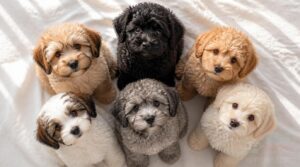
Pugapoos come in a surprisingly wide color palette. You might end up with a fawn, black, apricot, cream, gray, or white dog — or even a parti-colored mix of two or three shades.
Coat color is driven by eumelanin and pheomelanin pigments inherited from both parents, so predicting it’s tricky. Regular brushing keeps any coat looking its shiny best.
Curly or Smooth Coat

One of the most unpredictable things about a Pugapoo Pug Poodle Mix is the coat. It might be tight, curly ringlets, a loose wave, or a short, smooth coat — sometimes all three appear in the same litter.
Curly coats demand regular grooming tool selection, like a wide-tooth comb to tackle managing matting risks, while smooth coats stay tidy with a simple weekly brush.
Shedding and Allergies
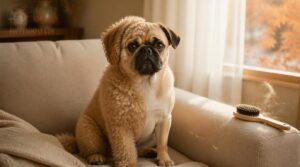
Shedding depends almost entirely on which parent a Pugapoo takes after. Curly, Poodle-type coats shed very little, making them a solid choice for allergy-sensitive households.
Smoother, Pug-type coats shed more noticeably, especially during spring and fall peak seasons. Daily brushing during those windows catches loose hair before it takes over your furniture.
Watch for patchy bald spots or red, itchy skin — those signal allergic dermatitis, not normal shedding.
Litter Appearance Differences

Two puppies from the same Pugapoo litter can look remarkably different. Color variation runs from cream and apricot to deep black, depending on which Pug or Poodle genes dominate.
- Coat texture ranges from smooth to curly, even among siblings
- Facial features vary — some look Pug-round, others more muzzle-forward
- Size at eight weeks can differ by several pounds
Pugapoo Temperament and Family Fit

If there’s one thing Pugapoos are known for, it’s wearing their heart on their sleeve — these dogs live to be near their people. Whether you’ve got a bustling household or a quieter setup, their personality usually fits right in. Here’s what you can expect from a Pugapoo regarding temperament and daily family life.
Affectionate Personality
If you’ve ever wanted a dog that treats you like the center of the universe, the Pugapoo might be your match. This breed is deeply affectionate and people-oriented, often leaning into you for closeness or following you from room to room. They’re natural cuddlers with a gentle, empathetic streak — quietly settling beside you when you’re having a rough day.
The Pugapoo is a natural cuddler who quietly settles beside you on your hardest days
| Affectionate Trait | What It Looks Like |
|---|---|
| Physical closeness | Leans against you or curls into your lap |
| Greeting rituals | Tail wags, excited jumps when you return |
| Emotional sensitivity | Stays close when you seem sad or stressed |
| Playful bonding | Soft paw touches and gentle nuzzling |
| Routine attachment | Thrives on shared daily moments like grooming |
Bonding routines matter deeply to this breed. A consistent schedule — morning cuddles, evening walks, quiet downtime together — builds the kind of trust that makes a Pugapoo genuinely content. Their social sensitivity means they mirror your mood, staying calm and affectionate in a warm, stable home.
Good With Children
That same warmth the Pugapoo showers on you extends naturally to the kids in your home. Their playful, gentle nature makes them genuinely family-friendly pets — the kind of companion animal who thrives in a busy household full of little hands and big energy.
Here are five safe interaction tips to set everyone up for success:
- Teach gentle petting by showing kids to stroke the back or chest rather than grabbing ears or tails.
- Supervision during play is non-negotiable, especially with toddlers who don’t yet understand a dog’s limits.
- Create safe spaces — a crate or quiet corner where your Pugapoo can decompress without interruption.
- Managing stress signs like yawning or lip-licking helps you step in before things escalate.
- Approach from the side calmly — teaching children this small habit builds lasting trust.
Consistent routines and reward-based greetings before extended play sessions make a real difference. These suitable for families with kids companions genuinely flourish when boundaries are mutual and kindness goes both ways.
Other Pets
If your Pugapoo has already won over your kids, chances are good it’ll charm your other pets too — though that takes a bit more patience. This mixed breed dog is generally sociable, but introductions matter. A neutral space, leashed first meetings, and separate feeding areas go a long way toward preventing tension before it starts.
| Situation | What to Do | Why It Helps |
|---|---|---|
| First meeting | Introduce in neutral territory | Reduces territorial guarding |
| Feeding time | Use separate bowls in different spots | Prevents food guarding |
| Birds or small pets | Always supervise; use baby gates | Controls chase instinct |
Impulse control training — practicing "leave it" and recall around other animals — keeps this curious hybrid dog breed from turning every encounter into a pursuit. With birds especially, barriers and supervision aren’t optional. Reward calm behavior consistently, and your Pugapoo will learn that coexisting is far more rewarding than chasing.
Apartment Living
If your Pugapoo gets along with other animals, apartment life is next on the checklist. The good news? These compact dogs — usually 10 to 25 pounds — are genuinely built for smaller spaces.
A consistent daily walk of 20 to 30 minutes covers most of their energy needs, and short indoor play sessions fill the gaps nicely.
Separation Anxiety
The one downside to apartment life with a Pugapoo? They don’t love being left behind. Separation anxiety is common in this breed — you might come home to chewed furniture, accidents on the floor, or neighbors mentioning the nonstop barking.
Watch for predeparture stress triggers like grabbing your keys or putting on shoes, which can set off trembling or panting before you’ve even opened the door.
Pugapoo Care Needs
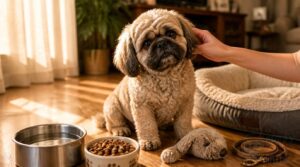
Caring for a Pugapoo isn’t complicated, but it does take some consistency. Like any dog, they thrive when their basic needs are met in the right way. Here’s what you’ll want to cover to keep yours happy and healthy.
Food and Diet
Getting your Pugapoo’s diet right makes a real difference to their health and happiness. Small but mighty, they have surprisingly specific calorie needs — adults need around 40–45 calories per pound daily. Key things to keep in mind:
- Named protein sources like chicken or turkey beat vague "meat by-products"
- Fresh water, always available, promotes urinary health
- Properly sized kibble protects their crowded, brachycephalic teeth
- Limited ingredient foods help manage inherited food sensitivities
Exercise Requirements
Think of exercise as a balancing act for your Pugapoo — they need enough movement to stay healthy, but not so much that their flat face works overtime. Adults need 45 minutes daily, split into two shorter sessions.
Puppies start with just 10–20 minutes of gentle play.
Never exercise when it’s above 70°F — their brachycephalic airways struggle in heat. Watch for excessive panting or gagging as early warning signs.
Positive Training
Because Pugapoos inherit the Poodle’s sharp mind, they pick up new commands quickly — but only if you’re consistent. Use a clicker to mark the exact moment your dog does something right, then deliver a pea-size treat within one second.
- Keep sessions to five minutes
- Use the same verbal cues every time
- End on a win
Socialization Tips
Socialization isn’t just a puppy phase — it’s an ongoing investment. Start with name call training: say your dog’s name and reward a response within ten seconds, repeating across short two-to-five-minute sessions a few times daily. That quick loop builds attention and trust faster than you’d expect.
Meeting new strangers goes smoother when visitors kneel to the dog’s level and let your Pugapoo approach on its own terms. Pair each greeting with a treat, and you’ll see wariness melt quickly.
For canine interaction skills, begin in a neutral space with parallel sniffing rather than a face-to-face introduction. Watch the body language — a tucked tail means it’s time to redirect calmly.
Don’t overlook home environment exposure either. Walk your dog through different rooms, introduce various floor textures, and keep guest visits short but regular.
Grooming Routine
Your Pugapoo’s grooming needs depend heavily on coat type. A curlier, low-shedding coat needs brushing two to three times weekly plus professional trims to stay mat-free, while smoother coats need less effort.
Four essentials to build into your routine:
- Daily facial cleaning with a damp cloth to prevent fold infections
- Ear checks weekly for wax or redness
- Dental hygiene — brush teeth several times weekly
- Nail trims every two to three weeks
Pugapoo Health Concerns

Like most mixed breeds, the Pugapoo comes with a few health considerations worth knowing before you bring one home. Some of these come from the Pug side, others from the Poodle, and a handful show up simply because of the dog’s small size. Here’s what to keep an eye on.
Breathing Problems
One of the trickier parts of owning a Pugapoo is understanding its brachycephalic airway syndrome — a mouthful of a term for a real structural issue.
Because of the Pug’s influence, your dog likely inherited a shortened skull, narrowed nostrils, and an overlong soft palate. Together, these create multiple points where airflow gets blocked, making every breath slightly harder than it should be.
Eye Conditions
The Pug side of your dog’s family tree brings one more challenge worth knowing: eye health problems.
Cherry eye is common in Pug-related breeds — it’s when the gland behind the third eyelid pops out of place. It looks alarming, but surgery fixes it in over 95% of cases and preserves normal tear production.
Left untreated, it can develop into dry eye (keratoconjunctivitis sicca), where the eye can’t produce enough tears. That leads to corneal damage and, eventually, vision loss. Your vet can monitor tear production with a simple 60-second test.
From the Poodle side, genetic cataracts are a real risk, usually showing up between ages three and seven. Regular eye exams catch them early — surgical removal restores vision in over 90% of cases.
Progressive retinal atrophy is another inherited concern. There’s no cure, but annual retinal exams and DNA testing help you stay ahead of it.
Hip Dysplasia
Hip dysplasia isn’t just a large-breed problem. Poodles carry a genetic predisposition for it, which means your Pugapoo could inherit it too.
The hip’s ball-and-socket joint loses proper coverage, creating abnormal stress on cartilage with every step. Over time, that wear leads to pain and reduced mobility — potentially arthritis.
Weight management is your best defense.
Patellar Luxation
Another joint issue worth knowing about is patellar luxation — when the kneecap slips out of its groove. You might notice your Pugapoo doing a little skip on a hind leg, then walking normally again. That’s the classic sign.
Vets grade it 1 to 4. Grades 2 through 4 often need surgery, but most dogs recover well.
Obesity Risk
Weight is actually where the Pug side does your dog no favors. Pugs carry a genetic predisposition to obesity — nearly four times the risk of other breeds — and that passes right along to your Pugapoo.
Add neutering, which slows metabolism by up to 15%, and even one extra treat daily can quietly tip the scales over time.
Frequently Asked Questions (FAQs)
What is a pugapoo puppy?
The smaller the dog, the bigger the personality. A Pugapoo is a designer mix of a Pug and Poodle — a compact, clever, affectionate companion whose traits shift with every litter.
Is a pugapoo a good dog breed?
Yes — for the right owner, this designer mix hits the sweet spot. It’s affectionate, adaptable, and trainable, making it a solid family pet for active households who can offer daily company and consistent guidance.
Is a pugapoo a poodle?
A pugapoo is not a purebred poodle. It’s a designer crossbreed — half pug, half poodle. Your pugapoo may inherit the poodle’s curly coat and sharp mind, but it carries both parent breeds equally.
What is the difference between a pug and a pugapoo?
A pug is a purebred dog with fixed traits, while a pugapoo is a pug-poodle crossbreed that blends genetic inheritance from both parents, making each dog’s size, coat, and temperament less predictable.
Are pugapoos good dogs?
For the right family, they’re an ideal family companion — intelligent, affectionate, and genuinely people-loving. Pugapoos thrive on daily companionship and bond deeply with their humans, making them a wonderfully devoted family pet.
Do pugapoos have health problems?
Like any hybrid, they carry health risks from both parents. Expect breathing issues, joint problems, eye conditions, skin allergies, and neurological disease — especially without genetic testing from a responsible breeder.
Are pugapoo smart dogs?
Yes — these little dogs are sharper than they look. They inherit Poodle intelligence alongside the Pug’s charm, making them quick learners who respond well to treat-based rewards and pick up routines fast.
Where did pugapoo come from?
The Pug hails from ancient China, while the Poodle got its start as a German water retriever. Breeders eventually combined the two, producing the Pugapoo as part of the designer dog trend.
Is a pugapoo a hybrid dog?
A hybrid dog is the intentional result of crossing two purebred dogs. The pugapoo fits that definition perfectly — bred from a purebred pug and poodle, making every pugapoo a first-generation hybrid.
Is pugapoo a good dog food?
Pugapoo" isn’t a dog food — it’s the breed itself. For small dog nutrition, look for real meat as the first ingredient, balanced protein, and omega fatty acids to support coat and energy.
Conclusion
A pugapoo won’t suit every home—it craves constant company, shadows your every single move, and brings real health considerations that genuinely deserve your full attention. But for the right household, it’s loyal without being clingy, clever without being stubborn, and compact enough to thrive anywhere without shrinking its personality.
This dog is equal parts comedian and devoted companion.
If that contradiction sounds like exactly what you want, you’ve probably already made up your mind.