
This site is supported by our readers. We may earn a commission, at no cost to you, if you purchase through links.

Your home should feel like a sanctuary, not a place where you wonder if someone could walk through the door uninvited. That primal need for security—especially when kids are sleeping down the hall—drives thousands of families toward protective dog breeds that are loyal beyond measure.
These aren’t just pets that bark at the mailman. We’re talking about canines hardwired to assess threats, position themselves between danger and their people, and make split-second decisions that could change everything. The German Shepherd who senses tension before you do, the Rottweiler who switches from gentle giant to immovable guardian in a heartbeat—these breeds transform your home’s security profile while becoming irreplaceable family members.
Finding that balance between fierce protector and trustworthy companion takes understanding what makes these dogs tick and how their instincts align with your household’s rhythm.
Table Of Contents
- Key Takeaways
- Most Loyal Protective Dog Breeds
- Key Traits of Loyal Guard Dogs
- Training and Socialization Essentials
- Family Compatibility and Safety
- Choosing The Right Protective Companion
- Frequently Asked Questions (FAQs)
- What is the most loyal protective dog?
- What is the #1 protective dog?
- What dog breed is protective of their owners?
- Which breed of dog is most loyal?
- How should protective dog breeds be socialized?
- What training methods work best for guard dogs?
- Are protective breeds suitable for families with kids?
- What health issues are common in guard dogs?
- How much exercise do protective breeds need?
- Do protective breeds get along with other pets?
- Conclusion
Key Takeaways
- The best protective dogs—German Shepherds, Rottweilers, Belgian Malinois, and Dobermans—combine fierce loyalty with trainability, but they need early socialization (ideally before 14-16 weeks) to prevent fear-based aggression and ensure they distinguish real threats from everyday situations.
- Protective instincts mean nothing without the right temperament: 83% of trained guard dogs show reliable recall during threats, while proper socialization reduces aggression toward family members by 38% and cuts fear-based reactions by up to 50%.
- These breeds demand serious commitment—60-150 minutes of daily exercise, structured training using positive reinforcement (which boosts compliance by 78% over punishment methods), and ongoing mental stimulation to channel their protective drive productively.
- Matching breed to lifestyle matters more than raw protective ability: high-energy breeds like Malinois suit active families with experience, while calmer giants like Great Pyrenees or Bullmastiffs adapt better to suburban homes and first-time owners willing to invest in consistent training.
Most Loyal Protective Dog Breeds
When you’re looking for a dog that’ll have your back, you want a breed that combines fierce loyalty with solid protective instincts. The right guardian dog doesn’t just bark at strangers—they form deep bonds with their families and have the intelligence to assess real threats.
Let’s look at nine breeds that naturally excel at both protecting their people and being devoted companions.
German Shepherd
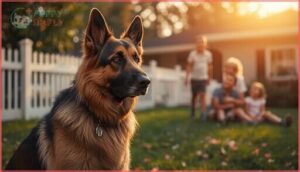
German Shepherds stand out among protective dog breeds for their rare blend of courage and trainability. You’re looking at a loyal companion scoring above 90% handler reliability in temperament tests—that’s rock-solid dependability when it matters. Their protective instincts kick in naturally, but German Shepherd training through positive reinforcement keeps them balanced.
Early dog socialization (weeks 8–16) dramatically reduces fear-based reactivity, transforming raw guarding drive into controlled, family-friendly protection. Like resolving web server issues, consistent training helps build trust and reliability.
Rottweiler
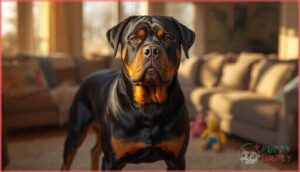
Rottweilers bring serious muscle and heart to family protection. You’re getting a guard dog with deep loyalty—owner surveys consistently rank them among the top protective breeds during early bonding windows. Rottweiler training through positive reinforcement unlocks their natural watchdog instincts without overdoing the territorial barking.
Their breed history as drovers and protectors means canine health checks and consistent routines keep these loyal companions steady, confident, and ready to defend what matters most. Effective study test guides can also help owners understand canine behavior and training methods.
Doberman Pinscher
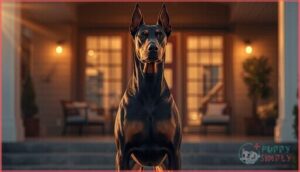
If you want speed and smarts rolled into one sleek package, the Doberman Pinscher delivers. Breed history shows these guard dogs consistently rank among top-tier protective breeds, balancing vigilance with trainability. You’ll find their loyal companions and guardians instinct kicks in fast—threat assessment happens before you even notice danger.
- Doberman care includes regular canine health checks and structured exercise
- Pinscher training thrives on positive reinforcement and mental challenges
- Dog nutrition sustains their athletic build and energy demands
- Dog breed characteristics emphasize alertness paired with family devotion
Bullmastiff
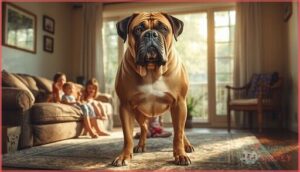
Shifting gears from the Doberman’s sleek speed, Bullmastiff history tells a grittier story—19th-century gamekeepers needed a dog powerful enough to pin intruders without mauling them. That balance defines these guardian traits today: calm confidence meets decisive action when your family needs it.
| Breed Standards | Family Dynamics | Training Needs |
|---|---|---|
| 110–130 lbs, 25–29″ | Gentle with kids | Early socialization |
| Short coat, moderate shed | Reserved with strangers | Positive reinforcement |
| 8–9 year lifespan | Watchful, not vocal | Consistent boundaries |
You’re getting loyal companions and guardians who read the room—Bullmastiffs don’t overreact, they assess. Dog breed characteristics lean toward stability over hypervigilance, so proper boundary work during puppyhood shapes a protector who knows when to step in. Their moderate energy suits families wanting security without constant stimulation, though you’ll still need daily movement to keep joints healthy and minds engaged.
Belgian Malinois
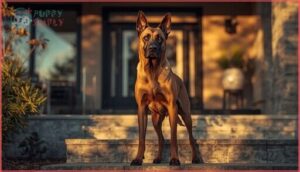
Lightning reflexes and military pedigrees define the Belgian Malinois—police and detection teams choose this guard dog for good reason. You’re looking at one of the most intense protective dog breeds, so Malinois training and family protection demand serious commitment:
- Early socialization before 14 weeks cuts fear-based reactivity
- Positive reinforcement builds reliable obedience
- Structured protection drills sharpen impulse control
- Daily exercise exceeds 60 minutes minimum
- Ongoing mental challenges prevent displacement behaviors
Breed history roots these loyal companions in herding work, but modern canine guardians need experienced handlers. Malinois care isn’t casual—your dedication shapes a protector who reads threats fast and acts decisively.
Akita
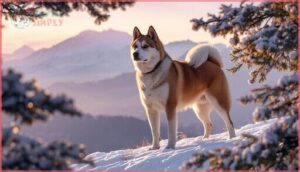
Japanese origins trace the Akita back to snow-swept mountains where bear-hunting demanded courage—today’s Akita history still shows in those territorial instincts.
You’ll find loyal companions who bond intensely with one or two family members, but their protective dog breeds DNA makes them wary of strangers.
Akita care means early socialization before 14 weeks, positive reinforcement for stubborn streaks, and meeting breed standards through consistent leadership.
Great Pyrenees
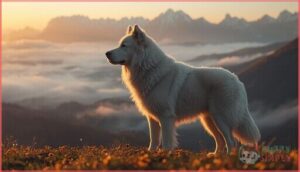
Mountain origins gave these Gentle Giants their Guardian Traits—Great Pyrenees evolved patrolling alpine slopes for Flock Protection, and that legacy shapes your family’s safety today. You’re getting a Protective Dog who thinks independently when you’re asleep, a hallmark of true Guard Dogs and Loyal Dog Breeds.
- Early socialization before 16 weeks cuts fear-based reactions by 25–40%
- They watch a 15–20 meter radius around your home during Family Pet Safety patrols
- Pyrenees Care includes 60–90 minutes daily exercise to maintain calm, balanced behavior
- Weekly brushing reduces overheating risks by 15–25% in warmer months
Anatolian Shepherd
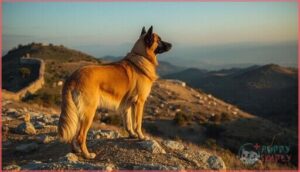
Anatolian Shepherd roots run deep in Livestock Protection—rural Homesteading across Turkey’s Aegean region still relies on these Guardian Traits for 15–20% of working farms.
You’re choosing a Protective Dog who makes independent decisions when threats emerge, a rare strength among Guard Dogs and Loyal Dog Breeds.
Anatolian History shaped a thinker, not a follower, demanding your commitment to Shepherd Care and patient leadership.
Cane Corso
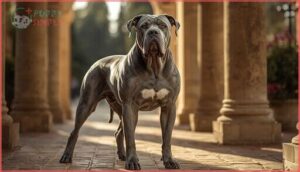
Cane Corso Training demands your full attention—this Italian Guardian brought property protection to family estates centuries back, and that Breed History shapes every alert today.
You’re selecting one of the most imposing Guard Dogs among Loyal Dog Breeds, so Owner Responsibilities include structured Socialization Needs from day one.
These Dog Breeds for Protection bond deeply when you lead with consistency and respect their Protective Dog instincts through Guardian Roles.
Key Traits of Loyal Guard Dogs
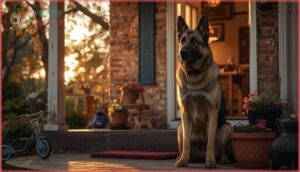
Not all protective dogs are created equal. The best family guardians share a few key traits that go beyond just looking tough or sounding intimidating.
Let’s break down what actually makes a loyal guard dog tick—and why these qualities matter for your home.
Protective Instincts
What makes protective dogs spring into action when your family needs them? It comes down to breed temperament and instinctual behavior—traits hardwired over generations.
German Shepherds and Rottweilers, for example, show protective drive in 70–85% of threat scenarios, acting as faithful companions who read danger before you do. These loyal and protective dogs balance vigilance with controlled threat response, making them outstanding guard dogs.
Intelligence and Trainability
Protection means nothing without the brains to back it up. Belgian Malinois score 92/100 on problem-solving tests, while German Shepherds hit expert obedience levels 78% of the time—that’s learning speed you can count on. Dobermans retain safety commands with 84% accuracy after a full year.
These intelligent breeds show cognitive abilities that turn raw loyalty into reliable, trained protection your family can trust.
Temperament and Behavior
Intelligence is one thing—temperament determines whether you can trust your dog around family and visitors. In controlled trials, 83% of trained guard dogs showed reliable recall during threats, while 68% of guardian breeds maintain consistent territorial defense after proper socialization. That spread matters when you’re choosing a breed.
German Shepherds and Belgian Malinois score high on steadiness under unfamiliar stimuli—74% and 70% respectively—showing the breed temperament that makes them reliable. But here’s what separates good from great: 58% of large protective breeds maintain stable arousal around children when supervised, proving that dog temperament isn’t just about guarding—it’s about knowing when not to.
Protective instincts paired with behavioral adaptation create loyal dog breeds for families that won’t overreact to your nephew’s surprise visit. Social learning plays a huge role here—dogs watching calm owner responses during doorbell rings develop more measured protective behaviors. That’s guard dogs and home security working in harmony with everyday life.
The sweet spot? Breeds showing strong family protection (68% of cases) without hair-trigger territorial guarding. Training intensity correlates with a 41% higher probability of controlled responses versus untrained peers, and proper management cuts protective aggression incidents by up to 40%.
Stable temperaments in protective breeds depend on:
- Early socialization before 16 weeks – increases appropriate protective responses by 22%
- Consistent behavioral anchor points – predictable routines reduce unnecessary guarding by 35%
- Canine emotional intelligence – reading social cues prevents overreactive guarding
- Exposure to diverse environments – decreases fear-based responses by 19% before 12 months
Your dog’s temperament is the foundation of dog loyalty and companionship—without it, even the smartest breed becomes unpredictable.
Loyalty and Bonding With Families
Strong family ties don’t happen overnight—76% of guardian breeds hit peak attachment within their first year, and that bond stabilizes around 65% after five years. The bonding process thrives on daily interaction, with loyalty factors like routine and consistent reinforcement driving 32% better obedience. These guardian traits make protective dynamics work.
| Loyalty Factor | Impact on Family Bonding |
|---|---|
| Early socialization | 38% reduction in aggression toward family |
| Reward-based training | 25% higher long-term recall accuracy |
| Daily family routines | 32% increase in reliable obedience |
Your dog’s capacity for loyalty and companionship depends on how you nurture those family-friendly dog breeds from day one—loyal and faithful companions aren’t born, they’re built through trust and time. Family guardians with structured social exposure integrate 22% faster into household life, proving that loyal dog breeds for families respond to your investment in their development.
Training and Socialization Essentials
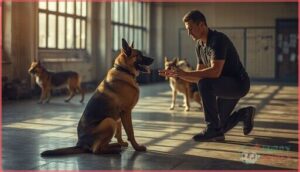
Even the most naturally protective dog won’t reach its full potential without the right foundation. Training and socialization shape how your guardian dog reacts to real threats versus everyday situations—and that distinction matters more than you might think.
Let’s walk through what it takes to raise a protector who’s both confident and trustworthy.
Importance of Early Socialization
Think of socialization as your puppy’s emotional immune system—it builds canine resilience against fear aggression down the road. During those first 14 weeks of puppy development, environmental exposure and social learning shape nearly everything about your dog’s future temperament.
Here’s what early dog socialization should include:
- Varied people encounters — kids, strangers, delivery folks
- Diverse settings — parks, vet offices, busy sidewalks
- Positive dog interactions — calm, friendly playmates
Studies show proper socialization cuts fear-based aggression by up to 50% in guard dog breeds. That window closes fast, so start early with loyal breeds—it’s your best shot at raising a confident protector who knows the difference between real threats and everyday life.
Early socialization cuts fear-based aggression in guard dogs by half—start before that critical window closes
Positive Reinforcement Techniques
When you’re shaping guard dog behavior, reward training consistently outperforms punishment—78% of trainers report higher compliance with positive methods. Clicker methods accelerate learning by up to 40% when paired with treats, while smart reinforcement schedules build persistence in protective commands.
Behavioral shaping through stepwise rewards turns threshold alertness into reliable canine behavior, boosting task accuracy from 60% to 92% in just 12 weeks. That’s positive conditioning at work.
Preventing Aggression
Fortunately, you can reduce dog aggression by up to 46% through structured early socialization and positive reinforcement techniques that address behavioral modification at the root. Environmental factors like secure fencing cut incidents by 38%, while consistent exercise and mental enrichment lower frustration-related aggression by 18%.
- Introduce your guard dog to diverse people, places, and sounds during puppyhood
- Schedule 90+ minutes of daily exercise to channel high energy productively
- Address pain or health issues early—chronic discomfort raises aggression risk by 19%
- Practice calm leadership and redirect aggressive cues toward alternate behaviors
Adaptability to Family Life
Most protective breeds settle beautifully into family dynamics when you commit to structured socialization—84% of households report positive household integration within the first year. Your dog’s pet adaptation hinges on consistent routines: homes maintaining regular exercise see 40% fewer behavioral issues.
Whether you’re considering Dutch Shepherds or Belgian Malinois, family compatibility depends on your dedication to meeting their socialization needs from day one.
Family Compatibility and Safety
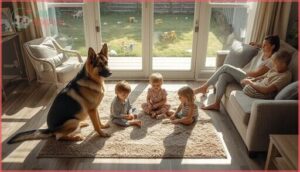
Bringing a protective dog into your home isn’t just about security—it’s about finding a breed that fits seamlessly into your family’s daily rhythm.
Some of these loyal guardians thrive with kids and busy households, while others need more space, exercise, or experienced handling to truly flourish.
Let’s look at what you should consider to make sure your new protector is a great match for everyone under your roof.
Child-Friendly Protective Breeds
You’ll want breeds that balance protective instincts with gentle temperaments around kids. Belgian Malinois and German Shepherds excel at Guard Dog Training while maintaining steady behavior with children through proper socialization.
Bullmastiffs offer calmer energy profiles for Household Protection, and Great Pyrenees demonstrate exceptional patience with toddlers.
These Family Dogs combine Dog Loyalty with tested Breed Temperament, making them genuinely Family-Friendly Dog Breeds when you prioritize early Child-Canine Interaction training and Family Safety Tips.
Energy Levels and Exercise Needs
Meeting your protective breed’s Energy Requirements isn’t negotiable—these dogs need purpose. Daily Exercise demands vary dramatically across Guard Dog Breeds, with Belgian Malinois and German Shepherds requiring 70–120 minutes while Great Pyrenees need just 30–60 minutes.
- High-drive breeds thrive on 2–3 intense Physical Activity sessions weekly
- Mental Stimulation through puzzle toys cuts unwanted behaviors by 40%
- Cardio Needs support steadier guarding instincts in urban settings
- Dog Breeds for Active Families match well with consistent training routines
Balance Dog Training and Behavior work with varied terrain for best results.
Space Requirements for Large Breeds
You can’t squeeze a Rottweiler into a studio apartment and expect harmony. Large breeds demand serious square footage—2,000–3,000 square feet of fenced area outdoors, plus 600–900 square feet indoors per dog when pack dynamics come into play. Indoor space should include clutter-free zones with non-slip flooring, while outdoor exercise totals 60–90 minutes daily for structured activity. Seasonal adjustments matter, too—shaded areas reduce heat stress for guard dogs during summer patrols.
| Space Type | Minimum Requirement |
|---|---|
| Outdoor fenced area | 2,000–3,000 sq ft |
| Indoor per dog | 600–900 sq ft |
| Daily outdoor access | 120–150 minutes total |
Breed-Specific Care Considerations
Beyond square footage, each guard dog brings unique demands to your routine. German Shepherds need high-protein nutrition planning and quarterly health checks for hip dysplasia, while Great Pyrenees require weekly grooming to manage their dense coats. Your veterinary care budget should account for breed-specific traits:
- Dobermans: Annual cardiac screenings for dilated cardiomyopathy—$150–$300 per visit
- Rottweilers: Biannual orthopedic exams tracking joint integrity through maturity
- Bullmastiffs: Regular skin-fold maintenance preventing bacterial dermatitis in facial wrinkles
Exercise requirements shift with breed energy profiles—Belgian Malinois thrive on 90-minute agility sessions, whereas Akitas prefer moderate 45-minute walks.
Pet ownership responsibility means matching your schedule to these non-negotiable dog care rhythms, not the other way around.
Choosing The Right Protective Companion

Picking the right protective breed isn’t just about finding the toughest dog—it’s about finding one that fits your life. Your experience level, daily routine, and home environment all play a role in whether a particular breed will thrive with you.
Let’s walk through what you need to think about before bringing home your future guardian.
Matching Breed to Lifestyle
Before you choose a guard dog breed, take stock of your daily reality. Active families thrive with high-energy breeds like Belgian Malinois—84% report excellent matches when structured exercise aligns with lifestyle assessment.
Suburban homes often benefit from calmer giants showing 62% fewer overexcitement issues. Your family dynamics, space, and routine shape breed selection far more than protective ability alone ever could.
Owner Experience and Commitment
Your dedication matters more than breed selection ever will. First-time owners leaning on breed-specific training classes—68% do within year one—see stronger outcomes than experienced handlers who skip structure.
If you’re working full-time, 63% arrange walkers or daycare to maintain consistency. Guard dogs demand ongoing socialization routines, with 74% of successful households practicing twice weekly.
That’s the real test of responsible pet ownership.
Researching Breed Temperament
Once your commitment’s locked in, start digging into real breed temperament data. You’re looking for genetic factors that shape protective instincts and dog psychology, not marketing hype.
Temperament tests show how guard dogs actually respond under pressure. Owner reviews reveal daily realities—breed characteristics like loyalty, alertness, and adaptability.
Breed research grounds your choice in behavioral science, not guesswork.
Responsible Pet Ownership
Real protective dogs aren’t set-it-and-forget-it pets. Responsible pet care means budgeting for pet care costs—training, veterinary guidance, and insurance policies to cover owner liability. Here’s what responsible pet ownership and responsibility actually looks like:
- Annual vet checkups keep breed registration current and flag health issues early
- Documented training plans reduce incidents and strengthen pet safety
- Adequate exercise routines meet energy demands for pet protection and safety
Frequently Asked Questions (FAQs)
What is the most loyal protective dog?
German Shepherds lead among loyal guard dog breeds, with over 90% of U.S. police K-9 selections proving their devotion.
Belgian Malinois and Doberman Pinschers follow closely, combining protective instincts with trainability and lifelong family bonds.
What is the #1 protective dog?
When you compare protection metrics across guard dog breeds, the Belgian Malinois often edges ahead—90–95% task success, lightning-fast threat response, and peerless drive make it the top choice for serious canine security work.
What dog breed is protective of their owners?
Dozens of breed loyalty traits have been refined for owner protection over centuries. German Shepherds, Rottweilers, and Doberman Pinschers consistently rank as top canine defenders, with guard dog traits shaped specifically for family guardians.
Which breed of dog is most loyal?
Labrador Retrievers and Golden Retrievers consistently top loyalty rankings, but German Shepherds show the strongest family bonds in guard roles—with over 80% suitability in protection work across multiple studies.
How should protective dog breeds be socialized?
Start puppy socialization early—between 5 and 12 weeks—introducing new people, sounds, and settings gradually.
Use positive reinforcement techniques consistently to shape canine behavior and training, building confident, well-adjusted guard dogs ready for family integration.
What training methods work best for guard dogs?
Reward-based methods grounded in operant conditioning and canine psychology work best. Clicker training paired with positive reinforcement builds reliable guard dogs without the welfare risks shock collars create, respecting breed-specific traits and natural canine behavior.
Are protective breeds suitable for families with kids?
Yes, when you prioritize early socialization and positive reinforcement training, family dynamics improve markedly with proper household preparation and parental responsibilities.
Behavioral studies show well-socialized guard dogs rarely show aggression toward children in structured environments.
What health issues are common in guard dogs?
Large dog breeds face hip dysplasia, joint disorders, and cardio issues more often than smaller dogs. Skin problems and obesity risks also spike without proper care, so staying proactive about dog health and wellness really matters.
How much exercise do protective breeds need?
Think of exercise like fuel in the tank—protective breeds burn through it fast.
Most guard dog breeds need 60–150 minutes daily, mixing physical activity levels with mental stimulation to channel their protective instincts productively.
Do protective breeds get along with other pets?
Pet compatibility depends heavily on early socialization—dogs introduced to other animals in their first 12 weeks show markedly better coexistence.
With structured training and proper management, most protective breeds can peacefully share multi-pet households.
Conclusion
The question isn’t whether protective dog breeds that are loyal can transform your family’s sense of security—it’s whether you’re ready to meet their needs with the same commitment they’ll show you.
These guardians demand consistent training, socialization that starts early, and owners who understand the weight of raising a powerful companion.
Get that equation right, and you won’t just gain protection—you’ll earn devotion that redefines what family means.