This site is supported by our readers. We may earn a commission, at no cost to you, if you purchase through links.
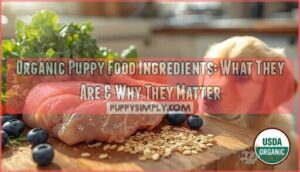
Your puppy’s immune system won’t reach full maturity until around six months of age, which means the ingredients in their food aren’t just fueling growth—they’re literally building the foundation of their lifelong health.
Organic puppy food ingredients differ from conventional options in ways that go beyond marketing buzzwords: USDA Organic certification requires at least 95% certified organic components, annual third-party audits, and documented compliance with strict agricultural standards.
The choice between organic chicken raised without antibiotics and conventional poultry exposed to synthetic pesticides affects more than just ingredient quality—it influences your puppy’s developing gut microbiome, allergen sensitivity, and nutritional absorption.
Understanding what makes ingredients truly organic, which ones matter most for growing dogs, and how to verify legitimate certifications helps you make informed decisions during this critical developmental window.
Table Of Contents
- Key Takeaways
- What Makes Puppy Food Organic
- Essential Organic Puppy Food Ingredients
- Nutritional Benefits of Organic Ingredients
- Top 10 Organic Puppy Food Products
- 1. Organic Salmon And Duck Dinner
- 2. Organic Chicken Dog Food Recipe
- 3. Natural Pork And Rabbit Stew
- 4. Primal Puppy Raw Dog Food
- 5. Freeze Dried Chicken Dog Food Nuggets
- 6. Whole Earth Farms Grain Free Dog Food
- 7. Organic Chicken Oatmeal Dog Food
- 8. Salmon Dog Food With Vitamins
- 9. Blue Buffalo Lamb Dog Food
- 10. Natural Chicken Dog Food Recipe
- How to Choose Safe Organic Puppy Food
- Frequently Asked Questions (FAQs)
- Is organic food good for puppies?
- What is the healthiest food to feed your puppy?
- What is the best ingredients for puppy food?
- What dog food does not have synthetic vitamins and minerals?
- What are potential drawbacks of organic puppy food ingredients?
- How does organic puppy food impact dental health?
- Are organic puppy food ingredients more sustainable?
- Can puppies have allergic reactions to organic ingredients?
- Are organic puppy foods worth the extra cost?
- Can organic food help puppies grow faster?
- Conclusion
Key Takeaways
- USDA Organic certification requires at least 95% certified organic ingredients with annual third-party audits, guaranteeing no GMOs, antibiotics, or growth hormones—not just marketing spin but enforceable standards backed by up to $20,000 penalties for violations.
- Organic produce in puppy food carries pesticide residues up to 115 times lower than conventional options, reducing contaminant exposure during the critical six-month window when your puppy’s immune system and gut microbiome are still developing.
- Meeting AAFCO’s minimum standards (22.5% protein, 8.5% fat for growth) is non-negotiable regardless of organic status—certification doesn’t override the nutritional requirements your puppy needs for proper bone development and healthy growth.
- Organic ingredients don’t automatically prevent allergies since common triggers like chicken, beef, and wheat cause reactions based on specific proteins rather than farming methods, though fewer synthetic additives may reduce non-protein chemical exposure that aggravates sensitivities.
What Makes Puppy Food Organic
When you pick up a bag labeled “organic,” you’re looking at more than a marketing buzzword—there’s a whole regulatory framework behind that seal. The USDA sets specific standards for what can and can’t go into organic puppy food, from how the animals were raised to what’s allowed in the soil.
Let’s break down what actually makes puppy food organic and why those distinctions matter for your growing pup.
USDA Organic Certification Standards
When you’re choosing organic puppy food, USDA Organic certification is your benchmark for regulatory compliance. The certification process requires manufacturers to meet strict accreditation standards for ingredient sourcing—products labeled “organic” must contain at least 95% certified organic ingredients, while “100% organic” means everything except water and salt comes from organic sources.
Here’s what USDA certification guarantees for organic dog food:
- Rigorous ingredient verification – Every organic ingredient traces back to certified farms using approved practices
- No GMOs allowed – Organic pet food can’t contain genetically modified organisms in any form
- Third-party inspection – Accredited certifiers conduct annual audits of organic puppy food producers
- Documented compliance – Five years of production records prove organic labeling claims are legitimate
- Enforceable standards – Violations carry penalties up to $20,000, protecting you from misleading organic ingredients claims
USDA certification also ensures that manufacturers adhere to organic standards in their production processes.
Organic Meat Requirements
Organic livestock used in organic puppy food must be fed 100% certified organic agricultural feed—no mammalian or avian byproducts allowed. USDA organic standards prohibit antibiotics and growth hormones entirely, meaning any animal treated loses organic status permanently.
Your pup’s organic dog food also guarantees animal welfare: meat sourcing requires outdoor access, pasture grazing for ruminants, and freedom of movement throughout production, protecting both nutritional integrity and ethical treatment.
Understanding the importance of USDA Organic standards is essential for making informed decisions about your puppy’s diet.
Organic Produce Requirements
Just like meat, fruits and vegetables in your puppy’s organic food must meet strict USDA Organic standards. That means produce sourcing from farms practicing soil management without prohibited synthetic pesticides or fertilizers—backed by annual third-party certification.
Crop rotation, organic farming techniques, and documented traceability guarantee every carrot, potato, or even organic broccoli in organic pet food options maintains genuine organic certification from field to bowl.
Mixed-Ingredient Organic Formulas
When you spot “made with organic ingredients” on dog food packaging, you’re looking at a formula that contains at least 70% certified organic components by weight—excluding water and salt.
These organic blends commonly feature organic chicken or beef alongside organic grains, while vitamin premixes or certain fats may remain nonorganic to satisfy AAFCO nutrient profiles and regulatory compliance without the cost of full certification.
Differences: Organic Vs. Natural Vs. Non-GMO
Labels can mislead if you don’t know what they actually regulate. USDA Organic puppy food prohibits GMOs, synthetic pesticides, and routine antibiotics—backed by federal standards and site inspections.
Natural claims simply mean minimal processing under AAFCO guidelines but don’t address GMO-free sourcing or pesticide use.
Non-GMO verification blocks genetically engineered ingredients yet allows conventional farming with chemical inputs, so ingredient sourcing varies widely across these pet food regulations.
Essential Organic Puppy Food Ingredients
Organic puppy food relies on a handful of core ingredients that work together to meet your growing dog’s nutritional needs. These components aren’t just buzzwords—they’re the building blocks that support healthy development during those critical first months.
Let’s look at what you’ll actually find in quality organic formulas and why each ingredient earns its spot on the label.
Animal-Based Proteins: Chicken, Duck, Salmon, Lamb
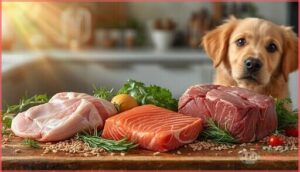
You’ll find chicken, duck, salmon, and lamb at the heart of organic puppy food because these protein sources deliver the amino acid profiles your growing pup needs. Commercial chicken-based formulas often guarantee 28–32% crude protein on a dry matter basis, easily meeting AAFCO’s 22.5% minimum for growth.
Salmon and duck add fatty acids for digestive health and coat shine, while lamb offers a novel option if your puppy shows sensitivity to common proteins.
Whole Grains and Grain-Free Options
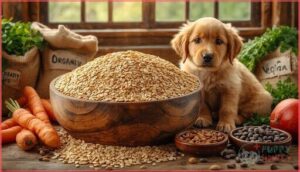
Organic puppy food usually includes whole grains—oats, brown rice, barley—that supply 40–60% of carbohydrates in complete diets, delivering energy and fiber your pup’s digestion needs. Yet grain-free formulations dominate shelves, driven by owner perceptions rather than veterinary evidence.
Here’s what the science tells us about grain benefits, pet nutrition, and canine health:
- More than 90% of dogs digest whole grains efficiently, while true dog allergies to cereals affect less than 1% of pets.
- Grain-free dog food accounted for roughly 90–93% of DCM cases reported to the FDA, raising questions about food sensitivities tied to legume-heavy recipes.
- Whole grains contribute B vitamins, trace minerals, and 7–12% protein—not empty fillers.
- Organic dog food with grains often offers better digestibility than some grain-free alternatives rich in legumes or tubers.
- Veterinary guidance recommends choosing natural dog food based on documented needs, not marketing hype.
Fruits and Vegetables: Carrots, Potatoes, Apples
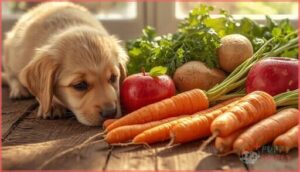
You’ll see carrots, apples, and potatoes featured in many organic puppy food formulas—and for good reason. Organic carrot benefits include beta-carotene (a vitamin A precursor) and fiber, while apples deliver vitamin C and digestible sugars. Potatoes provide starch energy.
Surveillance data confirm organic ingredients for pets carry pesticide residues up to 115 times lower than conventional produce, reducing vegetable allergens and contaminant exposure in natural pet food ingredients your puppy consumes daily.
Healthy Fats: Chicken Fat, Salmon Oil, Flaxseed
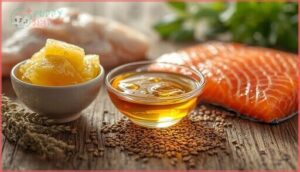
Fat fuels your puppy’s brain, skin, and energy—so quality matters. Chicken fat benefits include delivering linoleic acid and concentrated calories (around 4,505 kcal/kg in high-energy formulas), while salmon oil supplements provide EPA and DHA that boost learning in puppies. Flaxseed nutrition adds plant omega-3s.
Together, these organic ingredients for pets create a fatty acid balance that maintains healthy puppy food nutrition from nose to tail.
Natural Sources of Vitamins and Minerals
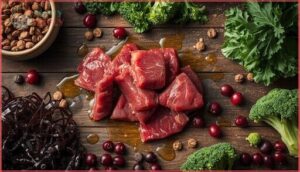
Vitamin sources like beef liver deliver over 100% of your puppy’s daily vitamin A needs, while mineral-rich kelp at just 0.5% dry matter supplies iodine and selenium.
Organic supplements from whole foods—organic broccoli, kale, cranberries, sunflower oil—create nutrient balance without synthetic additives.
Even seaweeds boost immune response naturally, proving that organic ingredients work smarter, not harder.
Nutritional Benefits of Organic Ingredients
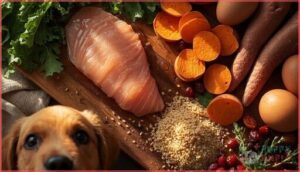
Organic ingredients aren’t just about what’s left out—they’re about what your puppy actually gets from their food. When you choose organic puppy food, you’re banking on cleaner sourcing, stricter standards, and ingredients that work with your pup’s developing system instead of against it.
Organic puppy food delivers cleaner sourcing and stricter standards that work with your pup’s developing system, not against it
Here’s what those organic labels really deliver nutritionally.
Higher Quality and Purity
Quality control in organic farming goes deeper than you might expect. Under USDA Organic standards, your puppy’s food is made from ingredients raised without prohibited pesticides, and certifiers actively monitor residues—triggering formal scrutiny if they exceed 5% of EPA tolerance.
This rigorous ingredient sourcing creates purity standards that minimize synthetic additives and environmental contaminants, delivering genuinely high-quality ingredients in every bowl.
Reduced Risk of Allergies and Sensitivities
Organic dog food doesn’t eliminate allergy triggers—beef, chicken, dairy, and wheat remain common culprits in both conventional and USDA Organic formulas. However, fewer synthetic residues and no artificial preservatives mean less exposure to non-protein chemicals that can aggravate digestive health or immune system responses.
When you pair organic sourcing with limited-ingredient or grain-free recipes, you’re bolstering nutrient balance and natural sensitivity reduction:
- Single-source animal proteins minimize potential allergens
- Absence of artificial additives bolsters immune system stability
- Whole, minimally processed ingredients promote digestive health
- Simple carbohydrate sources align with puppy nutrition and health needs
Compliance With AAFCO Puppy Nutrition Standards
Meeting AAFCO guidelines isn’t optional—puppy nutrition depends on formulas that deliver at least 22.5% protein and 8.5% fat on a dry matter basis, plus balanced calcium and phosphorus for bone growth. Organic dog food earns a “complete and balanced” label only when its nutrient profiles hit these minimums, whether through precise formulation or feeding trials.
USDA Organic certification doesn’t override regulatory compliance; your puppy food must satisfy both dog nutrition standards and organic rules.
Absence of Artificial Preservatives and Additives
Beyond meeting AAFCO standards, organic dog food avoids synthetic preservatives like BHA, BHT, ethoxyquin, and propylene glycol, commonly found in conventional kibble for extended shelf life.
Instead, USDA Organic formulas utilize natural antioxidants such as mixed tocopherols, rosemary extract, and pomegranate to stabilize fats without chemical additives.
These preservative-free recipes offer synthetic-free nutrition but require stricter storage and shorter use-after-opening windows.
Top 10 Organic Puppy Food Products
Now that you understand what makes organic puppy food nutritionally sound, you’re probably wondering which products actually deliver on those standards.
I’ve reviewed dozens of formulas and narrowed it down to ten that meet strict organic certification requirements while providing complete nutrition for growing puppies.
These products represent different formats—wet, freeze-dried, and kibble—so you can find what works best for your pup’s needs and your lifestyle.
1. Organic Salmon And Duck Dinner
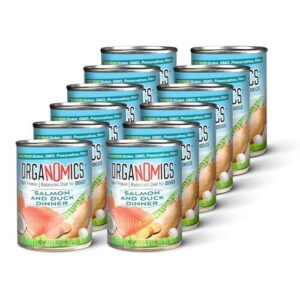
When you’re looking for a wet food that delivers real salmon benefits and duck nutrition in one can, OrgaNOMics Salmon & Duck Dinner stands out as a solid choice for organic feeding your growing pup. This grain-free pate uses salmon and duck as its first ingredients—providing 10% crude protein and 7% fat on an as-fed basis—while organic carrots, sweet potatoes, and coconut oil round out the natural ingredients.
At roughly 347 kilocalories per 12.5-ounce can, it’s formulated for all life stages and meets basic puppy growth needs without artificial preservatives.
Best For: Pet owners seeking an organic, grain-free wet food with exotic proteins for puppies or dogs of any age, especially those with food sensitivities or allergies.
- Real salmon and duck as the first two ingredients deliver quality animal protein without fillers, GMOs, or artificial preservatives
- Organic vegetables like carrots and sweet potatoes plus coconut oil support skin, coat, digestion, and overall vitality
- Formulated for all life stages with added taurine and vitamins C & E for heart, brain, and immune health
- Some customers received dented or rusted cans, raising safety and quality control concerns
- Limited availability can lead to stockouts, making it hard to maintain consistent feeding
- A few dogs experienced adverse reactions or sensitivities despite the hypoallergenic ingredients
2. Organic Chicken Dog Food Recipe
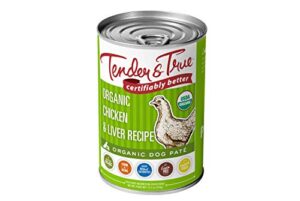
Tender & True’s USDA Organic chicken recipe uses cage-free organic chicken as its single animal protein—making meat sourcing transparent and straightforward for your pup’s diet.
This grain-free pâté delivers organic feed benefits without corn, wheat, or soy and is formulated to support natural dog food enthusiasts who prioritize poultry welfare and recipe formulation integrity.
At 12.5 ounces per can, it provides balanced chicken nutrition for all life stages except large-breed growth. The formula’s certified NonGMO pet food status and absence of artificial additives align with strict organic dog food standards you can trust.
Best For: Dog owners seeking USDA-certified organic, single-protein food for dogs with food sensitivities or allergies, especially those avoiding grains and prioritizing humane animal welfare standards.
- Single-ingredient animal protein (cage-free organic chicken) makes it easy to identify and avoid allergens while ensuring transparent sourcing
- Grain-free formula with no corn, wheat, soy, or artificial additives fits strict dietary restrictions and organic standards
- Suitable for all life stages except large-breed puppies, so you can feed the same food to multiple dogs in your household
- Not appropriate for growing large-breed dogs (70 lbs as adults), limiting its use for certain puppy owners
- Customer reports of damaged shipments and potential quality control issues, including black spots that may indicate contamination
- Higher price point typical of USDA organic certification may not fit all budgets, especially for multi-dog households
3. Natural Pork And Rabbit Stew
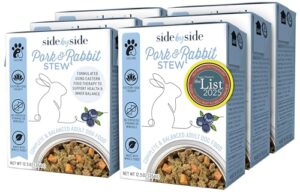
Side By Side’s Complete & Balanced Pork & Rabbit Wet Dog Food showcases rabbit benefits alongside pork nutrition in a 33-ingredient stew recipe that promotes pet wellness without grains, peas, or potatoes. This natural dog food delivers 11% minimum crude protein and meets AAFCO maintenance standards, making it suitable for organic pet products enthusiasts focused on puppy health and nutrition.
At $4.99 per 12.5-ounce can, you’ll find organic formulas rich in vegetables like carrots and kale—though the short three-day refrigerator shelf life and premium pricing may challenge budget-conscious feeding plans for larger breeds.
Best For: Dog owners seeking a limited-ingredient, grain-free wet food for pets with food sensitivities or those who want to add moisture and variety to their dog’s diet.
- Uses whole, raw ingredients including rabbit and pork with no artificial additives, providing high-quality animal protein and nutrient density
- Meets AAFCO maintenance standards and works as either a complete meal or a topper, offering flexible feeding options
- Includes functional ingredients like pumpkin for digestion and New Zealand green mussel for joint support, making it beneficial for dogs with specific health needs
- Premium price point at $4.99 per 12.5 oz can makes it expensive for daily feeding, especially for larger dogs
- Short three-day refrigerator shelf life after opening requires careful meal planning and may lead to waste
- Limited availability and higher cost compared to conventional protein sources may not fit all budgets or feeding routines
4. Primal Puppy Raw Dog Food
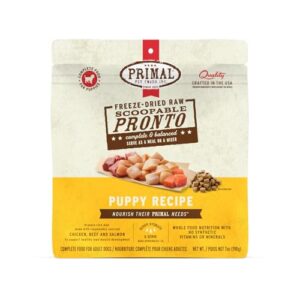
Primal Puppy Raw Dog Food offers freeze-dried raw nutrition built on cage-free chicken, wild-caught salmon, and USDA certified organic fruits and vegetables—meeting AAFCO growth standards for puppies, including large breeds over 70 pounds. This grain-free, high-protein formula promotes healthy skin, coat, and digestion through minimally processed ingredients and whole-food micronutrients instead of synthetic vitamins.
At $20.98 for seven ounces, you’re investing in shelf-stable raw feeding convenience, though you’ll want to know Primal’s recall history includes Salmonella and Listeria events between 2011 and 2022, making veterinary consultation essential.
Best For: Puppy owners who want a premium raw diet with organic ingredients and are comfortable with the higher price and careful handling that comes with freeze-dried raw feeding.
- AAFCO-compliant growth formula with cage-free chicken, wild-caught salmon, and certified organic produce supports healthy development in all puppy sizes
- Minimally processed freeze-dried format offers raw nutrition benefits with shelf-stable convenience—just rehydrate and serve
- Grain-free, high-protein recipe may improve digestion, skin, coat, and stool quality compared to conventional kibble
- At $20.98 for 7 oz, this is an expensive feeding option that adds up quickly, especially for larger or multi-dog households
- Recall history including Salmonella and Listeria contamination between 2011–2022 raises safety concerns that warrant veterinary consultation
- Hard texture and cube size may be challenging for small-breed puppies, and no-return policy limits your ability to test fit
5. Freeze Dried Chicken Dog Food Nuggets
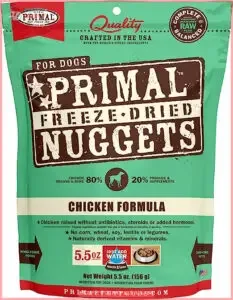
When you rehydrate each nugget with warm water, you access the convenience of raw feeding without the freezer. Primal’s freeze-dried chicken nuggets pack 37% crude protein and 37% crude fat alongside USDA certified organic kale, carrots, and blueberries—meeting AAFCO all-life-stage standards, including puppy growth.
High-pressure processing reduces Salmonella risk while preserving nutrients, yet you’ll need to budget around $1.50 per ounce and watch for digestive upset if your pup eats them dry without moisture.
Best For: Pet owners who want the nutritional benefits of raw feeding without freezer storage, and are willing to invest in premium, organic ingredients for dogs of all life stages—including puppies.
- High protein and fat content (37% each) with USDA certified organic produce supports healthy growth, skin, coat, and energy levels across all life stages
- High-pressure processing reduces Salmonella risk while keeping nutrients intact, and shelf-stable nuggets eliminate the need for freezer space
- Simple rehydration with warm water transforms nuggets into a complete meal, or you can use them dry as high-value training treats
- Premium pricing at roughly $1.50 per ounce makes it one of the more expensive dog food options, potentially limiting use as a sole diet for many budgets
- Feeding dry nuggets without added moisture can cause digestive discomfort, constipation, or even blockages in some dogs
- Once opened, the product has a limited shelf life and some customers have reported issues with food mites during storage
6. Whole Earth Farms Grain Free Dog Food
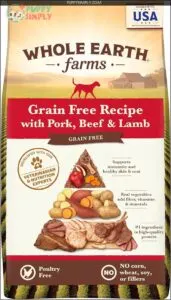
If your puppy struggles with chicken or poultry, Whole Earth Farms Grain Free with Pork, Beef, and Lamb offers a poultry-free alternative that’s not certified organic but still emphasizes natural ingredients matter. You’ll find 26% protein from named meat meals, legume-based carbohydrates, and zero corn, wheat, or artificial preservatives—hitting AAFCO all-life-stage standards while remaining budget-friendly.
The recipe includes organic alfalfa meal and probiotics for digestive support, though nutritionists note the high legume content (peas, pea protein) relevant to ongoing dog food safety investigations into grain-free diets.
Best For: Puppies and dogs with poultry allergies or sensitivities who need a grain-free diet with multiple protein sources at a mid-range price point.
- Triple-protein formula (pork, beef, lamb) with 26% protein from named meat meals, no chicken or poultry by-products
- Includes probiotics and organic alfalfa for digestive health, plus omega fatty acids for skin and coat support
- Meets AAFCO standards for all life stages while priced lower than most premium grain-free options
- High legume content (peas, pea protein, pea fiber) may be relevant to FDA’s investigation into grain-free diets and heart health
- Contains 19 synthetic vitamin and mineral additives, plus five ingredients classified as potential anti-nutrients
- Not organic certified and some ingredients sourced outside the USA despite U.S. manufacturing
7. Organic Chicken Oatmeal Dog Food
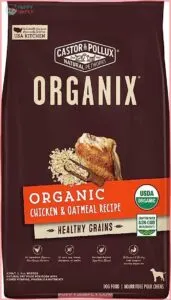
Castor & Pollux Organix Organic Chicken & Oatmeal Recipe delivers USDA Organic certification with 95% certified ingredients—organic chicken raised without antibiotics or growth hormones, paired with organic oatmeal and barley for dog digestion support. You’ll appreciate organic superfoods like flaxseed and blueberries, plus natural preservation with mixed tocopherols instead of synthetic BHA or BHT.
While marketed for adults, nutritionists note that puppies require higher protein and fat than this formula provides to meet AAFCO growth standards. Verify complete puppy nutrition with your veterinarian before feeding organic dog food exclusively during development.
Best For: Dog owners who prioritize USDA organic ingredients and want to avoid synthetic preservatives, antibiotics, and growth hormones in their adult dog’s diet.
- USDA organic certified with 95% organic ingredients including free-range chicken, oatmeal, and barley
- Contains organic superfoods like flaxseed, blueberries, and sweet potatoes for natural antioxidants
- Uses natural preservation with mixed tocopherols instead of synthetic chemicals like BHA or BHT
- More expensive than conventional dog food options
- Not formulated to meet AAFCO growth standards for puppies despite some marketing claims
- Contains grain ingredients that won’t work for dogs with confirmed grain allergies
8. Salmon Dog Food With Vitamins
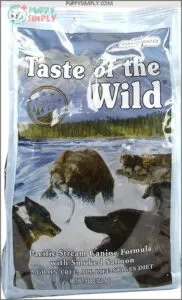
Taste of the Wild Pacific Stream Grain-Free Salmon Dog Food combines real smoked salmon—the top marine ingredient used in 203,307 tons of US pet food annually—with targeted vitamin fortification meeting AAFCO growth standards. This formula offers 32% crude protein and 18% fat, plus omega-3 benefits (around 0.4%) to support your puppy’s brain development through DHA content from fish oil supplements.
This natural dog food is enriched with vitamins E (150 IU/kg) and added B-complex, ensuring healthy dog food nutrition. Despite its premium salmon nutrition and pet nutrition science backing omega-3 benefits for skin and coat, it lacks USDA organic certification.
Best For: Dog owners looking for a high-protein, grain-free salmon formula with omega-3s and added vitamins to support active dogs or puppies with grain sensitivities.
- Real smoked salmon as the first ingredient delivers 32% protein and natural omega-3s for brain development and healthy skin and coat
- Grain-free recipe with sweet potatoes and peas works well for dogs with grain allergies or sensitivities
- Fortified with vitamins E (150 IU/kg), B-complex, zinc, and selenium to meet AAFCO growth standards without artificial flavors or preservatives
- Higher price point may not fit all budgets, with some owners questioning the value for money
- Mixed reviews on palatability—some dogs love it while others are picky eaters
- Quality and taste can vary by batch, and individual dogs may have sensitivities to specific ingredients despite the grain-free formula
9. Blue Buffalo Lamb Dog Food
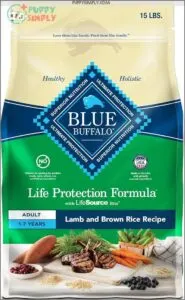
Blue Buffalo Life Protection Formula Puppy Lamb and Oatmeal delivers 26% crude protein from deboned lamb and fish meal, plus 16% fat to fuel your growing pup—but it’s not USDA organic or grain-free. You’ll find DHA (0.10%) and ARA (0.04%) for brain development, calcium (1.2%), and phosphorus (1.0%) meeting AAFCO puppy standards.
The brand’s recall history since 2007—melamine, mold, and thyroid hormone incidents—raises pet safety concerns, though none involved this specific lamb recipe.
For puppies with dog allergies to chicken, this natural dog food offers solid lamb nutrition without poultry by-products.
Best For: Puppy owners looking for a lamb-based formula without chicken, corn, wheat, or soy—especially if their pup has poultry sensitivities or allergies.
- Real lamb as the first ingredient with 26% protein and 16% fat to support muscle growth and energy in growing puppies.
- Contains DHA and ARA for brain and eye development, plus calcium and phosphorus levels that meet AAFCO puppy nutrition standards.
- No chicken by-products, corn, wheat, or soy, making it a good option for dogs with common food sensitivities.
- Blue Buffalo has had multiple recalls since 2007 (melamine, mold, thyroid hormone issues), raising some safety concerns even though this specific recipe wasn’t affected.
- Some dogs experience digestive issues like diarrhea or vomiting, and a few may refuse to eat it altogether.
- Pricier than many competitor puppy foods and has a strong smell when you first open the bag.
10. Natural Chicken Dog Food Recipe
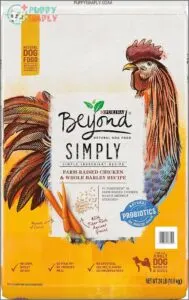
If you’re ready to craft homemade diets, a vet-approved chicken nutrition formula for an 8-pound, 6-month-old pup delivers 550 kilocalories daily from 6.75 ounces of cooked chicken breast, 80 grams of white rice, 3 teaspoons of canola oil, and natural ingredients like carrots. This organic recipe approach ensures 47.7% protein calories and meets puppy feeding standards when you add a canine supplement at serving time.
It’s a transparent, grain-free alternative to commercial organic dog food benefits—just handle poultry safely and consult your vet for pet food ingredients and safety guidance.
Best For: Dog owners who want full control over ingredients and are committed to preparing balanced, vet-approved meals for their puppies or adult dogs with sensitive stomachs.
- You know exactly what’s going into your dog’s bowl—real chicken, whole grains or grain-free carbs, and added omega oils—with no fillers, by-products, or mystery ingredients.
- Recipes can be tailored to your dog’s specific needs, whether that’s adjusting fat content, swapping rice for quinoa, or adding pumpkin for digestion.
- When properly supplemented and portioned, homemade chicken recipes meet AAFCO standards for complete nutrition across all life stages, from puppies to seniors.
- Requires careful measuring, cooking, and adding a canine vitamin-mineral supplement every time to avoid nutritional gaps that can harm growing puppies.
- More time-consuming and often pricier per serving than grabbing a bag of commercial kibble, especially when you factor in quality proteins and oils.
- Safe handling is critical—raw or undercooked chicken poses contamination risks, and improper storage can lead to spoilage or foodborne illness for both dogs and humans.
How to Choose Safe Organic Puppy Food

Picking the right organic puppy food isn’t just about spotting a green label—it’s about understanding what you’re actually feeding your growing pup. You’ll want to decode ingredient lists, verify certification claims, and make sure the formula fits your puppy’s specific nutritional needs.
Here’s how to make smart, safe choices when shopping for organic options.
Interpreting Ingredient Lists and Labels
Understanding pet food ingredients and safety starts with label decoding—those first three to five ingredients represent the bulk of what you’re feeding. Ingredient ordering follows weight-as-added, so fresh chicken might outrank chicken meal even though the meal packs more protein once moisture is removed.
- Organic certification means at least 95% organic ingredients, letting you see the USDA Organic seal right on the package.
- Natural dog food can still include synthetic vitamins and minerals—it’s not the same as organic dog food benefits.
- Grain-free formulas often swap grains for legumes or potatoes, which matters for nutrient analysis and regulatory compliance concerns.
- High-moisture proteins like fresh meat can mislead you if you don’t check what comes after them on the list.
Verifying Certifications and Claims
Beyond the ingredient panel, you’ll want to spot the USDA Organic seal—your shortcut to certification standards and regulatory compliance. That symbol confirms a third-party verified at least 95% organic content, not just marketing spin.
Recent fraud detection cases remind us that some brands fake certificates or misuse “organic” without proper ingredient verification. So, cross-check label claims against USDA databases or ask your retailer for proof before trusting natural and organic pet food options like OrgaNOMics or USDA organic beef formulas.
Consulting Your Veterinarian for Puppy Needs
Most puppy owners—82.7% in a recent survey—consult their veterinarian about diet at least once, and for good reason. Veterinary nutrition experts catch early red flags like reversed calcium ratios or excess calories that trigger developmental bone disease.
Before you commit to any organic formula, schedule a puppy wellness visit. Your vet will review ingredient lists, tailor diet planning to breed-specific growth curves, and write a veterinarian-formulated feeding plan that balances health consultations with real-world pet care advice.
Transitioning Puppies to Organic Diets
Switching to organic isn’t like flipping a light switch—you’ll protect digestive health and support steady puppy development and growth by spreading the change over 5–7 days. Start with 75% current food and 25% natural puppy food or grain-free organic, then shift the ratio every two days.
This gradual switching preserves nutrient balance and feeding schedules while your pup adjusts to dietary adjustments, keeping stools firm and energy steady.
Frequently Asked Questions (FAQs)
Is organic food good for puppies?
Your puppy won’t morph into a kale-munching zen master on organic kibble. Organic foods can reduce pesticide exposure and support pups with food allergies, but only if they meet AAFCO puppy nutrition standards for complete dietary needs.
What is the healthiest food to feed your puppy?
The healthiest option is a complete puppy food meeting AAFCO growth standards, featuring identifiable animal proteins and balanced nutrients. Grain-free or organic diets work well, but always consult your veterinarian to match your puppy’s specific developmental needs.
What is the best ingredients for puppy food?
The best ingredients include high-quality animal proteins like chicken or salmon, balanced fats with DHA for brain development, precise calcium-to-phosphorus ratios for bones, and whole fruits and vegetables providing natural vitamins.
What dog food does not have synthetic vitamins and minerals?
Nature’s Logic and Yumwoof Perfect Superfood provide complete AAFCO nutrition using only whole food ingredients—no synthetic vitamins or minerals added.
These comprehensive pet care brands rely on organ meats and natural nutrition for nutrient sources instead of preservative-free premixes.
What are potential drawbacks of organic puppy food ingredients?
Despite marketing appeal, organic ingredients can harbor toxic elements like lead and mercury, suffer nutrient imbalances, and carry high costs—challenges that organic squash, organic carrots, or organic brown rice can’t automatically prevent without careful formulation.
How does organic puppy food impact dental health?
Organic puppy food won’t prevent plaque or gum disease on its own—dental health depends on mechanical cleaning like brushing or chews, not whether ingredients are organic, grain-free, or contain organic squash.
Are organic puppy food ingredients more sustainable?
Sustainability is a double-edged sword here. Organic Farming reduces pesticide use and protects soil health per acre, but organic meat ingredients often require more land and produce similar greenhouse gas emissions compared to conventional options—making Eco Friendly and Sustainable Pet Product Choices nuanced.
Can puppies have allergic reactions to organic ingredients?
Yes, puppies can develop allergic reactions to organic ingredients. Common triggers include chicken, beef, dairy, and wheat—regardless of organic status.
Food intolerance and puppy sensitivities depend on specific proteins, not farming methods.
Are organic puppy foods worth the extra cost?
The answer depends on your priorities. If reducing pesticide exposure, supporting sustainable farming, and choosing certified USDA Organic beef, organic carrots, or grain-free natural puppy food matter to you, the price comparison favors organic despite limited proven health benefits.
Can organic food help puppies grow faster?
No—growth velocity in puppies depends on caloric needs and nutrient balance, not whether ingredients are organic. Your puppy’s development follows genetic timelines; ideal growth comes from meeting AAFCO standards, not organic certification alone.
Conclusion
Sure, you could feed your puppy whatever’s cheapest and hope their immune system figures it out—because who needs third-party audits when you’ve got blind optimism?
Or you could recognize that organic puppy food ingredients genuinely matter during these six critical months. USDA-certified proteins, pesticide-free produce, and verified formulations don’t just check boxes—they support developing gut microbiomes and lifelong resilience.
Your veterinarian can help you translate labels into choices that actually protect your growing dog’s foundation.