This site is supported by our readers. We may earn a commission, at no cost to you, if you purchase through links.
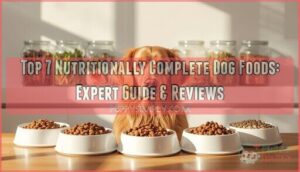
Your dog’s bowl holds more than just dinner—it contains the building blocks for every cell, every movement, and every wag of their tail. Yet manufacturers aren’t required to prove their formulas actually work in real dogs, which means many products labeled “complete and balanced” rely on mathematical calculations rather than feeding trials.
The gap between laboratory compliance and genuine canine nutrition creates confusion for owners trying to decode ingredient lists, AAFCO statements, and guaranteed analysis panels that often obscure more than they reveal.
Understanding what constitutes nutritionally complete dog food requires looking beyond marketing claims to examine protein digestibility percentages, bioavailable mineral ratios, and the specific nutrient profiles your dog needs at their current life stage.
Table Of Contents
Key Takeaways
- You can’t trust “complete and balanced” labels without verifying the AAFCO nutritional adequacy statement and checking whether the formula passed feeding trials or just met calculated nutrient profiles on paper.
- Converting guaranteed analysis from as-fed basis to dry matter basis is essential for accurate comparisons, since moisture content dramatically skews protein and fat percentages between wet and dry foods.
- Your dog’s nutritional needs shift substantially across life stages, requiring higher protein and calorie density for puppies, balanced maintenance for adults, and joint-supporting, lower-calorie formulas for seniors.
- Premium ingredients like freeze-dried proteins, omega-3 fatty acids from fish oil, and traceable protein sources deliver better nutrient bioavailability than standard kibble, but you’ll pay significantly more per pound.
What Makes Dog Food Nutritionally Complete
When you’re choosing food for your dog, you need to understand what “nutritionally complete” actually means, which goes beyond just listing ingredients on a bag. A truly complete dog food must provide all essential nutrients in the right proportions to support your dog’s growth, energy, and long-term health without requiring supplements or additional foods.
Look for labels that confirm the food meets standards for complete and balanced dog nutrition, ensuring your dog gets everything they need in every meal.
A nutritionally complete dog food delivers all essential nutrients in proper balance without needing supplements or extra foods
Let’s break down the four fundamental nutritional components that every complete dog food must contain to meet your dog’s biological needs.
Essential Nutrients for Canine Health
Achieving proper canine nutrition requires balancing six core nutrient groups that work together to sustain your dog’s health. Protein sources deliver amino acids for tissue maintenance, while fatty acid balance maintains skin and coat integrity, and carbohydrates provide accessible energy for daily activity.
Mineral supplements, vitamins, and water complete the nutritional adequacy statement requirements that define a complete canine diet meeting established nutrient profiles for peak health. For more on the importance of a and specific nutrient needs, consult veterinary-backed nutrition resources.
Role of Protein, Fat, and Carbohydrates
Protein sources supply the amino acids your dog needs for muscle growth and tissue repair, while crude protein levels on labels indicate total protein content including digestibility. Fat metabolism provides concentrated energy at approximately 9 calories per gram and supports absorption of fat-soluble vitamins, whereas carbohydrate digestion delivers quick fuel and fiber for gut health, creating the nutrient balance required to meet complete and balanced nutritional requirements across varying energy requirements.
Understanding the role of can help guarantee your dog’s diet is comprehensive and backs optimal health.
Importance of Vitamins and Minerals
While protein, fat, and carbohydrates provide the macronutrient foundation, vitamins and minerals deliver the micronutrient support your dog’s body can’t produce in sufficient quantities. Vitamin roles include energy metabolism through B vitamins, antioxidant support via vitamin E and vitamin A, and niacin for skin health.
Mineral balance between calcium, phosphorus, and zinc affects bioavailability factors that determine how well nutritional content is absorbed and utilized for immune function, bone strength, and cellular protection.
Water and Hydration Needs
Water intake isn’t just a dietary afterthought; it’s the foundation that allows every other nutrient to function properly. Your dog needs roughly 1 ounce of water per pound of body weight daily to maintain hydration levels and support digestive health.
Watch for dehydration signs like dry gums or dark urine, and guarantee fresh clean water is always available to support fluid balance and healthy drinking habits.
How to Identify Complete Dog Foods
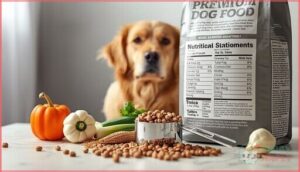
You can’t rely on marketing claims or packaging alone when selecting a nutritionally complete dog food. The label contains specific regulatory statements and analytical information that reveal whether a product meets established nutritional standards for your dog’s life stage.
Learning to interpret these components, including AAFCO statements, guaranteed analysis panels, and moisture-adjusted nutrient calculations, equips you to make informed decisions and avoid products with misleading or incomplete nutritional profiles.
Decoding AAFCO Nutritional Adequacy Statements
You’ll find the nutritional adequacy statement near the guaranteed analysis on your dog’s food label, and it’s your clearest signal that the product meets AAFCO nutrient profiles for a specific life stage. Here’s what to look for:
- Verify the statement says “formulated to meet AAFCO dog nutrient profiles” for the life stage matching your dog’s age.
- Check whether substantiation came from feeding trials or laboratory analysis, with feeding trials offering extra assurance.
- Confirm the life stage designation such as growth, adult maintenance, or all life stages aligns with your dog’s needs.
- Cross-reference the statement with feeding directions to verify portion sizes match the intended life stage and activity level.
- Remember that treats and supplements don’t carry the same adequacy statements, so they shouldn’t replace complete and balanced pet food.
Understanding Guaranteed Analysis on Labels
The guaranteed analysis on your dog’s food label lists crude protein, crude fat, crude fiber, and moisture with minimum or maximum values set by regulatory compliance standards. Protein and fat appear as minimums, while fiber and moisture show as maximums, all expressed on an as-fed basis that includes water weight.
| Nutrient | Listed As | What It Means |
|---|---|---|
| Crude Protein | Minimum % | Essential amino acids for muscle repair |
| Crude Fat | Minimum % | Energy density and palatability potential |
| Moisture Content | Maximum % | Water weight affecting dry matter calculations |
If label claims highlight specific nutrients like omega fatty acids or calcium, those must appear in the guaranteed analysis to meet nutrient profiles and verify nutritional adequacy statement accuracy.
Open Farm publishes detailed nutritional breakdowns for their grain-free and grain-inclusive formulas, making it easier to verify that highlighted nutrients meet AAFCO standards.
Dry Matter Vs. As-fed Nutrient Content
You’ll see two ways to express nutrient levels on dog food packages, and understanding both helps you compare products accurately. The guaranteed analysis uses an as-fed basis that includes all moisture content, while dry matter basis calculations remove water to reveal true nutrient density regardless of the product’s moisture percentage.
- Canned foods contain 75-78% moisture, dramatically lowering as-fed crude protein percentages compared to kibble
- Dry matter basis allows fair comparisons between wet and dry formulations by eliminating water weight
- Converting as-fed values requires knowing the moisture content and applying nutrient conversion formulas
- Protein percentages on dry matter basis usually appear higher than the guaranteed analysis shows
- Feeding strategies should account for moisture content differences to meet your dog’s nutrient profiles accurately
Red Flags to Avoid in Labeling
Your first line of defense starts with scrutinizing label claims that promise health benefits unsupported by the ingredient disclosure or nutrition analysis. Watch for vague serving sizes, incomplete AAFCO statements, and guaranteed analysis figures that don’t align with documented nutrient profiles after processing.
Misleading advertising often uses terms like “premium” without verifiable criteria, while regulatory compliance requires clear manufacturer information and readable production dates.
Top 7 Nutritionally Complete Dog Foods
Now that you understand how to spot a complete and balanced dog food, it’s time to look at specific products that meet these rigorous nutritional standards.
The following seven options represent diverse formulations, each designed to provide dogs with all the essential nutrients required for peak health and well-being.
These selections include freeze-dried, air-dried, and traditional kibble formats that cater to different preferences, life stages, and dietary requirements.
1. Nutra Complete Freeze Dried Dog Food
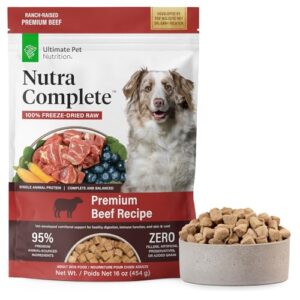
Nutra Complete Freeze Dried Dog Food delivers 95% ranch-raised beef and organs in a veterinarian-formulated raw formula, targeting dogs across all life stages with crude protein levels in the mid to upper 30 percent range on a guaranteed analysis basis.
The freeze-drying process removes moisture while retaining natural nutrient levels without artificial preservatives, creating a shelf-stable product with energy-dense bites suitable for active dogs.
You’ll find balanced calcium and phosphorus through bone inclusion, plus omega-3 support from flaxseed to promote coat health and digestive function.
| Best For | Dog owners looking for a high-protein, minimally processed meal option who don’t mind paying premium prices for freeze-dried raw nutrition. |
|---|---|
| Brand | ULTIMATE PET NUTRITION |
| Primary Flavor | Beef |
| Age Range | All Life Stages |
| Item Form | Chunk |
| Weight | 1 pound |
| Made In | USA |
| Additional Features |
|
- 95% ranch-raised beef delivers serious protein (mid-30% range) without fillers or artificial preservatives
- Freeze-dried format makes raw feeding convenient—just rehydrate and serve
- Works as a complete meal or mix-in topper to boost nutrition in existing food
- Price per pound makes daily feeding expensive, especially for larger dogs
- Requires rehydration prep before serving (not grab-and-go like kibble)
- Some dogs may need a gradual transition period to adjust to raw ingredients
2. Wellness Natural Dog Food Chicken Oatmeal
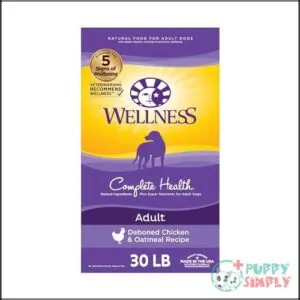
Wellness Complete Health Chicken Oatmeal features deboned chicken as the primary ingredient, delivering approximately 24 percent crude protein on an as-fed basis to support muscle maintenance in adult dogs with moderate energy requirements.
The formula incorporates oatmeal and brown rice as digestible grain sources that provide sustained energy while keeping crude fiber under 5 percent for ideal gut function.
You’ll notice omega fatty acids from flaxseed alongside glucosamine and chondroitin in select variants, promoting coat luster and joint integrity without artificial colors or preservatives in standard formulations.
| Best For | Dog owners seeking a protein-rich, grain-inclusive formula for adult dogs with moderate activity levels, especially those with sensitive stomachs or coat issues. |
|---|---|
| Brand | ULTIMATE PET NUTRITION |
| Primary Flavor | Chicken |
| Age Range | All Life Stages |
| Item Form | Chunk |
| Weight | 1 pound |
| Made In | USA |
| Additional Features |
|
- High-quality deboned chicken as the first ingredient provides 24% crude protein for strong muscles
- Omega fatty acids from flaxseed support healthy skin and a shiny coat
- No corn, wheat, or soy makes it easier on digestion for dogs with common grain sensitivities
- Higher price point compared to many mainstream dog food brands
- Some dogs may be picky about the granule texture or chicken-oatmeal flavor
- Requires gradual transition to avoid stomach upset, which can take 7-10 days
3. Wellness Small Breed Dog Food
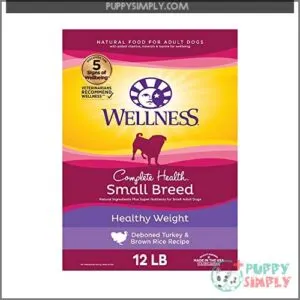
Small breed dogs require calorie-dense formulations in bite-sized kibble, and Wellness Small Breed Core meets these needs with deboned turkey and chicken meal providing high-quality protein to support lean muscle mass in compact frames.
You’ll find omega fatty acids from salmon oil and flaxseed supporting skin and coat health, while glucosamine and chondroitin sulfate help maintain joint function despite the mechanical stress smaller breeds experience.
The formula includes wholesome grains like oatmeal and brown rice that deliver steady energy without contributing to weight gain common in less active toy breeds.
| Best For | Small breed adult dogs who need help maintaining a healthy weight while getting nutrient-dense food in a kibble size that fits their smaller mouths. |
|---|---|
| Brand | Wellness |
| Primary Flavor | Chicken & Oatmeal |
| Age Range | Adult |
| Item Form | Granule |
| Weight | 30 Pounds |
| Made In | USA |
| Additional Features |
|
- High protein from turkey and brown rice supports lean muscle without excess calories
- Omega fatty acids plus glucosamine help keep coats shiny and joints healthy despite their compact size
- No corn, wheat, or soy makes it easier on sensitive stomachs
- Some bags have dusty residue at the bottom that goes to waste
- Kibble size or hardness doesn’t work for all small dogs
- Needs gradual introduction to avoid upsetting your dog’s digestion
4. Pedigree Adult Dog Food
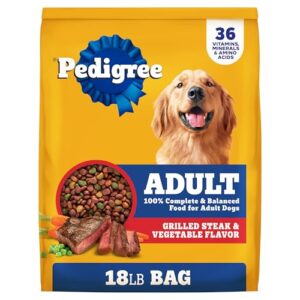
Pedigree Adult Dog Food markets itself as an affordable everyday option with its 100 percent complete and balanced nutrition claim backed by an AAFCO statement for adult maintenance.
You’ll notice ground whole grain corn as the primary carbohydrate source alongside meat and bone meal for protein, with animal fat supplying omega-6 fatty acids and dried beet pulp providing digestive fiber.
The formula includes added vitamins and minerals to meet daily requirements, though you should be aware it contains BHA as a preservative and may not suit dogs with grain sensitivities or digestive issues.
| Best For | Budget-conscious dog owners looking for a complete nutrition option for their adult dogs without specific dietary sensitivities. |
|---|---|
| Brand | Wellness |
| Primary Flavor | Turkey & Brown Rice |
| Age Range | Adult |
| Item Form | Dry |
| Weight | 12 Pounds |
| Made In | USA |
| Additional Features |
|
- Complete and balanced nutrition with added vitamins and minerals at an affordable price point
- High-quality protein supports lean muscle maintenance across all adult dog breeds
- Includes prebiotic fibers and omega-6 fatty acids for digestive and coat health
- Contains BHA preservative and ground whole grain corn, which may not suit all dogs
- Not ideal for dogs with grain sensitivities or sensitive stomachs
- Uses meat and bone meal rather than whole meat protein sources
5. Wellness Senior Dry Dog Food
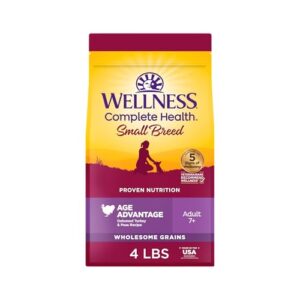
If your senior dog needs targeted nutrition beyond basic maintenance, you’ll find that Wellness Senior Dry Dog Food adjusts calorie levels to maintain a healthy weight while delivering glucosamine and chondroitin at guaranteed levels for joint cartilage support.
The turkey-based formula incorporates omega fatty acids from fish oil and flaxseed to reduce joint inflammation and support coat condition, while prebiotic chicory root promotes beneficial gut bacteria in aging digestive systems.
You’ll appreciate the softer kibble designed for dental sensitivity and the absence of corn, wheat, or soy in this nutrient-dense option.
| Best For | Small breed senior dogs who need weight management and joint support without corn, wheat, or soy fillers. |
|---|---|
| Brand | ULTIMATE PET NUTRITION |
| Primary Flavor | Chicken |
| Age Range | All Life Stages |
| Item Form | Chunk |
| Weight | 3 Pounds |
| Made In | USA |
| Additional Features |
|
- Glucosamine and chondroitin at guaranteed levels help protect aging joints and cartilage
- Turkey and omega fatty acids support healthy skin, coat, and reduced inflammation
- Probiotics and prebiotics promote better digestion in older dogs
- Some bags have excess dust or powder at the bottom
- Kibble may be too hard for dogs with severe dental issues despite being marketed as softer
- Requires slow transition to avoid upsetting sensitive senior stomachs
6. Zignature Goat Dog Food
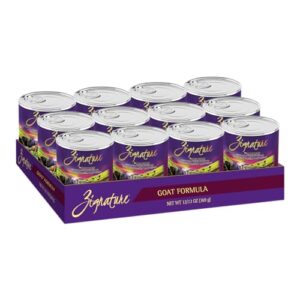
For dogs with sensitivities that persist despite senior-specific formulas, you can consider Zignature Goat Dog Food, which uses goat as the primary protein source and goat meal as a secondary amino acid contributor.
This grain-free formula excludes corn, wheat, and soy while incorporating peas and chickpeas for fiber, supporting digestive tolerance in reactive animals.
The recipe meets AAFCO nutritional adequacy standards with added taurine for cardiac function, dicalcium phosphate for skeletal maintenance, and omega fatty acids to sustain coat quality in allergy-prone dogs.
| Best For | Dogs with food sensitivities or allergies who need a limited-ingredient, grain-free diet with a novel protein source. |
|---|---|
| Brand | Pedigree |
| Primary Flavor | Steak & Vegetable |
| Age Range | Adult |
| Item Form | Dry Kibble |
| Weight | 18 Pounds |
| Made In | USA |
| Additional Features |
|
- Uses goat as the primary protein, which is rare in dog foods and helpful for dogs with common protein allergies
- High moisture content (78%) helps keep dogs hydrated, especially important for older or less active dogs
- Meets AAFCO standards with added nutrients like taurine for heart health and omega fatty acids for skin and coat
- Price point is high compared to other wet dog foods, which can add up for daily feeding
- Some customers report receiving dented or damaged cans upon delivery
- Quality control issues have been noted, including occasional labeling errors or inconsistent ingredients
7. Open Farm Grain-Free Grass-Fed Beef Dog Food
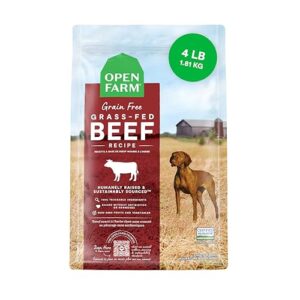
For high-energy adults requiring nutrient-dense sustenance without grain exposure, you can select Open Farm Grain-Free Grass-Fed Beef Dog Food. This formula delivers 30 percent crude protein from 100 percent grass-fed beef and excludes corn, wheat, and soy to accommodate grain sensitivities.
The formula incorporates coconut oil for skin support, pumpkin and sweet potato for fiber enhancement, and 14 percent crude fat to meet elevated energy demands.
Open Farm provides ingredient traceability through geographic origin data and lot-specific safety test results, supporting informed selection in dogs with normal to high activity requirements.
| Best For | Active dogs with grain sensitivities or sensitive stomachs who need high-quality protein and transparent ingredient sourcing. |
|---|---|
| Brand | Pedigree |
| Primary Flavor | Roasted Chicken & Vegetable |
| Age Range | Adult |
| Item Form | Dry Kibble |
| Weight | 18 Pounds |
| Made In | USA |
| Additional Features |
|
- High protein from 100% grass-fed beef with full ingredient traceability
- Includes skin-supporting coconut oil and digestive-friendly pumpkin and sweet potato
- Grain-free formula suitable for dogs with sensitivities while meeting high energy needs
- Kibble size may be too small for some dogs’ preferences
- Expiration dates can be close to purchase date
- Not ideal for dogs with specific dietary restrictions beyond grain sensitivity
Choosing The Right Dog Food for Life Stages

Your dog’s nutritional needs shift dramatically as they move from bouncing puppy energy to the steadier pace of their senior years, and choosing the wrong formula at the wrong time can compromise their health and longevity.
Activity levels, underlying health conditions, and metabolic changes all influence which complete and balanced food will truly support your dog’s wellbeing at each stage.
The following sections break down the specific nutrient adjustments you’ll need to make as your dog grows, ages, and faces different health challenges.
Puppy Vs. Adult Vs. Senior Nutritional Needs
Your dog’s nutritional completeness hinges on matching nutrient profiles to its specific life stage, because what fuels a growing puppy won’t sustain a senior dog’s health. Puppy development demands higher protein levels and energy density to support rapid growth, while Senior Health formulas reduce calories to prevent obesity and maintain muscle mass. Dietary Transitions must occur gradually over 7 to 14 days to avoid digestive upset as your dog moves between life stages.
- Puppies need carefully balanced calcium-to-phosphorus ratios to build strong bones without developmental issues
- Adult maintenance formulas balance energy for daily activities while preventing weight gain from excess calories
- Senior formulas support aging joints and slower metabolism with nutrient-dense, lower-calorie ingredients
- Canine nutrition experts recommend DHA supplementation during puppy development for brain and vision support
Adjusting Diets for Activity Levels
Active canines routinely demand calorie adjustment to maintain energy balance, and performance optimization begins with matching nutrient profiles to your dog’s daily output.
When your dog engages in intense exercise, you’ll need to increase calories by 10 to 20 percent to support recovery, while elevating protein and carbohydrate intake ensures dietary needs align with elevated energy levels.
Proper nutrient timing sustains canine nutrition throughout demanding activities.
Special Considerations for Health Conditions
Veterinary dietary management transforms how you approach canine medical conditions, requiring therapeutic diets that address nutrient deficits and support chronic management protocols. When your dog faces kidney disease, you’ll reduce protein and phosphorus levels to protect renal function, while diabetes demands consistent carbohydrate sources for glucose stability.
Dietary therapy for canine endocrinopathy, allergies, or inflammatory bowel disease necessitates ongoing health monitoring and veterinary nutrition expertise to guarantee nutritional therapy for pets remains complete and balanced.
Comparing Ingredients in Premium Dog Foods
When you’re comparing premium dog foods, the differences often come down to processing methods, protein quality, and functional ingredients that support your dog’s health. Air-dried and freeze-dried formulas preserve nutrients differently than traditional kibble, while the source and digestibility of protein directly impact how well your dog absorbs essential amino acids.
Understanding these distinctions, along with the role of omega-3s and the ongoing grain-free debate, will help you make informed comparisons across premium brands.
Benefits of Air-dried and Freeze-dried Formulas

Gentle processing sets air-dried dog food and freeze-dried formulas apart from conventional options. The Air Dry Process and Freeze Dry Method preserve heat-sensitive vitamins, minerals, and enzymes that high-temperature extrusion often destroys.
You’ll find excellent Nutrient Retention in both formats, which translates to enhanced Palatability Factors and Rehydration Benefits. These support your dog’s hydration while maintaining nutrient profiles essential for ideal dog nutrition with premium ingredients.
Importance of High-quality Protein Sources

High Protein Quality determines how well your dog absorbs essential nutrients, with Amino Acid Profiles playing a central role in Muscle Growth and immune health. You’ll want sources like eggs, dairy, and lean meats that exceed 90 percent Protein Digestibility, ensuring optimal Nutrient Bioavailability.
Complete proteins deliver all nine essential amino acids, supporting tissue repair and metabolic function more effectively than incomplete options.
Superfoods and Omega-3 Fatty Acids

Premium formulas featuring salmon, sardines, and omega-3-rich algae oil deliver EPA and DHA—long-chain fatty acids that promote canine brain health, joint function, and coat shine. Superfood Complete blends often pair fish oil with antioxidants like blueberries and spinach to support immune resilience. You’ll want to balance omega-three and omega-six fats for ideal nutrient absorption:
- Fatty fish supply 1.0–1.5 grams EPA and DHA per three-ounce serving for dogs.
- Chia seeds and flaxseed add ALA and fiber, supporting digestion alongside crude protein.
- Algae oil provides plant-based DHA suitable for non-fish eaters and environmentally conscious owners.
Fish oil supplements and omega-rich foods improve cognitive aging in seniors and brain development in puppies, while fatty acid benefits extend to reduced inflammation and healthier skin. Always verify label claims for precise EPA and DHA content before switching formulas.
Grain-free Vs. Grain-inclusive Diets

Beyond omega-three fats, you’ll encounter grain-free dog food and grain-inclusive formulas—each with distinct nutrient profiles and crude protein levels. Grain-free options substitute legumes like peas and lentils for traditional grains, while grain-inclusive recipes feature rice, oats, or barley.
Pet nutrition research shows grain benefits include fiber and B vitamins, yet pet allergies and food sensitivities sometimes favor grain-free formulations. Nutrition science confirms both styles meet AAFCO standards when properly balanced, so your choice depends on your dog’s individual health and dietary trends.
| Feature | Grain-Free | Grain-Inclusive |
|---|---|---|
| Carbohydrate sources | Legumes, potatoes, peas | Rice, oats, barley, wheat |
| Typical protein content | Higher protein to replace grain calories | Balanced mix of grain and animal protein |
| Fiber sources | Non-grain vegetables, legumes | Whole grains provide dietary fiber |
| Cost | Premium pricing due to ingredient sourcing | Usually less expensive to produce |
Frequently Asked Questions (FAQs)
What dog foods are complete and balanced?
Complete and balanced dog food displays an AAFCO nutritional adequacy statement on the label, confirming it meets established nutrient profiles for your dog’s life stage and can be fed as the sole diet.
How often should I switch dog foods?
You can switch dog food when changing life stages, addressing health conditions, or implementing dietary rotation. However, most dogs thrive on consistent, nutritionally complete diets rather than frequent transitions that risk digestive health disruptions.
Can homemade diets be nutritionally complete?
Yes, but achieving nutrient balance requires veterinary consultation, precise dog food formulation, and careful ingredient selection.
Homemade diet risks include deficiencies in calcium, vitamin D, and essential fatty acids unless you follow tailored pet nutrition plans.
Are prescription diets better than regular foods?
Prescription diets target specific health conditions through nutrition therapy with controlled minerals, fats, and fiber, while regular pet food promotes general wellness.
Veterinary guidance determines which option meets your dog’s current health status and crude protein needs best.
Do small and large breeds need different formulas?
Breed size matters because small and large dogs differ in calorie needs, nutrient density, and joint support requirements.
Your pet food selection should match metabolic rates, kibble size, and feeding strategies specific to your dog’s size.
Should I rotate protein sources regularly?
Rotating protein sources every 4–12 weeks promotes Gut Health and Nutrient Variety, lowering Allergy Prevention risks while encouraging canine digestive health.
Introduce each protein through Gradual Transitions over 7–10 days to monitor your dog’s tolerance and stool quality.
Conclusion
Laboratory assurances don’t guarantee your dog thrives, but feeding trials and digestible nutrients do. Selecting nutritionally complete dog food requires scrutinizing AAFCO statements, calculating dry matter percentages, and matching formulas to your dog’s metabolic demands rather than accepting manufacturer claims at face value.
Your responsibility extends beyond filling the bowl—it encompasses verifying bioavailable protein sources, essential fatty acid ratios, and micronutrient profiles that sustain cellular function, immune response, and long-term vitality across every life stage.
- http://www.aafco.org/
- https://vetnutrition.tufts.edu/2016/07/should-you-make-your-own-pet-food-at-home/
- https://www.justfoodfordogs.com/blog/can-dogs-have-quinoa.html
- https://www.fullmoonpet.com/blogs/news/a-guide-to-changing-your-dogs-diet?srsltid=AfmBOoqSYACxnmQetUWCzE4z4DtX2ISdX7wB4fuzDpnQNfHcCQf0c5zd