This site is supported by our readers. We may earn a commission, at no cost to you, if you purchase through links.

A dog who raids the kitchen counter might seem more mischievous than endangered—but that stolen grape or chocolate square can trigger organ failure within hours. Many kitchen foods toxic to pets don’t act like obvious poisons; they work quietly through compounds that a pet’s body simply can’t process the way ours can.
Theobromine, N-propyl disulfide, xylitol—these aren’t exotic chemicals. They’re hiding in your pantry right now. Knowing which foods cross the line between harmless and deadly, and what to do the moment your pet gets into them, is one of the most practical things you can do as a pet owner.
Table Of Contents
- Key Takeaways
- Common Kitchen Foods Toxic to Pets
- Why These Foods Are Dangerous
- Signs Your Pet Ate Something Toxic
- Immediate Steps if Your Pet is Poisoned
- Kitchen Safety Tips to Protect Pets
- Frequently Asked Questions (FAQs)
- What kitchen foods are safe for dogs?
- What are the 10 most toxic foods for cats?
- What is the 90/10 rule dog?
- Can pets recover fully after food poisoning?
- Are some dog breeds more food-sensitive than others?
- Which toxic foods affect cats differently than dogs?
- How soon do toxic food symptoms typically appear?
- Should pets be tested regularly for organ damage?
- Conclusion
Key Takeaways
- Common kitchen staples like grapes, chocolate, xylitol, and onions contain compounds your pet’s body simply can’t process, and even small amounts can trigger organ failure within hours.
- Symptoms of poisoning — vomiting, sudden lethargy, tremors, or irregular heartbeat — can appear as quickly as 30 minutes after ingestion, so acting fast is non-negotiable.
- If your pet eats something toxic, call the ASPCA Poison Control (1-888-426-4435) or your vet immediately, and have the food, amount, and your pet’s weight ready before you dial.
- Simple habits like locking cabinets, storing hazardous foods above five feet, and briefing visitors on what not to feed your pet are your most reliable defense against accidental poisoning.
Common Kitchen Foods Toxic to Pets
Your kitchen holds more dangers for pets than you might expect. Some of the most common ingredients — ones you probably use every week — can cause serious harm or even death if your pet gets into them.
From mild digestive trouble to life-threatening emergencies, the risks vary widely — and understanding whole food nutrition for dogs can help you make safer choices about what ends up in their bowl.
Here’s what you need to watch out for.
Chocolate and Caffeine

Chocolate is one of the most common toxic foods pets encounter at home. It contains theobromine and caffeine — both methylxanthines — that trigger dangerous pet overstimulation of the heart and nervous system. Dark chocolate and cocoa powder carry the highest theobromine toxicity risk. Even small amounts can cause vomiting, tremors, or seizures.
Caffeine poisoning from coffee or energy drinks poses similar dangers. Keep all sources secured. Understanding chocolate toxicity risks is vital for pet owners.
Grapes and Raisins

Grapes and raisins are deceptively dangerous — a small snack you’d never think twice about. The culprit is tartaric acid, which causes nephrotoxic effects in dogs and can trigger rapid kidney failure. Raisin poisoning is especially severe since raisins concentrate the toxin.
Watch for these grape toxicity warning signs:
- Vomiting within 6–24 hours
- Lethargy and appetite loss
- Decreased or absent urination
- Swollen, painful abdomen
Understanding renal failure causes is essential for dog owners.
Keep both out of reach entirely.
Onions, Garlic, and Chives

Just as grapes damage kidneys, onions, garlic, and chives strike a different target — your pet’s blood. The toxic mechanism involves N-propyl disulfide, an Allium toxin that oxidizes red blood cells, triggering hemolytic anemia. Garlic is five times more potent than onions.
| Pet | Toxic Dose |
|---|---|
| Cats | Under 1 teaspoon cooked onion |
| Dogs | 15–30g raw onion per kg |
Don’t underestimate pet vulnerability here.
Xylitol (Sugar Substitute)

Unlike the blood-cell damage from Allium plants, xylitol hits a completely different system — your dog’s blood sugar regulation. This sugar substitute triggers an extreme insulin surge, causing dangerous hypoglycemia within 30–60 minutes.
Even a small amount can send blood sugar crashing fast — see the full list of foods poisonous to dogs so you know exactly what to keep out of reach.
Sugar-free gum, some peanut butters, and low-carb baked goods all contain it. For pet safety, read every label. Xylitol poisoning moves fast — immediate emergency response saves lives.
Macadamia Nuts

Macadamia nuts are sneaky — their exact toxin is still unidentified, yet even a handful can cause serious harm. Dogs show weakness, tremors, vomiting, and fever within 12 hours. For a 10 kg dog, just 6 to 10 nuts cross the toxic threshold.
Nut storage matters: keep them sealed and out of reach. If ingestion happens, emergency response is critical — call your vet immediately.
Alcohol and Raw Dough

Two kitchen hazards that rarely get enough attention: alcohol and raw yeast bread dough. Even a few sips of beer or wine can trigger alcohol poisoning in pets — their bodies metabolize ethanol far less efficiently than ours.
Raw dough is equally dangerous; fermentation dangers are real, as yeast produces alcohol inside your pet’s stomach while the dough expands, risking life-threatening bloat. Treat both as pet emergencies.
Avocado and Other Lesser-Known Hazards
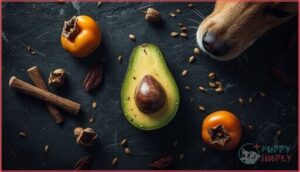
Avocado toxins often catch pet owners off guard. The persin compound in avocado flesh, skin, and leaves causes vomiting and diarrhea in dogs — and it’s potentially fatal to birds.
Don’t overlook persimmon dangers either; the seeds can block your dog’s intestines. Nutmeg toxicity kicks in within hours, triggering seizures. Even licorice effects add up, raising blood pressure dangerously.
Pet toxin awareness around these kitchen hazards genuinely saves lives.
Why These Foods Are Dangerous

It’s not just that these foods taste wrong to pets — their bodies literally can’t process certain compounds the way ours do. The reaction can be immediate or build quietly over time, making it hard to connect the dots without knowing what to look for.
Here’s what’s actually happening when your pet gets into the wrong food.
Toxic Compounds in Human Foods
Every toxic food harms your pet through a specific compound — and understanding those compounds is the foundation of pet nutrition safety. Chocolate’s theobromine, xylitol’s insulin-spiking sugars, grapes’ tartaric acid, and onions’ thiosulfates each target different body systems.
These human food risks aren’t random. They’re built into the chemistry of ingredients you use daily, making food toxicity levels and toxic compound interactions a real concern for any pet owner.
How Pets React to Toxins
Your pet’s body doesn’t filter toxic foods the way yours does — and reaction times can be shockingly fast. Xylitol triggers hypoglycemia within 20 to 30 minutes. Chocolate poisoning stages range from vomiting to seizures within hours.
Watching pet behavior shift from restless to lethargic is your clearest signal. Recognizing toxicity symptoms early is what separates a close call from a crisis.
Short- and Long-Term Health Effects
Some toxic foods don’t just cause a bad day — they leave lasting damage. Grapes can trigger kidney disease within 72 hours, while xylitol drives liver failure in under 48. Organ damage from chocolate’s neurological effects may linger as behavioral changes or recurring seizures.
Some toxic foods leave lasting damage — grapes, xylitol, and chocolate can trigger organ failure within days
Food toxicity isn’t always over when symptoms clear. Recognizing toxic foods early is your strongest tool for pet health and safety.
Signs Your Pet Ate Something Toxic

Catching a problem early can make all the difference for your pet’s recovery. The tricky part is that symptoms don’t always show up right away, and some signs are easy to mistake for something minor.
Here’s what to watch for if you suspect your pet got into something they shouldn’t have.
Vomiting and Diarrhea
Vomiting and diarrhea are your pet’s earliest warning signals — and you shouldn’t dismiss them. These gastrointestinal issues appear fast, sometimes within 30 minutes of xylitol exposure or up to 24 hours after grape ingestion. Canine gastroenteritis from food poisoning can escalate quickly into serious pet dehydration. Watch for these toxicity symptoms:
- Vomiting more than twice in an hour
- Watery or bloody diarrhea lasting over 12 hours
- Dry, tacky gums indicating fluid loss
- Undigested food or fruit visible in vomit
- Restlessness followed by sudden stillness
Contact poison control immediately — don’t wait.
Weakness and Lethargy
When vomiting settles, weakness often follows — and that shift matters. Toxic food reactions like xylitol ingestion can drop blood sugar within 30 minutes, leaving your dog unable to stand. Grapes trigger lethargy as kidney function declines. Onions cause anemia-driven weakness days later.
These pet lethargy causes aren’t laziness — they’re distress signals. Emergency response starts with recognizing that sudden collapse demands immediate veterinary attention.
Seizures and Tremors
Weakness can escalate fast. Chocolate’s theobromine overstimulates the nervous system, triggering seizures 6–12 hours after ingestion — full-body convulsions that can last well over a day. Xylitol drops blood sugar sharply, causing tremors within two hours. Macadamia nuts produce rhythmic hind-leg shaking without loss of consciousness.
These toxicity symptoms signal serious neurological damage. Don’t wait — contact poison control immediately.
Abnormal Heart Rate or Breathing
Seizures aren’t the only red flag. Some toxic substances hit the heart and lungs hard — and fast. Chocolate can push your dog’s heart into a dangerous racing rhythm within hours. Watch for:
- Rapid or irregular heartbeat requiring immediate heart rate monitoring
- Labored breathing or breathing difficulties from alcohol or caffeine
- Pale gums signaling cardiovascular strain from xylitol or allium poisoning
These toxicity symptoms demand urgent poison control contact.
Immediate Steps if Your Pet is Poisoned

Finding out your pet ate something toxic is one of those moments where staying calm and moving fast both matter equally. What you do in the next few minutes can make a real difference in how well they recover.
Here’s what you need to know right away.
Contacting Poison Control or a Veterinarian
Speed matters more than anything once you suspect poisoning. Call the ASPCA Animal Poison Control Center at 1‑888‑426‑4435 or the Pet Poison Helpline at 1‑855‑764‑7661 — both offer 24/7 emergency hotlines for toxicity assessment and poison control and treatment guidance. These services connect you with specialists for an immediate vet consultation, so don’t wait for symptoms to worsen before seeking urgent veterinary care.
What Information to Provide
When you call for help, the specialist needs a clear picture fast. Have your Ingestion Details ready — what your pet ate (chocolate, xylitol, grapes, onions, garlic), roughly how much, and when.
Your Pet Profiles matter too: species, breed, age, and weight. Share any Symptom Analysis you’ve observed, current medications, and your Emergency Contacts.
Accurate Toxicity Reports help specialists act immediately.
Do’s and Don’ts for First Aid
Once you’ve reached out for help, what you do next can make a real difference. Follow these Pet First Aid essentials while awaiting Vet Emergency guidance:
- Wipe your pet’s mouth with a damp cloth for basic Toxic substance identification and residue removal.
- Never induce vomiting without vet approval — Induction Methods vary by toxin and species.
- Monitor Toxicity Symptoms like gum color, breathing, and responsiveness closely.
Crisis Response means acting smart, not just fast.
Kitchen Safety Tips to Protect Pets

Knowing which foods are dangerous is only half the battle — the other half is making sure your pet can’t get to them. A few practical changes in how you store, prep, and talk about food at home can make a real difference. Here’s what to put in place starting today.
Storing Toxic Foods Securely
Think of your kitchen as a minefield your pet navigates daily. Secure storage solutions start with airtight sealing methods — BPA-free or glass containers with locking lids keep toxic foods like xylitol and macadamia nuts inaccessible.
Safe shelf placement matters too; store anything hazardous above five feet. Clear toxic food labels help every family member identify kitchen dangers and maintain consistent petproofing habits.
Pet-Proofing Cabinets and Trash
Cabinets and trash cans are two of the sneakiest kitchen dangers for curious pets. Petproofing these spots is one of the most practical pet safety tips you can act on today. Focus on these secure storage solutions for kitchen hazard prevention:
- Cabinet locks: Magnetic or spring-action latches block paw access reliably
- Trash can security: Locking-lid bins prevent scavenging from discarded toxic foods
- Household hazards: Latch every cabinet holding cleaning products or pantry staples
- Toxicity prevention: Choose ABS plastic or stainless steel hardware — both resist chewing
Safe Food Prep and Cleanup Habits
Your kitchen habits are your pet’s first line of defense. During food prep, keep pets out using a baby gate — especially when chopping onions or handling chocolate. Clean toxic spills immediately; a grape on the floor takes seconds to become a crisis.
| Habit | Why It Matters |
|---|---|
| Wipe spills instantly | Stops xylitol or grape juice ingestion |
| Wash hands after prep | Prevents toxin transfer through petting |
| Separate cutting boards | Reduces cross-contamination pets might reach |
| Use pet-safe cleaners | Avoids chemical exposure during kitchen sanitation |
| Store dough covered | Raw yeast produces alcohol harmful to pets |
These cleanup protocols make food poisoning prevention second nature — protecting your pet without disrupting your routine.
Educating Family and Visitors
Even with the safest kitchen habits, one well-meaning guest can undo it all. That’s why family education and visitor awareness matter just as much as locked cabinets.
Tell household members clearly: chocolate, grapes, and xylitol aren’t minor concerns. Post simple household rules near the kitchen.
When guests arrive, a quick, friendly heads-up about pet food safety and food hazards for pets goes a long way toward toxicity prevention.
Frequently Asked Questions (FAQs)
What kitchen foods are safe for dogs?
Not everything on your counter is a threat. For dog safe proteins, plain cooked chicken, eggs, and salmon fit canine nutrition well.
Safe feeding practices also include carrots, blueberries, and plain rice as healthy snacks.
What are the 10 most toxic foods for cats?
Chocolate, grapes, onions, garlic, xylitol, macadamia nuts, alcohol, raw dough, avocado, and caffeine top the feline nutrition danger list — each one capable of triggering serious toxicity symptoms fast.
What is the 90/10 rule dog?
The 90/10 rule is simple: 90% of your dog’s daily calories should come from complete, balanced meals, while treats stay within the remaining 10%. This maintains calorie balance and prevents dog obesity.
Can pets recover fully after food poisoning?
Yes, most pets recover fully — think of it as a race against the clock. With prompt veterinary emergency care within two hours, full recovery rates exceed 90 percent across common food toxicity cases.
Are some dog breeds more food-sensitive than others?
Absolutely — breed allergies and genetic factors play a real role. Labradors, Golden Retrievers, and Bulldogs show higher food intolerance and digestive issues, making toxic foods for dogs and overall food toxicity in dogs a greater canine health risk for them.
Which toxic foods affect cats differently than dogs?
Feline toxicity thresholds sit far lower than canine ones. Onions harm cats at roughly one-third the dose dangerous to dogs, and xylitol — serious canine toxicity territory — rarely triggers the same insulin crisis in cats.
How soon do toxic food symptoms typically appear?
Symptom onset varies by substance. Xylitol triggers weakness within 30–60 minutes. Chocolate reactions begin in 2–4 hours. Grapes may delay toxicity signs 6–24 hours. Knowing each poisoning speed helps you act faster.
Should pets be tested regularly for organ damage?
Regular checkups with organ function tests catch silent damage before symptoms appear. Toxicity screening through blood panels bolsters pet health monitoring, aids liver damage prevention, and protects long-term animal welfare.
Conclusion
Most pet poisonings happen on ordinary days—a birthday cake left unattended, a grocery bag briefly forgotten on the floor. That’s rarely a coincidence; it’s just how busy households work.
Staying aware of kitchen foods toxic to pets doesn’t require perfect vigilance, just consistent habits: store food securely, act fast if something disappears, and keep your vet’s number within reach. The pets who stay safe aren’t lucky—they’ve prepared owners.
- https://www.bluecross.org.uk/advice/dog/foods-poisonous-to-dogs
- https://www.aspca.org/pet-care/aspca-poison-control/people-foods-avoid-feeding-your-pets
- https://www.msdvetmanual.com/toxicology/food-hazards/garlic-and-onion-allium-spp-toxicosis-in-animals
- https://www.battersea.org.uk/pet-advice/dog-care-advice/toxic-food-dogs
- https://www.dvm360.com/view/new-findings-effects-xylitol-ingestion-dogs