This site is supported by our readers. We may earn a commission, at no cost to you, if you purchase through links.

You’d think breeding a marathon-running sled dog with a four-pound terrier would be biologically impossible, yet here we are—watching Husky Yorkie mixes zoom around dog parks like caffeinated squirrels. This crossbreed doesn’t follow the usual “designer dog” playbook. One pup might inherit the Husky’s piercing blue eyes and stubborn streak, while its littermate looks like an oversized Yorkie with permanent wanderlust.
Breeders started pairing these drastically different parents to create compact companions with big-dog energy, though what you’ll actually get remains nature’s wildcard. Before you fall for those striking facial markings and feisty charm, you’ll want to understand the health quirks, grooming marathons, and training challenges that come standard with this unpredictable package.
Table Of Contents
- Key Takeaways
- What is a Husky Yorkie Mix?
- Physical Characteristics of Yorksky Dogs
- Husky Yorkie Mix Temperament
- Health Issues in Husky Yorkie Mixes
- Grooming and Maintenance Needs
- Exercise and Activity Requirements
- Training Your Husky Yorkie Mix
- Feeding and Nutrition Guidelines
- Cost of Owning a Husky Yorkie Mix
- Is The Husky Yorkie Mix Right for You?
- Frequently Asked Questions (FAQs)
- Can a yorkie breed with a Husky?
- How big are huskydoodles?
- What is the temperament of a Dobsky dog?
- What type of exercise does a Husky Yorkie Mix need?
- Is a Husky Yorkie Mix good with other pets?
- Are Yorkie Husky Mixes hypoallergenic?
- What type of training is best for a Husky Yorkie Mix?
- How often should a Husky Yorkie Mix be groomed?
- Can Husky Yorkie Mixes live in apartments?
- Do they get along with cats?
- Conclusion
Key Takeaways
- The Yorksky inherits unpredictable traits from its drastically different parents—ranging from 12-16 inches tall and 20-45 pounds—with coat types, colors, and temperament varying wildly between littermates, making each dog a genetic wildcard that requires artificial insemination to produce.
- This high-energy mix demands 45-60 minutes of daily exercise plus consistent mental stimulation through puzzle toys and training sessions to prevent destructive behaviors, making it unsuitable for owners seeking a low-maintenance lap dog.
- Grooming becomes a serious time commitment with brushing needed 3-5 times weekly and professional grooming every 4-6 weeks, while health monitoring should focus on inherited conditions like progressive retinal atrophy, hip dysplasia, and skin disorders common to both parent breeds.
- Early socialization and positive reinforcement training are non-negotiable for managing the Yorksky’s stubborn streak and preventing behavioral issues, especially around children and other pets, with consistent routines proving essential for channeling their intense energy into positive outlets.
What is a Husky Yorkie Mix?
The Yorksky—sometimes called the York Husky—is what happens when you cross a Siberian Husky with a Yorkshire Terrier, two breeds that couldn’t be more different in size or personality. This rare mixed breed isn’t recognized by major kennel clubs and usually comes about through artificial insemination because of how drastically the parent breeds differ.
If you’re drawn to unconventional mixes, you might also be curious about the Rottweiler Husky mix, known as the Rottsky, another striking hybrid that blends strength with Husky energy.
The Yorksky is a rare designer mix of Siberian Husky and Yorkshire Terrier, two wildly different breeds that require artificial insemination to cross
Understanding where this unique crossbreed came from helps you know what to expect when you bring one home.
Origin and Breed History
The Yorkie Husky mix brings together two wildly different worlds—the rugged Siberian Husky from northeast Asia and the pint-sized Yorkshire Terrier from 19th-century England. This hybrid dog’s genetic roots blend northern working endurance with toy breed spunk, creating a crossbreeding history that’s less about formal breed development and more about capturing bold looks in a manageable package.
What shaped this unique ancestral lineage:
- Huskies contributed stamina and striking facial markings from sled-pulling heritage
- Yorkies added feisty companionship and portable size from pest-control origins
- Breeders sought lively, people-oriented pets without massive space requirements
- The cross emerged alongside designer dog trends favoring personality variety
- Each pup inherits unpredictable traits depending on which parent genes dominate
The development of mixed breeds like the Yorkie Husky reflects a broader history of dog breed evolution shaped by both utility and companionship.
Hybrid Dog Recognition
Identifying a Yorksky or any designer dog by sight isn’t always straightforward—that’s where machine learning comes in.
Image analysis tools use facial recognition and breed classification algorithms to spot mixed-breed dogs by analyzing coat patterns, ear shape, and body proportions. Data augmentation expands training sets so these systems recognize hybrid dog features under different lighting and angles, helping shelters and apps tag Yorkie Husky mix pups more accurately.
For an in-depth example of such technology, explore the ResNet50-based dog breed classifier used in modern recognition algorithms.
Why This Crossbreed Was Developed
Beyond the tech wizards identifying mixed-breed dogs, the real question is: why breed a Yorksky at all? Breeders developed this designer dog to capture hybrid vigor—healthier offspring with fewer inherited problems—while blending the Husky’s stamina with the Yorkie’s compact charm. This crossbreed delivers:
- Enhanced genetic diversity reducing disease risk
- Balanced size fitting various homes
- Unique appearance standing out from purebreds
- Adjustable energy for family-friendly companionship
Physical Characteristics of Yorksky Dogs
The Yorksky is one of those surprises you can’t quite predict—thanks to genetics from two wildly different parent breeds. You’ll find these dogs range from compact and lean to stocky and sturdy, with coats that can swing from silky Yorkie locks to thick Husky fluff.
Let’s break down what you can actually expect regarding their size, coat, and those standout features like eyes and ears.
Size and Weight Range

Your Yorkie Husky mix won’t fit into a neat, predictable package regarding size. Height ranges usually fall between 12 and 16 inches at the withers, while weight factors span 20 to 40 pounds—sometimes nudging 45 if Husky genetics dominate.
Growth patterns stabilize around one year, with body proportions showing size variance based on which parent your hybrid dog favors most.
Coat Types and Colors

Texture variations in your hybrid dog can surprise you—ranging from a smooth, sleek finish to slightly wiry patches that need extra brushing attention. Color genetics paint every coat differently, while grooming needs shift with shedding patterns.
Here’s what you’ll likely see in coat patterns and coat colors:
- Classic black and tan with white chest markings
- Brindle stripes over a base shade
- Merle patches blending lighter and darker tones
- Solid white coats needing more frequent bathing
- Gray or tan variegations across the body
Shedding tips? Brush 2–3 times weekly during spring and fall peaks to control loose fur and keep that appearance sharp.
Eye Color and Ear Shape

Those striking blue eyes you’ve probably noticed? They’re a direct result of iris pigmentation inherited from the Siberian Husky parent—melanin production determines whether your Yorkie Husky mix shows ice-blue, brown, or even heterochromia.
If you’re drawn to those captivating eyes but wondering about temperament, understanding husky behavior with children can help you prepare for your mix’s social traits.
Ear cartilage usually forms pointy, erect structures, though earlobe attachment and eye shade variations depend on which parent genes dominate this hybrid dog’s appearance and temperament beyond its Yorkshire Terrier lineage.
Husky Yorkie Mix Temperament

Your Yorksky’s personality is where things get interesting—and maybe a little unpredictable. This mix can land anywhere between the Husky’s spirited independence and the Yorkie’s feisty confidence, so no two dogs are quite the same.
Let’s break down what you can generally expect from their temperament, how they do around kids and other pets, and why early socialization matters so much.
Personality Traits
Your Yorkie Husky mix brings together the loyal companionship of both parent breeds with a twist—think energetic explorer meets devoted shadow. This hybrid dog’s playful nature shines through interactive games, while their emotional intelligence helps them tune into your moods surprisingly well.
Expect affection levels that run high, though temperament varies; some lean Yorkshire Terrier-feisty, others channel Husky-level exuberance. Social adaptability improves with consistent, positive exposure to new situations.
Behavior With Children and Pets
Your Yorksky’s temperament around kids and other pets depends heavily on early socialization techniques and consistent training methods. Supervise all interactions initially—watch for stiff posture or pinned ears signaling discomfort.
Child safety tips include teaching gentle handling and establishing retreat zones for your canine companion. With patient exposure and positive reinforcement, family dynamics improve as this dog behavior matures into respectful pet interaction.
Socialization Needs
Think of socialization as your Yorkie Husky mix’s passport to confident living—early exposure shapes their entire temperament. Start puppy training during those critical first months to build solid social skills and public etiquette.
Focus on three core areas:
- Canine interactions through weekly playdates with well-mannered dogs
- Environmental adaptation by rotating parks, stores, and indoor venues monthly
- Family dynamics with supervised introductions to children and guests using calm energy
Consistent socialization prevents wariness with strangers and fosters balanced behavior throughout life.
Health Issues in Husky Yorkie Mixes

Like any mixed breed, your Yorksky can inherit health issues from either parent—and knowing what to watch for helps you catch problems early.
Most Husky Yorkie mixes live long, healthy lives, but a few conditions show up more often than others. Here’s what you need to know to keep your pup in great shape.
Common Genetic Conditions
Like any hybrid dog, your Yorksky can inherit health conditions from both parent breeds. Eye disorders like progressive retinal atrophy and cataracts may surface, while skin conditions such as atopic dermatitis or demodicosis can cause itching and hair loss. Musculoskeletal issues like hip dysplasia and patellar luxation are common inherited diseases you’ll want to watch for.
Genetic testing helps identify canine health risks early, so you can tackle dog health issues before they escalate.
Lifespan Expectations
With proper care, your Husky Yorkie mix commonly lives between 12 and 15 years—some even reach 16 or more. Genetic factors from both parent breeds influence dog lifespan, so health screenings early on help you spot potential issues before they snowball.
Nutritional impact matters too: balanced meals and weight management support a healthier aging process. Regular vet visits and heartworm prevention are simple longevity tips that extend your hybrid dog’s quality years.
Preventative Health Care
Staying ahead of dog health problems starts with consistent wellness checks—aim for visits at least once a year, twice if your hybrid dog is senior. Vaccine schedules protect against distemper, parvovirus, and rabies, while health screenings catch hip dysplasia or eye issues before symptoms flare.
Nutrition planning and disease prevention go hand in hand, supporting canine health throughout your Husky Yorkie mix’s lifespan.
Grooming and Maintenance Needs

Your Yorksky’s grooming routine will depend largely on which parent breed they take after. If they inherit the Husky’s thick double coat, you’re looking at more intensive maintenance than if they get the Yorkie’s silky hair.
Let’s break down what you’ll need to stay on top of to keep your pup healthy and comfortable.
Brushing and Bathing Frequency
Your Yorksky’s grooming needs strike a balance between maintaining that gorgeous coat and preserving healthy skin. Here’s what works best:
- Brush 3 to 5 times weekly to prevent matting in the wavy coat and keep shedding under control—this simple routine makes a huge difference in coat maintenance.
- Bathe every 4 to 6 weeks using mild canine shampoo, which protects natural oils while keeping your pup fresh.
- Spot-clean between baths with a damp cloth for quick touch-ups without overdoing it.
Coat Shedding and Care Tips
Expect year-round shedding with heavier waves in spring and fall—that’s when your vacuum becomes your best friend.
A deshedding tool once weekly during peak seasons works wonders for hair reduction, while daily brushing keeps loose fur from taking over your couch.
Add omega-3 fatty acids to their diet for healthier coat maintenance and less flakiness, supporting skin moisture naturally.
Nail, Ear, and Dental Hygiene
Beyond the brush lies routine pet care that keeps your Yorksky thriving.
Trim nails every 2–4 weeks to prevent splitting and discomfort during walks. Weekly ear cleaning with a vet-approved solution stops infections before they start.
Brush teeth 2–3 times weekly using dog toothpaste—dental care directly impacts overall dog health. These grooming tips transform basic hygiene routine into preventative medicine, and your pup will thank you for it.
Exercise and Activity Requirements
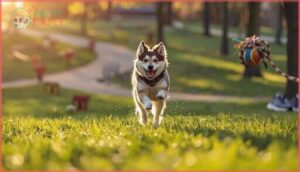
Your Yorksky isn’t a couch potato—this little powerhouse packs serious energy thanks to that Husky DNA. Without enough physical activity and mental challenges, you’ll likely see some unwanted behaviors like destructive chewing or nonstop barking.
Let’s break down what your dog actually needs to stay happy, healthy, and out of trouble.
Daily Walks and Playtime
Your Yorkie Husky mix thrives on two 15 to 20 minute walks daily—morning sessions help regulate appetite and energy. Short, brisk walks beat long strolls for burning excess energy.
Pair leash training with interactive playtime like tug of war or fetch using lightweight toys. Always use a well-fitted chest strap to prevent escape, and carry water to avoid overheating after exercise.
| Activity Type | Recommended Duration |
|---|---|
| Morning Walk | 15-20 minutes |
| Evening Walk | 15-20 minutes |
| Interactive Play | 10-20 minutes |
Mental Stimulation Ideas
Intelligence paired with curiosity means your Yorkie Husky mix craves brain exercises daily. Puzzle toys with hidden treats challenge problem-solving skills over 15 to 30 minutes.
Scent games like hide-and-seek tap into natural tracking instincts—lay treat trails across rooms for focused nose work.
Interactive training using name cues or target drills sharpens recall while building confidence.
Rotate sensory play with textured mats and ice cube enrichment to prevent boredom-driven destruction.
Managing High Energy Levels
Without structure, Husky Yorkie mix energy can spiral into chaos fast. Balance keeps your dog happy while protecting your furniture.
- Morning exercise blocks (20 to 30 minutes) torch pent-up energy before you start your day
- Multiple short training sessions reinforce calm behavior between active spurts
- Puzzle feeders slow mealtimes and engage problem-solving instincts
- Scheduled rest periods in a quiet crate prevent overstimulation burnout
- Consistent routines stabilize energy spikes and reduce anxiety-driven restlessness
Training Your Husky Yorkie Mix

Training your Husky Yorkie Mix takes patience and the right approach, especially since you’re working with two breeds known for their independent streaks.
The good news is that these smart dogs learn quickly when you use methods that match their personality. Let’s walk through the most effective training strategies to help your Yorksky become a well-mannered companion.
Positive Reinforcement Techniques
Your Yorkie Husky mix thrives when you pair behavior modification with positive feedback—think treats, praise, and play immediately after they nail a command. These reinforcement strategies tap into their Husky intelligence and Yorkie eagerness, making training methods feel more like bonding than boot camp.
Reward systems work best when you’re specific, enthusiastic, and consistent, turning dog training tips into daily wins for both of you.
Housebreaking and Crate Training
You’ll want to start crate training early—choose a crate size that lets your puppy stand and turn around, but not so roomy they pick a “bathroom corner.” Introduce the space with treats and short sessions, then build up duration.
Pair it with potty break schedules: first thing in the morning, after meals, and before bed. Accident prevention hinges on training consistency and quick outdoor trips when they circle or sniff.
Addressing Stubbornness
Once your puppy grasps the basics, stubbornness may still pop up—especially when that Yorkie Husky mix temperament kicks in. Emotional intelligence helps here: notice what triggers resistance, then adjust your approach. Behavior modification through positive reinforcement builds cooperation better than force. Try these conflict resolution tactics during training:
- Frame commands as short, clear requests
- Offer two choices instead of one demand
- Acknowledge their viewpoint before redirecting
- Celebrate small wins to reinforce communication skills
Feeding and Nutrition Guidelines

Your Yorksky’s diet plays a bigger role in their health than you might think. Getting the right balance of nutrients keeps their energy steady, their coat shiny, and those potential health issues at bay.
Let’s break down what you need to know about feeding this unique mix.
Choosing The Right Dog Food
Your Yorkie Husky mix thrives on quality nutrition, so look for dog food listing a named protein source—like chicken or fish—as the first ingredient. Choose formulas labeled ‘complete and balanced’ that match your puppy or adult dog’s life stage. Pay attention to nutrient balance and digestible carbs.
If your pup shows signs of food allergies or digestive health issues, consider limited-ingredient diets customized to sensitive systems.
Recommended Feeding Schedules
Once you’ve nailed down the right food, meal planning becomes your next priority. Feed your Yorkie Husky mix puppy three to four times daily to support puppy nutrition and steady energy.
Adult dogs usually do well on two meals a day, spaced about 12 hours apart. This feeding frequency keeps nutrient balance consistent and helps prevent digestive upsets while meeting your pup’s dietary needs.
Foods to Avoid
Just as important as choosing good food is knowing what to keep out of your Yorkie Husky mix puppy’s bowl. Skip processed meats loaded with salt, fried foods, sugary snacks, and refined carbs like white bread—they spike blood sugar and pack on pounds fast.
Canned goods often hide dangerous sodium levels that stress your dog’s heart, so stick with fresh, whole ingredients for ideal dog nutrition.
Cost of Owning a Husky Yorkie Mix

Bringing home a Husky Yorkie Mix isn’t just a commitment of time and love—it’s a financial one too. You’ll want to budget for both the upfront costs and the ongoing expenses that come with raising a healthy, happy dog.
Let’s break down what you can expect to spend so there aren’t any surprises down the road.
Puppy Price Range
When you’re ready to bring home your Yorkie, expect breeder fees between $400 and $1,200—though reputable breeders with health guarantees usually charge $600 to $1,000. Small litters and high demand can push prices toward the upper range. If you’re open to adoption, rescue shelters offer this dog breed for just $50 to $350, often with initial vet care included.
Key Purchase Factors:
- Breeder reputation and health screening documentation
- Geographic location and local market trends
- Litter size and puppy availability
- Health guarantees and vaccination records
- Adoption costs versus private breeder pricing
Ongoing Care Expenses
Beyond the initial purchase, you’ll face veterinary costs around $200 to $400 yearly for routine checkups, plus grooming expenses every 6 to 12 weeks at $40 to $90 per session.
Medical bills can spike during emergencies—sometimes topping $1,000—so building emergency funds is smart.
Professional dental cleanings, flea prevention, and quality food add another $500 to $800 annually to your pet ownership expenses.
Pet Insurance Considerations
When unexpected illnesses hit, insurance softens the blow on your pet ownership expenses. Most policies cover accidents and hereditary conditions common in Yorkie mixes, though pre-existing issues won’t qualify.
Key policy options to evaluate:
- Coverage limits – Annual caps usually range from $5,000 to unlimited
- Claim process – Look for online submission with fast reimbursement
- Renewal terms – Premiums increase with age, affecting long-term insurance costs
Is The Husky Yorkie Mix Right for You?

You’ve learned about the Yorksky’s needs, quirks, and demands—now it’s time to ask yourself the honest question: should you bring one home? This breed isn’t a perfect fit for everyone, and that’s okay.
Let’s break down the key factors that’ll help you figure out if you’re ready for this energetic, affectionate little powerhouse.
Pros and Cons of Ownership
Owning a Yorkie Husky mix isn’t all tail wags and cuddles—it’s a real emotional investment with tangible trade-offs. Let’s break down the pros and cons of this long-term commitment so you can make an informed choice about pet ownership.
| Pros of Ownership | Cons of Ownership |
|---|---|
| Full control over training routines and dog care guide decisions | Ongoing ownership costs including food, vet visits, and emergency expenses |
| No rental constraints; permanent companionship | Complete responsibility for exercise, grooming, and health management |
| Long-term emotional rewards and family stability | Pet liability for injuries or property damage |
| Unlimited customization for enrichment and lifestyle | Potential disruption if housing or life circumstances change |
| Deep bond strengthens household routines | Higher upfront financial risks and initial supply costs |
Weigh these costs and expenses honestly—your lifestyle and budget matter as much as your heart.
Ideal Home Environments
Your Yorkie Husky mix thrives when your home layout accommodates both their size and energy. A functional design includes non-slip flooring, fenced outdoor spaces for exercise, and proper indoor air quality to manage grooming-related dander. Pet safety features matter too:
- Secure gates and containment zones for weight-appropriate containment
- Cool, quiet resting areas away from chaos
- Storage for toys, leashes, and grooming supplies within easy reach
Adoption and Finding a Puppy
Finding a dog can feel like a leap of faith, but doing your homework pays off. Start by checking local shelters and rescue groups within 50 miles for a Yorkie Husky mix puppy—rescue organizations often include foster care evaluations. If you’re considering a breeder, prioritize those who perform health testing and allow facility visits. Either path demands home preparation: crate, food bowls, and a solid adoption process plan before you commit.
| Adoption Path | Key Step |
|---|---|
| Puppy Rescue | Visit shelters; ask for vaccination records and temperament notes |
| Breeder Selection | Verify health testing; meet parent dogs if possible |
| Foster Care | Consider fostering first to test compatibility |
| Home Preparation | Set up crate, bowls, toys; schedule first vet visit within 2–3 days |
Frequently Asked Questions (FAQs)
Can a yorkie breed with a Husky?
Technically, a Yorkshire Terrier and Siberian Husky can create a crossbreed called a Yorksky, but breeding challenges arise. Size differences between these designer dog parents require artificial insemination, making natural mating impossible.
How big are huskydoodles?
Huskydoodles aren’t the same as Yorksky mixes. A standard Huskydoodle usually weighs 40 to 60 pounds and stands 18 to 24 inches tall, while mini versions range from 15 to 40 pounds.
What is the temperament of a Dobsky dog?
The Dobsky bonds intensely with family, showing alert energy and protective instincts.
They’re affectionate yet independent, requiring consistent socialization and training to channel their intelligent, sometimes stubborn nature into positive behaviors.
What type of exercise does a Husky Yorkie Mix need?
Your Yorkie Husky mix needs 45 to 60 minutes of exercise daily—think brisk walks, fetch sessions, and mental stimulation through training.
Balance outdoor activities with puzzle games to prevent boredom and maintain a healthy energy routine.
Is a Husky Yorkie Mix good with other pets?
With proper Pet Socialization, Yorkie Husky mix dogs can thrive in Multi Pet Homes.
Early training helps manage their Husky energy around Canine Companions and smaller animals, supporting positive Animal Interactions and balanced Household Dynamics.
Are Yorkie Husky Mixes hypoallergenic?
Many claim the Yorkie Husky mix is hypoallergenic, but that’s a myth.
All dogs produce allergen proteins in dander and saliva.
Coat structure influences shedding, yet regular grooming and allergy management remain essential for sensitive owners.
What type of training is best for a Husky Yorkie Mix?
Positive reinforcement works best for these smart pups—use clicker training, high-value treats, and short sessions.
Focus on impulse control, leash manners, and socialization techniques to build confidence and prevent stubborn behavior.
How often should a Husky Yorkie Mix be groomed?
To manage a dog grooming schedule that prevents tangles and keeps shedding under control, brush your Yorkie Husky mix three to five times weekly.
With regular brushing, professional grooming every four to six weeks is also necessary for ideal coat maintenance.
Can Husky Yorkie Mixes live in apartments?
Yes, your Yorkie Husky mix can adapt to apartment living with consistent exercise—aim for 45 to 60 minutes daily—plus mental stimulation through puzzle toys, rotating games, and structured potty routines that support urban living.
Do they get along with cats?
Achieving feline friendship isn’t always a walk in the dog park. With careful cat introduction, early socialization, and supervised sessions, your Yorkie Husky mix can learn canine coexistence, creating household dynamics where pet harmony thrives.
Conclusion
The irony? You wanted a predictable lap dog, but the Husky Yorkie mix delivers delightful chaos instead. This crossbreed demands more commitment than most “small” dogs—training patience rivals marathon prep, grooming becomes your second job, and that energy level won’t quit.
Yet owners who embrace the unpredictability discover fiercely loyal companions with oversized personalities. If you’re ready to swap convenience for adventure, this quirky hybrid might just rewrite your definition of the perfect dog.