This site is supported by our readers. We may earn a commission, at no cost to you, if you purchase through links.
You brush your Cockapoo on Monday, and by Wednesday there’s already a felt-like patch behind her ear. Sound familiar? Matting isn’t just a cosmetic headache—those tight tangles tug at the skin, trap moisture, and create perfect hiding spots for infections.
The culprit is usually that adorable poodle-mix coat: dense, curly or wavy, and constantly weaving new hair into existing strands. Left unchecked, a small knot can snowball into a mat so stubborn that your only option is shaving it out.
The good news? Once you understand your Cockapoo’s unique fur texture and the friction zones where mats love to form, prevention becomes a straightforward routine. With the right tools, brushing techniques, and a consistent schedule, you can keep that teddy-bear fluff soft, healthy, and tangle-free.
Table Of Contents
- Key Takeaways
- Why Does Cockapoo Fur Mat So Easily?
- Which Areas of a Cockapoo Are Prone to Matting?
- How Often Should You Brush a Cockapoo?
- What Are The Best Tools to Prevent Matting?
- How to Brush a Cockapoo to Avoid Mats
- How to Bathe a Cockapoo Without Causing Mats
- Should You Trim Your Cockapoo to Prevent Mats?
- What Role Does Nutrition Play in Matting Prevention?
- How to Spot and Address Early Signs of Matting
- When to Seek Professional Grooming Help
- Frequently Asked Questions (FAQs)
- Why do Cockapoos get so matted?
- How do I stop my Cockapoo from getting matted?
- Is matted hair neglect on dogs?
- How do groomers get rid of matted fur?
- How often should I bathe my cockapoo?
- Can I use human shampoo on my cockapoo?
- How can I prevent matting on my cockapoos undercoat?
- What is the best way to trim my cockapoos matted hair?
- Can I use a hairdryer to dry my cockapoos coat?
- Can diet supplements reduce cockapoo coat tangling?
- Conclusion
Key Takeaways
- Cockapoos mat easily because their poodle-mix genetics create dense, curly coats that trap loose hair against the skin instead of shedding it naturally, with friction zones like ears, armpits, and neck tangling fastest.
- Prevention requires brushing 3-4 times weekly using proper technique (line brushing with a slicker brush), focusing on high-friction areas, and scheduling professional trims every 6-8 weeks to maintain a manageable coat length.
- The right tools matter—slicker brushes for daily maintenance, de-matting combs for stubborn knots, and dog-specific shampoos with moisturizing conditioners that make detangling easier without damaging the coat’s pH balance.
- Catching mats early through finger checks during grooming sessions and addressing small tangles immediately with detangling spray prevents minor knots from becoming painful, skin-damaging mats that require professional intervention or shaving.
Why Does Cockapoo Fur Mat So Easily?
If you’ve ever brushed your Cockapoo only to find another mat the next day, you’re not alone. Their unique coat structure practically invites tangles, and it’s not just about skipping a grooming session.
Using the right dog shampoos for long hair can make detangling easier and keep your Cockapoo’s coat smoother between grooming sessions.
Let’s look at the three main reasons why your Cockapoo’s fur seems to mat so easily.
If you’re considering adding other pets to your home, it’s worth knowing that your dog’s temperament matters more than you’d think when considering bearded dragon compatibility.
Cockapoo Coat Types and Textures
Your Cockapoo’s coat can come in three main textures, and knowing which one you’re working with makes all the difference for matting prevention. Understanding your dog’s specific coat type helps you build a smarter matting prevention routine from day one.
Some breeders who specialize in American Bully and Pitbull lines also work with Cockapoos and may carry unique coat color variations worth exploring.
There are several key factors to consider:
- Curly coat care demands daily brushing because tight corkscrew curls trap loose hair deep against the skin, forming hidden mats fast.
- Wavy texture creates that adorable teddy-bear look but needs brushing several times weekly since soft ringlets tangle easily.
- Straight fur sheds a bit more but mats less—though friction zones still need attention.
- Coat density varies wildly; thicker poodle-like fur requires more intensive Cockapoo grooming than lighter spaniel coats.
- Texture variations often appear during the puppy-to-adult coat change around 9–12 months, when fur maintenance becomes critical.
Genetics of Matting in Cockapoos
Behind that fluffy Cockapoo coat lies a genetic blueprint that determines how easily mats form. The RSPO2 furnishing gene from the Poodle side creates those adorable bearded faces but traps loose hair close to the skin, making matting prevention essential.
This genetic advantage also appears in other Poodle-based hybrids like the Australian Goldendoodle, where careful breeding prioritizes coat quality alongside temperament.
Your Cockapoo’s adorable beard comes from a Poodle gene that also traps loose hair and invites mats
Meanwhile, the KRT71 curl gene tightens ringlets that naturally grab dead hairs. Understanding these breed traits and gene expression patterns helps you stay ahead of tangles.
Environmental Factors Affecting Matting
Your dog’s surroundings play a bigger role in Cockapoo matting than you might think. Rain-soaked walks and humid weather turn damp curls into tangles before they even air-dry. Winter heating cranks up static, while mud and debris from outdoor activities bind hairs together fast.
Even indoor climate control affects coat maintenance—dry air makes fur brittle and prone to knots, so humidity levels and proper dog grooming routines matter year-round.
Which Areas of a Cockapoo Are Prone to Matting?

Not all parts of your Cockapoo’s coat mat at the same rate. Some spots are friction zones that tangle up fast, while others stay relatively smooth with less attention.
Let’s look at the three main problem areas you need to watch closely.
Ears and Neck
Ever wonder why ear matting sneaks up so fast? The long, floppy ears of your Cockapoo trap moisture and debris like magnets.
Neck tangles form just as quickly—collars rub constantly, and drool works its way into that dense fur. Regular fur trimming around these hot spots and gentle debris removal after walks will save you from skin irritation headaches down the road.
If you’re dealing with a breed that sheds year-round, like Corgis and their constant fur fallout, investing in a good deshedding tool makes those neck tangles far easier to prevent.
Belly, Legs, and Armpits
Movement creates mayhem in these hidden zones—every step your Cockapoo takes turns belly, leg, and armpit fur into tangled knots. Friction areas mat fastest because the coat rubs constantly against itself.
Focus your tangle prevention here: lift each leg during brushing, check under collar straps, and keep feathering care consistent. A quick dematting spray and smart trimming techniques will save you from grooming disasters later.
Face and Tail
Facial hair care requires daily attention—your Cockapoo’s beard traps food and drool, while eye irritation starts when discharge hardens on inner-corner fur. These friction zones mat faster than anywhere else on the body.
Combat tail matting and beard maintenance issues with these quick fixes:
- Wipe the face daily with dog-safe eye wipes to prevent crusty buildup
- Comb the beard after every meal using dematting spray
- Trim muzzle hair level with the jawline to reduce water absorption
- Brush the tail base to tip weekly, holding firmly above each section
How Often Should You Brush a Cockapoo?

The truth is, there’s no one-size-fits-all answer—how often you brush depends on your Cockapoo’s coat type, lifestyle, and the time of year.
Some dogs need daily attention, while others can get by with a few sessions each week. Let’s break down what actually works so you can build a routine that keeps those mats away for good.
Daily Vs. Weekly Brushing Frequency
Brushing schedules make all the difference in Cockapoo grooming and care. Daily routine brushing—just 5 to 7 minutes—addresses tangles before they turn into stubborn mats, especially for curly coats.
Weekly grooming frequency works for shorter clips paired with quick spot checks. Your dog’s coat maintenance needs depend on texture: dense curls demand more attention than wavy fur for effective mat prevention and dog matting prevention.
Seasonal Grooming Adjustments
Your Cockapoo’s grooming needs shift with the seasons. In winter, boost brushing frequency to combat humidity control issues from indoor heating that dry out Cockapoo fur and invite tangles.
Warmer months trigger seasonal shedding cycles—ramp up coat conditioning during temperature acclimation periods. Adjust your dog grooming techniques and grooming tools and products to match climate changes for effective mat prevention and consistent coat maintenance and health year-round.
Creating a Grooming Schedule
Think of your schedule planning as the blueprint for healthy Cockapoo fur—without it, mat prevention falls apart fast. Lock in this grooming routine for consistent coat maintenance:
- Daily 5–10 minute brushing keeps tangles at bay during active growth
- Midweek touch-ups target ears and legs where Cockapoo matting starts
- Twice-daily spring and fall sessions manage seasonal shedding surges
- Monthly full coat checks adjust your dog grooming approach
- 4–6 week bathing cycles prevent overdrying while controlling dirt buildup
Track your brush frequency in a simple log to spot patterns and stay consistent.
What Are The Best Tools to Prevent Matting?
Having the right grooming tools makes all the difference in keeping your Cockapoo’s coat mat-free.
Not all brushes and combs work the same way, and choosing the wrong ones can actually make tangles worse. Let’s look at the must-have tools that’ll help you stay ahead of mats before they even start.
Slicker Brushes and Pin Brushes
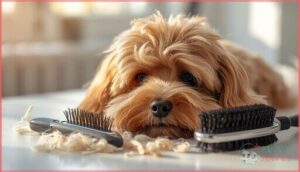
The right tools make all the difference in canine grooming. Slicker brushes use fine bent steel pins on a cushioned base to tackle Cockapoo matting in the undercoat without pulling surface fur.
Pin brushes feature longer, round-tipped pins that lift loose hair and distribute oils for shine. Using both in your grooming techniques improves coat health while ensuring brush ergonomics and proper brush maintenance protect your pup’s skin.
De-matting Combs and Rakes

When slicker brushes can’t tackle stubborn knots, de-matting combs and rakes step in with sharper edges. These grooming tools feature stainless steel blades—usually 8 to 22—designed to slice through matted dog hair without yanking skin. Ergonomic grips reduce wrist strain during detangling sessions, while rounded blade tips protect your Cockapoo’s sensitive skin from scratches. For more details on, check the latest grooming options available.
- Blade materials like stainless steel resist rust and stay sharp longer
- Dual-head designs let you switch between coarse and fine blades for different mat removal needs
- Non-slip, contoured ergonomic grips make long grooming sessions comfortable
- Rounded blade tips prevent skin punctures while breaking up Cockapoo matting
- Rake types with staggered blade patterns penetrate dense fur more evenly
Recommended Shampoos and Conditioners

Once you’ve tackled knots with the right combs, pH Balanced Shampoos become your next defense against Cockapoo fur tangles.
Dog Shampoo formulas designed for Dog Grooming should match canine skin, not human hair. Sulfate Free Options prevent drying that leads to frizz, while Moisturizing Conditioners ease detangling.
Gentle Cleansers with aloe or oatmeal soothe sensitive skin, and Color Safe Formulas keep your pup’s coat vibrant during Cockapoo Care routines. For more insights on evaluating haircare product effectiveness, consider how professionals test for both ingredients and results.
| Feature | Why It Matters | What to Look For |
|---|---|---|
| pH Balance | Matches dog skin chemistry | Formulas labeled 6.5–7.5 pH |
| Sulfate-Free | Reduces scalp dryness | “No SLS” on ingredient list |
| Moisturizers | Softens tangles pre-brush | Aloe vera, oatmeal, shea butter |
| Conditioner Type | Eases post-bath combing | Clear-rinse, leave-in options |
| Tearless Formula | Protects eyes during face wash | “Tearless” or “gentle” labels |
How to Brush a Cockapoo to Avoid Mats
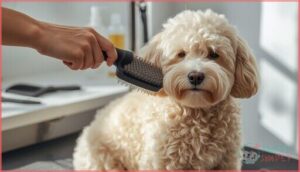
Brushing your Cockapoo the right way makes all the difference between a mat-free coat and a tangled mess.
It’s not just about running a brush through their fur—you need the right brushing technique to catch those sneaky knots before they turn into tight mats. Let’s break down the brushing methods that actually work for curly and wavy Cockapoo coats.
Line Brushing Technique Explained
Line brushing separates your cockapoo’s coat into thin, manageable sections—think parting the hair to the skin and brushing outward in controlled strokes. Use a slicker brush perpendicular to the skin to prevent pulling and keep tension gentle.
This technique catches hidden knots close to the skin before they turn into mats, making it your best defense against cockapoo matting.
Brushing Tips for Curly and Wavy Coats
Curly and wavy coats respond best to wet detangling—brush when damp with a slip conditioner to preserve the curl pattern and reduce breakage. Work in small sections from ends to roots using a slicker brush or pin brush with flexible tips.
For cockapoo matting prevention, try these daily grooming essentials:
- Apply detangling spray before each session
- Use a wide-tooth comb on longer curly fur
- Brush horizontally in layers for thorough coverage
Detangling Small Knots Before They Mat
Catching knots early saves you serious time and prevents matted dog hair down the road.
Keep the area damp with a light detangling spray, then use your fingers to gently loosen the edges before grabbing any grooming tools.
Work from the outside in—twisting and separating strands as you go.
Finish with a wide-tooth comb for that smooth, tangle-free finish your cockapoo deserves.
How to Bathe a Cockapoo Without Causing Mats
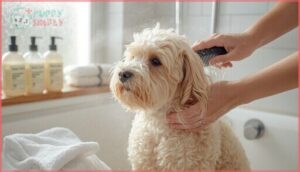
Bath time can either protect your Cockapoo’s coat condition or turn it into a tangled mess—it all comes down to technique.
The wrong products or rushed drying can create mats that take weeks to undo.
Let’s walk through the essentials to keep your pup’s fur soft, clean, and tangle-free.
Choosing Dog-Safe Shampoos and Conditioners
The wrong shampoo can turn bath time into mat city. Your cockapoo’s delicate fur needs products formulated specifically for dogs—human options disrupt their skin’s pH balance (around 6.5–7.5).
Here’s what to grab:
- Sulfate-free formulas that won’t strip natural oils
- Hypoallergenic conditioners with aloe or oatmeal for sensitive skin
- Natural alternatives using coconut or jojoba oil
- Fragrance-free options to avoid irritation
- Medicated shampoos for persistent skin issues (vet-approved only)
Check ingredient lists carefully—your pup’s coat health depends on it.
Proper Rinsing and Drying Methods
After shampooing, water temperature matters more than you’d think. Rinse with lukewarm water following the hair growth direction—hot water strips oils and invites stiffness. Rinse twice for thorough cockapoo fur care.
For drying, gentle blotting beats rubbing every time. Microfiber towels absorb moisture faster while protecting delicate cockapoo matting-prone areas.
| Drying Step | Best Practice | Why It Helps |
|---|---|---|
| Squeeze coat | Press gently, don’t twist | Prevents breakage and frizz |
| Towel technique | Blot from skin outward | Lifts water without tangling |
| Dryer use | Low heat drying, 6+ inches away | Protects skin protection and reduces mat risk |
| Ear care | Pat ears gently | Prevents moisture buildup in folds |
These pet grooming tips transform dog grooming from guesswork into prevention.
Avoiding Wet Fur Matting
Ever wonder why your Cockapoo’s coat mats worst after bath time? Wet fur prevention starts the moment water touches their coat.
Follow these fur drying tips for effective coat maintenance:
- Brush before bathing to remove loose hair and prevent wet tangles
- Keep daily brushing going right after towel drying
- Never leave damp Cockapoo fur to air dry completely
- Focus detangling efforts on problem zones while still slightly moist
Master these dog hair care basics to stop matting before it starts.
Should You Trim Your Cockapoo to Prevent Mats?
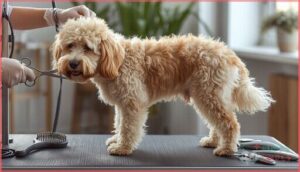
Trimming your Cockapoo’s coat isn’t just about looks—it’s one of the smartest ways to stop mats before they start.
A shorter coat means less brushing drama and fewer tangles sneaking up on you between grooming sessions.
Let’s break down the best lengths to aim for, which spots need regular trims, and whether you should tackle it yourself or book a pro.
Ideal Coat Length for Mat Prevention
Shorter fur is your best defense against matting. A short clip just above the skin dramatically reduces tangling across your Cockapoo’s body, while trimmed belly and hindquarters prevent debris from catching loose hair.
Keep the muzzle slightly shorter to stop knots near the face, and maintain uniform neck length to avoid collar snagging. Regular clipper maintenance every 6 to 8 weeks keeps everything manageable.
How Often to Trim Problem Areas
Target problem areas every four to six weeks to stop mats before they form. Ears and neck need attention every four weeks since they tangle fastest. Check belly, armpits, and leg feathering every five to eight weeks depending on your Cockapoo’s coat density. Face and tail? Trim every six weeks to keep them mat-free.
- Trim ears and neck every four weeks
- Address belly fur every five to six weeks
- Maintain leg feathering every six weeks
- Tackle face fringe every four to six weeks
- Adjust timing if tangles appear earlier
DIY Vs. Professional Grooming
You can groom your Cockapoo at home or book salon visits—both work if you’re consistent. DIY grooming saves money and lets you catch tangles daily, but you’ll need practice with clippers. Professional sessions every six to eight weeks handle tough mats and breed-specific trims safely.
Many owners blend both: brushing at home, trimming at the salon.
| Approach | Best For |
|---|---|
| DIY Grooming | Daily brushing and minor trims |
| Professional | Heavy mats and breed cuts |
| Hybrid | Regular home care plus salon shaping |
| Tool Effectiveness | Slicker brushes work best at home |
| Time Management | Salons save you one to two hours |
What Role Does Nutrition Play in Matting Prevention?

You mightn’t think about your Cockapoo’s diet when you’re dealing with mats, but what goes in their bowl directly affects what grows on their skin. A healthy coat starts from the inside out—poor nutrition shows up as dull, brittle fur that tangles more easily.
Let’s look at how the right foods keep your pup’s coat smooth and mat-resistant.
Importance of a Balanced Diet for Coat Health
Nutrient balance is the foundation for a gorgeous coat—without it, your Cockapoo’s fur struggles to stay soft and tangle-free. Quality protein sources feed keratin production, while healthy fats like omega-3s bring that shine you’re after.
These omega benefits go beyond looks; they reduce inflammation and keep skin happy. Good canine hygiene starts from within, and proper animal health and nutrition transforms coat management completely.
Nutrients That Support Healthy Fur
Your Cockapoo’s coat thrives on specific building blocks. Here’s what makes the biggest difference:
- Biotin benefits keratin production, strengthening each hair shaft—aim for 2.5 to 5 mg per 100 pounds daily.
- Omega fatty acids from fish oil bring shine and reduce skin inflammation in low-shedding breeds.
- Zinc supplements support rapid cell turnover and maintain barrier function.
- Protein sources like lean meat supply amino acids for strong, resilient fur in curly coat management.
Signs of Poor Nutrition in Cockapoos
If your Cockapoo’s coat feels brittle or looks patchy, those are health red flags pointing to nutrient deficiencies. Watch for these malnutrition effects:
| Coat Symptoms | What It Means |
|---|---|
| Dull, dry fur | Low omega fats or protein |
| Excessive shedding | Vitamin deficiency |
| Slow regrowth after clipping | Chronic dietary imbalances |
| Flaky skin with dandruff | Insufficient fatty acids |
| Thin, wiry texture | Zinc or biotin shortfall |
Address canine health and wellness through better dog nutrition—your pet care routine depends on it.
How to Spot and Address Early Signs of Matting
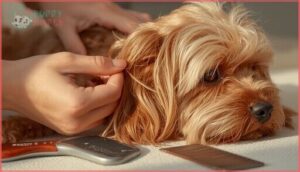
Catching mats early is your best defense against a grooming nightmare. The trick is knowing what to look for during your regular brushing sessions and acting fast before a small tangle turns into a tight, painful mat.
Let’s walk through the warning signs you need to watch for and how to handle them before they become a bigger problem.
Checking for Tangles During Grooming
Your fingers are your best tool for catching trouble early. Run your fingertips slowly from skin to tip during every grooming session—they’ll snag on tiny tangles before your eyes spot them.
Follow up with visual checks for darker patches and a greyhound comb gliding from root to end. Work in clear sections, watch for flinching, and you’ll stop mats before they start.
Preventing Small Knots From Becoming Mats
Speed matters. The moment you spot a tiny knot, mist it with a detangling spray and work it loose with your fingers—sideways, never straight.
Daily brushing stops tangles from tightening overnight. Hold the hair near the skin while you gently comb outward, so your pup feels zero pull. Catch knots early, and dematting never becomes a battle.
Monitoring Skin Health Under The Coat
Honestly, your Cockapoo’s skin tells the real story before mats take over. Part the coat during each brushing session to check for hidden trouble:
- Skin irritation – red patches, bumps, or flaky spots signal dermatitis signs that worsen matting prevention efforts
- Coat condition – oily or damp areas trap debris around hair follicles
- Odd smells – musty or foul odors mean infection brewing beneath the fur
Healthy skin equals easier dog grooming.
When to Seek Professional Grooming Help
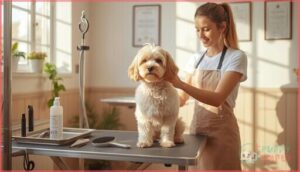
Sometimes matting gets out of hand, and that’s when it’s time to call in the pros. Professional groomers have the experience and tools to handle situations that feel impossible at home.
Let’s look at three clear signs you need expert help with your Cockapoo’s coat.
Persistent or Severe Matting Issues
When your cockapoo’s coat feels like one solid pelt or your dog yelps when touched, home detangling won’t cut it anymore. Severe mat care requires veterinary assistance or an experienced groomer who can safely remove matted dog hair without causing cuts or clipper burns.
Matting prevention starts fresh after a professional dematting session using proper grooming tools and products to stop matting from returning.
Professional De-matting Services
When you hand over your matted dog hair problem to a professional groomer, they start with a full coat assessment—checking for pelting, skin irritation, and hidden sores.
Expect dematting sessions that combine slicker brushes, de-matting combs, and high-velocity dryers to safely loosen tangles. Salon pricing usually adds $10–$100 depending on severity, with extra time blocks for intensive mat removal tools and de-matting safety protocols.
Expert Advice for Home Grooming Challenges
Stuck on a stubborn mat or uncertain about technique? Reach out to your groomer between appointments—most pros happily share home care tips on brushing angle, detangling sprays, and grooming tools that match your Cockapoo’s coat.
They’ll troubleshoot your mat prevention routine, recommend dog grooming techniques for problem zones, and flag any dog health concerns hiding under those curls.
Frequently Asked Questions (FAQs)
Why do Cockapoos get so matted?
Your Cockapoo’s gorgeous curls hide a secret: they’re tangling traps.
That poodle-cocker blend creates dense ringlets that snag loose hairs instead of shedding them, building hidden mats near the skin between brushings.
How do I stop my Cockapoo from getting matted?
Brush thoroughly three to four times weekly using a slicker brush and metal comb, focusing on high-friction spots like armpits and ears.
Then schedule professional trims every six to eight weeks.
Is matted hair neglect on dogs?
Yes, severe matting can signal neglect. Left unchecked, mats trap moisture and dirt, causing painful skin irritation and infections. Regular grooming shows you care about your dog’s health and comfort.
How do groomers get rid of matted fur?
Professional groomers assess matting severity first, then use dematting tools like slicker brushes and rakes with detangling sprays.
For tight mats, they employ clipping strategies—spot shaving problem areas or full-body shaves when matted hair solutions require it.
How often should I bathe my cockapoo?
Most healthy adults do well with a bath every four to six weeks. If your pup stays indoors and clean, you can stretch it closer to eight weeks without issues.
Can I use human shampoo on my cockapoo?
Sure, you could use human shampoo on your Cockapoo—if you’re aiming for skin irritation, coat damage, and pH balance chaos.
Dog shampoo benefits their unique skin chemistry, preventing matting and keeping dog hair healthy through proper grooming.
How can I prevent matting on my cockapoos undercoat?
Brush your cockapoo’s undercoat four to five times weekly with a slicker brush that reaches the skin, then follow with a metal comb to confirm all tangles are removed before they compact into mats.
What is the best way to trim my cockapoos matted hair?
Use dog grooming clippers with a 10 blade, not scissors, to safely trim matted Cockapoo fur.
Hold the mat’s base firmly, then clip in short strokes from the edge inward, protecting skin throughout.
Can I use a hairdryer to dry my cockapoos coat?
Yes, you can use a hairdryer on cool or low heat, keeping it 6-12 inches away.
Brush while drying to prevent matting—thorough coat drying stops tangles forming in damp fur.
Can diet supplements reduce cockapoo coat tangling?
Diet supplements like omega three benefits and biotin supplements can improve cockapoo coat texture and reduce tangling, but they work best when paired with regular dog grooming—nutrition alone won’t prevent mats.
Conclusion
Sure, you could ignore the brushing schedule and pray your Cockapoo’s coat magically resists the laws of physics. Or you could accept that preventing matting on a Cockapoo means showing up with a slicker brush, checking friction zones, and staying consistent.
Your reward? A pup who’s comfortable, healthy, and ready for belly rubs—not emergency shave-downs. The choice is yours, but the coat won’t maintain itself. Start today, and those mats don’t stand a chance.
- https://www.houndtherapy.com/blog/cockapoo-grooming/
- https://www.thepawspasalon.com/post/how-to-prevent-and-treat-matting-in-long-haired-dogs
- https://www.oreateai.com/blog/best-brush-for-cockapoo-puppy/b9446906940d2b3fae62ceeab1eef2b6
- https://cockapooclubamerica.com/
- https://www.poodleclubofamerica.org/