This site is supported by our readers. We may earn a commission, at no cost to you, if you purchase through links.

Most dogs don’t lose interest in training because they’re stubborn or distracted—they lose interest because the session stopped feeling worth their time.
A dog that shuts down mid-exercise isn’t being difficult; it’s giving you honest feedback.
Motivation isn’t something dogs either have or don’t have.
It’s something you build, protect, and continuously adjust.
The right reward at the right moment can turn a reluctant dog into an enthusiastic partner.
Knowing how to keep dogs motivated during training sessions comes down to understanding what your dog finds genuinely valuable—and using that strategically.
Table Of Contents
- Key Takeaways
- Why Motivation Matters in Dog Training
- Choosing Effective Rewards for Your Dog
- Structuring Engaging Training Sessions
- Tailoring Techniques to Your Dog’s Personality
- Tips to Sustain Motivation Over Time
- Frequently Asked Questions (FAQs)
- How do you motivate a dog to exercise?
- Is it a bad idea to train a dog?
- Should high-energy dogs be exercised before a class?
- Why does my dog not want a reward?
- Can training sessions happen right after meals?
- Should I train my dog every single day?
- How do I train multiple dogs at once?
- What role does body language play in training?
- Conclusion
Key Takeaways
- Your dog’s disengagement during training isn’t stubbornness—it’s honest feedback that the session stopped feeling worth their time, so adjust rewards and pacing before pushing forward.
- Matching the right reward to your dog’s personality—whether that’s high-value treats, a quick tug game, or genuine praise—is what actually drives consistent progress.
- Short, structured sessions of 5–15 minutes beat long ones every time, and always ending on a win keeps your dog eager to come back.
- Motivation is something you build over time by gradually raising the challenge, celebrating small wins, and staying tuned in to what your dog needs in the moment.
Why Motivation Matters in Dog Training
Motivation is the engine behind every successful training session — without it, even the simplest commands can feel like pulling teeth. The good news is that once you understand what drives your dog, training becomes less of a chore and more of a conversation.
Tapping into what your dog genuinely loves — whether that’s treats, praise, or play — is the same principle that helps Rottweilers thrive in water-based activities, where positive reinforcement turns unfamiliar challenges into exciting ones.
Understand what drives your dog, and training transforms from a struggle into a conversation
Here’s what you need to know about why motivation matters so much in the first place.
The Role of Motivation in Learning
engine behind every innovation in canine learning. When your dog expects a reward for the right choice, their brain releases dopamine — making that behavior stick faster.
Predictable feedback through positive reinforcement tells them, "Yes, that works." Emotional safety matters too. Dogs learn best when training sessions feel like a fair game, not a test they might fail.
Using the dopamine anticipation window can boost engagement during training.
Benefits of Keeping Dogs Engaged
Keeping your dog engaged does more than just make training sessions go smoothly. It builds something lasting.
- Bond Strengthening — Dog engagement deepens daily trust and responsiveness between you and your dog.
- Behavior Reduction — Positive reinforcement training keeps minds busy, cutting boredom behaviors like chewing or barking.
- Mental Calm and Faster Learning — Reward systems and motivating dogs through focused practice build confidence and safety enhancement naturally.
Incorporating mental stimulation benefits through interactive toys can further improve engagement.
Common Reasons Dogs Lose Interest
Even the best reward systems hit a wall sometimes.
Dogs lose interest for a few key reasons: reward saturation (the same treat loses its spark), boredom from repetition, and session fatigue from training too long.
Easily distracted dogs struggle with environmental distractions, while non-food-motivated dogs tune out food-based positive reinforcement training entirely.
Physical discomfort, like sore joints, can quietly kill enthusiasm too.
Choosing Effective Rewards for Your Dog
Not every dog goes wild for the same reward, and that’s completely normal. The key is figuring out what makes your dog’s eyes light up — because that’s what’s going to drive real progress in training.
Once you know what makes your dog tick, the right training essentials can help you channel that excitement into real, lasting results.
Here are the three main reward types worth knowing.
Identifying High-Value Treats

Not all treats are created equal. High-value rewards are the ones your dog will actually work hard for — usually soft, aromatic options like chicken, liver, or cheese.
Run a quick Flavor Preference Test at home: offer a few choices and see which your dog grabs first. Keep pieces pea-sized for Calorie Monitoring, and always check for Ingredient Transparency on the label.
Using Toys and Play as Incentives
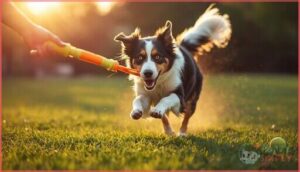
couldn’t care less about treats — but the moment you pull out a tug toy, they’re all in.
That’s where Toy Timing matters: keep Playtime rewards to short 3‑4‑second bursts so your dog stays focused.
Use Fetch Rewards after a solid recall, or Tug Integration mid‑session for Positive reinforcement that feels like pure fun.
Add Interactive Puzzle Play between reps for mental variety, and always teach a Safety Drop Cue to keep Reward‑based training smooth and safe.
Leveraging Praise and Affection

For many dogs, your voice and touch are just as powerful as any treat. Verbal Praise Timing is key — praise within 1–3 seconds so your dog connects the word with the action. Use Tone Modulation and watch Body Language Cues to tailor your approach.
- Say "yes" in a warm, upbeat tone
- Pair praise with a chest scratch
- Keep affection short for high‑energy dogs
- Combine treats with praise early on
Structuring Engaging Training Sessions

How you set up each training session matters just as much as what you teach.
A little structure goes a long way in keeping your dog focused and enthusiastic to learn.
Here’s what works for building sessions that actually stick.
Ideal Session Length and Frequency
Short training sessions beat long ones every time. Most dogs focus best for just 5 to 10 minutes before Attention Span Limits kick in. Age-Based Timing matters too — puppies need only 3 to 5 minutes, while adult dogs handle 15 to 30 minutes daily. Use Daily Minute Caps and Break Scheduling to protect their focus.
| Age Group | Session Length | Sessions Per Day |
|---|---|---|
| Puppies (8 weeks–6 months) | 3–5 minutes | 3–4 times |
| Adolescents (6 months–2 years) | 10–20 minutes | 1–2 times |
| Adults (2–7 years) | 15–30 minutes | 1–2 times |
For high‑energy dogs, Energy Level Adjustments — like a short walk beforehand — sharpen focus fast.
Introducing Variety to Prevent Boredom
Repetition is the fastest way to lose your dog’s attention. Mixing things up — through Environment Switching, Command Mixing, and Reward Rotation — keeps every session fresh.
- Toy Rotation: Swap toys every 1–2 minutes to maintain excitement and novelty.
- Novel Trick Introduction: Weave in new skills alongside mastered commands using Positive Reinforcement and High-value Treats.
- Interactive Games: Use Puzzle Toys to engage their natural instincts between drills.
Ending Sessions on a Positive Note
How you end a session matters just as much as how you start it.
Use a Final Cue like "all done" paired with a Treat Finale — a high-value bite like chicken or cheese — to signal closure clearly.
A quick Play Wrap‑up or Calm Release with praise locks in the good feeling.
That last moment of Positive Reinforcement is what your dog remembers most.
Tailoring Techniques to Your Dog’s Personality
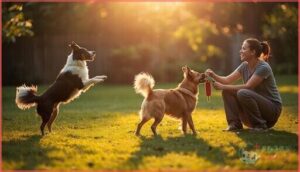
No two dogs are exactly alike, and what works for one might completely fall flat for another.
Your dog’s personality, energy level, and background all shape how they learn best.
Here’s how to adjust your approach so training actually clicks.
Adapting Rewards to Individual Preferences
Not every dog plays by the same rules. Reward Preference Testing helps you figure out what truly drives your dog — before frustration sets in. Try Flexible Reward Rotation to keep motivation fresh:
- Offer high-value treats for new or difficult cues.
- Use toys and playtime for prey-driven breeds — Breed-Specific Incentives matter.
- Give praise and affection to socially bonded dogs.
- Apply Sensory Reward Matching by noting texture and smell preferences.
Non-food-motivated dogs especially thrive when you discover their real currency through positive reinforcement.
Managing High-Energy and Easily Distracted Dogs
High-energy dogs aren’t broken — they just need the right setup. Before any session, try 20–30 minutes of Pre-Training Exercise like brisk walking or a quick fetch game. Energy Release Activities clear the mental clutter so your dog can actually focus.
| Strategy | What to Do | Why It Works |
|---|---|---|
| Pre-Training Exercise | 20–30 min brisk walk or fetch | Burns excess energy, improves focus |
| Impulse Control Games | "Wait," "Stay," controlled fetch | Builds restraint and self-regulation |
| Distraction Proofing Steps | Start indoors, gradually add distractions | Builds real-world reliability |
| Mental Stimulation Tools | Puzzle toys, scent games, obstacle courses | Tires the mind without overexertion |
| Short Session Bursts | 5–10 min, multiple times daily | Matches short attention spans |
Then keep sessions to 5–10 minutes. Impulse Control Games like "leave it" or a timed "stay" channel that drives into positive reinforcement wins. Pair them with high-value treats, and Distraction Proofing Steps gradually, and even the bounciest dog starts locking in. Mental Stimulation Tools like puzzle toys do the rest.
Adjusting for Age, Breed, and Temperament
Once you’ve managed energy levels, fine-tuning for age, breed, and temperament takes your Dog Training Techniques from good to great.
Puppy bursts of 3–5 minutes build habits without overwhelm. Senior stamina calls for gentler 5‑minute sessions with soft treats. Herding focus loves fetch sequences, Scent drive thrives on nose work, and Terrier impulse reacts to wait‑at‑door drills rooted in Dog Psychology.
- Puppies learn best in frequent 3–5 minute sessions with high‑value treats
- Seniors benefit from soft rewards and visual hand signals
- Herding breeds stay motivated through fetch and obstacle challenges
- Scent hounds engage deeply with nose work and hidden treat games
- Terriers channel boldness through impulse‑control drills using Positive Reinforcement
Tips to Sustain Motivation Over Time
Keeping your dog motivated isn’t just about one great session — it’s about building something that lasts.
The good news is that few simple habits can make a real difference over weeks and months.
Here’s what actually works for sustaining that momentum long‑term.
Gradually Increasing Challenge Levels
Stepping up the challenge too fast is one of the quickest ways to lose your dog’s enthusiasm. Use the 3 Ds — Distance Progression, Duration Extension, and Distraction Management — to guide your Stepwise Difficulty approach.
| Variable | Start Point | Progression Step |
|---|---|---|
| Duration Extension | 2–3 seconds | Add 2–3 seconds per session |
| Distance Progression | Handler nearby | Move one step back at a time |
| Distraction Management | Quiet room | Introduce mild distractions slowly |
Shift to a Variable Reward Schedule as skills solidify, and return to higher reward frequency when difficulty rises.
Celebrating Progress and Small Wins
Small wins deserve real recognition. Progress Journaling helps you spot patterns — maybe your dog nailed a two‑second eye contact hold today. That’s worth celebrating. Use Visual Charts to track success rates, and build Celebration Rituals around Achievement Badges or Success Stickers after key breakthroughs.
- Use Praise and Affection immediately after good behavior
- Apply Positive reinforcement during Dog training sessions consistently
- Reserve high-value Rewards for bigger achievements
Avoiding Common Motivation Killers
Avoiding motivation killers is simpler than you’d think.
Watch out for Repetition Fatigue — repeating commands too often teaches your dog to tune you out.
Keep sessions short to prevent Session Overlength burnout, and manage High Distractions by starting in calm environments.
Never train with Negative Emotion; dogs feel your frustration instantly.
Match rewards carefully — Low Reward Value stalls progress, especially with nonfoodmotivated dogs who need play-based positive reinforcement instead.
Frequently Asked Questions (FAQs)
How do you motivate a dog to exercise?
Ironically, the secret to motivating your dog to exercise isn’t more discipline — it’s more fun.
Try high-energy games, scent workouts, puzzle toys, or interactive fetch to spark genuine enthusiasm and keep your dog moving.
Is it a bad idea to train a dog?
Training a dog isn’t a bad idea — it’s one of the best things you can do.
Training myths and ethical concerns about aversive methods aside, positive reinforcement builds trust, reduces anxiety, and keeps dogs mentally healthy.
Should high-energy dogs be exercised before a class?
Yes. A brisk 20-to-30-minute walk or short fetch session burns off restless energy, helping high-energy dogs settle and actually focus once class begins — without crossing into overexercise territory.
Why does my dog not want a reward?
Your dog might be skipping food rewards due to stress triggers, medical discomfort, food saturation, or environmental distractions. Even high-value rewards get ignored when something feels off—physically or emotionally.
Can training sessions happen right after meals?
It seems logical, but skipping post‑meal timing is a mistake. A full stomach drops food rewards motivation and raises digestive safety risks. Wait 1–2 hours, then train.
Should I train my dog every single day?
Most days work well, but rest day benefits are real. Skipping a day or two weekly helps your dog process what they’ve learned and come back more focused.
How do I train multiple dogs at once?
Train one dog at a time using a Group Rotation Schedule.
Use a Crate Waiting System with high-value treats, Station Training Setup, and Name Cue Coordination to keep sessions focused and fair.
What role does body language play in training?
Your posture cues, facial expressions, eye contact, and gestural signals all shape canine behavior.
Calm movement dynamics and soft, open expressions tell your dog you’re a safe, trustworthy leader worth following.
Conclusion
struggle one day and a turning point the next—that contrast is exactly where progress lives. Knowing how to keep dogs motivated during training sessions isn’t about having the perfect technique.
It’s about staying curious and responsive to what your dog needs in the moment. Watch their energy. Adjust your rewards. Celebrate the small wins.
A dog that trusts the process becomes a dog that shows up enthusiastic—and that changes everything.
- https://k9connoisseur.com/blogs/news/dog-training-rewards
- https://sterlingdogtrainers.com/rotating-rewards-keeping-your-dog-interested-in-training/
- https://www.alansk9academy.com/blogs/playful-learning-fun-and-games-to-boost-your-dogs-training-success
- https://petcareshed.com.au/blogs/pet-supplies/dog-boredom-signs-enrichment-training
- https://www.noblebeastdogtraining.com/the-impact-of-training-style-on-your-dog-s-learning-journey