This site is supported by our readers. We may earn a commission, at no cost to you, if you purchase through links.
Most dog owners discover the hard way that grooming a double‑coated dog isn’t like grooming any other breed. One missed brushing session turns into a matted undercoat that takes hours to work through—sometimes requiring a vet visit if skin irritation sets in underneath.
The double coat isn’t just extra fur; it’s a two‑layer system built to regulate temperature, repel water, and protect skin.
Treat it wrong, and you work against the coat’s natural design. Learn how it functions, use the right tools, and follow a consistent routine, and you’ll keep shedding manageable and your dog’s coat healthy year‑round.
Table Of Contents
- Key Takeaways
- What is a Double Coated Dog?
- Essential Tools for Double Coat Grooming
- Step-by-Step Grooming Routine for Double Coated Dogs
- Maintaining Coat Health and Preventing Issues
- When to Seek Professional Grooming Help
- Frequently Asked Questions (FAQs)
- Can you groom a double coated dog?
- How do groomers deshed a dog with a double coat?
- How to cut a double coated dog?
- Can double-coated dogs live in hot climates?
- How does diet affect a double coats health?
- At what age do puppies develop their double coat?
- Can stress or illness cause excessive coat shedding?
- Are certain double-coated breeds hypoallergenic?
- Conclusion
Key Takeaways
- A dog’s double coat is a two-layer system built to regulate temperature, repel water, and protect skin — working against it with the wrong tools or a shave‑down, and you’ll undo what nature designed.
- Consistent brushing (3–4 times weekly, daily during shedding season) is the single most important habit for preventing mats, managing shedding, and keeping your dog’s skin healthy.
- Using the right tools — an undercoat rake, slicker brush, pH-balanced shampoo, and rounded-tip scissors — makes the difference between a healthy coat and one that’s damaged or mat-ridden.
- Knowing when to call a professional matters: severe matting, persistent odor, skin irritation, or behavioral distress during grooming are clear signs home care isn’t enough.
What is a Double Coated Dog?
If you own a Husky, Golden Retriever, or Australian Shepherd, you’ve already met the double coat up close — usually on your couch.
That fluffy double coat also means a real grooming commitment — check out this guide on how often to groom double-coated dogs before you buy your third lint roller.
Understanding what that coat actually is makes grooming a whole lot easier.
Here’s what you need to know before you pick up a brush.
Double Coat Structure and Purpose
Think of your dog’s coat as a built-in weatherproof jacket — two layers working together. The soft undercoat manages insulation mechanics and temperature regulation, trapping warm air close to the skin. Above it, the guard hairs manage water repellency and UV shielding, blocking moisture and sun.
A dog’s double coat is nature’s weatherproof jacket, with a warm insulating underlayer and a sun-and-rain-blocking topcoat
During seasonal shedding, the undercoat renews itself. Understanding this double coat structure explains everything about proper coat maintenance.
approximately 900 million dogs worldwide possess this double coat.
Common Double Coated Breeds
That double‑coat structure shows up across dozens of breeds — each one carrying it a little differently. Siberian Huskies, Golden Retrievers, Australian Shepherds, Samoyeds, and Bernese Mountain Dogs are among the most recognized double‑coated breeds, but the list runs long.
Here’s a quick look at some common ones:
- Siberian Huskies — medium-sized, heavy seasonal shedders
- Golden Retrievers — large dogs with dense, mat‑prone undercoats
- Australian Shepherds — athletic herders with thick, weather‑resistant layers
- Samoyeds — fluffy northern breeds requiring consistent daily attention
- Bernese Mountain Dogs — gentle giants with striking tri‑color double coats
Many working group dogs such as Saint Bernards also sport double coats.
Why Double Coats Need Special Grooming
All those breeds share one thing — their coats don’t maintain themselves. A double coated dog needs consistent care because the undercoat traps heat, moisture, and dead fur when neglected.
Without regular grooming tools and techniques, matting forms fast and pulls on skin. Brushing manages oil distribution, allergen reduction, and seasonal shedding, while also supporting temperature regulation and skin protection year‑round.
Essential Tools for Double Coat Grooming
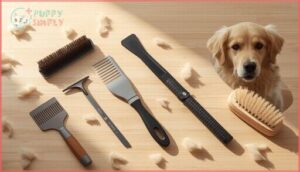
The right tools make all the difference when grooming a double-coated dog.
A groomer’s advice on whether shaving a Husky is safe can save you from costly coat damage down the road.
Using the wrong brush or the wrong shampoo can damage the coat or leave the undercoat packed with dead hair.
Here’s what you actually need to get the job done right.
Best Brushes and Rakes for Double Coats
The right tools make all the difference. A slicker brush lifts loose fur and spreads natural oils — Hertzko’s ergonomic handle features keep your hand from tiring mid-session.
For deeper work, an undercoat rake designs let curved teeth glide past the topcoat without cutting guard hairs. The FURminator size guide (1.75″ to 4″) helps you match width to your dog’s breed. Double-sided rake benefits include mat-cutting and thinning in one tool.
Choosing The Right Shampoo and Conditioners
Shampoo choice can make or break bath day. For double coats, look for a pH balanced dog shampoo — dog skin runs around 6.5 to 7.5, so human shampoos can disrupt that balance quickly.
A deshedding shampoo with natural ingredients like aloe or oatmeal helps moisture retention without stripping natural oils. Add a detangling power conditioner afterward, and brushing becomes so much easier.
Safe Scissors, Shedding Blades, and Combs
For sensitive areas like the face and paws, rounded tip scissors are non‑negotiable — ball‑tip grooming shears prevent accidental punctures near ears and eyes. Blade angle control matters too; keep shears flat to avoid gouging skin.
Pair thinning shears with a deshedding rake for bulk removal, then finish with a comb. Comb tooth spacing determines how deeply you’re reaching — wide teeth for thick undercoats, narrow for smoothing.
Ergonomic grip design reduces hand fatigue on longer sessions, while skin protection techniques keep your dog comfortable throughout.
Step-by-Step Grooming Routine for Double Coated Dogs
Grooming a double-coated dog isn’t complicated once you know the right order of steps. Each part of the routine builds on the last, so skipping ahead usually creates more work.
Here’s exactly what to do, from first brush stroke to final trim.
Brushing and De-Shedding Techniques
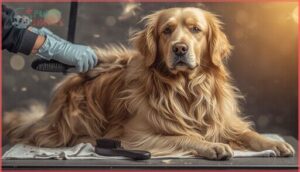
Think of brushing as excavation — you’re not just smoothing the surface, you’re pulling dead hair from deep within.
Start with Line Brushing, parting the coat in sections until you see skin. Follow with an Undercoat Rake using short, gentle strokes — a deshedding rake can cut shedding by 90%. Finish with a Slicker Brush to smooth the topcoat. Brush three to four times weekly minimum.
Bathing and Drying Without Damaging The Coat
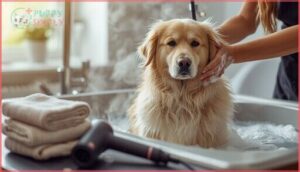
A lukewarm bath — water between 37°C and 39°C — keeps your dog calm and protects the coat’s natural oils.
Use a dog-specific shampoo diluted 10:1, then focus on gentle rinsing until water runs completely clear.
Pat dry first with absorbent towels, never rub.
Finish with airflow drying using a high-velocity blow dryer to lift the undercoat — this is non-negotiable for double-coated dog grooming.
Always do a product residue check before your dog’s coat dries fully.
Removing Mats and Tangles Safely
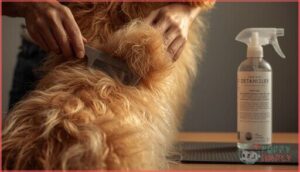
Mats in a double-coated dog aren’t just messy — they pull at the skin and cause real pain. Tackle them with the right grooming tools and safety precautions:
- Base Hold Technique: Grip the fur close to the skin before brushing.
- Edge Start Method: Work outer edges inward with your dematting comb choice.
- Detangler Spray Timing: Let it sit 2–5 minutes before using your brush or Safe Scissor Cut on stubborn knots.
Trimming and Shaping Double Coats
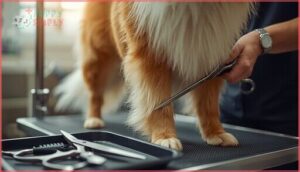
Trimming a double coat takes patience and the right tools. Start with Paw Pad Grooming — use a #30 blade to trim pads clean, then thinning shears to round the top.
For Sanitary Area Shaping, clear space around the anus with a #10 blade.
Shape Leg Feather Trimming with curved shears, then blend with thinning shears.
Finish Tail Outline Shaping and Blending Finishing Techniques using chunker shears for smooth results.
Maintaining Coat Health and Preventing Issues
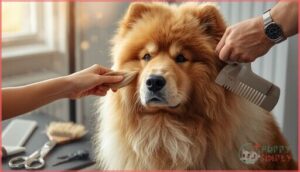
Keeping a double coat in great shape goes beyond the occasional brush — it’s about staying consistent and catching small problems before they grow. From managing heavy shedding seasons to building a routine that actually sticks, there’s a lot you can get right with the right habits.
Here’s what you need to know to keep your dog’s coat healthy long-term.
Managing Shedding and Seasonal Coat Changes
Seasonal shedding hits twice a year — spring around March and fall in September — and each wave lasts two to four weeks.
Daily brushing for 15–20 minutes keeps the chaos manageable.
Bathe every four to six weeks using omega fatty acid shampoos for better shedding control.
Quality nutrition with omega-3s also cuts excessive loss.
These double coated dog grooming techniques make seasonal grooming far less overwhelming.
Preventing Matting and Skin Problems
Once shedding season winds down, matting becomes your next challenge — and it doesn’t wait.
Pay special attention to these High Friction Areas:
- Armpits — leg movement rubs fur into tight knots
- Behind ears — moisture gets trapped fast
- Tail base — constant wagging frays the fur
- Collar area — daily wear causes chafing
- Chest front — collects dirt and tangles from ground contact
Post-wet brushing is non‑negotiable after swims or rain. Damp undercoat breeds bacteria within 24 hours. Use Skin Moisturizing Products like coconut oil or oatmeal rinses to soothe irritated skin. Dietary Skin Support — especially omega-3s — strengthens the coat from inside out.
Establishing an Effective Grooming Schedule
healthy coat is what separates a baseline — then matted one. Use this schedule as your baseline — then adjust based on your dog’s age, activity level, and the season.
| Dog Type | Regular Season | Shedding Season |
|---|---|---|
| Puppy (8–16 weeks) | Weekly, 5 min sessions | N/A |
| Adult indoor dog | 2–3x weekly brushing | Daily brushing |
| Active/outdoor dog | 3–4x weekly brushing | Daily + post-exercise grooming |
| All dogs (bathing) | Every 6–8 weeks | Every 4–6 weeks |
Seasonal Frequency Planning and Activity-Based Adjustments keep this doublecoated dog grooming process on track year-round.
Common Mistakes to Avoid With Double Coats
Even a solid schedule won’t protect your dog if your technique is off.
overbathing strips natural oils and dries out the skin. shaving guard hairs removes the coat’s built-in temperature control. harsh deshedding tools slice healthy fur instead of clearing loose undercoat. hot drying burns the skin. wrong shampoo pH causes irritation.
These common grooming mistakes to avoid are just as important as everything you do right.
When to Seek Professional Grooming Help
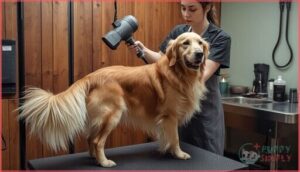
most dedicated home groomer hits a wall sometimes — and that’s completely normal. Knowing when to hand things off to a professional can save your dog from unnecessary stress and coat damage.
Here’s what to watch for, why regular groomer visits pay off, and how to make those appointments go smoothly.
Signs Your Dog Needs Professional Care
Some signs are hard to ignore. Severe matting that feels like armor near the skin, strong odor returning within days of a bath, or visible skin irritation after brushing — these mean it’s time to call a professional.
Dog skin care has moved beyond what home tools can handle when nail problems, behavioral distress during grooming, and recurring dog coat health issues also signal that a professional is needed.
Benefits of Regular Groomer Visits
Regular professional grooming services do more than keep your dog looking good. Groomers catch early disease detection clues — lumps, hot spots, skin changes — before they become serious.
Consistent appointments support temperature regulation, allergy reduction through dander control, and dog coat health by preventing matting and tangling. You also save hours at home, making owner time savings real between veterinary checkups.
Preparing Your Dog for Grooming Appointments
Preparing your dog the day before goes a long way.
Start with pre-appointment exercise — a 30- to 45-minute walk burns energy and makes handling easier.
Use positive reinforcement to introduce grooming tools gradually, so dryers and brushes feel familiar.
Complete your ear cleaning routine and nail trimming prep beforehand.
Stick to your regular feeding schedule, and bring notes from recent veterinary checkups for specific dog coat maintenance.
Frequently Asked Questions (FAQs)
Can you groom a double coated dog?
Yes, you can — and doing it right builds trust between you and your dog.
With the right grooming tools and brushing techniques for double coats, you’ll master shedding control at home.
How do groomers deshed a dog with a double coat?
Groomers start with Skin Sensitivity Checks, parting the coat to spot hot spots.
Then the Undercoat Rake Technique pulls dead undercoat loose, followed by High‑Velocity Drying to blast remaining fur free.
How to cut a double coated dog?
Cutting less is actually doing more.
For double coated dogs, skip shaving — light outline trim tips, paw pad trimming, sanitary area cutting, and feathering light trim keeps your dog neat without damage.
Can double-coated dogs live in hot climates?
Double-coated dogs can live in hot climates, but they need extra care. Their coat actually shields skin from UV rays.
Focus on hydration strategies, indoor cooling, and regular de-shedding to keep them safe and comfortable.
How does diet affect a double coats health?
Think of your dog’s coat as a garden. Without the right soil, nothing grows well.
Protein quality, omega balance, hydration levels, and key vitamins and minerals all feed that garden from the inside out.
At what age do puppies develop their double coat?
Most puppies begin developing their double coat between 4 and 6 months old. Undercoat emergence varies by breed, but the full adult double coat normally matures around 12 to 18 months.
Can stress or illness cause excessive coat shedding?
Yes — stress, illness, and hormonal shifts can all trigger excessive shedding.
Telogen effluvium, anxiety‑driven hair loss, and illness‑related alopecia disrupt normal coat health, causing stress-induced shedding that’s hard to control without addressing the root cause first.
Are certain double-coated breeds hypoallergenic?
No double-coated breeds are truly hypoallergenic.
All dogs produce dander, and heavy seasonal shedding in breeds like Huskies spike allergen levels.
Grooming impact is real — regular coat maintenance helps, but never eliminates dander production.
Conclusion
The irony of learning how to groom a double coated dog is this: the coat designed to protect your dog still needs protecting from you. Every shave-down, skipped brushing, or wrong tool works against a system nature spent thousands of years perfecting.
But when you work with the coat—using the right tools, the right routine, the right hands—you stop fighting it entirely. That’s when grooming stops feeling like a chore and starts feeling like care.
- https://www.everhartvet.com/how-to-groom-a-double-coated-dog/
- https://gaugaupet.com/blogs/dog-grooming-bathing/best-grooming-tools-for-double-coated-dogs
- https://www.goodnaturereviews.com/which-drying-method-is-best-for-a-double-coated-dog/
- https://www.bubblypaws.com/barkblog/how-do-you-bathe-and-dry-a-double-coated-dog
- https://refuresh.com.au/blogs/blog/double-the-coat-double-the-love-caring-for-double-coated-breeds