
This site is supported by our readers. We may earn a commission, at no cost to you, if you purchase through links.

Most prospective Sheltie owners experience sticker shock when they discover their dream puppy costs anywhere from $800 to $1,500—and that’s before factoring in the first year’s expenses, which can push your total investment close to $4,000. These intelligent, loyal herding dogs command premium prices for good reason: reputable breeders invest heavily in health clearances, genetic testing, and careful socialization that set your puppy up for a healthy life.
However, the upfront purchase price represents just the beginning of your financial commitment. From routine veterinary care and grooming to premium nutrition and unexpected health issues, understanding the complete cost picture helps you prepare for responsible ownership.
Whether you’re weighing adoption against buying from a breeder or trying to budget for championship bloodlines, breaking down these expenses reveals where your money goes and how to plan strategically for your new companion’s lifetime care.
Table Of Contents
- Key Takeaways
- How Much Does a Sheltie Puppy Cost?
- Sheltie Puppy Adoption Vs. Buying
- Initial Expenses for Sheltie Puppy Owners
- Monthly and Annual Sheltie Ownership Costs
- Lifetime Costs and Budget Planning for Shelties
- Frequently Asked Questions (FAQs)
- Is a Sheltie a good house dog?
- What are the downsides of Shelties?
- Do Sheltie dogs bark a lot?
- What’s the life expectancy of a Sheltie dog?
- What factors can influence the price of a Sheltie puppy?
- How can I find a reputable breeder for a Sheltie puppy?
- What are the typical health issues that Shelties may face?
- How often should I groom my Sheltie?
- Do Shelties get along with other pets?
- How much space does a Sheltie need?
- Conclusion
Key Takeaways
- Sheltie puppies cost $800-$1,500 from reputable breeders, while adoption through rescue organizations runs $200-$500 and includes spay/neuter, vaccines, and microchipping already completed.
- First-year expenses typically reach $4,000 when combining purchase price, initial veterinary care ($100-$500), essential supplies ($100-$200), and early training costs ($140-$250 for group classes).
- Monthly ownership costs average $90-$180 for food, grooming ($50-$75 every 6-8 weeks), and routine veterinary care, with lifetime expenses totaling roughly $16,000 over the breed’s 12-14 year lifespan.
- Hereditary conditions like Collie eye anomaly (affecting 15-72% of Shelties), hip dysplasia, and thyroid issues require budget planning for specialist exams, ongoing medication, and potential surgeries that can cost thousands over the dog’s lifetime.
How Much Does a Sheltie Puppy Cost?
If you’re considering bringing a Shetland Sheepdog into your home, you’ll want to know what you’re getting into financially. The upfront cost of a Sheltie puppy varies widely depending on where and how you acquire your new companion.
Like many herding breeds, Shelties have protective instincts that can lead to frequent barking, which is something to consider if you live in an apartment or noise-sensitive area.
Let’s break down the typical price ranges and the key factors that influence what you’ll actually pay.
If you’re curious about ownership costs beyond the initial purchase, check out this complete breakdown of Cockapoo pricing and expenses to plan your budget.
Average Price Range
Expect to budget between $800 and $1,500 when you purchase a Sheltie puppy from a reputable breeder in 2026, though regional variations and breeder reputation can push prices toward $2,000 or slightly higher.
If you’re comparing costs across breeds, English Cocker Spaniels fall in a similar price range and share some of the same considerations around breeder quality and pedigree.
Adoption costs run considerably lower at $200 to $500 through rescue organizations, making this an accessible option if you’re planning your puppy budget carefully and prioritizing lifetime costs over initial breeder fees.
Many rescues also feature popular doodle breeds like Goldendoodles and Labradoodles at these adoption rates, giving you purebred-quality companions without the premium price tag.
For more information about Shetland Sheepdog puppies for sale, explore available listings in Fairfax, Virginia.
Factors Affecting Cost (Lineage, Gender, Location)
Several interconnected variables shape what you’ll ultimately pay for your Sheltie puppy, with lineage costs, gender pricing, and regional price variations playing the largest roles in determining final breeder fees.
- Champion bloodlines frequently command $2,000 to $5,000, especially when both parents hold national titles
- Breeding rights add several hundred dollars, while limited registration keeps pet ownership costs lower
- Location factors and regional demand create price gaps, with Northeast and West Coast puppies running $1,000 to $2,500 compared to Midwest ranges of $800 to $2,000
To get a full picture of expenses beyond the initial purchase, you might find it helpful to review the typical monthly care costs breakdown as outlined by breed experts.
Price Differences: Pet Vs. Show Quality
Show quality Shetland Sheepdogs usually carry price tags between $1,500 and $5,000, reflecting champion bloodlines and full registration fees that permit conformation competition.
Pet pricing sits lower at $800 to $1,500 because cosmetic faults—oversized frames, off markings, or minor bite issues—disqualify these puppies from the ring without affecting their health or temperament as companions.
Warning Signs of Unusually Low Prices
While show-quality puppies command premium prices, ads below $300 raise immediate red flags that point to puppy mills or scam tactics. Legitimate breeders can’t cover health guarantees, veterinary care, and proper housing at those rates. Watch for these warning signs before you commit:
- Missing health documentation – no vaccine records, vet contacts, or genetic testing for parents
- Pressure to pay upfront – wire transfers, gift cards, or deposits before meeting the Sheltie puppy
- Fake registrations – vague paperwork promises or unrecognized “registry” certificates
Adoption costs through rescues run $150 to $600, while reputable breeder pricing starts around $800, so anything far below signals corners cut on pet expenses that’ll cost you later.
Sheltie Puppy Adoption Vs. Buying

When you’re ready to bring a Sheltie into your home, you’ll face a fundamental choice between adoption and purchasing from a breeder. Each path comes with its own price tag, process, and considerations that affect both your wallet and the dog you’ll eventually welcome.
Let’s break down the costs and benefits of both options so you can make the decision that works best for your situation.
For Shetland Sheepdogs specifically, pet insurance can help cover genetic issues like hip dysplasia and eye conditions that tend to show up as they age.
Adoption Costs and Process
Adopting a Sheltie through a rescue organization begins with a detailed application that covers your home environment, work schedule, and experience with dogs. You’ll need to provide veterinary references for current pets, personal references, and consent to a home visit where volunteers assess fencing, safety hazards, and household compatibility. Once approved, you’ll sign a contract outlining care standards and post-adoption support, with adoption fees generally ranging from $150 to $600 depending on the dog’s age and location.
| Step | What to Expect |
|---|---|
| Application | Online form covering household details, pet history, and lifestyle |
| Screening | Veterinary checks, reference calls, and home visits to verify safety |
| Finalization | Signed contract with care requirements and return policies |
Rescue Organization Fees
Across Sheltie rescues, adoption fees usually range from $75 to $685 based on age, with puppies under 18 months commanding higher prices and seniors dropping to $195 or less. You’re basically making a donation—Northern Virginia Sheltie Rescue charges $450 for dogs up to three years, while Coastal Sheltie Rescue adds a $40 application fee and mandatory first-year membership.
| Age Bracket | Typical Fee Range | What It Covers |
|---|---|---|
| Puppies (under 18 months) | $450–$685 | Spay/neuter, vaccines, microchip, deworming |
| Adults (2–9 years) | $350–$485 | Full vet work, transport, foster care costs |
| Seniors (10+ years) | $195–$200 | Basic medical care, administrative expenses |
Most rescue organizations spend roughly $950 per dog on veterinary care alone—far exceeding what adoption fees bring in—so your payment helps subsidize spay/neuter surgeries ($110–$600), microchipping ($38–$88), and transport costs that can exceed $250 per dog. Some rescues require a separate $100 spay/neuter deposit for young puppies, refunded once you provide proof of surgery, while others adjust individual fees within age brackets to account for medical conditions or placement difficulty.
Benefits of Adopting a Sheltie
Beyond the sticker price, Sheltie puppy adoption delivers emotional support and family bonding that reshape your household. You’re bringing home a dog that usually lives 12–15 years, bonds intensely with every family member, and learns training tips in fewer repetitions than most breeds—making responsible pet ownership smoother from day one.
| Adoption Benefit | What You Gain | Why It Matters for Shetland Sheepdog Ownership |
|---|---|---|
| Lower upfront cost | Save $600–$1,400 versus breeders | Frees budget for quality food, vet care, supplies |
| Included veterinary work | Spay/neuter, vaccines, microchip already done | Eliminates $300–$800 in first-year medical bills |
| Known temperament | Foster families report behavior, energy, quirks | Reduces surprises during the pet adoption process |
| Adult dog advantages | House training, basic manners often established | Cuts early training frustration for busy families |
| Health benefits for you | Daily walks, structured routines, companionship | Boosts your step count and emotional well-being |
Rescue Shelties offer immediate lifestyle rewards—you skip the puppy chaos yet still enjoy that signature “shadow” loyalty, and the dog adoption and rescue process gives a deserving animal a second shot at stability.
Comparing Breeder and Adoption Expenses
When you run an expense analysis side by side, the numbers tell a clear story—breeder fees versus adoption fees can swing your budget planning by over $1,400 in month one alone. Here’s the cost comparison that matters for Sheltie puppy adoption:
| Expense Category | Breeder Route | Adoption Process |
|---|---|---|
| Puppy cost + early vet work | $1,780 first month | $350 first month |
| Included services | Usually none | Spay/neuter, vaccines, microchip |
| Long-term pet insurance need | Higher premiums for unknowns | Lower risk, known health history |
Initial Expenses for Sheltie Puppy Owners
Beyond the purchase or adoption fee, bringing home a Sheltie puppy means you’ll need to stock up on essential supplies and cover several one-time expenses right away. These initial costs can add up quickly, ranging from basic necessities like food bowls to critical health services like vaccinations and microchipping.
Here’s what you should budget for in those first few weeks of Sheltie ownership.
Essential Supplies (Food, Bowls, Bed, Toys)

Before you bring your Sheltie puppy home, you’ll need to stock up on essential pet supplies that form the foundation of responsible ownership. Your initial shopping list should include four critical categories:
- Puppy nutrition – quality dog food averaging $30–$80 monthly, adjusted for food allergies
- Feeding gear – stainless steel bowls ($10–$20 total)
- Pet bedding – comfortable crate or bed ($25–$100)
- Toy safety – chew toys and puzzles ($30 initially)
These grooming essentials and supplies usually total $100–$200 upfront, establishing your monthly expenses baseline.
First Vet Visits and Vaccinations
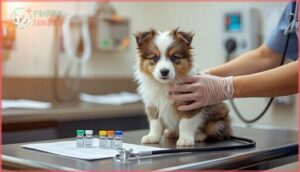
Your Sheltie puppy will need several veterinary visits between 6 and 16 weeks to complete core vaccine schedules, including DHPP combo shots and rabies vaccination. These puppy exams also cover health checks for eyes, heart, parasites, and breed-specific canine health issues. Budget around $100–$500 total for initial veterinary care and vaccination costs, depending on your clinic’s vet fees and bundled wellness packages.
| Vaccine Type | Timing | Typical Cost |
|---|---|---|
| DHPP combo | 8, 12, 16 weeks | $40–$50 per dose |
| Rabies | 14–16 weeks | $30–$40 |
| Leptospirosis | 12+ weeks (2 doses) | $30–$35 per dose |
| Exam fee (each visit) | Per appointment | $50–$100 |
Microchipping and Licensing Fees
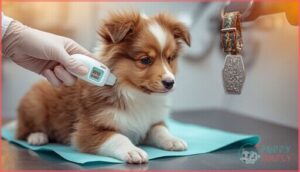
After completing vaccines, you’ll want permanent identification methods for your Sheltie. Microchip costs usually run $25–$60 for the procedure, plus $15–$30 for registration in a pet recovery database—bringing your total to roughly $70–$105 upfront. Annual licensing fees add another $10–$20 per year in most localities, and you’ll need current rabies documentation before your local government issues the license tag.
- Microchipping boosts return-to-owner rates to 52% compared to extremely low recovery for unchipped dogs
- Community clinics and shelter events often drop microchip costs to $20–$30 during adoption drives
- Lifetime registration options may cost extra but eliminate annual database renewal fees
Early Training and Socialization Costs

Beyond chip and tag expenses, you’ll face puppy training and behavior investments that set the foundation for your Sheltie’s temperament. Local puppy socialization through obedience classes generally costs $140–$250 for six to eight weekly sessions, addressing behavioral issues like excessive barking and herding instincts.
Private training methods run higher at $600–$1,800 for multi-session packages, while online courses offer budget-friendly alternatives around $99–$159 annually.
Monthly and Annual Sheltie Ownership Costs

Once you bring your Sheltie puppy home, the real expenses begin—and they add up faster than most new owners expect. Between food, vet visits, grooming appointments, and potential insurance premiums, you’re looking at consistent monthly costs that deserve careful planning.
Here’s a breakdown of what you’ll actually spend to keep your Sheltie healthy and happy throughout the year.
Food and Nutrition Expenses
Quality dog food represents one of your biggest monthly expenses, generally costing $20 to $60 depending on brand and formula. Your Sheltie’s calorie management needs—about 400 to 550 calories daily for a 10-pound puppy—directly impact feeding schedules and diet quality choices.
- Budget kibble costs $0.80 to $1.80 per pound, while premium formulas reach $3.50 to $4.50
- Wet food additions can push monthly expenses up by $30 to $90
- Food allergies requiring prescription diets may double your puppy cost to $80-$200 monthly
Routine Veterinary Care
After you’ve covered feeding your Sheltie, veterinary expenses deserve your attention because they’ll shape your monthly budget considerably. Puppies need wellness exams every 3 to 4 weeks initially, with vaccine schedules and parasite control adding $100 to $300 per visit in that first year.
| Care Type | Annual Cost Range |
|---|---|
| Routine Exams & Vaccines | $150–$300 |
| Parasite Prevention | $180–$420 |
| Dental Care & Health Screenings | $100+ |
| Pet Insurance (Optional) | $300–$600 |
Annual dog health maintenance, including canine health checks and preventive medicine, usually runs $410 or more according to recent estimates. Veterinary care and expenses have climbed roughly 38.5 percent since 2019—so budgeting an extra cushion protects you from sticker shock at checkout.
Grooming and Maintenance Fees
That luxurious double coat demands consistent attention and real dollars. Professional grooming sessions generally run $50 to $75 every 6 to 8 weeks, adding up to roughly $400 to $700 annually for pet grooming and hygiene.
- Grooming essentials like slicker brushes, combs, and de-shedding tools cost $100 to $200 per year for at-home coat care between salon visits.
- Nail trimming services average $17 per session, with ear cleaning adding another $10 to $25.
- Shedding control requires weekly brushing at minimum—Sheltie care and maintenance isn’t optional with their thick undercoat.
Pet Insurance Options and Costs
Against unexpected veterinary bills, pet insurance provides financial protection with monthly policy premiums averaging $25 to $50 for Shelties. Coverage limits usually range from $5,000 to unlimited annual reimbursement, with most plans offering 70 to 90 percent claim process coverage after deductibles.
Insurance riders for wellness care add $15 to $30 monthly, while some providers include veterinary discounts that offset routine pet care expenses throughout your dog’s lifetime.
Lifetime Costs and Budget Planning for Shelties

Owning a Sheltie isn’t just about the upfront puppy price—you’re looking at 12 to 14 years of ongoing expenses that add up quickly. Understanding the full financial picture helps you plan for everything from routine care to emergency vet bills, so you won’t get blindsided down the road.
Let’s break down what you can expect to spend over your Sheltie’s lifetime and how to manage those costs effectively.
Estimated Lifetime Expenses
Over a Sheltie’s 12 to 14 year lifespan, you’ll generally spend around $16,000 on lifetime pet expenses, which includes food, routine veterinary care, grooming, and basic supplies. That breaks down to roughly $1,100 to $1,400 annually—slightly below the national average for dog ownership costs.
Over 12 to 14 years, expect to spend roughly $16,000 on your Sheltie—about $1,100 to $1,400 annually
Your first year will be the most expensive, often approaching $4,000 when you factor in initial purchase, vaccinations, and essential setup costs.
Common Health Issues and Associated Costs
Hereditary conditions can quietly drain your wallet over the years, so understanding common Shetland Sheepdogs health risks helps you plan realistic lifetime pet expenses:
- Genetic disorders like Collie eye anomaly affect 15 to 72 percent of Shelties and require specialist exams, adding several hundred dollars annually to veterinary costs.
- Hip dysplasia may need joint supplements or surgery costing thousands, making pet insurance valuable for joint conditions.
- Thyroid issues and dental care demand lifelong medication and professional cleanings, easily reaching $500 yearly in combined veterinary care.
Strategies for Budget-Friendly Ownership
Smart budget planning doesn’t mean cutting corners on your Sheltie’s care—it means making every dollar count. You can trim monthly expenses by buying food in bulk through auto-ship programs, learning basic grooming at home to avoid frequent salon visits, and using community vaccine clinics for affordable care.
Pet insurance and initial setup investments in quality supplies prevent costly surprises while keeping veterinary care accessible.
Planning for Unexpected Costs
Emergency funds act as your financial safety net when a serious vet bill arrives without warning. You should set aside at least $500 to $1,000 specifically for veterinary care surprises, or consider pet insurance to shift unpredictable expenses into manageable monthly premiums.
Cost buffering through dedicated emergency accounts or specialized funding plans helps you handle sudden treatments without derailing your household budget.
Frequently Asked Questions (FAQs)
Is a Sheltie a good house dog?
Yes, when you meet their exercise and socialization needs. These affectionate dogs bond deeply with family, adapt well to various living spaces, and respond quickly to house training, though their vocal nature requires noise management.
What are the downsides of Shelties?
Shelties face several challenges: constant shedding requiring frequent grooming, excessive barking problems, and strong herding behavior that causes nipping.
Additionally, they exhibit high anxiety triggers and training challenges due to their sensitive nature and demanding exercise needs.
Do Sheltie dogs bark a lot?
While many assume small dogs stay quiet, this vocal breed barks frequently due to their herding instinct and noise sensitivity.
Effective bark control requires consistent training tips targeting their watchdog nature and environmental triggers.
What’s the life expectancy of a Sheltie dog?
Most Shelties live 12 to 14 years with proper canine health management, though some reach their mid-teens. Genetic factors, health screening, and senior care strongly influence breed longevity for your Shetland Sheepdog.
What factors can influence the price of a Sheltie puppy?
Breeder reputation, pedigree impact, geographic demand, and health screening directly shape Sheltie prices.
Market trends, breed-specific needs in dog breeding, and pet ownership costs all contribute to variations you’ll encounter when purchasing your puppy.
How can I find a reputable breeder for a Sheltie puppy?
Start with national breed clubs like the American Shetland Sheepdog Association, which list breeders committed to health testing and responsible breeding.
Visit breeders in person, verify health clearances, and ask detailed questions about puppy socialization practices.
What are the typical health issues that Shelties may face?
Before smartphones existed, vets already knew Shelties faced genetic diseases like Collie Eye Anomaly, skin issues including dermatomyositis, joint problems such as hip dysplasia, hormonal imbalances like hypothyroidism, and MDR1 drug sensitivity requiring careful veterinary care.
How often should I groom my Sheltie?
Your Sheltie needs thorough brushing at least once weekly to prevent matting, though 2-3 sessions control shedding better.
During seasonal coat blows, daily brushing prevents dense mats and maintains proper coat maintenance for peak Sheltie health and wellness.
Do Shelties get along with other pets?
Yes, with proper Pet Socialization, your Shetland Sheepdog can thrive alongside Canine Companions and achieve Feline Coexistence. Early dog training and behavior work ensures Multi Pet Harmony, though Small Pet Safety requires supervised interactions due to herding instincts.
How much space does a Sheltie need?
Think of indoor space as breathing room rather than square footage. Your Sheltie needs clear walkways and one open area for movement, plus yard access or daily park visits to satisfy exercise needs and mental stimulation requirements.
Conclusion
Bringing home a Sheltie means embracing both the joy and the investment—think of it as planting a seed that requires consistent care to flourish. Understanding how much a Sheltie puppy costs, from that initial $800-$1,500 purchase through decades of veterinary care, grooming, and nutrition, transforms sticker shock into strategic planning.
Budget transparency doesn’t diminish the experience; it strengthens your commitment, ensuring your intelligent companion receives the lifelong care these devoted herding dogs deserve.
- https://www.adoptapet.com/answers/how-much-do-shelties-cost
- https://www.lancasterpuppies.com/sale/puppies/shetland-sheepdog/
- https://iheartdogs.com/cost-of-a-sheltie-puppy-by-us-region/
- https://grandfortshelties.com/what-does-an-ethically-raised-sheltie-puppy-really-cost-a-transparent-breakdown/
- https://articles.hepper.com/shetland-sheepdog-cost/