
This site is supported by our readers. We may earn a commission, at no cost to you, if you purchase through links.

Most new puppies sleep between 18 and 20 hours a day—and yet, somehow, they still manage to wake you up at 2 a.m. like clockwork. That exhausting first week says less about your puppy being difficult and more about where they’re sleeping and how that space is set up.
A puppy dropped into a quiet room alone at night is a puppy in distress, and distress means noise. Keeping your puppy’s crate in your bedroom, at least early on, changes the whole picture—shorter crying spells, faster settling, and more sleep for both of you.
The details matter more than most people expect.
Table Of Contents
- Key Takeaways
- How Long Should Puppies Sleep?
- Puppies Should Sleep in Your Bedroom
- Nighttime Puppy Sleep Schedule
- Create a Calm Sleep Setup
- Fix Common Puppy Sleep Problems
- Frequently Asked Questions (FAQs)
- What is a red flag puppy’s behavior?
- How long should a puppy sleep in the bedroom?
- When to move a puppy crate out of the bedroom?
- At what age can puppies sleep through the night without eating?
- When to let a dog sleep in the bedroom?
- What should I do if my puppy has trouble sleeping in the bedroom?
- Is there a risk of my puppy getting too comfortable sleeping in the bedroom?
- How can I help my puppy adjust to sleeping in the bedroom?
- What temperature should puppys bedroom be?
- How to handle puppy nightmares or sleep terrors?
- Conclusion
Key Takeaways
- Keeping your puppy’s crate in your bedroom for the first few months cuts down on crying, builds trust faster, and helps both of you actually get some sleep.
- Puppies sleep anywhere from 12 to 22 hours a day, depending on their age, so what looks like laziness is really just their brains and bodies doing the hard work of growing.
- A solid bedtime routine — last meal two to three hours before bed, a final toilet trip, and a calm, dark, consistent sleep space — makes a bigger difference than any gadget or trick.
- Most puppies stop needing nighttime potty breaks by four to six months, but getting there faster comes down to bladder control, consistent crate training, and not rushing the process.
How Long Should Puppies Sleep?

Puppies sleep a lot more than most new owners expect, and that’s completely normal.
In fact, some breeds like Cavapoos can snooze up to 18–20 hours a day—check out this breakdown of how long Cavapoo puppies sleep to see what’s typical at each stage.
How much sleep they need changes fast as they grow, so the number that’s right for your pup depends entirely on their age.
Here’s how it breaks down, week by week.
Newborn to 4 Weeks: 20–22 Hours Daily
Newborn puppies sleep 20 to 22 hours a day — and that’s completely normal. Their days run on short sleep cycle bursts interrupted by feeding intervals, since tiny tummies empty fast.
A low-light environment and parent proximity help them settle back down quickly.
Gentle swaddling support and familiar warmth make a real difference.
From newborn to four weeks, rest is their main job.
4 to 12 Weeks: 18–20 Hours Daily
Once your pup hits four weeks, sleep drops slightly—but 18 to 20 hours daily remains the norm through 12 weeks. Here’s what shapes that:
- Nap frequency stays high; puppies cycle between play and sleep every hour or two.
- Awake windows are short—overtired puppies fight sleep hard.
- Growth sleep fuels rapid physical development during this stretch.
- Sleep phase depth alternates between light and deep cycles throughout naps.
- Energy recovery depends on your sleep environment setup for ideal puppy rest.
Stick to a designated sleeping area and watch your puppy’s cues closely.
12 to 16 Weeks: 16–18 Hours Daily
Between 12 to 16 weeks, the average amount of time puppies spend sleeping drops to 16–18 hours daily. Wake window length stays short—overtired signs like snapping and restlessness appear fast.
Daytime activity balance matters here: a short play session before each nap helps.
Breed rest variations are real too, so don’t panic if your puppy sleeps a little more or less.
4 to 6 Months: 14–16 Hours Daily
By 4 to 6 months, your puppy’s sleep needs settle into a more manageable rhythm — around 14 to 16 hours daily. Nap consolidation kicks in here, often dropping to one or two solid daytime naps.
Wake window balance matters: most pups handle 2 to 3.5 hours awake before tiredness hits.
Bedtime routine tweaks and a consistent sleep zone support healthy growth hormone timing beautifully.
6 to 12 Months: 12–14 Hours Daily
Between 6 to 12 months, your puppy’s sleep duration settles into 12–14 hours daily — a natural growth-related sleep decline as their brain and body mature. Consolidated nighttime sleep now spans roughly 9–11 hours, with daytime nap distribution filling the rest.
Healthy sleep at this stage includes:
- Longer, uninterrupted nights with fewer wake-ups
- Shorter naps clustered after meals or play
- Better energy expenditure balance throughout the day
- A stable nighttime crate setup and comfort routine
- Early sleep concerns easing as bladder control improves
When Puppy Sleep Starts Resembling Adult Sleep
Around 12 weeks, you’ll notice your puppy’s sleep cycle consolidation beginning — naps stretch longer, wake windows widen, and nights grow quieter. This juvenile sleep shift unfolds gradually as REM stabilization and brainwave maturation remodel how deeply they rest.
Delta power keeps declining through 8–14 months, so adult-like sleep isn’t a single moment. It’s a slow, steady drift toward fewer, longer stretches.
Along the way, factors like nighttime panting and behavioral shifts can signal disruptions that slow this natural maturation process even further.
Most puppies require 16–20 hours of sleep each day during this stage, as detailed in the newborn puppy sleep needs.
Puppies Should Sleep in Your Bedroom

Your new puppy doesn’t just want to sleep near you — they genuinely need it, at least at first. Being close to you at night helps them feel safe, settle faster, and cry less.
Your new puppy doesn’t just want you close at night — they genuinely need it
Here’s what that actually looks like in practice, from the first night home to the day they’re ready to sleep on their own.
Why Bedroom Sleeping Helps New Puppies Settle
Your bedroom is the best place for a new puppy to sleep — and the science backs that up. Human proximity acts as a powerful security cue, helping reduce sleep anxiety in dogs from the first night. Here’s why it works:
- Your breathing and warmth regulation calm them naturally
- Nighttime supervision means faster responses to distress
- Social bonding through co-sleeping builds lasting trust
How Long to Keep The Crate Nearby
There’s no magic number of days for keeping the crate nearby — it’s really a readiness assessment based on your puppy’s behavior. Most owners follow a gradual distance plan over one to two weeks, staying close while bladder maturity timing is still developing.
Watch for puppy stress signals like persistent crying. Owner proximity benefits crate comfort, eases crate resistance, and enhances your puppy’s sleep needs from day one.
When to Move The Crate Farther Away
Readiness cues matter more than calendar dates. Move the crate farther away only when your puppy settles quickly, stays calm for several consecutive nights, and doesn’t escalate during brief separations.
Gradual distance shifts — a foot or two at a time — prevent crate resistance and separation anxiety from spiking. Keep noise management consistent, and monitor wake-up frequency closely.
Earlier wake-ups usually mean the sleep environment setup moved too fast.
Transitioning to Another Room
Gradual Light Adjustment and Familiar Cue Placement create a consistent sleep environment. Match brightness levels between rooms and maintain the same crate layout and blanket to ease the transition.
Timing the Move for early evening, after a toilet break, ensures a smoother shift. This aligns with the puppy’s natural routine, reducing stress during the relocation.
Parental Proximity and Traffic Noise Management ease the first few nights. Keeping the puppy close and minimizing disruptive sounds fosters comfort and quicker adaptation.
Bedroom Sleeping Versus Bed Sharing
Sharing your bed feels sweet, but surface safety matters more than snuggles here. Puppies can tumble off mattresses or burrow into bedding risks like loose blankets, creating hazards. These disruptions also compromise your sleep environment setup for ideal puppy rest.
A sleep-friendly crate environment nearby offers a safer alternative. It enables monitoring when needed, fosters puppy independence, and prevents sleep disruption for adults — ensuring your sleep zone remains truly quiet for both of you.
Signs Your Puppy is Ready for Independence
Your puppy is likely ready when you notice calm solo settling—relaxing without fixated attention on you, engaging in independent play, and showing consistent potty signals before accidents occur. Reduced clinginess and tolerance for brief separations are the clearest indicators.
These behaviors signal that your sleep zone training and crate training have successfully taken hold. Moving the crate farther away won’t compromise the social bonding established through co-sleeping with puppies.
Nighttime Puppy Sleep Schedule

Getting your puppy through the night takes a bit of patience and a decent routine. The good news is that most puppies fall into a predictable pattern pretty quickly once you know what to expect at each age.
Here’s a look at how a typical nighttime schedule plays out, and how it shifts as your puppy grows.
Typical 8-Week-Old Puppy Night Routine
At 8 weeks old, your puppy’s night looks nothing like yours — and that’s completely normal. A simple Dim Light Routine paired with a Soft Music Cue and Gentle Crate Entry signals sleep time clearly. Keep your Quiet Voice Signal calm and brief.
With proper Hydration Cutoff Time and crate training, establishing a bedtime routine for puppies becomes second nature within days.
Bedtime, Toilet Breaks, and Wake-Up Times
Most 8-week-olds go down around 8 pm and wake twice — once around 11 pm, again near 3 am — then rise by 6 am.
Pre-bedtime exercise and controlled water intake reduce nighttime wakeups greatly. Use morning light cues to anchor wake time, and maintain a low-key wake response to keep the environment intentionally boring.
Establishing a consistent bedtime routine for puppies, with temperature comfort in mind, locks in a reliable sleep schedule fast.
When Puppies Stop Needing Night Potty Trips
Most puppies stop needing nighttime potty breaks between 3 and 6 months, following these bladder development milestones:
- ~3 months – needs a break every 3–4 hours
- ~4 months – many achieve overnight bladder control
- ~5 months – reduced night accidents become consistent
- ~6 months – nighttime potty breaks usually end
A consistent last-call trip plus gradual interval extension helps achieve this faster.
How Bladder Capacity Affects Sleep Length
Think of your puppy’s bladder like a small tank that fills throughout the night. Functional bladder capacity — how much it can hold before triggering the nocturnal urge threshold — determines when they wake you up.
A steep bladder filling curve means nighttime urine volume hits the limit quickly, cutting sleep short.
As capacity grows, the curve flattens, and overnight bladder control naturally extends sleep duration.
Why Puppies Often Wake Early
Even with the best setup, early morning wake-ups catch most new puppy owners off guard.
Light exposure through uncurtained windows, sound triggers like birdsong or trash trucks, temperature discomfort, and sleep cycle fragmentation all pull puppies awake before you’re ready. Watch for these four common culprits:
- Light and sound: Dawn light and neighborhood noise reset their internal clock fast.
- Attention reinforcement: Responding immediately teaches your puppy that morning waking earns a reward.
- Temperature shifts: A too-cold or too-warm sleeping spot breaks sleep quickly.
- Bathroom urgency: Nighttime potty training isn’t complete yet — their bladder simply says "now.
Adjusting The Schedule as Your Puppy Ages
Your puppy’s sleep schedule isn’t set in stone — it shifts quietly as they grow. During 4 to 6 months, Bedtime Gradual Shift and Nap Timing Tweaks become necessary as sleep drops to 14–16 hours.
By 6 to 12 months, Potty Break Reduction occurs naturally, while Consistent Wake Times anchor the daily routine. Energy Level Balancing—prioritizing more active time earlier—helps maintain calm nights.
Create a Calm Sleep Setup
Getting your puppy’s sleep space right makes a bigger difference than most people expect. A few simple tweaks to their crate and bedroom setup can mean the difference between a settled pup and a long, restless night.
Here’s what actually helps.
Choosing The Right Puppy Crate Size

The right crate size makes all the difference for sleep zone training. Measure your puppy’s length and height, then add 6 inches to both for a proper height buffer.
Length measurements matter most — too much space invites accidents.
Adjustable dividers let one crate grow with your pup.
Wire and plastic each has its place, but both work well with consistent placement guidelines.
Adding Soft Bedding and Familiar Scents
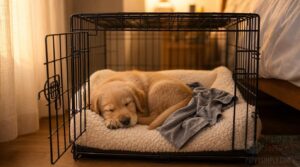
Soft bedding does more than feel cozy — it provides texture pressure relief for a puppy logging 16-plus hours of sleep daily. Line the crate with a washable soft blanket and tuck in a worn T-shirt for familiar scent adaptation. That small scent cue genuinely settles first-night anxiety.
Maintain bedding hygiene by washing weekly with unscented detergent. Layer lightly to ensure temperature regulation without bulk, prioritizing comfort and safety.
Using White Noise or a DAP Diffuser
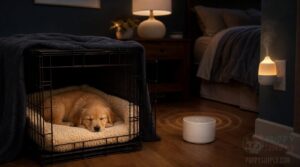
Beyond scent, sound shapes how well your puppy settles. A white noise machine near the crate smooths out sudden household noises — use Volume Adjustment to keep it audible, not loud, and Timer Settings let it shut off automatically.
To use a DAP diffuser effectively, follow Placement Guidelines near the crate for Coverage Optimization. Dog Appeasing Pheromone helps calm dog pheromones naturally.
Practice Safety Monitoring if your puppy seems unsettled after starting either tool.
Keeping The Bedroom Quiet and Predictable

Sound and light set the mood more than you’d think. Keep windows closed, use blackout curtains, and cover any blinking LED glare — small Lighting Discipline habits that reinforce a predictable sleeping pattern.
Soft steps, low voices, and consistent crate placement round out your sleep environment setup for ideal puppy rest.
Steady surroundings tell your puppy: *this is safe, this is sleep time.
*
Final Toilet Break Before Bed

A calm room sets the stage — now seal it with one last trip outside. Managing nighttime toilet trips in puppies comes down to consistency:
- Use a consistent spot every night
- Keep a leash control hold to prevent wandering
- Say your cue word quietly while they go
- Return inside immediately for quick cleanup if needed
- Adjust timing if accidents keep happening afterward
That’s your potty schedule for puppies sorted.
Last Meal Timing to Reduce Night Wakings
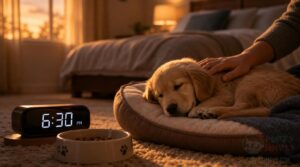
Food timing matters more than most people realize. Aim for an Evening Meal Buffer of at least two to three hours before bed — that’s your sweet spot for Consistent Feeding Time.
Keep it a Light Dinner Portion with Digestible Night Food, so digestion wraps up before lights out.
Managing nighttime wakeups and potty breaks gets noticeably easier when the stomach isn’t still working overtime.
Comfort Items That Help Puppies Settle

Transform a crate into a genuine den-like environment with thoughtful additions. Heartbeat toys like the Snuggle Puppy mimic a littermate’s warmth, while pheromone diffusers—such as DAP—quietly ease separation anxiety.
For mental stimulation, Snuffle mats offer restless puppies a calming activity before sleep, encouraging natural foraging instincts.
Comfort-focused solutions like Cuddle cave beds and weighted blankets complete the setup, ensuring the space feels safe and inviting.
Together, these elements create a soothing, den-like atmosphere that addresses both emotional and physical needs.
Fix Common Puppy Sleep Problems

Even the best routines hit a snag sometimes, and that’s completely normal. Most puppy sleep problems have a straightforward fix once you know what you’re looking at.
Here are the most common issues and what to do about each one.
Night Crying and How to Respond
Night crying is exhausting — but it’s rarely random. Start by working to identify pain triggers like teething, ear infections, or skin irritation. Check feeding timing adjustments, as a long gap before bed invites hunger-driven waking. Temperature comfort matters too — cold drafts near the sleep zone are easy culprits.
For response style tips: stay boring. Calm, quiet, no eye contact.
Watch for medical red flags if crying is sudden or intense.
Too Many Nighttime Wake-Ups
Frequent nighttime waking usually traces back to a handful of fixable triggers. Pre-bed hydration—too much water right before bed—fills that tiny bladder fast. Light exposure, over-play stimulation, and anxiety triggers all disrupt sleep-zone comfort too. Underlying pain, like joint soreness or itching, quietly fragments rest.
Tightening your bedtime routine—consistent timing, calm settling, no roughhousing—makes managing nighttime wakeups and potty breaks noticeably easier.
Puppy Won’t Nap During The Day
A puppy that won’t nap is usually overstimulated, not stubborn. Watch for zoomies or restless pacing — they mean your pup is overtired and needs quiet time.
- Follow a consistent nap schedule with predictable potty-play-rest cycles
- Create crate darkness by covering part of it
- Time meals carefully — hunger disrupts nap frequency
- Practice noise management by keeping the area calm
- Enforce your puppy nap routine firmly but gently
Loud Snoring or Breathing Concerns
Some snoring is totally normal — but loud, persistent snoring is worth paying attention to. Snoring severity can signal airway obstruction or even early sleep apnea signs in certain breeds.
Key warning signs and recommended actions are outlined below:
| Warning Sign | What It Means | What to Do |
|---|---|---|
| Breathing pauses | Possible sleep apnea | Call your vet promptly |
| Morning dry mouth | Airway obstruction overnight | Schedule a checkup |
| Gasping/choking awakenings | Serious breathing concern | Seek urgent veterinary care |
Don’t wait.
Sudden Increase in Sleep Time
If your puppy is suddenly sleeping significantly more than usual, don’t brush it off. A sharp rise in sleep duration — beyond what’s normal on any puppy sleep chart by age — can signal serious issues.
Possible causes include stress-related somnolence, sleep debt recovery after disruption, or medication-induced drowsiness.
Red-flag symptoms worth watching for include:
- Confusion or difficulty focusing during play
- Unexplained weight changes alongside deeper sleep
- Trouble waking even after long rest
- Underlying hypersomnia tied to illness or pain
Lethargy, Poor Focus, or Sleep Deprivation
Sleep deprivation shows up fast. You’ll notice attention lapses during training, microsleep episodes mid-play, and a real motivation decline — your puppy just checks out. Cognitive slowing makes learning feel impossible, and safety risks creep in when reaction time drops.
If your puppy seems foggy despite normal sleep opportunities, that’s your signal to look closer at their sleep environment setup and consistent sleep schedule.
When to Contact a Veterinarian
Sometimes sudden breathing distress, prolonged seizures, inability to urinate, or clear poison ingestion signs all need same-day veterinary care — don’t wait. Severe pain or injury never gets a "let’s see how tonight goes."
When common signs of health issues reflected in puppy sleep patterns appear, consult your veterinarian. Health monitoring for puppies starts with knowing when home fixes aren’t enough.
Frequently Asked Questions (FAQs)
What is a red flag puppy’s behavior?
Red flags show up as Fear Hiding, Defensive Aggression, Excessive Mouthing, Resource Guarding, or Separation Anxiety — behaviors that signal stress, not stubbornness, and deserve early attention from a professional.
How long should a puppy sleep in the bedroom?
Most puppies benefit from sleeping in your bedroom for about four months—until they’re reliably potty trained. After that, you can gradually shift them to their own sleep space.
When to move a puppy crate out of the bedroom?
Move your puppy’s crate when they demonstrate calm crate behavior, sleep through the night without potty training concerns, and show reduced dependency on your presence.
This typically occurs around three to four months old, marking a key developmental stage for independence.
At what age can puppies sleep through the night without eating?
Most puppies reach their sleep consolidation key stage around 5 to 5 months.
By then, bladder control improves enough that the balance between hunger and bladder needs no longer disrupts the night, making dropping night feeds a realistic option.
When to let a dog sleep in the bedroom?
Most dogs are ready for bedroom sleeping around one year old, once basic training sticks and bladder control is solid. That’s your clearest sign of true Behavioral Independence.
What should I do if my puppy has trouble sleeping in the bedroom?
Start with familiar scents, soft bedding, and calming music near the crate. Try gradual desensitization, light management, and aromatherapy aid like lavender. A DAP diffuser helps most.
Is there a risk of my puppy getting too comfortable sleeping in the bedroom?
Yes, there’s a real risk. Letting your puppy get too cozy in your bed can quietly trigger dependency escalation — and before long, canine separation anxiety becomes a nightly battle you didn’t sign up for.
How can I help my puppy adjust to sleeping in the bedroom?
Think of it like helping a child feel safe in a new room. A scented blanket, dim lighting, calm voice cues, and a consistent bedtime rhythm make all the difference.
What temperature should puppys bedroom be?
Maintain your puppy’s sleep environment at 75–80°F (24–27°C). Check the floor temperature, not the thermostat—since floors run colder.
Avoid drafts and avoid overheating risks.
Use safe supplemental heat only when truly needed.
How to handle puppy nightmares or sleep terrors?
Most puppy nightmares are normal. Let them settle on their own — gentle soothing with a calm voice works better than touching.
If episodes seem violent or frequent, episode tracking and a veterinary consult helps.
Conclusion
Think of those first nights like a lighthouse guiding a small boat to shore—your presence is the light, and the crate beside your bed is the harbor. How long puppy sleep bedroom routines take to settle depends entirely on how safe your puppy feels in those early weeks.
Get the setup right, stay consistent with the schedule, and that 2 a.m. alarm slowly goes quiet. The effort you put in now shapes the calm nights ahead.
- https://petlandraleigh.com/post/puppy-sleep-routine-by-age-from-newborn-to-six-months/
- https://www.yourtango.com/self/scientifically-proven-benefits-letting-dog-sleep-bed
- https://www.akc.org/expert-advice/health/how-much-do-puppies-sleep/
- https://www.playpetbrands.com/blogs/tips/puppy-sleep-schedule-by-age?srsltid=AfmBOopmRQVuLRzTvLjFO_gTE9-f-jjRxTopYoigyIswAWNLKrVHcBRw
- https://www.utahhumane.org/blog/puppy-survival-guide-part-1-the-importance-of-sleep