This site is supported by our readers. We may earn a commission, at no cost to you, if you purchase through links.

Your clipper glides through your dog’s coat, then suddenly stalls—blades tugging instead of cutting. That burning smell tells you something’s wrong, but you’re not sure what. Understanding how dog grooming clippers work prevents these frustrating moments and protects your dog from discomfort.
The mechanism is straightforward: an electric motor drives one blade rapidly across a stationary blade, creating a scissors action that slices through hair. Motor power, blade alignment, and heat management all determine whether your clipper cuts smoothly or struggles.
When you know what’s happening inside the housing, you’ll maintain sharper blades, prevent overheating, and recognize when your tool needs attention before it fails mid-groom.
Table Of Contents
Key Takeaways
- Dog clippers work through a rapid oscillating blade system where a moving blade slides across a stationary blade at 6,000-12,000 RPM, creating a scissor-like shearing action that slices through hair cleanly when properly aligned and maintained.
- Your clipper’s motor type and power rating must match your dog’s specific coat texture—light single coats need basic motors while thick double coats or curly non-shedding breeds demand heavy-duty models with higher stroke rates to prevent stalling and overheating.
- Clipper burn happens when friction from dull or dry blades generates excessive heat against your dog’s skin, which you prevent by oiling blades every 10 minutes, pausing to let metal cool, and stopping immediately if skin appears pink or feels warm.
- Blade maintenance determines performance longevity—clean trapped hair after every session, apply clipper oil to moving parts, and budget for professional servicing every 12-18 months or sooner if you notice reduced cutting efficiency or repeated overheating.
What Are Dog Grooming Clippers?
Dog grooming clippers are specialized tools designed to trim and shape your dog’s coat safely and efficiently at home. Understanding what makes them different from regular hair clippers helps you choose the right equipment and use it correctly.
Investing in the best dog grooming clippers ensures you have the right blade power and safety features for your pet’s specific coat texture.
Let’s break down the essential components, power options, and blade features you need to know.
Key Components and Their Functions
Dog clippers are precision grooming tools built around essential systems. Understanding these parts helps you maintain your equipment and groom safely.
Before you buy, check out what to look for in dog clippers to make sure you’re getting one that’s safe and effective for your pet’s coat type.
Core Components:
- Motor housing – Contains the drive motor and cooling vents that prevent overheating during long sessions
- Blade alignment system – Keeps moving and stationary blades properly tensioned for smooth cutting action
- Safety features – Guards and low-heat designs protect your dog’s skin from irritation
- Ergonomic design – Reduces hand fatigue and improves clipper handling precision
Types of Clippers (Corded Vs. Cordless)
Choosing between corded and cordless clippers shapes your grooming workflow. Corded models deliver steady power for long sessions—you won’t face battery life interruptions during a full-body clip. They’re lighter and maintain consistent torque.
If you’re weighing these trade-offs for your dog, check out our guide to the best professional dog clippers to find models that match your grooming style.
Cordless clippers offer freedom to move around your dog without tangling, though battery performance impacts clipper durability and runtime.
Many beginner-friendly grooming clippers now feature quick-charge batteries that minimize downtime between grooming sessions.
For pet comfort, both electric clippers work well when properly maintained.
Blade Designs and Materials
Once you’ve picked your power source, the blade itself becomes your workhorse. Material science drives performance—stainless steel resists rust, ceramic blades stay sharp longer, and titanium coating cuts heat. Blade geometry affects how smoothly you trim: narrow edges navigate tight spots, while coating options improve glide. Blade lengths determine cut depth, and proper clipper handling plus blade safety habits prevent nicks during clipper maintenance.
- Stainless steel resists corrosion during regular use.
- Ceramic blades maintain edge retention but chip easily.
- Titanium coatings reduce heat buildup and wear.
- Narrow blade geometry improves maneuverability around joints.
How Do Dog Grooming Clippers Work?
Dog grooming clippers might look simple, but there’s real engineering behind every smooth pass through your dog’s coat. Understanding how these tools convert power into precise cuts helps you use them more effectively and spot problems before they affect your grooming results.
Let’s break down the three core systems that make clippers work: the motor and power source, the blade movement that does the actual cutting, and the built-in safety features that protect your pet.
Before you power up those clippers, make sure you’ve got your professional dog grooming supplies kit ready—including protective gear and proper restraints to keep both you and your pup safe.
Motor Mechanism and Power Source

Most grooming clippers rely on brushed motors or brushless motors to generate blade speed. Corded models pull steady power from outlets, while cordless units use lithium batteries that affect runtime and torque. Professional clippers generally spin between 6,000 and 12,000 RPM.
Thermal management features prevent overheating during long sessions. Energy efficiency varies by motor type, impacting clipper maintenance needs and battery life.
Blade Movement and Cutting Action

The cutting action happens through a scissor-like shear between two clipper blades. Your moving blade oscillates at thousands of cycles per minute, trapping hair against the stationary blade’s teeth.
Blade geometry and clearance determine how cleanly you cut—proper alignment prevents snagging and heat buildup.
Regular blade maintenance keeps this precision intact, ensuring clipper efficiency across different grooming equipment and clipper types.
Safety Features for Pets
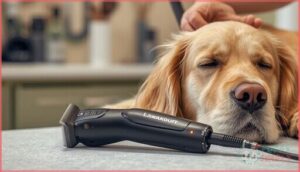
Pet injury prevention starts with built-in safeguards. Automatic shutoff kicks in when your clipper jams or stalls, preventing overheating and burn risk. Thermal monitoring through carbon brushes and temperature sensors tracks motor health. A clipper guard prevents accidental skin contact during operation.
Electric shock protection comes from insulated housings on corded and cordless models. Look for safety certifications like IEC or UL—they confirm your grooming tool safety meets rigorous standards for dog safety and wellbeing.
Choosing The Right Clippers for Your Dog
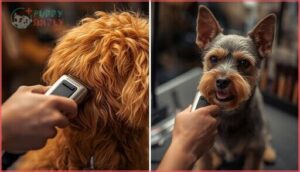
Not every clipper works for every dog. Your pet’s coat texture, thickness, and length determine which tool will give you the best results without struggling or causing stress.
Let’s break down how to match the right equipment to your dog’s specific needs.
Matching Clippers to Coat Type
Your dog’s coat determines which clippers will actually work—not the other way around. Matching the motor’s power to your pet’s fur texture prevents stalling, overheating, and incomplete cuts that frustrate both you and your dog.
Select clippers based on these coat analysis factors:
- Light single coats (Beagles, short-haired Terriers) need only light to medium duty clippers for occasional touch-ups and trimming.
- Medium double coats require medium to heavy duty models with rotary motors to handle both topcoat and undercoat layers.
- Thick double or mixed textures demand heavy duty clippers with higher strokes per minute to drive dog grooming clippers through dense sections.
- Non-shedding curly, wool, or fleece coats (Poodle crosses) require super duty clippers rated for all dog coat types and grooming challenges, including knots.
To guarantee the right choice, consider the dog coat types and their specific needs.
Selecting Blade Lengths and Attachments
Blade length guides work like height settings on a lawn mower—numbered labels (3, 6, 10) tell you exactly how close the clipper blades will cut. Attachment combs add extra length when you need it, giving you grooming precision without guesswork.
Match blade lengths to your dog’s coat type matching needs, and you’ll avoid uneven patches. Regular clipper maintenance keeps these clipper adjustments sharp and consistent every session.
Factors Affecting Clipper Performance
Performance optimization depends on five factors you’ll notice right away during any grooming session.
- Motor power drives cutting speed—higher wattage manages thick coats without slowing down
- Blade sharpness determines clipper efficiency and reduces pull on your dog’s fur
- Heat management prevents overheating that stalls performance mid-clip
- Battery chemistry (cordless models) affects runtime consistency
- Regular blade maintenance sustains peak clipper blades performance across clipper types
Proper Use of Dog Grooming Clippers
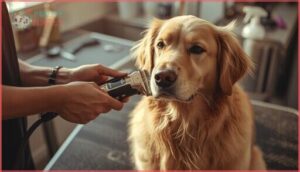
Using clippers correctly protects your dog’s skin and keeps grooming sessions stress-free. The right setup and technique make all the difference between a smooth clip and potential irritation.
Here’s how to prepare, clip safely, and avoid common problems that lead to discomfort.
Preparing Your Dog and Workspace
Before you even plug in your clippers, your workspace setup and canine stress management make the difference between a smooth session and a wrestling match. Exercise your dog beforehand—a tired pup cooperates better. Use a stable grooming table with non-slip matting to prevent slips.
Check the coat and skin for mats, bumps, or irritation, then brush thoroughly to remove tangles. Following a proper coat prep guide is vital for a safe and effective grooming experience.
Step-by-Step Clipping Techniques
Once your dog’s settled and the workspace is ready, you can start clipping. Grip the clippers firmly but stay relaxed—tension shows up in uneven passes. Work with the coat’s natural growth, not against it.
Make short, steady strokes and pause often to oil the blade. Check for matting as you go, adjusting guard lengths when needed for smooth, consistent results.
Preventing Skin Irritation and Clipper Burn
Hot blades cause clipper burn—friction from dry, dull edges heats metal fast. Keep your blade sharp, clean, and oiled before every pass. Slow down on sensitive spots and lift the clipper every few strokes to let it cool.
If your dog’s skin looks pink or feels warm, stop immediately. A pet-safe balm afterward soothes any redness and protects the coat.
Clipper Maintenance and Troubleshooting
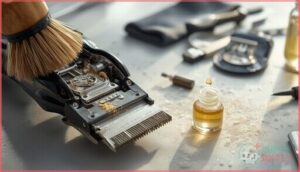
Your clippers won’t perform well if you skip maintenance—it’s that simple. Regular cleaning, quick troubleshooting, and knowing when to replace parts keep your tools running smoothly and your dog safe.
Let’s break down the essential maintenance tasks every groomer needs to master.
Cleaning and Lubricating Blades
Your clipper blades need consistent attention to stay sharp and rust-free. After each grooming session, brush away trapped hair with a small brush or air blower. Apply a few drops of clipper oil to the blade edges and moving parts, then wipe with a lint-free cloth to spread the lubricant evenly.
Store blades removed or covered—proper blade storage solutions prevent contamination and extend their lifespan considerably.
Handling Blade Jams and Overheating
When your blades snag or heat rises, stop immediately—continuing risks motor damage and burns. Blade jams usually mean hair buildup between teeth, so power off and clear debris with your brush. Overheating signals dull blades or excessive pressure.
Quick fixes for common problems:
- Apply blade lubrication every 10 minutes during long sessions
- Pause clipping when you feel heat building
- Remove matted fur before it binds the mechanism
- Use cooling spray between passes on thick coats
- Check blade alignment if jamming repeats
These safety precautions protect both your grooming equipment and your dog’s skin.
When to Replace or Service Clippers
Generally, your clippers need professional attention after 12–18 months of regular use—sooner if you notice reduced cutting efficiency or overheating twice in one session. Blade replacement becomes necessary when sharpening no longer restores performance.
Budget for annual service schedules to extend equipment longevity and avoid costly emergency repairs. Check your manual for model-specific maintenance costs and intervals that keep your clipper types running smoothly.
Frequently Asked Questions (FAQs)
Can I use human clippers on my dog?
No—never swap human hair clippers for proper dog grooming clippers. Pet-specific clipper blades and motors handle dense coats safely, preventing painful pulls, overheating, and clipper burn that compromise dog comfort and grooming risks.
How often should I groom my dog at home?
Brushing two to three times weekly prevents matting for most breeds. Shorthaired dogs need weekly sessions, while longhaired pups require more frequent coat maintenance.
Bathe every four to eight weeks to maintain proper dog hygiene.
What should I do if my dog fears clippers?
Calm, consistent positive reinforcement transforms clipper phobia. Start gradual desensitization early—pair sounds with treats, use non-slip mats, and reward stillness.
For severe canine anxiety, consult a veterinary behaviorist about fear reduction strategies during dog grooming sessions.
Are professional groomers worth the extra cost?
Professional dog grooming offers expert handling and bundled services like nail trimming, but at $40–$120 per visit, annual costs can exceed $
Weigh your budget planning, grooming frequency needs, and pet comfort against home grooming tools.
How do I groom hard-to-reach areas safely?
Start with rounded-tip scissors or guards for safe trimming. Keep your dog calm, check skin closely, and work in short sessions.
Light pressure and proper clipper maintenance prevent nicks in tight spots.
Conclusion
Investigate the truth of a theory: a well-maintained clipper is more than a tool—it’s your dog’s comfort and safety in action. When you understand how dog grooming clippers work, every detail matters, from blade alignment to motor strength.
Consistent care and smart choices prevent pain and stress for your pet. Treat your clippers like trusted partners, not just machines. Master their mechanics, and each grooming session becomes smoother, safer, and more satisfying—for both you and your dog.