This site is supported by our readers. We may earn a commission, at no cost to you, if you purchase through links.

Most commercial dog treats read like a chemistry textbook—artificial preservatives, vague "meat by-products," and enough sodium to make a cardiologist wince. After years of reviewing pet nutrition labels, I still can’t tell you what "natural flavor" actually means. Your dog deserves better clarity than that.
Homemade dog treats put you back in the driver’s seat, letting you swap mystery ingredients for whole foods your pup’s body recognizes and uses. These vet-approved recipes are straightforward, budget-friendly, and genuinely designed to keep tails wagging and bellies happy.
Table Of Contents
- Key Takeaways
- Homemade Dog Treat Benefits
- Vet Approved Recipes
- Healthy Treat Ingredients
- Making Homemade Treats
- Safe Feeding Guidelines
- Frequently Asked Questions (FAQs)
- What are the best ingredients to use for homemade dog treats?
- How much of each ingredient should be used?
- Are homemade dog treats safe for all types of dogs?
- How should these treats be stored?
- Are there any special tips for making homemade dog treats?
- Can puppies eat the same homemade dog treats?
- How do I know my treats are safe?
- Are homemade treats suitable for senior dogs?
- How often can dogs eat homemade treats?
- What equipment do I need for baking?
- Conclusion
Key Takeaways
- Making treats at home gives full control over every ingredient, so you can skip the mystery additives and tailor each bite to your dog’s specific health needs.
- Toxic everyday ingredients like xylitol, grapes, and onions can seriously harm your dog, so always read labels carefully before adding anything to your recipe.
- Keeping treats under 10% of your dog’s daily calorie intake is the simplest way to prevent weight gain while still rewarding good behavior.
- Vet-approved recipes like chicken chews, mini omelettes, and apple pretzels use whole-food ingredients that genuinely support digestion, coat health, and dental hygiene.
Homemade Dog Treat Benefits
Making your dog’s treats at home comes with some real perks worth knowing about. From what goes into each bite to how much you spend, the benefits add up fast.
Before you raid the pantry, it’s worth knowing which human snacks are unsafe for dogs so you can keep every homemade batch both tasty and safe.
Here’s what makes homemade treats such a smart choice for your pup.
Control Over Ingredients
Every ingredient in your dog’s treat starts with you — and that’s a big deal. Homemade dog treat recipes put sourcing standards in your hands, not a factory’s. Here’s what that control really means:
- Choose allergen-free flours like chickpea or coconut for sensitive pups.
- Use natural sweeteners and preservative‑free baking to skip harmful additives.
- Guarantee protein transparency with real chicken or salmon — no mystery meals.
Vet-approved. Always. You can also benefit from customizable ingredient control for your dog’s specific health needs.
Customizable Shapes Sizes
Now that you’re sourcing clean, natural ingredients, here’s where the real fun begins — shaping those homemade dog treats into something your pup (and honestly, you) will love.
Silicone mold options let you fill each paw‑print cavity with exactly one teaspoon of dough, creating perfectly uniform, vet‑approved bites every time. Cookie cutter varieties — bones, hearts, flowers — mean you’re not just baking dog biscuits; you’re crafting them.
Scale your sizes to your breed: tiny training treat dimensions under 0.25 inches for Chihuahuas, 1.5‑inch chews for Labradors. Dental health shapes with textured ridges clean teeth while rewarding good behavior. Now that’s a win‑win. For more ideas, see the vet‑approved recipes guide.
Cost Effective Options
Those custom shapes we just talked about? They come with a bonus: homemade dog treats are genuinely budget-friendly.
Bulk Buying flour and oats — often 20–40% cheaper per pound — makes Natural Ingredients affordable. Smart Ingredient Substitutions (oat flour instead of almond, carrots instead of berries) stretch your dollar further.
Batch Cooking one dough yields 30–60 Healthy Treats per session. Waste Reduction through Seasonal Sales and repurposed leftovers keeps VetApproved Dog Health treats surprisingly cheap:
- Buy oats and whole-wheat flour in bulk
- Swap pricey add‑ins for carrots or sweet potato
- Bake full batches to cut per‑treat cost
- Use xylitol‑free peanut butter over specialty spreads
- Freeze portions to prevent spoilage waste
Improved Dog Health
homemade dog treats genuinely improve your pup’s health.
better gut health means better gut health, natural immune boost support, and real allergy relief.
Firm baked biscuits even help with dental hygiene.
Lean, low-calorie bases support weight management without sacrificing flavor.
Ingredients like plain pumpkin, oats, and unsweetened applesauce are great starting points — find more ideas in this guide to healthy homemade dog treats that won’t tip the calorie scale.
These vet-approved, natural, and healthy dog treats give you full confidence in your dog’s nutrition and health.
Vet Approved Recipes

Good news — all four of these recipes have the thumbs-up from vets and are simple enough to make on a weeknight.
Each one uses wholesome ingredients your dog will actually get excited about.
Here’s what’s on the menu.
Apple Pretzels Recipe
These apple pretzel dog treats are honestly one of the easiest vet-approved homemade dog treats you’ll ever make. Just three ingredients — almond flour, egg, and xylitol-free applesauce — come together for a dough consistency that’s easy to roll and shape. Here’s what makes them a win:
- Baking temperature of 350°F for 25–30 minutes creates satisfying crunch
- Shaping techniques are simple — roll, twist, done
- Storage duration reaches two weeks airtight
Applesauce keeps the calorie count reasonable for dog health and nutrition.
Blackberry Biscuit Recipe
Baking these blackberry dog biscuits is simpler than you’d think.
The almond flour ratio — 4 cups to ¾ cup flax meal — gives your vet-approved dog biscuits structure, while olive oil moisture keeps the dough workable.
Mash in ½ cup of fresh blackberries (or raspberries work too), add one egg, and mix with water.
Follow baking time tips: 350°F for 25–30 minutes until firm.
For storage temperature, airtight at room temp lasts one week — refrigerated stretches to three.
Mini Omelette Recipe
mini omelette is one of the easiest vet-approved homemade dog treats you can make. Beat 2 eggs, add cooked salmon for an omega boost, and toss in diced bell pepper for vitamins. Cook fully — no runny spots.
- Egg protein benefits muscle and digestion
- Salmon omega boost helps skin and coat
- Bell pepper vitamins add nutrition with minimal calories
Cool completely before serving small, bite-sized pieces.
Savory Chicken Chews
These savory chicken chews are genuinely one of the best homemade dog treats you can make.
Use cooked, unseasoned chicken breast with oat flour and one egg — simple ingredient ratios that your pup’s stomach will thank you for.
Bake at 350°F for 15–20 minutes for perfect texture variations, chewy but firm.
Vet approved, high in dog nutrition, and refrigerator shelf life of about two weeks.
Healthy Treat Ingredients

What goes into dog’s treats matters just as much as the recipe itself. The right ingredients keep things nutritious, safe, and tail-wag worthy.
Here’s what to keep in mind when stocking up your treat-making pantry.
Low Calorie Ingredients
Smart ingredient swaps make all the difference in vet-approved healthy snacks for dogs. Focus on these three pillars of pet nutrition:
- Lean Protein Options — skinless chicken or cod keep treats light yet satisfying
- Non-Starchy Veggies — carrots and zucchini add crunch with minimal calories
- Low-Cal Fruit Add-ins — blueberries and strawberries deliver antioxidants naturally
Fat reduction techniques like swapping butter for unsweetened applesauce also keep your dog treat recipes guilt-free.
Avoid Toxic Foods
Some kitchen staples are quietly dangerous for dogs.
Xylitol dangers are real — this sweetener hides in sugar‑free peanut butter and can trigger seizures within an hour. Grapes toxicity can cause sudden kidney failure, even in tiny amounts. Onion allium risk builds over time, damaging red blood cells. Macadamia nut hazard causes tremors and weakness. Alcohol and yeast hazards are equally serious.
Xylitol, grapes, onions, macadamia nuts, alcohol, and yeast can seriously harm your dog—even tiny amounts can trigger dangerous reactions
Always read labels before making natural and healthy dog treats.
Portion Control Tips
Now that you know what to keep out of the bowl, let’s talk about how much to put in. Calorie budgeting for homemade dog treats is simpler than it sounds — just keep treats under 10% of your dog’s daily calories.
For a medium dog eating 1,000 calories daily, that’s roughly 100 treat calories. Batch portioning to pre-divide treats into daily bags, and a quick daily log tracking intake helps you catch creep before the scale does.
Nutritional Balance
Now that you’re portioning wisely, let’s zoom in on the nutritional balance. Healthy dog snacks should support your pup’s Canine Nutrition, not compete with it.
Vet-approved treats focus on:
- Smart Macronutrient Ratios
- Protein Quality for muscle health
- Fiber Digestive Balance
- Vitamin Mineral Sync for strong bones
- Life Stage Needs for targeted Pet Nutrition and Wellness
Making Homemade Treats
Making dog treats at home doesn’t have to be complicated — even if you’ve never baked a thing in your life. The recipes and tips below are designed to fit real schedules, real kitchens, and real dogs with their own quirky preferences. Here’s what you need to know to get started.
Easy Recipes for Beginners

Starting with homemade dog treats doesn’t have to feel overwhelming. Most dog treat recipes use simple ingredient prep and one-bowl mixes — think peanut butter, oats, and banana all stirred together before baking at 325°F.
No special tools, no fancy techniques. Basic shaping techniques like rolling small balls or cutting flat rounds keep things easy.
These vet-approved, easy-to-make treats support real dog nutrition without the stress.
Freezable Dog Treats
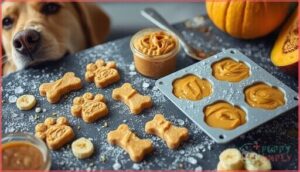
Once you’ve nailed those beginner recipes, freezing opens up a whole new world of homemade dog treats.
Silicone molds — bone or paw shapes work great — make mold selection simple and fun.
Try blending peanut butter with banana or pumpkin for flavor pairings, your pup will obsess over. The cooling benefits on hot days are real, and proper storage tips (airtight containers, labeled with dates) keep vet-approved batches fresh for weeks.
Long Lasting Treats

Crafting long lasting homemade dog treats is a game changer for both you and your pup. With proper dehydration techniques and smart size sizing, you’ll boost chew texture and dental benefits while extending shelf-life. Here’s what you gain:
- Satisfying, tough chews for busy mouths
- Gluten-Free and vet-approved recipes
- Natural shelf‑life extension
- Better Dog Nutrition and Health
Homemade Dog Food

homemade dog food puts you in charge of your pup’s plate — and that’s a beautiful thing. control ingredient sourcing, swap in seasonal produce, and handle dietary restrictions with ease.
Smart food rotation and nutrient supplementation keep meals balanced and vet-approved. It’s genuinely good pet care and wellness in action — real dog nutrition and health, built one loving meal at a time.
Safe Feeding Guidelines

Making treats at home is only half the equation — how you feed them matters just as much.
few simple guidelines can keep your pup healthy and happy without any guesswork.
what you need to know before reaching for that treat jar.
Limiting Treat Intake
Think of treats as a calorie budget — spend it wisely. Vet‑approved nutrition guidelines say treats should cover no more than 10% of your dog’s daily diet. For a small 11‑pound pup, that’s just 32 calories. Portion sizing and activity adjustment matter too — active dogs can handle slightly more.
- Use size‑based limits to set daily treat caps
- Break healthy snacks into smaller training pieces
- Schedule frequency to avoid overfeeding
- Swap food rewards for praise occasionally
- Track calories from homemade dog treats consistently
Avoiding Allergies
Ever notice your pup scratching more after a treat? Food allergies can sneak up like a thief in the night. Try Novel Protein Options and Allergen-Free Flours for vetapproved Homemade Dog Treats. Skin Symptom Monitoring and Elimination Diet Trials help pinpoint triggers. Store treats in airtight containers—Mute-Free Storage matters for Natural Pet Care.
| Allergy Trigger | Safer Swap | Storage Tip |
|---|---|---|
| Beef, Wheat | Duck, Potato | Airtight Container |
| Dairy, Chicken | Venison | GlutenFree Flour |
| Soy, Corn | Rabbit | Mite-Free Storage |
Consulting Veterinarians
Did you know your veterinarian is the secret ingredient to safer, happier treat times?
Their expertise goes beyond basic Pet Nutrition Advice—they offer Calorie Guidance, Allergy Screening, and can flag Medication Interactions that homemade treats might cause. Rely on Veterinary Advice for Dogs to tailor recipes, suggest smart Dietary Adjustments, and monitor for any health hiccups.
That’s true Canine Health and Care, every single treat.
Storing Homemade Treats
Fresh treats are the gift that keeps giving — but only if stored right.
- Use Airtight Containers (BPA-free glass or stainless steel) for up to two weeks at room temperature.
- Refrigeration Tips: perishable treats with eggs or meat last up to ten days.
- Freezing Methods: freeze in single layers, then bag — good for six months.
- Dehydration Process: fully dried treats last months in a cool pantry.
- Labeling Shelf Life: always date and list ingredients for smart Pet Care.
Frequently Asked Questions (FAQs)
What are the best ingredients to use for homemade dog treats?
Your kitchen is already stocked with pup’s best medicine.
Reach for oat flour, pumpkin puree, peanut butter (xylitol-free!), and applesauce — protein-rich, digestive-friendly, and low-sugar.
Omega-3 sources like flaxseed and allergy-safe almond flour round things out beautifully.
How much of each ingredient should be used?
Getting ingredient ratios right makes all the difference. For most dog treat recipes, aim for 2–3 cups dry ingredients, 1 egg, and ½ cup wet additions like pumpkin or applesauce.
Are homemade dog treats safe for all types of dogs?
Homemade dog treats aren’t a one-size-fits-all solution—think of them like shoes: what fits one pup might pinch another.
Toxic ingredient risks, breed-specific sensitivities, calorie density concerns, and food allergies mean you must tailor treats for canine health and wellness.
How should these treats be stored?
Store your treats in airtight containers at room temperature for up to a week.
Refrigerate perishable batches for 7–10 days, or freeze them for three months using proper freezer packaging with labeled dates.
Are there any special tips for making homemade dog treats?
Think of yourself as a chef and scientist rolled into one.
Use fresh ingredients, nail your dough consistency, mind your baking temperature, and always label dates — your pup deserves that kind of love.
Can puppies eat the same homemade dog treats?
Yes, but with care. Puppies under eight weeks aren’t ready for treats at all.
After that, age milestones, calorie limits, puppy texture size, and choking risk all matter — always confirm with a vet first.
How do I know my treats are safe?
Your kitchen is your dog’s first line of defense.
Check every ingredient label carefully, skip toxic foods, verify cooking temperatures, watch for allergy signs, monitor shelf life, and ask your vet before introducing anything new.
Are homemade treats suitable for senior dogs?
Senior dogs thrive with softer textures, omega‑3 enrichment for joint support, and calorie monitoring to match their slower pace.
Kidney‑friendly ingredients and natural pet nutrition keep aging pups feeling their best.
How often can dogs eat homemade treats?
Treats should stay within 10% of your dog’s daily calories. Smart calorie budgeting and activity-based adjustments keep your pup healthy.
Ask your vet for a treat schedule customized to your dog’s needs.
What equipment do I need for baking?
You don’t need a fancy setup. A few measuring tools, baking trays, silicone molds, an oven thermometer, and cooling racks are all it takes to start making delicious homemade dog treats confidently.
Conclusion
Your dog would eat a thousand of these treats before touching another mystery-ingredient kibble snack. That’s the magic of knowing exactly what goes into every bite.
This homemade dog treats recipe vet approved approach isn’t just about better ingredients—it’s about building a deeper trust between you and your pup, one wholesome batch at a time. Start simple, stay consistent, and let every treat reinforce what your dog already knows: you’ve always had their back.
- https://itdoesnttastelikechicken.com/easy-homemade-dog-treats/
- https://montanapetdentist.com/homemade-dog-treat-recipe/
- https://www.akc.org/expert-advice/lifestyle/homemade-vet-approved-dog-treat-recipes/
- https://drjustinelee.com/veterinary-recommended-homemade-dog-treat-recipes-dr-justine-lee/
- https://amp.pawmart.ca/fr/blogs/news/safe-homemade-treat-recipes-approved-by-toronto-vets