This site is supported by our readers. We may earn a commission, at no cost to you, if you purchase through links.

Your large breed puppy will gain roughly three pounds every week during their first year. That breakneck pace puts enormous pressure on developing bones and joints. One wrong nutritional move during these critical months can trigger orthopedic problems that last a lifetime.
Grain-free formulas have surged in popularity among puppy owners seeking alternatives to traditional diets, but the FDA’s 2019 investigation into potential links between grain-free foods and heart disease in dogs changed the conversation entirely. Now you’re stuck weighing the benefits of eliminating grains against legitimate concerns about taurine deficiency and dilated cardiomyopathy.
The challenge gets even trickier when you factor in calcium-to-phosphorus ratios, controlled calorie density, and the specific protein requirements that separate large breed formulas from standard puppy food. Here’s what actually matters when evaluating grain-free options for your growing giant.
Table Of Contents
- Key Takeaways
- Choosing Grain Free Food for Large Breed Puppies
- Top 10 Grain Free Large Breed Puppy Foods
- 1. Wellness Core Puppy Large Breed Food
- 2. ORIJEN Puppy Large Breed Dog Food
- 3. Taste of the Wild Puppy Food
- 4. Nulo Puppy Salmon and Turkey Food
- 5. Orijen Puppy Large Breed Dry Food
- 6. Instinct Raw Boost Large Breed Puppy
- 7. NutriSource Grain Free Large Breed Puppy
- 8. Nulo Puppy Turkey and Sweet Potato
- 9. Now Fresh Large Breed Puppy Food
- 10. Victor Grain Free Active Dog Food
- Analyzing Ingredients in Grain Free Puppy Foods
- Feeding Guidelines for Large Breed Puppies
- Tips for Selecting The Best Grain Free Puppy Food
- Frequently Asked Questions (FAQs)
- Is a grain free diet good for puppies?
- Do large breed puppies need grains?
- What should a large breed puppy eat?
- How do I transition my puppy to adult food?
- How often should I feed my large breed puppy?
- Can I mix grain-free puppy food with other foods?
- When should I switch puppy food brands?
- How do I store grain-free puppy food?
- What treats work best with grain-free diets?
- Conclusion
Key Takeaways
- Large breed puppies need grain-free formulas with a calcium-to-phosphorus ratio between 1.1:1 and 1.3:1 to prevent skeletal problems like hip dysplasia during their rapid growth phase of roughly three pounds per week.
- The FDA’s 2019 investigation linked grain-free diets to potential heart disease in dogs, with 90% of reported DCM cases involving grain-free formulas, so you should consult your veterinarian before switching and look for foods with added taurine supplementation.
- Protein should hit 22.5% to 25% with fat around 12-15% in large breed puppy food to support muscle development without triggering excessive growth rates that strain developing joints.
- When evaluating grain-free options, prioritize AAFCO-approved formulas with whole-muscle animal proteins as the first ingredient and verify they meet the 2.0 to 4.5 grams of calcium per 1,000 calories standard for safe bone development.
Choosing Grain Free Food for Large Breed Puppies
Picking the right grain-free food for your large breed puppy isn’t just about skipping wheat and corn. You need to understand what their growing bodies actually require and how grain-free formulas stack up against traditional options.
Let’s walk through the essentials you should know before comparing specific products.
Key Nutritional Requirements for Large Breed Puppies
Your large breed puppy needs specific nutrition to grow without overdoing it. Protein should hit 22.5% to 25% for muscle support, while fat stays around 14% to prevent rapid growth that harms joints.
You’ll want vitamin D, copper, and zinc for strong bones. Don’t forget DHA for brain development and glucosamine for joint support as your pup grows into those big paws.
Large-breed puppies benefit from diets with controlled calcium levels to support healthy bone development.
Importance of Balanced Calcium and Phosphorus
Getting calcium and phosphorus right matters more than most owners realize. Your grain-free large breed puppy needs a ratio between 1.1:1 and 1.3:1 to avoid skeletal problems. Too much calcium leads to bone issues, while phosphorus deficiency slows growth and weakens bones. Ideal ratios are necessary for bone health.
Watch for these mineral ratio red flags:
- Calcium above 1.8% in dry matter risks hip dysplasia
- Inverted ratios cause nutritional secondary hyperparathyroidism
- Grain-free formulas sometimes lack proper mineral balance
- Puppies absorb up to 70% of calcium before regulation matures
- Excess intake overwhelms young bones during peak growth
AAFCO standards require large breed puppy food to contain 2.0 to 4.5 grams of calcium per 1,000 calories. Always verify your grain-free choice meets these guidelines, since some formulations substitute legumes without maintaining proper mineral profiles for skeletal development.
Role of Protein and Fat in Puppy Development
Protein quality is crucial for your puppy’s muscle and tissue development. Aim for 23-26% crude protein from sources like chicken or fish, providing sufficient support for muscle growth without leading to excess weight gain. For crude fat, a target of 12-15% is recommended to fuel growth while preventing rapid weight gain that could strain developing joints.
| Nutrient | Recommended Level | Purpose |
|---|---|---|
| Crude Protein | 23-26% | Aids muscle development and tissue growth |
| Crude Fat | 12-15% | Provides energy while controlling calorie density |
| Protein-to-Fat Ratio | ~1.7:1 | Balances nutrient needs for healthy puppy growth |
Energy management is essential, as fat provides more than double the calories per gram compared to protein. Maintaining the right nutrient balance is key to preventing orthopedic issues associated with excessive growth rates, particularly in large breed puppies.
Benefits and Risks of Grain-free Diets
Now that you’ve nailed the protein-to-fat ratio, consider whether grainfree puppy food fits your large breed puppy nutrition plan. Grainfree diets offer allergy relief for the 13% of dogs with grain sensitivities and may improve digestive health through better protein content.
However, 90% of FDA-reported DCM cases involved grainfree formulas, with taurine deficiency raising concerns. Grainfree diet benefits exist, but DCM risks warrant veterinary consultation before switching.
Top 10 Grain Free Large Breed Puppy Foods
You’ve got plenty of grain-free options designed specifically for large breed puppies. Each formula on this list meets AAFCO standards for growth and brings something different to the table.
Let’s look at ten foods that balance protein, fat, and controlled calcium levels for steady development.
1. Wellness Core Puppy Large Breed Food
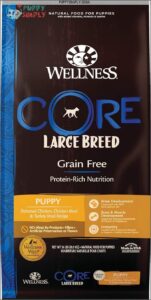
Wellness Core Grain Free Large Breed Puppy food delivers 34% protein from chicken and turkey to support your pup’s growing muscles. The Mineral Balance sits at 1.3% calcium and 1.0% phosphorus—right where large breed puppy nutrition experts want it to prevent bone issues.
You’ll find DHA for brain development and 80 million CFU of probiotics per pound.
Feeding Recommendations scale up with size, adding about 28 grams per extra 5 kg of weight.
One Recall History note: a 2012 Salmonella event, now resolved.
Best For: Large breed puppy owners who want controlled calcium and phosphorus levels to support healthy bone growth while feeding a high-protein, grain-free diet.
- 34% protein from chicken and turkey helps build lean muscle mass during critical growth phases
- Calcium-to-phosphorus ratio of 1.3:1 is specifically formulated to reduce skeletal development issues common in large breeds
- Includes DHA for brain development and 80 million CFU probiotics per pound for digestive health
- Price point runs higher than many competing large breed puppy foods
- Some dogs experience digestive upset or diarrhea when transitioning to this formula
- Had a Salmonella recall in 2012, though no safety issues have been reported since 2017
2. ORIJEN Puppy Large Breed Dog Food
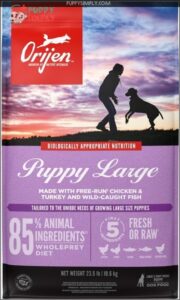
Champion Nutrition meets real-world scrutiny with ORIJEN Puppy Large Breed Dog Food. The Ingredient Analysis shows 85% animal content—chicken, turkey, and fish lead the list—but Nutritional Adequacy demands a closer look at its 1.18:1 calcium-to-phosphorus ratio and 38% protein.
DCM Concerns linger because legumes like lentils and peas replace grains, though the FDA hasn’t pinned down causation.
Manufacturing Quality shines with zero recalls and in-house production.
Life-Stage Suitability checks out: AAFCO-approved for Large Breed Puppy Nutrition through adulthood.
Best For: Owners of large-breed puppies who want a high-protein, grain-free diet with extensive animal ingredients and a clean safety record, and who are comfortable with premium pricing and monitoring for any digestive sensitivity.
- 85% animal ingredients with fresh chicken, turkey, and fish as the first five components, plus WholePrey organs and cartilage for naturally occurring nutrients
- Zero FDA recalls and in-house manufacturing with HACCP quality controls, third-party testing, and no reliance on co-packers
- AAFCO-approved for all life stages including large-breed puppies, with a 1.18:1 calcium-to-phosphorus ratio that falls within the recommended 1.1:1 to 1.4:1 range for healthy skeletal development
- Expensive compared to most large-breed puppy foods, which may not fit all budgets for long-term feeding
- Grain-free formula relies heavily on legumes like lentils and peas, raising ongoing concerns about potential DCM links despite inconclusive FDA findings
- Some puppies experience gas, digestive upset, or adverse reactions, requiring careful monitoring during transition and individual assessment of tolerance
3. Taste of the Wild Puppy Food
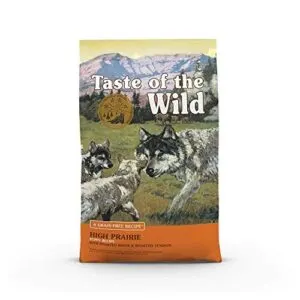
Taste Of The Wild High Prairie Puppy food brings roasted bison and venison to the table, delivering 28% protein from diverse protein sources. Ingredient analysis reveals peas and potatoes as grain replacements—legumes tied to DCM concerns in the FDA’s ongoing investigation, with 53 cases linked to the brand.
Nutrient ratios sit at 1.4:1 calcium-to-phosphorus and 3.3 g calcium per 1,000 kcal, meeting large breed puppy nutrition standards.
Feeding volume runs high—over 5 cups daily for a 40 lb pup—because grain-free diets pack fewer calories per cup than you’d expect.
Best For: Large-breed puppy owners who want high-protein, grain-free food with real meat as the first ingredient and are willing to monitor for DCM-related concerns while feeding higher daily volumes.
- Real roasted bison and venison deliver 28% protein with added DHA for brain and eye development in growing puppies
- Meets AAFCO standards for large-breed growth with controlled calcium (3.3 g per 1,000 kcal) and a 1.4:1 calcium-to-phosphorus ratio
- Includes species-specific probiotics and omega fatty acids to support digestive health, immune function, and skin and coat condition
- Grain-free formula uses peas and potatoes linked to 53 FDA-reported DCM cases associated with the brand
- High feeding volume—over 5 cups daily for a 40 lb puppy—makes it less convenient and potentially more expensive than calorie-dense alternatives
- Some puppies may not enjoy the bison and venison flavor, and the food can be pricier than similar options at local pet stores
4. Nulo Puppy Salmon and Turkey Food
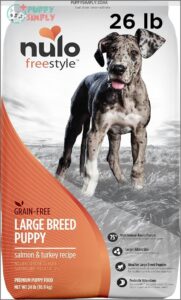
Nulo Freestyle Large Breed Puppy Salmon & Turkey delivers 32% protein—well above AAFCO’s 22.5% minimum—with 75% coming from animal sources. You’ll find calcium at 1.2% and phosphorus at 1.0%, producing a 1.2:1 ratio that promotes proper bone growth without overdoing it.
The formula includes 0.15% DHA for brain development and 80 million CFU probiotics per pound for digestion.
While it’s grain-free with legumes like peas and chickpeas, Nulo adds supplemental taurine (0.02%) in response to ongoing DCM investigations.
Best For: Large breed puppy owners who want high animal-protein nutrition with controlled calcium levels for healthy bone growth and added DHA for brain development.
- High-quality protein at 32% with 75% from salmon and turkey supports lean muscle development without excess calories
- Balanced 1.2:1 calcium-to-phosphorus ratio helps large breed puppies grow at a controlled pace and avoid skeletal issues
- Includes 0.15% DHA for cognitive development plus 80 million CFU probiotics for digestive health
- Grain-free formula with legumes raises questions about potential DCM links, though Nulo adds supplemental taurine
- Premium pricing and some reports of poor value make it a bigger investment than standard puppy foods
- Quality control issues with damaged or opened bags showing up at delivery
5. Orijen Puppy Large Breed Dry Food
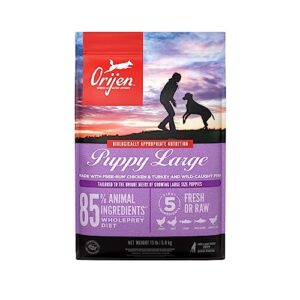
If you’re looking for one of the most protein-dense options available, Orijen Puppy Large Breed delivers 38% protein and 85% animal ingredients. You’ll get calcium at 1.2–1.3% and phosphorus near 1.0–1.1%, yielding a safe 1.2–1.3:1 ratio for large breed puppy nutrition.
The formula includes 600 mg/kg each of glucosamine and chondroitin for joint support, plus 0.2% DHA and added taurine.
While it’s grain-free with legumes, Orijen meets AAFCO standards and handles DCM concerns through supplementation.
Best For: Owners of large breed puppies who want a high-protein, grain-free formula with controlled calcium and phosphorus levels to support healthy growth and joint development.
- Extremely high protein content (38%) with 85% animal ingredients including fresh chicken, turkey, and multiple fish sources for peak muscle and brain development
- Controlled mineral balance with a 1.2–1.3:1 calcium-to-phosphorus ratio that meets AAFCO standards for large breed growth without excess that could harm developing bones
- Includes 600 mg/kg glucosamine and chondroitin plus DHA and added taurine to support joints, cognition, and heart health during rapid growth
- Premium pricing makes it one of the most expensive puppy food options on the market
- Grain-free legume-based formula may be a concern for some owners following FDA’s ongoing DCM investigation, despite manufacturer’s supplementation efforts
- Very high caloric density (3720–3940 kcal/kg) requires careful portion control to avoid overfeeding and excessive growth rate in large breed puppies
6. Instinct Raw Boost Large Breed Puppy
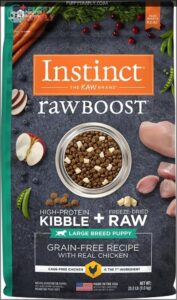
Instinct Raw Boost stands out by mixing freeze-dried raw chicken pieces right into the kibble, giving you 33.5% protein and 15.5% fat on an as-fed basis. You’ll find approximately 495 kcal per cup, so watch portion sizes closely to avoid overfeeding.
The formula uses cage-free chicken as the first ingredient and includes natural DHA from chicken eggs for brain development.
While some users report palatability wins, others note quality-control hiccups—inconsistent batches and occasional gastrointestinal upset.
Check the calcium-to-phosphorus ratio and compare it against the 2.0–4.5 g per 1,000 kcal target before committing long-term.
Best For: Large breed puppy owners who want a high-protein, grain-free diet with freeze-dried raw pieces and are willing to pay premium prices while carefully monitoring portion sizes and calcium intake.
- Combines crunchy kibble with freeze-dried raw chicken pieces for high protein (33.5%) and varied texture that many puppies find appealing
- Specifically formulated for large breed puppies with cage-free chicken as the first ingredient and natural DHA for brain and eye development
- Grain-free recipe excludes corn, wheat, soy, and artificial preservatives, making it suitable for puppies with food sensitivities
- More expensive than traditional puppy foods and some users report quality control issues with inconsistent batches
- High caloric density (495 kcal per cup) requires careful portion control to avoid overfeeding during critical growth phases
- Some owners report gastrointestinal upset in their puppies, and you’ll need to verify the calcium-to-phosphorus ratio meets the 2.0–4.5 g per 1,000 kcal target for safe large breed growth
7. NutriSource Grain Free Large Breed Puppy
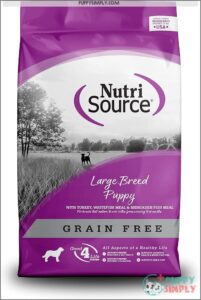
If you’re weighing options for GrainFree Dog Food, NutriSource Grain Free Large Breed Puppy Food deserves a close look. With 28% protein and balanced omega fatty acids, it’s built to support growth and a healthy coat. Ingredient analysis shows turkey and fish as main protein sources, plus prebiotics and probiotics for digestion.
Life-stage suitability and regulatory compliance are covered, meeting AAFCO standards for large breed puppies. Feeding guidelines suggest 2¼–4 cups daily, so you can adjust portions as your pup grows.
Best For: Owners of large breed puppies who want a grain-free formula with solid protein content, digestive support, and nutrients targeting heart health and controlled growth.
- High protein at 28% with turkey and fish as primary sources, plus prebiotics and probiotics for gut health
- Meets AAFCO standards for large breed puppy growth with balanced calcium-to-phosphorus ratio (1.2:1) to support healthy bone development
- Includes heart-health supplements like taurine, L-carnitine, and choline, along with omega-3s for coat, skin, and brain development
- Pricier than many competing brands at $85.79 for 26 pounds
- Contains chicken fat, which may trigger reactions in puppies with poultry sensitivities
- Availability can be limited in some retail locations compared to mainstream brands
8. Nulo Puppy Turkey and Sweet Potato
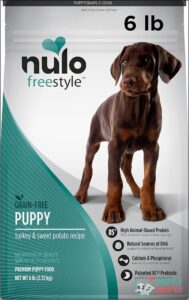
For a high-protein grain-free diet, Nulo Puppy Turkey and Sweet Potato hits 33% protein with real deboned turkey as the first ingredient. The formula includes DHA from trout to support brain development and omega fatty acids for skin and coat health.
Sweet potato provides steady energy, while probiotics aid digestion. Consumer palatability is strong, though some puppies need time to adjust.
At $29.99, it meets AAFCO standards for large breed puppy growth, delivering 441 calories per cup to fuel your pup’s active days.
Best For: Large breed puppy owners looking for a high-protein, grain-free formula that supports muscle development, brain health, and digestive wellness.
- Real deboned turkey as the first ingredient delivers 33% protein to fuel growth and lean muscle development
- DHA from trout supports cognitive development while omega fatty acids promote healthy skin and a shiny coat
- Includes live probiotics and natural fibers for digestive support, plus meets AAFCO standards for large breed puppies
- Higher price point at $29.99 compared to other puppy food options
- Some puppies may experience an adjustment period with occasional upset stomach or may not prefer the taste
- Quality control issues reported with packaging occasionally arriving damaged or open
9. Now Fresh Large Breed Puppy Food
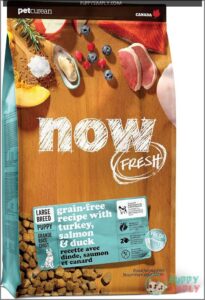
Now Fresh Large Breed Puppy Food brings fresh ingredients to the grain-free diets table with deboned turkey, salmon, and duck as top-billing proteins. At 28% protein and 16% fat, it meets AAFCO standards for large breed puppy growth while controlled calcium (1.1%) and phosphorus (1%) support healthy bone development without overdoing it.
Pumpkin and 90 million CFU probiotics per pound aid digestion, and New Zealand green mussels provide joint support. Made in Canada, it delivers 403 calories per cup at $107.99—premium puppy nutrition backed by solid dog food ingredients and pet safety standards.
Best For: Large breed puppy owners who want a grain-free diet with fresh meat proteins, controlled minerals for safe bone growth, and built-in digestive support through probiotics and fiber.
- Real deboned turkey, salmon, and duck as primary proteins with 28% protein and controlled calcium/phosphorus ratios designed specifically for large breed puppy growth
- Includes 90 million CFU probiotics, pumpkin fiber, and New Zealand green mussels to support digestion and joint health from day one
- Made in a certified Canadian facility with no by-product meals, artificial flavors, or preservatives—meets AAFCO standards for large breed development
- Expensive at $107.99 with no refunds available if your puppy doesn’t take to the taste
- Not made in the USA, which may matter to owners who prioritize domestic manufacturing
- Some dogs may not like the flavor, and the grain-free formula isn’t necessary for all puppies unless they have specific sensitivities
10. Victor Grain Free Active Dog Food
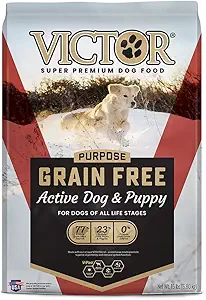
Victor Grain Free Active Dog Food offers 33% protein from beef, pork, and fish meals, surpassing most puppy-specific formulas. With 384 calories per cup and priced at $43.99, it meets AAFCO standards for all life stages, including large breed puppy growth. The ingredient analysis highlights 77% animal protein and joint-supporting nutrients in its grain-free diet.
However, recall history is a concern: Mid America Pet Food recalled all Victor products in October 2023 due to potential Salmonella contamination. If you opt for this high-protein puppy food, verify current batch safety with your veterinarian first.
Best For: Active dogs and large breed puppies who need high-protein, grain-free nutrition to support growth and energy demands.
- Delivers 33% protein from multiple animal sources (beef, pork, and fish meals), which is higher than most standard puppy foods and supports muscle development
- AAFCO-approved for all life stages including large breed puppy growth, so you can feed the same food from puppyhood through adulthood
- Includes functional nutrients like DHA for brain development, L-carnitine for metabolism, and omega fatty acids for coat and skin health
- Recalled in October 2023 for potential Salmonella contamination across all Victor products, raising safety concerns about manufacturing quality control
- At $43.99, it’s pricier than many competitor brands without offering unique benefits that justify the cost difference
- Some owners report the kibble size is too small for larger breeds, making it less practical for dogs who gulp their food
Analyzing Ingredients in Grain Free Puppy Foods
Reading a grain-free puppy food label can feel like decoding a foreign language. The ingredient list tells you whether you’re feeding quality nutrition or clever marketing.
Let’s break down what really matters in these formulas so you can spot the good stuff from the filler.
High-quality Protein Sources for Growth
Your large breed puppy needs protein sources that deliver amino digestibility above 85%. Look for whole-muscle meats like chicken, lamb, or salmon rather than plant proteins.
AAFCO requires at least 22.5% protein for growth, but quality matters more than percentages alone. Animal proteins supply critical taurine and sulfur amino acids that support muscle development and heart health—something legume-heavy formulas can’t match.
Nutrient-dense Whole Foods and Antioxidants

Whole ingredients like blueberries, carrots, and spinach bring more than fiber to grain-free diets—they deliver antioxidant bioavailability that aids oxidative stress control. Studies show vitamin fortification with E and C, combined with whole-food synergies from botanicals like rosemary and turmeric, reduces DNA damage markers in growing dogs.
These botanical preservatives stabilize kibble while enhancing your puppy’s cellular defense networks through complementary phytonutrient pathways.
Essential Fatty Acids and Joint Support Nutrients

Because large breed puppy food must cushion joints during rapid growth, omega-3 fatty acids from fish oil deliver EPA and DHA that support bone health and cognitive development. Look for formulas providing:
- Omega-3 sources at 500–1,000 mg EPA+DHA daily for joint health
- Glucosamine dosage around 1,000 mg and chondroitin benefits at 900 mg per day
- Green-lipped mussel for glycosaminoglycans that improve mineral balance and cartilage resilience
Limited Ingredient Diets for Sensitivities

When your large breed puppy shows itching or digestive upset, limited ingredient diets featuring novel protein sources like rabbit or pollock can help identify triggers. However, cross-contamination risks mean that even grain-free puppy food labeled “single protein” may contain undeclared ingredients.
Diet trial efficacy improves under veterinary supervision, particularly when choosing hydrolyzed diets over standard formulas for suspected food sensitivities.
Feeding Guidelines for Large Breed Puppies

Getting the feeding portion right matters just as much as picking quality food. Large breed puppies need a careful balance between getting enough nutrition and avoiding the growth problems that come with overfeeding.
Let’s walk through the key guidelines that’ll help your puppy grow at a healthy pace.
Determining Daily Calorie Needs
Your large breed puppy’s calorie needs aren’t one-size-fits-all. Start with RER Calculation using the formula 70 × body weight in kg^0.75, then apply growth multipliers (usually 2.0-3.0× RER depending on age).
Consider these key factors:
- Current body weight and expected adult size
- Growth stage (higher energy density early, decreasing toward maturity)
- Body condition score to prevent orthopedic risk
- Activity level affecting total calorie density needs
- Puppy weight management through controlled intake
Following puppy feeding guidelines that match nutritional requirements of puppies helps prevent developmental issues.
Portion Sizes and Feeding Frequency
Did you know feeding one big meal a day can raise your puppy’s GDV risk? For large breed puppies, split daily calories into 3–4 meals early on, then 2–3 as they grow. Portion control is key for skeletal health and obesity prevention.
Use the table below to guide your puppy feeding routine:
| Age (months) | Meals/day | Portion control tip |
|---|---|---|
| 2–4 | 4 | Measure every serving |
| 4–6 | 3 | Adjust for body condition |
| 6–12 | 2 | Watch for weight changes |
| All ages | — | Avoid overfeeding |
| All ages | — | Monitor calorie density |
Transitioning From Puppy to Adult Food
As your puppy grows, the shift from puppy food to adult formulas isn’t a race—it’s a gradual change. For large breeds, timing of the change usually falls between 12 and 15 months, but breed and growth rate matter.
Watch for healthy growth, adjust for changing nutritional needs, and lean on vet guidance if you spot digestive changes or appetite shifts.
Preventing Overfeeding and Growth Issues
Once you’ve settled on the right food, keep your large breed puppy slightly lean. Studies show that feeding large breed puppies 25% fewer calories than free-choice feeding cuts hip dysplasia risk.
Studies show feeding large breed puppies 25% fewer calories than free-choice feeding significantly reduces hip dysplasia risk
Stick to portion control rather than leaving food out all day. Keep treats under 10% of daily calories.
Monitor body condition weekly and adjust portions to support healthy puppy growth without rushing bone development or throwing off calcium and phosphorus levels.
Tips for Selecting The Best Grain Free Puppy Food
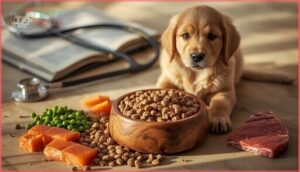
Picking the right grain-free puppy food isn’t just about reading labels. You need to think about the brand’s track record, your vet’s input, and whether the food fits your budget without cutting corners on nutrition.
Here’s what to focus on when making your choice.
Evaluating Brand Reputation and Reviews
Brand reputation matters when you’re investing in your puppy’s nutrition. Check recall history and expert opinions on platforms like Dog Food Advisor, where top grain-free options average 4.5 stars.
Customer testimonials reveal real-world outcomes—Instinct Raw Boost earns enthusiastic consumption reports across Chewy reviews.
Look for ingredient transparency and ethical sourcing practices that align with veterinarian-recommended standards in any puppy food buyers guide.
Consulting With Veterinarians for Recommendations
Beyond reputation, schedule a diet discussion with your vet—about 70% of puppy wellness visits cover nutrition, and individualized assessment catches risks like DCM before they escalate.
Ask whether your chosen grain-free dog food meets evidence-based guidelines for large breed puppy food, including AAFCO trials and brand transparency. Veterinarian-recommended diets backed by qualified nutritionists offer stronger guarantees than marketing alone in puppy nutrition and dog food recommendations.
Affordable Options Without Compromising Nutrition
Although grain-free diets can stretch your budget, you don’t have to sacrifice puppy nutrition and health. Look for cost per calorie around $0.0020–$0.0028 and large breed puppy formulas that meet AAFCO standards for puppy food with proper calcium standards.
Nutrient density matters more than price per pound. Functional additives like glucosamine built into affordable puppy food options deliver joint support without extra supplements, making purchasing strategies like bulk bags and autoship your smartest moves.
Frequently Asked Questions (FAQs)
Is a grain free diet good for puppies?
Grain-free diets can meet puppy nutrition standards when properly formulated, but they aren’t inherently better than grain-inclusive foods.
Reserve them for documented grain sensitivities, as balanced nutrition matters more than grain presence.
Do large breed puppies need grains?
No, they don’t. AAFCO guidelines permit grain-free diets for large breed puppies when properly formulated.
While DCM risks exist with certain alternative ingredients, grains aren’t essential for puppy bone health or grain-free vs. grain-inclusive nutrition.
What should a large breed puppy eat?
Your large breed puppy needs a diet meeting AAFCO standards with controlled calorie intake, moderate protein levels around 23-25%, balanced calcium ratio between 1:1 and 4:1, and appropriate energy needs for steady growth.
How do I transition my puppy to adult food?
You’re ready to switch your pup, yet rushing the change invites trouble.
Shift over seven to ten days by mixing increasing portions of adult food with puppy food, watching stool quality and energy to verify your large breed puppy tolerates the shift smoothly.
How often should I feed my large breed puppy?
Your large breed puppy needs three to four meals daily until six months old. After that, switch to two meals per day and maintain portion control to support a steady growth rate and proper digestion timing.
Can I mix grain-free puppy food with other foods?
Think of diet mixing like building blocks—you want them to stack evenly.
You can blend grain-free puppy food with other complete diets if you shift gradually and keep calcium, phosphorus, and calories balanced for steady growth.
When should I switch puppy food brands?
You should switch puppy food brands if your dog shows digestive issues, food allergies, or nutrient deficits.
Health signs like persistent vomiting or itching mean it’s time to reconsider your dog food brand reputation.
How do I store grain-free puppy food?
Store dry food in an airtight container at cool temperatures below 70°F with low humidity. Keep it away from light and pests.
Use opened bags within two months to prevent rancid fats and spoilage risks.
What treats work best with grain-free diets?
When choosing treats for grain-free diets, aren’t healthy ingredients non-negotiable? Look for limited-ingredient, grain-free snacks with functional nutrients, mindful of caloric limits and treat safety.
Avoid legume-heavy options linked to canine digestive health concerns.
Conclusion
Picture your gangly pup at twelve months—strong legs carrying them through the dog park, joints moving smoothly, heart pumping powerfully. That future depends entirely on what fills their bowl today.
Grain-free large breed puppy food can support healthy growth when you choose formulas with proven nutritional profiles and appropriate calcium ratios.
Talk with your veterinarian about specific brands that match your puppy’s needs. Their guidance transforms overwhelming options into confident decisions that protect your growing companion.
- https://www.towardsfnb.com/insights/grain-free-pet-foods-market
- https://dataintelo.com/report/grain-free-dog-food-market
- https://www.aafco.org/wp-content/uploads/2023/01/Model_Bills_and_Regulations_Agenda_Midyear_2015_Final_Attachment_A.__Proposed_revisions_to_AAFCO_Nutrient_Profiles_PFC_Final_070214.pdf
- https://www.dogfoodadvisor.com/best-dog-foods/best-large-breed-puppy-food/
- https://pmc.ncbi.nlm.nih.gov/articles/PMC12291746/