This site is supported by our readers. We may earn a commission, at no cost to you, if you purchase through links.

Your dog turns their nose up at one bowl, then devours another with tail-wagging enthusiasm—yet both claim to be premium grain-free formulas. The truth is, grain-free dog food varies wildly in taste, and understanding what drives those preferences can save you from wasting money on rejected kibble.
Palatability hinges on protein sources, fat quality, and natural flavor enhancers, not just marketing promises. Some brands rely on chicken fat and freeze-dried coatings to boost appeal, while others use fresh salmon or beef as their flavor foundation.
Dogs don’t care about grain-free trends—they care about aroma, texture, and taste. This comparison examines how leading grain-free foods stack up in real palatability tests, what ingredients actually influence your dog’s mealtime excitement, and how to identify formulas your pup will genuinely enjoy eating every day.
Table Of Contents
- Key Takeaways
- What Makes Grain-Free Dog Food Different
- Nutritional Comparison: Grain-Free Vs Grain-Inclusive
- The Science of Dog Food Taste
- Factors That Influence Dog Food Preference
- Key Benefits of Grain-Free Dog Food
- Top 5 Grain-Free Dog Foods for Taste
- Real-World Taste Tests and Findings
- Transitioning to Grain-Free Dog Food
- Choosing The Best Grain-Free Food for Your Dog
- Common Concerns About Grain-Free Diets
- Frequently Asked Questions (FAQs)
- Why do vets not like grain free dog food?
- What dog food is comparable to the Taste of the Wild?
- Is it really healthier for a dog to eat grain free?
- What dog food do dogs like the taste of best?
- What role do veterinarians play in grain-free diets?
- How does storage affect grain-free food taste?
- Are there seasonal changes in dog food palatability?
- Conclusion
Key Takeaways
- Palatability in grain-free dog food depends primarily on protein sources, fat quality, and natural flavor coatings rather than the absence of grains, with chicken by-product meal and fat-rich coatings often outperforming fresher ingredients in controlled preference tests.
- Grain-free formulas typically contain higher protein (30-43%) and fat content but lower carbohydrates (64g vs 86g per 1000 kcal) compared to grain-inclusive diets, though this doesn’t automatically make them healthier for all dogs.
- The FDA received over 1,300 reports linking grain-free diets high in legumes to dilated cardiomyopathy (DCM), yet no definitive causal relationship has been established, and true grain allergies in dogs are rare—beef and chicken allergies are more common.
- Successful transition to grain-free food requires a gradual 7-14 day process mixing increasing ratios of new food with old, while monitoring stool quality, energy levels, and skin health to catch digestive issues or sensitivities early.
What Makes Grain-Free Dog Food Different
Grain-free dog food isn’t just about removing wheat, corn, and soy from the bowl. It’s a complete reformulation that changes the carbohydrate sources, protein balance, and overall nutritional structure of your dog’s diet.
To understand what sets these foods apart, you’ll need to look at three key areas: the ingredients used, the substitutes that replace traditional grains, and the protein sources that form the foundation of these formulas.
Key Ingredients in Grain-Free Formulas
When you scan a grain-free dog food label, you’ll notice a careful mix of high-quality components designed to replace traditional grains while delivering complete nutrition. Chicken leads the pack as the primary protein in roughly 36% of formulas, followed by beef, salmon, and turkey.
- Protein sources: Animal proteins like chicken, beef, and salmon dominate, with novel options like venison gaining traction for dogs with sensitivities
- Legume benefits: Peas, lentils, and chickpeas provide 15-30% of the formula, offering fiber and low-glycemic carbohydrates that support steady energy
- Fat composition: Chicken fat and fish oils supply essential fatty acids, generally comprising 10-20% of the diet for skin and coat health
Micronutrient fortification with vitamins E and B, plus minerals like zinc and selenium, guarantees your dog gets everything needed despite the absence of grain-based nutrients. Many brands offer customized feeding plans to guarantee your dog receives the right amount of nutrients.
Functional additives such as prebiotics and probiotics at 1-2% inclusion rates support digestive wellness, while natural antioxidants like mixed tocopherols preserve freshness. Sweet potato often appears as a nutrient-dense carbohydrate alternative, complementing the protein-rich foundation these dog foods are built upon.
Grain Substitutes and Their Benefits
The legumes and tubers replacing grains bring tangible advantages you can measure. Peas, lentils, and sweet potatoes serve as alternative carbohydrate sources that boost fiber impact—grain-free diets show 31.9% greater fiber digestibility. This translates to better stool consistency and allergy reduction for sensitive dogs, while tuber nutrition delivers the energy stability your active pup needs. Both options, grain and grain-free, can be nutritious, provided they contain the right ingredients.
| Substitute Type | Key Benefits |
|---|---|
| Legumes (peas, lentils) | Enhanced digestibility, protein boost |
| Tubers (sweet potato) | Sustained energy, vitamin-rich |
| Mixed alternatives | Allergy relief, improved gut health |
Typical Protein Sources in Grain-Free Food
When you’re reading labels, you’ll notice most grain-free foods lean heavily on animal protein—think chicken, turkey, salmon, or lamb—for high protein and a broad spectrum of amino acids. Plant protein from peas and lentils helps round things out, and some brands even use exotic proteins like bison or duck for variety and to support dogs with allergies.
- Animal protein like chicken and lamb
- Plant protein from legumes (peas, lentils)
- Exotic proteins: bison, duck, or fish
Nutritional Comparison: Grain-Free Vs Grain-Inclusive
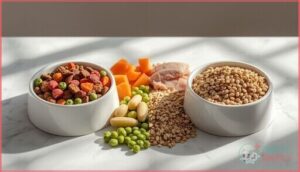
Regarding nutrition, grain-free and grain-inclusive dog foods take different paths. Each choice brings its own pros and cons to the bowl. Let’s look at the key differences side by side.
Protein Content and Quality
Ever wondered what really sets one bag of dog food apart from another? Protein content is often the deciding factor. Grain-free options usually pack more animal sources and deliver higher protein percentages, sometimes soaring above 38%. While plant proteins are present, it’s the digestibility and quality of those animal proteins that help maintain muscle, energy, and overall health.
| Brand/Formula | Protein Percentage |
|---|---|
| Wellness CORE | 38% (Fish) |
| Orijen Regional Red | 43% (Mixed meats) |
| Stay Loyal Combo | 32% (Chicken/Lamb/Fish) |
| Open Farm Front Range | 30% (Multiple meats) |
Amino Acid Profiles
Clarity around protein quality starts with essential aminos—think lysine, methionine, and tryptophan. Most grain-free diets lean on animal protein, delivering complete essential amino acid profiles. Digestibility scores often edge higher, with taurine levels rising after long-term feeding.
Here’s how major protein sources stack up for essential amino acids and digestibility:
| Protein Source | Essential Aminos & Digestibility |
|---|---|
| Chicken | High, fast-absorbing |
| Lamb | Very complete, highly digestible |
| Fish | Broad spectrum, enhanced bioavailability |
| Pea-based | Decent, but more limiting aminos |
Carbohydrate and Fat Differences
When comparing macronutrients, grain-free dog food averages 64 g carbohydrates per 1000 kcal, versus 86 g in grain-inclusive diets. Fat content runs higher, boosting caloric density and energy balance.
Here’s how carb sources and fat differ:
| Nutrient | Grain-Free | Grain-Inclusive |
|---|---|---|
| Carbs (dry matter) | Legumes, tubers | Oats, rice, millet |
| Fat Content | 15–30% | 10–18% |
Digestibility impact varies, with some dogs showing improved stool quality on grain-free formulas.
The Science of Dog Food Taste

Understanding what makes one dog food more appealing than another isn’t just guesswork—it’s a field backed by controlled research and sensory science. Scientists use specific testing methods to measure how dogs respond to different foods, and the results can surprise you.
Let’s look at how researchers measure palatability, what sensory factors matter most to dogs, and how manufacturers improve taste through coatings.
Methods for Measuring Palatability
How do scientists know which dog food your pet will actually prefer? Researchers use five reliable methods to measure dog food taste and palatability, especially helpful for picky eaters:
- Two-bowl testing compares intake ratios when dogs choose between foods simultaneously
- One-bowl testing measures consumption quantity and speed for single-diet acceptability
- E-nose analysis detects volatile compounds that correlate with preference patterns
- Olfactory evaluation isolates aroma appeal using specialized equipment
- Cognitive assessments track learned preferences through object discrimination protocols
Each dog food review method provides specific data about what makes dogs return to their bowls.
Aroma, Texture, and Visual Appeal
Your dog’s preference for grain-free food hinges on three sensory dimensions: aroma, texture, and visual attractiveness. Grain-free formulas contain fewer volatile compounds, creating milder olfactory cues that dogs detect instantly. The kibble texture is often harder and more expanded, influencing chewing behavior during palatability tests. While visual appeal matters more to you than your dog, ingredient quality shapes all three sensory evaluation factors.
| Sensory Factor | Grain-Free Characteristics |
|---|---|
| Aroma compounds | Fewer aldehydes and ketones; milder scent profile |
| Kibble texture | Harder, less dense, more expanded after extrusion |
| Visual attractiveness | More uniform shape and color; lower human appeal |
| Olfactory cues | Reduced intensity; may need aroma enhancers |
| Sensory evaluation | Medium to high dog food taste and palatability ratings |
Flavor Coatings and Their Impact
Manufacturers spray flavor coatings on kibble surfaces after extrusion, dramatically altering your dog’s sensory perception and eating behavior. These coating ingredients—beef tallow, animal digest, and Maillard reaction products—boost palatability enhancement by masking milder grain-free aromas.
Application techniques vary, but the market impact is clear: coated dry dog food brands command 40–60% higher margins, proving that ingredient quality alone doesn’t guarantee dog food quality without strategic flavor layering.
Factors That Influence Dog Food Preference

Not all grain-free dog foods taste the same to your dog, even if they look identical on the shelf. Several factors determine whether your dog will eagerly finish every bite or leave half the bowl untouched.
Understanding these key influences helps you choose a formula your dog will actually enjoy eating.
Protein and Fat Sources
Your dog’s preference hinges on where the protein and fat originate. Animal protein types like chicken by-product meal outperformed other chicken sources in controlled two-bowl tests, even when competing formulas had higher fat content.
In taste tests, chicken by-product meal outperformed fresher chicken sources, proving protein origin matters more than fat content alone
That’s because palatability factors aren’t just about fat levels—chicken fat and salmon oil carry distinct aromas that shape taste appeal, making protein sources and fat source influence equally important drivers of preference.
Ingredient Quality and Freshness
Fresh meat quality matters more than you’d expect. Kibble made exclusively with fresh chicken delivered 20.6 g of amino acids per 100 g dry food, compared to just 17.9 g in chicken-meal-based grain-free dog food.
Rapid viscera processing—within 48 hours—preserves taurine amino acids, while fat oxidation control prevents rancidity that dogs detect immediately.
Legume processing risks aside, ingredient freshness drives palatability as much as animal protein content itself.
Role of Natural Additives
Beyond freshness, natural additives shape how grain-free formulas taste and perform. Mixed tocopherols and rosemary extract slow fat oxidation by 30–60%, preventing rancid off-notes that dogs reject instantly.
Yeast hydrolysates and fish-protein palatants boost umami appeal without synthetic labels. Antioxidant benefits protect flavor through a 12-month shelf life, while probiotic effects support consistent appetite.
Formulation impacts palatability as much as the base ingredients themselves.
Key Benefits of Grain-Free Dog Food

Grain-free dog food offers several advantages that go beyond just taste, particularly for dogs with specific dietary needs or sensitivities. While not every dog requires a grain-free diet, certain benefits consistently emerge in dogs who make the switch.
Let’s examine three key areas where grain-free formulas can make a measurable difference in your dog’s health and daily comfort.
Improved Digestive Health
When you switch to grain-free dog food, you’re often giving your dog’s digestive system a break. Studies show that legume- and potato-based formulas can lower fecal ammonia and improve stool consistency, supporting better intestinal balance and gut health.
Many dogs experience enhanced fecal quality and reduced gastrointestinal upset, with digestibility rates above 98% indicating efficient digestion and nutrient absorption throughout the digestive tract.
Dog Allergy and Sensitivity Relief
If your dog struggles with food allergies or sensitivities, shifting to GrainFree Dog Food can ease symptoms such as itching or ear issues.
Food allergy prevalence is low overall, but actual relief often comes from elimination diets that swap out common proteins and grains.
Look for formulas with balanced fatty acids—it’s key for long-term management of dog food allergies and skin health.
Stable Energy Levels
Consistency in energy can make or break your dog’s day. Thanks to the low glycemic index of many grain-free dog food recipes, your pup benefits from a more gradual, sustained energy release and stable blood sugar.
With balanced macronutrient energy and high-protein dog food, even working dogs maintain energy levels—supporting long-term health, performance, and better overall dog nutrition.
Top 5 Grain-Free Dog Foods for Taste
If your dog could talk, taste would probably top their wish list. That’s why choosing the right grain-free food isn’t just about the label—it’s about what gets tails wagging at mealtime.
Here are five options that stand out for flavor and owner satisfaction.
1. Instinct Raw Boost Chicken Dog Food
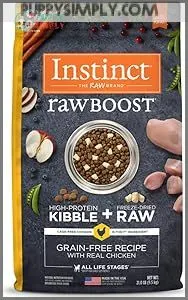
Here’s a dog food that gets tails wagging: Instinct Raw Boost Chicken packs high-protein kibble and freeze-dried chicken bites into every scoop. The Raw Boost Ingredients focus on quality—cage-free chicken, probiotics, and antioxidants—while skipping grains, potatoes, and artificial junk.
Palatability Features like a strong aroma and raw coating make this grain-free option stand out, though some dogs may show Tolerance Responses like digestive upset.
Instinct’s adherence to AAFCO Nutrient Standards and steady Brand Recalls record offers added reassurance.
Best For: Dogs who need high-quality protein and a flavor boost, especially picky eaters who respond well to freeze-dried raw pieces mixed with kibble.
- Cage-free chicken as the first ingredient delivers strong protein content (around 32-38%) to support lean muscle and energy.
- Freeze-dried raw bites add bold flavor and aroma that many dogs find irresistible, making mealtime more exciting.
- Grain-free formula with probiotics, omegas, and antioxidants supports digestion, skin health, and immune function without corn, wheat, soy, or artificial preservatives.
- Some dogs experience digestive issues like diarrhea or vomiting during the transition, even with gradual mixing.
- Higher price point than many standard kibbles due to premium ingredients and freeze-dried components.
- Instinct was mentioned in the FDA’s grain-free diet investigation related to potential heart health concerns, though no definitive link has been established.
2. Weruva Steak Frites Dog Food Cans
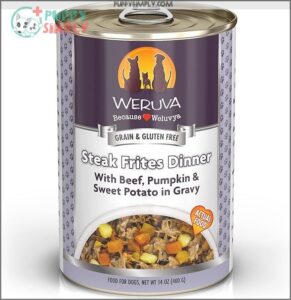
Shredded grass-fed Australian beef, pumpkin, and sweet potato in gravy make Weruva Steak Frites a standout Beef-Based Formula among wet dog food brands. You’ll find no chicken, grains, or carrageenan—just responsibly sourced ingredients that meet strict B.R.C. standards.
Palatability Factors shine here: even picky eaters dig the stew-like texture and rich aroma, while organ meats boost Nutritional Benefits with B vitamins and iron.
Feeding Guidelines suggest about 1 ounce per pound of body weight daily, making portion control straightforward. The high moisture content aids hydration, and fiber from pumpkin aids digestion in this grain-free dog food option.
Best For: Dogs with poultry allergies, sensitive digestion, or picky appetites who need a high-quality, grain-free wet diet.
- Made with grass-fed beef, pumpkin, and sweet potato for strong taste and good nutrition.
- Free from chicken, grains, gluten, and artificial additives—great for allergy-prone dogs.
- High moisture and fiber content support hydration and healthy digestion.
- Price per can is higher than many other wet dog foods.
- Some cans may arrive dented or damaged, affecting quality.
- Made in Thailand, which might concern certain pet owners.
3. Stella Chewy’s Chicken Freeze Dried Food
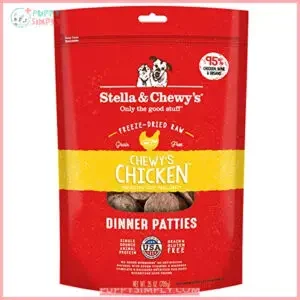
If you’re after real Freeze-dried benefits and top-tier Chicken palatability, Stella Chewy’s Chicken Dinner Patties raise the bar. Their dog food ingredients list—95% cage-free chicken and organs—reflects standout dog food quality through careful ingredient sourcing and minimal processing.
Nutritional analysis reveals a meat-rich, high-protein, low-carb profile with plenty of fat for energy. Owner reviews often highlight how even the choosiest dogs show enthusiasm, especially when rehydrated.
It’s grainfree dog food that tastes as honest as it reads on the label.
Best For: Owners who want high-protein, minimally processed food for picky eaters or dogs with sensitive stomachs.
- Packed with 95% cage-free chicken, organs, and organic produce for premium nutrition.
- Freeze-dried raw patties work as full meals, toppers, or tasty training treats.
- Grain-free and probiotic-rich recipe supports digestion, skin, and overall health.
- Higher price than most commercial dog foods.
- Some packaging and shipping issues, like crushed patties or faulty zippers.
- May not suit dogs with specific allergies or dietary restrictions.
4. Merrick Grain Free Small Breed Chicken
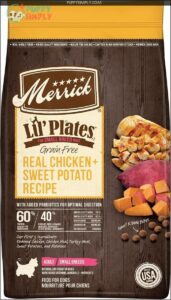
Looking for a grain-free dog food that checks every box for small breeds? Merrick Grain Free Dog Food stands out with its specific Kibble Size and Chicken Palatability. Deboned chicken leads the ingredient list, supported by Raw Bites for added flavor and texture.
Owners of picky small dogs often notice improved interest at mealtime, thanks to high-protein, nutrient-rich profiles. Grain-Free Benefits go beyond taste—supported hips, a healthy coat, and easy digestion make this chicken formula a practical favorite among leading dog foods.
Best For: Small breed adult dogs whose owners want a grain-free, high-protein formula with real chicken, smaller kibble, and joint support—especially helpful for picky eaters or dogs with grain sensitivities.
- Real deboned chicken as the first ingredient with 30% protein supports lean muscle and energy in active small dogs
- Smaller kibble size makes it easier for little mouths to chew, plus the crunchy texture helps clean teeth
- Packed with glucosamine and chondroitin for joint health, plus probiotics for digestion and omega fatty acids for a shiny coat
- Priced higher than many competitors, which can add up for long-term feeding
- Some bags arrive damaged or missing the freeze-dried raw bites that dogs (and owners) expect
- A few dogs don’t take to the taste or texture, and switching too quickly can cause digestive upset
5. Wellness Core Natural Large Breed Food
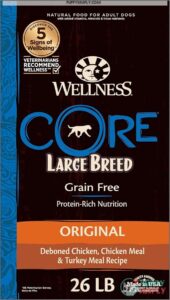
Your large breed dog needs more than just taste—they need joint support and balanced nutrition built into every bite. Wellness CORE GrainFree Original delivers 34% protein from chicken and turkey meals, plus glucosamine for healthy hips.
Palatability tests show strong acceptance rates, and you’ll notice firmer stools thanks to added probiotics. This dog food review consistently ranks Wellness among top grainfree dog food brands for digestive health.
With omega fatty acids and thoughtful protein sources, it’s engineered specifically for bigger dogs who need sustained energy without excess weight.
Best For: Large breed adult dogs who need high-protein nutrition with joint support, especially those prone to hip issues or requiring help maintaining lean muscle mass.
- High 34% protein content from quality chicken and turkey meals supports strong muscles and healthy weight in bigger dogs
- Glucosamine and chondroitin built right in help protect joints and hips without needing separate supplements
- Added probiotics and prebiotics promote better digestion and firmer stools, which many owners notice quickly
- Higher price point compared to standard large breed formulas may not fit every budget
- Some dogs with sensitive stomachs may experience digestive upset during the transition period
- Larger kibble size, while designed for big dogs, might be too bulky for some breeds or individual preferences
Real-World Taste Tests and Findings
Understanding how dogs actually respond to grain-free food requires more than marketing claims—it demands controlled testing. Researchers use structured palatability trials to measure which diets dogs genuinely prefer, and the results often surprise pet owners.
Let’s look at how these real-world tests work, what the data shows across popular brands, and why your dog’s preferences might differ from the pack.
Two-Bowl Preference Studies

You’ll often see researchers use two-bowl preference tests to measure which dog food your pet actually prefers. These trials record intake ratios and first choice to reveal real preferences, though design factors like prior exposure and data variability can affect results.
Test limitations include side bias and the fact that not every dog agrees, so grain-free advantages aren’t universal across all dog food brands.
Palatability Test Results by Brand

When you look at palatability test results by brand, the picture gets murky. A 2025 dog food review found that 88% of dogs preferred grain-free formulations overall, but brand-specific data remains proprietary. Brands like Taste of the Wild and other grain-free dry dog food options rely on meat inclusion and sensory drivers to boost owner acceptance, yet data limitations mean you won’t find head-to-head rankings for specific dog food brands in peer-reviewed studies.
- Grain-free category wins 88% preference in controlled trials
- High-meat brands show strongest palatability responses
- Taste of the Wild and similar brands leverage fat-rich coatings
- Proprietary testing limits public brand-level comparisons
Variability in Dog Taste Preferences

Even when two dog foods score equally in lab tests, your pup might prefer one over the other. Age differences matter—senior dogs respond more slowly to new diets than younger ones. Breed variations show up too, with some breeds maintaining consistent preferences while others fluctuate.
Prior experience shapes response, and picky eaters or dogs with food sensitivities need individual assessment rather than relying on population averages.
Transitioning to Grain-Free Dog Food
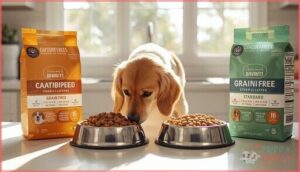
Switching your dog to grain-free food isn’t as simple as swapping bowls overnight. A rushed shift can trigger digestive problems, from mild stomach upset to more serious gastrointestinal distress.
Here’s how to make the change safely, minimize discomfort, and know what signs to watch for along the way.
Steps for a Smooth Dietary Change
Switching your dog to grain-free food isn’t a flip-the-switch decision—it’s a deliberate process that protects Dog Digestive Health. Veterinary guidelines recommend a structured Adjustment Timeline to minimize Digestive Issues and accommodate Food Sensitivities in Dogs.
- Days 1–2: Mix 25% new grain-free food with 75% old food
- Days 3–4: Shift to a 50/50 ratio for balanced Portion Adjustments
- Days 5–6: Increase to 75% new, 25% old
- Day 7: Complete the switch to 100% grain-free
For Sensitive Dogs or those prone to upset, extend Owner Planning to 10–14 days, allowing Clinical Monitoring of stool quality before advancing each ratio when Changing to GrainFree Food.
Avoiding Digestive Upset
When you understand how Formulation Factors shape dog food and digestion, you can steer clear of digestive issues during the switch. Digestibility Trials show that Fiber Sources and grain-free diets affect stool firmness differently, so here’s what a sound Adjustment Protocol looks like:
| Strategy | Why It Works |
|---|---|
| Monitor fiber levels | Pulse ingredients increase fermentable fiber, which can trigger gas or loose stools in sensitive stomachs. |
| Choose proven formulas | Brands that publish feeding-trial data reduce food sensitivities and upset. |
| Consider Elemental Diets | Dogs with chronic enteropathy benefit from simplified, highly digestible proteins. |
Balance matters more than grain exclusion alone.
Monitoring Your Dog’s Response
Track your dog’s adaptation closely during the first two weeks—it’s when food allergies and digestive issues surface most. Watch for these signs:
- Stool Quality: Aim for small, firm stools; watery or loose ones signal poor tolerance and possible food sensitivities.
- Weight Changes & Energy Levels: Weekly weigh-ins catch unintended loss; lethargy flags inadequate nutrition.
- Skin Health: Increased scratching or coat dullness warrants vet follow-up—persistent allergy symptoms need professional assessment.
Choosing The Best Grain-Free Food for Your Dog

Picking the right grain-free food for your dog isn’t just about taste, it’s about matching nutrition to your dog’s unique needs. You’ll want to think about factors like age, activity level, and ingredient quality to make an informed choice.
Here’s what you should focus on when evaluating your options.
Matching Food to Life Stage and Activity
Did you know a puppy’s rapid growth demands more protein and calories than a senior lounging on the couch? Matching grain-free food to your dog’s life stage and activity level—whether it’s Puppy Growth, Adult Maintenance, or Senior Diets—means adjusting Caloric Needs.
Active dogs need extra fuel, while all life stages formulas must meet stringent nutritional standards for puppies and adults alike.
Evaluating Ingredient Quality
Ever wondered what sets premium ingredients apart in grain-free dog food? Sourcing transparency and nutrient bioavailability matter as much as the label.
Look for dog food ingredients processed with care—think extrusion for digestibility—and check for ingredient safety and ethical considerations.
Evaluating dog food quality means demanding pet food quality standards, not just fancy packaging. That’s how you choose wisely.
Consulting With Pet Nutrition Experts
Choosing the right grain-free food isn’t just about labels—it’s about using expertise. Board-certified veterinary nutritionists use Dietary Recall, monitor Taurine Levels, and provide Clinical Oversight, especially for dogs with Breed Predisposition. Owner Communication matters, too. When canine nutrition gets complicated, a veterinarian trained in animal nutrition helps match nutritional needs of dogs to safe, balanced diets.
- Dietary Recall analysis
- Taurine Levels monitoring
- Breed Predisposition assessment
- Owner Communication strategies
Common Concerns About Grain-Free Diets

Grain-free diets have sparked plenty of questions among dog owners, from concerns about balancing taste with nutritional value to confusion about what the science really says. You might wonder if choosing a more palatable food means compromising on your dog’s health, or whether common beliefs about grain-free diets hold up under scrutiny.
Let’s address the most pressing concerns and clear up the misconceptions with evidence-based answers.
Taste Versus Nutrition Trade-Offs
Palatability vs. health doesn’t mean choosing one over the other. Most commercial grain-free dog foods that pass AAFCO feeding protocols deliver both taste appeal and nutritional adequacy, with crude protein digestibility above 80% in balanced formulations.
Ingredient sourcing and long-term effects matter more than carbohydrate type alone. Your dog’s preference and clinical health should guide decisions, not flavor trends that compromise nutritional needs or dog food quality.
Addressing Misconceptions About Grain-Free
Many grain-free myths persist despite evidence. Surveys show roughly 50% of U.S. owners believe grain-free diets offer nutritional superiority, yet no broad clinical data support universal health advantages.
Grains aren’t mere fillers—they provide digestible carbs, B vitamins, and fiber. True food allergies in dogs more often involve beef or chicken than wheat.
The potential risks of grain-free diets, including DCM linked to high legumes, remain multifactorial and affect specific breeds, not all dogs.
Latest Research on Grain-Free Diets
Recent evidence on grain-free diets remains mixed. A 26-week trial found no taurine depletion in Labs fed grain-free food, yet the FDA received over 1,300 DCM reports linked to legume-heavy diets through 2022. By December 2022, regulators saw no definitive causal link.
Current research highlights the grain impact on gut microbiome and canine health, but long-term safety data remain limited.
Frequently Asked Questions (FAQs)
Why do vets not like grain free dog food?
Veterinarians worry about diet-related DCM cases linked to grain-free formulas containing legumes, plus taurine deficiency risks and limited benefits—since true food allergies in dogs rarely involve grains, making grain-free unnecessary for most.
What dog food is comparable to the Taste of the Wild?
If you’re seeking GrainFree Dog Food Options with a protein comparison and novel proteins, brands like Orijen, Blue Buffalo Wilderness, Acana Singles, and Merrick offer ingredient analysis, similar price points, and palatability factors to Taste of the Wild.
Is it really healthier for a dog to eat grain free?
Grain-free diets aren’t automatically healthier for every dog. Grain-free dog food benefits matter most for dogs with true grain allergies, but nutritional adequacy and potential risks vary.
Always match canine nutrition to individual needs—vet consultation is key.
What dog food do dogs like the taste of best?
Ironically, dogs don’t read dog food reviews—they let their noses decide. Palatability testing methods show Taste of the Wild and fat-coated kibbles top the charts, thanks to aroma sensory drivers and high meat content. Fat coating impact is huge.
What role do veterinarians play in grain-free diets?
Your veterinarian diagnoses DCM, guides dietary recommendations away from legume-heavy grain-free diets, provides client education on canine nutrition risks, monitors cardiac health protocols, and influences policy development—ensuring dog health trumps food allergies concerns through evidence-based practice.
How does storage affect grain-free food taste?
Think of kibble like fresh bread—leave it out, and oxidation effects, temperature impact, and air exposure quickly spoil the flavor.
Poor container types and long storage duration invite microbial growth, degrading dry dog food quality and taste.
Are there seasonal changes in dog food palatability?
Yes, dogs eat less during hot months and more in colder seasons, even with unchanged food quality.
Temperature effects, energy needs, and seasonal intake shifts mean you may need palatability adjustments to maintain consistent dietary intake year-round.
Conclusion
Your dog’s opinion matters more than any ingredient list, yet understanding the science behind grain-free dog food taste comparison ensures you’re making informed choices. Palatability depends on protein quality, fat sources, and natural flavor enhancers—not marketing claims.
Test multiple formulas using two-bowl preference trials, monitor your dog’s enthusiasm at mealtime, and consult your veterinarian before making permanent dietary changes. The best grain-free food balances nutritional completeness with genuine appetite appeal for your individual dog.
- https://www.frontiersin.org/journals/animal-science/articles/10.3389/fanim.2023.1292658/full
- https://pmc.ncbi.nlm.nih.gov/articles/PMC8622411/
- https://www.petfoodprocessing.net/articles/18894-palatable-preferences
- https://journals.plos.org/plosone/article?id=10.1371%2Fjournal.pone.0285381
- https://www.ncbi.nlm.nih.gov/pmc/articles/PMC5809771/