This site is supported by our readers. We may earn a commission, at no cost to you, if you purchase through links.

Your German Shepherd’s ancestors didn’t eat kibble. They tore into raw meat, crunched through bones, and thrived on whole prey. That evolutionary blueprint still drives your dog’s digestive system today, which is why more owners are ditching processed foods for a German Shepherd raw food diet.
Raw feeding promises shinier coats, leaner muscle, and fewer trips to the vet for allergies and stomach troubles. But it’s not as simple as tossing your dog a raw chicken breast. You’ll need to balance proteins, fats, and minerals while avoiding serious health risks like bacterial contamination and nutritional gaps.
Getting it right means understanding what your German Shepherd actually needs and how to deliver those nutrients safely.
Table Of Contents
- Is Raw Food Good for German Shepherds?
- German Shepherd Nutritional Requirements
- Benefits of a Raw Diet for German Shepherds
- Risks and Safety Concerns of Raw Diets
- Transitioning Your German Shepherd to Raw Food
- Creating a Balanced Raw Food Diet
- Homemade Raw Food Recipes for German Shepherds
- Foods to Avoid in a German Shepherd Raw Diet
- Top Raw Food Products for German Shepherds
- Frequently Asked Questions (FAQs)
- Conclusion
Is Raw Food Good for German Shepherds?
Wondering if raw food is the right choice for your German Shepherd? There are a few key things to think about before making the switch.
Let’s break down the main options and what they mean for your dog’s health.
Raw Diet Overview for German Shepherds
Think of the German Shepherd raw diet as a nod to your dog’s ancestry—built around uncooked meats, bones, and organs. This raw food diet is designed to match their natural carnivore needs, offering real benefits but also real risks. If you’re curious about Diet Origins or Switching Tips, keep these essentials in mind:
- Muscle meat forms the base
- Edible bones support dental health
- Organs add key nutrients
- Careful handling prevents contamination
For large breeds, consider adding raw meaty bones to their diet.
BARF Vs Prey Model Raw Diets
When you weigh BARF against the Prey Model for your German Shepherd’s raw food diet, you’ll notice key differences. BARF includes vegetables, fruits, and supplements, while Prey Model sticks to raw meat, bones, and organs.
BARF offers greater nutritional variability but higher preparation costs. Prey Model mimics wild diets, with simpler diet composition and distinct feeding trends among raw feeders.
Both approaches, like the BARF diet, aim to mirror a dog’s natural diet.
Breed-specific Dietary Needs
Just as BARF and Prey Model diets offer choices, German Shepherd nutrition demands an individualized approach. You’ll need to factor in EPI risk, joint health, and activity levels for each life stage.
For example:
- Puppies require higher fat and calcium.
- Working adults need extra protein.
- Seniors benefit from joint-support supplements.
Veterinary input keeps your German Shepherd raw food diet balanced.
German Shepherd Nutritional Requirements

Making sure your German Shepherd gets the right nutrition is key to their health and energy. There are a few important basics you’ll want to keep in mind before planning their raw food meals.
Here’s what matters most for a balanced diet.
Protein, Fat, and Fiber Needs
Did you know German Shepherds thrive on high protein digestibility and quality fat sources in their raw food diet? You’ll want 22% protein and at least 8% fat to meet their nutritional requirements. Fiber types matter, too—aim for 3–5% from vegetables.
Balancing macronutrient ratios and caloric quantities ensures your dog gets the energy and digestive support they need.
Essential Vitamins and Minerals
Getting vitamins and minerals right is like tuning an engine—your German Shepherd runs best when every part works together. Vitamin deficiencies, mineral imbalances, and poor bioavailability can sneak up fast in raw diets.
Supplement sources like liver, seafood, and leafy greens help cover gaps. Watch for toxicity risks from excess organ meats, and always tailor essential nutrients to your dog’s nutritional needs.
Ideal Calcium-phosphorus Ratio
When planning a raw food diet for German Shepherds, the calcium-phosphorus ratio makes all the difference. Aim for 1.2:1 to 1.5:1, with bone content percentage at 10–15% by weight.
Ratio imbalance effects—like bowed limbs or poor growth—are real risks. Careful dietary analysis and breed-specific needs help prevent supplementation risks and meet nutritional requirements for lifelong health.
Benefits of a Raw Diet for German Shepherds

Switching your German Shepherd to a raw diet can bring a range of changes you’ll notice day to day. Many owners report benefits that go beyond just what’s in the bowl.
Here’s what you can expect when you feed raw.
Improved Skin and Coat Health
Ever wondered why some German Shepherds seem to shine like new pennies? A raw food diet can make all the difference for healthy skin and coat condition. Here’s how:
- Omega Fatty Acids boost coat appearance and reduce allergic reactions.
- Improved bioavailability of zinc and copper promotes fur growth.
- Owner observations show less itching and softer coats—real allergy relief.
Enhanced Energy and Muscle Tone
Your German Shepherd’s raw diet directly fuels sustained energy release through higher protein and amino acids. This translates to lean muscle mass and improved physical performance.
Studies show raw-fed dogs maintain better metabolic efficiency, with 69% of owners reporting noticeable energy level boosts within eight weeks.
Over time, enhanced muscle tone promotes long-term health—some dogs even live nearly three years longer.
Reduced Allergies and Digestive Issues
Your German Shepherd raw diet can be transformative for allergy-prone dogs. Novel proteins like venison reduce allergic reactions in 43% of sensitive cases, while an improved gut microbiome bolsters digestive health.
Studies show 58% of German Shepherds with digestive issues experience normalized stools, and the diet offers EPI mitigation through enzyme-rich ingredients. You’ll likely see reduced inflammation response and fewer food sensitivities within weeks.
Better Dental Health and Smaller Stools
Raw bones work like natural toothbrushes for your German Shepherd, scraping away plaque while strengthening gums. The raw bone benefits extend to digestive health too—dogs produce 35% less stool mass due to enhanced nutrient absorption rates.
Your dog’s oral bacteria balance improves with:
- Mechanical cleaning from chewing that prevents tartar buildup
- Natural enzymes that protect teeth and freshen breath
- Low-starch content reducing harmful bacterial growth
- Firmer, less-odorous stools reflecting prime digestive enzyme impact and stool consistency factors
Risks and Safety Concerns of Raw Diets

Raw diets offer benefits, but they aren’t without their downsides. From bacterial contamination to nutritional gaps, you’ll need to understand what can go wrong before committing to this feeding approach.
Let’s look at the main concerns you should keep in mind.
Pathogen Contamination Risks
When you handle raw meat for dogs, you’re opening the door to serious food safety risks. Research shows that up to 80% of homemade raw diets contain Salmonella, while 87% of chicken-based raw food tested positive for antibiotic-resistant E. coli. Campylobacter detection reached 55% in raw-fed dogs. These pathogens don’t just threaten your German Shepherd—zoonotic transmission puts your whole household at risk, especially young children.
Handling raw meat for dogs exposes your household to serious pathogens like Salmonella and antibiotic-resistant E. coli, posing health risks for everyone
| Pathogen Type | Prevalence in Raw Diets | Risk to Humans |
|---|---|---|
| Salmonella | Up to 80% in homemade diets; 20% in commercial products | High—20 human cases linked to dogs fed raw meat, mainly infants |
| E. coli (resistant) | 87% in chicken-based raw food; 62% shedding in UK raw-fed dogs | Moderate—multi-drug resistant strains spread through contact |
| Campylobacter | 55% fecal detection in raw-fed dogs; 21% in beef products | Moderate—common foodborne illness from handling/contact |
| Yersinia | 3% shedding in raw-fed dogs | Low to Moderate—sporadic detection but zoonotic potential |
| Combined Pathogens | Coliform bacteria in all tested commercial raw diets | High—FDA identifies raw food as public health concern |
Handling risks extend beyond feeding time. Your dog can shed these bacteria in feces for weeks, contaminating floors, toys, and furniture. Even asymptomatic German Shepherds become silent carriers. The raw food diet disadvantages become clear when you consider that extensively drug-resistant Salmonella prevalence traced back to raw-fed dogs caused human hospitalizations.
Raw food safety requires strict hygiene—washing hands, surfaces, and bowls with hot soapy water immediately after preparation. Store raw meat separately, thaw in the refrigerator, and never leave it at room temperature. Despite precautions, risks of raw food diets persist because your German Shepherd’s mouth becomes a vehicle for pathogen spread through licking and contact.
Bone Safety and Choking Hazards
Beyond bacteria, bones themselves create serious dangers. Dental fractures happen in over 60% of tooth injuries from raw bone chewing, with German Shepherds facing up to 8% tooth fracture rates.
Choking incidents affect 2–4% of raw-fed dogs yearly, while bone fragments cause 25% of gastrointestinal blockages requiring surgery. Large, meaty bones are safer—small, brittle bones cause 80% of obstruction cases.
Nutritional Imbalances and Deficiencies
Bones aren’t the only problem. Over 60% of raw diets don’t meet your dog’s nutritional requirements of German Shepherds. Calcium and phosphorus imbalances cause bone problems—three out of five raw diets tested fell short. Here’s what goes wrong:
- Copper and zinc deficiencies affect over half of raw diets, weakening immunity and coat health
- Vitamin A shortfalls appear in 25% of raw meals, risking vision problems
- Mineral imbalances from poor protein ratios and fat distribution lead to malnutrition
- Metabolic consequences include anemia, thyroid issues, and impaired growth in puppies
A balanced diet requires precision you can’t eyeball.
Cost and Preparation Challenges
Even if nutrition falls into place, your wallet and schedule might not. Feeding a German Shepherd a commercial raw food diet costs $428 to $693 monthly—four times kibble prices. Homemade raw food diet preparation eats up hours each week: grinding, portioning, and sanitizing equipment. You’ll need dedicated freezer space, storage issues multiply with bulk purchases, and ingredient sourcing from specialty butchers adds logistical headaches. Contamination risk demands strict hygiene protocols after every meal prep session.
| Cost Factor | Commercial Raw | Homemade Raw |
|---|---|---|
| Daily expense | $14–$23 per day | $2–$6 per day (variable) |
| Monthly total | $428–$693 | ~$180 (multi-dog estimate) |
| Time investment | Minimal | 20+ minutes per batch |
| Equipment needs | Freezer space only | Grinders, tubs, freezers, cleaning supplies |
Transitioning Your German Shepherd to Raw Food

Switching your German Shepherd to raw food isn’t something you do overnight. A rushed shift can upset your dog’s stomach and make the whole experience stressful for both of you.
Here’s how to make the change smoothly and safely.
Gradual Introduction Schedule
Switching to a raw diet works best when you spread the shift over 10 days. Start with 25% raw and 75% kibble for three days. Kibble reduction continues as you reach 50-50 by day six, then 75% raw by day nine.
Protein rotation begins after week one, followed by bone inclusion at 10–15% and organ introduction at 5%. If tolerance setbacks occur, pause and revert to well-tolerated proteins before moving forward.
Monitoring Digestive Response
Tracking your dog’s health status starts with stool consistency—aim for firm, easy-to-pick-up results that signal strong nutrient absorption. Watch for clinical signs like energy shifts or digestive problems during the first month.
Monitoring protocols should include weekly checks of your German Shepherd’s digestive system response, including enzyme activity markers and any pathogen shedding risks that affect canine digestive health.
Adjusting Portions and Ingredients
After your first week, you’ll want to fine-tune portions based on your German Shepherd’s body weight, activity level, and health status. Active adults may need 3–4% of body weight daily, while seniors require less.
Calculating raw food amount for your German Shepherd raw diet means weekly monitoring of muscle tone and energy. Rotate ingredients regularly—switching proteins keeps life stage needs met and reduces allergen risks.
Creating a Balanced Raw Food Diet

Building a raw diet for your German Shepherd isn’t about guesswork—it’s about getting the ratios right. You’ll need to understand how much muscle meat, bone, and organ to include, and whether fruits and vegetables have a place on the plate.
Let’s break down the essential components and any supplements that might be necessary to keep your dog thriving.
Muscle Meat, Bone, and Organ Ratios
Building your German Shepherd’s raw diet starts with the right ratios. Most prey model feeders follow 80% muscle meat, 10% edible bones, and 10% organ meat—with liver making up half that organ portion.
Raw meaty bones like chicken wings provide both categories, but you’ll need to calculate actual bone content since a chicken wing contains roughly 46% bone by weight.
These feeding considerations guarantee your dog gets complete nutrition.
Role of Fruits and Vegetables
While prey model diets skip plants entirely, BARF approaches include 10–20% raw vegetables and fruits for added fiber and antioxidants. You’ll get extra vitamins, minerals, and support for digestion, but watch for toxin risks—grapes, onions, and avocados are dangerous.
For German Shepherds, fiber-rich choices like carrots and blueberries work best when chopped or pureed for better nutrient absorption.
Necessary Supplements for Completeness
Even well-designed raw food diet supplements can’t be skipped—43% of homemade plans lack Vitamin D, and only 13% of commercial options meet B Vitamins standards.
You’ll need to address mineral ratios (calcium-phosphorus balance), amino acids, and digestive enzymes through targeted canine nutrition and health products.
Essential nutrients like vitamins A, D, E, and probiotics prevent deficiencies and support your dog’s wellness under nutritional guidelines for dogs.
Homemade Raw Food Recipes for German Shepherds
Making raw food at home gives you full control over what your German Shepherd eats. You can tailor meals to your dog’s specific needs and make certain everything is fresh and safe.
Let’s look at practical recipes, how to pick the right ingredients, and essential prep tips to keep meals both nutritious and safe.
Simple Balanced Meal Ideas

You can build nutritious raw food recipes using tested frameworks like the BARF Model or proven combinations such as Chicken Organ Meal, Beef Liver Meal, Fish Vegetable Meal, and Red Meat Recipe.
Calculating raw food amount starts at 2–4% of your dog’s body weight daily. These homemade raw dog food recipes for German Shepherds guarantee balanced nutrition when prepared correctly.
Ingredient Selection and Sourcing
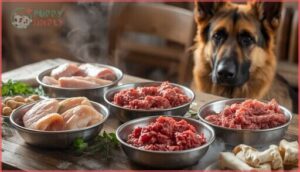
Once you know your recipe framework, ingredient quality matters most. Choose muscle meat like chicken breast (31g protein per 100g) or lean minced beef from traceable suppliers with documented sourcing records.
Add organs like kidney for the 10% organ requirement, and raw meaty bones sized for safe chewing.
Market trends show frozen formats reduce contamination risks—Salmonella appears in 24.2% of raw samples, so source carefully.
Safe Raw Food Preparation Tips
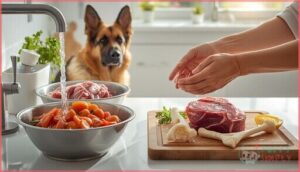
Sourcing quality ingredients is just half the picture. Proper hand hygiene cuts bacterial transfer by 99%—wash for 20 seconds before and after handling raw food.
Thaw meals in the fridge, never at room temperature, to keep bacteria below dangerous levels. Dedicate separate cutting boards for raw bones safety and sanitize equipment after every use.
Proper waste disposal protects your household from contamination risks.
Foods to Avoid in a German Shepherd Raw Diet

Not every food belongs in your German Shepherd’s raw bowl, even if it seems natural or nutritious. Some ingredients can cause serious health problems, from choking hazards to toxic reactions.
Let’s look at what you should keep out of your dog’s diet to protect their safety and well-being.
Dangerous Bones and Choking Hazards
Bone splintering is a real threat, especially with cooked bone risks—they can splinter and cause bone fractures or dental damage. Raw meaty bones like chicken necks are safer, but bone size matters for your German Shepherd.
Supervision importance can’t be overstated; even raw bones safety depends on watching your dog closely to prevent choking and keeping those tails wagging.
Toxic Foods for Dogs
Chocolate toxicity, xylitol poisoning, and grape dangers top the list of toxic foods for dogs. Your German Shepherd’s digestive system can’t handle these common household items:
- Chocolate and caffeine cause seizures and heart problems—dark chocolate is especially dangerous.
- Xylitol in sugar-free products triggers rapid blood sugar drops within minutes.
- Grapes and raisins damage kidneys, even in small amounts.
- Onion hazards and garlic destroy red blood cells, while macadamia nuts cause weakness.
Common Allergenic Ingredients
Protein allergens like beef and chicken cause 34% and 15% of food allergies in dogs, respectively. Grain allergens—wheat, corn, and soy—trigger reactions in sensitive German Shepherds.
Watch for poultry byproducts, dairy, and eggs when introducing raw food. Additives and contaminants from poor-quality ingredients increase allergy risk.
Fruit allergens, including apple seeds and citrus, also require careful allergy prevention measures.
Top Raw Food Products for German Shepherds
Switching to raw food is easier when you have the right resources and supplements on hand. Whether you need guidance on balancing meals or want to fill nutritional gaps, a few well-chosen products can make the process smoother.
Here are some helpful options to support your German Shepherd’s raw feeding journey.
1. Raw Feeding Guide For Dogs
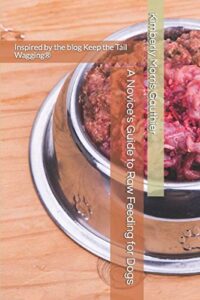
If you’re just starting your German Shepherd raw diet journey, Kimberly Gauthier’s guide cuts through the confusion. At $8.31, this beginner-friendly resource covers raw food basics, portion size guides, and a gradual introduction plan adapted to your dog’s needs.
You’ll learn how to observe digestive responses and adjust as you go. While some experienced raw feeders find it basic, it’s perfect for building confidence in raw dog food preparation.
The author’s hands-on experience with her own dogs makes breed-specific needs easier to understand and apply.
Best For: Dog owners new to raw feeding who want a simple, confidence-building guide to transition their German Shepherd or other breed to a raw diet without feeling overwhelmed.
- Includes practical portion guidelines and a clear 10-12 day transition plan that helps you gradually introduce raw food while monitoring your dog’s response.
- Written by someone with real hands-on experience, making breed-specific needs and raw feeding basics easier to understand and apply.
- Affordable at $8.31 and beginner-friendly, cutting through complex information to give you the essentials without jargon.
- Experienced raw feeders may find the content too basic or lacking the detailed nutritional information they’re looking for.
- Some sections feel repetitive or like blog content, which might not offer enough new insights for those who’ve already done preliminary research.
- May require additional resources for European customers or those needing more advanced formulation guidance to address specific health concerns.
2. Pet Food Safety Guide Magnet
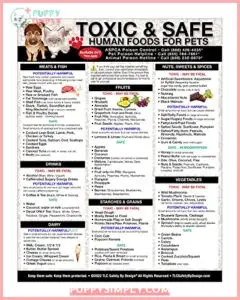
When you’re feeding your German Shepherd a raw diet, keeping track of what’s safe and what’s toxic is half the battle. This 8.5 x 11-inch vinyl magnet sticks to your fridge and lists dangerous foods like onions, chocolate, and grapes—substances that account for over 30% of pet poison control cases annually.
The Magnet Benefits include quick Emergency Access to poison control hotlines, making it useful Food Education for kids and pet sitters. Its durable Magnet Material withstands daily kitchen use, and the Gift Potential makes it thoughtful for new German Shepherd owners approaching raw food safety.
Best For: German Shepherd owners feeding raw diets who need a quick visual reference for toxic foods and emergency contacts, plus families with kids or pet sitters who may not know what’s safe.
- Lists common toxic foods like onions, chocolate, grapes, and xylitol—items responsible for over 30% of annual pet poisoning cases—so you can avoid accidental ingestion.
- Includes poison control hotline numbers right on the magnet, giving you immediate access during emergencies without searching online.
- Durable vinyl and magnetic material holds up to daily kitchen use, and the 8.5 x 11-inch size makes it easy to read from across the room.
- The 8.5 x 11-inch size may feel too large for smaller fridge spaces or minimalist kitchens.
- Only covers common food toxins, not every possible hazardous substance, so you’ll still need to research less common items.
- You only get one magnet and one emergency contact list per order, so households with multiple pets in different locations would need to buy extras.
3. Zesty Paws Dog Multivitamin Chews

When your German Shepherd transitions to a raw diet, filling nutritional gaps becomes essential. Zesty Paws Dog Multivitamin Chews deliver 400 mg glucosamine and 150 mg chondroitin per serving—necessary for this breed’s joint health.
The chew ingredients include cod liver oil with 0.85% EPA and probiotics for digestive support. Dosage guidelines recommend two chews daily for 26-75 lb dogs.
Customer reviews highlight improvements in mobility after three months, though the safety profile notes it’s not proven safe for pregnant dogs. These vitamin supplements complement raw food plans effectively.
Best For: German Shepherds on raw diets who need joint support and digestive balance, especially seniors or dogs with mobility concerns.
- Packs 400 mg glucosamine and 150 mg chondroitin per serving to protect hip and joint health in large breeds prone to dysplasia.
- Includes a billion CFU probiotics plus omega-3s from cod liver oil, which helps digestion and keeps their coat shiny.
- Soft chews with peanut butter flavor make daily dosing easy, and customers report noticeable mobility improvements after about three months.
- Not cheap compared to basic supplements, and the 90-count jar runs out quickly for larger dogs needing three chews daily.
- Some buyers mention the chews can be crumbly or dry, which might be messy or less appealing to picky eaters.
- Results take time to show up, and it’s not proven safe for pregnant or breeding dogs, so you’ll need to skip it during those periods.
4. Raw Dog Food Diet Guide

Approaching the shift to raw feeding doesn’t have to feel overwhelming. A proper diet change takes 1–2 weeks, replacing kibble gradually to avoid digestive upset. Portion sizes depend on your German Shepherd’s weight—aim for 2–3% of body weight daily.
Commercial options from certified suppliers guarantee nutritional completeness, while home preparation gives you control over ingredients. The BARF approach combines muscle meat, organs, and bones for raw food diet benefits.
Always seek veterinary guidance before starting, especially for puppies or dogs with health conditions.
Best For: German Shepherd owners who want a complete guide to transitioning their dog to a natural raw diet, especially those seeking both practical feeding advice and the science behind raw nutrition.
- Provides detailed portion guidelines and ingredient ratios (70–80% muscle meat, 10–15% bone, 10–15% organs) that take the guesswork out of meal planning for German Shepherds.
- Written by a veterinarian with specific nutritional information that helps address common health concerns like dental issues, coat quality, and digestive problems.
- Covers both DIY preparation and commercial options, making it useful whether you’re hands-on with meal prep or prefer ready-made solutions.
- Published in 1993, so some recommendations (like feeding garlic) are now considered unsafe by modern veterinary standards and need fact-checking.
- Doesn’t address bacterial contamination risks thoroughly—recent studies show 80% of homemade raw diets contain Salmonella, which requires strict hygiene protocols.
- May recommend ingredients or products that aren’t readily available in all regions, limiting its practical application for some readers.
Frequently Asked Questions (FAQs)
How do I store raw dog food safely?
To store raw dog food safely, freeze raw meat in airtight containers at 0°F to prevent spoilage.
Thaw in the fridge, use within two days, and always wash utensils and surfaces to reduce bacterial risks during raw food preparation.
Can puppies be fed a raw diet?
Yes, puppies can eat raw diets, but Puppy Raw Risks are real. Balanced Puppy Diets need precise calcium, phosphorus, and supplementation. Gradual introduction is essential.
Raw Diet Benefits include better digestion, but puppy nutritional needs demand careful puppy feeding and monitoring.
What signs indicate raw food intolerance?
Watch for digestive upset like vomiting, diarrhea, or bloating. Skin reactions—itching, redness, or ear infections—signal allergy.
Behavioral changes, weight fluctuation, and secondary risks from food allergies or digestive problems also warn of intolerance impacting dog health.
How do travel plans affect raw feeding?
Travel plans often disrupt raw food routines, causing feeding interruptions and storage challenges. Without careful travel preparation planning, maintaining raw food safety and consistency is tough.
Freeze-dried alternatives and pre-portioned meals help keep your German Shepherd’s raw diet on track.
Should I fast my dog before switching diets?
Fasting before switching diets offers digestive system reset benefits, especially for adult dogs. A 12-hour fast is ideal, reducing shift risks like digestive problems. Puppies shouldn’t fast.
Always seek veterinary guidance when changing to a raw food diet for safe canine nutrition.
Conclusion
Like tuning a classic engine, building a German Shepherd raw food diet demands care, knowledge, and respect for the breed’s unique needs. When you balance nutrients and prioritize safety, you set the stage for stronger health, sharper minds, and happier days together.
Every meal becomes an investment in your dog’s future. With thoughtful choices and steady attention, you can help your German Shepherd thrive—fueling their vitality, one bowl at a time. Their loyalty deserves nothing less.
- https://www.mcgill.ca/oss/article/health-nutrition/feeding-dogs-theyre-human-raw-grain-free-and-vegan-diets-dogs
- https://www.sciencedirect.com/science/article/pii/S016758772200174X
- https://www.nadelhaus.com/beginners-guide-to-raw-food-diet-for-dogs
- https://pmc.ncbi.nlm.nih.gov/articles/PMC8174467/
- https://germanshepherdshop.com/blogs/list/raw-diet-for-german-shepherds-health-panacea-or-potential-hazard