
This site is supported by our readers. We may earn a commission, at no cost to you, if you purchase through links.
Most people picture a full grown mini goldendoodle and assume "mini" means pocket-sized. Surprise — a healthy adult often tips the scale at 25 to 35 pounds and stands a solid 13 to 17 inches at the shoulder.
That’s closer to a sturdy hiking companion than a purse dog.
The confusion makes sense, though. Breeders use "mini" loosely, and the wide range of size categories — from teacup to small standard — means two dogs carrying the same name can look dramatically different standing side by side.
Knowing what to expect before your dog reaches adulthood saves a lot of guesswork and sets you up for smarter choices around food, grooming, and care.
Table Of Contents
- Key Takeaways
- What is a Full Grown Mini Goldendoodle?
- How Big Do Mini Goldendoodles Get?
- Factors Influencing Mini Goldendoodle Size
- Appearance of Full Grown Mini Goldendoodles
- Temperament and Personality Traits
- Grooming Needs and Coat Care
- Health and Wellness Considerations
- Nutrition and Feeding Guidelines
- Exercise and Activity Requirements
- Life With a Full Grown Mini Goldendoodle
- Frequently Asked Questions (FAQs)
- How do you discipline a Goldendoodle puppy?
- How big is a full grown mini Goldendoodle?
- What are the disadvantages of a mini Goldendoodle?
- Do mini Goldendoodles bark a lot?
- What do I wish I knew before getting a Goldendoodle?
- How big is a mini Goldendoodle full grown?
- Are mini Goldendoodles good dogs?
- What does a full size mini doodle look like?
- Do mini Goldendoodles adapt well to travel?
- What is the ideal diet for Mini Goldendoodles?
- Conclusion
Key Takeaways
- full-grown mini goldendoodle weighs 25 to 35 pounds and stands 13 to 17 inches tall, so don’t let the word "mini" fool you into thinking you’re getting a lap-sized dog.
- coat type — straight, wavy, or curly — decides how much grooming work you’re signing up for, with curly coats needing daily brushing to stay mat‑free.
- emotionally tuned-in to your moods, which makes them wonderful companions but also means they’re prone to separation anxiety without enough connection and routine.
- Genetics, nutrition, and daily exercise all shape how your dog grows, so feeding quality food and keeping up with vet visits from the start set them up for a healthier adult life.
What is a Full Grown Mini Goldendoodle?

If you’ve been wondering what a full grown Mini Goldendoodle actually looks like — size, personality, and all — you’re in the right place.
From coat type to temperament, this complete Mini Goldendoodle size and personality guide covers everything you’d want to know before bringing one home.
This breed is a cross between a Golden Retriever and a Miniature or Toy Poodle, and "full grown" means something specific regarding these dogs. Here’s what you need to know about where they come from and when they’re truly done growing.
Mini Goldendoodle Breed Overview
The Mini Goldendoodle’s breed origin traces back to a deliberate cross between a Golden Retriever and a Miniature Poodle — a pairing that produced something genuinely special. You get the Golden’s warm, people-loving temperament alongside the Poodle’s sharp intelligence and low-shedding coat.
That combination explains the breed’s popularity trends over the past decade; families, therapists, and first-time dog owners alike have made them one of the most sought-after companions around.
Understanding Mini Goldendoodle temperament, Mini Goldendoodle adult size range, and Mini Goldendoodle grooming requirements upfront helps you decide if this dog fits your life — whether you’re exploring breeders, weighing ownership costs, or considering rescue adoption.
They’re adaptable, affectionate, and genuinely enthusiastic to be part of your world.
Their moderate exercise needs make daily walks essential.
Defining “Full Grown” in Dogs
Knowing your Mini Goldendoodle is full grown is more than just eyeballing the scale. It means their skeletal development stages are complete, their muscle mass stabilization has settled in, and that gangly puppy look has finally given way to a confident adult build.
For most Mini Goldendoodles, these physical maturity markers show up somewhere between 12 and 18 months — though some dogs fill out closer to 24 months.
Here’s what signals your dog has hit their Mini Goldendoodle growth milestones:
- Bones stop lengthening, locking in adult height
- Adult weight holds steady across several weeks
- Behavioral maturity correlation kicks in — calmer, more predictable energy
- Veterinary size evaluation confirms the Mini Goldendoodle adult size range
Your vet can track adult weight and adult height trends to confirm when growth is truly done.
How Big Do Mini Goldendoodles Get?
Size is one of the first things people want to know before bringing a Mini Goldendoodle home.
The answer isn’t always a simple number — it depends on genetics, breeding, and a few other key factors. Here’s what you can expect as your pup grows into adulthood.
Average Adult Weight and Height

A full grown Mini Goldendoodle generally weighs between 15 and 35 pounds, with most landing comfortably around 25 to 35 pounds. Shoulder height measurement usually falls between 13 and 17 inches at the shoulder. Males show a noticeable male-female weight difference, running about 2 to 5 pounds heavier than females. Use a body condition score alongside the scale — weight alone doesn’t tell the whole story.
The Mini Goldendoodle size chart below shows weight and height expectations by age, helping you track the growth plateau age when your dog’s size finally settles.
| Age | Weight Range | Height Range |
|---|---|---|
| 6 months | 10–22 lbs | 10–15 inches |
| 12 months | 20–32 lbs | 13–18 inches |
| 18 months | 25–35 lbs | 15–20 inches |
Size Variations (Teacup, Toy, Standard)

Not every Mini Goldendoodle fits the same mold—and that variety is worth understanding before you bring one home.
The adult weight and height range for Mini Goldendoodles shifts noticeably across size categories:
- Teacup Mini Goldendoodle – under 9 inches tall, 2–4 lbs; highest fragility risk
- Toy Mini Goldendoodle – 10–12 inches, 5–12 lbs; better size stability
- Miniature – 11–16 inches, 15–30 lbs; most family-friendly build
- Small Standard – 18–24 inches, 25–45 lbs; suits active households
Size stability issues are common with teacups due to breeding ethics concerns and limited regulatory size standards. Market pricing trends also rise sharply for smaller dogs—sometimes without justification. Your living space needs should guide this choice as much as your heart does.
Growth Timeline and Milestones

Watch your Mini Goldendoodle grow through four clear phases. At birth, puppies weigh around 1 pound.
By 4 to 6 months, paw development steadies, dental milestones like teething begin, and weight reaches roughly half the adult range. Between 6 and 12 months, gait maturity sets in and social confidence builds noticeably.
Growth spurts slow after month 9, with most reaching their adult weight and height range by 11 to 13 months. Behavioral shifts follow, as energy stabilizes and routines take shape.
Factors Influencing Mini Goldendoodle Size

Not every Mini Goldendoodle ends up the same size, even from the same litter. A few key factors quietly shape how big your dog will actually get.
Here’s what plays the biggest role.
Genetics and Breeding Lines
Your mini goldendoodle’s adult size is written in its DNA long before it takes its first steps. Parent Size Genetics set the foundation — the smaller the poodle parent, the more Poodle Gene Influence pulls offspring toward a compact build. F1 generation dogs carry a 50/50 split, producing moderate size ranges with strong hybrid vigor. F1b generation pups lean heavier on poodle ancestry, often resulting in smaller, more predictable adults. Here’s what shapes size most:
- Genetic influence on Mini Goldendoodle size starts with parent selection.
- Line Breeding Strategies stabilize traits across generations.
- Health Screening Protocols and genetic testing guarantee responsible breeding practices.
Coat Curl Inheritance follows similar rules — curlier parents tend to pass that texture forward.
Nutrition and Feeding Habits
What your mini goldendoodle eats shapes how they grow — sometimes more than you’d expect. Quality puppy food with real animal protein listed first promotes steady bone and muscle development.
Once they’re adults, switching to adult dog food with proper dog nutrition guidelines keeps weight stable. A solid feeding schedule and dietary needs plan matter too. Splitting meals twice daily helps with digestion and avoids overeating.
| Feeding Factor | Why It Matters |
|---|---|
| Meal Timing Strategies | Two daily meals reduce stomach upset |
| Calorie Counting | Prevents excess weight gain |
| Treat Portion Control | Keeps daily intake balanced |
| Fiber Balance | Promotes consistent digestion |
Watch for Food Sensitivity Testing needs if stools stay loose after a dietary change from puppy to adult food.
Exercise and Lifestyle Impact
How much your mini goldendoodle moves each day quietly shapes their adult body.
Aim for 30 to 60 minutes of daily activity — walks, fetch, or play — to support weight management strategies and lean muscle development. Seasonal exercise adjustments matter too; hot mornings swap for cooler evenings.
Social walk benefits go beyond calories, easing anxiety and building confidence. Joint health maintenance starts early, so avoid overdoing it with puppies.
Consistent energy level management and dog activity enrichment genuinely prevent obesity and keep their build healthy long-term.
Appearance of Full Grown Mini Goldendoodles

One of the best parts of owning a Mini Goldendoodle is that no two look exactly alike. Their coats come in a surprising range of colors, textures, and patterns that make each dog genuinely one of a kind.
Here’s what you can expect about how your fully grown Mini Goldendoodle actually looks.
Common Coat Colors and Patterns
Full-grown Mini Goldendoodles are walking canvases — no two look quite the same.
Solid Colors like black, cream, apricot, chocolate, and rich red give some dogs a clean, uniform look.
Others sport Bi-Color Patterns, like a classic black-and-white tuxedo or chocolate patches against bright white.
Then there are Merle Variations, with mottled, irregular splotches across the coat, and Brindle Streaks that run like tiger stripes along the torso.
Some dogs carry Facial Mask Markings — a dark muzzle or subtle brow accents that add real personality.
And yes, many coat colors naturally fade or soften as your dog matures.
- Black coats stay deep and uniform
- Cream and apricot lighten noticeably with age
- Merle dogs may have pale or blue eyes
- Brindle patterns are most visible on the legs and chest
- Facial masks often extend to the ears
Coat Types (Straight, Wavy, Curly)
Your Mini Goldendoodle’s coat type shapes almost everything about daily care — and there are three main varieties to know.
Straight coats lie flat and smooth, reflecting strong Golden Retriever influence. They shed steadily throughout the hair growth cycle and need brushing twice weekly to control loose hairs and maintain coat volume.
Wavy coats split the difference beautifully. Gentle S-shaped curls create soft texture with minimal seasonal molting, though tangles can sneak up on you without regular brushing.
Curly coats — the Poodle’s gift — offer the lowest shedding and best hypoallergenic qualities. But matting control becomes your top priority. Daily brushing keeps curl definition sharp and prevents that dense coat from clumping.
Each coat type has real charm. Knowing yours helps you stay ahead of coat characteristics and maintenance before small knots become big headaches.
Changes From Puppy to Adult Coat
That curly or wavy coat you’re caring for now? It’s about to change. Between 6 and 12 months, your dog goes through a full Hair Cycle Switch — a natural Texture Change where soft puppy fur gives way to a denser, more structured adult coat. Color Shift is common too, with shades deepening or lightening noticeably.
Watch for these changes during the swap:
- Undercoat Development makes the coat look fuller but feel thicker.
- Matting Prevention becomes urgent — brush daily without exception.
- Hypoallergenic coat qualities solidify once adult curly coat or wavy coat settles.
- Uneven patches appear temporarily as old and new hair overlap.
Temperament and Personality Traits

A full-grown Mini Goldendoodle isn’t just a pretty face — the personality behind those curls is what really wins people over.
These dogs bring a rare mix of warmth, smarts, and emotional depth that makes them a natural fit for almost any household.
Here’s a closer look at the traits that define them.
Social and Family-Friendly Nature
These dogs were practically built for family life. Mini Goldendoodles thrive on gentle family interactions, staying close to their people throughout the day and greeting guests with curiosity rather than anxiety.
Their calm greeting rituals and kid‑friendly handling tolerance make them genuinely easy to live with. Social confidence building starts early — consistent socialization helps them handle busy households smoothly.
For inclusive household dynamics, few breeds match this Mini Goldendoodle personality and temperament.
| Family Situation | How They Adapt |
|---|---|
| Homes with young children | Tolerate gentle handling well |
| Multi-person households | Bond with multiple family members |
| Guests and visitors | Approach calmly with curiosity |
| Busy daily routines | Settle well with predictable schedules |
| Other pets present | Generally friendly and accepting |
Intelligence and Trainability
family-friendly nature goes hand-in-hand with serious smarts. Mini Goldendoodles pick up training basics and command teaching surprisingly fast — most start responding to cues reliably by 4 months.
Their natural problem solving ability means they connect cause and effect quickly. Cue consistency and reward timing matter most here: keep your signals the same, deliver treats within seconds, and they’ll nail generalization skills across different settings.
Positive reinforcement isn’t just effective — it’s how they genuinely enjoy learning.
Emotional Sensitivity and Bonding
Smart as they are, Mini Goldendoodles bring something even more impressive to the table — a deep emotional attunement that catches most new owners off guard.
Mini Goldendoodles don’t just learn your commands — they learn your emotions
These dogs read comfort-seeking behaviors and attachment signals naturally, leaning in or following you room to room when they sense a shift in your mood.
Dog emotional sensitivity runs strong in this breed, meaning stress triggers like loud noises or sudden changes hit them harder than average.
That’s why co-regulation cues matter — your calm voice and steady presence genuinely lower their anxiety.
Without enough connection, separation anxiety can develop.
Treat them like a partner, and they’ll settle, trust, and thrive.
Grooming Needs and Coat Care
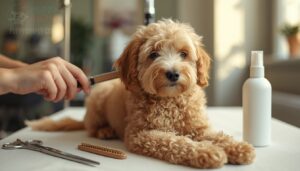
Grooming a Mini Goldendoodle isn’t complicated, but it does take some consistency. Their coat type determines how much time and effort you’ll actually spend each week.
Here’s what you need to know about keeping that coat healthy and manageable.
Brushing and Shedding Expectations
Mini Goldendoodles aren’t the heavy shedders some people expect, but grooming demands are real.
Your coat maintenance schedule depends on coat types — curly coats need daily brushing, wavy coats every other day.
Brush Type Selection matters: a slicker brush manages surface tangles, while an undercoat rake addresses Undercoat Management deeper down.
Seasonal Shedding Patterns peak twice yearly, making Mat Prevention Techniques even more important then.
Bathing Timing works best after brushing to flush loosened fur.
- Brush curly coats daily to prevent painful mats
- Use a slicker brush for surface detangling
- Add an undercoat rake during seasonal shedding periods
- Bathe after brushing to rinse out loosened hair
- Check behind ears and under the collar — mats form fastest there
Haircut Frequency and Styles
Most Mini Goldendoodles need a professional haircut every six to eight weeks — that’s your baseline for Trim Interval Guidelines. Curly coats may need shorter gaps, while longer styles can shift to Shape-Only Touchups between visits.
Popular choices include the teddy bear cut for a fuller look and shorter sporty cuts for easier Mat Prevention Techniques. Facial Hair Management keeps eyes clear, and Body Length Shaping follows your dog’s natural build. Stick to your coat maintenance schedule consistently.
Seasonal Grooming Considerations
Each season brings its own grooming demands for your Mini Goldendoodle, so staying ahead makes a real difference.
- Spring Mat Prevention: Brush more often as temperatures rise — loose hair tangles fast, especially behind ears and under the collar.
- Summer Heat Protection: Keep the coat clean and well-aired so skin breathes easily in humidity.
- Fall Undercoat Change: Remove trapped loose fur before it mats close to the skin.
Winter Dryness Management means brushing gently and bathing less, since indoor heating strips coat moisture quickly. Always practice Paw Moisture Control after wet walks.
Health and Wellness Considerations

Mini Goldendoodles are generally healthy dogs, but they do come with a few things worth keeping on your radar. Like any breed, they have their own set of tendencies that regular care can help you stay ahead of.
Here’s what every owner should know about keeping their dog feeling their best.
Common Health Issues
Your full grown mini goldendoodle is tough, but a few health issues tend to run in the breed. Watch for joint problems like hip dysplasia and patellar luxation, plus eye disorders such as progressive retinal atrophy. Skin irritation, ear infections, and dental disease are common day-to-day concerns. Von Willebrand’s disease and hypothyroidism also show up more than you’d expect.
| Health Issue | Key Warning Sign |
|---|---|
| Joint Problems | Limping, stiffness after rest |
| Ear Infections | Head shaking, unusual odor |
| Eye Disorders | Cloudy eyes, bumping into objects |
Regular Veterinary Care
Routine preventive veterinary care is one of the best things you can do for your Mini Goldendoodle.
Schedule a vet annually for an Annual Checkup covering a Blood Panel, Weight Monitoring, and Dental Prophylaxis.
Your vet will also set up Flea Tick Control and flag health concerns common to Mini Goldendoodles early.
Pet insurance makes these veterinary checkups and red flags for growth issues much easier to manage financially.
Preventative Health Measures
Think of preventative care as your Mini Goldendoodle’s best defense against common health issues in mini goldendoodles before they become costly problems.
Follow Vaccination Protocols and keep Parasite Control current year-round — missing doses leave real gaps in protection.
Brush teeth regularly; Dental Care prevents disease that affects more than just the mouth.
Weight Monitoring and obesity prevention in dogs go hand in hand, so track portions carefully.
Home safety, health screening for goldendoodles, and pet insurance round out a smart, proactive plan when you visit the vet annually.
Nutrition and Feeding Guidelines

Feeding your mini goldendoodle the right way makes a bigger difference than most people realize. What works for a puppy won’t cut it once they’re fully grown, and hydration matters more than it gets credit for.
Here’s what you need to know about amounts, timing, and keeping your dog healthy at every stage.
Adult Feeding Amounts and Frequency
Most adult Mini Goldendoodles do best on two meals a day — one in the morning, one in the evening. Meal timing matters more than people think; a steady feeding schedule helps regulate digestion and bathroom habits.
For a 25-pound dog, that’s roughly 1½ to 2½ cups daily, but calorie density varies by brand, so always check the label.
Use body condition scoring monthly for portion adjustment, and keep treat limits to about 10 percent of daily calories.
Transition From Puppy to Adult Food
Around 12 months, your Mini Goldendoodle is ready to move from puppy to adult food.
Start with gradual mixing — 25% adult food blended with 75% puppy food — then shift toward 50%, 75%, and full adult portions over 7 to 10 days.
Digestive monitoring matters here; loose stools mean slow down.
Check food label evaluation for portion adjustment guidance, and ask your vet for veterinary guidance specific to your dog’s weight.
Hydration and Special Dietary Needs
Water is just as important as the food in your dog’s bowl. Your Mini Goldendoodle needs continuous water access — roughly one ounce per pound of body weight daily.
Keep the bowl clean and easy to reach.
If you’ve switched to dry kibble, wet food hydration benefits may help bridge the gap.
Watch for dehydration indicator monitoring clues like tacky gums or darker urine.
For dogs on high-fiber diets, fiber hydration management matters — ask your vet about electrolyte supplementation if needed.
Exercise and Activity Requirements

Mini Goldendoodles have real energy, and they need a regular outlet for it. Without enough movement and mental challenges, they get bored fast — and a bored Goldendoodle usually finds trouble on its own.
Here’s what keeping one active actually looks like.
Daily Exercise Needs
Your full-grown Mini Goldendoodle needs 30–60 minutes of daily activity to stay balanced and calm. Exercise requirements for Mini Goldendoodles aren’t about intensity—they’re about consistency. Spread your activity level across the day with smart walk frequency and rest intervals between sessions.
Key exercise and activity needs to manage include:
- Adjust walk pace gradually to avoid overexertion
- Practice intensity management in heat by timing walks for cooler hours
- Choose smooth surfaces for paw protection
- Build rest intervals between outings
- Make weather adjustments during rain, cold snaps, or extreme heat
Playtime and Mental Stimulation
Even a well-walked Mini Goldendoodle can get restless without enough mental enrichment for dogs. Puzzle Toys, Scent Games, and Training Games tap directly into their activity level and sharp instincts. Rotating Toys weekly keeps the challenge fresh so boredom doesn’t sneak in.
- Puzzle games that reward problem-solving with hidden treats
- Scent Games using indoor hide-and-seek to engage their nose
- Tug of War for structured, back-and-forth bonding play
- Training basics and command teaching woven into short play sessions
Mental work genuinely tires them faster than exercise and activity requirements alone.
Suitable Activities for Mini Goldendoodles
Mini Goldendoodles genuinely light up when they have activities that match their energy and people-loving personality. Here’s a quick guide to their best outlets:
| Activity | What to Do | Why It Works |
|---|---|---|
| Fetch Games | Short bursts with soft balls | Matches retrieving instincts |
| Trail Hiking | Flat paths with water breaks | Builds stamina safely |
| Backyard Agility | Low jumps, tunnels, cone weaves | Sharpens coordination |
| Tug Training | Rope toy with a release cue | Channels energy constructively |
| Water Play | Gradual entry, supervised sessions | Burns energy while staying cool |
Rotating these activities covers their exercise requirements while keeping mental stimulation high. Weave in training basics and command teaching during hikes or fetch games — it doubles the benefit. Socialization for puppies happens naturally at dog parks too.
Life With a Full Grown Mini Goldendoodle

Living with a full-grown Mini Goldendoodle is one of those experiences that often surprise people — in the best way. They fit into more lifestyles than you might expect, but knowing what works best makes all the difference.
Here’s what real life with one actually looks like.
Adaptability to Different Living Environments
Your full-grown Mini Goldendoodle is one of the most compact-living-compatible dogs you’ll find. As an apartment-friendly Doodle, this small breed dog adapts well to tighter spaces — provided you meet daily exercise requirements and keep a steady routine.
Indoor climate comfort matters: their dense coat traps heat, so good airflow helps.
Outdoors, their outdoor temperature tolerance is decent but not extreme.
Add non-slip rugs for flooring traction needs, and this family pet thrives anywhere you call home.
Training and Socialization Tips
Your Mini Goldendoodle’s sharp mind is both a joy and a responsibility. Confidence building comes naturally when sessions stay short and fun.
Start dog socialization tips early — introduce calm people, new surfaces, and controlled introductions with other pets before tackling busier environments.
Puppy handling builds confidence, so pair ear and paw touches with treats.
Leash etiquette clicks fast when you reward check-ins.
Positive reinforcement drives training basics and command teaching, while crate training tips create a safe routine.
Real Owner Experiences and Testimonials
Ask any first-time owner what surprised them most, and you’ll hear the same thing: how quickly a Mini Goldendoodle becomes family.
- Gentle behavior with kids, cats, and multi-dog household companions from day one
- Easy adjustment to apartment living, travel companion duties, and holiday grooming routines
- Smooth rescue adoption transitions, with dogs meeting full-grown size expectations within 12 months
Whether you’re tracking a Mini Goldendoodle size chart by age and gender or celebrating Mini Goldendoodle personality, temperament wins, owners agree — the bond runs deep.
Frequently Asked Questions (FAQs)
How do you discipline a Goldendoodle puppy?
Redirect, don’t punish. Use Positive Reinforcement and Boundary Setting to guide behavior.
Crate Management, Mouthing Prevention, and Jumping Control all rely on rewarding what you want — not scolding what you don’t want.
How big is a full grown mini Goldendoodle?
Full grown size expectations vary quite a bit with this breed. Most land between 20 and 40 pounds and stand 13 to 20 inches tall at the shoulder, depending on genetics.
What are the disadvantages of a mini Goldendoodle?
They’re charming, sure — but owning one isn’t all golden.
Grooming demands, size variability, matting skin irritation, ownership expense, noise sensitivity, and health concerns like hip dysplasia and patellar luxation make health screening costs a must.
Do mini Goldendoodles bark a lot?
Mini Goldendoodles are moderate barkers, not nonstop yappers. They usually bark to alert you to strangers, odd noises, or passing animals — classic alert barking triggers — rather than barking without reason.
What do I wish I knew before getting a Goldendoodle?
Honestly, the grooming demands alone can catch you off guard.
Factor in pet insurance early, consider allergy considerations, and remember — their emotional sensitivity and long-term commitment make this a lifestyle, not just a pet choice.
How big is a mini Goldendoodle full grown?
Most mini Goldendoodles tip the scale at 20 to 40 pounds and stand 13 to 20 inches tall at the shoulder — though parent breed size is the real deciding factor.
Are mini Goldendoodles good dogs?
Yes — they’re wonderful family pets.
Their Mini Goldendoodle temperament and personality blend warmth, trainability, and hypoallergenic traits into one cheerful package. They bond deeply, adapt well, and genuinely thrive with people around them.
What does a full size mini doodle look like?
Think of a living teddy bear — compact, fluffy, and impossibly soft.
At adult size, your mini doodle stands 16–20 inches tall and weighs 20–40 pounds, with expressive eyes and wavy or curly fur.
Do mini Goldendoodles adapt well to travel?
They’re natural road trip companions.
Their calm temperament, compact Mini Goldendoodle size, and love of being near you make car rides’ calmness second nature once crate training and travel command training are solid.
What is the ideal diet for Mini Goldendoodles?
A protein-rich, balanced diet works best. Prioritize animal protein, healthy fats, and fiber balance.
Feed about 5 cups daily across two to three meals, adjusting portions for activity level and calorie control.
Conclusion
They say the best things come in small packages — but a full-grown mini goldendoodle proves that "small" is a relative term.
At 25 to 35 pounds, this dog brings big personality, big heart, and a grooming schedule to match.
Knowing what you’re signing up for changes everything.
Feed them well, keep their coat brushed, and invest in consistent training.
Do that, and you’ll have a loyal companion built for the long haul.
- https://www.akc.org/
- https://www.frontiersin.org/journals/veterinary-science/articles/10.3389/fvets.2020.00388/full
- https://www.goldendoodleassociation.com/about-the-breed/sizes/
- https://www.animaltrust.org.uk/conditions/patella-luxation/
- https://vcahospitals.com/know-your-pet/von-willebrands-disease-in-dogs






Mark
October 29, 2025 at 05:37 AM
This is an incredibly detailed and helpful article! I really liked how you explained the different stages of growth and personality development in Mini Goldendoodles. The section about maintaining a healthy diet and exercise routine stood out — it’s something every owner should pay attention to, especially as their doodle transitions from puppy to adult.
I’ve also been reading more about the miniature Goldendoodle and learned how genetics, coat type, and training consistency all play a big role in shaping their overall temperament. Your focus on responsible ownership, grooming, and realistic expectations really makes this guide stand out from others.
Overall, this article perfectly balances practical advice and genuine insight — a must-read for anyone planning to bring home a Mini Goldendoodle. Thanks for sharing such valuable and thoughtful information! https://theminigoldendoodles.com/