This site is supported by our readers. We may earn a commission, at no cost to you, if you purchase through links.
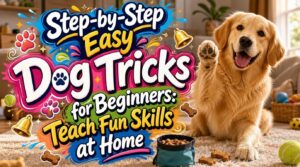
Most dogs already know how to sit—but the ones who can shake your hand, ring a bell for dinner, or dramatically "play dead" at a finger-gun? Those dogs have owners who figured out that training doesn’t have to be serious business. Teaching easy dog tricks for beginners takes 10 minutes a day, a handful of small treats, and knowing exactly where to start. Skip that part, and you’ll spend 20 minutes watching your dog stare blankly at your hand.
Get it right, and you’ll have a dog that learns new skills faster than expected—and actually enjoys the process.
Table Of Contents
- Key Takeaways
- Easy Dog Tricks for Beginners
- Training Foundations Before Teaching Tricks
- Step-by-Step Beginner Trick Instructions
- Top 4 Beginner Dog Training Items
- Beginner Dog Trick Training Tips
- Frequently Asked Questions (FAQs)
- What is the 7 7 7 rule for dogs?
- What is the 3-3-3 rule for dog training?
- What is the easiest trick to teach your dog?
- What is the easiest dog to teach?
- What is the easiest command to teach a dog?
- What is the 1 2 3 dog training method?
- What are the best rewards for teaching my dog tricks?
- How do I know when my dog has learned a trick?
- Are there any safety precautions I should take when teaching my dog tricks?
- How long should I spend teaching my dog tricks?
- Conclusion
Key Takeaways
- Start with tricks like shake hands, spin, and ring a bell — they build on each other naturally and give your dog quick, satisfying wins early on.
- Short 5–10 minute sessions beat long ones every time, because your dog’s focus fades fast and consistency matters more than volume.
- Always reward the exact moment your dog does the right thing — even a one-second delay weakens the connection between the behavior and the treat.
- Before jumping to flashy tricks, lock in sit, down, and stay first — they’re the foundation everything else is built on.
Easy Dog Tricks for Beginners
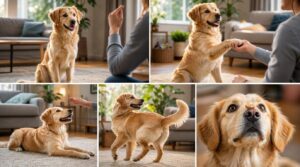
Teaching your dog a few fun tricks doesn’t have to feel overwhelming. The best place to start is with skills that build confidence for both of you.
Simple tricks like "sit" or "spin" are a great starting point — check out these fun dog training tricks and tips to keep sessions playful and rewarding.
Here are eight beginner-friendly tricks worth adding to your training lineup.
Shake Paws
One of the best beginner dog trick training win you’ll get is teaching your dog to shake paws. Hold a treat-filled fist at chest level—that serves as your hand touch target. Your dog’s natural paw positioning does the work through treat shaping.
Once the paw lift is reliable, cue timing matters: say "shake" right before the paw rises. Positive reinforcement seals it fast.
Having a compact first‑aid kit on hand helps address minor injuries during training sessions.
High Five
Once your dog nails the shake, high five is a natural next step. This beginner-friendly canine trick training move builds on hand targeting — just raise your open palm slightly above paw height.
Keep treat size small for quick rewards, use non-slip flooring for surface grip, and make safety adjustments if your dog strains.
Positive reinforcement with a clear hand signal locks it in fast.
Wave
Wave takes the high five’s upward hand signal and stretches it into a full paw sweep — like watching a crest and trough rise and fall. Hold your hand just out of reach, let your dog’s paw amplitude measurement naturally increase with each attempt, and reward that energy transport upward.
This beginner-friendly canine trick training move uses positive reinforcement and a clear hand signal. One wave, done.
Spin
From a wave, your dog’s next move is a full-body spin. Hold a treat near your dog’s nose and slowly guide it in a tight circle — your hand signals do all the work. Like quantum spin basics, this trick involves rotation in discrete, repeatable steps.
Use positive reinforcement dog training and your step-by-step guide to dog trick training approach: reward each quarter-turn until the full spin clicks.
Ring a Bell
Teaching your dog to ring a bell is one of the most satisfying beginner-friendly canine trick training wins you’ll hit. It’s practical, fast, and honestly impressive at parties. This step-by-step guide to dog trick training keeps it simple with positive reinforcement dog training.
- Bell Placement — Mount it at nose height
- Consistent Nudging — Reward only actual rings
- Reward Timing — Treat within seconds
- Distraction Management — Train near the same door
- Cue Association — Add "ring" after reliability
Play Dead
Bang — and your dog drops. Play Dead is one of those easy dog tricks for beginners that always gets a reaction.
Start from a down position, then use treats to lure your dog onto its side.
This step-by-step guide to dog trick training relies on positive reinforcement methods: nail Cue Timing, use Marker Consistency, build Duration Progression slowly, and always mind Surface Safety and Joint Considerations.
Roll Over
Once your dog nails Play Dead, Roll Over becomes a natural progression. Body positioning is key: your dog begins in a down position, rolls onto its side, and completes the rotation onto its back.
Follow this step-by-step guide using positive reinforcement:
- Use a Non-Slip Surface
- Guide the Lure Path from shoulder to back
- Apply Clicker Training at the exact back-lying moment
- Practice Gradual Progression, building on basic obedience before introducing cue timing
Close The Door
Teaching your dog to Close The Door is a trick that genuinely impresses guests. Success hinges on precise Cue Timing: deliver your verbal cue only when your dog makes contact with the door, never before. Target Positioning begins at the door’s inner panel, guiding the dog’s initial interaction.
Reward Timing is critical—offer the reward immediately when the door clicks shut to reinforce the desired outcome.
Safety Precautions are essential: always ensure fingers are clear of the door’s path during training.
Reliability Building develops naturally through consistent repetition, solidifying the behavior over time.
Training Foundations Before Teaching Tricks

Before your dog learns a single trick, a few simple habits need to be in place first. Think of these as the ground rules that make everything else click faster and stick longer.
Here’s what to set up before you start teaching anything new.
Start With Sit, Down, and Stay
Think of sit, down, and stay as your dog’s ABCs — everything else builds on them. These basic obedience foundations set up every trick you’ll teach later.
Nail your position setup and duration building before adding distance proofing or a release cue. Focus on cue consistency throughout:
- Sit lowers the rear on command
- Down holds a lying position
- Stay keeps them planted until released
Use Short 5–10 Minute Sessions
Five to ten minutes are your sweet spot. Session timing matters more than marathon practice. Short bursts boost repetition frequency, keep your dog’s motivation high, and give you clear endings to track progress.
Think of each session as one tiny win stacked on another. This step-by-step dog training guide approach builds beginner-friendly canine trick training results faster than you’d expect.
Train in a Quiet Space First
Environmental Consistency and Distraction Reduction go hand in hand — close doors, silence your phone, and pick one dedicated corner.
Sound Management is simple: fewer sudden noises mean fewer startled dogs.
A Calm Shift into each session starts with stillness. That low-distraction environment and consistent Handler Positioning are your beginner-friendly canine trick training foundation in this step-by-step guide to dog trick training.
Reward The Correct Behavior Immediately
Once your space is calm and quiet, your timing becomes everything. The moment your dog does the right thing, reward it — right then. That’s the heart of positive reinforcement training methods.
Precise timing and zero-delay marking ensure your dog instantly connects the action to the treat. This immediate association is critical for effective learning.
Close reinforcement through clicker training methods and prompt praise makes behavior shaping click — literally. These tools bridge the gap between action and reward, strengthening desired behaviors effortlessly.
Add Verbal Cues After Consistency
Once your timing is sharp, the next piece is knowing when to introduce words. Cue timing matters here — don’t say "shake" until your dog is already offering the behavior reliably. That’s your Consistency Threshold.
Say the word once, cleanly — Clean Cue Delivery — then reward. Prompt Fading and Generalization Practice follow naturally, helping verbal cues stick across different rooms and real-life situations.
End Every Session Positively
Once your verbal cues are clicking, the last thing you want is to undo that momentum with a rushed ending. How you close a training session matters just as much as how you open it.
- Use a gratitude cue like "all done" with calm body language
- Give a small final treat after the easiest win
- Add a quick next step preview — "tomorrow, more wave"
That predictable ending keeps your reward system strong.
Step-by-Step Beginner Trick Instructions
Now that your dog has the basics down, it’s time to put them to work. Each trick below comes with clear, numbered steps so you always know exactly what to do next.
Let’s get started.
How to Teach Shake Paws
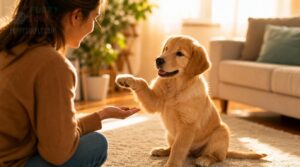
Shake starts with smart paw selection — pick one front paw and stick with it. Use a treat-filled fist near the ground so your dog naturally investigates with that paw. Mark the moment it lifts using a clicker or "yes" — marker timing is everything here.
Gradually shift to hand positioning with an open palm, applying the lure fade technique.
How to Teach High Five

Build directly from your dog’s paw shake foundation. Hold a treat inside a closed fist as your target hand, and wait — your dog will paw at it. Use marker timing with a clicker or "yes" the instant paw meets hand.
After reliability practice, raise hand height slightly.
Begin cue introduction by saying "high five" as contact happens.
How to Teach Spin
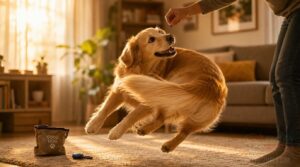
Hold a treat near your dog’s nose—that’s your lure. Guide it in a small arc to initiate the Spin shaping steps. Maintain Hand Signal Placement at nose level for consistency. Click the instant your dog begins turning to ensure precise Reward Timing.
Gradually reduce the Lure Arc Size as your dog progresses. Prioritize Directional Consistency by sticking to one direction initially. Finally, introduce the verbal cue "spin" once the behavior is established.
How to Teach Roll Over
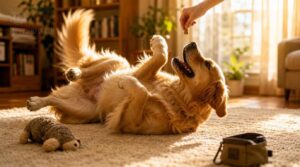
Roll Over looks impressive, but it’s one of the most beginner-friendly canine trick training wins you can score. Start your dog in a down position, then use the Lure Technique—guide a treat slowly around their nose in a circle. Nail the Marker Timing by saying "good" the moment they complete the full roll.
Keep sessions short; Roll Over demands Core Strength, so two or three attempts are plenty. Once consistent, add Cue Consistency with the verbal command "roll over" paired with the same hand motion every time.
How to Teach Play Dead
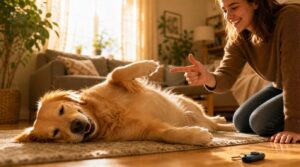
Bang" — and your dog drops like a pro. Play Dead is all about nailing Cue Timing with a Side-Lying Lure, then slowly building Duration Building so your dog holds the pose.
- Lure from down into a Side-Lying position using a treat
- Click your clicker the moment the correct pose happens, then reward
- Add the Hand Signal — point like a gun — alongside your verbal cue
- Practice Distraction Proofing gradually across multiple sessions
How to Teach Ring a Bell
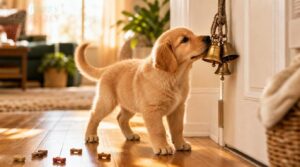
Your dog’s already knocking things over — why not make it count? Ring a Bell is a crowd-pleaser that doubles as a potty cue.
- Hang the bell at Bell Height — nose or paw level in an Obstacle-Free Zone near the door
- Use Shaping Sequence: reward any interaction, then only bell-touches
- Apply Immediate Reward within seconds
- Add your Consistent Cue — "ring" — once reliable
How to Teach Close The Door
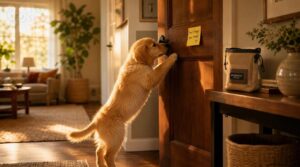
Once your pup’s ringing bells, Close The Door is a natural next step — and honestly, it never gets old watching them do it.
- Set your Approach Position near an open door with a Post-it note at nose level.
- Use Gentle Motion — reward any nose touch.
- Shape toward a full push using Reward Timing within seconds.
- Add the Latch Cue once reliable; check the latch catches completely.
How to Teach Go to Bed

After closing doors, teaching your dog to "go to bed" gives them a calm "home base" they’ll actually love returning to.
- Bed Placement — Set the bed in a low-traffic corner, close to you first.
- Lure Progression — Move a treat slowly onto the bed; mark the moment paws land.
- Cue Consistency — Say "go to bed" only after they move reliably.
- Stay Duration — Reward settling, not just touching.
Top 4 Beginner Dog Training Items
The right tools make a real difference when you’re just starting out with trick training. You don’t need a ton of gear, but a few key items will help your dog learn faster and keep sessions running smoothly.
Four beginner-friendly training items are worth picking up.
1. Neoweek Adjustable Weighted Adult Hula Hoop

Here’s a hoop that pulls double duty — and yes, your dog will love it too. The Neoweek Adjustable Weighted Hula Hoop is a solid pick for teaching your dog to jump through a hoop, a classic trick that builds coordination and confidence. Its 38-inch diameter gives your dog plenty of clearance, and the high-density foam padding keeps the surface smooth and safe against your dog’s body mid-jump.
The 8-section detachable design also lets you shrink the hoop as your dog’s skills grow.
| Best For | Adults who are new to hula hooping and want a low-impact way to work on core strength and cardio at home or on the go. |
|---|---|
| Primary Use | Fitness & Exercise |
| Build Material | Plastic & Foam |
| Portability | Disassembles for transport |
| Durability | Breaks after months of use |
| Target User | Beginner adults |
| Indoor/Outdoor | Home, park, beach |
| Additional Features |
|
- The foam padding makes it comfortable against your waist, even during longer sessions
- You can adjust the diameter down to 28 or 32 inches as you get more comfortable, so it grows with your fitness level
- At just over 2 lbs, it’s light enough to travel with and easy to store once you break it into its 8 sections
- Taking it apart is trickier than it should be — the foam hides the release button, so you’re basically wrestling with it every time
- A few users have reported cracking or breaking after a few months of regular use, which is worth keeping in mind
- The weight can feel like a lot if you’re brand new to weighted hoops, and going too hard too fast can leave some bruising around your waist
2. Zukes Mini Naturals Chicken Training Treats
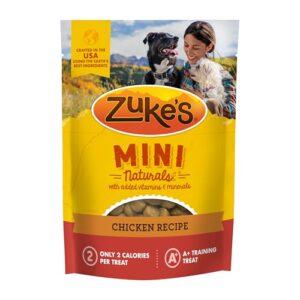
Good treats matter just as much as good gear. Zuke’s Mini Naturals Chicken treats are a go-to for a reason. Each piece is only about 2 calories, allowing you to reward your dog dozens of times in a single session without overfeeding concerns. They’re soft enough to break into smaller pieces for puppies or tiny breeds.
The treats contain no corn, wheat, or soy, and the 16-oz resealable pouch keeps them fresh. Their mild smell ensures it won’t distract your dog mid-training, making them ideal for focused training sessions.
| Best For | Dog owners who train frequently and want a low-calorie, small-sized reward that works for puppies, small breeds, or dogs with dental sensitivities. |
|---|---|
| Primary Use | Dog Training |
| Build Material | Soft Chewable Treat |
| Portability | Resealable 16-oz pouch |
| Durability | Dries out if unsealed |
| Target User | Dogs of all sizes |
| Indoor/Outdoor | Home and on-the-go |
| Additional Features |
|
- Only 2 calories per treat, so you can reward your dog over and over in a session without worrying about overfeeding
- No corn, wheat, or soy, and soft enough to break into smaller pieces for tiny or younger dogs
- The 16-oz resealable pouch keeps treats fresh and is easy to take on the go
- Not grain-free — contains rice, oats, and barley, so dogs with grain sensitivities may need something else
- Texture runs firmer than truly soft treats, which might be a letdown if your dog needs something extra tender
- The bag can dry out fast if you don’t seal it tightly after every use
3. MROCO Chrome Desk Service Bell
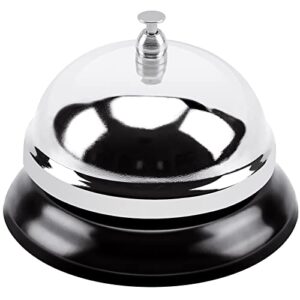
Here’s a bell your dog will actually learn to ring. The MROCO Chrome Desk Service Bell is built from stainless steel with a chrome finish, ensuring it withstands paws, noses, and repeated taps without damage. Its compact 3.38-inch base remains steady on any surface, making it ideal for training sessions.
The bell produces a single crisp chime that carries clearly across a room, which simplifies teaching the "Ring a Bell" command. Consistent sound output every time reinforces your dog’s learning process effectively.
Rated for over 20,000 ring cycles, this durable tool won’t fail before your dog masters the task. Its robust construction guarantees long-term reliability for persistent training.
| Best For | Dog owners and pet trainers who want a durable, easy-to-use bell for teaching communication commands at home. |
|---|---|
| Primary Use | Signal & Training |
| Build Material | Stainless Steel |
| Portability | Compact 3.38in diameter |
| Durability | 20,000+ ring cycles |
| Target User | Pets and professionals |
| Indoor/Outdoor | Indoor and outdoor |
| Additional Features |
|
- Built from stainless steel with a chrome finish, so it holds up to repeated paw taps and nose bumps without wearing down
- Rated for over 20,000 ring cycles, meaning it’ll outlast even the most enthusiastic training sessions
- Compact base keeps it stable on floors or surfaces, so it won’t slide around mid-session
- The chrome finish picks up fingerprints and smudges easily, so it needs a wipe-down now and then to stay looking sharp
- The chime might get lost in noisy environments or larger rooms where sound doesn’t carry well
- Only comes in silver, so if you’re going for a specific aesthetic in your space, you’re a little out of luck
4. Cool Runners Adjustable Agility Weave Poles
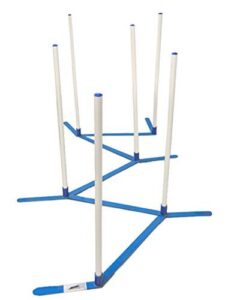
Weave poles aren’t just for competition dogs — they’re one of the best ways to build your beginners’ coordination and focus. The Cool Runners set includes six 37-inch plastic poles spaced 24 inches apart, and you can arrange them in a straight line or offset formation to match your dog’s skill level.
At just 6.4 pounds, it packs into a carrying case and travels anywhere.
The flat base stays stable, and the included grass stakes keep everything anchored outdoors during training.
| Best For | Small to medium dog owners who want a portable, beginner-friendly weave pole set for backyard training or travel. |
|---|---|
| Primary Use | Dog Agility Training |
| Build Material | Plastic |
| Portability | Includes carrying case |
| Durability | Loosens with repeated use |
| Target User | Small to medium dogs |
| Indoor/Outdoor | Indoor and outdoor |
| Additional Features |
|
- Lightweight at 6.4 lbs and comes with a carrying case, so it’s easy to toss in the car and go
- Adjustable formations let you start wide and gradually work toward a straight competition-style line as your dog improves
- Quick to set up and includes grass stakes to keep things from shifting around outdoors
- Poles can loosen over time with repeated use and may need occasional tightening with a screwdriver
- The plastic base struggles on uneven or grassy ground, so you might need extra anchoring
- Not built for large or heavy dogs — the bases can crack under impact, and it doesn’t meet official competition specs
Beginner Dog Trick Training Tips

Good tricks only go so far if the training habits behind them are shaky. Smart practices make the difference between a dog that performs once and one that nails it every time.
Here’s what to keep in mind as you work through each skill.
Use Positive Reinforcement, Not Punishment
Punishment doesn’t teach your dog what to do — it only creates fear. Reward-based training works because your dog learns that trying leads to good things. Nail your Reward Timing, use Specific Praise, and lean on Reinforcer Variety to keep sessions fresh. When your dog misses a cue, just Error Reset — simplify the step and try again.
Punishment creates fear, but reward-based training teaches your dog that trying always leads to something good
| Situation | Punishment-Based Response | Positive Reinforcement Training Response |
|---|---|---|
| Dog ignores cue | Scold or correct | Reset, simplify, reward attempt |
| Dog gets it right | No response | Immediate treat + Specific Praise |
| Dog loses focus | Force attention | End session, restart fresh |
| Dog tries wrong behavior | Punish mistake | Redirect using Fear-Free Motivation |
| Dog nails the trick | Occasional praise | Reinforce with Reinforcer Variety |
Keep Treats Small and High-Value
Think of treats as your dog’s paycheck — tiny, frequent, and worth showing up for. Mini treat benefits shine here: small pieces mean more reward frequency without blowing your calorie budget.
Strong treat aroma from cheese or liver grabs attention fast.
Smart texture selection keeps chewing quick, so momentum stays high.
That’s the heart of effective treat-based training and positive reinforcement methods.
Pair Hand Signals With Verbal Cues
Your dog reads your body before your words — so pair both every time. Say "shake," then immediately show the hand signal. That’s timing consistency in action. Over time, your dog builds cue generalization, responding to either one alone.
Hand signals also handle distraction handling beautifully — when noise drowns out your voice, a clear gesture keeps communication alive.
Visual cue clarity plus your verbal cue? Unbeatable combo.
Increase Difficulty Gradually
Rushing your dog from "got it once" to "nailed it everywhere" is where most beginners stumble. Smart training progression means changing just one thing at a time — distance, distraction, or duration — never all three at once.
- Start Cue Fading Techniques early — shrink hand gestures gradually
- Build Progressive Distraction Levels slowly — yard before the dog park
- Apply a Variable Reward Schedule — treats become unpredictable, motivation stays high
That’s Incremental Movement Complexity and Contextual Generalization Steps working together.
Practice Tricks for Mental Stimulation
Once your dog navigates changes in difficulty like a pro, it’s worth knowing that tricks do more than impress — they tire out a busy brain.
Scent Work, Puzzle Games, and Cue Variations keep your dog sharp between sessions.
| Activity | Mental Benefit |
|---|---|
| Distance Training | Builds focus beyond close range |
| Novel Environments | Strengthens cue reliability anywhere |
| Scent Work | Engages natural problem-solving instincts |
| Puzzle Games | Reduces boredom-driven behavior |
Avoid Tricks That Strain Joints
Mental stimulation matters, but so does keeping your dog physically safe while learning. Stick to low-impact exercises that keep at least one paw grounded. Use joint-friendly cues within a comfortable range of motion—no full-body twisting for beginners. Train on cushioned surfaces to prevent slips.
Monitor for pain signals, such as limping or flinching. Stopping immediately if something looks off is crucial for safe dog training practices.
Build Confidence Before Advanced Tricks
Keeping your dog physically safe is just one piece of the puzzle — their emotional readiness is just as crucial. Basic obedience foundations provide the trust-building blocks they need before advancing to more complex tricks.
Use safe distance, reward consistency, and solid marker timing to layer incremental challenges gradually. These techniques ensure your dog remains confident and engaged as difficulty increases.
Building a bond through tricks starts with small wins first. Celebrating early successes fosters motivation and strengthens your connection, creating a positive foundation for future training.
Create a Simple Weekly Training Schedule
Once your dog’s confidence is growing, a solid training routine keeps that momentum going. Spacing sessions across the week — rather than cramming everything into one day — boosts retention.
- Training Frequency & Rotation Plan: Practice 1–2 tricks per day, rotating them throughout the week.
- Progress Tracking: Note response speed each session — immediate, delayed, or prompted.
- Environment Gradation & Recovery Day: Start in quiet spaces, then add distractions, with one easier day built in.
Frequently Asked Questions (FAQs)
What is the 7 7 7 rule for dogs?
The 7-7-7 rule maps your dog’s adjustment timeline — 7 days to decompress, 7 weeks to learn routines, and 7 months to fully bond.
This rule helps you set realistic bonding milestones and manage stress behaviors with patience.
What is the 3-3-3 rule for dog training?
The 3-3-3 rule is an adjustment timeline that maps a rescue dog’s emotional stages — 3 days to decompress, 3 weeks to learn routines, 3 months to build confidence.
Emphasizing gradual progression and consistency importance throughout.
What is the easiest trick to teach your dog?
Shake hands is the easiest trick to teach your dog.
It builds naturally on sit, uses simple paw targeting, and rewards with quick rewards — making it a perfect starting point with no special equipment needed.
What is the easiest dog to teach?
Labrador Retrievers, Golden Retrievers, and Border Collies top the list of enthusiastic and intelligent breeds. These dogs are naturally motivated learners, forming strong bonds with their owners.
Their focus and companionship make them attention-friendly, ideal for beginner-friendly canine trick training.
What is the easiest command to teach a dog?
Sit is the essential foundation cue — your dog’s first stepping stone into basic obedience commands.
It’s a simple one-word command with rapid learning potential, making it the easiest place for any beginner to start.
What is the 1 2 3 dog training method?
The 1 2 3 method builds anticipation through a simple sequence — you count aloud, then reward right after three.
That timing consistency and predictable cues help your dog lock in fast through counting reinforcement.
What are the best rewards for teaching my dog tricks?
Picture a tiny piece of freeze-dried chicken hitting your dog’s nose — that spark of focus? High-value treats doing their job.
Use rotating rewards, perfect reward timing, and low-calorie options to fuel reward-based training.
How do I know when my dog has learned a trick?
Your dog has learned a trick when it follows the cue quickly, consistently, and without a lure — even with mild distractions present.
This is your sign: cue generalization and reward independence working together.
Are there any safety precautions I should take when teaching my dog tricks?
Keeping your training space clear of Training Area Hazards, using proper Equipment Safety Checks, and following Supervision Guidelines protect your dog.
Safe dog training practices make every session smoother and keep your dog confident throughout.
How long should I spend teaching my dog tricks?
Keep sessions short — about 5 to 10 minutes. Your dog’s attention span drops fast after that. Factor in age-based sessions and breed stamina, and you’ve got your daily time budget covered.
Conclusion
Here’s a funny thing—the day your dog finally nails "play dead" on cue is usually the same day you stop thinking of training as work. That’s how easy dog tricks for beginners actually operate: small sessions, consistent repetition, and suddenly you’ve got a dog who’s sharper, happier, and genuinely fun to be around.
The tricks are just the surface. What you’re really building, one treat at a time, is a dog that trusts you completely.
- https://www.talenthounds.ca/20-easy-tricks-to-teach-your-dog/
- https://www.humaneworld.org/en/resources/positive-reinforcement-training
- https://www.rspca.org.uk/adviceandwelfare/pets/dogs/training/sit
- https://www.3dogranchmt.com/post/positive-reinforcement-tips
- https://www.onespoileddog.com/blogs/news/treat-timing-when-to-reward-your-dog-during-training?srsltid=AfmBOor8D5lsVpelrnnbApmtvPJTb_C-fH5KprIBbieGxfuzQP1ubYHZ