
This site is supported by our readers. We may earn a commission, at no cost to you, if you purchase through links.
Most dogs look peaceful when they sleep—until you notice the whites of their eyes glinting back at you. It’s unsettling the first time you see it, like something out of a horror movie.
But a dog that sleeps with eyes open is actually doing something completely normal, rooted in sleep biology and survival wiring that dates back thousands of years. The real story behind those half-open lids involves REM cycles, ancient instincts, and a hidden third eyelid most owners never knew existed.
Once you understand what’s actually happening, you’ll worry less—and watch more closely for the signs that do warrant a vet call.
Table Of Contents
- Key Takeaways
- Why Dogs Sleep With Eyes Open
- Canine Sleep Stages and Eye Movement
- The Role of The Third Eyelid
- Breed Anatomy and Open-Eye Sleeping
- Instincts That Keep Dogs Alert
- Normal Sleep Vs Concerning Signs
- Eye Conditions That Affect Closure
- Seizures, Narcolepsy, and Sleep Episodes
- How to Protect Sleeping Eyes
- When to Call Your Veterinarian
- Frequently Asked Questions (FAQs)
- Do sick dogs sleep with their eyes open?
- Is it normal for a dog to sleep with the eyes open?
- What dog breeds sleep with their eyes open?
- Why is my dog not closing his eyes while sleeping?
- Do dogs sleep with their favorite person?
- Are Certain Breeds More Likely to Sleep With Their Eyes Open?
- Are There Long-Term Effects of Open-Eyed Sleep?
- Could Open-Eyed Sleep Be a Sign of Stress?
- Is Open-Eyed Sleep Normal for Puppies?
- Can dogs dream while sleeping with eyes open?
- Conclusion
Key Takeaways
- Dogs sleep with eyes partly open because of relaxed eyelid muscles during REM sleep, and survival instincts wired in long before they ever had a couch to nap on.
- A hidden third eyelid — called the nictitating membrane — quietly slides across to keep the eye moist when the outer lids don’t fully close.
- Flat-faced breeds like Pugs, Bulldogs, and Shih Tzus are especially prone to open-eye sleeping due to shallow eye sockets that make a full lid closure nearly impossible.
- Occasional open-eye sleep is harmless, but redness, discharge, cloudiness, or eyes that never close at all are your cues to call the vet.
Why Dogs Sleep With Eyes Open
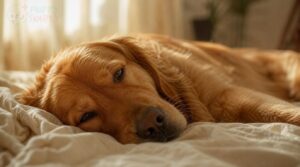
That half-open gaze can catch you off guard the first time you see it. But there are actually a few straightforward reasons why dogs sleep this way. Here’s what’s going on behind those drowsy, barely-there eyes.
If you’re also puzzling over why dogs sleep with their bum facing you, that quirky habit has some surprisingly sweet explanations too.
Light Sleep Awareness
When your dog dozes off, don’t assume they’re fully checked out. During light sleep, their body rests but their senses stay surprisingly sharp. A door closing or a distant footstep can pull them back to awareness in seconds — that’s animal instinct alertness doing exactly what it’s supposed to do.
REM Sleep Activity
Go a little deeper into sleep, and things get interesting. During REM sleep, your dog’s brain lights up almost like it does when they’re fully awake.
Their eyes dart around beneath relaxed lids — that’s rapid eye movement doing its thing. The brainstem drives all of it, triggering those telltale flickers while the body stays largely still.
Adequate sleep allows the brain to engage in REM memory consolidation processes.
Protective Instinct
While your dog dreams, another force is at work — one older than any breed or backyard fence. Wild ancestors couldn’t afford to sleep deeply without risking their lives. That instinct never left.
- Dogs use scent threat detection to sense danger without fully waking
- Startle readiness lets them shift from dozing to alert in seconds
- Owner proximity guarding keeps them watchful even mid-snooze
Relaxed Eyelid Muscles
There’s also a simpler, mechanical reason your dog’s eyes stay open — the muscles just let go.
The orbicularis oculi is the ring-shaped muscle responsible for eyelid closure. During REM sleep, muscle tone reduction causes it to relax completely. Without that closing force, passive tissue tension settles the lids into a half-open resting position — no alarm, no pain. Just physics.
Canine Sleep Stages and Eye Movement
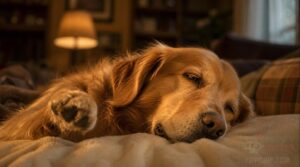
Your dog’s sleep isn’t just one long, steady snooze — it moves through distinct stages, each with its own quirks. Some of those stages are exactly why you might catch those half-open eyes or a twitching paw. Here’s what’s actually happening at each point in that cycle.
NREM Light Sleep
Think of light sleep as your dog’s "one eye open" mode. During the Sleep Entry Phase, their heart rate dips, breathing slows, and muscles begin to unwind — but their brain stays semi-alert.
- Body settles, but senses stay tuned
- Eyelids soften, often drifting partially open
- A nearby sound can snap them awake instantly
That’s why partial eyelid closure in NREM light sleep is completely normal.
REM Dreaming Phase
Once your dog drifts past light sleep, something striking happens.
REM sleep begins — usually about 60 to 90 minutes after dozing off — and their brain lights up almost as actively as when they’re awake.
This is canine REM sleep in full swing, where real dreaming happens and rapid eye movement becomes visible beneath relaxed lids.
Twitching and Soft Sounds
During REM sleep, your dog’s body gets busy. You might notice their paws twitching rhythmically, a soft whimper escaping, or tiny facial flickers — all signs of normal sleep microactivity.
This involuntary movement, called myoclonus, simply reflects the brain firing signals through resting muscles. It’s dreaming made visible.
Brief and self-resolving, these moments are nothing to worry about.
Half-closed Eyelids
Half-closed eyelids during sleep aren’t a glitch — they’re physics meeting biology. As muscle relaxation degrees deepen through each sleep cycle, the eyelid closure reflex gradually loosens, leaving eyes partly open without any conscious effort.
This partial position actually balances two competing needs: corneal exposure balance keeps the eye surface aired while limiting full drying.
The Role of The Third Eyelid
You might have noticed something pinkish or whitish peeking across your dog’s eye while they snooze — and no, it’s not cause for alarm. That’s the third eyelid doing its quiet, behind-the-scenes job. Here’s what it’s actually doing and when it’s worth a closer look.
Protective Inner Membrane
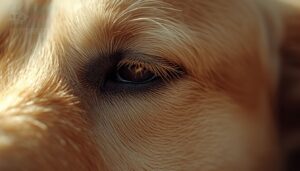
Your dog has a built-in backup system for eye protection — and most owners never even know it exists.
That hidden helper is the nictitating membrane, also called the third eyelid. It sits tucked in the inner corner of each eye and quietly does a lot of heavy lifting:
- It glides across the eye surface to maintain tear film stability
- It aids the membrane lubrication process by spreading moisture evenly
- It triggers a protective reflex when the eye senses dryness or irritation
- It provides corneal coverage benefits when the outer lids aren’t fully closed
This layer of ocular surface protection keeps the cornea from drying out during sleep. Even with eyelids slightly open, third eyelid function ensures the eye stays covered and comfortable. Think of it as a soft, self-deploying shield — always ready, rarely noticed.
Pinkish or Whitish Appearance
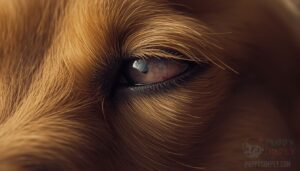
When the third eyelid slides across your dog’s eye during sleep, you might notice a faint pinkish or whitish tint at the inner corner. That’s completely normal.
This color comes from the membrane itself, which carries small blood vessels — a process called Conjunctival Vasodilation — making the tissue look slightly pink when visible.
Normal Sleepy Eye Coverage
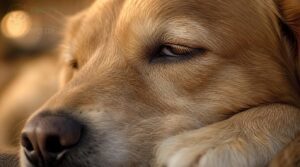
So what does normal actually look like?
When your dog’s eyes partially open during rest, the gap is usually small and steady — not wide, not alarming. The nictitating membrane, or third eyelid, may drift partway across, giving that sleepy, half-glazed look. The eye surface stays moist, reflecting a healthy natural tear film underneath.
When It Looks Swollen
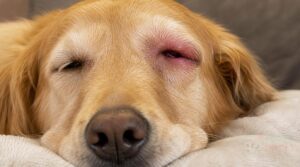
But sometimes what you’re seeing isn’t the third eyelid at all — it’s swollen eyelid tissue. Puffiness changes the picture fast.
The skin looks stretched, the lids sit unevenly, and the eye appears more exposed than usual.
If one eye looks noticeably puffier than the other, that asymmetry is worth a vet evaluation sooner rather than later.
Breed Anatomy and Open-Eye Sleeping
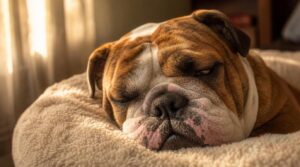
Some dogs are just built differently — and that’s not a figure of speech. Certain breeds have facial structures that make fully closing their eyes during sleep genuinely difficult, sometimes impossible. Here’s a look at the breeds and anatomical quirks most likely behind that wide-eyed snooze.
Pugs and Bulldogs
Pugs and Bulldogs are the poster breeds for open-eye sleeping — and their faces explain everything. Both are brachycephalic breeds, meaning their skulls are shortened, leaving their eyes large, prominent, and often without enough eyelid to fully close during rest.
- Shallow eye sockets make full eyelid closure nearly impossible
- The nictitating membrane (third eyelid) often becomes visible as a pinkish film
- Dry eye syndrome and corneal irritation are real risks for both breeds
That’s why eye exposure during sleep isn’t just quirky for these dogs — it’s a daily reality worth monitoring closely.
Shih Tzus and Boston Terriers
Shih Tzus and Boston Terriers share a lot with their flat-faced cousins. Both are brachycephalic breeds with shallow orbital sockets that make full eyelid closure difficult — meaning they commonly sleep with their eyes open without anything being wrong.
For Shih Tzus especially, dry eye syndrome is a real concern, so regular eye checks matter alongside their coat care routine.
Protruding Eyes
Protruding eyes — medically called proptosis or exophthalmos — mean the eyeball sits farther forward than normal. That forward position makes the sclera (the white part) more visible and limits how well the eyelids can seal.
When your dog relaxes into sleep, incomplete eyelid closure leaves the cornea exposed, raising the risk of ocular dryness and irritation.
Shallow Eye Sockets
Think of the bony eye socket like a cup — the deeper the cup, the more it cradles and protects the eye. In many brachycephalic breeds, shallow orbital sockets reduce that bony coverage, leaving more of the eye’s surface exposed to open air.
During sleep, this means the tear film dries faster, raising the risk of ocular dryness and corneal irritation.
Eyelid Closure Limits
Even with large, protruding eyes, some brachycephalic dogs face another layer of challenge: eyelid closure limits. The orbicularis oculi muscle closes the lids — but muscle weakness, nerve damage, or scarring can reduce that ability substantially.
Three factors that commonly restrict closure:
- Facial nerve paralysis — impairs blink reflexes
- Muscle weakness — reduces lid-closing force
- Scarring impact — stiffens tissue, limiting movement
This can lead to lagophthalmos, where protective closure simply isn’t possible.
Instincts That Keep Dogs Alert
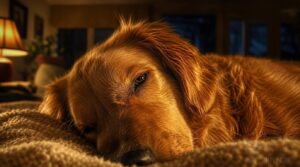
Your dog isn’t just napping — part of their brain is still quietly on duty. Even in the deepest snooze, millions of years of survival wiring don’t simply switch off. Here’s what’s actually driving that eyes-open, ears-up alertness your dog carries into sleep.
Survival-based Vigilance
Your dog’s ancestors couldn’t afford to fully switch off. In the wild, survival depended on vigilance — rest too deeply, and a predator could close the gap before you ever opened your eyes.
That instinct didn’t disappear with domestication. It’s still quietly running in the background, keeping your dog’s sensory readiness dialed up even during sleep.
Quick Response to Sounds
Your sleeping dog isn’t as "off" as they look. Even in rest, auditory vigilance stays active — a built-in alarm system that never fully powers down.
- Sound detection speed is sharpest for sudden, sharp-onset noises
- Quiet spaces make even small sounds stand out
- Noise arousal thresholds drop during light sleep
- Familiar sounds still trigger quick checking behavior when unexpected
That startle reflex kicks in fast — no thinking required.
Unfamiliar Sleeping Spaces
A new place can quietly put your dog on edge — even a cozy guest room or a familiar-smelling vacation rental.
Dogs scan entry points first, orienting toward doors before settling. They prefer spots near walls, where fewer open sides leave them exposed. Scent anchors matter too — a blanket from home signals safety that an unfamiliar surface simply can’t provide.
Stress-related Alertness
Stress takes that on-edge feeling up a notch. When your dog is anxious — whether from a thunderstorm, a stranger nearby, or a disrupted routine — stress hormones like cortisol flood their system, making true rest nearly impossible. That’s why anxious dogs so often sleep with their eyes open, staying primed to react at a moment’s notice.
Anxiety floods a dog’s system with cortisol, keeping them so alert they sleep with their eyes open
- Cortisol delays deep sleep by keeping the nervous system in standby mode.
- Anxiety-induced vigilance sharpens their sensitivity to sounds and movement.
- Environmental stress triggers — like loud neighbors or new pets — can restart the alertness cycle.
- Stress response behaviors often include restless shifting, whimpering, or partial eye-opening throughout the night.
Normal Sleep Vs Concerning Signs
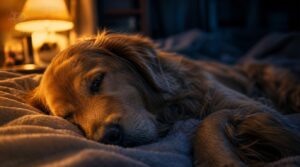
Most of the time, a little open-eye sleeping is completely harmless — just your dog doing dog things. But there are a few specific signs that tell you when it’s worth paying closer attention. Here’s what to watch for.
Brief Partial Eye Opening
Most of the time, your dog sleeping with eyes partly open is completely normal. Sleep muscle relaxation causes eyelids to loosen naturally between sleep stages, leaving a small gap. You might also notice a pale sliver — that’s the raised third eyelid, or nictitating membrane, quietly doing its job.
| What You See | What It Likely Means |
|---|---|
| Narrow slit, relaxed body | Normal light sleep |
| Glassy or reflective eye | Dim light effects on exposed surface |
| Pale membrane visible | Nictitating membrane at rest |
| Eye appearance shifting | Stage-transition movement |
Temporary exposure risks are minimal during brief episodes. Variable eye appearance — sometimes a sliver, sometimes more sclera — is common and harmless. Watch quietly rather than waking your dog.
Easy Gentle Arousal
When your dog stirs from sleep, watch how it happens. A healthy dog wakes up gradually and calmly — a slow blink, a stretch, maybe a quiet yawn. That easy arousal is a good sign.
| Response | What It Suggests |
|---|---|
| Slow blink, relaxed body | Normal, healthy awakening |
| Quick alertness, then calm | Natural situational awareness |
| Gentle stretch after waking | Restful REM sleep completed |
| Soft sounds, then stillness | Benign neurological reflex activity |
Gentle waking behavior tells you the nervous system is working as it should.
Redness or Discharge
A calm wake-up is reassuring — but open eyes paired with redness or discharge tell a different story. Eye discharge in dogs can range from watery to thick and yellow-green, and color matters.
| Discharge Type | Likely Cause | Action Needed |
|---|---|---|
| Yellow or green | Bacterial infection | Vet visit soon |
| Watery, thin | Viral or irritant | Monitor closely |
| Dried crusts on lids | Ongoing inflammation | Check daily |
Unilateral redness — just one eye — can signal early infection before it spreads. Environmental irritants like dust or pollen are common culprits too. If red irritated eyes come with discharge that keeps returning, that’s your cue to call the vet.
Cloudy-looking Eyes
Cloudiness is a detail worth pausing on. If your dog’s eyes look hazy — like someone smeared frosted glass over the lens — that’s not just sleepiness. Cataract progression creates a milky, grayish film, while corneal scarring produces a flatter, duller haze. Both deserve a vet’s eyes on them.
| What You See | Possible Cause |
|---|---|
| Milky white film | Cataract progression |
| Grayish surface haze | Corneal scarring |
| Dull, foggy appearance | Inflammatory clouding |
| Watery discharge with haze | Tear film defects |
Dry eye syndrome reduces tear production, leaving the surface unprotected — and unprotected surfaces scar. Eye infections can trigger similar cloudiness, sometimes alongside discharge. Breeds already predisposed to eye problems, like Pugs or Shih Tzus, face higher risk. Don’t wait on cloudiness. It rarely clears on its own.
Constant Full Exposure
Unlike brief, flickering moments of open-eye sleep, constant full exposure is different. When your dog’s eyes stay wide open throughout rest — never closing, never shifting — that’s worth noting.
| Sign | What It Suggests | Action |
|---|---|---|
| Eyes fully open all rest | Lagophthalmos or nerve issue | Vet evaluation |
| Corneal drying risks present | Tear film evaporating | Lubricating drops |
| Environmental exacerbators like fans | Worsening exposure | Reposition sleeping area |
Chronic open-eye sleep invites real complications. Without that eye closure reflex, the cornea dries, scars, and loses clarity over time.
Eye Conditions That Affect Closure
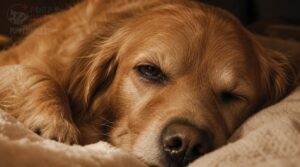
Sometimes open-eye sleeping isn’t about instinct or breed anatomy at all — it’s a physical problem that makes full closure impossible. Certain eye conditions can interfere with how well your dog’s lids actually shut, even when they’re trying to rest. Here are the most common ones worth knowing about.
Lagophthalmos
Lagophthalmos means the eyelids can’t fully close — leaving the eye exposed during sleep. This puts the cornea at serious risk of drying out, leading to:
- Corneal damage from ongoing eye exposure
- Loss of the normal eye closure reflex
- Irritation when the nictitating membrane can’t compensate
Facial nerve dysfunction is a common trigger. Your vet may recommend lubricating drops or surgical interventions for chronic cases.
Ectropion
Ectropion is when the eyelid rolls outward away from the eye, leaving the ocular surface exposed and unprotected. Instead of sitting flush against the eyeball, the lower lid sags and droops — think of it like a pocket turned inside out.
| Feature | What Happens | What You See |
|---|---|---|
| Eyelid position | Turns outward | Drooping lower lid |
| Eye surface | Exposed to air | Redness, dryness |
| Tear distribution | Disrupted | Excessive tearing or discharge |
Brachycephalic breeds like Pugs and Boston Terriers are especially prone due to their shallow orbital anatomy. Ectropion Diagnosis usually involves a hands-on ophthalmic exam. Left untreated, Ectropion Complications can include corneal ulcers and chronic conjunctivitis. Ectropion Surgery corrects severe cases permanently.
Cherry Eye
Cherry eye sounds alarming the first time you see it — a red, fleshy lump suddenly appearing at the inner corner of your dog’s eye. What you’re actually seeing is gland prolapse: the small tear-producing gland tucked inside the nictitating membrane (your dog’s third eyelid) has slipped out of place.
Here’s why that matters for sleep and eye health:
- Tear production drops, leaving the eye drier and more vulnerable during rest
- Exposed gland tissue gets irritated easily, causing redness and discharge
- Brachycephalic breeds — Bulldogs, Boston Terriers, Shih Tzus — face the highest risk due to shallow orbital anatomy
- Untreated cases can progress to dry eye syndrome, compounding closure problems
The condition usually appears in dogs under two years old. A vet will usually recommend surgical correction to reposition the gland rather than remove it, preserving those all-important tears.
Conjunctivitis
Conjunctivitis — or "pink eye" — is inflammation of the thin membrane lining your dog’s eyelids. It can be infectious (viral or bacterial) or non-infectious (allergies, irritants).
Either way, the resulting swelling and discharge make full eyelid closure uncomfortable, so your dog sleeps with eyes cracked open. Watch for redness, crusty discharge, or pawing at the eye — those signal a vet visit.
Dry Eye Syndrome
Similar to pink eye, dry eye syndrome — known medically as keratoconjunctivitis sicca — disrupts your dog’s ability to keep lids comfortably closed during sleep.
When tear production drops, the eye surface dries out, making closure feel irritating rather than relieving.
Watch for dull, red eyes or a thick, mucus-like discharge as telltale signs.
Seizures, Narcolepsy, and Sleep Episodes
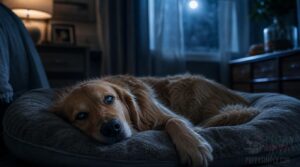
Sometimes what looks like vivid dreaming is actually something more serious going on. A few neurological conditions can cause your dog’s eyes to stay open during what seems like sleep — and knowing the difference matters. Here’s what to watch for.
REM Sleep Versus Seizure
Here’s the thing — REM sleep and seizures can look eerily similar from across the room. During Rapid Eye Movement sleep, your dog’s eyes may dart, their paws may twitch, and they might whimper softly. That’s normal dreaming. A seizure, though, involves abnormal electrical brain activity that’s harder to stop and harder to wake from.
Three key differences worth knowing:
- Easy arousal — a dreaming dog wakes with a gentle nudge; a seizing dog won’t respond normally.
- REM seizure shield — REM sleep actually suppresses most seizures, making true seizures during this stage uncommon.
- NREM seizure triggers — synchronized brain waves during light NREM sleep are far more likely to spark sleep-related seizures than REM ever is.
When something looks off, video the episode. Sleep-stage diagnostics often rely on recorded behavior to tell REM sleep from a seizure mimic. Your vet may recommend monitoring to confirm.
Sudden Collapse Episodes
Sometimes, what looks like unusual sleep behavior is actually a sudden collapse episode — and that’s a different concern entirely. Unlike the twitching of REM sleep, collapse happens fast: your dog drops, loses consciousness briefly, then recovers.
| Feature | Normal Sleep | Collapse Episode |
|---|---|---|
| Arousal | Easy with gentle nudge | Unresponsive during event |
| Eye appearance | Half-open, relaxed | Fixed or rolled back |
| Recovery | Gradual waking | Rapid return to normal |
| Motor signs | Soft twitches | Possible stiffening or limpness |
Cardiac-linked collapse is one serious cause — abnormal heart rhythm briefly cuts blood flow to the brain. Your vet will want to know: Was there a trigger? How fast did recovery happen? No lingering confusion afterward often points toward syncope rather than a seizure.
Stumbling or Disorientation
After a collapse episode, some dogs come back disoriented — stumbling, swaying, or walking like the floor is moving. This isn’t clumsiness. Vestibular causes and neurological triggers can scramble the brain’s balance signals, making your dog genuinely confused about where it is in space.
Watch for:
- Circling or drifting sideways after waking
- Misjudged foot placement on familiar ground
- Sudden onset of wobbly, wide-legged walking
Spatial disorientation and coordination problems linked to sleep-related seizures or REM sleep behavior disorder need a proper neurological assessment — don’t wait.
Unresponsive Behavior
When a dog doesn’t respond to its name, a hand clap, or even gentle touch, that’s not deep sleep — that’s a red flag. Unresponsive behavior during a sleep episode can signal a seizure or narcolepsy.
Check breathing first: slow, shallow, or irregular breaths paired with absent muscle tone means: call your vet immediately.
How to Protect Sleeping Eyes
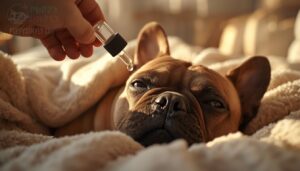
If your dog sleeps with eyes open — especially if they’re a flat-faced breed — a little daily eye care goes a long way. You don’t need a complicated routine, just a few simple habits that make a real difference. Here’s what you can do to keep those sleeping eyes healthy and comfortable.
Check for Dryness
Start by looking at your dog’s eyes right after they wake up. The morning eye signs are often your clearest window. A healthy eye should look glossy — that’s your quick Surface Gloss Test. Dull or hazy means the tear film may not be doing its job overnight.
- Check for redness or squinting shortly after waking — both suggest dryness during sleep.
- Watch for extra blinking — it means the eye is trying to refresh a depleted tear film.
- Feel the air near their bed — dry air from heaters or fans speeds up evaporation, thinning the moisture layer fast.
If your home runs dry, humidity effects hit hardest during sleep when blinking stops. The exposed eye — especially if the nictitating membrane isn’t fully covering it — loses moisture quickly. A vet can confirm dry eye syndrome in dogs and recommend the right eye lubricant or eye drops to keep things comfortable.
Keep Bedding Clean
Your dog’s bedding is basically a petri dish for everything you don’t want near their eyes — dander, oils, dried tear residue, and dust all pile up fast.
Wash covers weekly using a pet-safe, fragrance-free detergent in hot water when the label allows. Always dry bedding completely before reuse, since trapped moisture breeds odor-causing bacteria that can irritate sensitive eyes.
Reduce Bright Light
Bright light streaming into your dog’s sleeping space is more disruptive than most owners realize — especially for eyes that aren’t fully closed.
- Close window coverings during nap and nighttime hours
- Switch to warm bulbs around 2700K–3000K
- Add light diffusers or use indirect lighting with smart dimmers
A darker sleep environment genuinely benefits better eye health in dogs.
Use Vet-approved Drops
If your dog’s eyes stay partly open during sleep, lubricating eye drops can make a real difference — especially for flat-faced breeds prone to dryness.
Look for vet‑approved, preservative‑free formulas with hyaluronan, which helps moisture spread evenly across the eye surface.
Follow your vet’s dosing schedule closely, and always use drops with a one‑way valve to prevent contamination.
Support Calm Sleep Routines
A calm sleep environment does more for your dog’s eyes than you might think. Dark, quiet sleep spaces encourage deeper rest, which means less time with lids partly open and less corneal exposure overall.
Consistent meal, walk, and bedtime schedules reduce anxiety, helping your dog settle faster and sleep more soundly every night.
When to Call Your Veterinarian
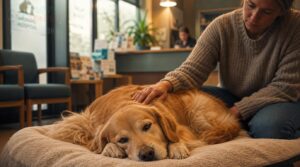
Most of the time, open-eye sleeping is completely harmless — but there are moments when it’s worth picking up the phone and calling your vet. Knowing the difference can save your dog from unnecessary discomfort or a delayed diagnosis. Here’s what to watch for.
Sudden Behavior Changes
Sometimes the warning sign isn’t something you see in your dog’s eyes — it’s a shift in who they seem to be. Sudden behavior changes deserve your full attention.
Watch for:
- Sudden confusion or disorientation in familiar spaces
- Unusual silence or withdrawal from normal interaction
- Agitation, frantic pacing, or unexplained restlessness
- Abrupt lethargy or collapse
These can signal neurological issues requiring same-day veterinary evaluation.
Pain or Pawing
Beyond behavior shifts, watch for pawing at the eye — a reliable pain signal. Dogs don’t paw randomly. If your dog keeps targeting one eye, that asymmetry matters.
Unilateral pawing often points to a specific irritation, not general itchiness. Left untreated, repeated rubbing worsens the problem. Call your vet.
Eye Injury Signs
Pawing is one signal — but sometimes the eye itself tells the story.
Look for eye redness or discharge, cloudiness, or a pupil that looks uneven or irregular. Chemosis, which is swelling of the clear tissue around the eyeball, is another red flag. So is a sensation your dog clearly can’t shake, like persistent blinking or squinting. These are signs of real ocular irritation — call your vet.
Breathing or Twitching Concerns
Eye signals aren’t the only thing worth watching. Breathing and twitching during sleep can point to something deeper.
- Labored or gasping breaths during sleep aren’t normal — seek help promptly.
- Whole-body jerks differ from typical REM dream twitching.
- Pale or bluish gums mean go now, not tomorrow.
- Disorientation after an episode suggests a neurological sleep event.
Possible Diagnostic Tests
When your vet suspects something more than normal sleep behavior, a few targeted tests can quickly answer why your dog’s eyes aren’t closing properly.
Ophthalmic examinations usually start with a Schirmer Tear Assessment — a small strip placed at the lower eyelid to measure tear production — followed by Fluorescein Staining to reveal corneal damage, and Tonometry Screening to rule out glaucoma.
Frequently Asked Questions (FAQs)
Do sick dogs sleep with their eyes open?
Not exactly — but illness can be a red flag. Eye redness, discharge, or cloudiness during sleep suggests something’s wrong. Neurological issues or systemic illness may impair eyelid closure, making vet examination essential.
Is it normal for a dog to sleep with the eyes open?
Yes, it’s completely normal. Many dogs doze off with their eyes partially open, especially during light sleep or REM. It’s a natural quirk of canine sleep behavior, not a sign of trouble.
What dog breeds sleep with their eyes open?
Short, smushed faces take the crown here. Bulldogs, Pugs, Shih Tzus, and Boston Terriers — all brachycephalic breeds — have shallow eye sockets that make full eyelid closure tricky, even during sleep.
Why is my dog not closing his eyes while sleeping?
Your dog probably isn’t fully closing his eyes because he’s caught between sleep stages. In light sleep, eyelids naturally relax without fully shutting — it’s normal, not worrying.
Do dogs sleep with their favorite person?
Most dogs do sleep near their favorite person. Familiar scent and routine make them feel secure, so they naturally gravitate toward their "safe base" when settling down for rest.
Are Certain Breeds More Likely to Sleep With Their Eyes Open?
Absolutely — breed anatomy plays a real role. Brachycephalic breeds like Pugs, Bulldogs, Shih Tzus, and Boston Terriers have shallow eye sockets and protruding eyes that make full eyelid closure difficult, even during deep sleep.
Are There Long-Term Effects of Open-Eyed Sleep?
Yes — over time, chronic eye exposure can cause corneal dryness, surface damage, infections, and even lasting vision loss. For vulnerable breeds especially, unaddressed nightly exposure quietly compounds into serious, sometimes irreversible harm.
Could Open-Eyed Sleep Be a Sign of Stress?
Sometimes, yes. Stress disrupts normal sleep by keeping your dog’s nervous system on high alert — and that tension can prevent eyelids from fully relaxing and closing during rest.
Is Open-Eyed Sleep Normal for Puppies?
For puppies, yes — it’s quite common. Eyelid muscles aren’t fully mature yet, so lids relax naturally during rest. Toss in active rapid eye movement sleep, and those half-open eyes are usually nothing to worry about.
Can dogs dream while sleeping with eyes open?
Dogs do dream. During REM sleep, their brains replay experiences much like ours do — and those half-open lids? Just relaxed muscles, not wakefulness. Your dog is deep in dreamland.
Conclusion
You might still feel a flicker of unease watching your dog sleep with eyes open—that’s fair.
But now you know it’s usually ancient instinct or simple anatomy at work, not a warning sign.
The real skill is knowing what to look for: redness, discharge, cloudiness, or behavior that feels off.
Trust what you observe, stay curious, and when something doesn’t sit right, your vet is always the right call.
- https://www.kinship.com/dog-behavior/can-dogs-sleep-with-eyes-open
- https://www.petmd.com/dog/general-health/why-your-dog-sleeps-their-eyes-open
- https://www.scenthound.com/dogblog/is-it-weird-that-my-dog-sleeps-with-its-eyes-open
- https://wagwalking.com/behavior/why-do-dogs-sleep-with-one-eye-open
- https://www.northwestanimaleye.com/site/blog/2024/08/30/why-dog-sleep-eyes-open