
This site is supported by our readers. We may earn a commission, at no cost to you, if you purchase through links.

Your dog spots a squirrel, lunges forward, and suddenly you’re white-knuckling the leash while they cough and gasp against their collar. This scenario plays out thousands of times daily, and it’s precisely why veterinarians and trainers have shifted their recommendations toward chest straps as the safer, more effective tool for walking.
Unlike collars that concentrate force on the trachea and neck vertebrae, chest straps distribute pressure across the chest and shoulders—reducing injury risk while giving you better control over enthusiastic pullers.
Whether you’re managing a 10-pound puppy or a 90-pound powerhouse, the right chest strap transforms stressful walks into enjoyable outings. The market offers front-clip designs for training, back-clip models for steady walkers, and dual-clip options that adapt as your dog’s leash manners improve.
Table Of Contents
- Key Takeaways
- Top 9 Dog Harnesses for Walking
- What to Look for When Buying Dog Harnesses
- How to Measure Your Dog for a Harness
- Dog Harness Vs. Dog Collar for Walking
- Training Your Dog to Walk on a Harness
- Caring for Your Dog’s Walking Harness
- Special Considerations for Different Dogs
- Frequently Asked Questions (FAQs)
- Conclusion
Key Takeaways
- Harnesses distribute pressure across your dog’s chest and shoulders instead of concentrating force on the trachea like collars do, making them safer for pullers and dogs with respiratory issues.
- Front-clip harnesses redirect your dog’s momentum sideways when they pull, offering better control during training, while back-clip designs work best for dogs with solid leash manners.
- Proper fit requires measuring chest girth at the widest point behind the front legs and neck circumference, then matching those numbers to brand-specific size charts since sizing varies significantly between manufacturers.
- Regular inspection for frayed webbing, loose stitching, and damaged hardware is critical for safety, and most quality harnesses need replacement every one to two years depending on activity level and wear.
Top 9 Dog Harnesses for Walking
You’ve got plenty of strap options on the market, but not all of them deliver on comfort, control, and durability. I’ve narrowed it down to nine that consistently perform well across different dog sizes, temperaments, and walking styles.
If you’re also rethinking your dog’s diet, check out this guide to raw and grain-free dog food for healthier feeding options.
Here’s what made the cut based on fit, clip position, and real-world use.
1. Rabbitgoo No Pull Dog Harness
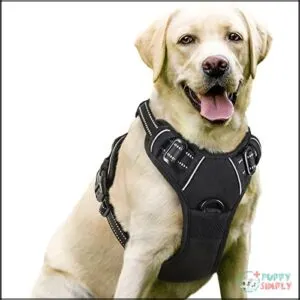
If your dog treats every walk like a drag race and you’re tired of playing tug-of-war with a leash, the Rabbitgoo No Pull Dog Harness might be the training tool that shifts the balance back in your favor.
If you’re looking for more security alongside pull control, check out options like an escape-proof dog harness that keeps determined pullers safely contained.
This comfortable strap features dual metal leash rings—front and back—giving you flexible control during leash training sessions. The reflective Oxford material keeps your pup visible at dusk, while four adjustable straps and soft padding guarantee dog comfort without sacrificing strap durability.
If you’re preparing for a new companion, check out this complete guide to the Pitbull Pug mix to understand their unique exercise and training needs.
It’s a solid choice for pet safety-conscious owners tackling pulling behavior in medium to large breeds.
| Best For | Dog owners with medium to large breeds that pull on walks and need a training harness with adjustable fit and dual leash attachment points for better control. |
|---|---|
| Size | Large |
| Material | Polyester |
| Color | Black |
| Pattern | Solid |
| Adjustability | 4 adjusting straps |
| Reflective | Yes |
| Additional Features |
|
- Two metal leash rings (front and back) give you flexible control options to discourage pulling during training
- Four adjustable straps with soft padding create a customizable, comfortable fit for daily walks
- Reflective material and durable Oxford construction keep your dog visible and safe in low light
- Sizing can be inconsistent between colors, so you might need to exchange for the right fit
- Front strap buckle may require frequent adjustments and doesn’t always stay secure
- Leash clip has a design flaw that can cause it to unclip unexpectedly during walks
2. Puppia Soft Dog Harness
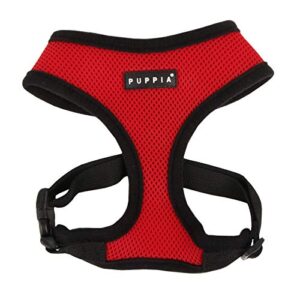
Small dogs and toy breeds deserve gear that won’t choke or chafe, which is where the Puppia Soft Dog Vest earns its reputation. This over-the-head style uses 100% polyester air mesh—triple-layered for breathability—paired with a padded neck opening that distributes pressure across the chest instead of the trachea.
You’ll find an adjustable chest belt with a quick-release buckle and a back D-ring for leash attachment. It’s comfortable enough for all-day wear, though dogs with oversized heads relative to neck girth may struggle with the fixed opening during on-and-off moments.
| Best For | Small dogs and toy breeds whose owners want a breathable, no-choke harness that distributes pressure across the chest rather than the neck. |
|---|---|
| Size | Small |
| Material | Polyester |
| Color | Red |
| Pattern | Solid |
| Adjustability | Adjustable chest belt |
| Reflective | No |
| Additional Features |
|
- Triple-layered polyester mesh keeps airflow high and heat buildup low, even during longer walks or warmer weather.
- Padded neck opening and adjustable chest belt spread pressure evenly, reducing strain on the trachea and making it comfortable for all-day wear.
- Quick-release buckle and machine-washable fabric make it easy to get on, off, and clean without much hassle.
- Fixed neck opening means dogs with large heads or unusual proportions may struggle to get the harness on and off safely.
- No built-in reflective trim, so visibility in low light is weaker unless you add reflective accessories separately.
- Not designed for heavy pullers—dogs that lunge or strain hard on the leash may need a more robust harness with better control features.
3. Puppia Two Tone Dog Leash
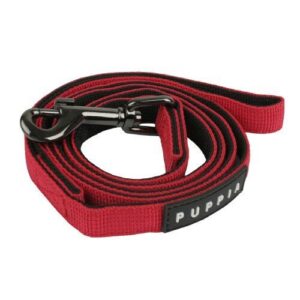
Matching the Puppia Soft Dog Strap with the Puppia Two Tone Dog Leash creates a coordinated system built for walking safety and dog comfort.
This 4 to 6-foot nylon leash features reinforced stitching and a nickel-plated D-ring that clips directly to your comfortable strap, making it a reliable pet accessory for daily walks.
The two-tone design improves visibility during dog walking, though users note the actual length measures closer to 47.5 inches—shorter than some expect.
Before purchasing, check the best French Bulldog car seat harness guide to ensure proper chest measurements align with the product’s actual dimensions.
It’s durable enough for standard use, but heavy pullers may need something thicker.
| Best For | Dog owners who want a matching, coordinated leash-and-harness system for small to medium dogs (up to 33 pounds) during standard neighborhood walks. |
|---|---|
| Size | Medium |
| Material | Polyester |
| Color | Red |
| Pattern | N/A |
| Adjustability | N/A |
| Reflective | No |
| Additional Features |
|
- Two-tone design adds visibility while creating a coordinated look with Puppia harnesses
- Reinforced stitching and nickel-plated D-ring hold up well for everyday walks
- Comfortable grip makes it easy to handle during training and casual outings
- Actual length is shorter than advertised (closer to 47.5 inches), which limits range during walks
- No padding on the handle or reflective material for nighttime safety
- Thinner construction may not hold up with dogs that pull hard or need stronger control
4. Kurgo Smart Dog Walking Harness
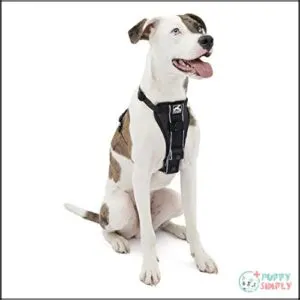
For stronger pullers, the Kurgo TruFit Smart Dog Walking Restraint offers dual leash attachment points that give you real control during training. The padded chest plate distributes pressure away from your dog’s trachea, making it a comfortable restraint for daily walks and a practical no-pull restraint for leash training sessions.
Quick-release buckles and five adjustment points guarantee a proper fit across different body types, while reflective stitching boosts dog safety during low-light outings. Smart features like the included seatbelt loop add versatility beyond basic dog walking.
| Best For | Dog owners dealing with pulling issues who want a versatile harness that works for both training and everyday walks. |
|---|---|
| Size | Medium |
| Material | Seatbelt webbing |
| Color | Black |
| Pattern | Solid |
| Adjustability | Five-point adjustable |
| Reflective | Yes |
| Additional Features |
|
- Front and back leash clips let you switch between training mode and regular walks without changing gear
- Padded chest plate keeps your dog comfortable even during longer walks or when they’re still learning not to pull
- Five adjustment points mean you can dial in the fit for most body types, from barrel-chested bulldogs to lean greyhounds
- Dogs with unusual body shapes might struggle to get a secure fit even with all the adjustments
- The front clip only works properly if you’ve tightened everything down, which some dogs find uncomfortable
- The seatbelt attachment carabiner doesn’t fit all car buckle styles, so test it before relying on it for travel
5. Kurgo Air Dog Harness
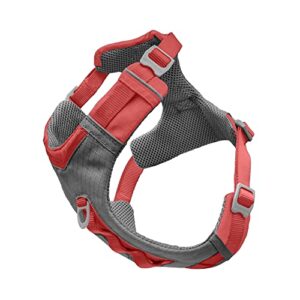
If your high-energy dog turns every walk into a sprint, the Kurgo Air Dog Strap delivers breathable comfort without sacrificing control. Lightweight ripstop fabric and breathable mesh keep your dog cool during intense hikes, while the back assist handle gives you instant leverage when you need to redirect momentum.
Reflective trim boosts visibility during dawn or dusk walks, and quick-release buckles mean you won’t wrestle with straps after muddy adventures. At eight ounces in medium size, it’s built for dogs that don’t slow down—though heavy pullers may shift the metal adjusters under serious strain.
| Best For | Active dog owners with high-energy pups who need breathable gear for long hikes and outdoor adventures without the neck strain of traditional collars. |
|---|---|
| Size | Medium |
| Material | Ripstop fabric/mesh |
| Color | Coral |
| Pattern | Solid |
| Adjustability | Adjustable straps |
| Reflective | Yes |
| Additional Features |
|
- Lightweight ripstop fabric and mesh keep dogs cool during intense activity
- Back assist handle and reflective trim add safety and control for unpredictable moments
- Quick-release buckles make post-adventure cleanup hassle-free
- Front leash attachment may sit lower than some owners expect
- Straps can be tricky to loosen once tightened
- Metal adjusters might slip on dogs that pull hard consistently
6. PetSafe Easy Walk Dog Harness
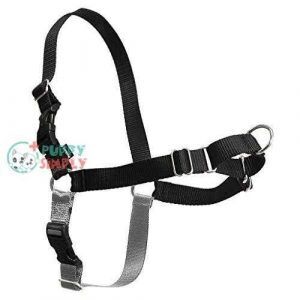
When your dog treats every walk like a tug-of-war, the PetSafe Easy Walk Dog Strap shifts the game in your favor. Its front chest leash attachment and patented martingale loop design redirect pulling force across the chest instead of the neck, giving you leash control without choking or coughing.
Unlike back-clip options that suit calm pups, this front-attachment style is perfect for energetic pullers who need gentle steering—check out more harness styles designed specifically for puppies to find the right fit.
The color-coded belly strap makes fitting straightforward, while adjustable nylon straps dial in a comfortable strap fit for various breeds.
Dog strap reviews note it excels for walk training, though dogs with extremely fluffy coats may need periodic adjustments to maintain proper tension.
| Best For | Dog owners struggling with pullers who want a gentler alternative to neck collars that redirects tension across the chest for more controlled walks. |
|---|---|
| Size | Large |
| Material | Nylon |
| Color | Black/Silver |
| Pattern | Solid |
| Adjustability | Adjustable comfort straps |
| Reflective | No |
| Additional Features |
|
- Front chest clip and martingale loop design effectively discourage pulling without choking or straining your dog’s neck
- Color-coded belly strap and adjustable nylon straps make it easy to get the right fit across different breeds and sizes
- Breathable, minimal-coverage design keeps dogs comfortable during walks while improving leash behavior
- May require frequent readjustments for dogs with very fluffy coats or low-to-the-ground body types
- Leash can sometimes tangle or flop around, creating minor discomfort or safety concerns
- Might not be effective enough for extremely stubborn pullers or dogs with serious existing training issues
7. Lupine Pet Step In Dog Harness
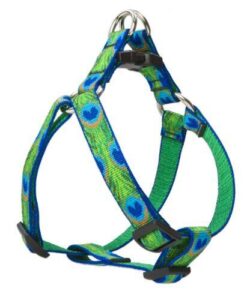
For dogs that dance away from overhead harnesses, the Lupine Pet Step In Dog Harness turns suiting up into a two-paw process. You guide your dog’s front legs through the loops, buckle the adjustable straps around the chest, and clip your leash to the welded D-ring—no head wrestling required.
Built in New Hampshire with reinforced bar-tack stitching and three adjustment points, this comfortable restraint manages daily walks while the nylon construction shrugs off dirt. Lupine backs it with a guarantee, even if your dog decides the straps look delicious.
| Best For | Dogs that resist overhead harnesses or owners who want a quick step-in design with adjustable fit and durability backed by a chew guarantee. |
|---|---|
| Size | 3/4″W; 20-30″ Girth |
| Material | Nylon |
| Color | Multicolor |
| Pattern | Tail Feathers |
| Adjustability | Three adjustment points |
| Reflective | No |
| Additional Features |
|
- Step-in design makes it easier to put on dogs that don’t like harnesses pulled over their heads
- Three adjustment points and reinforced stitching provide a secure, customizable fit for daily walks
- Chew guarantee and machine-washable nylon offer peace of mind and easy maintenance
- Sizing can be tricky—some users report needing adjustments or exchanges to get the right fit
- Not built for tie-out use, so it’s limited to leash walking
- Customer service experiences vary when addressing fit or quality issues
8. Lupine Pet Roman Dog Harness
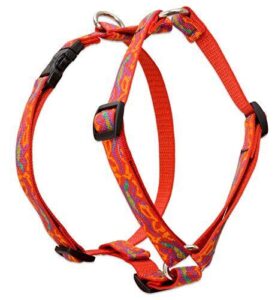
When you need a collar that slips on without the step-in shuffle, the Lupine Pet Roman Dog Collar delivers overhead simplicity with chest-wide pressure distribution.
This comfortable collar features jacquard-woven nylon in patterns like Go Go Gecko, a welded D-ring for back-clip leash attachment, and reflective elements that boost visibility during dawn or dusk walks.
The adjustable collar offers 14–24″ girth sizing with bar-tack stitching that withstands daily tugging, and Lupine backs it with their chew guarantee—essential dog walking essentials for owners who value both pet safety tips and straightforward design.
| Best For | Dog owners looking for an easy-to-use harness that reduces neck strain and goes on quickly without wrestling your pup’s paws through loops. |
|---|---|
| Size | 3/4″W; 15-21″ Girth |
| Material | Nylon |
| Color | Blue |
| Pattern | Rain Song |
| Adjustability | Wraparound style |
| Reflective | No |
| Additional Features |
|
- Simple overhead design with one-clip closure makes putting it on way faster than step-in harnesses
- Distributes pulling pressure across the chest instead of the throat, which is more comfortable for dogs who tug on walks
- Lifetime chew guarantee means Lupine will replace it if your dog manages to destroy it with their teeth
- Not built for tie-out use, so you’ll need a separate setup if you want to stake your dog outside
- Some reviews mention the plastic buckle or webbing breaking or getting chewed despite the guarantee
- Return policies can be tricky—make sure you understand the refund or replacement conditions before buying
9. Ruffwear Front Range Dog Harness
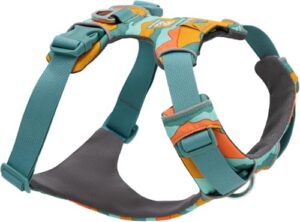
You need control and cushioning on multi-hour treks, and the Ruffwear Front Range Harness delivers both with aluminum V-rings and foam-padded construction that reduces chafing across your dog’s chest and belly.
This adjustable harness features dual leash attachment points—back and chest—for varied training or everyday control, while 300D polyester ripstop and breathable mesh lining guarantee harness durability through seasons of trail wear.
Reflective harness trim enhances pet safety at dawn, and the four-point adjustment system guarantees dog comfort across breeds—core harness materials built for adventure.
| Best For | Dog owners who need a versatile, padded harness for long walks, hikes, and training sessions where comfort and dual leash control are priorities. |
|---|---|
| Size | 3/4″W; 14-24″ Girth |
| Material | Nylon |
| Color | Orange |
| Pattern | Go Go Gecko |
| Adjustability | Adjustable girth |
| Reflective | No |
| Additional Features |
|
- Dual leash attachment points (chest and back) give you flexible control for training or managing pulling behavior
- Foam padding on chest and belly prevents chafing during all-day adventures or extended wear
- Reflective trim and four-point adjustment system work across different breeds while keeping your dog visible in low light
- May not fit dogs with very short legs properly due to the front chest attachment design
- Camouflage fabric shows dirt easily and requires frequent cleaning
- Not escape-proof for determined dogs or certain breeds that can back out of harnesses
What to Look for When Buying Dog Harnesses
Not all straps are created equal, and the wrong choice can turn your daily walk into a wrestling match. The best strap strikes a balance between control, comfort, and durability while matching your dog’s unique needs and behavior.
The best harness balances control, comfort, and durability while matching your dog’s unique needs and behavior
Here’s what you need to focus on before you buy.
Harness Types and Clip Positions
Where you attach the leash makes all the difference when you’re trying to manage pulling or encourage loose-leash walking. Front-clip strap types redirect your dog’s forward momentum toward you, distributing pressure across the chest plate rather than the neck. Back-clip designs suit calmer walkers and offer quick leash attachments. Dual-clip models let you switch locations as training progresses.
- Front clips reduce pulling by steering your dog sideways when they lunge.
- Back clips work best for dogs with solid leash manners and minimal pulling.
- Dual clips combine both attachment points in one adjustable strap for flexibility.
Sizing and Fit Considerations
Once you’ve chosen your clip position, getting the right size is where most people stumble. Use brand sizing charts to measure chest girth at the widest point behind your dog’s front legs, then check neck circumference.
Adjustable strap designs with multiple strap lengths let you dial in a comfortable fit—aim for two-finger clearance under every fastened point to prevent rubbing while keeping things snug.
Materials and Durability
A perfectly sized collar won’t last long if it’s stitched together with flimsy webbing or hardware that pops open mid-walk. Look for durable materials like reinforced nylon or polyester with bar-tack stitching at stress points.
Breathable designs with padded mesh keep your dog comfortable on longer treks, while metal buckles and D-rings handle serious pulling without bending or breaking—fabric selection matters as much as fit.
Safety Features and Visibility
Your dog can slip a leash in the dark before you realize it’s happening. Reflective materials and high-contrast colors—bright orange, lime, reflective gray—boost enhanced conspicuity by 500 meters under street lighting, giving drivers and cyclists critical extra seconds.
Built-in LED safety lights and reflective stitching on models like the Ruffwear Front Range Collar or Coastal Pet K9 Explorer Reflective Dog Collar deliver nighttime visibility that could save your dog’s life.
How to Measure Your Dog for a Harness
Getting the right fit starts with accurate measurements—it’s the difference between a collar that works and one that slips off or rubs your dog raw. You’ll need two measurements: chest girth and neck circumference, taken when your dog is standing naturally.
Once you have those numbers, you can match them to brand-specific size charts to find the perfect collar for your dog.
Measuring Chest Girth Accurately
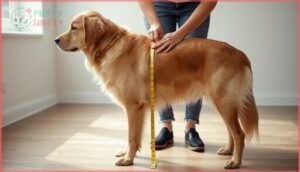
Getting your dog’s chest measurement right starts with a flexible tape measure placed directly behind the front legs—the widest part of their ribcage.
Keep the tape flat against their body without compressing fur or skin, and measure at the end of a full exhale while they’re standing square. Repeat twice and use the larger number when consulting sizing charts for a comfortable vest that won’t slip or chafe.
Measuring Neck Circumference

Wrap your flexible tape around the base of your dog’s neck—right where a collar would sit—and aim for a snug fit without compressing the skin. Take the measurement while they’re calm and standing naturally, then record it to the nearest quarter inch.
This neck measurement, combined with chest girth, helps you lock in the right vest sizing and identify adjustment points for a comfortable vest that won’t slip or rub.
Consulting Size Charts by Brand
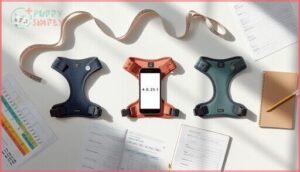
Once you’ve got your numbers, pull up the official size chart for whichever strap you’re eyeing—because brands don’t play by the same rules. A medium in one line won’t match another’s, and you’ll find adjustable strap options sized by chest girth, weight, or both. Brand comparison matters, and strap review sections often highlight sizing accuracy and variance across dog sizes, so cross-check before you commit.
- Each manufacturer publishes chest girth ranges and corresponding strap sizes on their product page
- Weight-based guidance supplements measurement tips but shouldn’t replace tape-measure data
- Strap fitting depends on matching your dog’s exact numbers to that specific brand’s chart
Dog Harness Vs. Dog Collar for Walking
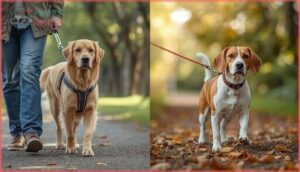
Choosing between a strap and collar isn’t about which one’s “better”—it’s about which one keeps your dog safer and gives you better control on walks. Straps distribute pressure across the chest and shoulders, while collars concentrate force directly on the neck, which can lead to injury in dogs that pull.
Let’s break down how each option affects your dog’s body and when you might reach for one over the other.
Pressure Distribution and Neck Safety
When your dog hits the end of the leash, a collar can crush the trachea—but a well-designed no-pull restraint spreads that force across the chest and shoulders. This tracheal protection matters most for pullers and brachycephalic breeds prone to neck injury.
| Gear Type | Pressure Distribution |
|---|---|
| Collar | Concentrated at neck, high tracheal risk |
| Back-clip restraint | Chest and shoulders, moderate control |
| Front-clip no-pull restraint | Redirects diagonal pull, lowest neck strain |
| Dual-clip comfortable restraint | Adjustable load path, best versatility |
| Poorly fitted restraint | Rides up, creates new pressure points |
Look for safety features like padded chest panels and adjustable straps to eliminate hot spots. Restraint reviews consistently highlight proper restraint design as the difference between comfort and chafing.
When to Use a Harness
If your pup chokes on every walk or twists out of a collar mid-stride, switching to a no pull strap solves both problems at once. Here’s when you’ll want that chest-mounted safety net:
| Situation | Why You Need a Comfortable Strap |
|---|---|
| Neck strain or choking | Airway protection by distributing pressure across chest |
| Pulling behavior | Redirects forward momentum without sudden neck jerks |
| Tracheal issues or collapse | Eliminates direct throat compression |
| Escape artists | Secure chest fit prevents slipping out |
| Airway sensitivity | Reduces risk in brachycephalic or vulnerable dogs |
When Collars May Be Better
Not every walk calls for a full vest—sometimes your dog collar wins on simplicity. Quick neighborhood strolls with a calm, trained companion need minimal gear, while urban walking in tight spaces benefits from collar compactness. Leash control stays direct, dog identification tags clip on instantly, and neck safety improves when proper fit prevents pulling. Here’s when simplified beats padded:
| Scenario | Collar Benefits |
|---|---|
| Short, familiar routes | Quick attachment without chest hardware |
| Well-trained walkers | Reinforces basic manners in known settings |
| Tight urban spaces | Compact profile navigates crowds easily |
| ID tag visibility | Instant contact info without vest review |
| Mild-mannered pups | Simple leash control for no-pull dogs |
Training Your Dog to Walk on a Harness
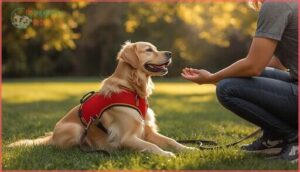
Getting your dog comfortable in a vest isn’t something that happens overnight—it takes patience and the right approach. Some dogs take to it immediately, while others need a little coaxing and positive reinforcement before they’re walking calmly by your side.
Here’s how to make the shift smooth and set your dog up for success from day one.
Introducing The Harness Gradually
Think of gear acclimation like introducing a new friend—you wouldn’t rush it. Start your gradual introduction with 5–10 minute sessions, letting your dog sniff and explore the comfortable gear while you pair it with high-value treats for positive reinforcement.
This gear familiarization builds trust without pressure. Watch for stress signals like lip licking or stiff posture, and use calming techniques to keep things relaxed and predictable.
Correcting Pulling Behavior
Once your dog accepts the gear comfortably, focus on correcting pulling behavior with consistent leash training techniques. Front-clip no-pull gears, like the 2 Hounds Design Freedom NoPull Gear, redirect momentum toward you when tension builds, while proper gear design distributes force across the chest.
Pair this setup with reward-based walking techniques—studies show behavior correction improves 40% over eight weeks through pulling prevention strategies and patient consistency.
Front-Clip Vs. Back-Clip for Training
Clip positioning shapes your leash control strategy from the start. Front-clip no-pull straps—like the 2 Hounds Design Freedom NoPull Strap—redirect pulling dogs sideways, teaching them that surging forward won’t work.
Back-clip designs suit dogs with solid walking manners, reinforcing loose-leash habits without constant correction.
Match clip placement to your dog’s behavior, then adjust training methods as progress unfolds.
Caring for Your Dog’s Walking Harness
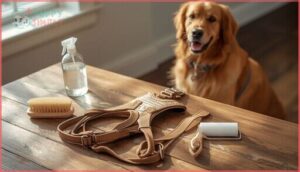
A well-maintained strap keeps your dog safe and extends the life of your investment. Regular cleaning, careful inspection, and proper storage prevent sudden failures during walks and guarantee the strap continues fitting correctly.
Let’s look at the essential maintenance steps that’ll keep your dog’s strap in top working condition.
Cleaning and Washing Guidelines
A dirty chest strap isn’t just unpleasant—it can harbor bacteria, weaken fabric integrity, and irritate your dog’s skin if left uncleaned for too long. Here’s how to keep your comfortable chest strap fresh:
- Hand washing with mild detergent preserves reflective components and extends lifespan.
- Air drying prevents material degradation (never machine dry).
- Spot-clean stains immediately to avoid fabric breakdown.
- Sanitize monthly for ideal dog health and canine accessories care.
Inspecting for Wear and Damage
Once you’ve cleaned your dog strap, it’s time for a thorough strap inspection. Before every walk, quickly scan for frayed webbing, loose stitching, or cracked buckles—these are red flags for material degradation.
Weekly, tug firmly on D-rings and check padding for compression. A comfortable strap turns risky when safety checks reveal damage. Replace immediately if any component fails your assessment.
| Component | Signs of Damage |
|---|---|
| Webbing straps | Fraying, thinning, cuts, UV fading |
| Stitching | Loose threads, gaps, pulled seams |
| Hardware | Cracks in buckles, rust on D-rings |
| Padding | Torn foam, permanent flattening |
Proper Storage and Replacement
Between walks, hang your gear on a peg in a cool, dry spot away from direct sunlight—UV rays degrade nylon webbing by 30 percent over months. Always air-dry completely before storage to prevent mold.
Most quality gear lasts one to two years with proper gear maintenance, but replace immediately when wear detection reveals fraying, rust, or loose hardware that compromises animal safety.
Special Considerations for Different Dogs

Not every dog needs the same collar—puppies, pullers, and dogs with mobility needs each come with their own challenges. The right fit depends on age, behavior, and whether your dog needs extra support or control.
Here’s how to match the collar to your dog’s specific situation.
Harnesses for Puppies
Starting your puppy on a chest strap as early as 7–8 weeks builds positive associations and protects delicate airways from collar pressure. Look for these essentials in a comfortable chest strap:
- Y-shaped front design that avoids throat tissue
- Soft padded materials to prevent chafing under developing skin
- Five adjustment points for Growth Accommodation as your pup gains size
- Chest girth priority in Sizing Considerations over weight alone
- Front-clip option for gentle Puppy Leash Training without shoulder restriction
Models like the Puppia Soft Dog Chest Strap, Ruffwear Front Range Chest Strap, or 2 Hounds Design Freedom NoPull Chest Strap offer the adjustability and Puppy Chest Strap Safety features young dogs need.
Measure chest girth weekly—rapid growth can turn a snug fit into a tight one fast. Choose breathable Chest Strap Materials and size up when measurements fall between brackets so you can tighten straps now and loosen them later.
Pair short wearing sessions indoors with treats to make strapping a game, not a battle, and you’ll set the stage for years of happy walks.
Harnesses for Dogs That Pull
Front-clip designs act like power steering for strong pullers, redirecting your dog’s momentum sideways instead of letting them drag you down the block. The 2 Hounds Design Freedom No-Pull Vest and PetSafe Easy Walk excel at curbing pulling behavior during leash training by rotating your dog toward you when tension hits.
| Feature | Front-Clip No Pull Vest | Dual-Clip Options |
|---|---|---|
| Redirect Force | Immediate sideways turn | Train front, cruise back |
| Chest Pressure | Distributed across sternum | Adjustable by clip choice |
| Training Speed | Faster behavior correction | Gradual shift support |
| Best For | Chronic pullers, reactive dogs | Mixed walking environments |
| Popular Models | Freedom No Pull Vest, Easy Walk | Kurgo Tru-Fit Smart, Ruffwear |
Pair your no-pull dog vest with short-leash dog walking tips—keep slack minimal and reward check-ins—so vest safety features work with your technique, not against it.
Mobility Assist and Tactical Harnesses
When your dog needs extra support—whether for balance assistance or mission-ready work—specialized harnesses deliver what standard walking gear can’t. Mobility aids feature rigid grips positioned at your dog’s center of gravity, distributing bracing forces across the torso without overloading joints, while tactical gear like the Julius-K9 IDC Powerharness incorporates MOLLE webbing, reinforced D-rings, and canine support features for demanding field operations.
- Harness ergonomics matter: Adjustable grip height keeps your elbow slightly bent, reducing shoulder strain during counterbalance tasks
- Load-bearing construction: Heavy-denier nylon with aluminum buckles withstands thousands of pounds of force in tactical scenarios
- Multi-point attachment: Chest, back, and rear D-rings on models like the Kurgo Tru-Fit Smart offer adaptable leash control
- Proper fit prevents injury: Straps behind the shoulders preserve natural gait and extend your working dog’s active life
Frequently Asked Questions (FAQs)
Can my dog wear a harness all day?
Most veterinarians recommend removing your dog’s restraint after walks to prevent skin irritation, pressure sores, and overheating. Restraint Safety improves with intermittent wear—save continuous use for mobility-assist situations only.
How often should I replace my dogs harness?
Like tires on a well-traveled road, dog gear wear signals when replacement is due.
Inspect your Dog Collar every month for frayed stitching or damaged buckles, replacing it every one to two years depending on activity level and material quality.
Will a harness stop my dog from barking?
No, a restraint won’t stop barking. Vocal behavior stems from anxiety, boredom, or reactivity—triggers that require dog training and behavior modification.
Front-clip no-pull restraints can reduce arousal during leash training, but they don’t directly inhibit barking mechanics.
Are harnesses safe for dogs with respiratory problems?
Yes, they’re actually safer than collars for respiratory health—harnesses distribute pressure across the chest, protecting your dog’s trachea and airway from dangerous compression that can trigger coughing or worsen breathing problems.
Can I use a retractable leash with harnesses?
You can use a retractable leash, but trainers discourage it due to injury risks. If you choose this option, pair it with a back-clip chest strap and avoid letting your dog sprint to full extension.
Conclusion
Picture your next walk: your dog heels beside you, alert but calm, while you grip the leash with one relaxed hand instead of two desperate fists. That’s the shift a well-fitted collar creates.
You’ve explored nine proven dog collars for walking, learned how front-clip designs curb pulling, and discovered why chest girth matters more than breed labels.
Now comes the rewarding part—watching your dog move comfortably, safely, and under control with every step forward.
- https://www.ai-literacy.se/research-prompts.html
- https://github.com/vinhphunguyen/how-to-write-a-paper/blob/master/how-to-write-paper.brf
- https://elsevier.blog/sub-points-outlining-organization/
- https://www.scribd.com/document/356795007/Research-Methods-Knowledge-Base
- https://mcluhan.unk.edu/lawson/?page_id=187