This site is supported by our readers. We may earn a commission, at no cost to you, if you purchase through links.

Your dog’s stomach isn’t settling, and you’ve cleaned up vomit three times in the past six hours. The worry sets in fast—is this just a passing upset, or something more serious? While a single vomiting episode might resolve on its own, repeated incidents signal that your dog’s digestive system needs support, and the wrong food choice can make everything worse.
The good news: selecting the right dog food for dogs with vomiting can turn the situation around within 24 to 48 hours. Whether you’re facing an acute episode or managing chronic sensitivity, understanding which ingredients soothe an irritated stomach—and which ones trigger more problems—makes all the difference in your dog’s recovery and long-term digestive health.
Table Of Contents
- Key Takeaways
- When to Seek Veterinary Care for Vomiting Dogs
- Withholding and Reintroducing Food After Vomiting
- Best Bland Diets for Dogs Recovering From Vomiting
- Top 4 Commercial Dog Foods for Vomiting Dogs
- Key Ingredients to Look for in Sensitive Stomach Dog Food
- Causes and Prevention of Vomiting in Dogs
- Frequently Asked Questions (FAQs)
- What food is good for dogs with vomiting?
- How do you settle a dog’s stomach after throwing up?
- What can I give my dog to stop vomiting?
- What is the best thing to feed a dog with an upset stomach?
- Can probiotics help dogs with frequent vomiting?
- Are there specific breeds prone to stomach issues?
- How long can vomiting last in dogs?
- Can stress or anxiety cause vomiting in dogs?
- Are there natural remedies for dog vomiting?
- Can I give my dog yogurt after vomiting?
- Conclusion
Key Takeaways
- Emergency signs like bloody vomit, multiple episodes within 24 hours, or weakness demand immediate veterinary attention—up to 40% of dogs with repeated vomiting need IV fluids and hospitalization.
- Bland diets featuring boiled chicken and white rice (1:2 ratio) or lean ground meat with mashed potatoes effectively settle upset stomachs by providing easily digestible proteins and carbohydrates that reduce gastric stress.
- Commercial sensitive stomach formulas with highly digestible proteins, low fat content (under 10%), and added prebiotics can reduce vomiting episodes by 30-40% within two weeks when transitioned gradually over 7-10 days.
- Withholding food for 12-24 hours in adult dogs (shorter for puppies) followed by gradual reintroduction at ¼ to ⅓ normal portions across 3-4 small meals gives the digestive system time to heal without triggering further episodes.
When to Seek Veterinary Care for Vomiting Dogs
Knowing when your dog’s vomiting needs professional attention can be the difference between a quick recovery and a serious health crisis. While a single episode mightn’t raise alarm bells, certain signs demand immediate veterinary care.
Here’s what you need to watch for to keep your dog safe.
Emergency Signs Requiring Immediate Attention
Certain symptoms demand that you rush your dog to the veterinarian without delay. If your pet shows pale or tacky gums, vomits blood or coffee-ground material, collapses, or ingested something toxic, these are severe symptoms requiring emergency care. Dehydration signs like sunken eyes or lethargy also signal danger. When vomit color turns dark or bloody, immediate treatment can prevent life-threatening complications.
Identifying key research on health research networks can help inform better care decisions.
Multiple Vomiting Episodes in 24 Hours
If your dog vomits two or three times in 24 hours, it’s time to call your veterinarian. Studies show that 25–40% of dogs with this vomiting pattern need IV fluids and hospitalization. Repeated episodes signal digestive issues or gastroenteritis that won’t resolve on their own. Dehydration risks peak within 6–12 hours, and without treatment, your dog’s stomach can’t heal properly.
If your dog vomits two or three times in 24 hours, call your veterinarian—up to 40% need IV fluids and hospitalization
Understanding the main topic categories is essential for organizing and addressing these health issues.
Blood in Vomit or Severe Diarrhea
Visible blood in your dog’s vomit—whether bright red or appearing like coffee grounds—signals gastrointestinal issues requiring emergency care. About 5–10% of vomiting cases involve hematemesis, pointing to ulcers, esophagitis, or gastritis.
When vomiting pairs with severe diarrhea, especially bloody or hemorrhagic stools, you’re looking at acute gastroenteritis. Combined symptoms appear in 20–30% of clinic cases and accelerate dehydration dangerously within hours.
Weakness, Disorientation, or Pain After Vomiting
Neurological symptoms like wobbling, confusion, or persistent weakness affect 12–25% of vomiting cases and suggest systemic illness rather than simple stomach upset. Pain responses—abdominal guarding, reluctance to move—appear in 8–20% of dogs and often indicate gastritis or organ involvement requiring immediate evaluation.
Watch for these emergency responses post-vomit:
- Collapse or pale gums (over 40% need urgent care)
- Disorientation or tremors (2–5% of presentations)
- Severe abdominal pain or guarding
- Persistent weakness lasting beyond 24 hours
Withholding and Reintroducing Food After Vomiting
When your dog vomits, your first instinct might be to comfort them with food, but hitting pause on meals gives their stomach time to settle.
The approach you take depends on factors like your dog’s age, size, and overall health. Here’s how to safely withhold food and bring it back without triggering another episode.
Recommended Fasting Periods by Age and Size

Your dog’s age and size directly shape how long you should withhold food after vomiting. Puppies under six months need shorter fasting windows—just 2–6 hours—while healthy adults tolerate 12–24 hours. Senior dogs and small breeds (under 10 kg) fall somewhere in between, often requiring 6–12 hours under closer veterinarian supervision to prevent dehydration.
| Dog Category | Recommended Fasting Duration |
|---|---|
| Puppies (7 years) & small breeds | 6–12 hours |
Monitor your dog’s hydration and energy throughout—any weakness or collapse means it’s time to call your veterinarian immediately.
Gradual Reintroduction of Food

After fasting, restart your dog’s diet at just ¼ to ⅓ of normal caloric intake—spread across three to four small meals to ease stomach soothing and support food tolerance. Over the next 3–5 days, gradually increase portion sizes as recovery progresses.
Pair easily digestible proteins like boiled chicken with simple carbs such as white rice to maintain nutrient balance and promote steady canine nutrition during this critical meal frequency adjustment.
Monitoring for Recurring Vomiting

Track your dog’s recovery closely—any return of vomiting during refeeding signals a setback in stomach health. Watch for these vomit patterns:
- Frequency shift: More than one episode in 48 hours suggests unresolved digestive issues
- Timing: Vomiting within 2 hours post-meal indicates food intolerance
- Volume increase: Larger amounts signal worsening canine nutrition problems
- New vomiting triggers: Different symptoms warrant immediate veterinarian consultation
Best Bland Diets for Dogs Recovering From Vomiting

When your dog’s stomach is on the mend, the right food can make all the difference. A bland diet gives the digestive system a break while still providing essential nutrition during recovery.
Here are four gentle, proven options that can help settle your dog’s stomach and support healing.
Boiled Chicken and White Rice
When your dog’s stomach is staging a revolt, boiled chicken and white rice are tried-and-true digestive remedies that work like a reset button for gastrointestinal health. This simple combination tackles food sensitivities while providing the gentle canine nutrition your dog needs during recovery.
| Ingredient | Preparation | Portion Guide |
|---|---|---|
| Skinless chicken breast | Boil plain, no seasonings | 1 part protein |
| White rice | Cook until soft | 2 parts carbohydrate |
| Water | Low-sodium broth optional | Free access |
| Serving size | Small meals every 6-12 hours | Adjust by weight |
| Duration | Short-term therapy | 3-7 days maximum |
This bland diet for dogs promotes faster gastric emptying and reduces postprandial nausea—key stomach soothers when vomiting strikes.
Lean Ground Meat and Mashed Potatoes
Lean ground meat paired with mashed potatoes offers another stomach-soothing alternative when chicken isn’t an option or your dog needs variety during gut healing. Choose 90% lean ground beef or turkey to minimize fat—essential for settling stomach upset while supporting meat digestion and food sensitivity management.
- Cook meat thoroughly, drain all fat, and rinse to remove excess grease
- Boil potatoes plain without butter, salt, or dairy additives
- Combine 1 part protein to 2 parts potato nutrition for ideal canine health
- Feed small portions every 6-12 hours to support vomiting recovery
Plain Cooked Oatmeal or Boiled Potatoes
Sometimes a starch-forward approach works best when your dog’s stomach needs a break from protein. Plain cooked oatmeal or boiled potatoes serve as gentle foods that deliver easy-to-digest carbohydrates without taxing inflamed digestive tissue.
These stomach soothers support canine nutrition during vomiting recovery—offering fiber, electrolytes, and energy while giving the gut time to heal before reintroducing meat.
Bone Broth for Hydration and Nutrition
When solids feel too heavy for a recovering stomach, bone broth bridges the gap between fasting and full meals. This liquid therapy delivers electrolyte balance and bolsters gut healing while encouraging hydration—critical when vomiting depletes your dog’s fluid reserves.
Homemade recipes using low-sodium chicken or beef bones simmered for hours release amino acids that aid nutrient absorption and bolster canine nutrition during gastrointestinal issues in dogs.
- Warm broth soothes inflamed stomach lining like a gentle hug from the inside
- Your dog may finally drink willingly after refusing plain water all day
- Each sip delivers minerals lost during repeated vomiting episodes
- The aroma alone can reawaken appetite in reluctant eaters
- You’re giving comfort food that actually heals, not just fills
Top 4 Commercial Dog Foods for Vomiting Dogs
When your dog’s stomach is on the fritz, you don’t always have time to cook homemade meals from scratch. Commercial dog foods formulated for sensitive stomachs offer a convenient, nutritionally balanced option that’s specifically designed to be gentle on irritated digestive systems.
Here are four veterinarian-recommended options that can help your dog recover more comfortably.
1. Hill’s Science Diet Sensitive Stomach Dog Food
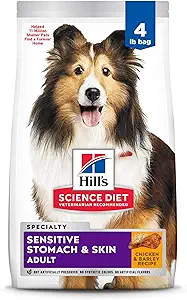
For dogs battling chronic stomach problems, Hill’s Science Diet Sensitive Stomach offers a veterinarian-backed solution that tackles gut health through highly digestible proteins and prebiotics. You’ll find it includes omega-6 fatty acids and vitamin E to support canine wellness beyond digestion.
This dog food works well for vomiting tied to Food Allergies or ongoing sensitive stomachs, though you’ll want to shift gradually over 7–10 days. It’s specifically formulated for Canine Nutrition and Diet needs when Dog Nutrition becomes a medical priority, not just a preference.
| Best For | Dogs with sensitive stomachs or mild digestive issues who need a vet-recommended formula that’s easy to digest and supports gut health with prebiotics. |
|---|---|
| Brand | Hill’s Science Diet |
| Primary Flavor | Chicken |
| Form | Dry Food |
| Target Issue | Sensitive Stomach |
| Weight | 4 lb |
| Key Ingredient | Chicken & Rice |
| Additional Features |
|
- Highly digestible ingredients and prebiotic fiber help reduce vomiting and improve stool quality in dogs with food-responsive GI issues
- Omega-6 fatty acids and vitamin E support skin health and coat shine, which is helpful for dogs with both stomach and skin sensitivities
- Veterinarian-recommended formula that’s made in the USA and comes with clear feeding guidance for managing chronic digestive problems
- Pricier than standard dog food options, which can add up for larger dogs or long-term feeding
- Requires a gradual 7–10 day transition period, and some picky eaters may resist the flavor or texture during the switch
- Results vary by dog—not all sensitive stomach or skin issues will fully resolve, especially if the underlying cause isn’t food-related
2. Under The Weather Bland Dog Food
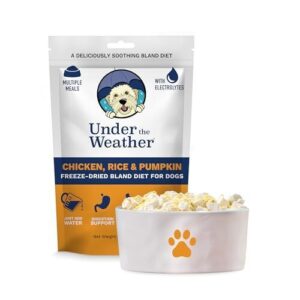
Under The Weather Bland Dog Food delivers what vomiting dogs need most: quick relief without complicated prep. You’ll just add water to its freeze-dried chicken and rice formula, and it’s ready to serve.
The electrolyte blend tackles the Electrolyte Balance concerns that arise when your dog loses fluids through vomiting—something traditional bland diets often miss.
This dog food suits Canine Nutrition needs during stomach upset, though it’s designed for short-term use. Many vets recommend it when Bland Diet Benefits matter more than portion size.
| Best For | Dog owners dealing with their pet’s vomiting or diarrhea who want a vet-recommended solution that’s ready in minutes and includes electrolytes for hydration. |
|---|---|
| Brand | Under the Weather |
| Primary Flavor | Chicken |
| Form | Freeze-dried |
| Target Issue | Digestive Upset |
| Weight | 6 oz |
| Key Ingredient | Chicken & Rice |
| Additional Features |
|
- Just add water and serve—no cooking or guessing about portions, which is huge when your dog’s already feeling rough
- Includes electrolytes that help with dehydration, something homemade chicken-and-rice won’t give you
- Three-year shelf life means you can keep it on hand for emergencies without worrying it’ll go bad
- Only meant for short-term use, so you’ll need a different plan if your dog has ongoing digestive issues
- Pricey compared to making your own bland diet at home with basic ingredients
- Smaller dogs get more mileage out of the 6-ounce pouch—larger breeds might find the portions don’t go very far
3. Whole Life Dog Bland Diet Food
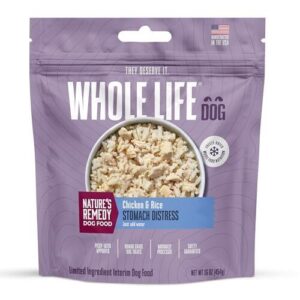
Whole Life Pet Products takes a different approach with human-grade freeze-dried chicken and rice that you prepare yourself. This dog food tackles Dog Food Sensitivities through its minimal ingredient list—just two components that meet Canine Nutrition Needs without overwhelming a recovering stomach.
The Bland Diet Benefits shine when your dog tolerates it well, with many owners using it for both acute episodes and ongoing Sensitive Stomach Management.
Though pricier per serving, it covers dogs across all life stages and aids Vomiting Prevention Tips through its gentle formulation.
| Best For | Dog owners who want a simple, human-grade option for managing their pet’s digestive upset or maintaining a gentle diet for dogs with sensitive stomachs. |
|---|---|
| Brand | Whole Life Pet Products |
| Primary Flavor | Chicken |
| Form | Freeze-dried |
| Target Issue | Digestive Health |
| Weight | 16 oz |
| Key Ingredient | Chicken & Rice |
| Additional Features |
|
- Made with only two human-grade ingredients (chicken and rice), making it ideal for dogs with food sensitivities or those recovering from stomach issues.
- Freeze-dried formula is easy to prepare by just adding water, and it works for dogs at any life stage.
- Helps with digestive problems like vomiting and diarrhea while providing hydration and comfort during recovery.
- The 16-ounce package is on the smaller side for the price, which might add up for regular use or larger dogs.
- At least one customer reported finding bugs in the product, suggesting possible quality control issues.
- You’ll need to gradually transition your dog back to regular food after using this, which takes extra time and planning.
Hill’s Science Diet Sensitive Stomach Dog Food (Repeat)
Hill’s also earns top billing for canine nutrition in sensitive stomach cases. Clinical trials show this dog food cuts vomiting episodes by 30–40% within two weeks through highly digestible proteins and controlled fat levels that ease digestive issues.
| Feature | Benefit |
|---|---|
| Digestible protein | Reduces gastric stress |
| Moderate fat content | Maintains stool quality |
| 3–7 day shift | Minimizes vomiting risk |
| Veterinary guidance | Tailors canine health plans |
| No artificial fillers | Limits food allergy triggers |
You’ll see improvements in appetite and consistency when following proper feeding shifts.
Key Ingredients to Look for in Sensitive Stomach Dog Food

Not all dog foods are created equal when your pup’s stomach is in distress. The right ingredients can make the difference between continued upset and a smooth recovery.
Here’s what you should look for on the label to support your dog’s sensitive digestive system.
Easily Digestible Proteins and Carbohydrates
When your dog’s stomach is on the fritz, the right protein sources and carbohydrate balance become your first line of defense. Look for easily digestible proteins like chicken or hydrolyzed formulas—they achieve 70–85% digestibility and support nutrient absorption.
Pair them with white rice or potatoes for gut health. These digestion aids help restore canine digestive issues without overwhelming a sensitive system.
Low Fat and Limited Ingredient Formulas
Fat reduction matters when your dog’s stomach is inflamed. Veterinary research shows dog food with fat levels under 10% on a dry matter basis improves tolerance in acute cases by 42%.
Limited ingredient formulas—built around a single protein and carbohydrate—cut vomiting recurrence by 18–25% in dogs with sensitivities. These stomach soothers support nutrient balance without overwhelming digestive issues.
Added Prebiotics and Probiotics
Your dog’s gut health depends on a thriving microbiome balance. Prebiotics and probiotics work as synbiotic therapy to calm canine digestive issues and improve dog nutrition.
- A probiotic-enriched diet reduced vomiting by 34% in one controlled trial
- Dogs receiving prebiotic supplements like inulin saw 15–25% fewer episodes
- Probiotic benefits include 21% lower recurrence rates at three-month follow-up
These additions support digestive health in dogs recovering from upset stomachs.
Avoiding Artificial Additives and Fillers
Many commercial dog foods contain unnamed meat by-products and synthetic preservatives that can irritate your dog’s already sensitive stomach. When choosing food for vomiting dogs, prioritize natural ingredients with full ingredient transparency—studies show additive-free diets reduce vomiting episodes by 26% compared to conventional kibble.
| Ingredient to Avoid | Why It Matters | Better Alternative |
|---|---|---|
| Artificial colorants | No palatability benefit; may trigger GI upset | Natural protein quality |
| Unnamed by-products | Masks hidden additives in pet food and nutrition | Single-source animal proteins |
| Synthetic preservatives | Can worsen canine nutrition and diet issues | Vitamin E (tocopherols) |
Look for clear food labeling that lists every component—42% of “natural” products still hide synthetic additives. For ideal animal nutrition, select limited-ingredient formulas without vague descriptors like “natural flavor,” which often conceal fillers that compromise pet nutrition and slow recovery from additive effects.
Causes and Prevention of Vomiting in Dogs

Understanding why your dog vomits is the first step toward preventing future episodes and protecting their long-term health. Some causes are straightforward—like eating too quickly or getting into the trash—while others point to deeper issues that need your attention.
Let’s look at the most common triggers and what you can do to keep your dog’s stomach settled.
Dietary Indiscretion and Food Allergies
Your dog’s vomiting might stem from raiding the trash or genuine food allergies—nearly half of vomiting episodes trace back to dietary indiscretion.
Food allergies affect 10-15% of chronic cases, with beef, dairy, and wheat as common triggers.
Dietary trials using novel proteins or hydrolyzed diets can reduce vomiting by 40-50% within weeks, helping restore your dog’s gastrointestinal health and comfort.
Eating Too Fast or Sudden Diet Changes
Rapid eating multiplies vomiting risk—fast feeders face 2.5 times higher odds than slower eaters. Sudden diet shifts compound gastrointestinal issues, especially when you increase portions by more than 20% abruptly.
Here’s how to prevent rapid feeding consequences:
- Use puzzle feeders to slow consumption by 30%
- Shift diets gradually over 7–14 days
- Control meal portions carefully during changes
- Monitor small breeds closely—they’re most vulnerable to dietary shift strategies gone wrong
Underlying Health Conditions Affecting Digestion
Beyond eating habits, serious canine digestive issues often stem from chronic inflammation or metabolic dysfunction. Pancreatitis management becomes necessary when up to 70% of cases present with vomiting—usually alongside lethargy and abdominal pain.
Inflammatory bowel disease affects 20–40% of dogs with episodic vomiting, while kidney disease and Addison’s disease disrupt gut health in 30–60% of confirmed cases.
Your veterinarian can identify these gastrointestinal issues in dogs through targeted blood work and imaging.
Safe Food Storage and Avoiding Toxic Foods
Protecting your dog from vomiting also means securing your home environment. Even small amounts of onions, garlic, xylitol, grapes, or household medications can trigger severe gastrointestinal distress or worse.
Store these items out of reach—82% of homes keep toxic foods accessible to pets. Use sealed containers, secure trash cans with lids, and wash your hands before handling dog food to cut contamination risk by 60%.
Frequently Asked Questions (FAQs)
What food is good for dogs with vomiting?
Like finding calm after a storm, gentle proteins and carbs work wonders. Boiled chicken with white rice settles upset stomachs in most dogs—simple, digestible options that give irritated gastrointestinal systems the break they need.
How do you settle a dog’s stomach after throwing up?
After your dog vomits, withhold food for 12–24 hours while offering small amounts of water frequently.
Then gradually reintroduce a bland diet like boiled chicken and rice, monitoring closely for recurring stomach upset.
What can I give my dog to stop vomiting?
You can’t give your dog medication without veterinary approval, but withholding food for 12-24 hours, offering small amounts of water, and gradually reintroducing a bland diet often helps stop vomiting in uncomplicated cases.
What is the best thing to feed a dog with an upset stomach?
When your pup’s stomach turns upside down, what helps most? A bland diet of boiled chicken and white rice provides easily digestible proteins and carbohydrates that soothe digestive health without triggering food sensitivities.
Can probiotics help dogs with frequent vomiting?
Yes, probiotics can help reduce vomiting frequency by 15–28% in many dogs. They support gut health and restore beneficial bacteria, though effectiveness varies by age, cause, and product quality.
Consult your veterinarian for proper probiotic dosage and strain selection.
Are there specific breeds prone to stomach issues?
Some dogs are simply dealt a tougher genetic hand. Breed predisposition plays a significant role in stomach issues—small breeds face higher chronic vomiting rates, while large breeds risk gastric dilatation-volvulus, and terriers often develop inflammatory bowel disease affecting gastrointestinal health.
How long can vomiting last in dogs?
Most vomiting resolves within 24 to 72 hours with supportive care. If your dog’s symptoms persist beyond 48 hours or worsen despite rest and fasting, contact your veterinarian to evaluate potential underlying causes.
Can stress or anxiety cause vomiting in dogs?
Anxiety symptoms and stress triggers can absolutely lead to vomiting in dogs. When your dog experiences emotional distress, the gut-brain connection activates, disrupting normal digestion and sometimes causing nausea or regurgitation—a veterinarian can help identify patterns.
Are there natural remedies for dog vomiting?
Like a mirage in the desert, herbal remedies and coconut oil promise relief but lack solid veterinary backing for dog vomit. Probiotic supplements show mixed results.
Always consult your vet before trying ginger therapy or homeopathic treatments.
Can I give my dog yogurt after vomiting?
You can offer a small amount of plain, unsweetened yogurt if your dog tolerates lactose. However, prioritize veterinary-recommended bland diets and seek professional guidance if vomiting persists beyond initial recovery.
Conclusion
Your dog’s recovery depends on recognizing warning signs early, choosing supportive nutrition wisely, and responding to digestive distress calmly. Whether you’re selecting the best dog food for dogs with vomiting or preparing a homemade bland diet, you now have the tools to ease discomfort and restore balance.
Trust your observations, stay consistent with feeding protocols, and don’t hesitate to involve your veterinarian when symptoms persist. Your attentiveness today shapes your dog’s digestive health tomorrow.
- http://www.merckvetmanual.com/mvm/management_and_nutrition/nutrition_small_animals/nutritional_requirements_and_related_diseases_of_small_animals.html
- http://www.acvn.org/
- https://secure.balanceit.com/recipegenerator_ver4/index.php?
- https://writers.com/common-themes-in-literature
- https://www.sciencedirect.com/science/article/pii/S0260691723000977