
This site is supported by our readers. We may earn a commission, at no cost to you, if you purchase through links.

Your dog drops to the floor and rubs one ear against the carpet like it’s trying to scratch an itch that won’t quit.
Sniff closer, and there it is — that sour, slightly yeasty smell that wasn’t there last week.
Roughly 20% of dogs deal with ear infections at some point, and floppy-eared breeds face even higher odds, since trapped moisture turns the canal into a breeding ground for bacteria and yeast.
While that smell signals trouble, catching it early means you’ve got options beyond an emergency vet visit.
The right dog ear infection home remedies ease the itch, clear the odor, and buy you time to figure out what’s going on in there.
Table Of Contents
- Key Takeaways
- Dog Ear Infection Symptoms
- Safe Home Remedies for Dogs
- How to Clean Infected Ears
- Top 6 Dog Ear Products
- When Home Remedies Are Unsafe
- Frequently Asked Questions (FAQs)
- What can I give my dog if her ears are bothering her?
- How do I treat my dog’s ear infection from home?
- What to do if your dog has an ear infection but can’t afford a vet?
- What to flush an infected dog’s ear with?
- Can home remedies replace veterinary treatment completely?
- How long do home remedies take to work?
- Are home remedies safe for puppies and seniors?
- Which dog breeds get ear infections most often?
- Can ear infections spread between dogs in households?
- What causes ear infections in dogs?
- Conclusion
Key Takeaways
- Watch your dog’s behavior closely, since head shaking, scratching, redness, odor, and pain are the earliest signs of an ear infection, while wobbling, head tilting, or sudden hearing loss mean it’s spread deeper and needs same-day vet care.
- For mild, early-stage irritation, gentle home remedies like diluted apple cider vinegar, coconut oil, witch hazel, or green tea rinses can soothe your dog’s ears, but never use them if the eardrum might be ruptured or the skin is broken.
- Clean ears the right way by using a pH-balanced, alcohol-free cleaner, massaging the base for 20-30 seconds, wiping gently with cotton balls, and drying thoroughly, since trapped moisture is what lets bacteria and yeast thrive.
- Skip home treatment and call your vet immediately if you see bleeding, heavy pus-like discharge, a head tilt, stumbling, or infections that keep coming back, since these point to deeper problems that need professional diagnosis and prescription care.
Dog Ear Infection Symptoms
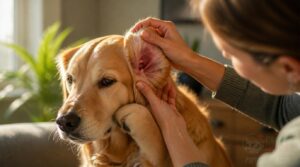
Your dog can’t tell you when their ear hurts, so their behavior does the talking. Knowing what to watch for makes all the difference between catching something early and letting it spiral. Here are the key symptoms that commonly signal an ear infection is developing.
Once you spot these warning signs, pairing a vet’s diagnosis with natural remedies for dog ear infections can ease your pup’s discomfort faster.
Since your dog can’t tell you their ear hurts, their behavior has to do the talking instead
Head Shaking and Scratching
When your dog won’t stop shaking their head or pawing at their ears, it’s rarely nothing. Head shaking and ear scratching are the earliest, clearest distress signals of a dog ear infection — and catching them early matters.
Frequent vigorous shaking often signals an underlying ear problem.
Common triggers behind this behavior include:
- Bacterial infections like Staphylococcus or Pseudomonas, which cause intense irritation
- Yeast overgrowth (Malassezia), producing itching that makes dogs scratch relentlessly
- Allergy-driven inflammation — food or environmental allergens account for up to 70% of chronic cases
- Ear mites, which mimic infection symptoms in younger or outdoor dogs
Don’t underestimate vigorous shaking — it can rupture blood vessels in the ear flap, causing an aural hematoma that often needs surgery. If shaking persists beyond 48 hours or you notice a head tilt, that points toward middle or inner ear involvement — a neurological concern requiring prompt veterinary attention, not a home remedy.
Redness and Swelling
Once the scratching starts, take a look inside the ear flap — redness and swelling are next. Inflamed tissue often feels warmer than the surrounding skin, a sign that blood flow has increased. The canal may narrow and look puffy or tender to touch.
If your dog flinches when you handle it, ear inflammation has likely set in, and home remedies should wait until swelling eases.
Bad Odor or Discharge
Once swelling settles, a pungent odor often follows.
A sweet, corn-like smell points to yeast, while sour odors signal bacterial growth. Dark, crumbly discharge suggests mites; green hints at Pseudomonas.
Blood-tinged fluid warns of eardrum rupture. Any unusual ear discharge from a dog ear infection deserves vet attention before trying natural remedies or an ear cleaning solution.
Pain and Sensitivity
Once odor sets in, pain usually follows close behind. Watch for touch sensitivity—a yelp, flinch, or pulled-away head when you check the ear.
Dogs may paw repeatedly, whine, or even snap if you reach near their head. Some withdraw entirely, skipping play and hiding instead.
These behavioral cues mean real ear pain, and they call for proper dog ear pain management, not guesswork.
Balance or Hearing Changes
When an ear infection reaches the middle or inner ear, you’ll notice something far more alarming than scratching — your dog may suddenly walk with a drunken, stumbling gait, circle repeatedly, or fall sideways. This is vestibular disease, and it signals otitis interna.
- Head tilts toward the infected ear
- Nystagmus — rapid, involuntary eye movements
- Loss of coordination or balance
- Conductive or sensorineural hearing loss
- Persistent wobbling even at rest
Most dogs improve within 72 hours of treatment, though full vestibular recovery takes two to three weeks. Sensorineural damage from inner ear inflammation can be permanent — don’t wait.
Safe Home Remedies for Dogs
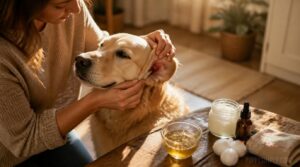
When the infection is mild and caught early, a few simple remedies can help soothe your dog’s ear before things get worse. Most of these you likely already have at home, and they’re gentle enough to use without causing further irritation. Here are five vet-approved options worth trying first.
Diluted Apple Cider Vinegar
Apple cider vinegar is one of the most accessible natural remedies you can reach for when your dog’s ears look mildly irritated. Always dilute it first — a 1:1 ratio of ACV to distilled water works well for routine use, though sensitive dogs do better with a gentler 1:3 mix.
For routine cleaning, this guide to choosing the safest dog ear cleaners breaks down which ingredients to look for and which to avoid.
This apple cider vinegar rinse creates an acidic pH between 3 and 5, which naturally discourages yeast and bacteria without harsh chemicals.
It’s also handy as a post-swim ear cleaning solution — just a few drops after water exposure helps clear trapped moisture before problems start.
Before full application, test a small amount on the ear flap; if your dog flinches or pulls away, dilute further.
One important caution: never use this remedy if the eardrum may be ruptured or the skin is broken, as the acidity will cause real pain and can worsen damage.
Coconut Oil for Irritation
Warmed to an ideal 100°F, coconut oil treatment soothes mild ear irritation fast. Its lauric acid benefits fight bacteria and yeast naturally.
Patch test first, dab some on the leg, wait 24 hours. Among natural remedies, it’s gentle, but coconut oil limitations matter: it won’t touch active dog ear infections. Discard rancid oil after six months; freshness keeps it effective.
Distilled Witch Hazel
Witch hazel might surprise you — it’s not just a bathroom cabinet staple. Distilled witch hazel water contains 8–12% tannins with real antibacterial and antifungal action, making it a legitimate natural antiseptic for pets.
Apply 5–10 drops with a cotton ball, massage the base gently, and let it work.
Always choose USP-grade distilled witch hazel — quality matters here.
Cooled Green Tea Rinse
Green tea is more than a morning ritual — it’s a gentle, evidence-based rinse for mildly irritated dog ears. Its catechins and EGCG reduce inflammation and create a mild antibacterial environment without disrupting your dog’s natural ear microbiome.
Steep two bags in 8 oz of boiled water, cool completely, then apply one dropper per ear using a pure cotton ball.
Mullein Garlic Oil
Few natural remedies pack a one-two punch quite like mullein garlic oil. Mullein’s flavonoids soothe inflamed ear tissue, while garlic’s allicin delivers real antimicrobial compound activity against bacteria and yeast — and together, that synergistic herbal benefit outperforms either herb alone.
Apply 1–2 mullein oil drops into the affected ear, massage the base gently for 30 seconds, and repeat daily for up to five days.
How to Clean Infected Ears
Cleaning an infected ear the right way makes a real difference in how quickly your dog heals. The process is straightforward, but the order and technique matter more than most people realize. Here’s exactly what to do, step by step.
Use Dog-safe Ear Cleaner
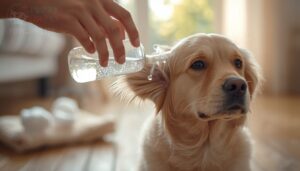
Before reaching for vinegar, grab a dog-safe ear cleaner free of alcohol and hydrogen peroxide, since those irritate inflamed tissue. Choose pH-balanced formulas with lactic or citric acid, restoring your dog’s natural acidity against bacteria and yeast.
Clean every one to two weeks, store sealed and shaken, and toss any solution that’s cloudy or smells unusual.
Massage The Ear Base
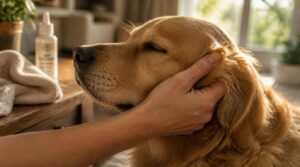
Once the cleaner’s in, massage the ear base for 20 to 30 seconds before your dog shakes its head. Hold the ear between thumb and fingers at the skull, applying gentle pressure with slow circular motions toward GB 20—you’ll hear a soft squish as solution moves through the canal.
Stop immediately if your dog whines, tenses, or pulls away.
Wipe With Cotton Balls
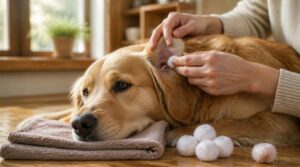
With the base massaged, lift debris next. Grab a dry ball first, then a lightly saturated cotton ball for a gentle ear cleaning routine:
- Dry wipe first to catch loosened wax
- Use gentle circular motions at the canal opening
- Swap balls often, preventing deep insertion while managing excess debris
Discard each immediately; maintaining hygiene standards keeps your ear canal clean.
Dry Ears Completely
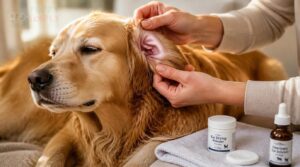
Once you’ve wiped away debris, moisture becomes the real enemy. Let your dog shake its head freely, then fold the ear flap back for five minutes of airflow. Apply drying powder or a veterinary drying solution, massaging until you hear a squishy sound—proper ear drying prevents the damp environment yeast and bacteria love.
| Drying Method | Why It Matters |
|---|---|
| Head shaking | Expels loosened fluid naturally |
| Ear folding | Boosts ventilation, speeds drying |
| Drying powder | Absorbs trapped moisture |
| Vet drying solution | Coats canal, fights buildup |
| Towel drying | Removes surface dampness |
Avoid Cotton Swabs
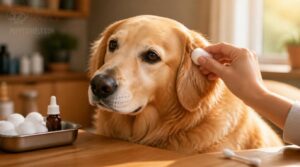
Tempting as it sounds, never use cotton swabs during ear cleaning. They cause ear canal trauma, risk eardrum puncture dangers, and often push wax deeper, leading to wax impaction risks. Swabs also leave fiber residue behind, irritating already inflamed tissue.
Stick with cotton balls for the outer ear instead. These safer cleaning tools support real ear infection prevention without the hidden damage swabs cause.
Top 6 Dog Ear Products
Once you’ve got the cleaning routine down, choosing the right product makes ongoing ear care so much simpler. Some formulas focus on prevention, others tackle active infections, and knowing the difference helps you pick wisely.
Here are six trusted options worth keeping on hand for your dog’s ears.
1. ZYMOX Ear Solution for Dogs Cats
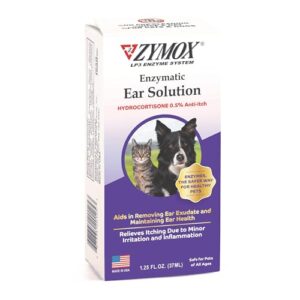
Few products skip the cleaning step entirely, but ZYMOX does just that. Its LP3 Enzyme System uses lactoperoxidase, lactoferrin, and lysozyme to generate hydrogen peroxide right in your dog’s ear, breaking down bacteria, yeast, and debris without scrubbing first. The 0.5% hydrocortisone formula calms itching and swelling noticeably fast, and it works on cats too.
At $22.49, it’s a simple one-step option—fill the canal, massage for 30 seconds, and let the enzymes work. It’s just not ideal for hydrocortisone-sensitive pets.
| Best For | Pet owners looking for a simple, no-sting, at-home solution to manage routine ear maintenance or mild-to-moderate ear irritation, itching, and inflammation in dogs and cats. |
|---|---|
| Active Treatment Type | Enzyme System |
| Application Method | Fill & Massage |
| Price | $22.49 |
| Species Use | Dogs & Cats |
| Rinsing Required | No |
| Vet Treatment Needed For Severe Cases | Yes |
| Additional Features |
|
- Skips the pre-cleaning step entirely—just fill the ear canal and massage for fast, easy application
- 0.5% hydrocortisone formula delivers noticeably quick relief from itching, redness, and swelling
- Gentle, natural, non-toxic ingredients make it safe for cats, dogs, and pets of all ages
- Not recommended for hydrocortisone-sensitive pets unless you opt for the hydrocortisone-free version
- Won’t treat underlying causes like mites, bacteria, or severe infections that need veterinary attention
- Effectiveness relies on proper, consistent application and thorough massage to distribute the solution
2. Curaseb Dog Ear Infection Treatment
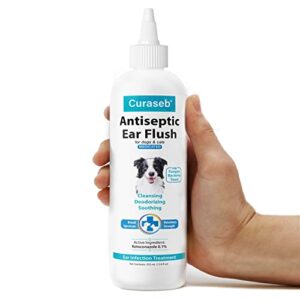
Pull double duty with Curaseb, since it pairs ketoconazole and chlorhexidine to fight fungal and bacterial infections at once. Many owners report clearer ears within 48 hours, though a full 14-day course usually needs about 14 oz of solution.
Fill the canal, massage the base for 30 to 60 seconds, then let your dog shake out the debris. At roughly $35 for a complete course, it’s a budget-friendly pick made in the USA under strict quality testing.
| Best For | Dog (and cat) owners looking for a vet-recommended, antifungal ear cleanser to manage routine ear hygiene or mild infections at home without the cost of a prescription. |
|---|---|
| Active Treatment Type | Antifungal/Antibacterial |
| Application Method | Fill & Massage |
| Price | ~$35 |
| Species Use | Dogs & Cats |
| Rinsing Required | No |
| Vet Treatment Needed For Severe Cases | Yes |
| Additional Features |
|
- Contains ketoconazole to help control fungal infections and reduce itching, redness, and inflammation
- Cucumber melon scent helps neutralize odor while cleaning
- Made in the USA with quality-controlled ingredients and trusted by veterinary professionals
- The artificial fragrance may not appeal to every pet or owner
- Dogs that dislike liquid in their ears may find application stressful
- Severe or advanced infections may still require a vet visit, and some users find the cap tricky to reseal
3. EcoEars Natural Dog Ear Cleaner
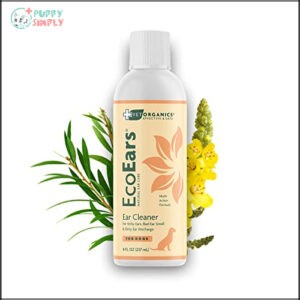
If your dog’s ear trouble traces back to yeast or bacteria, EcoEars works through witch hazel, tea tree oil, rosemary, and ionic silver, drying moisture while disinfecting without harsh chemicals.
Boric acid acidifies the canal, discouraging regrowth.
Apply twice daily for 10 days during active infections, then taper to weekly maintenance.
It’s formulated for dogs 12 weeks and older, with an 8 oz bottle covering a full 10–15 day course.
| Best For | EcoEars is best for owners of dogs of any size who want a natural, chemical-free option for managing yeast or bacteria-related ear issues, persistent odor, and everyday wax buildup as part of routine ear care. |
|---|---|
| Active Treatment Type | Herbal/Antimicrobial |
| Application Method | Drop & Apply |
| Price | Not Stated |
| Species Use | Dogs Only |
| Rinsing Required | No |
| Vet Treatment Needed For Severe Cases | Yes |
| Additional Features |
|
- Formulated with natural herbs and essential oils, with no harsh chemicals, antibiotics, steroids, or enzymes
- Drop-per-cap design allows for precise, mess-free application into the ear canal
- Helps cut down on unpleasant odor and discharge while easing itching and excess wax
- Has a strong natural scent that some owners may not love
- May cause mild stinging or burning the first few times it’s used, especially on already irritated ears
- Not meant for dogs with ruptured eardrums or severe infections that need a vet-prescribed treatment
4. Virbac Epi Otic Ear Cleanser
For routine upkeep rather than active infection, Virbac’s Epi-Otic Cleanser earns its spot in many vet clinics. Its pH-neutral formula pairs 0.2% salicylic acid with glycotechnology, reducing how well bacteria stick to the canal walls in the first place.
Massage it in, wipe with a cotton ball, done — no rinsing required.
Use it two to three times weekly after baths or swims. Just know it’s not medicated, so active infections still need your vet’s input.
| Best For | Owners of puppies, kittens, or adult dogs and cats needing regular ear maintenance, especially floppy-eared breeds or pets prone to moisture buildup after baths and swims. |
|---|---|
| Active Treatment Type | Salicylic Acid |
| Application Method | Massage & Wipe |
| Price | Not Stated |
| Species Use | Dogs & Cats |
| Rinsing Required | No |
| Vet Treatment Needed For Severe Cases | Yes |
| Additional Features |
|
- PH-neutral formula developed with veterinary dermatologists, gentle on ears
- Patented anti-odor technology eliminates smells instead of masking them
- No rinsing needed — just massage in and wipe away
- Contains alcohol, which may dry out very sensitive skin too quickly
- Not a medicated treatment, so it won’t address active infections
- Can be tricky to apply on pets that resist ear handling
5. Zymox Ear Cleanser for Pets
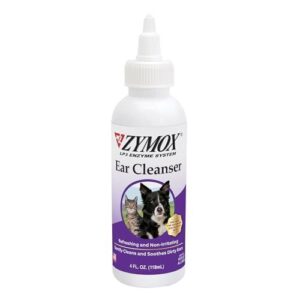
Here’s a cleanser that does double duty: Zymox relies on the same LP3 enzyme system found in their therapeutic ear solution, using lactoferrin, lactoperoxidase, and lysozyme to generate hydrogen peroxide right where bacteria live.
That enzymatic action even holds up against resistant strains like MRSA, which is impressive for a weekly maintenance product.
Shake well, fill the canal, massage the base, then wipe away what surfaces. At $15.99 for 4 oz, it’s gentle enough for puppies and kittens alike.
| Best For | Pet owners with cats or dogs of any age—especially multi-pet households—looking for a gentle, vet-recommended way to clean healthy ears and prevent buildup as part of a regular grooming routine. |
|---|---|
| Active Treatment Type | Enzyme System |
| Application Method | Fill & Massage |
| Price | $15.99 |
| Species Use | Dogs & Cats |
| Rinsing Required | No |
| Vet Treatment Needed For Severe Cases | Yes |
| Additional Features |
|
- Uses an enzyme-based LP3 system (lactoferrin, lactoperoxidase, lysozyme) to control microbial growth without harsh detergents
- Veterinarian-recommended and cruelty-free, with an easy-fill nozzle for precise application
- Safe for both cats and dogs at any age, and gentle enough for use after a vet-treated infection has cleared
- Not a substitute for antibiotic ear drops when an active infection is present
- Liquid can drip out during application, so you may need extra cleanup around the fur
- Costs more than basic ear cleaners, and proper technique (filling, massaging, wiping) is needed for best results
6. Burt’s Bees Dog Ear Cleaner
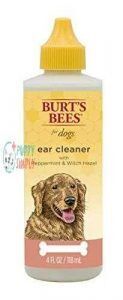
If you’d rather skip enzymes altogether, Burt’s Bees takes a botanical route instead. The formula leans on peppermint oil and witch hazel, with glycerin to keep tissue moisturized while SDA 40 alcohol dries excess moisture from the canal.
At 99.7% natural origin and free of sulfates or dyes, it suits dogs with sensitive skin. Apply 2–4 drops, massage for 30 seconds, twice weekly. Expect a noticeable peppermint scent, and it’s not meant for severe infections.
| Best For | dogs with sensitive ears who need gentle, routine preventive cleaning rather than treatment for an existing infection. |
|---|---|
| Active Treatment Type | Herbal/Astringent |
| Application Method | Squeeze & Wipe |
| Price | Not Stated |
| Species Use | Dogs Only |
| Rinsing Required | No |
| Vet Treatment Needed For Severe Cases | Yes |
| Additional Features |
|
- 99.7% natural, pH-balanced formula free of sulfates, parabens, phthalates, and dyes, making it gentle on sensitive skin
- Peppermint oil and witch hazel work together to clean wax and debris while soothing mild irritation and itching
- Eco-friendly bottle made with 80% post-consumer recycled material, and safe for use on both puppies and adult dogs
- Not a substitute for veterinary care when dealing with severe infections or otitis externa
- The peppermint scent is noticeable and may cause some dogs to shake their head or shake out the liquid after application
- A handful of users have noted limited effectiveness on heavily infected or odorous ears, along with occasional packaging issues
When Home Remedies Are Unsafe
Home remedies work well for mild irritation, but they’re not built for every situation. Some signs mean it’s time to put the witch hazel down and pick up the phone instead. Here’s when you should skip the home treatment and call your vet.
Severe Pain or Bleeding
Once bleeding lasts past ten minutes, or your dog yelps and snaps when touched, you’re facing an emergency vet situation, not a home remedy.
Watch for vestibular dysfunction symptoms like circling, plus neurological red flags such as head tilt.
Aural hematoma risks and a burst eardrum demand immediate veterinary attention and pain management for dogs—seek professional help immediately, don’t wait.
Pus or Heavy Discharge
Pain is one warning sign; what’s coming out of the ear is another, and color tells its own story.
Yellow-green often means Pseudomonas infection, antibiotic‑resistant and stubborn. Dark brown, coffee‑ground debris points to mites, not bacteria.
Either way, heavy discharge limits home treatment—it blocks penetration and can push infection deeper. Your vet needs an ear swab culture to identify what’s really happening.
Head Tilt or Stumbling
Discharge is one thing, but a wobbly dog is another story entirely.
Once infection spreads into the middle or inner ear, otitis media or otitis interna can damage the vestibular system, causing head tilting, stumbling, circling, or odd eye flicking, called nystagmus.
Watch for a half-closed eye or uneven pupils, too. This needs same-day veterinary care, not home treatment.
Suspected Ruptured Eardrum
Sudden atmospheric pressure changes, like flying in airplanes, or severe infection and trauma can rupture an eardrum, so skip home remedies and seek veterinary attention immediately.
- Nystagmus eye movement
- Facial nerve damage
- Balance disruption
These emergency warning signs demand prompt professional veterinary care. Diagnostic testing methods — otoscopic exams or dye testing — guide veterinary diagnosis and prevent permanent damage to hearing.
Chronic Recurring Infections
When canine otitis externa keeps returning, you’re not failing—something deeper is driving it.
Recurring otitis management means checking for hormonal imbalance causes, dietary allergy management needs, or microbial biofilm resistance, protecting bacteria from treatment.
Left unchecked, chronic canal remodeling narrows the canal permanently, sometimes requiring surgical intervention options like TECA.
Effective ear infection prevention starts with finding the root cause, not just treating symptoms.
Frequently Asked Questions (FAQs)
What can I give my dog if her ears are bothering her?
If she’s shaking her head or pawing at her ear, try a gentle ear cleaning home brew like diluted apple cider vinegar or coconut oil, mild anti-inflammatory foods, and dry, moisture-free ears daily.
How do I treat my dog’s ear infection from home?
You don’t need a vet visit for every mild flare-up. Gently clean with a pH-balanced rinse, apply diluted apple cider vinegar for its natural antimicrobial properties, then dry thoroughly—moisture prevention matters most for lasting relief.
What to do if your dog has an ear infection but can’t afford a vet?
Try low-cost cleaning with diluted apple cider vinegar or coconut oil, monitor progress daily, and watch for emergency signs like bleeding or head tilting.
Many clinics offer budgetary relief options or payment plans, so call and ask before assuming care is out of reach.
What to flush an infected dog’s ear with?
Good options include diluted apple cider vinegar (1:1 with water), cooled green tea, or distilled witch hazel—each offers gentle antimicrobial action. Coconut oil soothes irritation, while safely supporting a healthy ear canal during gentle cleaning.
Can home remedies replace veterinary treatment completely?
No—that’s a myth worth busting. Without pathogen identification via professional cytology, home remedies and natural alternatives can’t match veterinary care’s accuracy. They ease mild canine otitis, but moderate-to-severe dog ear infections need prescription treatment promptly.
How long do home remedies take to work?
Most mild cases show less head shaking and discharge within 5-7 days, with full recovery by day 10-14 if you apply remedies consistently—twice daily speeds recovery, while skipping treatments can stretch healing to three weeks.
Are home remedies safe for puppies and seniors?
Think of puppies and senior dogs as fine porcelain—beautiful but fragile. Puppy skin sensitivity, senior circulation issues, and essential oil toxicity raise age-specific risks, making veterinary consultation necessary before any natural ear treatment for pets.
Which dog breeds get ear infections most often?
Basset Hounds, Cocker Spaniels, and Golden Retrievers top the list, thanks to floppy ears trapping moisture. Allergy-prone breeds and designer mixes like Labradoodles also face higher risk, especially active, larger dogs over 10kg.
Can ear infections spread between dogs in households?
Yes, ear mites jump between dogs through head contact and shared grooming tools, but bacterial dog ear infections rarely transfer directly—household allergy triggers and humid ears often cause similar symptoms in multiple pets without contagion.
What causes ear infections in dogs?
Trapped moisture, breed-specific ear anatomy, food and environmental allergies, foreign debris, and hormonal imbalances all trigger bacterial ear infections, with allergy-driven inflammation standing out as the most common underlying cause behind recurring symptoms in dogs.
Conclusion
Every dog has an Achilles’ heel, and for many, it’s tucked inside those floppy, moisture-trapping ears.
Dog ear infection home remedies won’t replace a vet’s diagnosis, but they’ll ease discomfort, calm the itch, and buy you time to watch closely. Use them wisely, and know when professional care must step in.
Your dog can’t say what hurts, so your steady attention becomes its truest, most reliable line of defense, long before any vet visit begins.
- https://www.dogsnaturallymagazine.com/5-home-remedies-for-dog-ear-infections
- https://eascoranimalhospital.com/pet-pharmacy/home-remedies-for-dog-ear-infections
- https://www.proactivepaws.com/blogs/pet-health/natural-remedies-for-dog-and-cat-ear-infections
- https://aromachologyoils.com/blogs/news/best-essential-oils-for-dog-ear-infection-recipes-and-usage-instructions
- https://figopetinsurance.com/blog/dogs-and-tea-tree-oil