This site is supported by our readers. We may earn a commission, at no cost to you, if you purchase through links.
A dog breathing heavy at rest—not after a run, not in summer heat, but just lying on the couch—warrants a closer look. Respiratory rate is one of the most sensitive early indicators of cardiovascular and pulmonary disease in dogs, yet most owners don’t establish a baseline until something already looks wrong.
A healthy adult dog takes 15 to 30 breaths per minute at rest; anything above 35 with visible effort is a clinical red flag.
The causes range from manageable—anxiety, minor infection, excess weight—to immediately life‑threatening, including congestive heart failure and airway obstruction. Knowing the difference starts with understanding what normal looks like.
Table Of Contents
- Key Takeaways
- What Normal Dog Breathing Looks Like
- Heavy Breathing Versus Normal Panting
- Signs Breathing is Abnormal
- Common Causes of Heavy Breathing
- Heart Problems and Heavy Breathing
- Breed, Age, and Weight Risks
- Emergency Heavy Breathing Symptoms
- How to Check Breathing at Home
- How Veterinarians Diagnose Heavy Breathing
- Treatment for Heavy Dog Breathing
- Frequently Asked Questions (FAQs)
- What are the signs that a dog is about to pass away?
- What are signs of respiratory distress in dogs?
- Why does my dog breathe heavy when resting?
- What are the signs of respiratory distress in a dog?
- How to help a dog that is breathing hard?
- Why does my dog make a heavy breathing sound?
- Is Heavy Breathing in Dogs an Emergency?
- What Are the Types of Heavy Breathing in Dogs?
- What Causes Heavy Breathing in Dogs?
- How Do Vets Diagnose Heavy Breathing?
- Conclusion
Key Takeaways
- A resting breath rate above 35 per minute, blue or pale gums, or open-mouth breathing at rest are hard stops—don’t wait, call your vet immediately.
- Knowing your dog’s personal normal (count breaths for 60 seconds while they’re calm and still) is the single most useful thing you can do before a problem ever appears.
- Heavy breathing has a wide range of causes—anxiety and heat on one end, congestive heart failure and heartworm disease on the other—so the pattern, timing, and any accompanying signs matter as much as the breathing rate itself.
- Flat-faced breeds, small dogs prone to tracheal collapse, overweight dogs, and seniors all carry higher baseline breathing risk and deserve more frequent, deliberate monitoring.
What Normal Dog Breathing Looks Like

Before you can spot a problem, you need to know what normal looks like. Dog breathing varies depending on age, activity, and even the time of day.
Keeping a simple log of your dog’s resting breath rate helps you quickly notice changes—check out these tips on tracking your dog’s breathing patterns while sleeping to get started.
healthy breathing actually looks like across different life stages.
Resting Breathing Rate in Adult Dogs
Most healthy adult dogs breathe 15–30 times per minute at rest—though Baseline Rate Variability means your dog’s personal normal may differ slightly.
Environmental Temperature Effects and Seasonal Breathing Fluctuations can shift that number without indicating dyspnea.
Use a Consistent Counting Method—30 seconds, then double—to avoid Owner Perception Bias.
Reliable breathing rate monitoring starts with knowing your dog’s sleeping respiratory rate when truly calm.
A typical adult dog’s normal resting breathing rate averages about 24 breaths per minute.
Normal Breathing in Puppies
Puppies follow their own Developmental Rate Milestones. Neonates breathe 25–35 times per minute; by weeks 3–4, that drops toward 15–25—classic Age-Related Rate Shifts as their lungs mature.
Normal Breath Variability is wider than in adults, so don’t panic at fluctuations. Watch for these Calm Resting Breathing signs:
- Quiet, rhythmic chest rise
- Mouth closed at rest
- No nostril flaring
- Relaxed neck position
- Consistent Baseline Respiratory Rhythm breath-to-breath
Senior Dog Breathing Rates
As dogs age, their breathing rates shift slightly lower than in younger adults. Rate Trend Monitoring matters here—small changes over weeks can signal early trouble.
| Condition | Rate (breaths/min) |
|---|---|
| Normal rest | 10–30 |
| Mild concern | 30–35 |
| Veterinary attention | 35–40 |
| Urgent care | 40+ |
Environmental Temperature Impact, Sleep Position Effects, Anxiety Tachypnea, and Medication Side Effects can all push rates higher temporarily—but consistent elevation points toward conditions like congestive heart failure, pulmonary edema, or heartworm disease requiring oxygen therapy.
Smooth, Quiet Breathing Signs
Once you know your dog’s typical resting breathing rates by age, recognizing normal breathing patterns becomes straightforward. Healthy breathing shows a Steady Breath Rhythm—evenly spaced, smooth, and consistent.
Chest Wall Symmetry means both sides rise and fall together.
Gentle Abdomen Movement stays subtle, not heaving.
Quiet Mouth Closure holds at rest, with no audible wheeze, rattling, or snoring disrupting that calm, unremarkable breathing rate.
How Breathing Changes During Sleep
Sleep shifts your dog’s breathing in predictable ways. During non-REM stable ventilation, the sleeping respiratory rate drops and stays relatively even—oxygen saturation holds steady.
REM irregular breathing looks different: shallower, faster, less uniform.
arousal breath surge can briefly spike the breathing rate before settling.
Sleep position effects matter too—lying on the back worsens airway resistance.
Sleep apnea episodes and abnormal breathing patterns during rest always warrant veterinary attention.
Heavy Breathing Versus Normal Panting

Not every heavy breath means something is wrong—but knowing the difference between normal panting and labored breathing can change how quickly you act. Dogs breathe hard for all kinds of reasons, and context matters more than you might think.
Here’s what to watch for across the most common situations.
Panting After Exercise
After a good run, panting is your dog’s built-in cooling system—Mouth Airflow Cooling through rapid, open-mouth breathing replaces the sweating humans rely on. Recovery duration usually runs 10–30 minutes, depending on exercise intensity and panting levels.
Watch for:
- Breathing improves steadily within 30 minutes
- Alert, responsive behavior throughout recovery
- Access to water supporting Hydration Effects
Age-related recovery matters—older dogs and puppies normalize more slowly.
Panting From Heat or Excitement
Environmental Temperature Triggers and excitement both push your dog’s Excitement-Induced Respiratory Rate well above baseline—sometimes hitting 200 breaths per minute.
Unlike humans, Cooling Mechanisms Comparison reveals that dogs rely almost entirely on panting for temperature regulation in dogs.
Behavioral Indicators of Panting differ by cause: heat panting runs steady, while stress-induced panting spikes with the triggering moment.
Hydration Impact on Panting is real—a dry dog overheats faster.
When Panting Should Settle
Most dogs return to normal breathing within 5–20 minutes after mild activity or excitement—that’s your Recovery Window.
Humidity Impact matters here: muggy conditions slow the Settling Duration considerably.
Differentiating heavy breathing from normal panting comes down to trajectory—is it improving?
Stress-induced panting and heat exhaustion both delay recovery.
If panting won’t settle despite rest and cool surroundings, that’s a Delayed Settling Sign worth acting on.
Open-Mouth Breathing at Rest
A healthy dog at rest keeps its mouth closed. If your dog is breathing heavily while resting with a persistent mouth opening—tongue drooping, relaxed head posture, saliva accumulation, or dry mouth signs—that’s not casual panting.
It signals the body is working harder than it should. Congestive heart failure, respiratory distress, and labored breathing all share this pattern. Don’t wait for it to pass.
Breathing That Seems Forced or Noisy
Forced or noisy breathing isn’t just loud—it’s a signal that something is physically blocking airflow.
Stridor, stertor, and wheezing rapid breathing each point to different obstruction sites:
- Inspiratory stridor — narrowing above the vocal cords, common in laryngeal paralysis
- Expiratory stridor — lower airway collapse on exhale
- Biphasic stridor — obstruction during both phases
- Stertor — upper-airway tissue vibration, like snoring at rest
- Respiratory muscle fatigue — visible abdominal effort from prolonged labored breathing
Airway obstruction doesn’t resolve on its own.
Signs Breathing is Abnormal
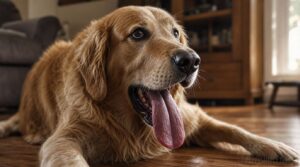
Normal panting fades — abnormal breathing doesn’t. Knowing what to look for can mean the difference between a watchful night at home and an emergency vet visit.
These are the signs that tell you something’s actually wrong.
Rapid Breathing at Rest
When your dog is lying quietly but taking quick, shallow breaths, that’s tachypnea — and it’s not something to wait out. Rapid breathing at rest often signals congestive heart failure, anxiety stress, or lung disease. Unlike normal panting, it stays elevated without a trigger.
| Age Group | Normal Rate | Concern Threshold |
|---|---|---|
| Adult | 15–30 bpm | Above 34 bpm |
| Puppy | 15–40 bpm | Above 50 bpm |
| Senior | 10–25 bpm | Above 35 bpm |
Belly or Abdominal Breathing
Rapid breathing and belly breathing often appear together. When the chest can’t do its job, the abdomen compensates — a sign of Diaphragmatic Activation gone wrong.
Breathing from the stomach at rest signals that your dog’s lungs are struggling. Pain, anxiety, stress, and obesity all trigger this pattern.
Think of it as your dog’s Breath Awareness Training alarm going off.
Neck Stretching or Elbows Forward
Watch for neck extension strain — when your dog stretches the head and neck forward, it’s recruiting posture to open the airway. Elbow spread stance and shoulder bracing follow the same logic: the body is engineering room to breathe.
Forward head posture that persists at rest, without heat or exercise, signals genuine respiratory distress. Posture persistence is the red flag here.
Flaring Nostrils or Wide Mouth
Posture shifts are one signal—but your dog’s face tells its own story.
Flaring nostrils are classic compensatory breathing signs, widening to pull in more air when normal airflow meets resistance.
Open-mouth breathing at rest follows the same pattern: the body bypasses nasal passages entirely.
visual respiratory assessment cues are toward airway obstruction indicators.
Labored breathing shouldn’t include either at rest.
Blue, Gray, or Pale Gums
Gum color is one of the most direct windows into your dog’s oxygen status—and a change here demands immediate attention. Blue-tinged gums signal central cyanosis, meaning blood oxygen saturation has dropped critically. Pale gums point to anemia or circulatory shock indicators like internal bleeding. Gray discoloration can reflect medication toxicity effects or tissue necrosis.
Your dog’s gum color is a direct oxygen report: blue means crisis, pale means shock, gray means toxicity
Watch for:
- Blue gums: hypoxia from severe respiratory distress
- Pale gums: anemia indicators or reduced circulation
- Gray gums: possible dental necrosis signs or systemic toxicity
- White gums: circulatory shock—call your vet immediately
Wheezing, Snoring, or Honking Sounds
Each sound your dog makes while breathing carries a specific meaning.
Wheezing—a high-pitched whistle—signals narrowed lower airways from asthma or bronchitis. Snoring during sleep often reflects upper airway obstruction, especially in brachycephalic obstructive airway syndrome. Honking episodes usually indicate collapsing trachea or laryngeal paralysis.
These aren’t interchangeable—this noise differentiation guide matters because wheezing triggers, airway disease progression, and treatment paths differ entirely between each pattern.
Common Causes of Heavy Breathing

Heavy breathing doesn’t always mean something serious, but it’s worth knowing what’s behind it. Several things can push your dog’s breathing into overdrive—some temporary, others that need a vet’s attention.
Here are the most common causes to be aware of.
Heat, Stress, or Anxiety
Heat, stress, and anxiety are three of the most common—most overlooked—triggers for heavy breathing. When your dog’s body temperature climbs, panting is their primary cooling technique.
But cortisol and adrenaline released during stress-induced panting or anxiety-induced panting keep the body in overdrive.
Effective temperature management and anxiety management—shade, water, calm environments, and calming strategies—usually resolve breathing quickly.
If it doesn’t settle, suspect something deeper.
Pain or Physical Injury
Pain hits the body like a switch—and your dog’s breathing is one of the first things to change. Acute injury drives pain-induced hyperventilation, raising resting respiratory rates well above normal thresholds.
Watch for:
- Guarded posture or hunching over a sore area
- Limping behavior or refusal to bear weight
- Swelling localization with warmth at the injury site
- Tenderness palpation responses—growling or flinching when touched
- Protective guarding against handling the affected side
Acute severe bleeding compounds labored breathing further by dropping oxygen‑carrying capacity. Pale gums alongside rapid breaths signal circulatory compromise requiring immediate veterinary attention.
Respiratory Infections
Respiratory infections move fast—viral transmission spreads kennel cough dog-to-dog before symptoms even appear. Bacterial pneumonia overwhelms lung defenses, while fungal lung infection and lungworm quietly damage tissue over weeks. Compromised mucociliary clearance lets pathogens anchor deep in airways, turning bronchitis into labored breathing quickly.
| Infection Type | Common Signs | Treatment Approach |
|---|---|---|
| Kennel Cough | Harsh honking cough | Rest, antibiotics if bacterial |
| Bacterial Pneumonia | Fever, rapid breathing | Targeted antimicrobials, oxygen |
| Fungal Lung Infection | Chronic cough, weight loss | Antifungal medication, monitoring |
| Lungworm | Breathing difficulty, lethargy | Antiparasitic treatment |
| Viral Respiratory | Nasal discharge, fatigue | Supportive care, isolation |
Vaccination prevention reduces your dog’s exposure risk substantially.
Chronic Bronchitis or Asthma
Chronic bronchitis and asthma—technically called eosinophilic bronchopneumopathy in dogs—both involve allergic airway inflammation that narrows airways and traps mucus.
Trigger identification matters: dust, smoke, and cold air can spark flares.
Long-term monitoring with chest X-rays tracks disease progression, while inhaler technique and medication side effects must be reviewed regularly. Environmental control reduces exposure and helps keep breathing stable between episodes.
Collapsing Trachea
Unlike bronchitis, collapsing trachea involves a structural problem—ring weakening mechanism where C-shaped cartilage loses rigidity and flattens. Airway collapse stages progress from mild narrowing to bronchial extension risk, causing variable airflow obstruction with each breath.
Your dog may produce a harsh, honking cough.
Severe cases require a therapeutic stent.
Small breeds are most affected.
Allergic Reactions or Irritants
Airway irritants and environmental triggers can hit just as hard as structural problems.
Inhaled chemicals, smoke, or allergens trigger rapid breathing even after a single exposure.
Anaphylaxis signs escalate fast—airway swelling, hives, vomiting. Watch for:
- Sudden respiratory distress after outdoor exposure
- Contact dermatitis with simultaneous coughing
- Irritant inhalation from sprays or cleaners
- Environmental allergenic triggers like mold or pollen
- Allergen avoidance reducing asthma flares
Heart Problems and Heavy Breathing
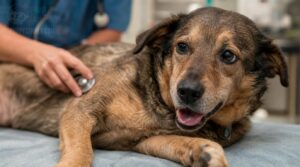
When your dog’s heart isn’t pumping efficiently, the lungs often pay the price first. Fluid buildup, poor circulation, and increased pulmonary pressure can all trigger rapid, labored breathing that won’t settle on its own.
Here’s how specific heart-related conditions connect to what you’re seeing.
Congestive Heart Failure
Left-sided congestive heart failure forces fluid accumulation in the lungs as the failing left ventricle can’t push blood forward efficiently.
You’ll notice congestive heart failure symptoms like rapid breathing at rest, exercise intolerance, and restlessness—especially at night.
Echocardiography confirms cardiac remodeling and guides treatment.
Managing it means oxygen therapy, diuretics, and consistent blood pressure monitoring with ongoing medication adjustments.
Pulmonary Edema
Pulmonary edema—fluid flooding the lung’s air spaces—directly follows when left-sided congestive heart failure overwhelms circulation. Cardiogenic fluid backs up when the heart can’t pump forward; non-cardiogenic edema occurs when the lung barrier itself leaks. Chest X-rays reveal Kerley B lines, pleural effusion, or ground-glass opacities.
Oxygen therapy and diuretics are the first moves.
- Breathing becomes visibly labored, even at rest
- Gum color may shift pale or blue
- Every breath looks like effort
Heartworm Disease
Heartworm disease forces adult worms—some reaching 14 inches long—into the lung’s blood vessels, triggering the kind of inflammation that eventually narrows pulmonary arteries and causes pulmonary hypertension and pulmonary edema.
That adult worm burden directly explains heavy breathing in dogs.
Treatment requires microfilariae testing, Wolbachia elimination via doxycycline, preventive medication, and strict exercise restriction throughout the multi-week protocol.
Pulmonary Hypertension
When blood pressure builds inside your dog’s lung arteries, the right ventricle pumps harder to compensate—leading to Right Ventricular Hypertrophy and Pulmonary Artery Remodeling that can’t be reversed.
Causes include heartworm disease, heart disease, and pulmonary edema.
Oxygen therapy buys time, but targeted medications—Endothelin Antagonists and PDE5 Inhibitors—slow progression.
Severe cases may require Lung Transplantation.
Coughing With Heavy Breathing
When your dog is coughing and breathing heavily at the same time, the two problems are almost always connected.
Common causes include:
- Pulmonary edema pressing fluid into airways
- Pneumonia from bacterial or viral infection
- Aspiration Pneumonia from inhaled material
- Heartworm disease restricting circulation
- Upper Airway Collapse, Vocal Cord Paralysis, or a Neoplastic Airway Mass narrowing airflow
A persistent and severe cough signals heavy breathing in dogs. Needs immediate evaluation.
Heavy Breathing at Night
Heavy breathing at night often signals cardiac fluid buildup — post‑treatment monitoring of sleeping respiratory rate is one of the most reliable owner monitoring tools you have.
Nighttime environmental triggers like seasonal allergies influence airflow, and sleep position impact can worsen dyspnea.
Medication side effects may also alter breathing patterns.
If the rate stays above 30 breaths per minute at rest, seek emergency veterinary care immediately.
Breed, Age, and Weight Risks

Some dogs are simply born with the deck stacked against them regarding breathing. Beyond underlying illness, your breed, age, and weight can all quietly shape how hard they work just to take a breath.
Here’s what to know about the groups most at risk.
Brachycephalic Breeds
Flat-faced breeds like Bulldogs, Pugs, and French Bulldogs are built with airways that fight against them from birth. Brachycephalic Airway Syndrome (BOAS) combines several structural problems that stack on top of each other:
- Stenotic nares restrict nasal airflow
- An elongated soft palate blocks the throat
- Everted laryngeal saccules and airway collapse risk narrow the larynx further
That constant resistance strains airway tissues, raising brachycephalic syndrome complications—including narrow trachea—over time.
Small Dogs and Collapsing Trachea
Small breeds carry a hidden structural risk—tracheal cartilage degeneration. Yorkshire Terriers, Pomeranians, and Chihuahuas develop weakened C-shaped rings that flatten, creating upper airway obstruction that worsens with excitement or heat.
Cervical vs thoracic collapse behave differently: cervical sections collapse on inspiration, thoracic on expiration.
Fluoroscopic assessment catches what thoracic radiographs miss.
| Breed | Primary Risk |
|---|---|
| Yorkshire Terrier | Cervical collapse |
| Pomeranian | Thoracic collapse |
| Chihuahua | Multi-segment collapse |
| Maltese | Narrow trachea |
| Toy Poodle | Bronchial extension |
Nasal stent therapy and strict postoperative care guidelines improve long-term outcomes substantially.
Older Dogs and Reduced Lung Function
Aging reshapes lung mechanics in ways that aren’t always visible until your dog is already struggling. Reduced lung compliance, decreased tidal volume, and increased respiratory frequency—combined with lower arterial PO2—mean older dogs work harder for less oxygen. Pulmonary mineralization accelerates this decline.
Watch for:
- Faster, shallower breaths at rest
- Reluctance to exercise
- Nighttime heavy breathing episodes
Diagnostic imaging often reveals what a stethoscope alone can’t catch.
Obesity and Breathing Effort
Extra weight does more than slow your dog down—it actively compromises every breath.
| What Obesity Does | Why It Matters |
|---|---|
| Reduces lung capacity | Less reserve air available |
| Increases airway resistance | Every breath requires more effort |
| Creates chest wall load | Muscles fatigue faster |
| Causes ventilation-perfusion mismatch | Oxygen delivery becomes inefficient |
| Triggers obesity hypoventilation | CO₂ builds; labored breathing worsens |
Even modest weight loss measurably improves breathing rate and exercise intolerance.
Puppies Breathing Fast
Puppies breathe faster than adult dogs—15 to 40 breaths per minute at rest is normal. But puppy breathing heavily after full rest isn’t typical puppy behavior.
Rapid breathing in puppies can signal real trouble.
Watch for these causes of heavy breathing in dogs under one year:
- Post-Exercise Cooldown incomplete—rate stays high 15+ minutes after play
- Stress-Related Hyperventilation from new environments or handling
- Air Quality Irritants like smoke or aerosols triggering airway inflammation
- Dehydration Effects reducing oxygen efficiency
- Vaccination Reaction causing sudden respiratory changes within hours
Senior Dogs Breathing Heavy
Where puppies bounce back quickly, older dogs don’t get that same luxury. An older dog breathing heavily at rest—not after a walk, just sitting there—deserves your full attention.
Conditions like congestive heart failure, pulmonary hypertension, noncardiogenic pulmonary edema, Cushing’s Syndrome, and Anemia Indicators compound with age, making each breath harder to complete.
| Condition | Breathing Sign | Diagnostic Tool |
|---|---|---|
| Congestive Heart Failure | Rapid, labored breathing at rest | Chest X-rays |
| Lung Cancer Risks | Persistent cough, heavy effort | Diagnostic value of chest X-rays in dogs |
| Thyroid Disorders / Cushing’s Syndrome | Elevated resting rate | Blood panel |
| Air Quality Impact / Anemia Indicators | Pale gums, shallow breaths | CBC, oxygen assessment |
Emergency Heavy Breathing Symptoms

Some breathing changes can wait for a routine vet visit—but others can’t. Knowing which symptoms signal a true emergency could save your dog’s life.
Here are the warning signs that mean you need to act right now.
Breathing Heavy While Resting
A dog breathing heavily at rest isn’t just tired—it’s asking for help. Unlike panting that fades after a walk, resting respiratory distress persists regardless of temperature, activity, or calm surroundings.
Owner observation tips make the difference here.
Watch for these four emergency signals:
- Rate above 35 breaths per minute at rest
- Visible abdominal effort with each breath
- Medication side effects or vaccination reactions triggering sudden onset
- Poor air quality index worsening pre-existing conditions
Collapse or Inability to Stand
When your dog collapses and can’t stand, it’s one of the clearest emergency signs indicating immediate veterinary attention. Spinal cord compression, cardiac syncope, neurologic shock, exercise collapse, and heatstroke collapse all share this pattern—heavy breathing paired with sudden inability to bear weight.
Cardiopulmonary disease and underlying heart disease can cut oxygen delivery fast.
Don’t wait. This is when to seek emergency veterinary care for dyspnea immediately.
Blue Tongue or Gums
Blue-tinged gums are one of the clearest oxygen deprivation signals you’ll encounter. When deoxygenated hemoglobin accumulates in the mucous membranes, that familiar pink turns gray or blue—fast.
- Mucous membrane color shifts before pulse oximetry use can confirm oxygen saturation decline
- Rapid color warning means severe breathing distress is already progressing
- Anemic hypoxia and cardiopulmonary failure both produce this blue-tinged tinge
Don’t observe. Act immediately.
Heavy Breathing With Vomiting
Vomiting and heavy breathing together are never coincidental. Retch-induced hypoxia develops when repeated heaving disrupts normal respiratory rhythm, while aspiration risk rises sharply if stomach contents enter the airway—triggering aspiration pneumonia within hours.
Dehydration tachypnea compounds the picture fast.
Heatstroke vomiting, GDV, and toxin exposure breathing all demand immediate emergency care.
Don’t wait to see if it resolves.
Heavy Breathing With Nose Bleeding
A nosebleed paired with heavy breathing isn’t just two separate problems—it’s one urgent signal.
Nasal Trauma, Coagulopathy Issues, or Medication Bleeding can all compromise airflow while triggering rapid, labored respiration. Blood pooling into the airway creates Upper Airway Blockage, making Diagnostic Imaging Challenges real in unstable patients.
These clinical signs of acute severe bleeding in dogs demand immediate care—don’t monitor at home.
Swollen Belly and Labored Breathing
A swollen belly paired with labored breathing is never coincidental. Gastric Volvulus cuts off blood flow within hours, while Ascites Dyspnea from congestive heart failure or Internal Hemorrhage causes Diaphragmatic Compression—your dog simply can’t move air properly.
Abdominal Fluid Accumulation from pleural effusion or fluid accumulation compounds the problem fast.
If belly looks distended and breathing looks forced, get to a vet immediately.
Suspected Heatstroke or Toxin Exposure
Two situations demand the same response: act now, ask questions later.
Heatstroke drives Core Temperature Monitoring into emergency territory fast—panting that won’t settle, collapse, and pale gums signal Rapid Onset Signs beyond simple heat exhaustion.
Toxin Identification matters equally; poisoning from Environmental Hazards like pesticides or cleaning fumes causes breathing that worsens despite removal.
First Aid Steps mean cooling, fresh air, and immediate veterinary transport.
How to Check Breathing at Home
You don’t need any special equipment to get a read on your dog’s breathing—just your eyes, a timer, and about a minute of quiet observation.
Knowing what to look for makes it much easier to describe what’s happening when you call your vet.
Here’s what to check at home.
Counting Resting Respiratory Rate

Counting your dog’s resting respiratory rate takes about a minute — but technique matters.
Wait until your dog has been still for five minutes in a quiet environment, then follow these steps:
- Set a 60-second timer for accuracy
- Watch the chest rise and fall, counting each complete cycle
- Log the number immediately for baseline establishment
15–30 breaths per minute indicate normal breathing; anything above 34 at rest signals abnormal breathing patterns worth tracking.
Checking Gum Color Safely

After counting breaths, gum color is your next essential sign to check.
Find a Quiet Spot Check — good lighting matters here. Use soft light; shadows can make healthy pink look bluish. Lift the lip gently. Avoid forced opening, which stresses your dog and temporarily worsens breathing.
| Gum Color | What It May Indicate |
|---|---|
| Pale coral pink | Normal |
| Blue-tinged gums or blue-tinged lips | Possible hypoxemia — contact an emergency vet clinic immediately |
| White or very pale | Circulation concern |
Post Exercise, wait before checking. Record timestamps if color shifts — oxygen therapy for dogs often starts faster when you arrive with that data.
Watching Chest and Belly Movement

Once you’ve checked gum color, watch how your dog’s chest and belly move together—this Belly Sync Timing tells you a lot.
Normal breathing shows coordinated Chest Expansion Ratio: chest and abdomen rise and fall smoothly.
Abdominal Effort Patterns become exaggerated when breathing turns labored.
Watch for Shoulder Motion Observation clues—neck tension or rigid posture—and always run a Rhythm Consistency Check for irregular cycles.
Noting Coughing, Wheezing, or Retching
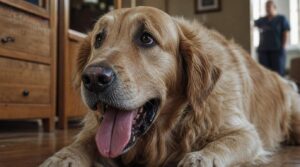
Beyond breathing patterns, the sounds your dog makes matter just as much.
Note the Cough Sound Type—dry and harsh versus wet and mucus‑filled.
Wheezing Pitch signals lower airway narrowing, while retching follows a distinct Retching Pattern: strained, stomach‑driven heaves.
Track Timing Correlation and Intensity Grading across episodes.
Coughing and nasal discharge together, or wheezing at rest, both warrant prompt veterinary attention.
Tracking Sleep Breathing After Treatment

Once treatment begins, monitoring your dog’s sleep breathing is just as important as the therapy itself. Log nightly SpO2 trends, minimum oxygen dips, and nightly event counts—not just averages.
Check mask fit compliance and note sleep position impact on breathing rate. Device data logs and posttreatment monitoring of sleeping respiratory rate reveal whether home monitoring techniques for dog respiration are actually working.
What Details to Tell The Vet

When you walk into the exam room, a detailed history is your most powerful diagnostic tool.
Be ready to share:
- Onset Timing & Trigger Identification — When did it start, and what was your dog doing?
- Behavioral Changes & Environmental Exposures — New sprays, foods, or lethargy?
- Medication History — Every supplement, dose, and recent change.
Emergency signs indicating immediate veterinary attention include blue gums or collapse—don’t wait.
How Veterinarians Diagnose Heavy Breathing
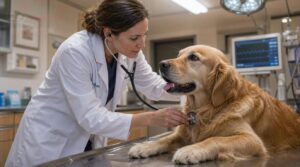
When your dog comes in struggling to breathe, the vet doesn’t just guess — there’s a clear, step-by-step process to figure out what’s actually going on. Each tool your vet uses gives a different piece of the puzzle, from what’s happening in the lungs to how the heart is functioning.
Here’s what that diagnostic process usually looks like.
Physical Exam and Lung Sounds
The stethoscope does more than confirm breathing—it maps what’s happening inside.
During auscultation, your vet listens across multiple chest points, comparing left and right lung fields using a consistent Auscultation Technique.
Wheeze Localization pinpoints airway narrowing; Inspiratory Crackle Timing flags fluid or infection.
Tracheal Sound Assessment catches upper-airway obstruction, while Chest Wall Palpation reveals pain or asymmetry.
| Finding | Sound Pattern | What It Suggests |
|---|---|---|
| Wheezing | Continuous, high-pitched | Airway narrowing |
| Crackles | Brief, popping bursts | Fluid or secretions |
| Reduced airflow | Absent breath sounds | Collapse or obstruction |
Oxygen Level Assessment
Listening to the lungs tells half the story—measuring oxygen levels tells the rest.
Pulse Oximetry gives you a fast, noninvasive oxygen monitoring reading: a sensor clips to your dog’s skin and displays SpO2 within seconds.
Normal SpO2 thresholds sit between 95–100%.
When those numbers drop, blood gas analysis confirms it—Arterial Blood Gas testing measures PaO2 directly, guiding oxygen therapy decisions with precision.
Chest X-Rays
A chest X-ray is often your vet’s fastest window into what’s actually happening inside your dog’s lungs and heart. Radiographic patterns reveal lung opacity types, cardiac silhouette evaluation, and pleural fluid detection in a single image—helping distinguish pneumonia, heartworm disease, and pulmonary hypertension quickly.
Key findings your vet evaluates:
- White lung opacities indicating fluid or consolidation
- Cardiac silhouette enlargement suggesting heart failure
- Pleural effusion with characteristic meniscus layering
- Airway obstruction imaging patterns showing abnormal aeration
Heart Ultrasound or Echocardiography
When X-rays show enlarged heart or fluid-filled lungs, an echocardiogram gives your vet the full picture.
This ultrasound maps Chamber Size, Valve Morphology, and Cardiac Output in real time—identifying congestive heart failure, heart disease, or heart murmur causes precisely.
| What Echo Measures | Why It Matters |
|---|---|
| Doppler Gradient | Detects valve obstruction severity |
| Tissue Doppler | Assesses diastolic filling patterns |
| Chamber Size | Confirms cardiac failure progression |
| Cardiac Output | Guides treatment intensity decisions |
Airway Exams and Bronchoscopy
When imaging points to an airway problem but can’t explain it fully, bronchoscopy fills the gap. A flexible scope passes directly into the trachea and bronchi—letting your vet see blockages, lesions, or collapse in real time.
Scope Selection depends on whether the goal is diagnosis or treatment.
Bronchoscopy offers:
- Direct visualization of airway anatomy and dynamics
- Bronchoalveolar lavage for Sample Analysis of infection or inflammation
- Foreign body removal without surgery
- Stent Placement in narrowed airway segments
- Sedation Strategies adjusted to your dog’s stability
Treatment for Heavy Dog Breathing
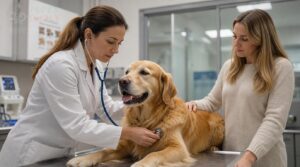
Treatment depends entirely on what’s causing the breathing problem in the first place. Your vet will target the underlying issue directly—whether that’s fluid on the lungs, an infection, pain, or something else.
Here’s a breakdown of the most common treatments used to get your dog breathing easier.
Oxygen Therapy and Stabilization
When your dog can’t get enough air, oxygen therapy is often the first intervention. Vets use pulse oximetry monitoring to assess SpO2, then adjust flow rate adjustment and FiO2 targeting based on response.
Oxygen delivery interfaces—masks, flow-by, or oxygen cages—match the dog’s condition and tolerance. Care escalation criteria guide whether stabilization is sufficient or mechanical ventilation becomes necessary.
Cooling for Heatstroke
Once oxygen is stabilized, heatstroke demands immediate thermal regulation. Start Cold Water Immersion now—every minute matters. Wet Towel Soaks work when a tub isn’t available; re-wet constantly.
- Use Evaporative Fan Cooling: mist cool water, then blow air across the coat
- Move your dog to Shade and Airflow immediately
- Practice Core Temperature Monitoring—stop cooling at 103°F
- Support hydration and heatstroke prevention long-term
Diuretics for Fluid in Lungs
When fluid accumulation in the lungs stems from congestive heart failure, diuretics are the frontline response.
IV diuretic administration—usually furosemide, a loop diuretic—pulls excess fluid from lung tissue within hours.
Loop diuretic dosing is adjusted based on kidney function assessment and electrolyte monitoring, since potassium and sodium can drop quickly.
Diuretic resistance management matters too; noncardiogenic pulmonary edema may require additional treatment options for canine pulmonary diseases beyond diuretics alone.
Antibiotics or Antifungal Medicine
When bacterial pneumonia or fungal bronchitis drives your dog’s heavy breathing, pharmacologic management of bronchitis and pulmonary infections demands precision—not guesswork. Bacterial Indications call for targeted antibiotics; Fungal Indications require systemic triazoles like itraconazole or voriconazole. Drug Selection depends on imaging, bloodwork, and culture results.
- Dosage Forms include oral tablets, liquids, or IV formulations.
- Side Effect Monitoring covers liver values and GI tolerance.
- Treatment options for canine pulmonary diseases never rely on one symptom alone.
Bronchodilators and Corticosteroids
When bronchitis or asthma narrows your dog’s airways, bronchodilators act as rescue inhalers—beta-2 agonists relax bronchial smooth muscle fast.
For maintenance therapy, combination formulations pair long-acting bronchodilators with inhaled corticosteroids, targeting both airflow restriction and underlying inflammation.
Steroid therapy and anti-inflammatory drugs build effect over days, not doses. Dosage titration and side effect management—monitoring heart rate, tremor, and throat irritation—guide the pharmacologic management of bronchitis long-term.
Pain Relief and Supportive Care
Pain doesn’t just hurt—it drives breathing faster. Pain-induced hyperventilation is real, and analgesic selection matters here.
Pain scoring guides how aggressively to treat, using behavior cues like restlessness or guarding.
NSAIDs and anti-inflammatory drugs reduce the underlying trigger. Calm handling, careful medication timing, and fluid therapy keep your dog stable.
Oxygen therapy continues alongside pain management until breathing normalizes.
Thoracocentesis for Chest Fluid or Air
When breathing becomes critical, thoracentesis—needle drainage of the chest—can be life-saving. Using Ultrasound Guidance, your vet identifies the safest entry point before beginning Needle Placement Technique.
- Fluid or air is removed from the pleural space
- Fluid Analysis Results guide diagnosis and treatment
- Post-Procedure Monitoring tracks lung re-expansion via chest X‑ray
- Complication Management handles rare risks like re-expansion edema
Long-Term Management and Prevention
Managing chronic respiratory disease long-term means staying consistent—Medication Adherence, Weight Monitoring, and Environmental Controls aren’t optional extras.
Follow your vet’s schedule for Regular Vet Checkups, adjust activity through Exercise Modification, and maintain Preventive heartworm medication protocols year-round.
Long-term monitoring of congestive heart failure, Management of pulmonary hypertension in dogs, and controlling Environmental allergens and asthma in canine patients all depend on disciplined weight management and early reporting.
Frequently Asked Questions (FAQs)
What are the signs that a dog is about to pass away?
Key signs include refusing food, lethargic withdrawal, incontinence episodes, decreased responsiveness, blue-tinged gums or lips, and temperature drop.
These clinical signs mirror dog shock and respiratory muscle fatigue—each one signals the body quietly stepping back.
What are signs of respiratory distress in dogs?
Labored gasping, chest retraction, wheezing, coughing, and a rising respiratory rate are the clearest signs. Watch for lethargic behavior, sweaty paws, cold extremities, and abnormal breathing patterns that won’t resolve.
Why does my dog breathe heavy when resting?
When the body speaks, listen before it shouts."
Heavy resting breaths can signal Endocrine Disorders, Neurological Issues, or Medication Side Effects—even poor Air Quality or Sleep Apnea quietly disrupt your dog’s sleeping respiratory rate.
What are the signs of respiratory distress in a dog?
Respiratory distress in dogs shows up as labored breathing, dyspnea, wheezing, coughing, restless pacing, dilated pupils, sudden lethargy, elevated heart rate, and abnormal breathing patterns—
blue gums signal immediate oxygen crisis.
How to help a dog that is breathing hard?
Move your dog to a calm environment setup—cool, quiet, minimal handling. Gentle positioning keeps the airway open.
Offer water if alert. Skip human meds.
Worsening effort means emergency veterinary care immediately.
Why does my dog make a heavy breathing sound?
Heavy breathing sounds can trace back to Upper Airway Collapse, Vocal Cord Dysfunction, or Neurological Breathing Control issues.
Stress Hormone Effects, Medication Induced Dyspnea, and Heart disease also disrupt normal respiration substantially.
Is Heavy Breathing in Dogs an Emergency?
Sometimes, yes. If your dog is breathing hard at rest, has blue or pale gums, or can’t get comfortable, don’t wait—that’s an emergency requiring immediate veterinary care.
What Are the Types of Heavy Breathing in Dogs?
Not all labored breathing looks the same.
Dogs show distinct patterns—obstructive airway breathing, restrictive lung breathing, cardiogenic edema breathing, metabolic hyperventilation, and neurological breathing dysregulation—each pointing to a different underlying cause.
What Causes Heavy Breathing in Dogs?
Causes of heavy breathing in dogs range from heat and anxiety to serious conditions like left-sided congestive heart failure, pulmonary hypertension, heartworm disease, blood anemia, Cushing’s disease, thyroid overactivity, pulmonary embolism, and neurological disorders.
How Do Vets Diagnose Heavy Breathing?
Vets start with a hands-on exam—listening for crackles, wheezes, or muffled airflow, then checking gum color and posture.
From there, pulse oximetry, CBC chemistry panel, and blood gas analysis clarify what’s happening quickly.
Conclusion
Like a smoke detector that only matters before the fire, knowing your dog’s normal breathing pattern is most valuable long before something goes wrong. A dog breathing heavily at rest is your clearest early signal that something needs attention—don’t wait for symptoms to stack up.
Count breaths, check gum color, and call your vet without hesitation. That quiet vigilance, practiced consistently, is what separates a close call from a preventable tragedy.
- https://www.aspcapetinsurance.com/resources/how-dogs-get-hernias/
- https://onlinelibrary.wiley.com/doi/10.1002/9781119414612.ch34
- https://www.akc.org/expert-advice/health/treating-dog-anxiety/
- https://pets.webmd.com/dogs/dog-panting-heavily
- https://www.vets-now.com/pet-care-advice/breathing-problems-and-difficulties-in-dogs/