
This site is supported by our readers. We may earn a commission, at no cost to you, if you purchase through links.

Transformed dogs come home from a Board and Train program—walking calmly on a leash, settling on command, ignoring distractions that used to send them spinning. Others return unchanged, because owners never learned to maintain the trainer’s work. This gap hinges on one factor: picking the right program for the right reasons.
Board and Train is not a magic fix, but in ideal scenarios, it offers the fastest path from chaos to control. Success depends on distinguishing a solid program from a disappointing one. Understanding this difference ensures lasting results.
Table Of Contents
- Key Takeaways
- What is Dog Board and Train?
- Board and Train Versus Alternatives
- What Programs Usually Include
- Costs, Discounts, and Value
- Choosing a Safe Training Facility
- Frequently Asked Questions (FAQs)
- Are board and trains worth it for dogs?
- Is it good to send your dog away for training?
- Is board and train worth it for dogs?
- How much for dog training and boarding?
- What is the best age to send a dog to board and train?
- What methods do you use in your Board and Train program?
- What should I expect when I pick up my dog after the Board and Train program?
- What follow-up support do you provide after the Board and Train program?
- What should dogs bring to boarding programs?
- How do dogs adjust after returning home?
- Conclusion
Key Takeaways
- Board and train works best when you commit to reinforcing those skills daily after your dog comes home—the trainer builds the foundation, but you maintain it.
- Choosing the right program means verifying trainer credentials, low dog-to-trainer ratios, positive reinforcement methods, as well as solid follow-up support before you sign anything.
- Costs range from $1,500 to $8,000 depending on program length and location, but discounts for rescues, military, and multi-dog households can reduce the cost.
- Puppies between 4 and 6 months old get the most out of board and train, though adult programs work too—which target different goals like reactivity or resource guarding.
What is Dog Board and Train?
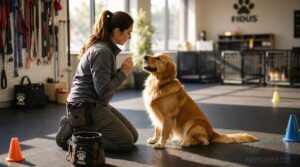
Dog board and train is exactly what it sounds like — your dog stays at a facility and works with a trainer every day. It’s a hands-off option for owners who want real results without juggling daily sessions themselves.
If you’re weighing your options, browsing local dog obedience training classes can help you find the right fit before committing to a full board and train program.
Here’s a closer look at how these programs actually work.
Dog Boot Camp Basics
Dog boot camp functions as basic obedience immersion — your dog resides at a training facility and works with a trainer multiple times daily. Behavioral assessment occurs early, ensuring training directly addresses your dog’s specific needs. A low trainer-to-dog ratio maintains focused, effective sessions.
Progress tracking is integrated throughout the program, providing clear updates on your dog’s development. The curriculum relies on evidence‑based training methods to deliver consistent, scientifically validated outcomes.
Boarding Plus Daily Training
Board and train dog training goes beyond basic boot camp — your dog lives at the facility and follows a structured routine built around immersive daily training. Multiple 15–30 minute sessions run each day, building training consistency across real-world distractions.
Trainers maintain a behavior log, documenting progress and challenges. You receive regular updates through owner communication check-ins, ensuring transparency throughout the process.
Progress monitoring stays active the entire residential stay, guaranteeing continuous assessment and adaptation of training methods.
Puppy Versus Adult Programs
Not every dog walks in with the same starting point. Puppy board and train focuses on short sessions that match a young pup’s attention span and learning pace, building cue consistency from day one.
Adult dog board and train takes a different angle — longer sessions targeting behavior goals like reactivity or resource guarding.
Training program customization makes all the difference.
Common Skills Taught
Whether your dog is 10 weeks or 10 years old, the skill list looks surprisingly consistent. Most programs cover core obedience commands — sit stay routine, recall training, loose leash walking, greeting manners, crate calm, and basic obedience like "place" and "off."
Socialization sessions and crate training round it out, giving your dog real-world skills, not just kennel-perfect behavior.
What Owners Still Do
Sending your dog to board and train doesn’t mean you step back entirely. Your role starts before drop-off and carries through long after graduation.
Your role in board and train begins before drop-off and never truly ends
- Attend the Pre-Training Evaluation and share your Owner Feedback on routines and goals
- Monitor Progress Reports and stay involved through Owner-Dog Communication with your trainer
- Schedule Follow-Up Sessions and keep Training Continuity at Home using the Online Dog Training Classroom
Board and Train Versus Alternatives
Board and train isn’t the only path to a well-behaved dog. Depending on your schedule, budget, and your dog’s needs, another option might fit your situation better.
Here’s how the main alternatives stack up.
Private Dog Training

Want results built around your dog — not a crowd? Private lessons pair one dog with one trainer. You get an individualized behavior plan based on a dog’s temperament assessment, adapted cue timing, and flexible session scheduling.
Your trainer can also help you decide whether a harness or collar suits your dog’s build and behavior — a small detail that makes a real difference in safety and control.
Real-world scenario drills happen in your dog’s actual environment, so skills stick.
| Feature | Private Training | Board & Train |
|---|---|---|
| One-on-one support | Always | Shared time |
| Individualized plan | Fully custom | Program-based |
| Session location | Home or facility | Facility only |
| Custom board train quote | Available | Standard pricing |
| Private Facebook support group | Often included | Often included |
Group Obedience Classes

Group dog training classes put your pup in a room full of real distractions — other dogs, handlers, noise. That’s actually the point. Class Dynamics push dogs to focus despite chaos, which is exactly what Distraction Training builds. Peer Learning happens naturally as dogs watch each other respond to cues.
- Practice dog obedience training alongside other handlers
- Build focus skills using positive reinforcement
- Track growth through Progress Benchmarks each session
- Benefit from Group Safety protocols and certified instructors
- Access free group classes as ongoing support after board and train
In-Home Coaching

In-home coaching brings the trainer straight to your door. A coach works with your dog in your actual Home Environment Setup — the kitchen, the hallway, the front door where chaos usually happens.
Sessions focus on Owner Skill Building through live demos, Personalized Safety Plans, and Progress Tracking Tools. This approach ensures practical, tailored solutions for real-life challenges.
Think of it as board and train’s hands-on cousin, minus the overnight stay. It combines convenience with effective, environment-specific training.
Veterinary Behaviorists

Veterinary behaviorists handle cases where a dog’s behavior stems from medical issues, not just training gaps. They combine Medical Diagnostics with Behavioral Assessment to identify hidden causes like pain or neurochemical imbalances.
Through Integrated Treatment Plans, these specialists pair behavior modification with Pharmacologic Intervention when necessary. This dual approach addresses both the symptoms and underlying medical drivers of problematic behavior.
They serve as the specialist referral process for complex cases where standard dog behavior specialist approaches have failed, offering a deeper, medically grounded solution.
Puppy Raising Programs

Volunteer Foster Training places dogs with screened families for 8–16 months, focusing on building foundational manners before formal training begins. During this phase, raisers handle Vaccination Scheduling, Checkpoint Tracking, and daily puppy socialization outings.
The host organization manages critical operational aspects, including Transportation Logistics and Volunteer Selection Criteria, ensuring smooth program execution.
After graduation, puppies transition to a Puppy Board and Train program—either a 2-Week or 4-Week immersive training—to solidify early behavioral foundations. 10% off incentives are often available for participants.
What Programs Usually Include
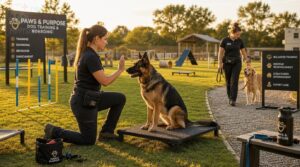
Not all board and train programs are built the same, and knowing what’s actually included helps you make a smarter choice. Some programs include a lot more than basic obedience work.
Here is a closer look at what you can usually expect.
Two-Week Training Packages
At a board and train facility, the two-week package is built for real results. Both the 2-week puppy board and train and 2-week adult board and train follow a structured routine with strong training intensity and daily play balance.
- Twice-daily sessions for behavior generalization
- Mid-Program Review after week one
- A tailored Owner Practice Plan
- Discounted training packages for returning clients
Four-Week Behavior Programs
Need more than two weeks? The 4 week puppy board and train and 4 week adult dog board and train go deeper.
Each week builds through a progressive skill-building — longer stays, fewer prompts, more distractions.
Impulse control training is woven into meals and play.
A full behavior assessment shapes a tailored owner reinforcement plan, while trainer ratio limits keep your dog’s progress on track.
That’s behavior modification board and train done right.
Daily Obedience Sessions
Every day of the board and train follows a clear training schedule planning approach. Sessions run 15 to 30 minutes — just enough for focused obedience training without burnout.
Your dog works through a cue hierarchy, one to three commands at a time. Reward timing is immediate, with mastery stickers tracking progress.
Each session ends with an owner’s home plan so skills keep building after pickup.
Field Trips and Socialization
Training doesn’t stop at the kennel door. Field trips take your dog into pet-friendly stores, parks, and busy public spaces — real-world distractions included.
Each outing builds on:
- Leash Etiquette and Crowd Impulse Control — staying calm through crowds
- Scent Desensitization and Public Venue Training — adjusting to new smells and sounds
- Controlled Dog Interactions — polite, confident canine socialization with strangers and other dogs
Progress notes track every outing.
Costs, Discounts, and Value

Board and train programs aren’t cheap, but the pricing makes more sense once you see what’s included. Costs vary based on program length, your dog’s needs, and any discounts you qualify for.
Here’s a breakdown of what you can expect to pay.
Typical Board Train Pricing
Prices can surprise you — but they don’t have to. The Base Price Spectrum for board and train programs typically ranges from $1,500 to $8,000, depending on program length and facility quality.
| Package Type | Estimated Cost |
|---|---|
| Basic (2 weeks) | $1,500 – $2,200 |
| Premium (4 weeks) | $5,000 – $8,000 |
| Specialized Programs | Custom board train quote |
Geographic Cost Variance and Trainer-to-Dog Ratio significantly influence the final price. Tighter ratios ensure more personalized attention but also correlate with higher costs.
Weekly and Daily Fees
Weekly Rate Components usually cover lodging, structured sessions, and basic enrichment. Daily Add-Ons — like field trips or health checks — can push costs higher.
Size-Based Pricing means larger dogs often pay more. Some programs require Upfront vs. Rolling Payments, so ask before signing. Watch for Cancellation Fees too.
Need a custom board and train quote? Most facilities will build one around your dog’s specific needs.
Rescue Client Discounts
If you’re bringing in rescue dogs, many board and train facilities offer real discounts and savings worth asking about. A 20% off deal is common, with stacked savings when you enroll multiple dogs. Seasonal promotions pop up during high-intake periods too.
Bring your intake paperwork — proof requirements are standard. Some board and train programs add additional benefits like free behavior consultations at no extra charge.
Military and First Responder Savings
If you serve — or have served — you’ve already earned more than most people know. Many board and train facilities offer Active Duty Discounts of 5–10% for military personnel, veterans, and first responders.
Base Proximity Savings and Family Dependent Rates can stack on top. Some programs even offer Veteran Scholarship Programs to offset boarding costs.
Always bring your service verification.
Multi-Dog Household Considerations
Got more than one dog? A multidog household deserves a smart plan. Many facilities offer a 10% multi-dog discount on board-and-train programs — real savings when dog boarding services add up quickly.
At home, implement a Feeding Station Design with Separate Rest Zones, practice Resource Guarding Prevention, add Scheduled Group Play, and maintain Individual Health Records updated for every dog.
Choosing a Safe Training Facility

Not every facility that calls itself a "board and train" is the same, and that gap matters more than most people realize.
Before you hand over your dog, there are a few key things worth checking. Here’s what to look for.
Positive Reinforcement Methods
The best dog board and train programs run on reward-based training — not fear. Look for these positive reinforcement methods in action:
- Behavior Specific Praise — trainers name the exact action: "Yes, you sat!"
- Reward Timing — treats follow the behavior immediately
- Effective Reinforcers — matched to each dog’s preference
- Shaping Approximations — small wins rewarded first
- Intermittent Schedules — rewards gradually taper to build lasting habits
Kennel Cleanliness Standards
Training methods matter — so does where your dog sleeps.
Solid kennel sanitation starts with daily inspection routines, covering waste disposal, bedding laundering, and high-touch disinfection on doorknobs and feeding areas. Pest management and facility inspections keep hidden risks in check.
| Sanitation Area | What to Look For |
|---|---|
| Kennel floors | Cleaned and dried daily |
| Bedding | Hot-washed, fully dried |
| High-touch surfaces | Disinfected with pet-safe products |
Proper sanitation protocols signal serious kennel management.
Trainer Experience and Limits
Clean kennels build trust — but who’s actually working with your dog? Look for certified trainers with 8–15 years of hands-on experience. Prioritize strong hands-on proficiency and welfare standards over flashy websites.
Verify trainer certification credentials, inquire about age limits (most programs cap enrollment at 8 years), and ensure adherence to a policy of a maximum of 5 client dogs. This guarantees a truly individualized plan for your dog’s needs.
Health and Safety Checks
A great trainer means little if the facility itself isn’t safe. Ask any board-and-train facility about its Hazard Inspection Routine, Infection Control Procedures, and Intake Stress Screening process.
Good kennel safety shows up in the details:
- Emergency Contact Protocols on file before day one
- Medication Administration Logs tracking every dose
- Individual kennels are cleaned and inspected daily
- Dog health considerations are documented at arrival
Follow-Up Support Options
Safety doesn’t stop at graduation. The best facilities back their work with real training follow-up — think virtual coaching sessions, reinforcement sessions in the first eight weeks, and photo and video updates twice weekly.
You’ll also gain access to an online classroom, an owner progress tracker, and a private Facebook support group. These tools ensure continuous guidance and community backing.
Lifetime support guarantees your dog’s progress actually sticks, providing long-term accountability and assistance beyond initial training.
Frequently Asked Questions (FAQs)
Are board and trains worth it for dogs?
For most dogs, a board and train program delivers real results. You gain focused training intensity, behavioral modification, and a solid foundation.
Long-term retention depends on your owner lifestyle fit and consistent follow-through post-graduation.
Is it good to send your dog away for training?
Sending your dog away for training can feel like dropping a kid off at boarding school — nerve-wracking but often life-changing.
Your owner commitment level after return matters most for long-term behavior retention.
Is board and train worth it for dogs?
Board and train is worth it when you’re ready to commit after your dog comes home. Long-term retention depends on you reinforcing skills daily—owner commitment drives real training outcomes.
How much for dog training and boarding?
Costs vary widely based on location and program length. Most programs run $1,500–$5,800, with discounts for repeat clients (10% off), rescue groups (20% off), and military or first responders (5–10% off).
What is the best age to send a dog to board and train?
Most dogs do best between 4 and 6 months old. That’s after vaccinations, bladder control develops, and the socialization window is still open — before bad habits take root.
What methods do you use in your Board and Train program?
Think of training like teaching a new language — consistency is everything.
We use Marker Training, Clicker Conditioning, Impulse Control Drills, and Behavioral Desensitization to build real, lasting obedience through positive reinforcement every day.
What should I expect when I pick up my dog after the Board and Train program?
At pickup, you’ll go through a graduation assessment, receive your transfer plan, and get a full owner briefing with handover tips, equipment handoff, and your first follow-up lesson scheduled.
What follow-up support do you provide after the Board and Train program?
After graduation, you receive personalized support through phone consultations, video check‑ins, a follow-up lesson, and weekly reinforcement sessions.
You gain access to online resources, including the online classroom, resource portal, and digital training support.
Community support is provided via a private Facebook group, with lifetime access to the support network.
What should dogs bring to boarding programs?
Pack labeled tags, food packets, a personal blanket, your medication bag, and vaccination proof.
These basics help dog boarding facilities and kennels keep your dog healthy, comfortable, and on track nutritionally from day one.
How do dogs adjust after returning home?
Most dogs sleep more and seem clingier for the first few days home. Expect Energy Recovery to take one to three days.
A Quiet Retreat, Calm Adjustment, and Feeding Consistency help ease the shift.
Conclusion
Think of dog board and train like physical therapy after an injury—the specialist does the hard work, but you maintain the progress. A dog who returned home walking calmly on a loose leash didn’t stay that way by accident. His owner showed up to the handoff session, practiced daily, and held the standard. That’s the real investment.
Choose a transparent program, stay involved, and your dog’s transformation won’t just stick—it’ll grow.
- https://www.preventivevet.com/dogs/board-and-train-for-dogs
- https://olk9dfw.com/dog-training-cost-dallas
- https://www.thecollarclubacademy.com/dog-board-and-train
- https://sitmeanssit.com/how-much-does-dog-training-cost-2026-price-guide-value-analysis
- https://k9maniadogtraining.com/how-much-does-a-board-and-train-program-cost