This site is supported by our readers. We may earn a commission, at no cost to you, if you purchase through links.

Your puppy gnaws happily on a rubber bone, but six months later, that same toy is shredded in minutes. It’s not stubbornness—your dog’s jaw strength has increased by up to 400% as they’ve matured, turning once-durable toys into potential hazards.
Most pet owners don’t realize that the difference between puppy and adult dog chew toys goes far beyond size. Material hardness, flexibility ratings, and safety thresholds shift dramatically as your dog develops, and using the wrong toy at the wrong stage creates real risks: fractured puppy teeth, choking hazards, or ingested fragments.
Understanding these distinctions protects your dog’s health while saving you money on replacements and emergency vet visits.
Table Of Contents
- Key Takeaways
- Key Differences: Puppy Vs Adult Chew Toys
- Why Age Matters in Chew Toy Selection
- Material and Construction: What to Look For
- Safety Risks: Choking, Wear, and Supervision
- Supporting Dental Health With Chew Toys
- Sizing Guide: Matching Toy Size to Life Stage
- Top Chew Toys for Puppies and Adults
- Tips for Safe and Lasting Chew Toy Use
- Frequently Asked Questions (FAQs)
- Conclusion
Key Takeaways
- Puppy chew toys use softer materials (40-70 Shore A hardness) to protect developing teeth during teething, while adult toys require tougher construction (60-90 Shore A) to withstand jaw strength that increases up to 400% as dogs mature.
- Size matters critically for safety—puppies need toys at least 2.5 cm in diameter to prevent choking, while adults require 5+ cm with proper width-to-jaw ratios that account for their full bite force.
- Regular inspection and timely replacement prevent serious injuries, with puppies needing toy upgrades every 2-4 weeks during rapid growth and adults requiring replacement when cracks, sharp edges, or significant wear appear.
- Wrong toy choices create real health risks, including fractured teeth in puppies from overly hard materials, choking hazards from undersized toys, and ingestion of fragments from toys that can’t withstand your dog’s current jaw strength.
Key Differences: Puppy Vs Adult Chew Toys
You can’t just grab any toy off the shelf and call it a day—puppy chew toys and adult dog chew toys are built with completely different needs in mind. The material, size, and how long they last all vary based on your dog’s age and development stage.
That’s why it’s important to know when to replace dog chew toys as your puppy grows—materials that work for teething won’t hold up to adult jaw strength.
Let’s break down the three main differences you need to understand before making your next purchase.
If you’re considering chicken as part of your husky’s diet, check out whether huskies can safely eat chicken to understand the benefits and precautions.
Material Hardness and Flexibility

The hardness of chew toys matters more than you’d think! Softer materials—around 40–70 on the Shore A durometer scale—protect your puppy’s developing teeth from fractures, while adults handle tougher rubber toys (60–90 Shore A) that match their jaw strength. Look for flexibility ratings on packaging to verify safe chewing and chew durability without risking canine dental health.
If your dog destroys toys out of boredom rather than teething, specialized chew toys for bored dogs focus on mental stimulation through puzzle features and treat-dispensing designs.
| Life Stage | Shore A Hardness | Why It Matters |
|---|---|---|
| Puppies | 40–70 | Gentle on teething gums, prevents tooth fracture |
| Adults | 60–90 | Withstands stronger jaw strength, resists rapid wear |
| Both | Material testing verified | Confirms safe chewing and dog chew toy safety standards |
Size and Shape Considerations
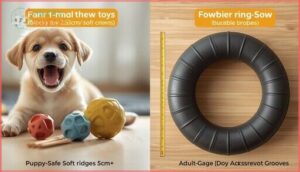
Shape plays a big role, too! Centralized designs—like bones or blocks—prevent rolling into spots where your pup could panic, while round toys need flat surfaces for control. Toy shape safety guidelines suggest anything below 2.5 cm in diameter risks choking in small breeds. As your puppy grows, upgrade toy dimensions to match jaw strength factors and maintain proper bite force analysis throughout each stage.
| Feature | Puppies | Adults |
|---|---|---|
| Diameter minimum | 2.5+ cm to prevent choking | 5+ cm for secure grip |
| Best shapes | Blocky, centralized bones | Durable rings, sturdy bones |
| Width to jaw ratio | Current gape + 20–30% growth room | Matches full adult jaw strength |
| Surface texture | Soft ridges for teething gums | Deeper grooves for tartar control |
| Length guidelines | Short enough to hold comfortably | Proportional to mouth and bite force |
Durability and Lifespan

Once you’ve nailed the right size and shape, you’ll quickly realize that puppy toys won’t survive the relentless chomping power of an adult dog—and that’s exactly why durability becomes your next safety checkpoint.
Puppy chew toys prioritize gentleness over chew resistance, using softer materials that wear down faster. Adult dog chew toys demand serious material testing to withstand aggressive canine chewing behavior and prevent breakage points that create choking hazards.
| Feature | Puppies | Adults |
|---|---|---|
| Material hardness | Soft rubber, plush fabrics | Heavy-duty rubber, nylon |
| Expected toy longevity | 2–4 weeks with supervision | 3–6 months with proper use |
| Wear patterns | Gradual softening, surface scratches | Deep gouges, chunk removal |
| Replacement frequency | Every growth stage (6–8 weeks) | When damage appears or quarterly |
| Chew toy safety focus | Preventing gum injury during teething | Avoiding splintering and ingestion |
Why Age Matters in Chew Toy Selection

Your puppy’s soft, developing teeth and gums can’t handle the same toys your adult dog chomps through without a second thought. As dogs grow, their jaw strength, chewing style, and dental needs shift dramatically—what’s perfectly safe for a six-month-old can become dangerously inadequate for a two-year-old.
As dogs grow, their jaw strength and dental needs shift dramatically—what’s safe for a puppy becomes dangerously inadequate for an adult
Here’s what you need to know about age-specific chewing needs and why matching toys to your dog’s life stage isn’t just smart, it’s essential for their safety.
Puppy Teething and Gum Sensitivity
Between 3 and 6 months, your puppy’s erupting teeth turn their mouth into a sore, itchy landscape—and suddenly everything becomes fair game for chewing. You’ll notice drooling, decreased appetite, and tender gums around those canine and incisor regions.
That’s why chew options designed for puppy comfort matter so much: softer, pliable materials provide gum relief and support oral health without damaging developing teeth during this vital puppy stage.
Adult Dog Jaw Strength and Chewing Habits
By adulthood, your dog’s jaw strength has reached its peak—some breeds exert bite forces exceeding 700 pounds per square inch. That power reshapes their chewing habits and demands tougher toys.
Adult dogs left unsupervised need durable, veterinarian-approved chew toys that can withstand their powerful jaws without splintering or causing injury.
Here’s what changes in adult dogs:
- Chew patterns shift from random exploration to focused, sustained sessions that can last several minutes
- Bite force increases dramatically, requiring high-tolerance rubber or polymer materials rated for heavy chewers
- Tooth wear accelerates when textures are too hard, risking enamel damage and fractures
Risks of Inappropriate Toy Choices
Mismatched toys create dangers you can’t afford to ignore. Puppies face choking risks from small parts and dental damage from overly hard materials, while adults can crack teeth on inappropriate textures or ingest toxic materials from non-food-grade plastics.
Always choose chew toys for teething that match your puppy’s size and developmental stage to keep them safe while satisfying their natural urge to gnaw.
Supervision tips and injury prevention start with choosing safe dog chews designed for your dog’s life stage—proper puppy teething relief toys protect developing mouths, and dog chew toy safety means matching durability to jaw strength.
Material and Construction: What to Look For
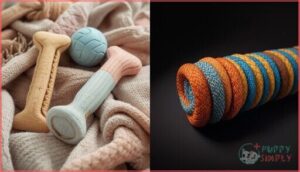
Not all chew toys are created equal, and what works for a puppy won’t necessarily hold up for an adult dog. The materials and construction matter just as much as size when you’re picking something safe and appropriate.
Here’s what you should look for at each life stage to keep your dog happy and protected.
Safe Materials for Puppies
Your puppy’s developing teeth and gums need gentle, nontoxic materials—think of them like a baby’s teething toys. Here’s what to look for in safe toys that provide puppy teething relief:
- Natural rubber or TPE surfaces free of PVC, phthalates, and latex allergens
- Food-grade silicone that’s dishwasher-safe and saliva-resistant
- BPA free materials meeting veterinary safety standards
- Non toxic coatings using water-based or mineral oil formulas
- Puppy friendly textures avoiding hard nylon that can fracture teeth
Always check for toxic free toys labeled specifically for teething stages!
Durable Materials for Adults
Your adult dog needs toys that can take serious punishment—and that’s where high-performance materials really shine! Look for rubber toys made from reinforced natural rubber or commercial-grade composites, which resist surface tearing and last 2–3 times longer than standard plastics. Nylon toys offer outstanding durability, holding up under powerful canine chewing behavior without creating sharp edges or digestible fragments.
| Material Type | Key Benefit | Typical Lifespan |
|---|---|---|
| Natural rubber composites | Safe for digestion, resists heavy chewing | 3–6 months |
| Hardened nylon | Outlasts soft plastics, maintains shape | 6–12 months |
| Vulcanized rubber | No sharp edges, withstands repeated load | 4–8 months |
Always choose durable chew toys with food-grade coatings for material safety and longevity testing!
Avoiding Harmful Chemicals and Components
You wouldn’t feed your dog mystery meat from an unmarked can, so why risk toys packed with hidden toxins and sketchy additives? Check every chew toy for non-toxic certifications and chemical-free labels—your dog’s health depends on it.
- Avoid phthalates, BPA, and lead: These toxic materials harm organs and disrupt hormones, especially in puppies.
- Choose eco-friendly, nontoxic brands: Safe ingredients mean better dog health and wellness overall.
- Verify third-party testing: Real pet safety standards require independent verification, not just marketing claims.
Safety Risks: Choking, Wear, and Supervision

Even the safest toy can become dangerous if it’s the wrong size, worn down, or used without proper oversight. Puppies and adult dogs face different risks regarding choking hazards and how quickly they can destroy their toys.
Let’s break down what you need to watch for at each life stage, how to spot when a toy’s past its prime, and when your dog needs you nearby during playtime.
Choking Hazards in Puppies Vs Adults
Think of your puppy’s trachea as a narrow straw—small toys can lodge there easily, creating serious airway obstruction risks. Puppies lack controlled swallowing reflexes and often chew frantically during teething, making toy safety critical.
Adults have stronger jaws and better chewing behavior, but they’re not immune to choking hazards. Size-appropriate toys and constant puppy monitoring are your best tools for hazard prevention.
Inspecting Toys for Damage
Preventing choking starts with spotting toy damage signs early. Before and after each play session, check for splitting, cracks, or bite marks that go deep. Look for exposed stuffing, sharp edges, frayed fibers, or soft spots—all red flags!
- Discard toys with exposed internal material or loose pieces that could break off
- Check for deformation or softened areas showing material breakdown
- Look for frayed fibers or peeling coatings your dog might swallow
- Replace toys showing accelerated wear relative to how often they’re used
- Follow manufacturer age recommendations and don’t push toy lifespan too far
Supervision Guidelines for Different Ages
Age supervision changes dramatically as your pup grows. During the puppy stage, stay right there for every chew session—little ones can gnaw off chunks or try swallowing pieces whole. Adult stage dogs can handle more independence, though periodic pet observation keeps playtime safety on track. Strong chewers? Check in more often.
Dog toy safety isn’t one-size-fits-all, and pet owner responsibilities shift with your dog’s history and temperament.
Supporting Dental Health With Chew Toys

Chew toys do more than keep your dog busy—they’re working behind the scenes to support healthy teeth and gums. Puppies need soft relief during that painful teething phase, while adult dogs benefit from toys that scrub away plaque and tartar buildup.
Here’s how to choose chew toys that support dental health at every life stage.
Puppy Toys for Teething Relief
Between 3 and 6 months, teething symptoms hit hard—your puppy’s gums ache, and everything becomes a chew target.
Gum soothers with gentle resistance work best during this puppy stage:
- Soft, pliable materials protect developing teeth while easing discomfort
- Textured surfaces massage irritated gums and prep for brushing habits
- Size-appropriate options fit small mouths safely
- Edible chews (in moderation) satisfy puppy preferences without digestive upset
Choose dog chew toys designed specifically for puppy development—toy textures and chew durability matter immensely.
Adult Toys for Tartar Control
Once your dog’s adult teeth settle in, tartar reduction becomes your new focus. Dental chews designed for adult oral health use enzymatic or abrasive textures to scrub away plaque—studies show measurable tartar reduction within weeks.
Look for veterinary-endorsed options sized for your dog’s jaw strength, and prioritize chew durability that won’t splinter. Regular use maintains canine dental health and pet hygiene between vet cleanings.
When to Upgrade Chew Toys
Your dog’s teeth tell the story—watch for visible wear, cracking, or flattening that signals it’s time for chew toy replacement. Puppies need upgrades every 2–4 weeks during rapid puppy development to match changing bite force and puppy growth stages.
Adults require toy safety checks when thinning or sharp edges appear. Shift dog chew toy options at key canine life stages, choosing safe dog toys that align with evolving jaw strength and dog dental care needs throughout dog toy selection.
Sizing Guide: Matching Toy Size to Life Stage

Getting the size right isn’t just about fit—it’s about keeping your dog safe from choking hazards and making sure the toy actually works for their jaw strength and play style. A toy that’s perfect for a 10-pound puppy can become dangerous once that same pup hits 50 pounds.
Here’s how to match toy size to your dog’s current life stage, and when it’s time to size up.
Choosing The Right Size for Puppies
Your puppy’s mouth size changes fast, so getting the toy diameter right matters more than you think. For small breeds, aim for 1.5 to 2.5 inches; medium to large puppies need 2.5 to 3.5 inches.
The toy should fill at least three-quarters of their mouth—if it fits entirely inside, it’s too small and poses a choking risk.
Reassess every few weeks as jaw development accelerates during teething relief phases.
Selecting Proper Size for Adult Dogs
Once your dog hits adulthood, jaw strength factors and canine chewing behavior demand bigger dog toys. Adult dog measurements require at least two inches of toy clearance beyond the closed mouth—that’s roughly 2.5 to 3.5 inches for most dog breed sizes.
Chew toy durability improves when the toy’s girth matches 80% of your dog’s muzzle width, giving you better size recommendations and dog chew toy options that actually last.
Adjusting Toy Size as Your Dog Grows
Growth monitoring isn’t optional—it’s essential for your pup’s safety. During puppy development, jaw development accelerates fast, and yesterday’s perfect toy becomes today’s choking risk.
- Check toy size every 3–6 months during rapid growth spurts to match jaw development and canine chewing behavior
- Watch for size change signs: difficulty grasping, excessive drooling, or avoidance of once-favorite dog toys
- Toy replacement timing depends on your dog breed’s growth rate and shifting chewing habits
- Document toy dimensions alongside weight checks—you’ll spot patterns that keep playtime safe
Top Chew Toys for Puppies and Adults
Now that you know how to size toys correctly, let’s look at some standout options that work well across different life stages.
The toys below have earned their reputation through durability, safety features, and real-world testing with dogs of all ages. Each one brings something unique to the table, whether your pup is teething or your adult dog needs a tougher challenge.
1. Kong Classic Dog Toy
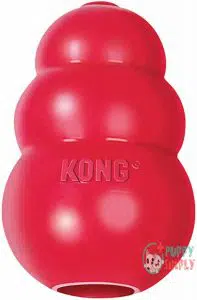
If you’re looking for a chew toy that works across life stages, the Kong Classic is a reliable choice. Made from natural rubber, it’s firm enough for adult dog chews yet gentle on teething puppies when sized correctly.
You can stuff the hollow center with kibble or peanut butter, turning it into an interactive puzzle that satisfies your dog’s instinctual needs.
Veterinarians recommend it for good reason—it aids pet dental care, reduces anxiety, and comes in multiple sizes to match your pup’s weight.
Just remember: no chew toy is indestructible, so supervision matters for pet safety.
| Best For | Dog owners seeking a versatile, vet-recommended chew toy that works for teething puppies through adult dogs and doubles as a treat-dispensing puzzle. |
|---|---|
| Material | Natural rubber |
| Price | $13.96 |
| Dishwasher Safe | Yes |
| Chewer Type | All types |
| Non-Toxic | Yes |
| Durability Concern | Aggressive chewers |
| Additional Features |
|
- Natural rubber construction stands up to months of vigorous chewing while staying gentle on puppy teeth
- Hollow center stuffs with kibble or peanut butter for extended mental stimulation and anxiety relief
- Dishwasher safe and available in multiple sizes to match your dog’s weight and chewing style
- Not indestructible—aggressive chewers can damage it over time
- Requires regular deep cleaning to remove stuck treats from the hollow interior
- Wrong sizing can create choking hazards, so matching to your dog’s weight is crucial
2. Yomp Funny Bone Dog Chew Toy

For puppies with sensitive gums, the Yomp Funny Bone offers paw-friendly silicone that’s gentle yet engaging. Its signature ridges and wishbone shape encourage canine chewing behavior without overwhelming developing teeth—perfect for soft to medium chewers going through the teething stage.
Made from BPA-free, hypoallergenic materials, it prioritizes pet safety and aids pet oral health through textured surfaces. You’ll appreciate the dishwasher-safe design for easy cleaning.
However, dog toy materials matter: this silicone durability won’t withstand aggressive chewers, and small pieces can break off. Always supervise during chew toy safety checks.
| Best For | Puppies and soft to medium chewers who need gentle teething relief and a safe chewing option that’s easy to clean. |
|---|---|
| Material | Silicone |
| Price | $24.99 |
| Dishwasher Safe | Yes |
| Chewer Type | Soft and medium |
| Non-Toxic | Yes (BPA-free) |
| Durability Concern | Hard chewers |
| Additional Features |
|
- Hypoallergenic, BPA-free silicone that’s gentle on sensitive gums and safe for teething puppies
- Dishwasher-safe design makes cleanup quick and hassle-free
- Textured ridges and wishbone shape encourage natural chewing behavior while supporting oral health
- Not durable enough for aggressive or heavy chewers—can break apart under intense chewing
- Small pieces may pose a choking hazard if bitten off, requiring close supervision
- Some dogs might lose interest quickly since it may not be engaging enough for independent play
3. Yomp Interactive Dog Toy

If your dog needs more than just a chew—something that bounces, wobbles, and rewards problem-solving—the Yomp Interactive Dog Toy brings treat-dispensing fun to the table. You can stuff it with peanut butter or kibble, turning snack time into brain-stimulating interactive play that aids puppy development and keeps adult dogs engaged.
The hypoallergenic silicone construction ensures dog toy safety for soft to medium chewers, though aggressive biters might crack the edges. Regular pet dental care gets a boost from the textured surface, and cleanup’s a breeze—just toss it in the dishwasher.
| Best For | Dogs who love treat puzzles and need mental stimulation during playtime, especially soft to medium chewers. |
|---|---|
| Material | Silicone |
| Price | $24.99 |
| Dishwasher Safe | Yes |
| Chewer Type | Soft and medium |
| Non-Toxic | Yes (BPA-free) |
| Durability Concern | Hard chewers |
| Additional Features |
|
- Stuffable design turns treats into an engaging challenge that keeps dogs entertained longer
- Made from dishwasher-safe, BPA-free silicone that’s easy to clean and safe for your pet
- Textured surface helps clean teeth and massage gums while your dog plays
- Not durable enough for aggressive or hard chewers who might crack the edges
- Heavier weight makes it less ideal for traditional fetch games
- May wear down with frequent intense play sessions
4. Yomp Interactive Dog Tug Toy

Tug-of-war sessions become safer with the Yomp Interactive Dog Tug Toy, designed with rings on both ends for controlled pulling games. The non-toxic silicone suits soft and medium chewers, making it suitable for supervised puppy development and adult play sessions alike.
Since different dog play styles demand specific tug toy safety features, you’ll want to watch for edge wear during interactive toy use—aggressive pullers might crack the material over time.
Pet owner guidance emphasizes supervision during training, preventing mouth injuries while building healthy bonding through dog toys that encourage appropriate chewing habits.
| Best For | Dog owners looking for a safe, interactive tug toy for puppies, soft chewers, or dogs with sensitive gums who enjoy supervised play sessions. |
|---|---|
| Material | Silicone |
| Price | $10.99 |
| Dishwasher Safe | Yes |
| Chewer Type | Soft and medium |
| Non-Toxic | Yes |
| Durability Concern | Hard chewers |
| Additional Features |
|
- Non-toxic, hypoallergenic silicone is gentle on sensitive mouths and safe for teething puppies
- Dishwasher-safe design makes cleanup simple after messy play sessions
- Dual tug rings on both ends allow for controlled, interactive play that strengthens the bond between you and your dog
- Not durable enough for hard or aggressive chewers who can crack the edges over time
- Heavier weight makes it less ideal for throwing during fetch games
- Some users report a shorter lifespan compared to other interactive dog toys
Tips for Safe and Lasting Chew Toy Use

Buying the right chew toy is only half the battle—keeping it safe and effective takes a little ongoing attention. You’ll want to rotate, clean, and inspect your dog’s toys regularly to avoid wear-related risks and keep them engaged.
Here’s how to make those chew toys last while protecting your pup’s health and safety.
Rotating Toys to Prevent Overuse
Rotating your dog’s chew toys every week or two keeps things fresh and extends toy longevity. Think of it like a wardrobe refresh—novelty reduces boredom-driven destruction and promotes dental health through varied textures.
Here’s a simple rotation schedule:
| Age Group | Rotation Cycle |
|---|---|
| Puppies | 3-4 toys weekly |
| Adult Dogs | 3-5 toys bi-weekly |
| Senior Dogs | 2-3 toys weekly |
This approach helps you track wear patterns and spot damage before safety risks develop.
Cleaning and Maintenance
Beyond rotation, proper toy sanitizing keeps both puppy and adult chew toys safe from harmful bacteria. Wash each toy with warm, soapy water after use, rinse thoroughly to prevent GI upset, and dry completely before storage. Regular inspection catches damaged squeakers or worn materials early. Store toys in a clean, dry spot away from sunlight to preserve material durability—simple pet care steps that protect your dog’s health.
- Wash with warm, soapy water after each chewing session
- Rinse thoroughly to remove all cleaning products residue
- Dry toys completely to prevent mold growth
- Inspect squeakers and batteries regularly for damage
- Store in clean, dry areas away from direct sunlight
Recognizing When to Replace Chew Toys
Vigilance protects your dog from hidden dangers lurking in worn-out toys. Inspect chew toys weekly for cracks, missing chunks, or sharp edges that threaten dog health. Frayed material, persistent odors, and excessive chew marks signal it’s time to toss and replace. Size matters too—if your pup’s outgrown their toy, upgrade immediately to prevent choking.
Regular Chew Toy Inspection and understanding Toy Wear Patterns keep toy safety front and center. When dog toys show any warning signs, don’t wait—replace them. Your commitment to Dog Toy Hygiene and recognizing Replacement Signs ensures safe, satisfying chewing sessions every time.
| Replacement Signs | What to Look For | Safety Risk |
|---|---|---|
| Structural Damage | Visible cracks, chunks missing, sharp edges after Pet Safety Checks | Cuts, punctures, internal injuries |
| Material Breakdown | Loose threads, frayed sections, soft spots from chewing behavior | Choking, intestinal blockage |
| Excessive Wear | Deep tooth marks, toy worn beyond safe structure | Piece ingestion, digestive issues |
| Size Mismatch | Toy no longer fits dog’s mouth properly | Choking hazard, airway obstruction |
Frequently Asked Questions (FAQs)
Can puppies safely use flavored chew toys?
Flavored fun meets furry friends—but proceed with caution. Puppies can enjoy flavored chew toys if they’re non-toxic, puppy-specific, and free from xylitol.
Always supervise initial use and watch for digestive upset or allergic reactions.
How often should dogs get new chew toys?
Inspect dog chews daily for damage. Puppies need fresh toys every 1–2 weeks during teething, while adults can rotate chew toys every 4–6 weeks. Replace immediately if you spot cracks or sharp edges.
Are natural wood chews safe for all ages?
Unfortunately, wood dog chews aren’t universally safe. Splinter prevention matters for both puppies and adults—wood fragments can cause digestive issues or internal injuries. Veterinarians often recommend natural chew alternatives that better support canine chewing behavior.
Do certain breeds need specialized chew toys?
Yes, certain breeds do need specialized chew toys. Dog breed characteristics like jaw structure, bite force, and oral anatomy shape chew toy variety requirements—brachycephalic breeds need softer options, while power chewers require heavy-duty materials.
Can chew toys help with separation anxiety?
Chew toys can provide anxiety relief and stress reduction for some dogs during short separations, but they work best alongside behavioral therapy.
Combine calming aids with gradual desensitization—chew toys alone rarely solve separation anxiety completely.
Conclusion
That chewed-up toy sitting in your living room? It might be doing more harm than you think. Recognizing the difference between puppy and adult dog chew toys isn’t just about shopping smarter—it’s about preventing fractured teeth, choking incidents, and expensive vet bills.
Match the toy to your dog’s developmental stage, inspect regularly for damage, and upgrade when strength outpaces durability. Your dog’s safety depends on these small, intentional choices you make today.
- https://happystaffyco.com/blogs/news/why-do-dogs-bring-you-toys
- http://kongcompany.com/kong-puppy/
- https://x.com/godofprompt/status/1990526288063324577
- https://www.sciencedirect.com/science/article/pii/S0749208123000268
- https://github.com/vinhphunguyen/how-to-write-a-paper/blob/master/how-to-write-paper.out