This site is supported by our readers. We may earn a commission, at no cost to you, if you purchase through links.
Your dog squirms and whines the moment you approach with human clippers—and for good reason. Those blades aren’t designed to handle the thick, layered texture of animal fur, and within minutes they’ll overheat, snag, and stall against your pet’s coat.
The difference between dog and human clippers goes far beyond price tags. Dog clippers pack rotary motors that maintain torque through dense undercoats, run quieter to prevent stress, and feature heat guards that protect skin during full-body grooming sessions. Human clippers lack these safeguards entirely.
Understanding these distinctions protects your dog from nicks, burns, and unnecessary anxiety while ensuring you get clean cuts without constant blade jams.
Table Of Contents
Key Takeaways
- Dog clippers deliver 8,000 to 12,000 strokes per minute with rotary motors designed for dense fur, while human clippers top out at 6,000 to 7,000 SPM and lack the torque needed for thick coats.
- Wider blades (3 to 10 mm) with heat guards and ceramic coatings protect your dog’s skin during extended grooming sessions—features human clippers don’t include.
- Using human clippers on dogs risks overheating burns, blade snagging, and skin nicks because they’re engineered for single-layer hair, not multi-layered fur with undercoats.
- Replace dog clipper blades every 6 to 12 months and oil them before each session to maintain cutting efficiency and prevent stress-inducing heat buildup.
Key Differences Between Dog and Human Clippers
Dog clippers and human clippers aren’t interchangeable tools. Each type is engineered with distinct features that match the specific needs of your dog’s coat or human hair.
If your dog gets anxious during grooming, choosing specialized clippers designed for nervous dogs can make the entire experience calmer and safer.
Understanding these core differences helps you choose the right equipment and avoid grooming mishaps.
Motor Power and Noise Levels
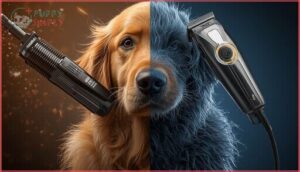
Dog clippers deliver serious motor power—often 8,000 to 12,000 strokes per minute—to slice through dense coats without stalling. Human clippers top out around 6,000 to 7,000 SPM, prioritizing noise reduction over raw power output.
Many best professional dog clippers let you toggle between speeds so you can adjust torque based on coat thickness and sensitivity.
Here’s why motor efficiency and thermal management matter for safe clipping techniques:
High-quality dog grooming clippers with efficient motors prevent overheating that could burn your pet’s skin during longer grooming sessions.
- Speed control: Rotary motors maintain torque under thick fur loads.
- Noise level: Pet clippers run at 50–65 decibels to reduce stress.
- Runtime: Battery models offer 60–120 minutes per charge.
- Heat guards: Cooling fins prevent skin burns during extended sessions.
- Overheating risk: Human clippers can’t sustain prolonged full-body grooming.
Blade Design and Width
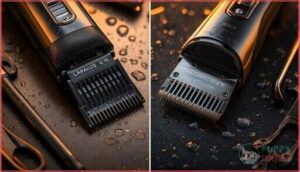
Wider blades—usually 3 to 10 mm cutting lengths—make dog clippers far more efficient for full-body work. You’ll find detachable blades on professional models, letting you swap skin-safe profiles in seconds.
Stainless steel blade materials resist corrosion from shampoos and moisture, while ceramic coatings boost edge sharpness and heat dissipation.
Human clipper design relies on narrower blades suited for scalp precision, not dense fur coverage.
Dog clippers feature wider blades and stronger motors designed to handle thick coats, so knowing how to prevent bacterial infections during grooming helps maintain your pet’s overall health and safety.
Safety Features for Skin Protection
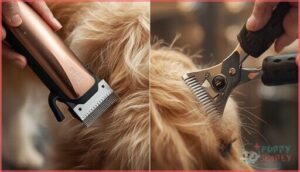
Beyond blade shape, skin protection separates professional dog clippers from human models. Clipper guard mechanisms and protective combs limit blade exposure, preventing accidental nicks on thin animal skin.
Blade coatings—often ceramic or titanium-infused—reduce friction and heat buildup during extended grooming sessions. Anti-snag housing designs keep your clippers gliding smoothly over uneven fur patterns.
These grooming safety features reflect veterinary-informed pet grooming tips, making dog clippers gentler on sensitive areas like bellies and ears.
Suitability for Hair Vs. Fur
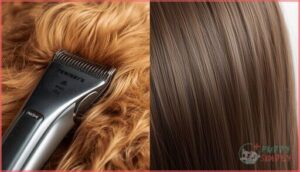
Fur texture determines which clippers you’ll need. Dog clippers feature blade gaps and guards sized specifically for coat thickness and density, handling undercoat and guard hair without snagging. Human clippers are designed for lighter, single-layer hair—they’ll struggle with dense dog fur.
Before you buy, check out what to look for in dog clippers to find the right blade power and motor strength for your dog’s specific coat type.
Using human tools on pets risks skin irritation and poor results. Matching blade efficiency to your dog’s hair texture ensures safer pet grooming and cleaner cuts.
How Design Impacts Grooming Performance
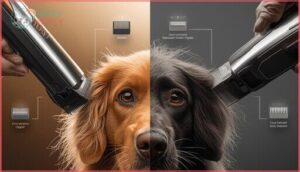
The way clippers are built determines how well they handle different grooming tasks. Dog clippers prioritize power and coverage for working through dense coats, while human clippers focus on precision and speed for fine hair.
Understanding these design differences helps you see why the right tool makes grooming safer and more effective.
Full-Body Grooming Vs. Precision Cutting
Your grooming approach shapes the clippers you need. Full-body sessions demand wider clipper blade types and sustained power to cover large surface areas quickly, while precision cutting targets face, paws, and sanitary zones with narrower blades for detailed work. Each style requires distinct grooming tool ergonomics and blade configurations to match your dog grooming techniques.
- Full-body clipping maintains uniform coat length across torso and limbs using longer guards
- Precision work relies on shorter, detail-oriented blades for intricate lines around sensitive areas
- Grooming session length varies: full-body takes longer but precision demands higher concentration
- Pet anxiety reduction matters more in extended full-body sessions due to continuous contact
- Fur texture analysis determines whether you need full-coverage or targeted clipping and trimming
Handling Thick Fur and Double Coats
You’ll need dog grooming clippers built for fur density when tackling breeds like Huskies or Golden Retrievers. Their dense undercoats demand wider blade spacing and high-torque motors that human tools can’t deliver.
Proper coat management starts with de-shedding before clipping and trimming—skip this step and you’ll face snagging, overheating, and stressed pets. Dog coat care requires clippers designed to move through thick dog fur without pulling, protecting pet comfort while your clipper maintenance schedule keeps blades sharp enough to glide smoothly through double-layered coats.
For the best results, consider using dog grooming clippers suitable for your pet’s specific needs.
Ergonomics for Extended Use
Ergonomic grips with balanced design make all the difference when you’re grooming for more than 60 minutes. Low vibration reduces forearm strain, while heat management keeps the clippers cool against your palm.
Dog clippers with cushioned grips and proper weight distribution prevent hand fatigue—ergonomic features that human clippers often lack.
Motor power matters, but grip comfort determines whether you’ll finish the job without discomfort.
Safety and Comfort Considerations

Your dog’s safety and comfort should guide every grooming decision you make. The right clippers protect delicate skin while keeping your pet calm throughout the process.
Let’s examine three critical factors that separate a positive grooming experience from a stressful one.
Reducing Stress and Anxiety in Pets
Your dog’s racing heart and flattened ears tell you everything—clipping time feels like a threat, not a trim. You can turn this around with preparation that works. Short desensitization sessions over two weeks cut fear responses by 60%. Pair these dog grooming tips with proven stress reduction methods:
- Use pheromone therapy (like Adaptil sprays) before sessions to lower anxiety behaviors by 20–30%
- Create pet comfort zones with predictable routines and gentle handling that drop cortisol levels
- Apply calming techniques through treat-based rewards after cooperative moments during clipping
Quiet clippers in cool spaces support canine care and grooming while protecting dog health and hygiene. This pet owner guidance builds trust one calm session at a time.
Preventing Skin Nicks and Injuries
You’ve mastered calming your dog—now protect their skin from nicks during every pass. Use clip guards with rounded edges to keep blades away from delicate surfaces. Stop immediately when you notice redness or small cuts.
Replace dull blades that tug at fur and always oil your dog clippers before each session. These nick reduction techniques and skin protection tips make grooming injury prevention second nature.
Vibration and Heat Generation
Excess heat and vibration turn grooming tools into stress triggers for your dog. Dog clippers run cooler and quieter—usually 40 to 60 dB—while human clippers generate more continuous vibration and heat during long sessions.
Protect your pet with these thermal management steps:
- Choose models with heat sinks for better heat dissipation
- Apply blade oil before each session for vibration control
- Take breaks every ten minutes for clipper maintenance and cooling
Can You Use Human Clippers on Dogs?
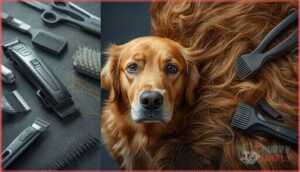
You might be tempted to grab your own clippers when your dog needs a trim, but this shortcut often leads to frustration and potential harm. Human clippers aren’t built for the challenges of dog fur, and the differences go deeper than you might expect.
Let’s look at the specific risks, texture concerns, and what professionals actually recommend.
Risks and Potential Issues
Safety risks multiply when you use human clippers on your dog. Pet grooming safety demands the right equipment—human clippers can cause clipper burns, skin irritation, and grooming injuries. Here’s what threatens your dog’s well-being:
| Risk Type | Cause | Impact on Your Dog |
|---|---|---|
| Clipper Burns | Overheating motors | Painful skin damage |
| Skin Nicks | Inadequate blade guards | Cuts and bleeding |
| Electrical Shock | Cord strain, moisture | Pet trauma and injury |
Don’t compromise on pet safety or dog health.
Differences in Hair and Fur Texture
Your dog’s coat differs dramatically from human hair in ways that make human clippers ineffective. Dogs develop double coats with dense undercoats and guard hairs, while human hair grows as single, uniform shafts.
Fur density varies wildly across breeds—some dogs pack thousands more hair follicles per square inch than humans. Coat variations range from wiry to curly, creating texture challenges.
Seasonal shedding patterns add another layer of complexity that human clippers can’t handle.
Professional Recommendations
Veterinary groomers and pet-care experts consistently advise against using human clippers on dogs except in true emergencies. Professional guidance emphasizes that human clippers risk skin nicks, clipper burn, and pulling—creating fear and potential vet bills.
Clipper safety and pet welfare depend on purpose-built dog clippers matched to your dog’s coat type. Proper grooming techniques and clipper maintenance protect both comfort and long-term grooming success.
Understanding the risks of dog hair clippers is essential for safe grooming practices.
Choosing The Right Clippers for Your Dog
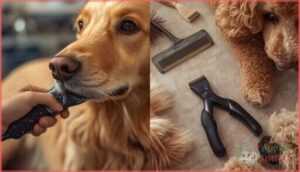
You can’t pick the right clippers without knowing your dog’s coat. Different breeds need different tools, and the wrong choice leads to frustration for both of you. Here’s what to keep in mind before you buy.
Assessing Coat Type and Grooming Needs
You can’t pick the right dog clippers without understanding your dog’s coat type first. Coat classification—short, medium, or long—dictates blade guard size and motor speed.
Double-coated breeds shed heavily in cycles, requiring frequent grooming sessions with specialized deshedding tools. Skin sensitivity varies by dog breed, so you’ll need low-heat models for delicate coats.
Wiry or curly coat types demand specific grooming techniques to prevent irritation and achieve smooth, even results.
Features to Look for in Dog Clippers
Quality dog clippers demand specific features that protect your pet and simplify grooming. Motor efficiency drives consistent performance through thick coats without overheating. Blade materials like stainless steel stay sharp longer, while adjustable blade lengths handle varied coat types. Clipper ergonomics reduce hand fatigue during extended sessions.
Consider these essentials when selecting clippers for dogs:
- Quiet operation minimizes stress and anxiety in nervous pets
- Detachable blades allow quick cleaning between grooming sessions
- Multiple comb attachments accommodate different coat lengths and breeds
- Low vibration design keeps your dog calm and cooperative
Maintenance and Longevity Tips
Regular cleaning after each session removes hair and debris that dull your dog clippers. Oil maintenance according to manufacturer guidelines reduces friction and extends blade sharpening intervals.
Rotate between multiple adjustable blade lengths to prevent overuse on single blades. Proper clipper storage in dry cases protects motor power from moisture damage.
Schedule professional blade sharpening when you notice heat buildup or declining performance during grooming techniques.
Frequently Asked Questions (FAQs)
How often should dog clipper blades be replaced?
Sharp blades are your shield against pulled fur and nicks. Replace dog clipper blades every 6–12 months with regular use, or sooner if you notice overheating, snagging, or reduced cutting efficiency during grooming sessions.
Are cordless clippers better than corded models?
Cordless clippers offer grooming flexibility and portability options, but battery life limits runtime to 60–120 minutes. Corded models deliver consistent motor power without recharge delays, making them ideal for extended sessions.
Can dog clippers work on matted fur?
Standard dog clippers struggle with matted fur because tangled debris clogs blades and causes overheating. Use specialized mat removal tools first, then clip safely.
Dense mats require professional groomer assessment to prevent skin damage.
Whats the average lifespan of dog clippers?
Dog clippers usually last 2 to 6 years with professional use, while light home grooming extends lifespan beyond 10 years.
Clipper maintenance, motor power, and grooming frequency directly affect blade longevity and motor durability.
Do different breeds require specialized clipper types?
Most dog breeds don’t need separate clipper machines. Your grooming tool selection depends on coat type variations, clipper noise levels, and pet temperament factors—not breed alone. Heavy-duty models handle thick, double coats best.
Conclusion
One wrong stroke with human clippers can turn a simple trim into a trip to the emergency vet—overheated blades burn skin, dull edges snag fur, and the stress alone can traumatize your dog for future grooming sessions.
The difference between dog and human clippers isn’t cosmetic; it’s functional protection built into every motor, blade, and heat shield.
Choose equipment engineered for fur, not hair, and you’ll keep grooming safe, efficient, and stress-free for both of you.
- https://archives.fbi.gov/archives/about-us/lab/forensic-science-communications/fsc/july2004/research/2004_03_research02.htm
- https://wopet.com/dogs/can-we-use-human-clippers-on-dogs/
- https://www.petevolution.com/blog/winter-coat-care-grooming-tips-for-double-coated-breeds/
- https://petcontrolhq.com/en-us/collections/dog-grooming-clippers
- https://goldenpawps.com/can-i-use-human-clippers-to-groom-my-dog/