
This site is supported by our readers. We may earn a commission, at no cost to you, if you purchase through links.
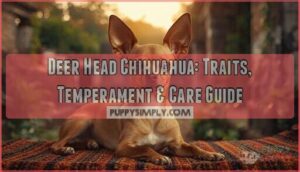
Somewhere around 900 CE, the Toltec civilization kept small, deer-faced dogs as sacred companions—long before anyone coined the term "lap dog." That lineage didn’t disappear.
It survived conquest, centuries of crossbreeding, and modern kennel club politics to become what we now call the deer head chihuahua. Genetic studies confirm these dogs still carry ancient Mexican DNA, which makes them feel less like a pet trend and more like a living artifact.
They’re spirited, surprisingly sturdy, and deeply devoted—equal parts tiny guardian and shadow. Everything you need to know about owning one starts here.
Table Of Contents
- Key Takeaways
- Deer Head Chihuahua Origins
- Physical Traits
- Temperament and Personality
- Vocal Tendencies
- Intelligence and Training
- Activity and Energy
- Suitability for Apartment Living
- Watchdog Capabilities
- Health and Longevity
- Ownership Costs
- Frequently Asked Questions (FAQs)
- Where should a Chihuahua sleep at night?
- Are deer head Chihuahuas less aggressive?
- Is my Chihuahua an apple head or deer head?
- How much does a deer head Chihuahua puppy cost?
- How much should a deer head Chihuahua weight?
- What is a deer head Chihuahua?
- What are the personality issues with deer head Chihuahuas?
- What is the difference between a deerhead and apple head Chihuahua?
- Why are deer head Chihuahuas not recognized by AKC?
- How much do deer head chihuahuas cost to feed?
- Conclusion
Key Takeaways
- Deer Head Chihuahuas carry genuine ancient Mexican DNA tracing back to Toltec-era dogs around 900 CE, making them one of the most historically rooted breeds you can own today.
- They’re registered purebreds with the AKC but can’t compete in conformation shows because their sloped forehead and longer muzzle don’t match the apple-head standard the club requires.
- Their longer limbs and less compressed anatomy actually work in their favor health-wise, and with the right care they routinely live 14 to 20 years — outlasting most dogs their size.
- Early socialization between weeks 3 and 14 is non-negotiable: skip it, and you’re likely trading a confident, easygoing companion for a stubborn, anxious one who treats every stranger like a personal threat.
Deer Head Chihuahua Origins
The Deer Head Chihuahua has a history that’s surprisingly deep for such a tiny dog.
Their lineage traces back to ancient Mexico, much like the equally captivating long-haired Chihuahua breed history that shares those same proud roots.
Understanding where they came from helps explain a lot about their personality and their quirks.
Here’s a look at two key pieces of that story.
Ancient Ancestry
If you’ve ever locked eyes with a Deer Head Chihuahua and felt like you were staring into something ancient — you’re not wrong. These little dogs trace their roots to Techichi Origins deep in Mesoamerican history, kept by the Toltec civilization around 900 CE. Genetic Continuity studies confirm ancient Mexican lineage still lives in modern Chihuahua DNA. Here’s what made their ancestors notable:
- Techichi dogs carried genuine Pre‑Colonial Traits — longer snouts, taller builds
- Mesoamerican Rituals used them as spiritual guides for the dead
- Aztec nobility bred them carefully as sacred companions
- Deer Head Chihuahuas preserve these ancient breed characteristics and traits more closely than Apple Head Chihuahua types
Their ancient ancestors even served a sacrificial animal role in Aztec ceremonies.
Breed Recognition
So, here’s the twist: Deer Head Chihuahuas are pure Chihuahuas by registry policies, but their longer muzzle and sloped forehead keep them off the American Kennel Club’s show floors. AKC recognition focuses on apple-shaped heads for breed classification. Still, your deer head can get official AKC papers—just don’t expect a blue ribbon in the conformation ring.
| AKC Eligibility | Show Standards | Registry Policies |
|---|---|---|
| Purebred, not showable | Apple head required | Pedigree-based, not head |
| No conformation points | Deer heads excluded | Both types registerable |
| Legal status: purebred | “Incorrect type” label | Same Chihuahua designation |
Apple head Chihuahuas often face respiratory issues common in the breed.
Physical Traits
Don’t let the small size fool you — deer head Chihuahuas have a surprisingly distinctive look that sets them apart from their apple-headed cousins. From how tall they stand to what’s happening with their coat, there’s more variety here than most people expect.
Here’s what you should know about their physical traits.
Size and Proportions

deer head Chihuahua as the greyhound of the toy breed world — long‑legged, lean, and built with a certain quiet elegance.
Like Greyhounds, deer head Chihuahuas pair surprising athleticism with a calm, devoted temperament — traits that make them standout picks among best lap dogs for small-space living.
Shoulder height usually runs 8 to 12 inches, which is noticeably taller than most small dog breeds in the same weight class. Weight range lies between 7 and 10 pounds for most adults, though some reach up to 12 pounds.
leg length and slender neck create a body ratio that leans rectangular rather than square. That build proportion actually works in their favor — longer‑limbed Chihuahua characteristics tend to mean fewer small dog health issues tied to compressed joints and crowded anatomy.
Coat Varieties

Beyond size, coat variety is where things get fun.
Smooth coat deer head Chihuahuas need only a quick weekly brush — honestly low‑effort even by small dog breed standards.
Long coat versions show beautiful feathering on ears and legs, but feathering maintenance means brushing three to five times weekly to avoid tangles.
Seasonal shedding patterns pick up during temperature shifts for both types.
Color genetics deliver everything from fawn to chocolate to tricolor — plenty of personality before they’ve even barked.
Temperament and Personality

Deer Head Chihuahuas pack a surprisingly big personality into that small, elegant frame.
They’re fiercely loyal, deeply affectionate, and — let’s be honest — a little opinionated.
Here’s what you can expect regarding how they connect with the people and animals around them.
Affection Levels
Deer Head Chihuahuas don’t just offer dog companionship — they go all in. Owner bonding runs deep with this breed; they’ll usually pick one favorite person and follow them everywhere, which is equal parts adorable and slightly dramatic. Their affection displays and cuddle habits are hard to miss:
- snuggle close and stay there, adjusting like tiny acrobats when you move
- Family interaction is warm and playful once they’re comfortable
- Stranger warmth takes time, but positive exposure speeds things up
Canine companionship this intense is a real commitment — wonderful, but worth knowing upfront.
Interaction With Children and Animals
These little dogs have big feelings — and they’re not shy about them.
Supervision Guidelines matter a lot here: children under 6 and fragile 4‑pound frames are a risky combo. Older kids aged 8‑plus tend to be a much better match.
The Socialization Window between 3‑14 weeks is genuinely critical — dogs introduced to other animals early show far less aggression later.
Watch for Stress Signals like lip licking or freezing, and always follow smart Play Size Matching and Multi‑Pet Training routines:
- calm introductions with size-appropriate animals build lasting trust
- consistent training sessions keep resource guarding in check
- early socialization shapes lifelong, easygoing canine companionship
Vocal Tendencies

Honestly, a Deer Head Chihuahua could give any smoke alarm a run for its money.
These small dog breeds are famously vocal, and their pitch range runs the full spectrum — from soft whining patterns when they want your attention to sharp, piercing alarm barking that carries through walls. Barking triggers are everywhere: a doorbell, a passing car, a curtain moving in the breeze. During busy parts of the day, some dogs bark several times per hour if no calming routine is in place.
Whining patterns show up differently — think quiet whimpers when they’re cold or anxious, escalating to something resembling a dramatic opera performance during thunderstorms.
The good news? Dog behavior this consistent is actually manageable. Vocal training using positive reinforcement works well with this breed. Dog care tips worth knowing: identify the trigger first, then redirect. Understanding the why makes the whole process click.
Intelligence and Training
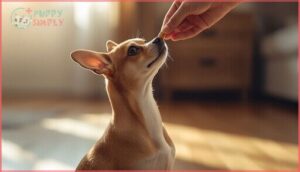
Don’t let the size fool you — your Deer Head Chihuahua has serious learning capacity packed into that tiny frame. They pick up basic commands like sit and stay within the first week, but they need you to keep training sessions short, around 5 to 10 minutes. Any longer, and you’ve lost them.
Positive reinforcement with treats works remarkably well for command mastery.
Start socialization strategies early, around 12 weeks, so your canine companion grows into a confident, well-rounded dog.
Activity and Energy

Your Deer Head Chihuahua runs on Energy Bursts, not marathons. A solid Daily Exercise Routine — just 20 to 30 minutes — keeps this Toy Dog healthy without overdoing it.
Two short walks plus some indoor play cover their Dog Exercise and Activity needs perfectly. Small Dog Ownership means knowing Exercise Limits, too; skip the jog on hot or freezing days and swap for Weather Safe Activity indoors instead.
Here are five great Playtime Toys and activities:
- Indoor fetch with soft balls
- Puzzle feeders for mental Dog Training
- Treat hide-and-seek games
- Tug toys for short bursts
- Mini sniff-and-search challenges
A well-exercised Chihuahua means better Dog Health — and a calmer couch companion for you.
Suitability for Apartment Living
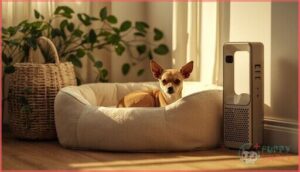
Compact living and small dogs go together like coffee and Saturday mornings. Deer Head Chihuahuas — usually under 10 pounds — fit apartment life surprisingly well.
Space Optimization is easy: all they need is a cozy corner, a soft bed, and a toy basket.
A few Indoor Exercise sessions daily keep them happy without a yard.
That said, Noise Management matters in thin-walled buildings — these alert little dogs bark at hallway sounds, so early dog training and behavior work is essential.
Separation Anxiety can also be an issue, so gradual alone-time training helps.
Regular dog grooming and hygiene, plus an Air Quality boost from a HEPA purifier, round out smart pet ownership and responsibility.
Watchdog Capabilities
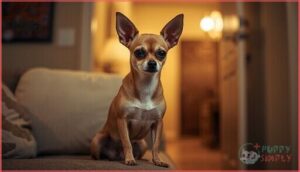
Don’t let the size fool you. Deer Head Chihuahuas punch well above their weight regarding alertness and vigilance around the home. Their sharp hearing picks up footsteps, keys in locks, and unfamiliar voices before you’ve even looked up from your phone.
Alarm barking kicks in fast — that high-pitched bark carries surprisingly far for such a small dog. Their protective instinct and territorial behavior run deep, especially near doorways, sofas, or your lap. Strangers get the full treatment: stiff posture, direct eye contact, and a bark that means business.
That said, guard limitations are real. Their role is early warning, not physical defense. With consistent dog training and behavior work, canine companionship and socialization shape that bold streak into a focused, reliable alert — not just noise for noise’s sake.
Health and Longevity

Deer Head Chihuahuas are generally hardy little dogs, but like any breed, they come with their own set of health quirks worth knowing about. Their size actually works in their favor here — they tend to have fewer issues than their Apple Head cousins.
Here’s what to watch for regarding their health, and how long they’ll be by your side.
Common Health Issues
Despite their tiny frames, deer head Chihuahuas pack some real canine health challenges worth knowing about. These breed characteristics mean staying on top of dog care isn’t optional — it’s essential.
Watch for these common dog health issues:
- Dental disease — crowded teeth trap plaque fast; daily brushing helps prevent painful infections
- Patellar luxation — that sudden hop‑skip on a hind leg means the kneecap slipped
- Tracheal collapse — a honking cough signals airway trouble; switch to a leash immediately
- Heart valve disease and hypoglycemia risk — small meals and regular cardiac checks support long‑term animal health and wellness
Lifespan Expectancy
Good news after all those health concerns — deer‑head Chihuahuas are genuinely long‑lived dogs. Most reach 14 to 16 years, and with solid dog care, some push past 18 or even 20. Genetic factors give them a small edge over apple‑heads too.
Deer Head Chihuahuas regularly outlive expectations, thriving 14 to 20 years with proper care
- Diet Influence — quality kibble with omega fats keeps energy steady and weight in check
- Exercise Impact — two short daily walks prevent obesity without overtaxing small joints
- Veterinary Care — annual checkups catch breed‑specific issues before they snowball
- Environmental Stressors — low‑stress home life genuinely extends dog health outcomes
Your everyday choices matter more than you’d think.
Ownership Costs

Owning a Deer Head Chihuahua comes with real costs — both upfront and over time.
Before you bring one home, it helps to know what you’re actually signing up for financially.
Here’s a breakdown of the key expenses to keep in mind.
Initial and Ongoing Expenses
Owning a Deer Head Chihuahua is a long-term investment in a very small package. Here’s what to budget for:
- Puppy Purchase: Expect $400–$1,200 from reputable breeders, depending on lineage and coat type.
- Veterinary Care and Pet Insurance: First-year vet costs run $300–$800, covering vaccines and spay/neuter. Monthly pet insurance helps soften surprise bills.
- Food Budget and Grooming Supplies: Quality dog nutrition costs $240–$360 annually. Add grooming supplies and training costs, and you’re looking at roughly $500 in dog care essentials.
Plan ahead, and pet ownership stays manageable — not scary.
Purebred Verification
Verifying your Deer Head Chihuahua‘s purebred status takes a little detective work — but it’s worth it. Since AKC recognition doesn’t extend to this head type under official Breed Standards and Classification, Pedigree Papers tracing four generations become your best friend.
Ask for Registry Numbers upfront and check Breeder Credentials carefully. DNA Testing through kits like Wisdom Panel confirms 100% Chihuahua lineage within days.
Genetic Health Screening also flags breed-specific conditions early. A trustworthy breeder won’t flinch at these requests — that alone tells you plenty.
Frequently Asked Questions (FAQs)
Where should a Chihuahua sleep at night?
Think of their bed as a tiny fortress. A donut bed or orthopedic mattress works best.
Crate placement near yours, maintain nighttime temperature around 65–72°F, and always make sure safe bedroom access.
Are deer head Chihuahuas less aggressive?
They can be, yes — but head shape isn’t the real reason. Calmer temperament often comes down to socialization timing and your training style. Good habits early make the biggest difference.
Is my Chihuahua an apple head or deer head?
Look at the skull shape first.
Apple Head Chihuahuas have a round, dome-like skull, short muzzle, and a sharp forehead stop. Deer heads show a sloped forehead, longer muzzle, and flatter eye prominence.
How much does a deer head Chihuahua puppy cost?
Prices range from $300 to $1,200, with breeder reputation impact and regional price variance playing big roles. Coat type surcharge, additional fees, and adoption vs purchase options all affect your final cost.
How much should a deer head Chihuahua weight?
Most adults land between 4 and 10 pounds, with healthy ones sitting around 5 to Males run slightly heavier than females — about a 1 to 2 pound difference, which is completely normal.
What is a deer head Chihuahua?
If you ever wished for a dog with the confidence of a lion and the face of a tiny deer, the Deer Head Chihuahua nails it—long muzzle, upright ears, sloped forehead, and wide-set eyes set their Head Shape Distinction apart.
What are the personality issues with deer head Chihuahuas?
They’re loyal to a fault — often bonding hard with one person.
Without early socialization, stubbornness levels spike, aggression tendencies flare toward strangers, and separation distress kicks in fast. Overconfidence risks are real too.
What is the difference between a deerhead and apple head Chihuahua?
Think of two dogs, one breed — but strikingly different silhouettes.
The Apple Head Chihuahua has a round skull, short muzzle, and bulging eye prominence.
The Deer Head has a sloped forehead, longer muzzle, wider ear placement, and a leaner body frame.
Why are deer head Chihuahuas not recognized by AKC?
The AKC’s Skull Shape Standards require a rounded apple-dome head, and Muzzle Length Rules demand a short snout. Deer heads fail both, making Conformation Eligibility impossible despite valid registration.
How much do deer head chihuahuas cost to feed?
Feeding a small dog is surprisingly affordable. Kibble budget stays low — just ¼ to ¾ cup daily, costing $15–$50 monthly depending on whether you choose budget, premium, or raw feeding costs.
Conclusion
dog curled up on your couch tonight shares DNA with animals that once roamed Toltec temples. That’s not marketing—that’s archaeology with a heartbeat.
Your deer head chihuahua isn’t just small, loud, and slightly obsessed with you. It’s a thousand-year thread still running.
Feed it well, train it early, and keep it warm. What you get back is a loyal, ancient soul in a surprisingly small package.