This site is supported by our readers. We may earn a commission, at no cost to you, if you purchase through links.

Your dog survives traffic, table scraps, and the occasional sock theft—then meets his match in a pothos on your bookshelf. It sounds absurd, but the ASPCA fields over 400,000 pet poisoning calls each year, and houseplants rank among the most common culprits.
The danger hides in plain sight: calcium oxalate crystals, cardiac glycosides, and compounds like ricin and cycasin, tucked inside leaves that look completely harmless.
Some reactions stay mild. Others escalate to organ failure within hours.
Knowing which common houseplants are toxic to dogs—and what to do the moment your dog takes a bite—can make all the difference.
Table Of Contents
Key Takeaways
- Many common houseplants can seriously poison dogs, including pothos, philodendron, aloe, oleander, and especially sago palm, where even one seed can be fatal.
- Plant poisoning can start with drooling, mouth pain, vomiting, or trouble swallowing, then quickly progress to tremors, seizures, irregular heartbeat, liver failure, or collapse.
- If your dog eats a toxic plant, rinse the mouth gently, remove any plant material, do not induce vomiting, and call your vet, the ASPCA Animal Poison Control Center, or Pet Poison Helpline right away.
- The safest approach is prevention — remove toxic plants when possible, keep risky plants fully out of reach, train a solid “leave it,” and choose dog-safe plants like spider plant, Boston fern, Haworthia, or wheatgrass instead.
Common Houseplants Toxic to Dogs You Should Know

Some of the most popular houseplants are also some of the most dangerous for dogs — and many owners don’t realize it until it’s too late. Knowing which plants pose a real risk is the first step to keeping your dog safe.
Your backyard adds another layer of risk, so it’s worth checking which common backyard plants are toxic to dogs before assuming your outdoor space is safe.
Here’s what you need to watch out for.
Araceae Family Plants (Pothos, Philodendron, Dieffenbachia, Monstera)
The Araceae family — pothos (Epipremnum aureum), philodendron, dieffenbachia, and monstera — are everywhere in homes, and that’s exactly the problem. Their leaf tissue toxicity comes from calcium oxalate crystals that act like tiny needles the moment your dog chews a stem or leaf.
The pain is caused by calcium oxalate crystals that irritate oral tissues. Some also contain proteolytic enzymes, making irritation worse.
Watch for:
- Excessive drooling or pawing at the mouth
- Swollen lips or tongue
- Vomiting or difficulty swallowing
Succulents and Tropicals (Aloe Vera, Snake Plant, Sago Palm)
Aloe vera, snake plant (*Sansevieria spp.
), and sago palm (Cycas revoluta*) are just as common indoors — and just as dangerous. Aloe’s saponins and anthraquinones disrupt toxin metabolism quickly, causing vomiting, diarrhea, and lethargy. Snake plant triggers similar symptoms.
Sago palm is the worst — cycasin causes liver failure within 72 hours. One seed can kill.
Sago palm’s cycasin can cause fatal liver failure within 72 hours — and a single seed is enough to kill a dog
Flowering and Ornamental Plants (Oleander, Azalea, Daffodil, Amaryllis)
Flowering plants look harmless — but some carry serious risks.
Oleander causes cardiac glycoside toxicity; every part of the plant can trigger irregular heart rhythms. Azalea’s grayanotoxin cardiac effects can cause collapse even after small amounts.
Daffodils and amaryllis both cause bulb alkaloid poisoning — the bulbs hit hardest.
These seasonal plant hazards make pet-friendly garden choices more important than most owners realize.
Severely Toxic Plants That Can Be Fatal (Castor Bean, Foxglove, Yew, Autumn Crocus)
Some plants go beyond "dangerous" — they can kill fast.
Castor bean’s ricin mechanism shuts down cells at the protein level; even one chewed seed can be fatal.
Foxglove’s cardiac glycoside toxicity can stop a dog’s heart before other symptoms appear.
Taxine alkaloid effects from yew work just as quickly.
Colchicine poisoning from autumn crocus may seem delayed — then hit hard.
Symptoms of Plant Poisoning to Watch in Dogs

Knowing which plants are dangerous is only half the battle — recognizing the warning signs early can make all the difference. Dogs can’t tell you when something’s wrong, so you have to know what to look for.
Watch for vomiting, lethargy, or unusual drooling — and if you’re rethinking snack time altogether, there are plenty of safe and satisfying foods dogs can actually enjoy.
Here are the key symptoms to watch if you suspect your dog got into a toxic plant.
Early Warning Signs (Drooling, Pawing at Mouth, Difficulty Swallowing)
Your dog’s first reaction to a toxic plant is often impossible to miss. Heavy drooling starts almost instantly — it’s the body’s attempt to flush out the irritant.
Oral irritation signs like pawing reflex at the mouth, face-rubbing, and whining signal real pain.
Throat swelling and swallowing difficulty can follow quickly.
If you notice vomiting, drooling, swelling, or symptoms of plant poisoning in dogs, act immediately.
Gastrointestinal Symptoms (Vomiting, Diarrhea, Loss of Appetite)
After the drooling stops, the stomach takes over. Vomiting usually hits within 30 minutes to two hours — your dog’s gut is working hard to expel the toxin.
Diarrhea follows, sometimes watery or mucus-streaked depending on what they ate. These gastrointestinal distress symptoms trigger real dehydration risks and electrolyte imbalance fast.
Appetite suppression mechanisms kick in too, and fluid therapy benefits are significant when symptoms persist.
Neurological and Cardiovascular Signs (Tremors, Seizures, Irregular Heartbeat)
When the gut quiets down, the nervous system speaks up. Neurological symptom progression moves fast — tremors from sago palm can appear within four hours, while cardiac glycosides in foxglove and oleander trigger serious cardiac abnormalities.
Watch for:
- Tremors or uncontrolled shaking
- Seizures within 4–12 hours
- Irregular heartbeat or weak pulse
- Stumbling, collapse, or sudden weakness
Neurotoxicity in dogs demands immediate action.
Organ Damage Indicators (Liver Failure, Kidney Distress, Lethargy, Collapse)
| Sign | Why it matters |
|---|---|
| Jaundice Signs | liver failure |
| Dark Urine | kidney failure |
| Swelling Abdomen | Confusion Symptoms |
| Pale Gums, lethargy | organ system effects of toxic plants |
These are late symptoms of plant ingestion. Call your vet quickly if your pet seems weak today. Collapse can follow quickly when toxins overwhelm the body.
What to Do if Your Dog Eats a Toxic Plant
If your dog chews or swallows a toxic plant, quick action matters.
The next steps can help you stay calm, protect your dog, and get the right help fast.
Here’s what to do first and what to watch for next.
Immediate First-Aid Steps at Home

Think fast—Emergency steps for canine plant poisoning start at home.
Do a gentle Mouth Rinse, Remove Plant Material, and Monitor Breathing.
Restrict Water Intake, avoid inducing vomiting, and Document Exposure Time.
Watch for vomiting drooling swelling or diarrhea while you prepare.
Have plant photos ready before speaking with Pet Poison Helpline or ASPCA Animal Poison Control Center for quick guidance.
When and How to Contact Poison Control (ASPCA 888-426-4435, Pet Poison Helpline 855-764-7661)

Once your dog has eaten a toxic plant, call immediately — every minute matters.
The ASPCA Animal Poison Control Center (888-426-4435) and Pet Poison Helpline (855-764-7661) are both available 24/7. Hotline hours never close, even on holidays.
Have your needed pet details ready: breed, weight, age, and what was eaten.
Consultation fees apply — $69 for ASPCA, $85 for Pet Poison Helpline — but follow-up guidance is included.
These poison control resources use triage priority levels to assess urgency fast.
What Veterinarians Do to Treat Plant Poisoning (Activated Charcoal, IV Fluids, Decontamination)

After the poison control hotline, emergency veterinary treatment moves fast:
- induced emesis methods
- activated charcoal dosing
- IV fluid management
Vets use decontamination procedures like activated charcoal within 1–2 hours. Gastric lavage indications are rare.
Intravenous fluid therapy aids the kidneys and hydration. Toxicology screening procedures, bloodwork, and ECG checks guide care, especially after oleander, foxglove, or sago palm exposure.
Symptoms to Monitor and Report After Ingestion
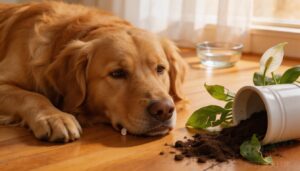
After treatment, track symptoms of plant ingestion in dogs closely.
| Watch | Clue | Report |
|---|---|---|
| Salivation Patterns | vomiting, diarrhea | time, amount |
| Behavioral Changes | seizures, Skin Irritation | pacing, pawing |
| Respiratory Distress, Urinary Abnormalities | blue gums, dark urine | liver failure in dogs |
Small shifts matter. If swallowing worsens, breathing looks hard, or urine darkens, call at once, even after the first calm hour passes.
How to Keep Dogs Away From Toxic Houseplants

Keeping plants out of reach is often the simplest way to prevent a scare. A few small changes in your home can make curious chewing much less likely.
Here are practical ways to add that extra layer of protection.
Safe Plant Placement (High Shelves, Hanging Baskets, Locked Rooms)
With toxic plants, safe placement of indoor plants around pets matters. Follow Shelf Height Guidelines—at least 1.5 meters high—and use Secure Hanging Hardware rated for 10 kilograms.
Add Window Ledge Barriers, Display Cabinet Locks, and Locked Room Ventilation.
These steps support Dog safety and indoor gardening, Dogproofing indoor-outdoor plant areas, help prevent accidental ingestion, and Pet poison control hotline usage.
Using Baby Gates, Barriers, and Deterrent Sprays
Even with plants placed high up, a curious dog can still find a way.
That’s where Gate Hardware Choices matter — hardware-mounted gates bolt into walls and hold firm under pressure.
Follow Barrier Height Guidelines and check latches regularly; Latch Visibility Indicators, like audible clicks, confirm closure.
For Combined Physical‑Chemical Deterrents, pair barriers with deterrent sprays for pets, and mind Sprays Application Frequency — reapply after rain or cleaning.
Training The Leave It Command for Plant Safety
Teaching "leave it" is one of the most practical dog safety tips you can use near houseplants.
Start with Leash Management — keep your dog on a leash so you can interrupt before contact.
Cue Timing matters: say "leave it" before your dog reaches the plant.
Use Distraction Gradation, beginning with easy objects, then real foliage.
Vary Reward Types and apply Generalization Techniques across rooms to prevent accidental ingestion.
Removing Fallen Leaves and Debris That Attract Chewing
Fallen leaves are easy to overlook — but they’re just as dangerous as the living plant. Aim to collect dropped foliage at least once daily, since sap residues linger on dried leaves for days.
Use a handheld vacuum or soft-bristled broom for indoor clean-up, and seal debris in closed bags. Keeping play areas away from plants adds one more layer of protection.
Dog-Safe Houseplants to Grow Instead

You don’t have to choose between loving plants and keeping your dog safe. Plenty of beautiful options won’t send you rushing to the vet.
Here are some dog-friendly plants worth adding to your home.
Non-Toxic Foliage Options (Spider Plant, Boston Fern, Ponytail Palm)
Good news: you don’t have to choose between greenery and your dog’s safety.
Spider plants thrive in low light, naturally support air purification, and only cause mild stomach upset if chewed.
Boston ferns boost humidity enhancement while staying completely non-toxic.
Ponytail palms offer sculptural pet-friendly décor with minimal care needs.
All three are reliable, beautiful non-toxic houseplants — dog-safe plants worth keeping around.
Safe Flowering Alternatives (Marigolds, Roses, Sunflowers, Zinnias)
Want color without the risk? Marigolds, roses, sunflowers, and zinnias are all confirmed dog-safe plants — ideal for pet safe landscaping and easy soil requirements around pH 6 to 7.
These drought-resistant flowers double as bee‑friendly blooms and deliver vibrant color schemes from compact border plantings to tall garden beds.
Safe alternative houseplants for dog owners don’t have to be boring.
Pet-Friendly Succulents (Haworthia, Christmas Cactus, Tiger Jaws)
Succulents can be a smart pick for dog homes — and three stand out. Haworthia thrives with low light tolerance and minimal watering frequency, fitting perfectly on an elevated display like a high shelf.
Christmas cactus is ASPCA-confirmed nontoxic. Tiger jaws offers natural leaf edge safety since its spiky texture discourages chewing.
All three are reliable pet safe indoor plants and nontoxic houseplants worth keeping.
Providing Dog-Safe Greens Like Wheatgrass to Curb Plant Chewing
Wheatgrass is one of the simplest chewing redirection strategies you can use at home. Grow it in a shallow tray near your dog’s resting spot — it’s a non-toxic houseplant alternative that gives curious chewers a legal target.
- Wheatgrass growing tips: reseed every few weeks for steady indoor green enrichment
- Enrichment grass benefits include redirecting chewing away from toxic plants
- Offer only pesticide-free shoots — nutritional value for dogs stays clean that way
- Skip it if your dog has wheat sensitivities; ask your vet first
Frequently Asked Questions (FAQs)
Are puppies more vulnerable than adult dogs?
Yes. Think of a puppy like a small cup — the same drop of toxin fills it faster.
Exploratory chewing, an immature detox system, and higher dose sensitivity from body weight ratio make puppies far more vulnerable.
Can dried leaves still poison my dog?
Dried leaves can still poison dogs because toxin persistence stays in plant tissue after drying.
Hidden Leaf Dangers rise in fall debris, so practice pet leaf cleanup and focus on identifying poisonous houseplants for dogs.
How can I identify an unknown houseplant?
plant ID app like PictureThis — photograph the leaf shape, stem growth pattern, and any flower or fruit features.
Cross-check leaf color markings and plant families to confirm before bringing it near your dog.
Are fertilizers and potting soil dangerous too?
Plants aren’t the only hazard — fertilizers and potting soil can poison dogs too.
Swallowing fertilizer causes vomiting, drooling, and diarrhea.
Some mixes contain pesticides that trigger seizures.
Store all products securely.
Should toxic plants be removed completely?
Removing them completely is the safest call. zero access strategy eliminates risk entirely — no barriers to failure, no fallen leaves to miss.
For dogs that already chew plants, removal isn’t overreacting; it’s responsible ownership.
Conclusion
As you tend to your indoor garden, a silent sentinel watches—your dog, vulnerable to hidden dangers. The line between beauty and peril is thin, especially with common houseplants toxic to dogs.
Stay vigilant, and safeguard your pet’s well-being by choosing dog-friendly greenery. Keep toxic plants out of reach, and know the warning signs of poisoning. With informed care, you can nurture both your plants and your pet’s safety, creating a harmonious home.