This site is supported by our readers. We may earn a commission, at no cost to you, if you purchase through links.

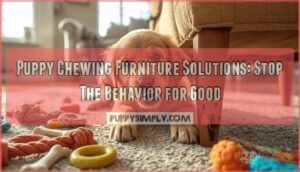
Your puppy’s relentless chewing isn’t just annoying—it’s a biological necessity. Between three and six months, puppies experience intense gum discomfort as 28 baby teeth fall out and 42 adult teeth push through. Without proper outlets, they’ll target your furniture, shoes, or anything within jaw’s reach.
The right chew toys don’t just protect your belongings; they provide genuine relief during this painful developmental stage. But not all toys are created equal. Some pose choking risks, others contain harmful chemicals, and many simply can’t withstand a teething puppy’s surprisingly powerful bite.
You need toys that match your puppy’s size, chewing intensity, and developmental needs—ones that’ll actually survive more than a day or two.
Table Of Contents
Key Takeaways
- Puppies experience intense gum discomfort between three and six months as 28 baby teeth fall out and 42 adult teeth push through, making appropriate chew toys a biological necessity rather than just a behavioral management tool.
- Safe chew toys must match your puppy’s current size (at least one inch wider than their muzzle), feature non-toxic materials like natural rubber or nylon, and require weekly inspection for cracks or loose pieces that create choking hazards.
- The five most recommended options—Outward Hound Snake, Kong Puppy, Benebone Bacon, Choo Chums Chicken Bone, and classic KONG—balance durability with tooth-safe softness while offering varied textures that massage sore gums without damaging developing enamel.
- Puppies thrive with five to ten total toys rotated weekly to maintain interest, but you should only keep three or four accessible at once and always supervise early play sessions to catch problems before they become emergencies.
Best Chew Toys for Puppies: Top 5 Picks
Finding the right chew toy can feel overwhelming when you’re staring at a wall of options at the pet store. You want something that’ll survive those sharp puppy teeth while keeping your little one safe and entertained.
Here are five tried-and-true picks that consistently earn top marks from veterinary professionals and puppy parents alike.
1. Outward Hound Durable Snake Dog Toy
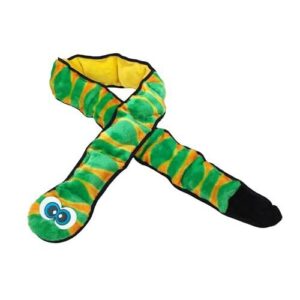
The Outward Hound Snake Toy offers flexible rubber durability designed specifically for puppy teething relief. You’ll find textured segments that massage sore gums while satisfying your pup’s natural chewing instincts.
This tough dog chew toy features pliable construction that won’t chip developing teeth—a key consideration for safe chew toys.
Available in bright colors for easy tracking during play, it measures appropriately for most breeds. Inspect it regularly for tears, and rinse after each session to maintain hygiene. For dogs spending time outdoors, especially breeds like German Shepherds that thrive in varied environments, durable toys withstand rougher play and weather exposure.
Many owners report it helps redirect destructive chewing when used consistently. For puppies still learning bite inhibition, establishing a consistent training routine can help them understand what’s acceptable to chew.
| Best For | Puppy owners looking for a safe, flexible teething toy that won’t damage developing teeth while redirecting destructive chewing behavior. |
|---|---|
| Material | Polyester |
| Age Range | All life stages |
| Weight | 0.9 pounds |
| Durability | Heavy-duty binding |
| Made In | Not specified |
| Primary Use | Interactive play |
| Additional Features |
|
- Textured rubber segments massage sore gums and satisfy natural chewing instincts during the teething phase
- Pliable construction protects puppy teeth from chipping while still offering durable resistance for heavy chewers
- Bright color options make it easy to spot during play and reduce the chance of losing it around the house
- Durability varies significantly depending on each puppy’s chewing style, with some owners reporting premature wear at seams
- Requires regular inspection for tears or punctures and replacement when surfaces become overly worn or frayed
- Not truly indestructible—aggressive chewers may still damage softer areas or hollow sections over time
2. Kong Natural Rubber Puppy Toy
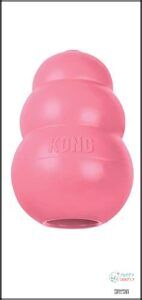
Kong Puppy’s soft natural rubber earns its reputation among veterinary behaviorists for safe puppy teething relief. Its textured surface massages inflamed gums without damaging those 28 baby teeth.
You can stuff the hollow core with kibble or peanut butter to extend chew sessions and support puppy enrichment during crate training. Pairing these enrichment strategies with positive reinforcement training methods helps redirect mouthing behavior while keeping teething puppies mentally stimulated.
The pink or blue toy comes sized for different breeds—choose one that fits your pup’s mouth now, not their adult size. Just wash it after each use and replace it when you spot cracks or softening.
| Best For | Puppy owners looking for a safe, vet-recommended chew toy that soothes teething discomfort while keeping their pup entertained through treat-stuffing and fetch. |
|---|---|
| Material | Natural Rubber |
| Age Range | Puppy |
| Weight | 0.13 pounds |
| Durability | Soft natural rubber |
| Made In | USA |
| Primary Use | Teething enrichment |
| Additional Features |
|
- Soft natural rubber formula protects baby teeth while massaging sore gums during the teething phase
- Hollow core design lets you fill it with kibble or peanut butter for extended play and mental enrichment
- Durable enough for moderate puppy chewing but washable and easy to inspect for wear
- Not indestructible—needs to be replaced once cracks or softening appear
- Size can run smaller than expected, so double-check dimensions against your puppy’s mouth
- Requires regular cleaning after each use to prevent residue buildup and bacteria
3. Benebone Bacon Dog Chew Toys
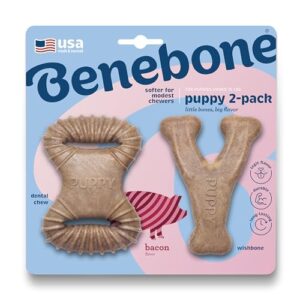
Benebone’s bacon-flavored nylon chew gives teething puppies something to gnaw on for hours. The real bacon scent keeps even distracted pups engaged, while the curved wishbone shape sits nicely between their paws for a solid grip.
This chew’s nylon construction holds up to aggressive chewing, but you’ll want to check it regularly for cracks or small pieces that could break off. Choose a size that matches your puppy’s current mouth—not their future adult jaws—and toss it once it shrinks enough to swallow.
| Best For | Puppy owners looking for a durable, long-lasting chew toy that helps with teething while keeping their pup entertained and away from furniture. |
|---|---|
| Material | Nylon |
| Age Range | Puppy |
| Weight | 0.27 pounds |
| Durability | Long-lasting nylon |
| Made In | USA |
| Primary Use | Teething aid |
| Additional Features |
|
- Real bacon flavor keeps puppies engaged for extended chewing sessions
- Durable nylon construction stands up to aggressive chewers
- Curved wishbone shape is easy for puppies to grip and hold between their paws
- Requires regular inspection for cracks or small pieces that could become choking hazards
- Size selection is critical—too large or too small can pose safety issues
- Not suitable for households with peanut or other allergies, and some customers find it overpriced
4. Choo Chums Chicken Bone Dog Toy
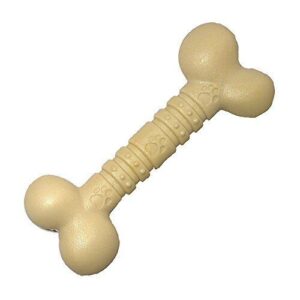
If you’re looking for something that combines interactive play benefits with solid chew toy durability, the Choo Chums Chicken Bone hits that sweet spot. This rubber chew toy’s bone shape and textured surface massage sore gums during puppy teething, while the non-toxic material checks the box for rubber material safety.
You can toss it for fetch or let your pup work through teething discomfort solo. Just watch for wear—once chunks start peeling off, it’s time for dog toy sanitization or replacement to keep playtime safe.
| Best For | Puppy owners looking for a multi-use toy that handles teething relief and interactive play like fetch or tug-of-war. |
|---|---|
| Material | Rubber |
| Age Range | All life stages |
| Weight | 0.22 pounds |
| Durability | Customized rubber |
| Made In | USA |
| Primary Use | Chewing enrichment |
| Additional Features |
|
- Textured surface massages gums and helps with teething discomfort
- Non-toxic rubber material that’s safe for puppies
- Works for both solo chewing sessions and interactive games
- Not ideal for super aggressive chewers who might break it down quickly
- Needs regular checks for wear and tear to avoid swallowing pieces
- Requires routine cleaning to prevent bacteria buildup
Kong Natural Rubber Puppy Toy (different Sizes/colors)
The classic KONG remains the benchmark for puppy teething toys—and for good reason. Its natural rubber formula offers impressive chew resistance without damaging developing teeth, while the hollow center turns snack time into mental exercise. You’ll find sizes ranging from tiny-breed options to large-puppy versions, each color-coded by durability. Stuff it with peanut butter, freeze it overnight, and watch your teething pup work through discomfort productively.
When selecting a toy, consider the importance of methodological rigor in evaluating its safety and effectiveness.
Choosing Safe and Durable Puppy Chew Toys
Not all chew toys are created equal, and picking the wrong one can put your puppy at risk. The best toys balance safety with durability so they hold up to teething without breaking apart or causing harm.
Here’s what you need to know to make smart choices that keep your pup safe and satisfied.
Material Safety and Non-Toxic Options

Your puppy’s mouth isn’t just exploring—it’s absorbing whatever’s in that toy. Look for non-toxic certifications like ASTM F963 or FDA compliance statements to dodge toxic material risks.
Safe rubber types include natural rubber and nontoxic silicone, both chemical-free alternatives that support dental health during teething relief. Eco-friendly options with third-party safety seals give you peace of mind while your pup gnaws away.
When searching for safe toys, consider using a dictionary search to find non-toxic materials.
Durable Construction for Teething Puppies

Teeth sharper than you’d expect meet their match when rubber quality and chew resistance work together. Your teething puppy needs tough dog chew toys that won’t crumble under pressure—think reinforced seams and thick-welt edges that distribute bite force evenly.
- Natural rubber outperforms PVC in tear tests, offering better toy longevity
- Nylabone puppy chew toys use softer nylon to prevent tooth wear
- Textured surfaces on durable chew toys resist chunk tearing during teething relief
- Layered construction keeps puppy teething toys intact through aggressive chewing
Appropriate Size and Choking Hazard Prevention

The wrong-sized toy can turn playtime into a vet emergency faster than you’d think. You need toys larger than your puppy’s mouth—at least one inch wider than their muzzle at its broadest point—to prevent swallowing. Check toys weekly for cracks or detached pieces that become choking hazards, and discard anything showing serious wear.
Choose chew toys at least one inch wider than your puppy’s muzzle, and inspect them weekly to prevent choking hazards
Supervise initial chewing sessions to catch problems early, and replace frayed teething toys before small parts break loose.
| Breed Size | Minimum Toy Diameter | Clearance Needed |
|---|---|---|
| Small (Chihuahua) | 2 inches | 1 inch beyond muzzle |
| Medium (Beagle) | 3 inches | 1 inch beyond muzzle |
| Large (Lab) | 4 inches | 1 inch beyond muzzle |
| Giant (Mastiff) | 5+ inches | 1 inch beyond muzzle |
| Mixed Breed | Measure first | 1 inch beyond muzzle |
Supervision and Maintenance Tips
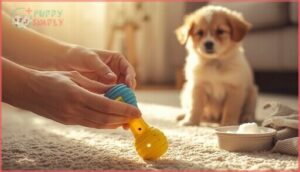
Even the toughest chew toy won’t stay safe forever. You’ll need to inspect toys before each play session—look for cracks, tears, or loose pieces that could be swallowed. Keep constant watch during those first 15–20 minute supervised play intervals, especially when your puppy’s gnawing peaks between weeks three and six.
Wash toys with warm soapy water after use, and toss anything showing serious damage control issues immediately.
Key Features to Look for in Puppy Chew Toys
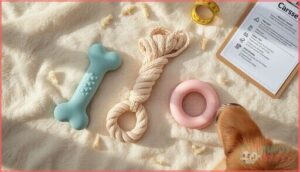
Not all chew toys are created equal, especially when you’re dealing with a teething puppy who’s simultaneously discovering the world and nursing sore gums. The right features can make the difference between a toy that sits ignored in the corner and one that becomes your puppy’s go-to comfort object.
Here’s what to prioritize when you’re shopping for chew toys that’ll actually work.
Textures and Shapes for Teething Relief
When those baby canines start breaking through, the right texture makes all the difference. Look for gentle surfaces with teething bumps or nubs that massage sore gums without damaging delicate puppy teeth.
Rubber textures with varied chew patterns provide moderate resistance—firm enough to satisfy gnawing instincts but soft enough to protect developing enamel.
Dental chew toys with soft edges work better than smooth surfaces for encouraging healthy exploration.
Treat-Dispensing and Interactive Designs
Puzzle toys that reward your puppy’s problem-solving keep those jaws busy for longer stretches. Treat dispensers work like interactive play sessions—peanut butter or kibble tucked inside challenges growing brains and satisfies teething urges simultaneously.
Choose durable rubber or hard plastic designs that resist punctures during chew challenges. These puppy teething toys turn snack time into a game, reducing boredom while supporting dog toy safety through controlled reward systems.
Squeakers, Crinkles, and Extra Stimulation
Sound-making toys tap into auditory feedback that captures attention fast—squeaks and crinkles match your pup’s natural prey drive while channeling puppy chewing behavior productively. Interactive designs with varied sound profiles keep sessions fresh, but monitor bite pressure during play.
Sensory toys boost engagement, yet rotation prevents overstimulation:
- High-pitched squeakers for alert breeds
- Crinkle panels for texture lovers
- Multi-sound combinations in one toy
- Quiet textured options for calmer pups
- Removable noisemakers for safety checks
Supervise interactive toys to maintain dog toy safety standards.
Edible Vs. Non-Edible Chew Toys
Edible materials bring calorie concerns and choking risk if swallowed in chunks—check labels for digestive health compatibility and allergens. Non-edible options like rubber or nylon sidestep nutrition worries but need vigilant inspection for fragments.
Safe chew toys balance teething relief with puppy care priorities: supervised edible treats for short sessions, durable non-edibles for daily gnawing that fosters dog chew habits without gut complications.
Tips for Managing Puppy Chewing Behavior

Chewing isn’t just normal puppy behavior—it’s how they explore their world and ease teething discomfort. But you can guide that natural instinct away from your furniture and toward appropriate toys with the right approach.
Here’s how to manage your puppy’s chewing in a way that keeps them safe, satisfied, and out of trouble.
Understanding Teething Stages
Your puppy’s mouth transforms dramatically between 3 and 6 months as deciduous teeth fall out and permanent ones push through. During tooth eruption, you’ll notice increased drooling and gum sensitivity—that’s when teething pain peaks.
Younger teething puppies need softer chew toys to protect developing gums, while older pups benefit from firmer options that match their growing jaw strength and puppy development stages.
Redirecting Destructive Chewing
Three strategies help you steer puppy teething away from your furniture. When you spot unwanted dog chew attempts, use redirective cues like “choose toy” paired with an approved option—this reinforces safe play areas and proper chewing behavior during critical puppy development stages.
- Keep durable materials within reach so you can quickly swap forbidden items for chew toys
- Rotate teething toys weekly to maintain novelty and prevent boredom-based destruction
- Reward appropriate choices immediately with praise or treat-dispensing options
- Supervise sessions until your pup consistently targets designated chew toy rotation items
Cleaning and Replacing Chew Toys
Regular toy hygiene keeps your pup safe from bacteria and mold. Wash chew toys with warm soapy water after each session, then deep-sanitize durable rubber options weekly using diluted bleach or approved pet cleaners. Air-dry completely before returning them.
Replace soft teething toys every one to two weeks if torn, and retire any item showing deep gouges or cracks that trap grime.
Recognizing Signs of Unsafe Toys
Cracked surfaces, sharp edges, or loose pieces signal it’s time to toss a toy—these wear patterns create choking hazards and expose toxic material risks. If strings fray or rubber crumbles under pressure, swap it out immediately.
Check for recall notices on manufacturer websites, and always verify safety labels before buying. Safe toys protect your pup from preventable emergencies.
Frequently Asked Questions (FAQs)
Can puppies share chew toys with other dogs?
While four-legged family members often play together, sharing chew toys poses real infection control risks. Toxic bacteria like Staphylococcus transfer easily between mouths, and resource guarding can spark conflicts in multi-dog households.
How many chew toys should a puppy have?
Most puppies thrive with five to ten puppy teething toys total, but keep only three or four out at once.
Rotate dog chew toys weekly to maintain interest and support safe toy limits while managing teething.
Do certain breeds need specific chew toys?
Just like Goldilocks needed the right-sized chair, your pup’s breed determines which dog chew toys fit best.
Small breeds need softer options, while large-breed puppies require durable dog toys matching their powerful jaw strength and unique teething patterns.
When do puppies stop needing teething toys?
Most teething puppies shift away from dedicated teething toys between 6 and 8 months, once their permanent teeth emerge. However, large breeds may need teething relief until 9 to 12 months of age.
Are homemade chew toys safe for puppies?
Most homemade recipes carry toxic material risks and choking hazards without safety verification.
Veterinary guidance strongly recommends commercially tested teething toys over DIY alternatives to guarantee proper canine dental care and pet safety during puppy care.
Conclusion
Your puppy’s teething phase won’t last forever, but the habits you build now will. The right chew toys do more than protect your baseboards—they teach your dog what’s acceptable to gnaw and what’s off-limits.
Choose toys that match your pup’s size and bite strength, rotate them regularly to maintain interest, and always supervise early play sessions.
Get this foundation right, and you’ll save yourself months of furniture repairs and frustrated redirections down the road.
- https://www.kongcompany.com/
- https://academichelpexpress.blog/2024/08/please-use-the-bulleted-points-and-the-rubric-below-to-guide-your-work-your-pa/
- https://x.com/godofprompt/status/1990526288063324577
- https://www.onelook.com/?loc=olthes1&w=subpoint
- https://www.sciencedirect.com/science/article/pii/S0749208123000268