This site is supported by our readers. We may earn a commission, at no cost to you, if you purchase through links.

Your dog spots the cracker in your hand and locks eyes with you—tail wagging, completely convinced it’s meant for them. It’s hard to say no.
But before you hand over that Wheat Thin, consider this: one serving contains roughly 200 mg of sodium, which already pushes against a small dog’s entire daily limit. Dogs process salt, sugar, and refined carbs very differently than we do, and snacks engineered for human taste buds don’t come with any safety buffer for them. Knowing what’s actually inside that cracker—and what it does inside your dog—makes the decision a lot easier.
Table Of Contents
- Key Takeaways
- What is in Wheat Thins?
- No, Dogs Should Avoid Wheat Thins
- What Risks Do Wheat Thins Pose?
- What if Your Dog Ate Some?
- Better Treats Than Wheat Thins
- Frequently Asked Questions (FAQs)
- Are Wheat Thins ok for dogs to eat?
- What kind of crackers can dogs eat?
- Is it OK to eat Wheat Thins?
- Can I feed my cat Wheat Thins?
- Can puppies eat wheat thins?
- What are the health benefits of wheat thins for dogs?
- Are there any special precautions for dogs with wheat allergies?
- Does Sable McNeil recommend wheat thins for dogs?
- Are flavored Wheat Thins worse for dogs?
- How do Wheat Thins affect small dogs differently?
- Conclusion
Key Takeaways
- A single serving of Wheat Thins contains around 200 mg of sodium, which can hit or exceed your small dog’s entire daily salt limit in just a few bites.
- Dogs can’t process refined carbs and added sugars the way we can, so even occasional crackers can trigger blood sugar spikes, weight gain, and long-term metabolic stress.
- Flavored Wheat Thins varieties are riskier than plain ones — some contain xylitol, which can cause liver failure in dogs.
- Safer crunchy swaps like baby carrots, apple slices, or plain cooked chicken give your dog a satisfying treat without the sodium, sugar, or empty calories.
What is in Wheat Thins?
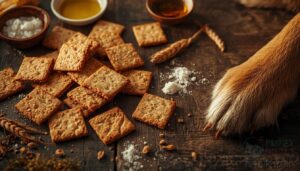
Before deciding if Wheat Thins are safe to share, it helps to know exactly what’s inside them. These crackers are made for human taste buds, not canine nutrition.
Since these snacks share similar ingredients, it’s worth checking whether dogs can safely eat saltine crackers to better understand the risks of salt and refined flour in your dog’s diet.
Here’s a closer look at what each serving actually contains.
Calories Per Serving
One standard serving of Wheat Thins — about 16 crackers, or 31 grams — contains 140 calories. That calorie density adds up fast.
macro calorie breakdown is mostly carbohydrates, with fat contributing disproportionately despite its smaller gram amount.
Label serving variability means some varieties differ slightly, so always check the nutritional information.
caloric intake management, even a few crackers deliver real energy per cracker.
Sodium Content
Calories tell part of the story — sodium tells another. A single serving of Wheat Thins packs around 200 mg of sodium, mostly from added salt.
For dogs, that’s a serious concern. Sodium intake guidelines for dogs cap daily limits at 100–300 mg depending on size. One handful can hit that ceiling fast, raising the risk of dehydration and salt poisoning in dogs.
One handful of Wheat Thins can exceed a dog’s entire daily sodium limit
Sugar and Refined Carbs
Sodium isn’t the only concern. Wheat Thins are high in sugar and high in carbohydrates, made mostly from refined wheat flour.
limited carbohydrate metabolism, so a sugar surge can trigger an Insulin Surge, followed by an Energy Crash. Fiber Deficiency in refined flour makes this worse.
For dogs with sugar intolerance, even small amounts can cause excess sugar effects that stress their system.
Fat and Flavoring Ingredients
Fat carries flavor. That’s its main job in crackers like Wheat Thins — it delivers taste and keeps every bite rich. The fat here is a mix of saturated and unsaturated oils, with emulsifiers maintaining that uniform crunch.
Then come the flavor enhancers: high salt, high sugar, and additives like BHT, garlic and onion powders. That flavor enhancer synergy makes them tasty — but concerning for dogs.
Why They Offer Little Nutrition
Wheat Thins are basically refined starch with a flavor coat. The bran and germ are stripped out during processing, leaving minimal fiber and almost no essential amino acids.
A nutritional analysis of Wheat Thins for dogs tells a clear story: low micronutrients, low moisture, high in calories, high in sodium, and high in carbohydrates.
Your dog gets very little back for every bite.
No, Dogs Should Avoid Wheat Thins

Wheat Thins aren’t built for dogs — and it goes beyond just the salt. Several things about these crackers make them a poor fit for your dog’s diet.
Here’s what you need to know before you pass one over.
Why They Are Not a Good Dog Treat
Think of Wheat Thins as empty calories in a crunchy package — built for humans, not dogs. They’re high in sodium and high in carbohydrates, with low protein benefit and refined grain concerns baked right in.
Regular feeding raises the risk of obesity in dogs and pancreatitis risk.
Some varieties carry xylitol risk, synthetic preservatives, and artificial colorings; your dog’s body simply wasn’t designed to handle.
xylitol can cause liver failure in dogs.
Plain Vs Flavored Varieties
Plain Wheat Thins already carry 210 mg of sodium per serving — not ideal for dogs. Flavored varieties push that even higher, reaching 230–260 mg, plus added seasonings, artificial colorings, and potential flavor additives, your dog’s system wasn’t built to process.
Ingredient transparency matters here: the more flavor variety, the more hidden risks.
Either way, neither version belongs in dog’s treat rotation.
Why “Just a Few” Still Matters
Just a few" is where portion misjudgment quietly begins.
Each cracker adds to a cumulative sodium load, your dog’s kidneys weren’t built to handle.
For small dogs especially, snack frequency impact is real — repeated treats mean repeated kidney stress.
High sodium and high carbohydrates create a metabolic burden that builds over time.
Moderation sounds safe, but with Wheat Thins, even a moderate treat portion size can cause digestive upset.
When an Occasional Crumb is Less Concerning
If your dog snagged a single crumb, don’t panic. Size-based tolerance matters here — a large, healthy dog faces far less risk than a small one.
Watch for minimal symptoms like vomiting or unusual thirst, offer fresh water for hydration support, and note the timing with meals.
Owner observation tips are simple: if your dog acts normal within 24 hours, it’s likely fine.
What Risks Do Wheat Thins Pose?

Wheat Thins might seem harmless, but they carry real risks for dogs. It’s not just one ingredient causing the problem — it’s a combination of things working against your dog’s health. Here’s what you need to know.
High Sodium for Dogs
One serving of Wheat Thins packs 200 mg of sodium — enough to hit or exceed your dog’s entire daily salt intake guideline.
That’s a real dehydration risk, especially for smaller breeds. High sodium content raises blood pressure and puts the kidneys under serious stress.
For dogs already managing heart or kidney disease, that toxicity threshold is even lower.
Salt poisoning isn’t dramatic — it starts quietly.
Sugar and Blood Sugar Spikes
Sodium isn’t the only concern. Sugar and refined carbohydrates create a different kind of damage — quieter, but just as real.
Wheat Thins have a high glycemic index. That means rapid carb absorption speed, a sharp glucose spike mechanism, and a delayed insulin release timing that can’t keep up. There’s almost no fiber buffering effect to slow things down.
Here’s what that means for your dog:
- Blood sugar spikes faster than their body can regulate
- Repeated sugar exposure increases diabetes risk over time
- Dogs with sugar intolerance show poor glycemic load tolerance
- High carbohydrates from refined flour offer zero nutritional payoff
Excess Calories and Weight Gain
Calories add up quietly. At 140 per serving, Wheat Thins are high in carbohydrates and high in fat — a combination that tips your dog’s energy balance fast.
Their metabolic rate can’t compensate for frequent snacking. Small portion size doesn’t protect them when snack frequency is the real problem. Over time, that surplus fuels obesity and steady weight gain.
Fat and Pancreatitis Risk
Fat doesn’t just add calories — it stresses your dog’s pancreas directly. Wheat Thins are high in fat, and fatty foods for dogs can trigger pancreatitis by flooding the pancreas with lipase activity, it can’t handle.
Obesity inflammation worsens this, since intrapancreatic fat accumulation makes pancreatic tissue more vulnerable. Fat-induced necrosis is a real outcome.
Even one high-fat snack trigger can be enough.
Wheat Allergies and Sensitivities
Some dogs are genuinely allergic to wheat. Wheat allergy involves IgE-mediated reactions — your dog’s immune system attacks wheat proteins like ω-5 gliadin, triggering itchy skin, ear infections, or worse.
Non-celiac sensitivity can also cause gut upset without a true grain allergy. Cross-contact risk matters too — even trace wheat in processed snacks can affect a sensitive dog.
Component testing helps confirm the cause.
Digestive Upset and Choking Concerns
Even a handful of Wheat Thins can upset your dog’s stomach. Their texture fragmentation — breaking into uneven, dry shards — complicates swallowing mechanics and raises aspiration risk if your dog gulps without chewing.
Gagging indicators like repeated coughing after eating are red flags. Esophageal irritation, vomiting, and diarrhea can follow.
Wheat Thins simply aren’t a safe snack for your dog, even in moderation.
What if Your Dog Ate Some?
It happens fast — you turn around and half a cracker is already gone. The good news is that small amount usually isn’t a cause for panic, but it’s still worth knowing what to look for.
Here’s what to check next.
How Much Your Dog Ate

The number of crackers your dog ate matters more than you might think. Start with cracker count estimation — 16 crackers equal one full serving and 200 mg of sodium.
For a small dog, that’s already past its daily salt load calculation. Factor in your dog’s size-based portion tolerance and calorie budget tracking to understand whether you’re looking at a minor incident or something worth monitoring closely.
Symptoms to Watch For

Once your dog eats something they shouldn’t, their body usually signals it fast. Watch for Vomiting and Diarrhea first — digestive upset often shows up within hours. Lethargy and Weakness can follow, especially if dehydration sets in.
Panting and Restlessness may mean stomach discomfort. Swelling and Hives suggest a wheat allergy response. Excessive Thirst points to salt’s effect on fluid balance.
Signs of Salt Overload

Salt overload hits harder than most owners expect.
When a snack is high in salt, watch for excess thirst and facial swelling first — early warning signs that the body is struggling. Vomiting episodes and diarrhea often follow. Lethargic behavior signals deeper dehydration.
In serious cases of salt toxicity in dogs, seizure-like activity or collapse can occur. Salt poisoning moves fast.
When to Call Your Veterinarian

Some symptoms simply can’t wait overnight.
Call your veterinarian right away if you notice any of these:
- Persistent vomiting or diarrhea lasting more than a few hours
- Abdominal pain — pacing, hunching, or a swollen belly
- Neurologic signs like seizures, stumbling, or sudden weakness
- Breathing distress — labored, rapid, or open-mouthed breathing at rest
- Any bleeding emergency combined with pale gums or collapse
These are your green-light-to-call moments.
What You Should Not Do at Home

When panic sets in, it’s tempting to act fast — but some home remedies can do more harm than good. Don’t induce vomiting without veterinary guidance.
Don’t offer salty treats or use human snacks to "settle" their stomach.
Store crackers high and out of reach going forward.
Never feed unsupervised, or ignore veterinary guidance about the health risks of feeding Wheat Thins to dogs.
Better Treats Than Wheat Thins

The good news is that your dog doesn’t have to miss out on snack time. There are plenty of safe, satisfying options that won’t put their health at risk.
Here’s what you can reach for instead.
Dog-Safe Crunchy Alternatives
If your dog loves that satisfying crunch, you don’t have to say no forever. Single-Ingredient Chews like bully sticks or dehydrated sweet potato are healthy alternatives with no hidden sodium surprises.
Low-Sodium Veggie Bites, frozen carrots, and Dental Crunchy Treats support chewing without the risks.
Portion-Controlled Training Treats for rewarding moments, and always practice Supervised Chew Safety.
Fresh Fruits Dogs Can Eat
Fresh fruit makes a surprisingly good swap for processed snacks.
Apples are a favorite — just practice apple core removal and seed-clearing first. Blueberries offer real blueberry antioxidant benefits in a tiny, low-calorie package. Watermelon hydration makes it perfect for warm days, but remove the rind. Bananas give a gentle banana potassium boost, and strawberry fiber helps digestion.
These fruit treats for dogs beat crackers every time.
Vegetables That Make Good Treats
Vegetables make wonderful vegetable treats for dogs — and your pup won’t miss the crackers.
Carrot sweetness satisfies chewing instincts while staying low in calories.
Cucumber hydration keeps dogs refreshed, especially in warmer months.
Green bean fiber promotes healthy digestion, served raw or cooked.
Sweet potato vitamins — think A and potassium — shine when lightly steamed.
Bell pepper crunch adds variety without the salt.
Plain Protein Treat Options
Protein treats are a smart swap — and simpler than you’d think.
Plain meat chews, single protein treats, and grain-free jerky give your dog real nutrition without the salt or sugar found in Wheat Thins. Plain chicken, salmon, or tuna work great too.
Egg-based treats and rawhide-free chews round out your options as low-calorie dog treats worth keeping on hand.
The 10 Percent Treat Rule
One simple rule keeps treat-giving safe: no more than 10% of your dog’s daily calories should come from treats. That’s your calorie budgeting baseline.
For a 20-pound dog eating 600 calories daily, that’s just 60 treat calories.
Practice treat portion control by measuring portions, not guessing. Training reward timing matters too — spread treats across the day.
Adjust your dog’s main diet if treats increase.
How to Prevent Accidental Snacking
Dogs are opportunistic. If Wheat Thins are within reach, they’ll find them. Prevention is simpler than treatment.
- Use Portion Control Containers and Visible Snack Storage to keep human food organized and out of paw’s reach.
- Follow Scheduled Snack Times and Mindful Eating Practices so crumbs don’t hit the floor unnoticed.
- Create Trigger-Free Environments by storing human snacks out of reach.
- Follow vet recommendations against snacks that ignore pet dietary restrictions and guidelines for safe dog treats and snacks — dangerous feeding starts with small moments.
Frequently Asked Questions (FAQs)
Are Wheat Thins ok for dogs to eat?
Wheat Thins aren’t toxic, but they’re not a smart snack for your dog either.
Salt, sugar, and refined carbs offer zero long-term health benefit — and veterinary guidance is clear: skip them.
What kind of crackers can dogs eat?
Plain unsalted crackers are your safest bet. Rice crackers, oat biscuits, or homemade oat crackers without salt or additives work best.
Always check labels — low sodium dog treats are the reference point.
Is it OK to eat Wheat Thins?
For humans, Wheat Thins are fine as an occasional snack.
But portion control guidelines matter — 130 calories per serving adds up fast, and the refined carbs and sodium offer little lasting nutritional value.
Can I feed my cat Wheat Thins?
No, Wheat Thins aren’t safe for cats.
As obligate carnivores, their bodies can’t use refined carbs well. The salt, additives, and empty calories create real feline sodium sensitivity and weight management concerns.
Can puppies eat wheat thins?
Puppies shouldn’t eat Wheat Thins.
Their developmental nutrition needs are too specific, and crackers like these crowd out balanced meals. The added salt, sugar, and refined carbs simply don’t belong in a growing pup’s diet.
What are the health benefits of wheat thins for dogs?
Honestly, benefits barely exist. Modest fiber, trace minerals, and B vitamins sound promising, but nutritional analysis of Wheat Thins reveals poor nutrient density.
Palatability aid aside, healthier treat options deliver far better carbohydrate balance and protein-sparing nutrition for dogs.
Are there any special precautions for dogs with wheat allergies?
If your dog has a wheat allergy, Wheat Thins are completely off the table. Even a crumb counts.
Work with your vet on allergy testing, wheat-free supplements, and a safe reintroduction plan.
Does Sable McNeil recommend wheat thins for dogs?
No verified expert endorsement, official pet blog post, social media posts, or public Q&A links Sable McNeil to recommending Wheat Thins for dogs.
Always rely on direct veterinary guidance for safe snack choices.
Are flavored Wheat Thins worse for dogs?
Yes — flavored varieties are worse. They pack extra artificial flavor chemicals, synthetic colorants, and preservative buildup.
Some contain xylitol, which is toxic to dogs. The flavor-specific sodium boost alone raises sodium toxicity risk substantially.
How do Wheat Thins affect small dogs differently?
Small dogs feel Wheat Thins’ effects faster.
Body Size Impact means less tolerance for sodium toxicity in dogs, carbohydrate overload in pets, and fat — raising dog obesity risk, dog pancreatitis risk, and Blood Pressure Spike quickly.
Conclusion
Old habits die hard—reaching for whatever’s nearby when your dog gives you those eyes. But now you know why "can dogs eat Wheat Thins" has a clear answer: no, not safely.
Too much sodium, empty carbs, and zero nutritional payoff. Your dog deserves better than snack food designed for your taste buds.
A baby carrot or plain chicken strip costs nothing extra and actually benefits their health. Tail will wag just the same.
- https://pangovet.com/talk-to-a-vet-online-dog-ate-drank-something/?utm_source=dogster&utm_medium=article&utm_campaign=dog_eat_drink&utm_content=can-dogs-eat-wheat-thins
- https://www.tastingtable.com/862628/why-wheat-thins-are-actually-banned-in-some-other-countries/
- https://tacticalfitnesswellnessnutrition.com/epic/view_post.php?id=165&slug=calorie-surplus-drives-weight-gain
- https://pmc.ncbi.nlm.nih.gov/articles/PMC7946062/
- https://traincalc.com/guides/how-to-gain-weight-safely