
This site is supported by our readers. We may earn a commission, at no cost to you, if you purchase through links.

Your dog gives you those eyes the moment you sit down with a bowl of leftover rice—hopeful, patient, completely committed to the cause. Before you cave, it helps to know that plain cooked rice has been a go-to stomach soother for dogs for decades, recommended by vets when a pup’s digestive system needs a break. It’s not magic, but it works.
The catch? Rice alone doesn’t tell the whole story. The variety you choose, how you prepare it, and how much you serve all shape whether it helps your dog or quietly causes problems.
Table Of Contents
- Key Takeaways
- Yes, Dogs Can Eat Rice
- Is Rice Good for Dogs?
- White Rice Versus Brown Rice
- Best Rice Types for Dogs
- When Rice Helps Dog Diarrhea
- How to Prepare Rice Safely
- How Much Rice Can Dogs Eat?
- Risks of Feeding Dogs Rice
- Dogs That Should Limit Rice
- Can Puppies Eat Rice?
- Frequently Asked Questions (FAQs)
- Can dogs eat brown rice?
- Can dogs eat white rice?
- Can dogs eat basmati rice?
- Is rice good for dogs?
- What words do dogs love to hear the most?
- How much rice is OK for a dog?
- Is white rice toxic for dogs?
- What’s better for dogs, rice or pasta?
- Can dogs eat fully cooked rice?
- How much rice should I feed my dog?
- Conclusion
Key Takeaways
- Plain cooked rice is safe for dogs and works best as a short-term gut reset—think two to four days max—not a permanent fixture in their bowl.
- White rice is easier to digest and better for upset stomachs, while brown rice offers more fiber and nutrients but takes longer to break down.
- Rice is a carbohydrate, not a complete meal—always pair it with a lean protein like boiled chicken, and keep portions under 10% of your dog’s daily calories.
- Dogs with diabetes, weight issues, grain allergies, or prescription diets should avoid rice or only use it under direct veterinary guidance.
Yes, Dogs Can Eat Rice

Good news — rice is perfectly safe for your dog, but a few simple rules make all the difference.
If you’re serving rice-based dishes, it helps to know that rice noodles are also safe for dogs — just keep them plain and portion-controlled.
Before you scoop some into your pup’s bowl, there are a few things worth knowing. Here’s what to keep in mind.
Fully Cooked and Plain
Plain fully cooked rice is the only version safe for your dog. Prepare it by boiling in water until every grain is soft, then cooling to room temperature. Batch Cooling is critical for both microbial safety and storage hygiene. Always skip additives like salt, butter, garlic, and onion entirely.
Unseasoned cooked white rice, served as part of a bland diet, carries no rice toxicity risk when Texture Consistency and Temperature Verification are confirmed before serving. This ensures the rice meets fully cooked standards and is safe for consumption.
Checking that the rice attains a safe internal temperature is essential. This verification step guarantees the rice is properly cooked, eliminating potential hazards and ensuring it adheres to food safety guidelines.
Safe Occasional Carbohydrate
Think of rice as a guest, not a roommate. Whether you use white rice or brown rice, it works best as an occasional carbohydrate source for pets — not a daily habit.
Carb rotation keeps your dog’s Balanced Meals varied and prevents nutritional gaps. Watch their Calorie Budget closely, since even a bland diet staple can quietly tip the scale with too-frequent Treat Frequency.
Not a Complete Meal
Rice is a carbohydrate source for dogs — full stop. Plain cooked rice misses essential amino acids, is low in essential fats, and lacks micronutrients your dog needs daily.
There’s also a lack of fiber variety and a skewed caloric ratio that leans too heavily on starch. Without a balanced meal alongside it, moderation alone won’t fix the nutrient balance problem.
Introduce Slowly
Since rice isn’t a complete meal on its own, how you introduce it matters just as much as what you serve. Start with a single ingredient trial — plain cooked rice in small amounts — and track everything with a simple feeding log.
- Offer 1–2 tablespoons first
- Wait 24 hours before a gradual portion increase
- Monitor stool changes closely
- Space timing between meals carefully
- Stop and consult your veterinarian if GI upset appears
Is Rice Good for Dogs?

Rice isn’t just safe for dogs — it can actually do some good when used the right way.
It’s one of those simple foods that earns its place in your dog’s bowl for a few solid reasons. Here’s what makes it worth keeping in your back pocket.
Easy-To-Digest Energy
When your dog’s stomach is in recovery mode, it needs fuel that won’t fight back. Plain, fully cooked rice is a gentle stomach fuel—an easily digestible carbohydrate source for pets that converts quickly into glucose.
This rapid glucose release provides a transient energy boost without taxing the gut. Low-fiber carbs mean digestive simplicity, making rice a smart short-term choice for a bland diet for dogs.
Low-Fat Bland Food
Plain cooked white or brown rice fits naturally into a bland diet for dogs because it checks every box: soft texture, fat limitation, and reduced fiber. Combined with a gentle protein like boiled chicken, it forms the backbone of a gastrointestinal bland diet.
This easily digestible pairing—with mild seasoning and nothing harsh—gives your dog’s gut a real chance to reset on a low-fat diet for dogs.
Helps Bind Stool
One of rice’s quieter superpowers is what it does in the gut. Its soluble fiber and starch binding effect creates a gel matrix that firms loose stool and slows transit time.
That slowed transit gives a dog’s intestines more time to absorb excess fluid, naturally improving stool consistency.
It’s a cornerstone of any gastrointestinal bland diet for preventing diarrhea in dogs and supporting overall digestive health.
Best With Lean Protein
Rice is a carbohydrate, not a protein — so it can’t do the job alone. Pair plain fully cooked rice with boneless skinless chicken or turkey for a proper bland diet.
That protein-to-rice ratio matters: aim for roughly one part lean meat selection to two parts rice.
This low-fat meal balance gives your dog digestible starches paired alongside essential amino acids, making portion control straightforward.
White Rice Versus Brown Rice
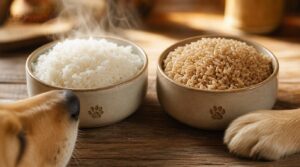
Both white and brown rice are safe for your dog, but they’re not exactly the same thing.
The differences come down to digestion, fiber, nutrients, and how each one affects blood sugar. Here’s how they stack up.
White Rice Digests Easier
White rice wins the digestion race, and there’s a clear reason why. Once the bran and germ are removed, you’re left with an enzyme-friendly composition—pure starch that breaks down fast. This rapid starch breakdown and quick glucose absorption mean your dog’s gut has to do far less work.
The soft grain texture and minimal residue output make plain, fully cooked white rice a go-to for stomach upsets and bland diet recovery. Its gentle nature supports healing without overtaxing the digestive system.
Brown Rice Has Fiber
Brown rice keeps its bran layer intact — and that’s where the fiber lives. Each cup delivers roughly 3.5 grams of dietary fiber.
This offers a real satiety boost and meaningful stool bulk for your dog’s gastrointestinal health.
That fiber also provides microbiome support by feeding beneficial gut bacteria.
Just remember: higher fiber means greater hydration needs, so fresh water alongside brown rice in your canine diet matters.
Brown Rice More Nutrients
Beyond fiber, whole-grain benefits truly add up. Brown rice delivers impressive mineral density—including manganese, phosphorus, and magnesium—alongside meaningful contributions of B-vitamins like thiamine and niacin. These nutrients collectively enhance its nutritional profile compared to refined alternatives.
Additionally, brown rice offers a genuine antioxidant boost from its bran layer, supporting a micronutrient variety your diet won’t get from white rice.
- Higher manganese for enzyme support
- More phosphorus for bone health
- Greater magnesium for muscle function
- B vitamins supporting energy metabolism
- Antioxidant compounds protecting cells
White Rice Higher Glycemic
Here’s the trade-off that often gets overlooked. White rice scores around 79 on the glycemic index — that’s high. Its elevated amylopectin ratio means rapid starch breakdown and a quick postprandial glucose spike.
Glycemic load climbs fast with portion size, so even modest servings affect blood glucose regulation.
| Factor | White Rice |
|---|---|
| Glycemic Index | ~79 (High) |
| Digestion Speed | Fast |
| Portion Impact | High GL |
For a diabetic dog diet, can dogs eat white rice? Only rarely.
Best Rice Types for Dogs
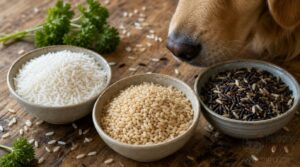
Not all rice is created equal for your dog’s bowl. The type you choose can make a real difference, especially if your dog has a sensitive stomach or a health condition worth watching.
Here’s a quick look at the most common options and how each one holds up.
Plain White Rice
Plain white rice is the go-to choice when your dog’s stomach is staging a protest. It serves as a safe, easily digestible carbohydrate source for pets dealing with gastrointestinal upset — its mild, bland quality making it an ideal meal base during digestive distress.
Cook the rice until soft, ensuring the water ratio is mastered to achieve the right consistency. Allow it to cool, as this process forms resistant starch, enhancing digestibility.
However, watch arsenic levels if feeding rice daily, as it may accumulate in the grain. Additionally, while rice provides temporary relief, its amino acid profile won’t carry a full diet alone, lacking essential nutrients for long-term health.
Plain Brown Rice
White rice gets all the spotlight, but brown rice earns its place in canine nutrition too. It’s a safe carbohydrate source for pets, offering gut health support through fiber and a satiety boost that refined grains simply can’t match.
Just know it has a chewy texture, longer cooking time, and arsenic concerns with daily use — so keep it occasionally for dogs with gastrointestinal issues.
Jasmine Rice Safety
Jasmine rice is safe for dogs when served plain, but it does come with a few caveats worth knowing. Arsenic levels average around 77 ppb — moderate but real over time.
Always perform quick recall checks before buying. Cook it in clean water to reduce bacterial contamination, serve as an occasional bland meal base, and watch for digestive upset closely.
Basmati Rice Safety
Basmati is generally safe for dogs, but it comes with more fine print than most rice varieties. Arsenic content is a real concern — FDA testing found inorganic arsenic in Indian-origin basmati samples. Pesticide residues and mycotoxin risk also vary by brand and origin.
Storage hygiene and testing standards matter here.
Stick to reputable brands, rinse thoroughly, and serve plain to avoid digestive upset.
Wild Rice Moderation
Wild rice is a nutritious whole grain, but moderation is key. It contains about 101 calories per 100g, making it lower in calories than white rice, while also providing useful fiber and magnesium.
The fiber impact can shift stool quality, so introduce wild rice gradually into your diet. Watch for digestive upset and consider it an occasional carb-balancing add-on, not a daily staple.
When Rice Helps Dog Diarrhea

When your dog has diarrhea, plain rice is one of the first things most vets reach for — and for good reason. Its gentle on an upset stomach and helps firm things up without adding stress to an already irritated gut.
Here’s how to use it the right way.
Bland Diet Support
When your dog’s stomach is in revolt, a vet-recommended bland diet is often the first line of defense. Rice fits right in—it’s a low-irritant ingredient that’s easy on inflamed intestines.
Smaller, more frequent meals using a simple boiling technique help ease digestive upset without overwhelming the gut. Avoid high-fat additions entirely, and shift back to regular food gradually.
Rice and Boiled Chicken
The classic vet-recommended bland diet for dog gastrointestinal upset pairs two simple ingredients: plain boneless cooked chicken and white rice. Together, they create real digestive synergy — protein to support recovery, easy starch to calm the gut.
Aim for a rice-chicken ratio of 2:1. Rice can be a healthy addition when portion balancing keeps chicken the star.
Refrigerate leftovers up to three days.
Short-Term Feeding Only
Rice works like a reset button — helpful for a day or two, not a long-term fix. Duration Guidelines matter here: stick to two to four days max.
Rice is a short-term reset button for your dog’s gut, not a long-term dietary fix
- Progress Timing back to regular food should be gradual
- Monitoring Symptoms daily keeps you ahead of problems
- Calorie Budget stays balanced when rice portions stay small
- Veterinary Follow-up is essential if symptoms linger beyond 48 hours
- Dog gastrointestinal upset needs a vet-recommended bland diet, not just digestive upset remedies alone
Watch Hydration Closely
While rice helps firm up stool, diarrhea already strips your dog of fluids and electrolytes. Watch for dehydration signs — sticky gums, sunken eyes, or darker urine.
Urine color monitoring is one of the easiest checks you can do at home. Track water intake, offer fresh water freely, and skip salty broths. Plain water only; sodium sensitivity is real when a dog’s gut is already irritated.
Call Vet if Persistent
A bland diet can only do so much. If diarrhea hasn’t improved within 24 hours, call your veterinarian—especially when you notice:
- Severe dehydration — sticky gums or sunken eyes
- Blood in stool — black, tarry, or bright red
- Lethargy and weakness — unusual quietness or reluctance to move
- Vomiting with diarrhea — doubled fluid loss
- Puppy or senior dog — they decompensate faster
Early veterinary advice beats gastrointestinal upset that spirals.
How to Prepare Rice Safely
Cooking rice for your dog is simpler than it sounds — the real key is keeping it plain and boring, and that’s actually a good thing.
A few basic steps make all the difference between a safe, stomach-friendly meal and one that causes more harm than good.
Here’s what to do each time you prepare rice for your pup.
Boil in Plain Water

Keep it simple: plain water, nothing else. When boiling rice for your dog, the right temperature allows grains to release starch naturally, creating a soft, digestible texture that enhances gastrointestinal health.
Excluding sodium is crucial—skip salt entirely. This approach eliminates risks tied to added seasonings, butter, or garlic, all of which pose dangers to canine digestion.
The vet-recommended bland diet prioritizes safety by avoiding food toxicity. Its simplicity supports gastrointestinal health while minimizing digestive hazards.
Cook Until Soft
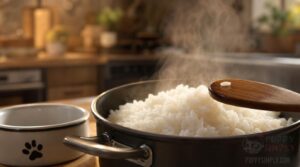
Once the water’s boiling, heat control matters more than you’d think. Proper Water Ratio and Pot Selection ensure grains cook evenly, preventing uneven textures that could affect digestion.
For dog gastrointestinal health, soft texture is everything. Undercooked rice remains hard and resists digestion, potentially causing discomfort. Use these Softness Cues to nail the Texture Test:
- Press a grain between fingers — it should squash easily
- Grains look fully opaque, not translucent
- No crunch when tasted
- Spoon smears rice smoothly
Cool Before Serving
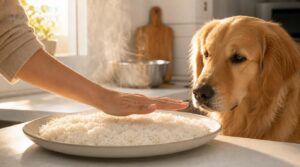
Surface cooling matters for food safety for pets — steamed rice can burn your dog’s mouth and tongue. Don’t rush this step. Spread the rice in a thin layer on a wide plate for quickly chill it.
Perform a simple temperature check: if the rice feels comfortable against your wrist, it’s ready.
Portion division into meal-sized servings also ensures storage readiness for the fridge.
Avoid Salt and Butter
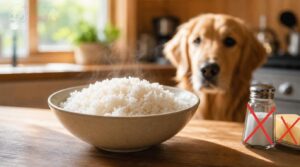
Plain means plain — no added salt, oil, butter, or seasonings of any kind. Salt drives sodium levels up, which can strain your dog’s kidneys and cardiovascular system. Butter adds saturated fat your dog simply doesn’t need.
For unsalted cooking, stick to water only. While low-sodium broth and herb flavoring might seem harmless, food safety for pets demands checking every ingredient for anything harmful to dogs first.
No Garlic or Onion

Never add garlic or onion to your dog’s rice — in any form. Fresh, powdered, or dried, alliums are toxic to dogs and can damage red blood cells even in small amounts. That’s why allium-free seasoning is the only safe route.
Cross-contamination caution matters too: shared utensils or pots can carry residue. Plain herb flavor boost from parsley is fine, but skip garlic substitute spices entirely.
How Much Rice Can Dogs Eat?

Portion size matters more than most dog owners realize. Too much rice — even plain, well-cooked rice — can tip the calorie balance and cause more harm than good.
Here’s a simple guide based on your dog’s size.
Extra-Small Dogs: 1–2 Tbsp
Your extra-small dog’s mini stomach capacity leaves little room for extras. For dogs under 20 pounds, tiny portion measuring matters—just 1 to 2 tablespoons of plain cooked rice works as a vet-recommended bland diet supplement.
Think of it as calorie budgeting: rice can be a healthy addition only when gradual food introduction and stool observation confirm your dog tolerates it well.
Small Dogs: 2–3 Tbsp
Small dogs weighing 21–30 pounds can handle 2–3 tablespoons of plain white rice per serving. That is your sweet spot for portion sizes without throwing off calorie accounting. Stick to twice weekly — portion frequency matters here.
Given white rice’s higher glycemic index, watch for any digestive problems during the adjustment period.
Adjust texture preference by mashing if your dog hesitates.
Medium Dogs: ¼ Cup
For medium dogs — think 31 to 50 pounds — ¼ cup of plain cooked rice per meal strikes the right balance. Rice can be a healthy addition to your dog’s diet when portion consistency stays front of mind.
Factor it into your calorie counting, since dog nutrition depends on the full picture.
Match scheduling to meal frequency, and adjust texture preference if your dog is hesitant.
Large Dogs: ⅓ Cup
If your large dog falls in the 51–90 pound range, ⅓ cup of plain cooked rice per serving works well as a canine carbohydrate source. Dog diet portion control matters here — rice can be a healthy addition, but factor it into your calorie tracking.
Adjust based on meal frequency, activity levels, and your dog’s body condition to maintain portion consistency. This ensures rice remains a balanced part of their diet while supporting their overall health.
Extra-Large Dogs: ½ Cup
For your extra-large dog (91 pounds or more), ½ cup of plain cooked rice per meal is a reasonable carb source — but portion scaling still matters. Rice can be a healthy addition only when calorie counting keeps it under 10% of daily intake.
- Measure consistently for meal balance
- Watch weight monitoring weekly
- Check digestive tolerance after each serving
- Keep regular food as the foundation
- Adjust portion sizes if stool changes
Risks of Feeding Dogs Rice

Rice is safe for most dogs, but it’s not without its downsides.
Feed too much, too often, or the wrong way, and you could run into real problems. Here’s what to watch out for.
Weight Gain From Overfeeding
Rice packs about 3.6 calories per gram — modest, until portions pile up. Frequent rice additions on top of a dog’s regular meals create a quiet calorie surplus most owners never notice.
Eyeballing measurements leads to portion estimation errors, and bulk volume misperception tricks you into thinking the serving looks "small enough."
Over time, even an active dog can become overweight or obese from consistently oversized, calorie-dense food additions.
Blood Sugar Spikes
Calorie creep isn’t the only concern. White rice has a high glycemic index, which means it pushes blood sugar up fast — especially in diabetic dogs where stress hormones or infection-related glucose rise can already strain blood glucose management.
Implement these strategies to mitigate spikes:
- Limit portions strictly
- Choose low glycemic index foods when possible
- Keep up glucose monitoring regularly
Possible Grain Sensitivity
Most dogs handle rice just fine — but not all. Rice protein allergy is real, and food intolerance in dogs can appear even when rice is plain and cooked. Individual tolerance variance means your dog might experience digestive irritation while another eats the same bowl without issue.
Watch for delayed symptom onset, as reactions sometimes surface days later. This unpredictability complicates identifying rice as the culprit, especially when symptoms emerge long after consumption.
Treat ingredient masking also hides rice in grain-free dog food and commercial snacks, further complicating allergen testing for dogs with sensitive stomachs. These hidden sources make it difficult to pinpoint rice as the trigger for digestive issues.
Nutritional Imbalance Risk
Think of rice as a side dish — not the main event. Leaning too heavily on it can quietly tip your dog’s diet toward a carb-dominant diet, crowding out the protein and fat they actually need.
Micronutrient deficits, protein deficiency, and fatty acid shortage can all follow. For balanced homemade dog meals, rice should complement complete nutrition, never replace it.
Undercooked Rice Dangers
Raw or undercooked rice isn’t just less digestible — it’s a genuine safety concern. Hard, undercooked grains can irritate your dog’s stomach and trigger bloating, or diarrhea.
Worse, undercooked rice may harbor Bacillus cereus, a bacterium capable of toxin formation that causes vomiting and gut distress. Cross-contamination risk rises with improper handling.
Vulnerable dogs — puppies, seniors, those with sensitive stomachs — feel these effects most.
Dogs That Should Limit Rice

Rice works well for most dogs, but a handful of pups really should keep it off the regular menu. Their health conditions make even small amounts a potential problem.
Here’s who needs to be more careful.
Diabetic Dogs
Rice and diabetes don’t mix well. White rice spikes blood sugar levels quickly — the last thing you want in diabetes management in dogs. Insulin timing depends on carb consistency, so adding a high-glycemic food disrupts glycemic control in dogs rapidly.
If you’re considering rice as an occasional treat, prioritize low glycemic foods, watch for hypoglycemia signs, and always confirm treat planning with your vet through routine glucose monitoring.
Overweight Dogs
Extra carbs are the last thing an overweight dog needs. White rice’s high glycemic index adds calories fast, worsens joint stress, and chips away at exercise motivation.
Body condition scoring helps your vet flag the problem early. Pairing calorie tracking with owner feeding habit adjustments is essential.
Measure portions, skip table scraps, and choose low glycemic foods and a low-fat diet for dogs to support healthy weight and obesity prevention.
Dogs With Allergies
Grain allergies are uncommon in dogs, but they’re real. If your dog shows itchy skin, recurring ear infections, or digestive upset after eating white rice, a food allergy may be the culprit. Allergy testing — including dog allergen testing — helps pinpoint the trigger.
Watch for these allergy warning signs:
- Persistent paw licking or chewing
- Recurrent ear infections
- Skin redness or hot spots
- Vomiting or loose stools after meals
- Hair loss from overgrooming
Food allergies in dogs often overlap with Environmental Triggers, Flea Allergy Dermatitis, and Contact Irritants, making Management Strategies complex. Allergy Testing clarifies whether rice is truly the problem. Until then, switching to a hypoallergenic diet — free of ingredients harmful to dogs — is the safest move.
Sensitive-Stomach Dogs
Even without a diagnosed allergy, some dogs simply have sensitive stomachs. Food intolerance signs — loose stools, gas, or vomiting after meals — can flare with any diet change, including rice. A gradual diet shift helps reduce stress-related gut upset.
Stick to a vet-recommended bland diet, practice portion control, and ask about veterinary monitoring if digestive problems persist even on a low-fat diet for dogs.
Dogs on Prescription Diets
Adding rice — even plain, boiled rice — can quietly disrupt the therapeutic nutrient balance your vet carefully designed for your dog’s prescription diet. These diets are not one-size-fits-all; they’re built around your dog’s exact condition.
Stick to veterinary dietary advice and follow changeover protocols before making any adjustments. Deviating from the prescribed plan risks undermining its effectiveness.
Diet adherence challenges are real, but consistency is what makes treatment work. Trust the structured approach to ensure your dog’s health remains on track.
Can Puppies Eat Rice?

Puppies can eat rice — but a few things are worth knowing before you add it to their bowl. Their digestive systems are still developing, so what works for an adult dog doesn’t always translate directly.
Here’s what to keep in mind when feeding rice to a young pup.
Safe in Small Amounts
Puppies can handle rice, but small portions are essential. Aim for a tablespoon or two—enough to support meal balance without displacing critical growth nutrients.
Digestive tolerance varies from puppy to puppy, so monitor for gas or loose stools. Allergy observation is also crucial.
Feeding should remain occasional, not routine, to avoid over-reliance on rice in their diet.
Use Fully Cooked Rice
Fully cooking rice is essential, as it triggers starch gelatinization—the process that softens grains and makes them digestible. Skipping this step risks leaving hard bits that can irritate a puppy’s stomach.
Always boil plain white rice or brown rice in water until tender. After cooking, cool it to room temperature to ensure safe portioning and timing while preventing bacterial growth.
Keep Meals Balanced
Think of rice as just one piece of the puzzle, not the whole picture. For nutritional balance in pets, protein proportion matters most — prioritize a protein-to-carbohydrate ratio where protein leads the plate.
Add fiber inclusion through vegetables, practice portion control, and maintain hydration emphasis daily.
Food group variety aids better nutrient absorption and meets dog nutrition guidelines for growing puppies.
Ask Your Veterinarian
Still unsure if rice fits your puppy’s diet? Veterinary oversight matters most when managing a growing dog’s nutritional needs. That’s exactly what vet consultations are for.
Your vet can provide:
- Glycemic Control Advice and Bloodwork Recommendations individualized to your puppy’s health
- Fecal Testing Guidance if digestive symptoms appear
- Prescription Diet Options or a Weight Management Plan with clear dietary guidelines for dogs
Frequently Asked Questions (FAQs)
Can dogs eat brown rice?
Yes, dogs can eat brown rice — plain and fully cooked. It offers dietary fiber benefits and supports steady carbohydrate metabolism in dogs.
However, its caloric density and phytate content necessitate moderation and veterinary guidance always apply.
Can dogs eat white rice?
Plain white rice is safe for your dog — it’s a vet-recommended bland diet staple for upset stomach relief and digestive support. Just keep it plain, portioned, and paired with protein.
Can dogs eat basmati rice?
Basmati is as safe as any plain white rice for dogs — fully cooked, unseasoned, and served in small portions. It fits a vet-recommended bland diet and suits sensitive stomachs well.
Is rice good for dogs?
Rice can be good for dogs in the right context. It’s easy on dog digestion, low in fat, and helpful during stomach upset —
as long as you skip the risk of toxic seasonings.
What words do dogs love to hear the most?
Dogs go wild for a handful of words: "walkies," "treat," "fetch," "dinner," and their own name. These high-value commands and food cue triggers spark instant tail-wagging, every single time.
How much rice is OK for a dog?
Portion size depends on your dog’s weight. Extra-small dogs get 1–2 tablespoons; medium dogs, ¼ cup; large dogs, ⅓ cup. Keep rice under 10% of daily caloric intake, offered 2–3 times weekly.
Is white rice toxic for dogs?
No, white rice isn’t toxic to dogs. The toxin misconception likely stems from arsenic risk and allergy signs in sensitive stomachs.
Plain, fully cooked white rice is safe — but vet advice matters for food intolerance or digestive tolerance concerns.
What’s better for dogs, rice or pasta?
For most dogs, plain cooked rice wins. It’s easier on digestion, naturally gluten-free, and better for glycemic control than pasta.
When starch-binding stool matters, rice remains your go-to bland option.
Can dogs eat fully cooked rice?
Yes — rice is one of those foods that’s genuinely safe when kept plain and fully cooked. For canine digestion, it’s gentle, starchy, and easy on the gut.
How much rice should I feed my dog?
Keep rice to about 10% of your dog’s daily calories. Weight-based ratios make this simple: tiny dogs get 1–2 tablespoons; large dogs, up to ⅓ cup.
Veterinary guidance helps dial in the right amount.
Conclusion
Like Hippocrates said, let food be thy medicine—and for a dog with an upset stomach, plain cooked rice earns its place in that philosophy. Dogs can eat rice safely when it’s prepared simply, portioned correctly, and used with purpose rather than habit.
It won’t replace a balanced diet, but it remains one of the most reliable tools for settling digestive trouble. Use it wisely, and your dog’s bowl—and belly will thank you.
- https://www.akc.org/expert-advice/nutrition/can-dogs-eat-rice/
- https://www.petmd.com/dog/nutrition/can-dogs-eat-rice
- https://www.grandmalucys.com/blogs/grandma-lucys-blog/is-rice-a-safe-food-to-feed-to-your-dog?srsltid=AfmBOoq5aq8GHYR3Ag8_BiXT8sZsov9keOuGAbszLscRiaz0sdr3n0vR
- https://wefeedraw.com/blog/brown-rice-vs-white-rice-for-dogs?srsltid=AfmBOorwEP1gHRdF0995O43HJ6Rx5weJJdkRBQI9isJEfcuwV1-nUhd-
- https://www.amcny.org/find_doctor/carly-fox/