This site is supported by our readers. We may earn a commission, at no cost to you, if you purchase through links.

You toss your dog a piece of chicken without a second thought, but reach for red beans and suddenly you’re second-guessing everything. The truth is, red kidney beans can be perfectly safe for your dog—but only when you prepare them correctly.
Get it wrong, and those innocent-looking legumes pack a toxin called lectin that’ll send your pup straight into digestive distress. Cooked properly, though, red beans offer solid plant-based protein, fiber, and minerals that support your dog’s health.
Before you share your rice and beans dinner or experiment with homemade dog food recipes, you need to know exactly how to make red beans safe, when to avoid them altogether, and how much is appropriate for your dog’s size and health status.
Table Of Contents
- Key Takeaways
- Can Dogs Eat Red Beans Safely?
- Nutritional Benefits of Red Beans for Dogs
- Potential Risks of Feeding Red Beans
- Safe Preparation of Red Beans for Dogs
- How Much Red Beans Can Dogs Eat?
- Signs of Adverse Reactions in Dogs
- Comparing Red Beans to Other Safe Beans
- Red Beans as a Treat or Training Reward
- Tips for Introducing Red Beans Into Your Dog’s Diet
- Frequently Asked Questions (FAQs)
- Can my dog eat cooked red beans?
- Are canned red beans safe?
- Can you give red beans to dogs?
- Can dogs eat raw kidney beans?
- How much of kidney beans can dogs eat in a day?
- Are green beans safe for dogs?
- Can dogs eat baked beans?
- What are the benefits of feeding beans to dogs?
- Can puppies safely eat red beans?
- Do red beans help dogs lose weight?
- Conclusion
Key Takeaways
- Red kidney beans are safe for dogs only when fully cooked and served plain, because raw or undercooked beans contain lectin toxins that cause severe vomiting, diarrhea, and abdominal pain.
- Properly prepared red beans offer valuable plant-based protein (8-9g per 100g), fiber for digestive health, and essential minerals like iron, potassium, and folate when served as occasional treats.
- Keep portions small based on your dog’s size—one to two teaspoons for small dogs, one tablespoon for medium dogs, and two to three tablespoons for large dogs—limiting beans to once or twice weekly and under 10% of total daily calories.
- Skip all seasonings, including salt, garlic, onion, and spices, when preparing beans for dogs, and choose home-cooked dried beans over canned versions to control sodium and avoid potentially harmful additives.
Can Dogs Eat Red Beans Safely?

Red beans can be part of your dog’s menu if you prepare them properly. Fully cooked, plain red kidney beans are generally safe for healthy adult dogs to eat in small amounts as an occasional extra, not as a main meal.
However, raw or undercooked red kidney beans are toxic to dogs due to a natural compound called lectin, so thorough cooking is essential.
In the context of pet food safety, the golden rule is this: never serve raw or undercooked red beans. They contain a toxin called lectin that triggers vomiting, diarrhea, and abdominal pain. Even a few raw beans can cause noticeable trouble because dogs are smaller and more sensitive than humans.
Never feed raw or undercooked red beans to dogs—the lectin toxin causes vomiting, diarrhea, and abdominal pain even in small amounts
Red bean nutrition offers plant-based protein, fiber, and minerals that support canine digestion and overall dog health benefits when you follow safe preparation steps. Dogs with existing kidney, heart, or digestive issues should only get red beans after your vet gives the green light.
For more about safe types of beans, see this guide on beans appropriate for dogs.
Nutritional Benefits of Red Beans for Dogs

When you cook red beans properly, they offer more than just a tasty snack for your dog. These little legumes pack a surprising nutritional punch that can complement your dog’s regular diet.
Let’s look at what makes red beans worth considering as an occasional treat.
Protein and Fiber Content
Cooked red kidney beans offer about 8 to 9 grams of protein per 100 grams, giving your dog a plant-based protein boost alongside their regular animal sources.
This legume also delivers roughly 6 to 7 grams of fiber per 100 grams, which aids digestive health by promoting regular bowel movements and helping your pup feel satisfied between meals without packing on extra calories.
For more details on the beans’ macronutrient breakdown and nutrition facts, you can review expert resources.
Essential Vitamins and Minerals
Beyond protein and fiber, these beans pack in folate—close to 394 micrograms per 100 grams raw—which promotes normal cell growth and blood health.
You’ll also find meaningful iron (around 7 milligrams), potassium (about 1359 milligrams), and magnesium (roughly 138 milligrams) per 100 grams, helping your dog’s mineral balance, heart function, and muscle relaxation when beans complement complete nutrition.
Antioxidants and Phytonutrients
Right alongside those minerals, red beans deliver an impressive load of antioxidants—especially polyphenols like flavanols and anthocyanidins—that neutralize free radicals and support cellular health. That dark red hue signals extra phytonutrient richness, offering your dog natural protection.
The benefits of red beans include:
- Combat oxidative stress over time
- Boost heart and metabolic function
- Add variety beyond standard fruits
- Pair fiber with antioxidant benefits
- Strengthen nutrient synergy in balanced diets
Potential Risks of Feeding Red Beans
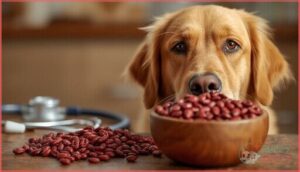
Red beans can be a nutritious addition to your dog’s diet, but they come with some important safety concerns you need to know about. When prepared incorrectly or fed in excess, these legumes can cause real problems for your pup.
Let’s look at the three main risks you should watch out for.
Toxicity From Raw or Undercooked Beans
Even a small bite of raw red beans poses serious food toxicity risks for your dog. Raw red beans contain phytohaemagglutinin, a lectin that triggers severe vomiting, diarrhea, and abdominal pain within hours. Undercooked dangers persist because heat hasn’t neutralized these bean toxins.
Some cases require IV fluids to reverse dehydration and circulatory damage from raw bean risks and canine dietary needs violations.
| Exposure Level | Symptoms | Action Required |
|---|---|---|
| Small amount raw | Vomiting, diarrhea | Monitor closely, call vet |
| Undercooked portion | Gut upset, lethargy | Veterinary assessment |
| Large raw serving | Severe dehydration, anemia | Emergency care needed |
Digestive Upset and Gas
Your dog’s gut health may take a hit even after properly cooked red beans. Dogs lack the digestive enzymes to break down bean fiber, so gut bacteria ferment these carbohydrates and create excessive gas formation.
If your pup struggles with red bean digestion, edamame offers a gentler alternative that’s easier on their stomach while still providing plant-based protein.
This intestinal imbalance often leads to stomach discomfort, bloating, and loose stools—especially in pups with sensitive gastrointestinal health or chronic digestive issues.
Allergic Reactions and Sensitivities
Food allergies can develop when your dog’s immune system flags red bean proteins as threats. Some pups show skin issues like paw itching or facial redness, while others react with digestive sensitivities such as vomiting or diarrhea.
Watch for:
- Persistent scratching at paws, face, or ears
- Red rashes or hot spots from repeated licking
- Hair loss in irritated areas
- Ongoing stomach upset after bean-containing meals
- Combined skin and digestive issues signaling allergic reactions
Safe Preparation of Red Beans for Dogs
Getting red beans ready for your dog isn’t complicated, but a few key steps make all the difference between a safe snack and a potential problem.
The way you prepare these legumes directly affects how well your dog’s body processes them. Let’s walk through the essentials—from proper cooking methods to what you should never add to the pot.
Soaking and Cooking Techniques
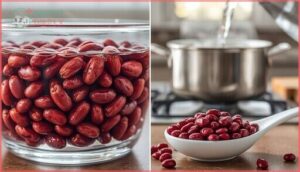
Proper bean soaking methods set the foundation for safe red beans. Soak dried beans for 8 to 12 hours in cool water—at least three times their volume—to soften them and reduce gas-producing compounds.
After soaking, discard that water and cook in fresh water at a rolling boil for 10 to 15 minutes, then simmer 45 to 60 minutes until very tender for canine digestive health.
Avoiding Seasonings and Additives
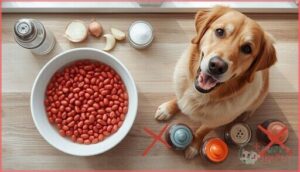
Plain preparation protects your dog from serious harm—seasonings turn nutritious red beans into a toxic threat. Salt, onion, garlic, and spice blends can cause anything from painful stomach upset to life-threatening poisoning in canine diets.
- Skip all salt and sodium-based flavor enhancers to avoid pushing daily intake into the danger zone
- Never add onion, garlic, or their powdered forms, which damage red blood cells and trigger anemia
- Keep out sugar, artificial sweeteners, and fatty toppings that overwhelm digestion and risk pancreatitis
Safe cooking means water only.
Choosing Fresh Vs. Canned Red Beans
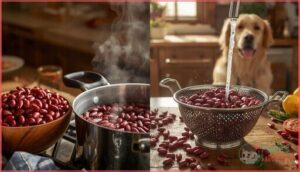
Fresh cooked red beans beat canned options for most dogs because sodium content stays low and you skip can linings that may contain BPA. Regular canned red beans can easily exceed a medium dog’s daily sodium limit, while home cooked beans let you control every ingredient. If you choose canned red beans, pick no-salt-added versions and rinse them thoroughly to cut sodium by roughly 40 percent.
| Factor | Fresh Cooked Beans | Canned Red Beans |
|---|---|---|
| Sodium Content | Naturally low unless salt added during cooking | High in regular versions; low-sodium options available |
| Nutrient Retention | Better preservation of heat-sensitive vitamins | Some nutrient loss from canning heat |
| Can Linings | None—avoids BPA exposure | May contain BPA unless labeled BPA-free |
| Cooking Methods | Requires soaking and 1+ hour simmering | Ready after draining and rinsing |
| Bean Storage | Refrigerate 3–4 days or freeze portions | Unopened: months; opened: 3–4 days refrigerated |
For canine digestive health and dog nutrition, batch cooking dry beans offers the safest routine choice while keeping cooked beans ready when your pup needs a wholesome reward.
How Much Red Beans Can Dogs Eat?

Even when red beans are cooked safely, portion control matters. Too much can overwhelm your dog’s digestive system and throw off their balanced diet.
Let’s look at how much you should feed based on serving size, how often to offer beans, and adjustments for your dog’s individual needs.
Recommended Serving Sizes
Your dog’s serving size depends on weight and overall calorie needs. Small dogs under 20 pounds can start with one to two teaspoons of cooked red beans, while medium dogs between 20 and 50 pounds usually tolerate about one tablespoon.
Large dogs over 50 pounds can handle two to three tablespoons per serving. Remember, portion control keeps red beans within the 10 percent treat rule to maintain nutrient balance and digestive health.
Frequency of Feeding
Once you’ve nailed serving sizes, you need to think about feeding schedules. Most dogs do best when red beans appear only once or twice per week, not daily.
This weekly ration gives their digestive system a break from the extra fiber and prevents long‑term stomach strain. Keep bean portions under 10 percent of total calories alongside other treats to maintain nutrient balance and canine digestive health.
Adjusting for Dog Size and Age
Size and age matter just as much as frequency when you’re serving red beans. Small breed dogs under ten pounds should stick to one to two teaspoons per meal, while large breed adults can handle up to three tablespoons.
Puppy nutrition and senior care demand extra caution—immature or aging digestive systems tolerate rich foods poorly, so start smaller and watch closely.
Signs of Adverse Reactions in Dogs

Even when you prepare red beans properly, your dog mightn’t tolerate them well.
Watching for warning signs helps you catch problems early before they get worse. Here’s what to look for after introducing red beans into your dog’s diet.
Digestive Issues (Gas, Bloating, Diarrhea)
Beans can upset your dog’s stomach in a few predictable ways. Gas causes from red beans stem from fiber content fermenting in the colon, while bloating signs include a tight belly and restlessness as trapped air builds up.
Diarrhea triggers range from undercooked beans to sudden overfeeding that overwhelms canine digestive health. Tolerance levels vary widely—what suits one dog may cause gastrointestinal health issues in another.
Allergic Responses (Itching, Swelling)
Though rare, allergic responses to red beans can strike suddenly. Food sensitivities in dogs often show up as skin allergies—your pup might develop itchy patches on paws, face, or belly, sometimes with noticeable swelling around the muzzle or eyes.
Watch for these food allergies in dogs:
- Persistent scratching despite normal-looking skin
- Rusty-brown staining on paws from constant licking
- Raised hives on the belly or groin
- Facial puffiness appearing within 20–60 minutes
- Red, warm skin folds around ears
Canine health depends on catching these signs early.
When to Contact Your Veterinarian
Contact your veterinarian if vomiting continues beyond two episodes or diarrhea lasts more than 24 hours—both signal serious digestive issues. Vet emergency situations include bloody stools, bloated abdomen, or toxic symptoms like trembling and weakness.
Allergy signs paired with breathing trouble need poison control or immediate care. When canine health declines after beans, veterinary advice and guidance protect your dog’s nutrition and wellness from food toxicity risks.
Comparing Red Beans to Other Safe Beans
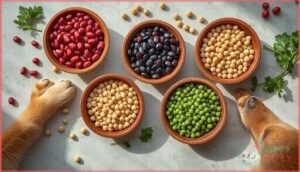
Red beans aren’t the only legume you can safely share with your dog when prepared correctly. Several other bean varieties offer similar nutritional benefits with their own unique advantages.
Here’s how red beans stack up against other dog-friendly options you might already have in your pantry.
Kidney Beans (Cooked)
Red kidney beans are the same bean family as red beans, so the cooked bean benefits and safety rules overlap completely. When you cook kidney beans thoroughly, they offer your dog solid plant protein, dietary fiber, and essential minerals that support canine nutrition.
Keep these canine digestion pointers in mind:
- Always cook kidney beans fully to destroy lectin toxins that cause severe stomach upset.
- Serve plain without salt, garlic, onions, or spices that harm dogs.
- Start with one tablespoon mixed into regular food to test your dog’s tolerance.
- Limit portions to under 10 percent of daily calories so complete dog food isn’t displaced.
- Rinse canned versions thoroughly to remove excess sodium before offering them.
Cooked kidney beans deliver comparable dog food alternatives to commercial treats, giving you a budget-friendly pet health tip that adds variety without sacrificing safety.
Black Beans
Your dog can enjoy black beans just as safely as red kidney beans when you cook them fully and serve them plain.
Black Bean Nutrition brings similar plant protein and about 7 grams of fiber per cup, supporting Canine Digestion and stool quality.
Like other Beans as treats, black beans may trigger Bean Allergies or gas in sensitive pets, so start with small portions to protect Pet Wellness and monitor Canine nutrition balance.
Green Beans
Green beans stand apart from red kidney beans because they’re mostly water and fiber, giving your dog fewer calories and gentle vegetable vitamins like A, C, and K instead of heavy starch.
They support Dog Wellness and Canine Health through:
- Lower calorie density for weight management
- Minimal lectin risk, even when raw
- Less gas than red or black beans
- Crunchy texture dogs love as Fresh Treats
- Rich Green Nutrition without protein overload
This makes green beans ideal for everyday Bean Benefits in pet care and dog nutrition.
Pinto Beans
Pinto beans mirror red kidney beans in protein and fiber density, so both fill your dog’s bowl with similar starch and energy compared to green beans. Yet pinto beans carry oligosaccharides that challenge canine digestion, often causing more gas than many pet food alternatives.
| Bean Nutrition Facts | Pinto Bean Benefits vs. Concerns |
|---|---|
| Protein & Fiber | Close to red kidney beans in density |
| Calorie Load | Higher than green beans |
| Gas Risk | Oligosaccharides can trigger bloating |
| Antioxidants | Helps aging immune system |
Watch for bean allergy signs like itching or loose stools when you introduce these beans as treats, and keep portions small to protect canine digestive health and maintain balanced dog nutrition and diet without crowding out complete pet nutrition.
Red Beans as a Treat or Training Reward

Red beans can work as a low-calorie reward during training sessions, but you’ll want to keep portions small.
The key is making sure these treats don’t throw off your dog’s overall nutritional balance. Let’s look at how to use red beans effectively and keep your pup’s diet on track.
Using Small Portions for Training
A few tiny bean pieces can work wonders during dog training when you control portions carefully. Proper reward timing and calorie management keep red beans a healthy treat option without overshadowing your dog’s balanced canine diet.
- Training treat size: Cut cooked red beans into pea-sized bits so your dog swallows quickly without interrupting focus.
- Reward timing: Hand out bean treats mainly during short five-to-ten-minute sessions to maintain dog motivation.
- Portion control: Stick to one small piece per correct response in early training.
- Calorie management: Keep total bean rewards under ten percent of daily calories to prevent weight gain.
Balancing Treats With Complete Nutrition
Red beans add variety, but your dog’s main meal still needs to supply ninety percent of daily calories for proper nutrient balance and canine diets to work.
Planning treat portions ahead helps with calorie control and meal planning, so you don’t accidentally throw off dietary supplements or dog nutrition and health.
That careful approach keeps your pet nutrition and diet on track.
Tips for Introducing Red Beans Into Your Dog’s Diet
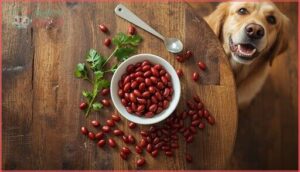
When you’re ready to add red beans to your dog’s meals, the key is to start slow and keep things simple. You want to make the change smooth so their stomach can adjust without any surprises.
Here’s how to do it safely while keeping their overall nutrition on track.
Mixing With Regular Dog Food
Start with a small amount—about one tablespoon of mashed, well-cooked red beans mixed into a cup of your dog’s regular kibble. This bean portion control ensures proper dog food ratio while supporting nutrient balance.
Reduce the kibble slightly to manage calories, and mix just before serving to prevent bacterial growth. These mixing techniques help you maintain canine diets without overwhelming your pup’s system.
Ensuring a Balanced Canine Diet
Balanced meals depend on more than just adding beans—nutrient ratios matter. Your dog needs protein sources, dietary fiber, and careful calorie management from a complete diet that promotes canine health and wellness. Red beans shouldn’t exceed 10 percent of daily calories.
Keep these dietary considerations for dogs in mind:
- Feed commercial “complete and balanced” food as the base
- Measure portions to maintain consistent nutrition
- Monitor body condition monthly
- Adjust bean amounts for your dog’s size
- Consult your vet about pet nutrition and diet changes
Frequently Asked Questions (FAQs)
Can my dog eat cooked red beans?
Yes, your dog can enjoy plain, fully cooked red kidney beans in moderation—think of them as occasional treats, not dinner staples.
Keep portions small, skip seasonings, and watch for digestive upset.
Are canned red beans safe?
Plain canned red beans can work as an occasional snack if you rinse them thoroughly to remove excess sodium content, but check labels carefully—any onion, garlic, or heavy seasonings create serious canned bean risks for your dog.
Can you give red beans to dogs?
You can give red beans to dogs, but only if they’re fully cooked and plain.
Raw or undercooked beans contain lectins that irritate your dog’s digestive system, causing vomiting and lethargy.
Can dogs eat raw kidney beans?
Never feed your dog raw kidney beans. They contain a dangerous lectin called phytohemagglutinin that damages red blood cells and irritates the gut, causing vomiting, diarrhea, and potentially serious canine health complications.
How much of kidney beans can dogs eat in a day?
Most healthy dogs can safely eat one teaspoon to one tablespoon of cooked kidney beans daily, depending on their size.
This small portion must stay within your canine’s total 10 percent treat allowance.
Are green beans safe for dogs?
Yes, green beans are safe for dogs when served plain. They’re a healthy snack option packed with fiber, vitamins, and minerals that support canine digestive health and wellness without harmful additives.
Can dogs eat baked beans?
While a lick or two isn’t an emergency, baked beans aren’t dog-safe treats.
The sauce carries harmful sugar, salt, and seasonings that upset canine digestion, making plain cooked beans a wiser choice.
What are the benefits of feeding beans to dogs?
Beans deliver a nutrient boost with lean protein, fiber for healthy digestion, and essential minerals.
Different bean variety options support canine nutrition through dietary balance, adding antioxidants and vitamins without excess fat or calories in your dog’s meals.
Can puppies safely eat red beans?
Puppies can eat fully cooked red beans in tiny portions, but their sensitive digestive systems handle them poorly.
Most veterinarians recommend skipping red beans entirely for puppies, focusing instead on complete puppy nutrition designed for growth.
Do red beans help dogs lose weight?
When used sparingly, red beans can support canine weight management through fiber benefits and healthy snacking choices.
However, they don’t directly cause weight loss—calorie control, protein balance, and proper dog diet portions remain essential for effective results.
Conclusion
The irony? Something as wholesome as red beans requires more caution than most processed dog treats sitting in your pantry.
But now you know the real answer to “can dogs eat red beans”—yes, when you’ve soaked and fully cooked them, skipped the seasonings, and served appropriate portions. Your dog doesn’t need red beans to thrive, but properly prepared, they’re a safe, nutrient-dense option worth considering for variety.