
This site is supported by our readers. We may earn a commission, at no cost to you, if you purchase through links.

Most dog owners discover pumpkin as a remedy the hard way—mid-crisis, searching frantically for something to settle an upset stomach. What they find surprises them: this ordinary kitchen staple works.
Vets have recommended plain pumpkin for digestive issues in dogs for years, and the science behind it holds up. It’s rich in fiber, low in calories, and packed with vitamins that support everything from gut health to eyesight.
Whether your dog struggles with loose stools, constipation, or you simply want a nutritious treat option, pumpkin earns a place in their bowl—when served correctly.
Table Of Contents
- Key Takeaways
- Can Dogs Eat Pumpkin?
- Nutritional Benefits of Pumpkin for Dogs
- Digestive Health and Pumpkin
- How to Safely Feed Pumpkin to Dogs
- Risks, Precautions, and Feeding Guidelines
- Frequently Asked Questions (FAQs)
- Is Pumpkin good for dogs?
- What happens if a dog eats too much pumpkin?
- Can dogs eat canned pumpkin?
- Can dogs eat pumpkin seeds?
- Can dogs eat pizza?
- What is the 90/10 rule dog?
- What is better for dogs, sweet potato or pumpkin?
- How much pumpkin can I give my dog?
- Is it harmful to dogs if they eat a pumpkin?
- Can dogs eat pumpkin safely?
- Conclusion
Key Takeaways
- Plain, cooked, or canned pumpkin is safe for most dogs and supports digestive health, but raw pumpkin and products with added sugar, salt, or spices can cause problems.
- Pumpkin’s fiber helps regulate your dog’s bowel movements, easing both constipation and diarrhea when served in the right portion for their size.
- Pumpkin offers key vitamins and minerals like vitamin A, C, E, potassium, and iron, which support vision, immune health, and overall wellness.
- Too much pumpkin can lead to loose stools, gas, or vomiting, so stick to recommended serving sizes and consult your vet if your dog has ongoing digestive issues or allergies.
Can Dogs Eat Pumpkin?
Yes, dogs can eat pumpkin — and it’s one of the few human foods that actually earns a place in a balanced canine diet. Plain cooked pumpkin and 100% canned pumpkin without added salt, sugar, or spices are both considered safe for most dogs when given in small amounts.
If you’re already adding pumpkin to your dog’s bowl, butternut squash is another dog-safe vegetable worth rotating in for variety.
From a veterinary care standpoint, pumpkin is a gentle, low-risk addition that promotes dog digestive health and overall canine health. That said, pet safety always comes first. Raw pumpkin is harder to digest, and anything containing sweeteners like xylitol is toxic. If your dog has a chronic condition or you suspect a pumpkin allergy, check with your vet before feeding dogs pumpkin for the first time.
For more information on the benefits of pumpkin, consider reviewing dog health benefits to make informed decisions about your pet’s diet.
Nutritional Benefits of Pumpkin for Dogs

Pumpkin isn’t just a fall favorite — it’s a surprisingly nutritious addition to your dog’s bowl. It packs a solid lineup of vitamins, minerals, and fiber that can do real good for their health.
Here’s a closer look at what makes pumpkin worth keeping in your pantry.
Key Vitamins and Minerals in Pumpkin
Pumpkin is a quiet powerhouse in terms of Vitamin Benefits and Mineral Content. It delivers vitamin A for healthy vision and skin, vitamin C and vitamin E for Antioxidant Effects and Immune Support, plus potassium for heart and muscle function and iron for healthy red blood cells.
Together, these nutrients offer real Nutrient Balance — meaningful support packed into just a spoonful. The nutritional value of pumpkin is highlighted in its low glycemic index, which makes it a beneficial addition to a healthy diet.
Fiber Content and Prebiotic Effects
Beyond those vitamins, fiber is where pumpkin really earns its place in canine nutrition. It offers both soluble and insoluble fiber types — about 60% soluble, 40% insoluble — tackling loose stools and constipation at the same time.
Its fermentable fibers also act as a prebiotic, feeding good gut bacteria and supporting Microbiome Balance. That’s genuine, food-first Gut Health support.
Supporting Immune and Vision Health
All that gut support pairs with some impressive immune and vision work. Pumpkin’s beta-carotene converts to vitamin A in your dog’s body, delivering real Vitamin A Benefits for Eye Health and Immune System strength. The Carotenoid Effects go further with lutein and zeaxanthin protecting retinal tissue, while Antioxidant Support from vitamins C and E shields immune cells from damage — solid canine nutrition from a humble vegetable.
Green bell pepper offers similar antioxidant-rich eye and immune benefits, as explored in this guide on green bell pepper nutrition for dogs.
- Vitamin A maintains night vision and healthy mucous membranes
- Lutein and zeaxanthin protect retinal cells from oxidative damage
- Vitamins C and E neutralize free radicals, supporting active immune cells
Digestive Health and Pumpkin

Pumpkin does more than just taste good to your dog — it’s a quiet workhorse for their gut. The fiber inside works in a few specific ways that can make a real difference in your dog’s daily comfort.
Here’s how pumpkin aids digestive health from the inside out.
Easing Constipation and Diarrhea
When your dog’s stomach is off, plain canned pumpkin can be a surprisingly effective natural remedy. Its soluble fiber absorbs excess water to ease diarrhea, while also softening stool to relieve constipation — real digestive relief from one simple ingredient.
For most dogs, this fiber benefit kicks in within 6–12 hours, gently supporting gut health without harsh side effects.
Regulating Bowel Movements
Consistency is what good digestive health really looks like day to day. Feeding small, steady amounts of plain canned pumpkin gives your dog’s gut a reliable fiber intake that maintains bowel regularity — not just a one-time fix.
The mix of soluble and insoluble fiber improves stool quality, helping your dog settle into a natural rhythm that keeps both constipation and diarrhea in check.
Maintaining Healthy Weight
Weight management often comes down to simple swaps. Pumpkin contains just 5 calories per tablespoon, so it adds bulk without loading your dog’s bowl with extra calories. Here’s how it aids Calorie Control and Portion Planning:
- Replaces high-calorie treats for Healthy Snacking
- Lowers meal calorie density through Fiber Benefits
- Slows stomach emptying, reducing between-meal begging
- Aids canine digestive health and steadier blood sugar
- Keeps dog nutrition and wellness on track during weight management plans
How to Safely Feed Pumpkin to Dogs
Knowing pumpkin is good for your dog is one thing — knowing how to serve it safely is another. A few simple choices make a real difference, from the type of pumpkin you pick to how you prep and serve it.
Here’s what you need to know before your dog gets their first taste.
Best Types of Pumpkin (Canned Vs. Fresh)

Both options work, but canned pumpkin wins on practicality. Its nutrient density beats fresh — one cup delivers 212% of daily vitamin A, and shelf life means it’s ready whenever your dog needs it. Fresh pumpkin is fine cooked, but raw pumpkin risks poor digestion.
Here’s a quick comparison:
| Factor | Canned Pumpkin | Fresh Pumpkin |
|---|---|---|
| Nutrient Density | Higher (lower water content) | Lower (90% water) |
| Shelf Life | Long, year-round | Seasonal, short |
| Preparation Effort | None — open and serve | Requires cooking |
| Texture Preference | Smooth puree dogs accept easily | Varies by cut |
Proper Preparation and Serving Methods

Preparing fresh pumpkin is easier than it sounds. Follow these safe cooking methods for feeding pumpkin to dogs:
- Bake peeled, seeded flesh at 175–180°C for 40–50 minutes until soft.
- Blend cooled flesh into smooth homemade pumpkin puree — no salt, spices, or oil.
- Offer serving texture options: puree, soft cubes, or lick-mat spreads.
- Skip raw pumpkin entirely — it’s hard to digest.
- Refrigerate canned pumpkin or fresh puree up to four days; freeze extra portions for later.
Mixing Pumpkin With Dog Food

Start small and build up. For kibble coating methods, stir 1 teaspoon of canned pumpkin per cup of dry food, adding a splash of warm water to help it coat each piece evenly. Wet food blending is even simpler — pumpkin folds right in.
Spread the daily diet adjustments across morning and evening meals so your dog’s gut adjusts without complaint.
Safe Pumpkin Treat Ideas
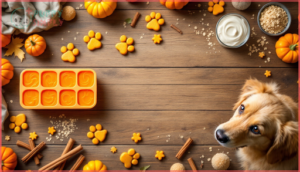
Beyond mixing pumpkin into meals, it shines as one of the most adaptable healthy treats for dogs. Frozen Pumpkin Treats — pumpkin puree blended with plain Greek yogurt and frozen in ice cube trays — make perfect seasonal treats on warm days.
Baked Pumpkin Biscuits, No-Bake Pumpkin Bites, Pumpkin Pupcake Recipes, and Pumpkin Peanut-Butter Snacks all turn this simple vegetable into dog treats your pup will actually look forward to.
Risks, Precautions, and Feeding Guidelines
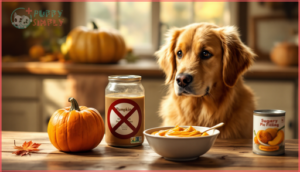
Pumpkin is great for dogs, but a little caution goes a long way. Not all pumpkin products are safe, and feeding too much can cause more problems than it solves.
Here’s what you need to know before adding it to your dog’s bowl.
Dangerous Ingredients to Avoid
Not all pumpkin products are safe — some are genuinely dangerous. Xylitol-laced pumpkin products can trigger severe hypoglycemia in dogs within 30 minutes. Nutmeg myristicin toxicity causes disorientation and elevated heart rate. High-sodium fillings strain kidneys and heart. Harmful spice blends and excess added sugars compound the risk.
Not all pumpkin products are safe — xylitol, nutmeg, and hidden sodium can turn a healthy treat deadly
Stick to plain, unsweetened pumpkin — especially during Halloween and other seasonal pet hazards.
Recommended Serving Sizes by Dog Size
Once you’ve ruled out harmful ingredients, getting the amount right really matters. Weight-Based Portions keep pumpkin a helpful addition rather than a digestive burden. Here’s a simple breakdown:
- Toy Breed Amounts (under 20 lbs): 1–3 teaspoons daily
- Medium Dog Servings (21–50 lbs): 1–2 tablespoons daily
- Large Breed Rations (51+ lbs): 2–4 tablespoons daily
Adjusting daily intake gradually helps your dog’s gut adapt comfortably.
Signs of Too Much Pumpkin
Even with the right serving size, watch your dog closely. Too much pumpkin can flip from helpful to harmful fast. Gastrointestinal distress shows up within 12–24 hours — think diarrhea, vomiting, or abdominal discomfort.
Gas and bloating, appetite loss signs, and lethargy and weakness often follow. Chronically overfeeding can also affect skin and coat health, signaling deeper canine digestive issues worth addressing promptly.
When to Consult a Veterinarian
If pumpkin isn’t helping after 24 to 48 hours, that’s your cue to call a veterinarian. Persistent Digestive Problems — ongoing diarrhea, straining, or vomiting — signal something deeper than a fiber fix can handle.
Watch for Emergency Warning Signs like bloody stool or sudden lethargy.
Dogs with Chronic Disease Management needs, Food Allergies, or Seed Blockage Concerns deserve proper Veterinary Guidance, not guesswork.
Frequently Asked Questions (FAQs)
Is Pumpkin good for dogs?
Yes — and it’s more than just a fall trend. Pumpkin offers real nutritional benefits, supporting canine digestive health with fiber, vitamins, and natural prebiotics that make it a smart, evidence-based addition.
What happens if a dog eats too much pumpkin?
Too much pumpkin can cause loose stools, gas, bloating, and vomiting. Fiber overload pulls excess water into the gut, disrupting canine digestive health and nutrient absorption — so always stick to recommended serving sizes.
Can dogs eat canned pumpkin?
Plain canned pumpkin — just pumpkin, nothing else on the label — is safe for dogs. It’s smooth, seedless, and easy to mix into meals, making it a smart, gut-friendly addition.
Can dogs eat pumpkin seeds?
Dogs can safely eat pumpkin seeds in moderation. Remove the shells first, and stick to plain, unsalted seeds. A few small seeds make a nutritious occasional treat without risking digestive upset.
Can dogs eat pizza?
No, pizza isn’t safe for your dog. Toxic toppings overview alone — onions, garlic, processed meats — plus cheese and fat, crust and carbs, make every slice a real health risk.
What is the 90/10 rule dog?
The 90/10 rule means 90% of your dog’s daily calories should come from balanced food, and no more than 10% from treats — including healthy dog snacks like pumpkin.
What is better for dogs, sweet potato or pumpkin?
Both are healthy, but pumpkin wins for gut comfort differences and sensitive stomachs. Sweet potato offers more calorie density for active dogs. Your dog’s needs decide the better choice.
How much pumpkin can I give my dog?
Think of pumpkin like seasoning — a little goes a long way. A safe starting point is 1 teaspoon per 10 pounds of body weight daily.
Is it harmful to dogs if they eat a pumpkin?
Pumpkin itself isn’t harmful, but the form matters. Raw pumpkin, toxic seasonings, or unsafe parts can cause digestive problems.
Plain, cooked pumpkin is safe when served in appropriate amounts for your dog’s size.
Can dogs eat pumpkin safely?
Yes, dogs can safely eat plain, cooked pumpkin. It promotes gastrointestinal health in dogs and offers real nutritional benefits of pumpkin for canine nutrition — just always check for preexisting health conditions first.
Conclusion
Think of pumpkin as a quiet helper that’s been sitting in your pantry all along. Regarding whether dogs can eat pumpkin, the answer is a confident yes—with the right type, amount, and preparation.
A spoonful of plain pumpkin can calm a troubled gut, support healthy digestion, and add real nutrition to your dog’s bowl. Keep it simple, keep it plain, and your dog’s stomach will thank you.
- https://bestpetfacts.com/is-canned-pumpkin-good-for-dogs/
- https://pawsunleashedusa.com/can-dogs-eat-pumpkin-seeds/
- https://www.spotandtango.com/blog/can-dogs-eat-pumpkin
- https://apssam2011.org/article/pumpkin-for-dogs-benefits-risks-tips-betterpet
- https://www.poochandmutt.co.uk/blogs/nutrition/pumpkin-for-dogs-health-benefits-and-suspiciously-good-snacks