This site is supported by our readers. We may earn a commission, at no cost to you, if you purchase through links.
Your dog spots the pistachio bowl on the coffee table and makes his move before you even notice. It happens fast—and suddenly you’re wondering whether to panic or shrug it off.
Pistachios aren’t classified as toxic to dogs the way grapes or xylitol are, but that doesn’t make them a safe snack. The fat content alone—nearly 45% by weight—puts them in a category that deserves serious attention, especially for dogs prone to digestive issues.
The full picture is more complicated than a simple yes or no, and knowing the difference between a minor incident and a real emergency could matter more than you’d expect.
Table Of Contents
- Key Takeaways
- Dogs Can Eat Plain Pistachios Sparingly
- Are Pistachios Bad for Dogs?
- Pistachio Shells Are Dangerous
- Salted Pistachios Are Unsafe
- Moldy Pistachios Can Be Toxic
- Pistachio Allergy Symptoms in Dogs
- How Many Pistachios Are Safe?
- Can Puppies Eat Pistachios?
- What if Your Dog Ate Pistachios?
- Better Alternatives to Pistachios
- Frequently Asked Questions (FAQs)
- Can dogs eat pistachios?
- Can dogs eat pistachios & urushiol?
- Can dogs eat pistachio ice cream?
- Can pistachios cause pancreatitis in dogs?
- Can dogs eat pistachio nuts?
- How can pistachios cause choking in dogs?
- Can you eat pistachios on keto?
- Are pistachios bad for dogs?
- What nuts can dogs not eat?
- What happens when my dog eats one piece pistachio?
- Conclusion
Key Takeaways
- Plain, unsalted pistachio kernels aren’t toxic to dogs in small amounts, but their nearly 45% fat content makes even a few too many a real risk for pancreatitis.
- Pistachio shells are a serious hazard—they can cause choking, intestinal blockages, and internal cuts from sharp fragments, so keep them completely out of your dog’s reach.
- Salted or seasoned pistachios are unsafe because added sodium strains the kidneys and seasonings like garlic and onion powder can damage your dog’s red blood cells over time.
- Moldy pistachios are especially dangerous—the aflatoxins they produce can cause rapid liver damage in dogs, and there’s no antidote, only supportive veterinary care.
Dogs Can Eat Plain Pistachios Sparingly

Plain pistachios aren’t on the toxic foods list for dogs, but that doesn’t mean you should toss a handful into their bowl without a second thought. A few key conditions determine whether sharing this snack is safe or a mistake waiting to happen. Here’s what you need to know before your dog gets even one.
For a deeper look at portion sizes, risks, and what vets say, check out the full guide on dogs and pistachios.
Not Toxic in Small Amounts
Pistachios aren’t on the toxic list for dogs — unlike grapes or macadamia nuts, a few plain kernels won’t trigger a medical emergency. That said, amount matters a great deal here.
- Small serving size keeps the fat load manageable
- Occasional treats reduce cumulative digestive strain
- Individual tolerance varies dog to dog
Even a "safe" food can cause trouble when portion size grows. That’s why keeping pistachios as a rare snack — not a daily habit — is the smarter call. Owners must also be wary of risk of pancreatitis due to the high fat content in these nuts.
Plain Kernels Only
If a plain kernel is the green light, then the type of kernel matters just as much as the amount. Plain, unsalted, shelled kernels are the only form worth considering for your dog — no coatings, no seasoning mixes, no flavored nut mixes.
Think of it this way: the moment a pistachio gets dusted with garlic powder, sea salt, or any spice mix, it stops being a simple food and becomes a chemical cocktail your dog’s system wasn’t built to handle. Single-ingredient kernels make it far easier to pinpoint the cause if your dog has a stomach reaction later.
Roasted or raw, the kernel itself is the edible portion — but heavily coated or processed varieties carry extra risks from the oils and flavor adhesives used during production. Stick to kernels labeled plainly, with no other ingredients listed. And if a kernel smells off or tastes rancid, don’t offer it.
Occasional Treat, Not Routine
Even the safest food becomes a problem when it shows up too often. Think of pistachios as a small caloric splurge — something your dog gets once in a while, not something folded into the daily routine.
Frequent high-fat treats can quietly push calories over your dog’s daily limit, making digestion harder over time. Occasional is the key word here.
Avoid Daily Feeding
Daily feeding turns an occasional treat into a dietary habit — and that’s where the real risk creeps in. High fat content in pistachios can quietly strain your dog’s pancreas over time, raising the risk of pancreatitis.
Scheduled meals with controlled portions make it easier to track what your dog actually eats each day, leaving no room for calorie creep from repeated snacking.
Are Pistachios Bad for Dogs?

Even plain pistachios come with a few strings attached regarding your dog’s health. The real concern isn’t one single thing — it’s a combination of factors that can quietly add up. Here’s what you need to know before tossing one to your pup.
High Fat Content
Fat content is one of the biggest reasons to think twice before sharing pistachios with your dog. At roughly 45% fat by weight, pistachios deliver a heavy fat load in just a small handful — far more than most dog-safe foods.
That fat adds up fast. Because nuts pack so many calories into such a small size, even a few kernels can push your dog’s daily fat intake beyond what their digestive system can manage comfortably. Repeated high-fat treats raise the workload on the pancreas, and that’s where things get serious.
Pancreatitis — painful inflammation of the pancreas — is one of the most common dietary risks tied to fatty foods in dogs. Dogs with prior digestive sensitivities are especially vulnerable, and certain breeds like Schnauzers are already predisposed.
Too Many Calories
Pistachios pack 562 calories per 100g — that’s a serious calorie load for an animal far smaller than you. A few extra kernels might seem harmless, but those calories stack up quickly against your dog’s total daily caloric intake, which is already much lower than yours.
When caloric intake for dogs consistently tips past what they burn, the body stores the excess as fat. That slow accumulation is exactly how dog obesity prevention becomes a real conversation at the vet’s office — not from one treat, but from a pattern.
Chronic overeating raises the risk of weight-related conditions like diabetes and heart disease. For a dog already prone to weight gain, even small amounts of calorie-dense food can quietly disrupt their energy balance over time.
Digestive Upset Risk
Your dog’s gut doesn’t handle sudden fat spikes well. Pistachios slow gastric emptying, which can trigger nausea, vomiting, or loose stools — especially in dogs with sensitive stomachs.
The fiber load adds another layer. A quick change in fiber intake can cause gas, bloating, or diarrhea. Feed them repeatedly, and that cumulative exposure quietly wears down your dog’s digestive health over time.
Pancreatitis Concern
Too much fat stresses the pancreas. When dogs eating pistachios consume high-fat foods repeatedly, the pancreas overworks to produce digestive enzymes — and that strain can trigger pancreatitis.
Here’s what makes it serious:
- Acute pancreatitis can escalate to organ failure
- Chronic pancreatitis causes irreversible pancreatic tissue damage
- Endocrine damage can eventually lead to diabetes
- Exocrine failure causes malabsorption and fatty stools
- Pseudocysts can rupture, causing internal bleeding
Pistachio Shells Are Dangerous
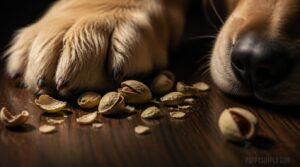
The kernel itself isn’t the only thing to worry about with pistachios — the shell is a whole separate problem. Even one shell can turn a harmless snack into a serious emergency for your dog. Here’s what you need to know about the specific dangers shells bring to the table.
Choking Hazard
A shell lodged in the throat can cut off airflow in seconds — and that’s exactly what pistachio shells can do to your dog.
Dogs don’t chew the way you do. They gulp, rush, and swallow before food is broken into safe pieces. A hard pistachio shell doesn’t compress or soften quickly, which means it can press tightly against the airway and block normal breathing.
| Choking Sign | What It Looks Like |
|---|---|
| Coughing or gagging | Repeated, forceful attempts to clear throat |
| Pawing at the mouth | Dog scratches frantically at face or muzzle |
| Panic or distress | Sudden restlessness, wide eyes, inability to settle |
| Unresponsiveness | Dog goes limp or loses consciousness |
When airflow is fully blocked, oxygen drops fast. That’s why choking prevention for pets starts before the nut ever reaches the bowl — keep shells off counters, tables, and floors entirely.
If your dog shows any of these signs, check the mouth immediately and call your vet. Don’t wait to see if it passes on its own.
Intestinal Blockage Risk
Swallowed shells don’t just disappear. Once a pistachio shell moves past the throat, it enters a digestive tract that simply wasn’t built to break it down — and that’s where a different kind of danger begins.
Unlike soft food that dissolves and moves through normally, shells can cause mechanical intestinal blockage, physically jamming the passage so nothing moves forward. Eating a large amount makes this worse — more indigestible material means a bigger buildup, and the intestines can’t push through what they can’t soften.
Here are five signs your dog may have an intestinal blockage from pistachio shells:
- Repeated vomiting — especially if it keeps coming back after meals
- No bowel movement — straining with little or nothing coming out
- Abdominal pain — your dog flinches or hunches when touched near the belly
- Loss of appetite — refusing food they’d normally eat without hesitation
- Weakness or lethargy — low energy that doesn’t improve with rest
Gas and fluid build up behind the blocked area, stretching the intestinal wall and making your dog feel worse by the hour. That pressure triggers repeated vomiting, which then causes dehydration and electrolyte imbalance — turning a partial blockage into a full emergency fast.
Dogs with preexisting GI conditions face even steeper odds. Existing bowel narrowing or chronic constipation makes it far harder for hard shell material to pass at all. Gastrointestinal distress in dogs can escalate quickly, so if you suspect a blockage, call your vet right away — don’t wait for symptoms to stack up.
Sharp Shell Fragments
Sharp shell fragments take the danger a step further than simple obstruction. When a dog bites down on a pistachio shell, the hard casing doesn’t just crack cleanly — it fractures in a brittle, shear-dominated way that produces angular, jagged pieces with little rounding on the edges.
| Fragment Risk | What Happens | Why It Matters |
|---|---|---|
| Shell fracture | Shell splits into sharp, angular shards | Jagged edges can cut soft tissue immediately |
| Penetration potential | High-velocity fragments contact throat lining | Causes cuts, tears, or punctures internally |
| Dispersion pattern | Fragments scatter in multiple directions | Increases contact with mouth, throat, and gut |
Those sharp pieces don’t stay in one place. Fragment dispersion means shards travel into the throat, esophagus, and digestive tract from multiple angles — not just straight down. The faster a fragment moves, the more damage it can do before slowing, and a dog’s enthusiastic chewing generates enough force to send pieces flying with real speed.
Once swallowed, fragment geometry matters enormously. Angular shards with sharp, slicing surfaces are far more likely to pierce soft intestinal tissue than rounded pieces of similar size. That’s why even small shell fragments carry serious risk — it’s not about size alone, but shape.
The result can be mouth sores, throat irritation, or lacerations deeper in the digestive tract that trigger vomiting, bleeding, or infection. Combined with the intestinal blockage risk covered earlier, sharp shell fragments make keeping shelled pistachios well out of reach a genuine pet safety priority.
Secure Trash Disposal
Once the shells are out of your dog’s mouth, they still need to go somewhere safe. Toss them into a bin with a pest-proof lid that closes completely — dogs can nose open loose covers easily.
- Use sealed, sturdy bags
- Keep bins out of reach
- Don’t leave shells on counters
Dispose of shells promptly before curiosity wins.
Salted Pistachios Are Unsafe

Salted pistachios might seem like a harmless snack to share, but the extras that come with them can quietly cause real harm to your dog. It’s not just the salt — seasonings, coatings, and added flavors each carry their own risks. Here’s what you need to watch out for.
Excess Sodium Risks
Salted pistachios carry real risks for your dog. Most store-bought varieties are heavily salted, and dogs have a much lower sodium tolerance than humans.
Too much sodium causes the body to retain excess fluid, which strains the heart and raises blood pressure. Over time, that added pressure damages blood vessels and forces the kidneys to work harder than they should.
Stick to plain, unsalted pistachios only — your dog’s kidneys will thank you.
Seasoning Dangers
Even plain sodium is only part of the problem. The seasonings coating many pistachio varieties introduce a whole separate layer of risk for your dog.
Allium powder toxicity is a serious concern. Garlic and onion powders — common in flavored snack nuts — can damage your dog’s red blood cells over time, even in small amounts. Repeated snacking on seasoned pistachios makes that cumulative exposure especially dangerous.
Here are five hidden seasoning dangers to watch for:
- Garlic powder — irritates the GI tract and contributes to red blood cell damage
- Onion powder — found in many spice blends, triggers anemia risk with repeated exposure
- Xylitol — sometimes present in "savory" coatings; causes dangerous blood sugar drops and potential liver injury in dogs
- Hot spice blends — chili and pepper mixes irritate your dog’s stomach even in small amounts
- Artificial colors and additives — can trigger skin reactions or digestive upset in sensitive dogs
Seasoning dust concentrates multiple additives in every bite. That’s why flavored pistachios aren’t a safe shortcut — plain, unsalted kernels only.
Garlic and Onion Flavors
What makes garlic and onion powder so much more dangerous than their fresh forms? Dehydration strips out the water and leaves concentrated sulfur compounds behind — one teaspoon of garlic powder equals roughly eight fresh cloves.
| Allium Form | Concentration Level | Risk to Dogs |
|---|---|---|
| Fresh onion/garlic | Moderate | Harmful in larger amounts |
| Cooked onion/garlic | Moderate | Still toxic — heat doesn’t neutralize it |
| Powder/dehydrated | Very High | Toxic in small amounts |
These compounds damage your dog’s red blood cells, triggering hemolytic anemia — a condition where cells are destroyed faster than the body can replace them. Garlic is considered three to five times more toxic than onion. Symptoms like weakness, pale gums, and labored breathing may not appear until several days after exposure.
That delay is exactly what makes flavored pistachios so deceptive. Your dog may seem fine right after snacking, but the damage quietly builds.
Avoid Flavored Nuts
Flavored pistachios hide a long list of hidden ingredient risks behind a single bite. Seasoning blends often contain garlic powder, onion powder, hot spices, salt, and artificial additives — all layered directly onto the surface your dog eats.
Concentrated seasoning hazards, sugar coatings, and spice irritation effects make flavored varieties far more dangerous than plain, unsalted kernels. Stick to plain only.
Moldy Pistachios Can Be Toxic
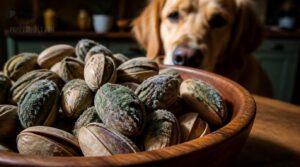
Mold is one of the sneakiest dangers hiding inside a pistachio bowl. Even a single moldy nut can put your dog at serious risk in ways that go beyond an upset stomach. Here’s what you need to watch for.
Aflatoxin Poisoning
Moldy pistachios carry a hidden danger — one you can’t always see or smell. When Aspergillus flavus or Aspergillus parasiticus fungi grow on pistachio shells or kernels, they release aflatoxins, a group of toxic compounds that can seriously harm your dog.
Once your dog swallows a contaminated nut, the body’s cytochrome P450 enzymes convert aflatoxin B1 into a reactive form that binds directly to liver cells, triggering damage fast. The three main outcomes are:
- Acute liver necrosis — rapid cell death in the liver
- Impaired blood clotting — leading to bruising or internal bleeding
- Long-term carcinogenic risk — with repeated exposure linked to hepatocellular carcinoma
What makes this especially scary for dog owners is that no antidote exists for aflatoxin poisoning. Treatment is purely supportive — meaning your vet can only manage the symptoms while your dog’s liver tries to recover.
Aflatoxin poisoning in dogs has no antidote—vets can only support recovery while the liver fights to heal itself
Improper Storage Risks
Where you store your pistachios matters more than you might think. Damp, warm, or poorly sealed containers create the exact conditions Aspergillus mold needs to produce aflatoxins — even before visible spoilage appears.
Temperature swings accelerate this further, and pest activity can breach shells, letting contamination reach the kernel directly. A bag left loosely closed on a warm pantry shelf is genuinely risky for your dog.
Neurological Symptoms
Aflatoxin doesn’t just upset the stomach — it can reach your dog’s brain. Watch for these neurological warning signs:
- Seizure-like episodes with paddling or body twitching
- Coordination loss — stumbling, swaying, or falling
- Muscle tremors and sudden rigidity
- Mental confusion or unusual lethargy
These toxic components disrupt animal toxicology at a cellular level. If symptoms appear, act immediately.
Liver-related Warning Signs
Your dog’s liver takes the hardest hit from aflatoxin exposure.
| Sign | What You See | Why It Happens |
|---|---|---|
| Jaundice | Yellow skin or eyes | Bilirubin buildup |
| Dark urine | Brown or tea-colored | Impaired bile flow |
| Swollen belly | Fluid retention | Low albumin production |
Persistent skin itching, easy bruising, or pale stools mean clotting factors are dropping. Contact your veterinarian immediately.
Pistachio Allergy Symptoms in Dogs

Some dogs can have an allergic reaction to pistachios, and the signs aren’t always obvious at first. Just like people, dogs respond differently — what seems harmless to one might trigger a real reaction in another. Here’s what to watch for if you think your dog may be sensitive to pistachios.
Itching or Swelling
Some dogs have nut allergies in pets that trigger skin reactions fast. If your dog ate a pistachio and starts scratching, that’s allergic skin inflammation at work — your dog’s immune system releasing histamine.
You might notice red welts resembling hives, or deep tissue swelling around the eyes or lips. That kind of swelling is angioedema, and it needs prompt veterinary attention.
Vomiting or Diarrhea
Skin reactions aren’t the only signal. Pistachios can trigger gastrointestinal upset that hits fast — vomiting and diarrhea together strip fluids from two directions at once, raising dehydration risk quickly.
Watch for:
- Repeated vomiting episodes
- Watery or bloody stool
- Fever alongside gut symptoms
- Lethargy or weakness
- Refusal to drink fluids
Bloody diarrhea needs prompt veterinary attention.
Breathing Difficulty
Gut symptoms are alarming, but breathing difficulty is the sign that demands immediate action. Airway inflammation can narrow the throat fast, cutting off oxygen delivery before you realize what’s happening. This is anaphylaxis — a severe allergic response affecting heart circulation and chest movement.
Don’t wait. Get to an emergency veterinary clinic now.
Urushiol Sensitivity
Urushiol sensitivity works differently than most allergies. This oily resin — the same toxic component found in poison ivy — binds to skin proteins after contact, triggering a delayed allergic reaction that may not appear for hours or days.
Every dog responds differently. Some show no reaction at all; others develop dermatitis symptoms like redness, swelling, or itching that gradually worsen.
How Many Pistachios Are Safe?

If you’ve decided to share a pistachio or two with your dog, getting the portion right really does matter. A few simple guidelines can help you do that safely without second-guessing every treat. Here’s what to keep in mind before you hand one over.
Follow The 10% Treat Rule
Treats shouldn’t exceed 10% of your dog’s daily calories — all treats combined, not just pistachios.
Here’s what that rule means in practice:
- Prevents calorie overload without nutritional benefit
- Reduces pancreatitis risk from high-fat snacks
- Keeps daily intake balance on track
- Avoids choking hazards from oversized portions
- Leaves room for safe snack alternatives
Small Dogs Need Less
Small dogs have smaller stomachs and burn energy faster than large breeds, which means even a tiny calorie surplus adds up quickly. One or two crushed kernels is the safe upper limit for small dogs.
Their obesity risk is real — just a couple of extra pounds strains their joints and heart. Less truly is more here.
Crush Before Serving
Before handing your dog a pistachio, take a moment to crush it first. Whole kernels are compact enough to swallow without chewing, which raises choking and intestinal blockage risks.
Crushing creates smaller pieces that are easier to swallow and digest. It also makes portion control far more accurate — you can see exactly how much you’re giving.
Start With Tiny Portions
Even a single crushed kernel is enough to start. Pistachios are calorie-dense — too much too soon can upset your dog’s stomach or quietly push their daily fat intake too high, raising pancreatitis risk.
Offer the smallest possible taste first, then watch for vomiting or diarrhea before ever giving more. That simple pause tells you everything you need to know.
Can Puppies Eat Pistachios?

Puppies aren’t just small dogs — their bodies are still developing, which makes them even more vulnerable to foods that an adult dog might handle better. What seems like a harmless snack can hit a young pup much harder. Here’s what every puppy owner should know before sharing a pistachio.
Puppies Have Sensitive Stomachs
A puppy’s digestive system is still developing, which makes gut health especially fragile. Gastrointestinal issues like vomiting, diarrhea, and bloating can appear even from small food changes.
Identifying intolerance early matters because ongoing symptoms may signal more than a one-time reaction. That’s why dietary restrictions apply more strictly to puppies — their systems simply can’t handle rich, high-fat foods the way adult dogs can.
Higher Choking Risk
Younger dogs bring a narrower airway and far less chewing experience to the table — a combination that turns pistachios into a genuine choking hazard.
Here’s what makes puppies especially vulnerable:
- Swallowing speed — Excited puppies gulp treats before properly chewing them
- Airway anatomy mismatch — A puppy’s throat opening is too narrow for an uncrushed kernel
- Improper chewing — Puppies haven’t developed the molar strength to grind hard nuts safely
- Fast eater risks — Distracted or food-guarding pups swallow before fully processing the kernel
Even a single whole pistachio can become a veterinary emergency if it lodges in a puppy’s throat. Kernel size safety matters here — what looks small to you may be exactly the wrong size for a young dog’s airway.
Safer Treats Are Better
Given the choking risks pistachios carry for puppies, simpler snacks just make more sense.
| Safer Treat | Why It Works |
|---|---|
| Carrot sticks | Low-calorie, safe texture for young dogs |
| Sweet potato pieces | Plain, single-ingredient with no harmful additives |
Stick to treats with short ingredient labels and no added sodium or seasoning — those two filters alone eliminate most risky options.
Ask Your Veterinarian First
Before your puppy tries any new food, call your veterinarian first. This is especially true with nuts, since nut toxicity in pets can be hard to predict without knowing your dog’s health history.
Your vet can check for individual health conditions — like a sensitive stomach or pancreatitis risk — and tell you whether pistachios should stay off the menu entirely.
What if Your Dog Ate Pistachios?
Finding out your dog got into the pistachio bowl can send your heart racing, but staying calm and acting quickly makes all the difference. Your next few steps matter more than the panic. Here’s what to do right away.
Check for Shells

Start with a mouth inspection. Look inside your dog’s mouth for any shell fragments caught between the teeth, along the gums, or near the back of the throat. Pistachio shells can splinter into sharp pieces, making them a real choking hazard even after your dog has stopped eating.
Check the floor and your dog’s resting spot too — dropped shells are easy to miss.
From there, watch for vomit and stool changes. Swallowed shells often show up in expelled material, so examining both can tell you whether shelled pistachios actually made it past the throat. If your dog is straining or producing nothing despite visible discomfort, that’s a sign something may be lodged further down. Abdominal guarding — where your dog flinches or tenses when you gently touch the belly — points to internal irritation that needs prompt attention.
Keep an eye on dehydration signs like dry gums or a refusal to drink, especially if vomiting has already started.
Note Amount Eaten

Once you’ve checked for shells, try to piece together how much your dog ate. Even a rough count matters — one or two plain kernels is very different from a small handful.
Record the amount using simple terms like "3 nuts" or "half a handful," and note the time. That detail helps your vet assess any risk quickly.
Watch for Symptoms

After your dog eats pistachios, keep a close eye on them for the next several hours. Vomiting, diarrhea, or lethargy are the most common early warning signs.
Watch for a hunched or prayer posture — that signals abdominal pain. Rapid or labored breathing, blue gums, tremors, or seizures mean something more serious is happening and every minute counts.
Call Your Veterinarian

Call your veterinarian right away — don’t wait to see if things improve on their own. Tell them your dog’s name, breed, weight, and exactly what was eaten, including whether shells were involved and how long ago it happened.
Don’t induce vomiting unless instructed. For severe symptoms, contact an emergency pet poison hotline or head straight to emergency vet care.
Better Alternatives to Pistachios

If pistachios feel more like a risk than a reward, the good news is your dog doesn’t need them. Plenty of everyday foods make safer, just-as-satisfying treats without the fat, sodium, or choking concerns. Here are five simple alternatives worth keeping on hand.
Carrot Sticks
Carrot sticks are one of the safest swaps you can make for pistachios. They’re low in fat and calories , so you don’t have to worry about the pancreatitis risk that comes with high-fat nuts.
Raw carrots also deliver fiber and vitamin A , and that satisfying crunch keeps most dogs genuinely happy. Serve them plain, cut into small pieces to avoid choking, and skip any dips or seasonings.
Apple Slices
Apple slices make a genuinely crisp alternative. They’re naturally sweet, low in fat, and easy to prepare — just remove the middle, stem, and seeds entirely, since apple seeds contain cyanogenic compounds that are harmful to dogs.
Serve small, plain pieces with the skin on for added fiber. Watch portion size, though, since the natural sugar content adds up quickly.
Green Beans
Plain green beans are one of the most practical swaps you can make for high-fat snacks like pistachios. At just 31 calories per cup, they’re a far cry from the 562 calories packed into every 100g of pistachios — which makes them a genuinely smart choice for dogs watching their weight.
They’re not just low in calories, either. Green beans carry vitamins A, C, and K, plus fiber, potassium, and magnesium — real nutritional value in a small package.
Serve them plain and unseasoned — no butter, no salt, no garlic. Steamed or raw both work well, though cooked beans are generally easier for dogs to chew and digest. Since the fiber content is relatively high, introduce them slowly to avoid stomach upset.
Plain Pumpkin
Pumpkin is one of those rare snacks that’s genuinely good for your dog — not just "less bad" than pistachios. Plain, unseasoned pumpkin is low in calories and high in dietary fiber, making it a smart swap when you’re stepping away from high-fat treats.
The fiber in pumpkin can help firm up loose stools or ease mild constipation, supporting your dog’s digestive system in both directions. Start with small amounts — a teaspoon for smaller dogs works well — and watch how their stomach responds.
Always check the label. "100% pumpkin" with no added sugar, salt, or spices is what you want. Pumpkin pie filling isn’t safe — it often contains nutmeg or sweeteners that are harmful to dogs.
Sweet Potato Pieces
Sweet potato is another excellent swap. Cook it plain — boiled or baked works well — and skip any butter, salt, or seasoning entirely. Cooked pieces become soft enough for easy chewing and digestion, making them gentler on your dog’s gut than raw.
Cut into bite-sized chunks before serving to reduce choking risk, and keep portions small as part of a balanced diet.
Frequently Asked Questions (FAQs)
Can dogs eat pistachios?
Think of pistachios like a double-edged treat — harmless in a nibble, risky in a handful. Dogs can eat plain, shelled pistachios sparingly, but shells, salt, and mold make them a real concern.
Can dogs eat pistachios & urushiol?
Urushiol — the same oily compound found in poison ivy — exists in pistachios too. Dogs can develop allergic-type reactions, especially around the face and mouth, including rash and swelling that worsens with scratching.
Can dogs eat pistachio ice cream?
Pistachio ice cream isn’t safe for dogs. It contains dairy, sugar, and fat — all hard on a dog’s stomach. Some varieties include xylitol, which is toxic. Skip it entirely.
Can pistachios cause pancreatitis in dogs?
Particularly perilous for pups, pistachios are high in fat — a known pancreatitis trigger that overloads fat digestion pathways and causes serious inflammation. Dogs with sensitive stomachs are most at risk from these high-fat dietary stressors.
Can dogs eat pistachio nuts?
Dogs can eat pistachios, but only plain, shelled kernels in small amounts. They’re not toxic, yet their high fat content makes them risky in large quantities. Treat them as an occasional snack only.
How can pistachios cause choking in dogs?
Hard shells and irregular shapes make pistachios a real choking hazard. Dogs swallow food quickly, giving shells little chance to clear the throat safely. Small breeds face the highest risk of airway obstruction.
Can you eat pistachios on keto?
Yes — with careful portion control. One ounce delivers 7g net carbs after subtracting 3g fiber, plus monounsaturated fats that support keto macros. Track servings closely; extra handfuls push carbs past your daily limit fast.
Are pistachios bad for dogs?
Pistachios aren’t toxic to dogs in tiny amounts, but their high fat content strains digestion and raises pancreatitis risk. Calorie density also adds up fast, making them a poor snack choice.
What nuts can dogs not eat?
Some nuts are a real minefield for dogs. Macadamia nuts can cause tremors and weakness. Black walnuts risk choking and mold toxins. Avoid all salted, flavored, or improperly stored varieties.
What happens when my dog eats one piece pistachio?
One plain kernel likely won’t cause serious harm. Watch your dog for 24 to 48 hours for vomiting, diarrhea, or lethargy. Most dogs recover fine with no treatment needed.
Conclusion
Picture your dog eyeing that pistachio bowl like it’s treasure—but the real treasure is knowing when to say no. Can dogs eat pistachios? Technically yes, in tiny plain amounts.
But the risks—fat, salt, shells, mold—quietly stack up faster than most owners realize. One or two won’t cause disaster. A habit might. Keep the bowl out of reach, choose smarter snacks, and let your vet guide the close calls.
- https://www.fda.gov/animal-veterinary/animal-health-literacy/aflatoxin-poisoning-pets
- https://www.akc.org/expert-advice/nutrition/can-dogs-eat-pistachios
- https://getfknnuts.com/blogs/pistachio-blog/can-dogs-have-pistachios
- https://fourleafrover.com/blogs/natural-health/can-dogs-eat-pistachios
- https://www.petmd.com/dog/nutrition/can-dogs-eat-pistachios