This site is supported by our readers. We may earn a commission, at no cost to you, if you purchase through links.
Your dog just licked a puddle of ketchup off the floor, and now you’re wondering if that condiment-fueled moment could land you at the emergency vet. While a tiny taste won’t trigger a medical crisis, ketchup harbors ingredients that can seriously harm your dog’s health—from onion and garlic powder that destroy red blood cells to sugar and sodium levels that strain essential organs.
The real danger isn’t in one accidental lick, but in what happens when those harmless exposures become routine or when your pup succeeds in devouring a more substantial serving. Understanding which ingredients pose the greatest threats, recognizing the warning signs of toxicity, and knowing exactly when to seek veterinary care can mean the difference between a minor scare and a genuine health emergency.
Table Of Contents
- Key Takeaways
- Can Dogs Eat Ketchup Safely?
- Which Ketchup Ingredients Are Harmful to Dogs?
- What Happens if a Dog Eats Ketchup?
- Why is Ketchup a Poor Choice for Dogs?
- How Much Ketchup is Dangerous for Dogs?
- What Should You Do if Your Dog Eats Ketchup?
- Healthier Alternatives to Ketchup for Dogs
- Frequently Asked Questions (FAQs)
- Can dogs eat ketchup once?
- Can dogs eat French fries with ketchup?
- Is ketchup bad for dogs?
- Can dogs eat ketchup chips?
- Can dogs eat ketchup without sugar?
- Can dogs with diabetes eat Ketchup?
- Can dogs have a little bit of ketchup?
- What condiments are ok for dogs?
- What if my dog eats tomato sauce?
- Can dogs eat Heinz tomato sauce?
- Conclusion
Key Takeaways
- Ketchup contains onion and garlic powder that can destroy your dog’s red blood cells, even in small amounts, potentially causing life-threatening anemia that requires immediate veterinary intervention.
- While a single accidental lick will not typically trigger an emergency, ketchup’s high sugar and sodium content strains your dog’s pancreas, kidneys, and cardiovascular system when consumed regularly or in larger quantities.
- Watch for warning signs like vomiting, pale gums, lethargy, or weakness within 24 hours of ingestion, and contact your veterinarian immediately if symptoms appear severe or persistent.
- Safe alternatives include plain cooked lean meats, fiber-rich vegetables like carrots and green beans, unsalted bone broth, and fresh herbs like parsley—all offering flavor without the toxic ingredients found in commercial condiments.
Can Dogs Eat Ketchup Safely?

Your dog’s curiosity around the dinner table can turn risky when ketchup enters the picture. While a single lick probably won’t send you rushing to the emergency vet, ketchup isn’t safe for regular canine consumption.
If you’re wondering about other processed meats like corned beef and its sodium-heavy risks for dogs, the same concerns about salt and additives apply.
Most commercial brands contain onion or garlic powder, both of which are toxic to dogs even in small amounts and pose serious threats to canine health. Beyond these harmful seasonings, ketchup’s high sugar and salt content can upset your dog’s digestion, contribute to weight gain, and strain their kidneys over time.
The vinegar and tomato base add acidity that may irritate sensitive stomachs, making ketchup a poor choice for pet safety despite its seemingly harmless appearance. In fact, the dangers of harmful ingredients in ketchup highlight the importance of avoiding this condiment for your pet’s well-being.
Which Ketchup Ingredients Are Harmful to Dogs?
While tomatoes themselves aren’t toxic to dogs, the other ingredients in ketchup pose serious health risks that every pet owner should understand.
Commercial ketchup contains a combination of seasonings, sweeteners, and additives that can harm your dog’s digestive system and overall health. Let’s break down the three most problematic ingredients you’ll find in that familiar red bottle.
Onion and Garlic Powder Toxicity

Perhaps the most insidious threat in ketchup stems from Allium plants—onions and garlic—which contain sulfur compounds that trigger canine hemolysis, destroying red blood cells and potentially causing life-threatening anemia. Even small amounts of onion powder or garlic powder can be toxic, especially since:
Ketchup’s onions and garlic destroy dog red blood cells, causing life-threatening anemia even in tiny amounts
- Dogs who ingest these ingredients may show vomiting, lethargy, or pale gums within 24 hours
- Repeated exposures accumulate toxicity over time
- Severe cases can lead to organ failure requiring immediate veterinary intervention
High Sugar and Salt Content
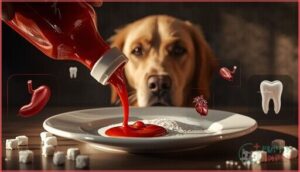
Beyond these plant-based toxins, ketchup’s high sugar content and salt pose their own serious threats. Commercial brands often pack in excess sugar that fuels canine dental issues, pancreatic stress, and obesity, while elevated sodium levels raise the specter of sodium poisoning risk—particularly dangerous for smaller breeds.
Large sugar loads can spike blood glucose and strain insulin response, while too much salt triggers dehydration and elevated blood pressure in your dog. For more information on the health risks for dogs, it’s important to understand the potential dangers associated with ketchup consumption.
Artificial Flavors and Preservatives
Synthetic additives and preservatives found in many condiments bring another layer of concern for pet nutrition. These chemical irritants don’t benefit your dog’s system in any way.
- Flavor enhancers can provoke vomiting or diarrhea by irritating the digestive tract
- Preservative effects may trigger allergic reactions or skin itching in sensitive animals
- Certain toxic compounds disrupt gut microbiota and suppress appetite
- Artificial colorings add unnecessary chemical exposure without nutritional value
What Happens if a Dog Eats Ketchup?

If your dog sneaks a lick of ketchup off a dropped hot dog, you’re probably wondering what comes next.
Just like you might wonder if tortillas are safe after that scenario, the same calm approach applies here—learn what to do if your dog ate ketchup and when to call the vet.
The answer depends on how much they ate and what’s actually in that bottle. Let’s look at what symptoms you might see and when things could get more serious.
Common Symptoms of Ingestion
When your dog sneaks a lick of ketchup, vomiting causes immediate concern, often appearing within hours alongside diarrhea and gastrointestinal distress. You might notice lethargy, loss of appetite, or excessive drooling as toxic reactions develop.
Digestive issues like abdominal cramping signal the body’s rejection of harmful ingredients, while repeated vomiting or weakness can indicate canine anemia from onion or garlic powder, requiring close monitoring for worsening poisoning symptoms.
Serious Health Risks and Complications
Severe ketchup poisoning symptoms escalate beyond typical gastrointestinal damage, potentially triggering life-threatening complications you can’t ignore. Toxic ingredient effects from garlic and onion compounds cause canine anemia by destroying red blood cells, while high sodium levels strain kidneys and cardiovascular function.
Watch for these emergency vet care indicators requiring immediate attention:
- Pale gums signaling severe anemia
- Tremors or disorientation from neurological impact
- Rapid heart rate with low blood pressure
Why is Ketchup a Poor Choice for Dogs?
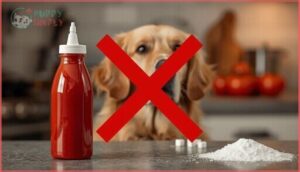
While a single lick of ketchup likely won’t send your dog to the emergency room, making it a regular part of their diet is a recipe for trouble.
The condiment’s ingredient list reads like a warning label for pet owners, packed with elements that chip away at your dog’s health over time. Let’s look at why ketchup deserves a permanent spot on your dog’s “no-go” food list.
Risks of Frequent Consumption
Frequent ketchup consumption turns harmless accidents into real health threats. Sugar content fuels weight gain and dental issues, while repeated exposure to onion powder raises anemia risk through damaged red blood cells.
Regular intake also strains your dog’s pancreas, increasing pancreatitis threat and gastrointestinal issues. Even small doses add up, making it a poor pick for any pet owner who values long-term wellness over momentary treats.
Hidden Dangers in Commercial Brands
Not all ketchup brands are created equal in terms of keeping your dog safe. Commercial varieties hide concentrated toxins and allergens that turn a quick lick into a potential emergency, making careful label scrutiny your best defense.
The following ingredients pose a risk to your dog’s health:
- Concentrated onion powder and garlic powder retain higher sulfoxides than fresh forms, amplifying red blood cell damage even in trace amounts
- Hidden allergens like undeclared mustard seeds or dairy derivatives trigger digestive upset in sensitive dogs
- Specific preservatives including BHA and BHT raise long-term health concerns in pets
- Xylitol in “light” varieties poses severe toxicity risk, though uncommon in standard ketchup ingredients
- High fructose corn syrup strains the liver while promoting weight gain and insulin spikes in diabetic dogs
How Much Ketchup is Dangerous for Dogs?

The amount of ketchup that poses a risk to your dog depends on several factors, including your pet’s size, overall health, and the specific ingredients in the brand consumed. While a small lick from a dropped french fry probably won’t send you rushing to the emergency vet, larger quantities or repeated exposure can lead to serious complications that require immediate medical attention.
Let’s break down the difference between minor accidents and dangerous ingestion levels, plus when those seemingly harmless bottles can become physical hazards.
Accidental Small Amounts Vs. Large Quantities
A single lick of ketchup off the floor won’t usually send your large dog to the emergency clinic, though small breeds are more vulnerable to even tiny doses of toxic ingredients like garlic and onion powder.
However, a tablespoon or more can trigger vomiting and diarrhea in any size dog, escalating ketchup toxicity risks quickly with quantity impact.
Risk of Digestive Blockages
While ketchup alone rarely causes physical gut obstruction, the real concern is when your dog swallows the plastic bottle cap or squeeze packet along with the condiment, creating a serious choking hazard that can lead to intestinal damage requiring emergency surgery.
- Blockage symptoms include repeated vomiting, refusal to eat, and visible abdominal distension or pain
- Digestive issues from toxic garlic and onion compounds can mask mechanical obstruction warning signs
- Stomach problems may worsen rapidly if packaging fragments tear intestinal walls during passage
- Immediate veterinary intervention prevents life-threatening complications from undiagnosed digestive blockages
What Should You Do if Your Dog Eats Ketchup?

If your dog happens to sneak a lick of ketchup off your plate, don’t panic just yet.
The steps you take in the next few minutes can make all the difference in preventing complications and keeping your furry friend safe. Here’s what you need to know about monitoring your dog, recognizing when professional help is necessary, and taking immediate action at home.
Monitoring for Warning Signs
Vigilance is your first line of defense once you suspect your dog has eaten ketchup. Watch for vomiting symptoms, diarrhea, lethargy signs, or abdominal pain within the first 24 hours, as toxic substances for dogs like onion powder can trigger digestive issues quickly.
Check for bloating or digestive blockages, especially if your dog seems restless, whines when touched, or refuses food despite the sugar content temptation.
When to Contact a Veterinarian
If your dog shows pale gums, severe weakness, repeated vomiting, or disorientation after eating ketchup, don’t wait—call your veterinarian immediately or head to the nearest emergency animal clinic.
Even if symptoms seem mild, a vet consultation helps assess dog health risks from toxic substances for dogs like garlic or onion powder. The ingestion amount matters, but severe reactions warrant urgent veterinary advice regardless.
Immediate Safety Steps at Home
While quick vet contact addresses emergencies, you also need a prevention plan at home. Practice secure food storage by placing ketchup and condiments in upper cabinets with childproof latches as part of your pet proofing strategy.
Keep first aid kits accessible, label toxic substances for dogs clearly, and remove hazards from floor level—these dog safety precautions support long-term pet safety and wellness against toxic food for dogs exposure.
Healthier Alternatives to Ketchup for Dogs

Instead of reaching for ketchup, you can offer your dog a variety of safe, nutritious alternatives that won’t put their health at risk.
The good news is that there are plenty of dog-friendly treats and simple ways to add flavor to their meals without the toxic ingredients found in commercial condiments. Let’s explore some practical options that’ll keep your pup happy and healthy.
Dog-Safe Treats and Snacks
You can confidently swap ketchup for dog-safe treats like fresh lean meats—cooked chicken or turkey work wonderfully—and fiber-rich vegetables such as carrot sticks or green beans.
Blueberries offer antioxidants without the sugar spike, while plain yogurt provides probiotics for canine wellness. These healthy snacking options support pet nutrition and dog care, giving your dog flavorful treat alternatives that prioritize both safety and canine nutrition.
Safe Ways to Add Flavor to Dog Food
Flavor enhancers don’t have to include ketchup or salt-laden toppings—you can boost palatability with natural additives that align with pet nutrition and support canine nutrition. Homemade treats made with safe herbs, lean proteins, or broths offer flavor without risk, creating healthy dog treats that respect dog nutrition principles.
- Sprinkle fresh parsley or a pinch of turmeric over kibble to add aroma and anti-inflammatory benefits.
- Drizzle unsalted bone broth or plain yogurt across dog food for creamy, protein-rich appeal.
- Mix in cooked turkey flakes or mashed pumpkin puree as herbal supplements-adjacent wholesome toppers.
Tips for Preventing Accidental Ingestion
Preventive measures start at home, where secure food storage and pet proofing go hand-in-hand with toxic awareness and household safety. You’ll protect your dog from ketchup and other toxic substances for dogs by combining safe feeding routines with vigilant food safety for dogs practices.
| Prevention Strategy | Action Steps | Safety Impact |
|---|---|---|
| Secure Food Storage | Lock cabinets, use high shelves, tighten lids after each use | Blocks access to toxic foods for dogs |
| Pet Proofing Counters | Remove stray bottles, clear clutter, choose heavy glass containers | Reduces impulsive licking incidents |
| Clear Labeling | Keep original packaging, check expiration dates, avoid unlabeled jars | Prevents confusion and accidental exposure |
| Safe Feeding Zones | Designate pet areas away from condiments, use childproof latches | Minimizes ketchup safety for dogs risks |
| Emergency Readiness | Post vet numbers, maintain intake logs, review routines with household | Ensures quick response to toxic substances for dogs |
Frequently Asked Questions (FAQs)
Can dogs eat ketchup once?
Most pet owners don’t realize that onion powder—present in roughly 70% of commercial ketchup brands—poses a genuine toxicity risk to dogs, even from a single exposure, making ketchup safety for dogs a serious canine health concern.
Can dogs eat French fries with ketchup?
French fries with ketchup pose combined hazards for your dog—the fry dangers include oil risks and high salt, while the condiment risks bring onion or garlic powder food toxicity plus sugar content that compounds potential harm.
Is ketchup bad for dogs?
Yes, ketchup is bad for dogs. This red condiment harbors toxic ingredients like onion and garlic powder that damage canine red blood cells, plus excessive sugar content and sodium that threaten your pet’s health.
Can dogs eat ketchup chips?
No, ketchup chips pose serious chip toxicity risks due to onion powder, garlic, high sugar content, and salt that harm pet health—causing canine nutrition issues and digestive upset.
Choose safe dog snack options instead.
Can dogs eat ketchup without sugar?
Sugar-free ketchup still contains onion and garlic powder, which damage red blood cells in dogs.
The toxic compounds in these ingredients remain dangerous regardless of sugar content, making organic ketchup or homemade dog sauce equally unsafe without proper ingredient screening.
Can dogs with diabetes eat Ketchup?
Absolutely not—diabetic dog care demands strict control over sugar content, and ketchup’s high glycemic load destabilizes blood glucose levels, making it particularly dangerous for managing canine nutrition in dogs with diabetes.
Can dogs have a little bit of ketchup?
Better safe than sorry: a tiny lick won’t usually harm a healthy adult dog, but ketchup ingredients like onion powder and high sodium offer zero canine health benefits and present real toxic food risks.
What condiments are ok for dogs?
Small amounts of plain parsley, rosemary, cinnamon, ginger, or oregano can augment your dog’s meals safely.
Avoid garlic, onion powder, mustard, salt, and xylitol—these pet-safe spices and healthy flavor enhancers support canine condiment options without ketchup-related health issues.
What if my dog eats tomato sauce?
The moment you notice your pup licking tomato sauce off the floor, don’t panic—small amounts rarely trigger severe reactions, though garlic or onion powder exposure warrants immediate observation for lethargy or pale gums.
Can dogs eat Heinz tomato sauce?
No, dogs shouldn’t eat Heinz tomato sauce. The onion and garlic powder inside damages red blood cells, while excessive salt and sugar contribute to obesity, heart strain, and digestive upset in your pet.
Conclusion
Think of ketchup as a red flag rather than a red condiment—it’s simply not worth the risk for your dog’s health. While an accidental lick won’t cause immediate harm, the toxic ingredients lurking in every bottle make it clear: can dogs eat ketchup? The answer is a firm no.
Protect your pup by keeping condiments out of reach, choosing dog-safe alternatives, and acting quickly if ingestion occurs. Your vigilance today prevents tomorrow’s emergency.