This site is supported by our readers. We may earn a commission, at no cost to you, if you purchase through links.

Soup night leftovers sitting on your counter might seem like a kind gesture for your dog—but what’s simmering in that pot could either nourish them or send you rushing to the vet. Broth for dogs sits in a tricky middle ground: genuinely beneficial when it’s the right kind, and surprisingly dangerous when it’s not.
The problem is that most store-bought broths are loaded with onion, garlic, and sodium—ingredients perfectly fine for humans but toxic to dogs, even in small amounts. That "low-sodium" chicken broth you picked up at the grocery store? Check the label. Garlic powder hides there more often than you’d think.
The good news: safe broth exists, and it can do real things for your dog—from coaxing a picky eater to finish their meal to supporting aging joints. Knowing what to look for makes all the difference.
Table Of Contents
- Key Takeaways
- Yes, Dogs Can Eat Safe Broth
- Best Broths for Dogs
- Benefits of Broth for Dogs
- Unsafe Broth Ingredients
- How to Serve Dog Broth
- Frequently Asked Questions (FAQs)
- Can dogs eat broth?
- Can you put bone broth on dog food?
- Can dogs eat beef broth if they’re sick?
- Can dogs eat bone broth if they’re sick?
- What words do dogs hear best?
- Can dogs eat chicken broth?
- Can dogs eat beef broth?
- Can dogs eat bone broth?
- How to make chicken bone broth for dogs?
- Can a dog eat store-bought broth?
- Conclusion
Key Takeaways
- Safe broth for dogs must be plain, low-sodium, and completely free of onion, garlic, and artificial additives — even small amounts of these can cause serious harm.
- Bone broth offers the most nutritional depth, delivering collagen, glucosamine, and joint-supporting compounds that benefit aging or active dogs when served occasionally.
- Store-bought broths often hide dangerous ingredients like garlic powder under "natural flavors," so reading every label — not just the front of the package — is non-negotiable.
- Dogs with kidney disease, heart disease, or diabetes should never receive broth without explicit veterinary approval, even when it’s labeled low-sodium.
Yes, Dogs Can Eat Safe Broth

Yes, dogs can safely enjoy broth — but the details matter more than you might think. Not every broth on the shelf is a good fit for your pup, and a few simple factors determine whether it’s a treat or a risk. Here’s what to look for before you pour.
From ingredients to sodium levels, knowing what makes beef broth safe for dogs helps you choose wisely every time.
Plain, Unsalted Broth
Plain, unsalted broth is the safest starting point for your dog. Look for labels showing low sodium levels — ideally tens of milligrams per serving — because even "unsalted" products carry naturally occurring sodium from their base stock.
Watch for hidden ingredients like yeast extract or vegetable concentrates, which can quietly raise sodium content. Scrutinize every ingredient panel before serving. For a clean option, look for certified gluten free broth that contains no artificial flavors.
No Onion or Garlic
Onions and garlic are toxic to dogs — both belong to the allium family and can damage red blood cells, leading to anemia. This applies to powders and dried forms too, which are far more concentrated than fresh. When checking labels, also watch for chives, leeks, and shallots, since they carry the same risk.
Best for Occasional Use
Broth works best as a nutritious and flavorful treat rather than a daily staple. Keeping it occasional naturally helps with managing sodium intake and lets you practice maintaining portion consistency without disrupting your dog’s complete diet.
Think of it as a flavor boost strategy — a small splash of bone broth on dry kibble when your dog needs extra encouragement, not a routine fixture.
When to Avoid Broth
Some dogs simply shouldn’t have broth. Skip it entirely if your dog has kidney disease, heart disease, or diabetes — even low-sodium options carry risk without veterinary clearance.
Watch for these red flags before serving any broth:
- The label lists onion or garlic powder
- The broth smells off or has been unrefrigerated
- Your dog has shown prior food sensitivities
Best Broths for Dogs
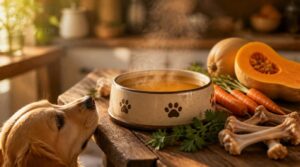
Not all broths are created equal for your dog’s bowl. Some are wonderfully safe and even nourishing, while others hide ingredients that can do real harm. Here are the best options worth keeping in your kitchen.
Chicken Broth
Chicken broth is the most approachable starting point for dogs new to broth. Scrutinize the label carefully — unsalted, plain versions reduce sodium risk and avoid hidden additives. Collagen-rich broth may gel when cooled, which is normal.
| What to Check | Why It Matters |
|---|---|
| Sodium | Accumulates with regular use |
| Fat | May cause digestive upset |
| Ingredients | No onion, garlic |
| Temperature | Cool before serving |
Beef Broth
Beef broth works well for dogs when it’s plain and unsalted. During long simmering, connective tissue releases collagen that turns into gelatin — you’ll notice the cooled broth thicken slightly, which signals good mineral and protein carryover from the bones.
That gelatin richness also signals deeper benefits — beef’s joint and digestive perks for dogs make a slow-simmered, unsalted broth one of the more wholesome homemade additions to their diet.
Watch sodium carefully. Store-bought versions often run high, so homemade beef broth gives you full control. Skip the onion and garlic most recipes call for.
Bone Broth
Of all the broth options, bone broth packs the most nutritional depth. Long simmering — often 12 to 24 hours — pulls collagen, glucosamine, and chondroitin from connective tissue directly into the liquid, supporting joint mobility and gut lining integrity.
Glycine and arginine dissolve into the broth too, helping with tissue repair. Just keep it plain and unsalted.
Low-Sodium Broth
When scanning store shelves, "low-sodium" labels can be misleading — two products using the same wording can have very different sodium levels per cup. Always check the nutrition facts label directly.
For dogs with heart or kidney concerns, even low-sodium options need veterinary approval. Diluting broth with water reduces sodium further, making it a safer hydration boost.
Homemade Broth
Making broth at home gives you complete ingredient control — no hidden additives, no risky seasonings.
Use dog-safe ingredients only:
- Raw or cooked bones (beef, chicken)
- Plain carrots or celery
- Water and a splash of apple cider vinegar
- No onion, garlic, or salt
Simmer for several hours, strain thoroughly, then portion into ice cube trays for easy, safe serving.
Benefits of Broth for Dogs
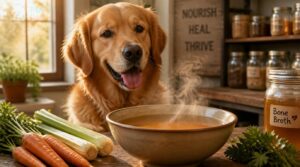
Broth isn’t just a tasty addition to your dog’s bowl — it genuinely earns its place as a functional supplement. From keeping your pup hydrated to supporting aging joints, the right broth can do more than you might expect. Here’s a closer look at the key benefits worth knowing.
Better Hydration
Many dogs don’t drink enough water on their own, and that’s where broth quietly earns its place. Mixing it into a water bowl enhances hydration by making fluids more appealing.
Bone broth also delivers trace minerals that support electrolyte balance, helping your dog’s body regulate temperature and maintain normal function. Watch for pale, concentrated urine — a clear sign your dog needs more fluids.
Picky Eater Support
Some dogs treat their bowl like a puzzle they’d rather not solve. A drizzle of bone broth as a meal topper can shift that mood — the aroma alone draws hesitant eaters in.
- Bridge textures with familiar flavors
- Use mild, low-sodium broth first
- Offer repeatedly without pressure
- Keep mealtimes calm and consistent
- Adjust flavor intensity gradually
Repeated exposure matters more than variety.
Gentle Digestive Support
When a dog’s stomach is off, plain broth offers a gentle way back. Serve it lukewarm, not hot — heat intensifies the smell, which can help coax a reluctant drinker, but scalding liquid causes discomfort.
Start with small portions and watch for loose stool or gas. Choose low-fat, strained broth to ease digestion and keep hydration steady without overwhelming a sensitive gut.
Joint-Friendly Nutrients
Broth goes beyond soothing an upset stomach — it carries nutrients that directly aid joint health.
Bone broth is particularly rich in compounds your dog’s body can use right away:
- Collagen cushions cartilage and maintains the connective tissue surrounding joints
- Glucosamine and chondroitin help slow cartilage wear and support repair
- Hyaluronic acid keeps joints lubricated and moving with less friction
- Omega-3 fatty acids reduce joint inflammation and morning stiffness
- Magnesium and calcium stabilize the bone structure that aids every joint
Skin and Coat Support
Your dog’s skin is doing constant work behind the scenes. The epidermal barrier holds moisture in, keeps irritants out, and aids the immune function that protects against infection. When nutrition falls short, that barrier weakens — dryness, dull coat, and excessive shedding often follow.
Collagen from bone broth strengthens the dermis directly, helping maintain the connective tissue where hair follicles are anchored and sebum-producing glands function normally.
Unsafe Broth Ingredients

Not every broth that’s safe for humans belongs in your dog’s bowl. Some common ingredients can cause real harm, even in small amounts. Here’s what to watch for before you pour.
Onion and Garlic
Onions and garlic are toxic to dogs — no safe amount exists. Both belong to the Allium family and contain organosulfur compounds that damage red blood cells, causing hemolytic anemia. These compounds survive cooking and concentrate in broth.
Onions and garlic are toxic to dogs in any amount, damaging red blood cells even after cooking
Dried garlic powder is especially dangerous; one teaspoon equals roughly eight fresh cloves. Always check labels for hidden "natural flavors" derived from Allium plants.
High Sodium
Most commercial broths carry far more sodium than a dog’s body can safely handle. That excess salt pulls water into the bloodstream, raising blood volume and forcing the heart to work harder — a real concern for dogs with heart or kidney conditions, where sodium intake must stay tightly controlled.
Always check labels. If "low-sodium" isn’t listed clearly, skip it.
Artificial Additives
What’s listed on a broth label can tell you a lot — and sometimes, it’s a short list that worries you most. Many store-bought broths contain synthetic preservatives, artificial colorants, emulsifiers, and flavor enhancers like monosodium glutamate.
None of these serve your dog nutritionally. Dogs don’t need added color or sweeteners, and repeated exposure to these unnecessary additives adds up.
Cooked Bone Pieces
Whole bone broth is safe — it’s the stray cooked bone fragments sometimes found in poorly strained batches that aren’t. Cooked bones splinter easily, and those sharp shards can cause mouth trauma, choking, or digestive obstruction before you’d even notice something went wrong.
Marrow fat adds another concern, triggering vomiting in fat-sensitive dogs. Always strain broth thoroughly before serving.
Spices and Seasonings
Broth made for humans is seasoned for human palates — not for dogs. Even small amounts of black pepper, chili, or cumin can irritate a dog’s digestive tract or trigger vomiting.
Watch for these unsafe seasonings in any store-bought broth:
- Black pepper
- Chili powder
- Garlic powder
- Onion powder
- Salt blends
Always choose plain, unseasoned broth only.
How to Serve Dog Broth
Once you’ve found a safe broth your dog can enjoy, the next step is figuring out how to actually work it into their routine. There are a few simple ways to do it, and most take less than a minute. Here’s what works well.
Pour Over Kibble

Pouring broth directly over kibble works well as a meal topper — aim for the center of the bowl so liquid coats the pieces evenly rather than pooling at the edges.
Give the kibble a minute to absorb before serving. This brief wait softens the texture slightly, making each bite more inviting without turning the meal into soup.
Mix With Water

When kibble isn’t on the menu, mixing broth with water makes a gentler hydration solution for pets. A simple 1:1 dilution ratio lowers sodium concentration and reduces the risk of digestive upset, especially for sensitive stomachs.
- Serve at room temperature for better acceptance
- Start with small portions to test tolerance
- Refrigerate any leftovers promptly
Managing caloric intake matters here — diluted broth adds fluid without excess richness.
Freeze Into Cubes
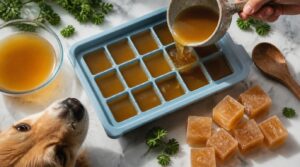
Freezing broth into cubes is one of the smartest canine hydration methods you can try. Silicone trays flex to release portions cleanly, and each cube becomes a pre-measured single serving — no guessing, no waste.
Cool the broth completely before freezing. Label the tray with the date and use cubes within a few weeks for best quality.
| Step | Why It Matters |
|---|---|
| Cool broth first | Prevents bacterial growth |
| Use silicone trays | Releases cubes without breaking |
| Seal in airtight bags | Blocks freezer odors |
| Label with date | Ensures freshness rotation |
| Thaw in refrigerator | Avoids unsafe temperature zones |
Serve Small Portions
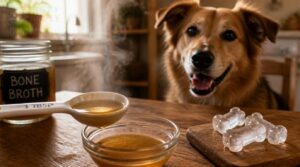
Once your cubes are ready, portion size becomes the next thing to get right. A tablespoon or two per serving is enough for most dogs — adjust based on size, age, and diet. Use a measuring spoon to stay consistent.
Too much broth, even low-sodium bone broth, can disrupt daily calorie intake and hydration balance without you realizing it.
Ask Your Veterinarian

Even with the right portions sorted, your vet remains the most reliable checkpoint. Before making broth a regular part of your dog’s diet, ask specifically about:
- Sodium level limits for your dog’s current health status
- Medical condition compatibility, especially kidney disease, heart disease, or diabetes
- Safe ingredient checks for any broth label you’re considering
- Appropriate serving size based on your dog’s weight and daily intake
Frequently Asked Questions (FAQs)
Can dogs eat broth?
Dogs can handle broth just fine — as long as it’s plain and low in sodium, free from onion, garlic, and artificial additives. Homemade preparation gives you the most control over what goes into every serving.
Can you put bone broth on dog food?
Yes, you can put bone broth on dog food. Pour a small amount over kibble as a meal topper to boost flavor, soften texture, and encourage eating — just make sure it’s plain, unsalted, and free of onion or garlic.
Can dogs eat beef broth if they’re sick?
When your dog is under the weather, plain unsalted beef broth can help. It offers liquid calories and hydration without straining a sick stomach — but only if it’s free from onion, garlic, and hidden additives.
Can dogs eat bone broth if they’re sick?
Bone broth for dogs can be a gentle option when they’re sick — as long as it’s plain, unsalted, and free of onion or garlic. Warm it slightly and offer small amounts.
What words do dogs hear best?
Short, sharp sounds cut through noise like a whistle in wind. High-pitched, consonant-heavy cues — words like "sit," "stay," or "come" — register fastest. Your dog responds best to brief, consistent words paired with rewards.
Can dogs eat chicken broth?
Plain chicken broth is safe for dogs when it contains no onion, garlic, or added salt. Choose low-sodium varieties or make your own at home to keep your dog healthy.
Can dogs eat beef broth?
Yes, plain beef broth is safe for dogs when it contains only beef and water. Skip anything seasoned or salted — low-sodium, additive-free versions are the only ones worth offering.
Can dogs eat bone broth?
Dogs can eat bone broth, but keep it plain, unsalted, and free of onion or garlic. Strain out all bone fragments before serving, and introduce it gradually to watch for digestive sensitivity.
How to make chicken bone broth for dogs?
Picture a slow, steaming pot — chicken bones and water simmering on low heat for 8–10 hours with apple cider vinegar to draw out nutrients. Strain, cool, skim the fat, then store in airtight containers.
Can a dog eat store-bought broth?
Store-bought broth can work for dogs, but label reading is essential. Choose plain, low-sodium options with no onion, garlic, or artificial additives. Even a "safe" broth should be given occasionally and in small amounts.
Conclusion
Think of broth as a tool, not a treat—its value depends entirely on what’s in it. Can dogs eat broth? Yes, but only when it’s free of onion, garlic, and excess sodium.
The right broth can support hydration, joints, and even a stubborn appetite. The wrong one causes real harm. Read every label. When in doubt, make it yourself. Your dog can’t check the ingredient list—but you can.
- https://vcahospitals.com/know-your-pet/onion-garlic-chive-and-leek-toxicity-in-dogs
- https://www.forbes.com/sites/forbes-personal-shopper/article/best-fresh-dog-food
- https://pmc.ncbi.nlm.nih.gov/articles/PMC2984110
- https://www.nbcnews.com/select/shopping/best-dog-food-ncna1189551
- https://www.justanswer.com/dog-health/qx9pj-dog-ate-half-cup-cup-chicken-bone-broth.html