
This site is supported by our readers. We may earn a commission, at no cost to you, if you purchase through links.
Some dogs leave behind a trail of fur like a slow-moving snowstorm—on your couch, your clothes, your morning coffee. For allergy sufferers or anyone who’d rather not lint-roll everything they own, that’s a real dealbreaker.
The good news is that plenty of dogs shed so little you’d barely notice, and a few might even stop your sneezing fits for good. No dog is completely fur-free, but coat type and genetics play a huge role in how much hair ends up on your floor.
Finding the best low-shedding dogs comes down to knowing which breeds fit your home, your health, and your lifestyle.
Table Of Contents
Key Takeaways
- No dog is truly non-shedding — low-shedding breeds simply keep loose hair trapped in their coat instead of scattering it around your home.
- “Hypoallergenic” doesn’t mean allergen-free, since dander, saliva, and urine are the real triggers, not the hair itself.
- Coat type, genetics, diet, and even indoor lighting all influence how much your dog sheds — it’s never just about breed alone.
- Low-shedding dogs still need regular grooming, because skipping brushing and professional trims leads to matting, hidden skin issues, and higher dander buildup.
What Makes a Dog Low-Shedding?
Not all dogs shed the same amount, and there’s actually a reason behind that. A few key factors determine whether a dog leaves fur everywhere or barely any at all.
Things like coat type, genetics, and season all play a role—and if you’ve got a Bulldog specifically, this breakdown of why English Bulldogs shed and how much to expect is worth a look.
Here’s what you should know before picking your next companion.
Difference Between Low-Shedding and Non-Shedding
Here’s the honest truth: no dog is truly non-shedding. Low-shedding dogs lose hair slowly and steadily — you’ll mostly find it in your brush, not on your couch.
Non-shedding is just a casual label for breeds whose hair growth cycle keeps hairs anchored longer before they fall. Different coat types and shedding patterns change your grooming needs, not whether hair falls at all.
The scientific basis for why some breeds shed less can be found in their hair growth cycle and genetics.
Hypoallergenic Qualities Explained
Here’s something worth knowing before you start browsing breeds: “hypoallergenic” doesn’t mean allergen-free. Allergen sources are actually your dog’s dander, saliva, and urine — not the hair itself.
Hypoallergenic does not mean allergen-free — dog dander, saliva, and urine are the real culprits, not the hair
Low-shedding and nonshedding coats simply spread less dander around your home. So hypoallergenic dogs are allergy-friendly in degree, not absolutely. For pet allergies, breed selection still matters, but it’s never a guarantee.
To understand the nuances of allergy risk, it’s helpful to read about the distinction between hypoallergenic pets and allergies.
Factors Influencing Shedding in Dogs
Several things shape how much a dog sheds — it’s not just breed.
- Coat Structure — Single-layer coats shed less than double coats, which release heavy bursts during seasonal changes.
- Breed Characteristics — Non-shedding and low-shedding breeds like Poodles trap loose hair in curls instead of dropping it.
- Health Factors — Skin conditions or hormonal issues can disrupt normal hair growth cycles.
- Shedding Patterns — Indoor dogs may shed steadily year-round due to artificial lighting disrupting natural cycles.
- Nutrition — Poor diets weaken coats; adequate protein and fatty acids support hypoallergenic dog grooming goals.
Best Small Low-Shedding Dog Breeds
Small dogs are a great fit if you want a low-shedding companion that doesn’t take up much space. Many of these breeds are friendly, easy to live with, and surprisingly low-maintenance regarding loose fur.
Here are some of the best small low-shedding breeds worth knowing about.
Bichon Frise

The Bichon Frise is one of those low-shedding breeds that genuinely earns its reputation. Their curly coat traps loose hair instead of scattering it everywhere, making them a practical choice for allergy-prone households.
Hypoallergenic doesn’t mean zero dander, but regular dog grooming and a solid diet rooted in good dog nutrition keep things manageable.
Their cheerful canine behavior and eagerness for bichon training make them genuinely easy to love.
Maltese

The Maltese dog breed is a standout among non-shedding breeds. Their single-layer coat loses very little hair year-round, making them a practical pick if allergies are a concern.
Coat colors are usually pure white, which looks stunning but needs regular dog grooming to avoid matting and tear staining.
Whether the coat turns out straight or curly, a good Pug Poodle mix grooming routine keeps that white fur looking its best year-round.
Good Maltese nutrition and early puppy training keep this hypoallergenic companion healthy and well-behaved.
Yorkshire Terrier

Yorkshire Terriers pack a surprising amount of personality into a 7-pound frame. Their single-layer, silky coat grows like human hair — trapping loose strands instead of scattering them everywhere. That’s what puts this breed firmly in the low-shedding, hypoallergenic category.
- Dog grooming every 4–6 weeks keeps their coat manageable
- Daily brushing prevents tangles and reduces dander
- Small dog exercise needs are modest but daily
- Terrier training should start early to curb stubbornness
- Yorkie nutrition and regular vet visits support their 11–16 year lifespan
Coton De Tulear

The “Royal Dog of Madagascar” earned that title for good reason. Rooted in Madagascar origins dating back to the 16th century, the Coton de Tulear brings a cheerful Tulear temperament that’s hard to resist.
Their cotton-soft coat is low-shedding and hypoallergenic, but don’t skip dog grooming and maintenance — daily brushing prevents mats.
Coton health is strong, with lifespans often reaching 14–16 years.
Havanese

Few small breeds pack this much personality into such a tidy package. Havanese dogs weigh just 7 to 13 pounds, yet their warmth fills a room.
Their Low-Shedding, Hypoallergenic coat makes dog grooming manageable with brushing three to four times weekly.
Havanese training is straightforward thanks to their eagerness to please.
Good dog nutrition and routine pet healthcare support their impressive 14 to 16-year lifespan.
Shih Tzu

The Shih Tzu is the definition of Canine Companionship in a compact frame. This Low-Shedding breed traps loose hair in its long coat rather than scattering it everywhere, making cleanup easier than you’d expect.
Dog Training Tips work best here when you keep sessions gentle and positive.
- Brush several times weekly to prevent mats
- Schedule grooming every 4–8 weeks
- Prioritize Shih Tzu Nutrition and Pet Health Advice for a long, happy life
Other Notable Small Breeds
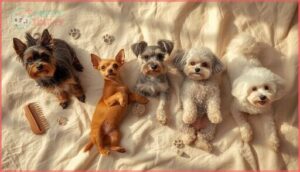
A few more small dogs deserve a spot on your radar. From the bold Affenpinscher to the sleek Miniature Pinscher, these low-shedding companions cover a range of Small Breed Traits and personalities worth knowing.
| Breed | Key Trait |
|---|---|
| Affenpinscher | Wiry, low-shed grooming needs |
| Miniature Pinscher | Short coat, minimal upkeep |
| Miniature Schnauzer | Hypoallergenic, non-shedding double coat |
| Miniature Poodle | Curly, non-shedding, highly trainable |
| West Highland Terrier | Bold personality, low-maintenance coat |
Top Medium and Large Low-Shedding Breeds
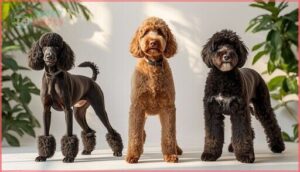
If you want a dog with a bit more presence, medium and large low-shedding breeds are worth a serious look. They bring the same coat benefits without the heavy cleanup, and many are surprisingly adaptable to different lifestyles.
Here are some top picks to explore.
Standard Poodle
The Standard Poodle is one of those dogs that genuinely earns its reputation. Its dense, curly coat barely sheds, trapping loose hair and dander close to the body — a real win if allergies are a concern.
But curly coat care is non-negotiable; brush several times a week or mats form fast.
Smart, active, and keen to please, Standard Poodle training is genuinely fun.
Portuguese Water Dog
If the Standard Poodle felt like a lot, the Portuguese Water Dog is a slightly more laid-back option — though still energetic. Built on fishing heritage, this breed’s low-shedding, hypoallergenic coat makes it a solid pick for allergy-prone homes.
- Minimal shedding thanks to a single-layer coat
- PWD temperament: loyal, smart, people-focused
- Needs brushing several times weekly
- Water Dog health screenings recommended before adopting
Schnauzer (Standard and Giant)
Both the Standard and Giant Schnauzer earn their spot among low shedding dog breeds — their wiry coats trap dead hair rather than dropping it on your floors. That said, coat care matters. Brush twice weekly, and schedule grooming every 6–8 weeks.
| Feature | Details |
|---|---|
| Grooming | Every 6–8 weeks |
| Allergy Management | Regular baths reduce dander |
Soft-Coated Wheaten Terrier
If Schnauzers felt like a step up in size, the Soft Coated Wheaten Terrier hits a sweet spot. This low-shedding, hypoallergenic breed has a single, silky coat that stays off your furniture.
Wheaten Terrier care involves brushing several times weekly and grooming every four to six weeks. Health screening for kidney and intestinal conditions is strongly recommended.
Irish Water Spaniel
The Irish Water Spaniel is one of the most underrated low-shedding, hypoallergenic dog breeds around. With its rich liver-colored curls and legendary water retrieval skills, this breed brings real working history to your home. Spaniel training and dog socialization early on makes a huge difference.
- Sheds minimally year-round
- Needs brushing twice weekly
- Loves swimming and active play
- Wary of strangers at first
Afghan Hound
Few dogs turn heads quite like the Afghan Hound — that long, silky coat looks high-maintenance, but it’s actually a low-shedding, hypoallergenic breed that drops hair slowly rather than in heavy seasonal bursts.
| Feature | Details | Owner Tip |
|---|---|---|
| Shedding Level | Low, gradual | Brush daily to prevent mats |
| Grooming Frequency | Several times weekly | 10–15 min per session |
| Exercise Needs | 2+ hours daily | Use securely fenced areas |
| Trainability | Independent nature | Start hound training tips early |
| Lifespan | 12–14 years | Monitor for bloat risk |
Sighthound exercise is non-negotiable here — Afghan Hounds have serious energy and a strong chase instinct.
Bouvier Des Flandres
The Bouvier des Flandres brings serious working dog energy wrapped in a rugged, tousled coat rooted in Flandres origins — this breed was built to herd cattle and haul carts, not sit pretty.
It’s Low-Shedding in the sense that loose hair stays trapped in the coat, but weekly brushing is non-negotiable.
Consistent dog training matters too — these big, smart dogs thrive with clear boundaries.
Grooming and Maintenance Needs

Low-shedding doesn’t mean low-maintenance — it just means different maintenance. Every breed has its own coat quirks, and knowing what yours needs makes a big difference.
Here’s what you should keep in mind regarding grooming and care.
Brushing Frequency by Breed
Not every low-shedding dog needs the same grooming schedule — breed specificity really matters here. Use this as your starting point for coat maintenance:
- Daily Brushing: Afghan Hounds, Maltese, and Shih Tzus need it every day.
- Every Other Day: Bichon Frise and Standard Poodles.
- 3–4 Times Weekly: Soft-Coated Wheaten Terriers and Bouviers.
- After Outings: Portuguese Water Dogs, especially post-swim.
Professional Grooming Recommendations
Even low-shedding dogs need professional grooming — home care alone won’t cut it. Most hypoallergenic dog breeds do best on a 4–8 week salon schedule.
| Coat Style | Recommended Schedule |
|---|---|
| Short puppy cut | Every 6–8 weeks |
| Medium fluffy trim | Every 4–6 weeks |
| Long or curly coat | Every 2–4 weeks |
Book recurring appointments so your groomer can track coat maintenance consistently.
Special Skin and Coat Care Tips
Your dog’s skin is the foundation of a healthy coat. For low-shedding and hypoallergenic breeds, skin care starts with bathing every three to six weeks using a moisturizing shampoo — look for oatmeal or aloe vera.
Grooming tools like slicker brushes support hair maintenance by distributing natural oils.
Coat nutrition matters too, so omega-3 fatty acids keep the skin barrier strong and the fur glossy.
Managing Dander and Allergens
Bathing your low-shedding or hypoallergenic dog weekly cuts dander levels dramatically — studies show coat allergens drop by around 86 percent right after a wash. But that reduction fades fast, so consistent pet grooming matters.
Pair that routine with HEPA air purification, regular household cleaning, and damp dusting for real allergen control. It’s a simple system that genuinely helps with dog allergies.
Choosing The Right Low-Shedding Dog

Finding the right low-shedding dog comes down to more than just coat type. Your lifestyle, living space, and energy level all play a role in making a good match.
Here’s what to think about before you decide.
Best Breeds for Families and Allergies
Finding the right family pet options when allergies are in the picture doesn’t have to be stressful. Hypoallergenic, low-shedding breeds like the Bichon Frise, Havanese, and Miniature Poodle are genuinely kid-friendly dogs — gentle, trainable, and easy to love.
They’re among the top dog breeds for allergy sufferers because they shed minimally, which helps reduce household allergens and keeps family-friendly dogs comfortable for everyone at home.
Apartment and Urban Living Suitability
Living in a city apartment with a dog is very doable — especially if you pick the right breed. Low-shedding, hypoallergenic dogs are a natural fit for small spaces.
A few things that help:
- Visit urban dog parks daily for small space exercise
- Budget for apartment pet fees and rental pet policies
- Choose quiet, low-maintenance breeds for city noise reduction
Activity and Training Considerations
Beyond the apartment question, knowing your dog’s activity and training needs makes a real difference. Small low-shedding dogs like Bichon Frises thrive with short daily walks and mental stimulation through puzzle toys or quick training sessions.
Larger breeds like Standard Poodles need 60-plus minutes of exercise daily. Reward-based dog training works best — these breeds are smart and respond well to consistency.
Matching Breed Traits to Your Lifestyle
Every household tells its own story, and the right breed fits naturally into yours. Think through what your days actually look like before committing to a dog.
- Seniors or homebodies do well with calm, low-maintenance lap breeds
- Active families match better with energetic, hypoallergenic medium breeds
- Allergy-friendly, low-shedding dog breeds suit multi-pet homes with tolerant temperaments
Your lifestyle considerations should always drive breed selection.
Frequently Asked Questions (FAQs)
What is the best house dog that doesn’t shed?
The Bichon Frise is a top pick for indoor life. It’s small, friendly, and sheds very little — making it a genuinely low-maintenance, hypoallergenic companion that fits nicely into almost any home.
How long do low-shedding dogs typically live?
Most low-shedding dog breeds live between 12 and 16 years. Smaller breeds often outlive larger ones. Good nutrition, regular vet visits, and daily exercise all shape how long your dog thrives.
Are low-shedding breeds more expensive to buy?
Yes, many hypoallergenic and #LowShedding #DogBreeds do carry higher purchase costs and breeder fees, but price variations are real — adoption options and budget-friendly picks exist too.
Do low-shedding dogs get along with cats?
Some low-shedding dogs live peacefully with cats — but coat type isn’t the deciding factor. Prey drive matters more.
Breeds like Poodles and Havanese tend to support household harmony through calm temperament and early dog socialization.
Are low-shedding breeds prone to skin conditions?
Surprisingly, yes. Many low-shedding and hypoallergenic breeds carry genetic predispositions to skin conditions like atopic dermatitis.
Their coat type can trap moisture, worsen allergy triggers, and hide early breed-specific issues beneath that low-maintenance fur.
Conclusion
The ball is in your court now. You’ve seen how the best low shedding dogs can genuinely change daily life—less cleanup, fewer sneezes, more couch space that actually stays clean.
But the right breed isn’t just about fur. It’s about matching a dog’s energy, size, and personality to yours. Take what you’ve learned here and let it guide your choice.
The right dog won’t just fit your home—it’ll feel like it belonged there all along.
- https://www.petmd.com/dog/general-health/hypoallergenic-dogs
- https://www.clipit-grooming.com/post/7-cleanest-low-shedding-dog-breeds
- https://www.telavets.com/blog/hypoallergenic-non-shedding-dogs
- https://askavet.com/blogs/news/12-cleanest-dog-breeds-2025-vet-approved-low-shedding-guide-%F0%9F%90%95%E2%9C%A8
- https://www.purina.com/dogs/dog-breeds/collections/low-shedding-dog-breeds