
This site is supported by our readers. We may earn a commission, at no cost to you, if you purchase through links.

The FDA’s 2019 alert linking grain-free, legume-heavy dog foods to dilated cardiomyopathy sent a lot of pet owners scrambling—and it reshaped how nutritionists think about dog food formulation.
Peas, lentils, and chickpeas had quietly become the backbone of countless premium recipes, standing in as cheap protein boosters and binding agents.
The problem? Dogs aren’t built to thrive on plant-forward ingredient lists, and some were paying for it with their hearts.
Finding the best legume-free dog food means cutting through a noisy market where labels mislead and marketing outpaces science—these vet-reviewed picks make that search considerably shorter.
Table Of Contents
- Key Takeaways
- 10 Best Legume-Free Dog Foods
- 1. ACANA Duck Pumpkin Limited Ingredient Dog Food
- 2. Taste of the Wild Ancient Stream Salmon
- 3. Zignature Select Cuts Lamb Dog Food
- 4. Orijen Amazing Grains Puppy Large Dry Dog Food
- 5. Canidae Salmon Barley Adult Dry Dog Food
- 6. Merrick Healthy Grains Adult Dog Food
- 7. Stella Chewy Wild Red Dog Food
- 8. Wellness CORE Grain Free Wet Dog Food
- 9. Honest Kitchen Wholemade Fish Oat Dog Food
- 10. Stella Chewy Wild Red Dry Dog Food
- Why Choose Legume-Free Dog Food
- Ingredients That Matter Most
- How to Compare Top Formulas
- Buying Guide for Best Picks
- Switching to a Legume-Free Diet
- Frequently Asked Questions (FAQs)
- What does "legume free" mean in dog food?
- Do Stella and Chewy have legumes?
- Is legume free good for dogs?
- Are lentils linked to DCM in dogs?
- Does acana dog food have legumes?
- Are grains or legumes better for dogs?
- What is a good dog food without legumes?
- What is a legume in dog food?
- Can dogs eat legumes?
- How much more expensive are legume-free dog foods?
- Conclusion
Key Takeaways
- The FDA’s 2019 alert linked legume-heavy, grain-free dog foods to dilated cardiomyopathy, making it worth checking whether peas, lentils, or chickpeas appear anywhere in your dog’s current ingredient list.
- "Grain-free," "pea-free," and "legume-free" aren’t the same label — only legume-free eliminates the entire plant family, so reading past the front of the bag matters.
- The best legume-free formulas lead with a named animal protein, use alternative carbs like oats, barley, or sweet potato, and carry an AAFCO complete and balanced statement for your dog’s life stage.
- Switching foods too fast can cause digestive upset, so a 7–10 day transition — starting at 25% new food and building gradually — gives your dog’s gut time to adjust.
10 Best Legume-Free Dog Foods
Finding a truly legume-free dog food takes more than just flipping a bag over and scanning the front label.
The ingredient list often tells the real story, which is why checking a breakdown of top grain-free dog food brands can help you spot hidden legumes fast.
Each pick below was chosen based on ingredient quality, protein sourcing, and confirmed absence of peas, lentils, and chickpeas.
Here are ten options worth a closer look.
1. ACANA Duck Pumpkin Limited Ingredient Dog Food
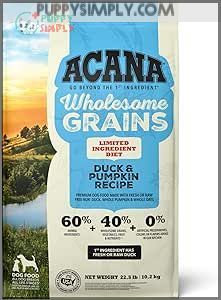
Duck & Pumpkin Limited Ingredient formula is a smart pick if your dog struggles with food sensitivities. It builds the entire recipe around a single protein — duck so there’s no guessing which ingredient is causing the trouble.
You get 27% protein and 17% fat, with oats and sorghum filling the carbohydrate role instead of legumes. Whole pumpkin adds natural fiber, and built-in probiotics support digestion.
At 3,370 kcal/kg, it delivers solid energy without unnecessary complexity.
| Best For | Dogs with food sensitivities or allergies who need a simple, single-protein diet built around easily digestible ingredients. |
|---|---|
| Primary Protein | Duck |
| Life Stage | Adult |
| Form | Dry Kibble |
| Free From Legumes | Yes |
| Made in USA | Yes |
| Price | $98.99 |
| Additional Features |
|
- Single animal protein (duck only) makes it easy to pinpoint and avoid allergy triggers
- Digestive support is built right in — fiber, prebiotics, and probiotics all in one bag
- Clean ingredient list with no corn, wheat, soy, or potatoes, plus antioxidants for immune health
- At $98.99 for 22.5 lbs, it runs significantly pricier than most standard dry dog foods
- Not suitable for large-breed puppies (70 lbs at adult size), so it’s off the table if you’re raising a big dog
- Contains oats, sorghum, and trace pollock oil, which could still be an issue for dogs with grain or fish sensitivities
2. Taste of the Wild Ancient Stream Salmon
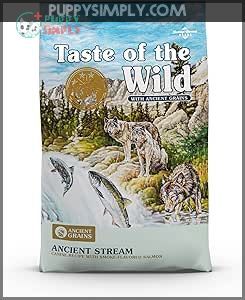
If your dog does better with fish than fowl, Taste of the Wild Ancient Stream is worth a close look.
Real salmon is the first ingredient, followed by salmon meal and fish meal — so animal protein carries the formula, not fillers.
You’re looking at 30% protein and 15% fat, with ancient grains like sorghum, millet, and quinoa replacing legumes entirely.
Five probiotic strains support digestion, and salmon oil delivers omega-3s for skin and coat.
It runs $58.99 for 28 lb.
| Best For | Dogs with chicken or beef allergies who need a high-protein, fish-based diet with digestive support across all life stages. |
|---|---|
| Primary Protein | Salmon |
| Life Stage | All Life Stages |
| Form | Dry Kibble |
| Free From Legumes | Yes |
| Made in USA | Yes |
| Price | $58.99 |
| Additional Features |
|
- Real salmon is the first ingredient, so you’re getting genuine animal protein — not a filler-heavy formula dressed up with meat flavor.
- Ancient grains like sorghum, millet, and quinoa replace legumes entirely, making it a solid pea-free option with steady, digestible energy.
- Five probiotic strains plus omega-3s from salmon oil help with both gut health and a healthy, shiny coat.
- Not grain-free, so dogs with grain sensitivities will need to look elsewhere.
- Some dogs switching from grain-free kibble may reject the texture or show signs of GI adjustment.
- At $58.99 for 28 lb, it sits on the pricier side compared to everyday dry food options.
3. Zignature Select Cuts Lamb Dog Food
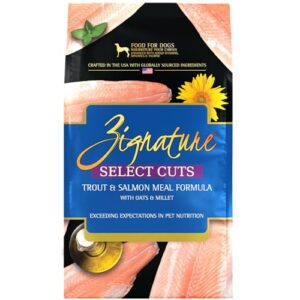
If your dog can’t eat fish, smart alternative — and Zignature Select Cuts delivers it cleanly.
Lamb and lamb meal lead the ingredient list, backed by oats, millet, and quinoa as the carb base. No peas, potatoes, soy, or wheat.
Protein sits at a minimum of 25%, fat at 16.5%, with taurine and probiotics included for heart and gut support.
At $82.99 for 25 lb, it’s priced higher, but the limited-ingredient profile justifies the cost for allergy‑prone dogs.
| Best For | Dogs with food sensitivities or allergies to poultry, beef, or common grains who need a clean, limited-ingredient diet with a novel protein source. |
|---|---|
| Primary Protein | Lamb |
| Life Stage | All Life Stages |
| Form | Dry Kibble |
| Free From Legumes | Yes |
| Made in USA | Yes |
| Price | $82.99 |
| Additional Features |
|
- Lamb and fish proteins make it a great fit for dogs who react badly to chicken or beef
- Free of peas, potatoes, soy, and wheat — a genuinely short, clean ingredient list
- Omega-rich trout and salmon blend supports skin, coat, and dogs with inflammatory conditions
- At $82.99 for 25 lb, it’s noticeably pricier than most mainstream dry foods
- The "grain-free" label can mislead — oats and millet are present, so strict grain-free seekers should read carefully
- Kibble size may not work well for small breeds or dogs with dental issues
4. Orijen Amazing Grains Puppy Large Dry Dog Food
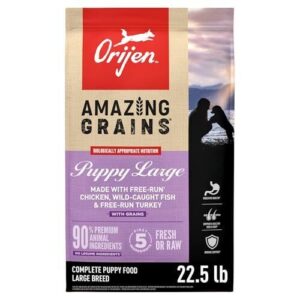
For large-breed puppies that need more than just clean protein, ORIJEN Exceptional Grains steps up. Fresh chicken, whole herring, and salmon lead the list — no fillers, no legumes.
The WholePrey approach means 90% animal‑derived ingredients, including liver and organs for natural taurine. Oats, quinoa, and chia handle carbs without a legume in sight. Protein hits 38% minimum, fat 16%, at 3,860 kcal/kg.
At $106.99 for 22.5 lb, it’s premium — but the formula backs up the price.
| Best For | Large-breed puppy owners who want a high-protein, biologically appropriate diet with quality animal ingredients and digestive support. |
|---|---|
| Primary Protein | Chicken/Herring/Whiting |
| Life Stage | Large Breed Puppy |
| Form | Dry Kibble |
| Free From Legumes | Yes |
| Made in USA | Yes |
| Price | $106.99 |
| Additional Features |
|
- 90% animal-derived ingredients with real chicken, herring, and salmon leading the list — no fillers or legumes
- Oats, quinoa, and chia provide balanced carbs alongside prebiotics and probiotics for gut health
- Pollock oil adds DHA/EPA to support immunity, brain development, and a healthy coat
- At $106.99 for 22.5 lb, it’s one of the pricier options on the shelf
- Not fully grain-free — contains oats, quinoa, and chia, which won’t work for dogs with grain sensitivities
- High protein content may not suit puppies with kidney issues or dogs on restricted-protein diets
5. Canidae Salmon Barley Adult Dry Dog Food
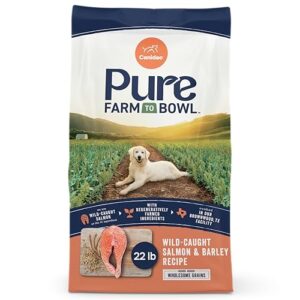
If your dog does well with fish but struggles with legumes, Canidae Salmon Barley is worth a close look.
Real salmon leads the ingredient list, followed by salmon meal and sardine meal — solid omega-3 sources for skin and coat health.
Barley, oatmeal, and sorghum handle the carbs without a pea or lentil in sight.
At $69.99 for 22 lb, it’s reasonably priced for a legume-free formula.
One heads-up: the fish odor is real, so airtight storage helps.
| Best For | Dogs that do well with fish protein but need a legume-free, grain-included formula — especially those with sensitive stomachs or skin and coat issues. |
|---|---|
| Primary Protein | Salmon |
| Life Stage | Adult |
| Form | Dry Kibble |
| Free From Legumes | Yes |
| Made in USA | Yes |
| Price | $69.99 |
| Additional Features |
|
- Wild-caught salmon leads the list, with salmon meal and sardine meal adding extra omega-3s for skin, coat, and joint support.
- Clean, simple formula — no corn, wheat, soy, peas, or lentils, and batch-tested for consistency.
- Many dogs with sensitive stomachs tolerate it well, with owners reporting less gas and better digestion.
- Strong fish smell is noticeable — airtight storage is pretty much a must.
- At $69.99 for 22 lb, it’s on the pricier side compared to mainstream dry foods.
- Not a fit for dogs with fish allergies or grain sensitivities, since barley, oatmeal, and sorghum are all in the mix.
6. Merrick Healthy Grains Adult Dog Food
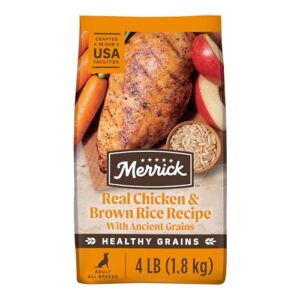
Merrick Healthy Grains keeps it simple: real deboned chicken first, no peas, no lentils, no soy.
Ancient grains — oats, barley, quinoa, brown rice — handle the carbs cleanly.
You also get glucosamine and chondroitin for joint support, plus salmon oil and flaxseed for skin and coat.
It’s a solid pick if your dog has mild sensitivities but doesn’t need grain‑free.
At $23.98 for 4 lb, it runs pricey per pound, so larger dogs will burn through it fast.
| Best For | Adult dogs with mild food sensitivities who do well on grains but need cleaner ingredients without peas, lentils, or soy. |
|---|---|
| Primary Protein | Chicken |
| Life Stage | Adult |
| Form | Dry Kibble |
| Free From Legumes | Yes |
| Made in USA | Yes |
| Price | $23.98 |
| Additional Features |
|
- Real deboned chicken is the first ingredient — good quality protein up front
- Glucosamine, chondroitin, salmon oil, and flaxseed cover joints, skin, and coat in one bag
- Free from common allergens like peas, lentils, corn, and soy
- Pricey at $23.98 for just 4 lb — larger dogs will go through it quickly
- Contains grains, so it’s not the right fit if you’re looking for grain-free
- Some dogs had digestive upset at first, so a slow transition is a good idea
7. Stella Chewy Wild Red Dog Food
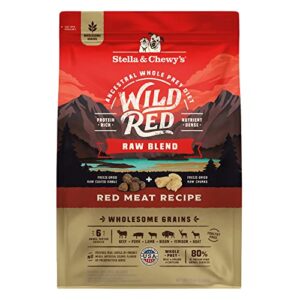
Stella & Chewy’s Wild Red brings six red-meat proteins — beef, pork, lamb, bison, venison, and goat — together in one legume-free kibble, which is genuinely rare.
The freeze-dried raw coating boosts palatability for picky eaters, while barley and oatmeal provide clean carbs without peas or lentils.
You also get taurine, glucosamine, chondroitin, and omega-3s from salmon oil.
At $82.99 for 21 lb, the cost per pound is reasonable for this quality tier.
Just note it contains pork, so skip it if your dog has a pork sensitivity.
| Best For | Dogs with poultry allergies or sensitivities who need a high-protein, legume-free kibble — especially active or picky eaters who do best on a varied red-meat diet. |
|---|---|
| Primary Protein | Beef/Pork/Lamb/Bison |
| Life Stage | All Life Stages |
| Form | Dry Kibble |
| Free From Legumes | Yes |
| Made in USA | Yes |
| Price | $82.99 |
| Additional Features |
|
- Six red-meat proteins plus a freeze-dried raw coating make it a solid pick for picky eaters who turn their nose up at most kibbles
- Completely free of peas, lentils, corn, and soy — a genuinely rare combo that’s hard to find in this quality range
- Built-in joint support (glucosamine, chondroitin) and omega-3s from salmon oil means fewer supplements to add on top
- At $82.99 for 21 lbs, it’s a noticeable spend — especially if your dog decides they don’t like it
- Contains barley and oatmeal, so it won’t work for dogs that need a strict grain-free diet
- Some dogs experience digestive upset during the switch, and a few just flat-out refuse it regardless of what you mix in
8. Wellness CORE Grain Free Wet Dog Food
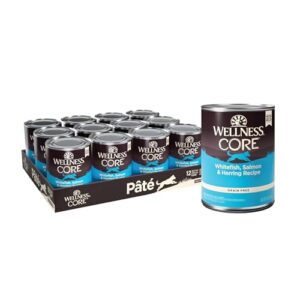
Wet food doesn’t always get credit for being a complete meal, but Wellness CORE Grain Free pulls its weight.
Whitefish, salmon, and herring lead the ingredient list, with no corn, wheat, soy or artificial additives.
The fish-and-flax omega blend helps skin and coat, while sweet potato and beet pulp keep digestion on track.
At $52.56 for 12 cans, it works well as a standalone meal or a kibble topper.
One heads-up: it contains chicken and chicken liver, so it’s not safe for poultry-sensitive dogs.
| Best For | Adult dogs with grain sensitivities, skin and coat issues, or reduced appetite who do well on a high-protein, fish-forward diet. |
|---|---|
| Primary Protein | Whitefish/Salmon/Herring |
| Life Stage | Adult |
| Form | Wet Canned |
| Free From Legumes | Yes |
| Made in USA | Yes |
| Price | $52.56 |
| Additional Features |
|
- Real whitefish, salmon, and herring up front — no fillers, artificial colors, or preservatives
- Omega-3s from fish and flax do genuine work for skin, coat, and joints
- Flexible enough to serve as a full meal or a kibble topper
- Contains chicken and chicken liver, so not safe for dogs with poultry allergies despite the fish-focused branding
- The fish smell is strong — your nose will know
- At $52.56 for 12 cans, it’s pricier than most canned options on the shelf
9. Honest Kitchen Wholemade Fish Oat Dog Food
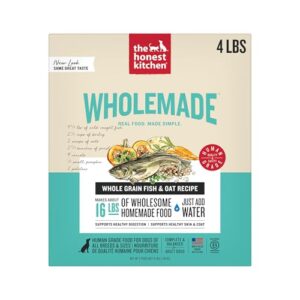
Dehydrated food often gets overlooked, but Honest Kitchen’s Wholemade Fish & Oat formula is worth a closer look. Wild-caught white fish leads the ingredient list, paired with organic oats, barley, flaxseed, and taurine — no legumes, corn, wheat, soy, or preservatives.
Add warm water, wait three minutes, and one 4 lb box yields about 16 lb of fresh-style food. At $53.89, it costs more than standard kibble, but the human-grade sourcing and digestibility make it a solid pick for adult and senior dogs with sensitive stomachs.
| Best For | Adult and senior dogs with sensitive stomachs or allergies to common kibble ingredients like corn, wheat, or soy. |
|---|---|
| Primary Protein | White Fish |
| Life Stage | Adult/Senior |
| Form | Dehydrated |
| Free From Legumes | Yes |
| Made in USA | Yes |
| Price | $53.89 |
| Additional Features |
|
- One 4 lb box rehydrates into ~16 lb of food, so it stretches further than it looks
- Human-grade ingredients, wild-caught white fish, and zero preservatives or fillers
- Easy on digestion — reviewers notice firmer stools, shinier coats, and less shedding
- At $53.89, it’s pricier than most dry kibble options
- Needs warm water and a few minutes to prep — not as grab-and-go as standard kibble
- Only comes in Fish & Oat, so it’s a no-go for dogs with fish allergies
10. Stella Chewy Wild Red Dry Dog Food
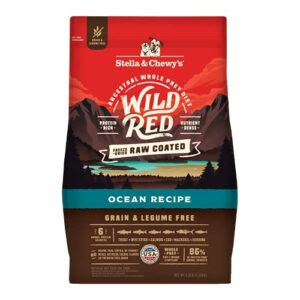
If your dog does well with fish but struggles with poultry, Stella & Chewy’s Wild Red Ocean Recipe deserves a spot on your shortlist. It combines six fish proteins — trout, whitefish, salmon, cod, mackerel, and herring — into a raw‑coated kibble with no grains, peas, or legumes.
At roughly 86% animal protein, it’s genuinely meat‑first. Sweet potato and tapioca keep carbs low. Added taurine, glucosamine, and four probiotic strains round out a formula that covers everything from puppy to senior.
| Best For | Dogs with poultry or grain sensitivities who need a high-protein, fish-based diet at any life stage. |
|---|---|
| Primary Protein | Trout/Salmon/Whitefish |
| Life Stage | All Life Stages |
| Form | Dry Kibble |
| Free From Legumes | Yes |
| Made in USA | Yes |
| Price | $21.99 |
| Additional Features |
|
- Six distinct fish proteins plus a freeze-dried raw coating give picky or sensitive dogs a nutrient-dense, flavor-rich meal
- Grain-, pea-, and legume-free with added taurine, probiotics, glucosamine, and omegas — solid all-in-one coverage
- Works for every life stage, so you’re not switching formulas as your dog ages
- At $21.99 for 3.5 lbs, the cost adds up fast — especially in a multi-dog home
- Some dogs refuse the freeze-dried coating or find the texture off-putting
- Fish meals and tapioca could still trigger reactions in dogs with specific fish or starch sensitivities
Why Choose Legume-Free Dog Food
Not every dog does well with peas or lentils, and the reasons vary more than you might expect.
Some owners switch after noticing itchy skin or loose stools, while others are responding to concerns about heart health. Here’s a closer look at what actually drives that decision.
Common Reasons Owners Avoid Peas and Legumes
Most owners don’t switch to legume‑free dog food on a whim — there’s usually a real concern driving it. The reasons vary, but they tend to cluster around a few consistent themes:
- Allergy Concerns tied to recurring itching or skin irritation
- Digestive Upset like gas, bloating, or loose stools
- Phytate Binding that may reduce mineral absorption
- Lectin Irritation potentially affecting gut lining integrity
- DCM Fears connected to the FDA investigation into grain‑free controversy and dilated cardiomyopathy
The presence of fermentable oligosaccharides risk in legume‑rich foods can increase bloat potential.
Food Sensitivities, Itching, and Digestive Upset
Food sensitivities often show up as itching, loose stools, or low energy — sometimes all three at once.
Allergen identification starts with noticing patterns: when symptoms flare, what your dog just ate, and how long symptoms last.
Skin symptom tracking over a few weeks gives your vet something concrete to work with before ordering veterinary diagnostic tests.
A limited ingredient diet paired with probiotics promotes gut microbiome balance while narrowing suspects.
Understanding that food allergy testing reveals immune‑mediated reactions helps guide treatment choices.
Legume-free Vs Pea-free Vs Grain-free
These three labels aren’t interchangeable, and the difference matters for allergy risk and nutrient gaps. Grain‑free diets still often contain peas or lentils — DCM concerns from FDA reports targeted exactly those formulas. Pea‑free dog food skips peas but allows other legumes. Only legume‑free dog food eliminates the entire family.
Grain-free, pea-free, and legume-free are not the same — only one eliminates the entire family
Veterinary nutritionists recommend checking the AAFCO statement alongside the ingredient list, since regulatory claims don’t guarantee complete nutrition.
When a Legume-free Formula Makes Sense
Knowing when to make the switch matters as much as knowing what to switch to. A legume-free formula makes sense in four clear situations:
- Your dog shows recurring food sensitivities like itching, loose stools, or gas after meals
- You’re handling Allergy Trigger Identification and want Simplified Ingredient Panels with fewer plant proteins
- Heart Health Concerns and the FDA’s findings around grain-free diets push you toward cleaner recipes
- Life-Stage Specific Needs require a formula that still meets AAFCO standards without legume fillers
When to Ask Your Veterinarian First
Before you swap your dog’s food, some situations genuinely call for a vet visit first.
Breed-specific DCM risk, emergency cardiac signs like coughing or collapse, and allergy elimination timing all need veterinary advice on dog diet choices before you act.
Life-stage nutrition checks, medication-food interactions, and vet-recommended pet food selections are areas where veterinary nutritionists give the clearest, most reliable veterinary dietary recommendations.
Ingredients That Matter Most

Not all ingredients pull equal weight in a legume-free formula.
Some do the heavy lifting for muscle, digestion, heart health, and skin — and knowing what to look for saves you from a lot of label confusion. Here’s what actually matters when you’re scanning that ingredient panel.
Named Animal Proteins as The First Ingredient
The first ingredient tells you a lot. When you see deboned duck, salmon, or chicken at the top of the list, that’s a signal your dog will digest meat first — before anything else.
These real meat sources deliver bioavailable amino acids that support muscle building benefits without straining digestion. ACANA lists deboned duck first, guaranteeing 31% crude protein with genuine digestive ease and omega‑3 enrichment from quality animal fat.
Non-legume Carbohydrate Sources to Look For
Carbohydrates aren’t the enemy — the wrong ones are.
Brown Rice and Oatmeal appear in many grain‑inclusive recipes and both digest well in dogs.
Sweet Potato and Tapioca Starch work in grain‑free diets, offering digestible carbohydrates with a low glycemic index.
Pumpkin Fiber adds digestive support without legumes.
These alternative carbohydrate sources keep energy stable and labels clean.
Omega-3 Fats for Skin and Coat Support
Healthy skin is the foundation of a great coat — and omega fatty acids are what keep that foundation solid.
- Marine Omega Sources like salmon and fish oil deliver EPA/DHA directly
- EPA/DHA Benefits include reduced skin inflammation and coat gloss enhancement
- Linoleic Acid Role maintains your dog’s outer skin barrier
- Flaxseed oil supplies ALA, a plant-based omega-3
- Omega‑3 Ratio Guidance: AAFCO caps omega-6 to omega-3 at 30:1
Probiotics and Prebiotics for Digestion
Your dog’s gut health in canines depends on the right balance of live microbes and natural fiber working together.
Probiotics like Enterococcus faecium and Bacillus subtilis support microbiome balance and help prevent digestive upset in dogs.
Prebiotics — think chicory root or inulin — fuel fermentation benefits that nourish colon cells.
Strain selection and shelf stability determine whether those microbes actually survive to help.
Enzyme synergy makes the whole system work better.
Taurine and Other Key Nutrients to Check
Taurine quietly keeps your dog’s heart pumping — and legume-heavy diets can quietly drain it. The FDA warning linking high-legume formulas to DCM is worth taking seriously. Check for these heart health nutrition essentials:
- Taurine precursors — methionine and cystine (sulfur amino acids) at 0.65%+ dry matter
- Added taurine — especially in fish- or plant-forward recipes
- Vitamin E benefits — protects heart muscle cells from oxidative stress
- Mineral balance — magnesium and potassium support myocardial function
Hidden Legume Ingredients on Labels
After checking taurine, don’t overlook label terminology. Hidden legume ingredients on labels often show up as pulse fractions—pea protein, lentil flour, chickpea fiber—rather than whole peas or beans.
Ingredient order matters: the first ten ingredients carry the most weight. Regulatory flags include “garbanzo beans” and “pulse protein.”
Reading dog food ingredient labels closely is key for finding true legumefree dog food.
How to Compare Top Formulas
Once you’ve confirmed a formula is legume-free, the next step is matching it to your dog’s specific needs.
Not every high-quality food works for every dog, and the differences between formulas come down to a few key factors. Here’s what to look at when comparing your top options.
Protein, Fat, and Calorie Balance

Protein content, fat content, and calorie content don’t mean much without each other. A food with 30% protein but high energy density can still push your dog past their daily limit.
Fat delivers 9 kcal per gram, so small serving changes matter.
For lean mass maintenance and weight management, match macro ratio targets to your dog’s activity level before comparing bags.
Limited-ingredient Vs Multi-protein Recipes
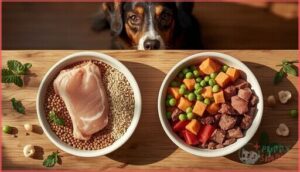
Once you’ve matched macros, ingredient structure is next. Limited-ingredient recipes narrow the list intentionally — one primary protein source, fewer carbs, cleaner Label Transparency. That’s your Allergy Elimination starting point. Multi-protein recipes offer Protein Variety but make identifying triggers harder.
Ask yourself:
- Is your dog still itching despite diet changes?
- Do legume‑free veterinary dietary recommendations apply here?
- Which protein sources for dogs does your dog actually tolerate?
Cost Efficiency often favors bulk limited‑ingredient kibbles.
Dry Food Vs Wet Food Vs Fresh Food

Format matters just as much as ingredients.
Dry kibble runs about 10% moisture and packs more Calorie Density per cup, making portion control straightforward.
Wet dog food sits at 75–78% moisture, so the Moisture Impact lowers calorie-per-serving substantially.
Fresh dog food lands in the middle.
Storage Requirements differ too — dry wins on Feeding Convenience, while fresh needs refrigeration.
Texture Preference varies by dog.
Life-stage Fit for Puppies, Adults, and Seniors

Not every legume-free formula fits every dog equally.
Puppies need higher nutrient density — more protein, fat, and a precise calcium‑phosphorus ratio — to support healthy growth, monitoring, and development.
Adults do well on maintenance diets calibrated to their actual energy requirements.
Senior muscle preservation becomes the priority for older dogs, whose calorie needs often drop.
Life‑stage specific dog food recommendations aren’t marketing fluff — they’re veterinary recommendations for dog nutrition that genuinely matter.
Large-breed and Active-dog Considerations
Large breeds and working dogs have unique needs that smaller or less active dogs simply don’t share.
Large breed puppies need careful calcium balance — too much is just as risky as too little.
Active dogs thrive on higher energy density and high protein content, ideally 30–35% dry matter.
Size-specific kibble promotes joint health, while omega fatty acids and joint health supplements for dogs reduce daily wear.
Match meal timing to your dog’s workload.
Price Per Pound Versus Ingredient Quality

higher price per pound doesn’t automatically mean better nutrition — that’s where ingredient transparency matters.
Look beyond the shelf price and check the guaranteed analysis.
Legume-free formulas with strong nutrient density value often require smaller daily portions, balancing out the cost-quality ratio.
Meat-first pricing reflects real protein content, so a vet-recommended pet food with named animal protein first usually justifies the premium ingredient premium.
Buying Guide for Best Picks

Finding the right legume-free food comes down to more than just flipping a bag over and checking for peas.
Your dog’s age, protein tolerance, stomach sensitivity, and your budget all factor into making a smart choice.
Here’s what to look for before you buy.
Matching The Recipe to Your Dog’s Needs
No two dogs are the same, so start by matching life‑stage protein and calorie density to your dog’s actual age and activity level. Mineral ratios matter more for growing or large breeds.
Factor in food sensitivities in dogs and prioritize ingredient transparency and digestive support.
Veterinary perspectives on the best legume‑free dog foods 2026 consistently emphasize allergy screening and confirmed protein content before committing to any formula.
Selecting The Right Protein Source
Think of protein like the foundation of a house — get it wrong, and everything else struggles. Single animal protein sources like salmon or lamb make it easier to spot species sensitivity reactions.
Named meats beat vague "meal" blends for amino acid profile transparency. Veterinary recommendations consistently favor high-quality animal protein over alternative protein sources, especially when protein digestibility and novel proteins matter for your dog’s long‑term health.
Choosing Formulas for Sensitive Stomachs
Sensitive stomachs need more than just legume‑free labels — they need the right formula architecture. For dogs with digestive issues, focus on:
- Fiber Types — balanced soluble and insoluble natural fiber from oats or barley
- Fat Moderation — moderate fat with clean carb sources like rice or sweet potato
- Probiotic Strains — consistent daily probiotics paired with prebiotics
Limited ingredient diets and steady feeding frequency reduce flare‑ups considerably.
Evaluating Ingredient Transparency and Sourcing
Once you’ve sorted out your dog’s digestive needs, the next question is whether you can actually trust what’s on the bag. Look for brands that publish Batch Traceability Records, conduct Supply Chain Audits, and carry Third-Party Certifications.
Ingredient Origin Labels and Guarantor Transparency tell you who’s accountable. A clean ingredient panel analysis isn’t enough — transparent sourcing and honest dog food labeling accuracy matter just as much.
Checking AAFCO Complete and Balanced Statements
Once you’ve verified sourcing, check the AAFCO statement on the back panel. It should confirm complete and balanced recipes through either nutrient profile match or feeding trial proof.
Label wording verification matters — look for life-stage identification (puppy, adult, all life stages) and product name consistency with the front label. Without that nutritional analysis confirming AAFCO nutrient profiles and complete protein coverage, the food isn’t genuinely balanced.
Red Flags to Avoid Before Buying
Watch for vague protein names like "meat meal" or "animal fat" — these tell you almost nothing. Ingredient splitting hides a heavy legume load by breaking peas or lentils into multiple entries.
Misleading marketing claims can bury the real formula. Check for artificial additives, lack of transparency around sourcing, and any ingredients flagged in FDA DCM regulatory alerts.
Label honesty matters.
Switching to a Legume-Free Diet

Switching your dog to a legume-free diet doesn’t have to feel overwhelming.
A few practical steps can make the whole process smoother — for both of you.
Here’s what to keep in mind as you work through the change.
Safe 7-to-10-day Transition Plan
Switching to a legume-free dog food doesn’t have to be stressful—for you or your dog. A gradual ratio increase over 7–10 days is the safest approach for switching dogs to new diets.
- Days 1–2: 75% old food, 25% new food
- Days 3–4: Equal 50/50 mix
- Days 5–7: 75% new food, 25% old
- Days 8–10: Full legume-free dog food only
- Sensitive dogs: Extend to 14 days if needed
Use the food mixing technique of combining both foods at every meal—not separate bowls. Monitoring stool consistency daily helps you catch early signs of intolerance before they become bigger problems.
Portion Sizes and Feeding Adjustments
Once your dog hits day five of the dietary change protocol, it’s time to recalibrate portion sizes.
Don’t rely on the old bag’s feeding guide—calorie targets shift with new protein content.
Measure portions by weight, not cups.
Factor in body condition and activity adjustments based on your dog’s actual size and energy level.
Start with manufacturer guidelines, then fine-tune weekly.
Signs Your Dog is Thriving
How can you tell the new food is working?
Look for a loose posture and relaxed ears during everyday moments — those are quiet signals that your dog feels good.
A thriving dog offers play bows, maintains a steady appetite, and shows curious exploration on walks.
Nutrient-dense dog food enhances immune system function, joint health, and a healthy coat from the inside out.
Signs The New Food is Not Working
Not every formula is the right fit.
Vomiting Episodes shortly after meals, Diarrhea Onset that persists across multiple feedings, or Excessive Flatulence all signal poor nutrient absorption.
Skin Itching, rashes, and Irregular Stool Quality can point to food sensitivities or canine food allergies.
These are clear signs the formula isn’t supporting your dog’s digestive health, and a vet-recommended pet food switch may be needed.
How Long to Monitor Results
Patience is part of the process. The Phase Timeline varies by what you’re trying to solve.
- Digestive Signs usually settle within 7–14 days
- Skin Improvement from food sensitivities takes 8–12 weeks minimum
- Weight Tracking works best with monthly body condition checks
- Veterinary Recheck is recommended after the first 2 weeks, then as needed
Understanding food sensitivities in dogs means accepting that managing food allergies in dogs takes time — vet‑recommended pet food changes rarely show full results overnight.
When to Stop and Contact Your Vet
Some signs can’t wait. Stop the new food immediately and call your vet if you notice any of these:
| Symptom | Why It’s Urgent |
|---|---|
| Vomiting Frequency (repeated) | Rapid dehydration risk |
| Blood in Stool or vomit | Possible internal bleeding |
| Persistent Diarrhea with Lethargy with Pain | Serious digestive crisis |
| Refusal to Drink | Dehydration develops fast |
Dogs with food sensitivities or dog food allergies, or those switching vet-recommended pet food due to dilated cardiomyopathy or DCM risk, need prompt evaluation — don’t wait it out.
Frequently Asked Questions (FAQs)
What does "legume free" mean in dog food?
Legume free means zero peas, lentils, chickpeas, soybeans, or beans — in any form. That includes pea protein, lentil flour, and hidden extracts buried deep in the ingredient labeling.
Do Stella and Chewy have legumes?
Some Stella & Chewy’s recipes contain legumes, others don’t. Wild Red legume variance means one formula may list peas while another is legume-free. Always check the ingredient panel before buying.
Is legume free good for dogs?
For many dogs, yes. Legume-free dog food helps digestive tolerance, allergy reduction, and heart health when paired with nutritional completeness. Always weigh cost considerations and confirm choices with your vet.
Are lentils linked to DCM in dogs?
Peas and lentils together — that Pea Lentil Synergy — showed up in 93% of FDA DCM Findings cases.
Lentil Pulse Impact on Taurine Depletion Risk makes canine dilated cardiomyopathy a real concern worth discussing with your vet.
Does acana dog food have legumes?
Some ACANA formulas do contain legumes.
Recipes like their Classic lines often list whole lentils or peas. Always check the current label, since ACANA ingredient variations and regional recipe differences mean formulations change regularly.
Are grains or legumes better for dogs?
Grains generally digest well and support energy. Legumes add fiber but carry allergy risk and possible heart health concerns. For most dogs, grains win on nutrient absorption and cost efficiency.
What is a good dog food without legumes?
A good legume-free dog food leads with a named animal protein, uses non-legume carbs like oats or barley, and meets AAFCO complete and balanced standards for your dog’s life stage.
What is a legume in dog food?
A legume is any plant from the pod-bearing family — think peas, lentils, and chickpeas.
In dog food, they show up as protein or carbohydrate sources, sometimes listed as pea flour or lentil meal.
Can dogs eat legumes?
Yes, dogs can eat most cooked legumes in small amounts.
Raw beans pose digestive risks, but plain green beans are generally safe.
If your dog shows allergy symptoms, a legume-free diet may help.
How much more expensive are legume-free dog foods?
Expect to pay 10–40% more per pound.
Higher meat content, specialized sourcing, and smaller production runs all drive up the price differential — but many owners find the nutritional value worth the cost.
Conclusion
Your dog can’t read a label—but you can. Choosing the best legume free dog food isn’t about chasing trends; it’s about quietly removing an unnecessary risk before it becomes a real one.
The right formula puts quality animal protein first, skips the botanical fillers, and helps your dog’s heart over the long haul. Trust what the ingredient list actually says, not what the front-of-bag marketing promises. That one habit protects more than you’d think.
- https://www.fda.gov/animal-veterinary/outbreaks-and-advisories/fda-investigation-potential-link-between-certain-diets-and-canine-dilated-cardiomyopathy
- https://www.avma.org/javma-news/2021-01-01/fda-urges-collaboration-dilated-cardiomyopathy-afflicts-more-dogs
- https://pangovet.com/talk-to-a-vet-online-dog-nutrition/?utm_source=dogster&utm_medium=article&utm_campaign=dog-nutrition&utm_content=best-legume-free-dog-foods
- https://www.acana.com/en-CA/dogs/dog-food/wholesome-grains,-duck-and-pumpkin-recipe,-limited-ingredient-diet/ds-aca-singles-duck-pumpkin.html
- https://concordpetfoods.com/products/acana-singles-wholesome-grains-limited-ingredient-diet-duck-pumpkin-recipe-dry-dog-food