This site is supported by our readers. We may earn a commission, at no cost to you, if you purchase through links.

One in four dachshunds will develop intervertebral disc disease at some point in their life. That’s not a small number—that’s your neighbor’s dog, your coworker’s dog, possibly yours. And while genetics load the gun, everyday habits like collar walks and hard landings off the couch pull the trigger.
The right supportive vest won’t rewrite your dachshund’s DNA, but it can take a surprising amount of pressure off that long, vulnerable spine. Finding the best supportive vest for dachshunds means looking past cute patterns and clever marketing to what actually protects the back behind the wagging tail.
Table Of Contents
- Key Takeaways
- Why Dachshunds Need a Special Harness
- What to Look for in a Dachshund Harness
- How to Fit a Harness on Your Dachshund
- Top 9 Best Harnesses for Dachshunds
- 1. DJANGO Adventure Neoprene Dog Harness
- 2. ChokeFree Velpro Mesh Shoulder Harness
- 3. SlowTon Small Dog Harness Leash
- 4. Lucy & Co Reversible Neoprene Harness
- 5. Muttitude World Collection Dog Harness
- 6. Django Tahoe Padded Dog Harness
- 7. GingerLead Dog Support Sling Harness
- 8. Taglory Reflective Neoprene Leash for Small Dogs
- 9. Puppia RiteFit Adjustable Neck Harness
- Key Benefits of Using a Harness Daily
- Common Harness Mistakes Dachshund Owners Make
- Frequently Asked Questions (FAQs)
- Do dachshunds need a special harness?
- Is it better to use a collar or harness for a Dachshund?
- What kind of leash is best for dachshunds?
- How do I stop my Dachshund from pulling on the leash?
- Is a harness safe to keep on my dachshund all day or just for walks?
- Can dachshunds wear harnesses during swimming?
- How often should harness straps be replaced?
- What age can puppies start wearing harnesses?
- Are step-in harnesses better than overhead styles?
- Can harnesses cause matting in long-haired dachshunds?
- Conclusion
Key Takeaways
- One in four dachshunds will deal with intervertebral disc disease, so daily habits like collar walks and jumping off furniture really matter for their long backs.
- Skip the collar and go with a body harness instead, since it spreads leash pressure across the chest instead of putting it on the neck and spine.
- Getting the right fit starts with measuring chest girth, then using the two-finger test under the straps to make sure it’s snug but not tight.
- Look for breathable mesh or padded neoprene with multi-point adjustment and a belly strap, since these features keep your dog comfortable and stop them from wiggling out.
Why Dachshunds Need a Special Harness
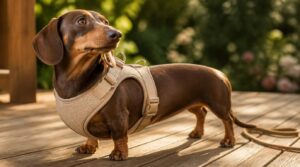
Dachshunds are adorable, but that long spine comes with real risks — and the wrong gear can make things worse. Before picking a support vest, it helps to understand exactly why their bodies need something different. Here’s what every dachshund owner should know.
If you’ve got a long haired dachshund, check out this guide on long haired dachshund health and care basics before choosing the right vest for their frame.
The Risk of Spinal Injury
Dachshunds are basically built like a loaded bridge — long span, short legs. That shape puts serious stress on the spine every single day. Spinal load management starts with understanding what their body is up against.
A dachshund’s body is built like a loaded bridge, putting daily stress on its long spine
Here are five everyday risks that can silently damage your dachshund’s back:
- Sudden jumps off furniture drive landing forces straight through the spine
- Slippery surface risks cause unexpected twists that strain the back
- Collar leash pulls concentrate force directly on the neck
- Steep ramps or stairs increase awkward spinal bending
- Extra body weight adds daily compression along that long spinal structure
Dachshund anatomy makes every one of these risks harder to shake off. Using a supportive gear can assist in maintaining neutral spine position during walks.
How IVDD Affects Dachshunds
Those everyday spinal risks don’t exist in a vacuum — they’re magnified by a condition called intervertebral disc disease (IVDD), which affects roughly 1 in 4 dachshunds. Their genetics load the odds against them. A specific retrogene tied to their short-legged build accelerates early disc degeneration, sometimes before your dog even turns two. Many discs are already calcified by 12 to 18 months.
The signs can sneak up on you — yelping, a hunched posture, or sudden refusal to climb stairs. In serious cases, hind-leg weakness or paralysis can appear within hours of a disc rupture.
Collars Vs. Harnesses for Long Backs
So what does all of this mean for your daily walk routine? Simple: ditch the collar.
A flat collar sends leash force straight to your dachshund’s neck and spine — exactly where they can’t afford it. A body harness spreads that pressure across the chest and torso instead, keeping their long spine protected every single step.
What to Look for in a Dachshund Harness
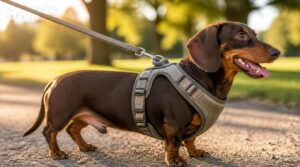
Not all harnesses are created equal — especially for a dog built like a dachshund. There are a few key things worth checking before you buy. Here’s what actually matters when shopping for one.
Fit and Sizing for Long Bodies
Getting the right fit starts with one measurement: chest girth. Wrap a soft tape measure around the widest part of your dog’s chest, just behind the front legs. That single number tells you more than weight ever will — two dachshunds can weigh the same but have completely different chest sizes.
When in doubt, size up and adjust down.
Breathable and Durable Materials
Choosing the right fabric matters more than most people think. A breathable mesh panel keeps your dachshund cool by letting air move freely through the material — reducing heat buildup on longer walks. Moisture wicking fabrics pull sweat away fast, so your dog stays dry and comfortable.
Look for three things in any fabric gear:
- Abrasion resistant weave — protects against friction where straps rub fur repeatedly
- Tear strength — manages unexpected snags without failing suddenly
- Wash cycle longevity — stays functional after repeated muddy-walk cleanups
A good nylon gear checks all these boxes without adding bulk.
Padding and Pressure Distribution
Think of a support vest like a good backpack — the padding is what keeps pressure from digging in.
Wide chest panels spread force across your dachshund’s sternum instead of concentrating it on one narrow strap. That’s critical, since the sternal area absorbs the most load during walks.
Padded neoprene and armpit clearance together prevent chafing where it hurts most.
Leash Attachment Options
Not all leash attachments work the same way — and for dachshunds, the placement matters.
- Front clip redirects pulling back toward you, making leash training easier
- Back clip suits calmer dogs who don’t pull much
- Dual attachment gives you both options on one device
A dual setup also works for hands-free walking or no-pull training sessions.
Escape-Proof Design Features
Dachshunds are natural escape artists — and a spooked wiener dog can back out of a loose gear in seconds.
Look for multi-point adjustment at the neck, chest, and belly to close off those gaps. A belly band or lower strap anchors the gear behind the elbows, making it much harder to reverse out. Pair that with a grippy interior lining and you’re set.
How to Fit a Harness on Your Dachshund
Getting the fit right makes all the difference between a vest that works and one that causes more problems than it solves. Dachshunds have such a unique shape that even a quality vest can go wrong if it’s sized or adjusted poorly. Here’s what to check before you ever clip that leash.
Measuring Chest Girth Correctly

Getting the chest girth right is the single most important step in any gear fitting guide. Have your dachshund stand naturally on all four paws. Then wrap a soft tape measure around the widest part of the rib cage — just behind the front legs.
- Keep the tape flat and level all the way around.
- Make sure it’s snug but not squeezing — you want it to follow the body’s outline.
- Compare your number against the brand’s size chart before ordering.
The Two-Finger Fit Rule
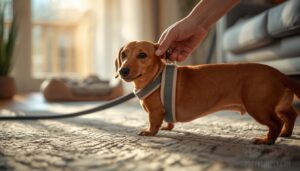
Once your dachshund is wearing the vest, slide two flat fingers under the straps. That’s your finger gap test, and it tells you everything.
Too tight and your fingers won’t fit — that can cause chafing or restricted breathing. Too loose and the vest shifts, creating an escape risk.
Repeat the check after every adjustment, and revisit it weekly since weight changes and grooming both affect fit.
Adjusting for Barrel-Chested Builds
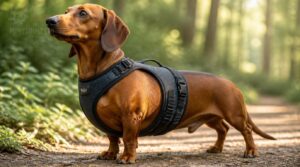
Some dachshunds carry a deep barrel chest—wide ribs, short legs. That changes how brace sizing works.
Look for a Barrel Chest Design paired with Adjustable Chest Straps. They flex around wide ribs without pinching. Underarm Padding and Wide Arm Openings stop rubbing where legs swing. A Secure Belly Strap keeps things from twisting, protecting spine health like a true back support brace.
Signs of a Poor Fit
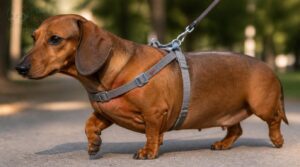
Even with barrel-chested tweaks, watch for trouble signs. Shoulder chafing near the front legs means poor pressure distribution. Neck pressure shows as coughing or marks at the throat—a gear sizing issue. Chest slippage lets the rig rotate.
Underbody pinching causes flinching at clip-on. Then movement restriction looks like stiff, frozen steps. Loose neck and belly straps invite escape artists.
Top 9 Best Harnesses for Dachshunds
Okay, now for the fun part. You know what to look for and how to size it up, so let’s get to the good stuff. Here are nine harnesses that fit dachshunds like they were made for them.
1. DJANGO Adventure Neoprene Dog Harness
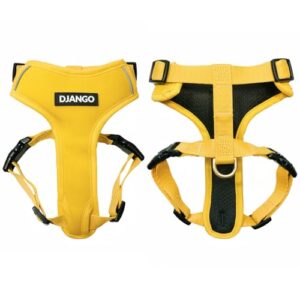
If you want a vest that feels like a cozy wetsuit, this one’s it. The weather-resistant neoprene shell shrugs off rain and dries fast, while the soft mesh lining keeps your pup cool on warm days.
Four adjustment points—two at the neck, two at the chest—help it hug different body shapes snugly, without any pinching. The deep, narrow chest panel guards against armpit chafing, and the back D-ring keeps leash control simple for everyday walks.
Just remember: it’s hand wash only.
| Best For | Small breed dogs like dachshunds, poodles, and chihuahuas who need a secure, weather-ready harness for walks, hikes, and even water play. |
|---|---|
| Material | Neoprene & Webbing |
| Adjustability | Four-point neck & chest |
| Leash Attachment | Single brass D-ring |
| Closure System | Dual side-release buckles |
| Primary Use | Hiking & daily walks |
| Breed Suitability | Small breeds |
| Additional Features |
|
- Weather-resistant neoprene shrugs off rain and dries fast, plus reflective piping keeps your pup visible after dark.
- Four-point adjustable straps and dual side-release buckles make it easy to fit and put on, even for dogs with arthritis.
- Solid brass D-ring and escape-proof design give you confident leash control, even with strong pullers.
- The front D-ring placement can sometimes cause shifting or chafing, especially on certain short-haired body types.
- Hand wash only, so no quick toss in the washing machine.
- Getting an accurate chest girth measurement really matters, since the wrong size can mean it slides around.
2. ChokeFree Velpro Mesh Shoulder Harness
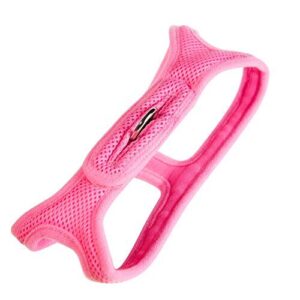
Looking for something lighter? The Velpro Mesh trades neoprene for soft, breathable mesh that breathes well on warm summer walks. Its Vel-Lock closure skips buckles—just wrap and fasten in seconds. This one-piece, step-in design rests across the chest and shoulders, never the throat, making it a gentle pick for sensitive necks.
It also comes with a built-in D-ring for leash attachment, and you’ll find it in colors like pink, mint, and coral. Just measure carefully, since sizing often runs small.
| Best For | This harness is best for pet owners whose dogs have sensitive throats or trachea issues and want a lightweight, breathable option for warm-weather walks. |
|---|---|
| Material | Polyester Mesh |
| Adjustability | Vel-Lock closure system |
| Leash Attachment | Integrated D-ring |
| Closure System | Vel-Lock system |
| Primary Use | Sensitive dog walks |
| Breed Suitability | Throat-sensitive dogs |
| Additional Features |
|
- Soft mesh material stays cool and gentle on the skin, even on hot days
- Vel-Lock closure means no fiddly buckles—just wrap, fasten, and go
- Shoulder-based design keeps pressure off the throat, perfect for sensitive necks
- Sizing can run small, so double-check measurements before ordering
- A loose fit increases the risk of your pet slipping out
- You’ll need to attach the leash separately after putting the harness on
3. SlowTon Small Dog Harness Leash
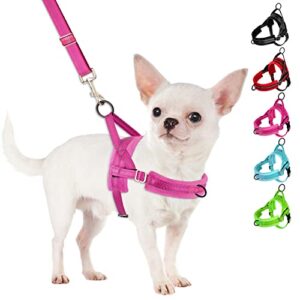
Need a budget-friendly set that does it all? The SlowTon Small Dog Vest Leash comes as a matched combo, starting around $15.99.
Soft flannelette wraps the neck and back straps, and double D-rings give you two spots for leash attachment. The bungee leash adds gentle stretch, so sudden pulls don’t jolt your dachshund’s spine.
It comes in XXS, XS, and S—just adjust both neck and chest loops for a snug, secure fit.
| Best For | small dog owners looking for a comfy, all-in-one harness and leash combo for daily walks, jogs, or training sessions. |
|---|---|
| Material | Nylon, Velvet & Fleece |
| Adjustability | Neck & chest loops |
| Leash Attachment | 360-degree swivel hook |
| Closure System | Head-through slip-on |
| Primary Use | Walking & training |
| Breed Suitability | Small dog breeds |
| Additional Features |
|
- Velvet and fleece padding plus a triangle-shaped design spread pressure evenly, so there’s less choking or pulling.
- Reflective stitching keeps your pup visible on evening or early-morning walks.
- The bungee leash with a padded handle smooths out sudden tugs, easing strain on your hands.
- The leash and hardware can feel a bit much for tiny, toy-sized breeds.
- The buckle sits under the leg, which might take some getting used to.
- You’ll need to adjust it carefully to make sure your dog can’t slip out.
4. Lucy & Co Reversible Neoprene Harness
Fancy a gear that’s two harnesses in one? The Lucy & Co Reversible Neoprene Gear flips inside out for a brand-new look, no extra cash needed.
The water-repellent neoprene moves with your dachshund’s wiggles, and the adjustable chest strap with side buckles keeps things snug. A back D-ring keeps the leash off the neck.
Sizes run XS to XL, but size up—Lucy & Co runs small.
| Best For | dog owners who want a tough, two-in-one harness that can handle muddy walks, water play, and everyday adventures without breaking the bank. |
|---|---|
| Material | Neoprene |
| Adjustability | Adjustable chest strap |
| Leash Attachment | Single back D-ring |
| Closure System | Side buckle fastening |
| Primary Use | Travel & outdoor activity |
| Breed Suitability | Small breeds |
| Additional Features |
|
- Machine washable, so cleanup after a muddy hike or beach trip is no big deal.
- Built tough enough for travel and rough weather, so it holds up over time.
- The side buckles and chest strap keep things snug, so your dog won’t slip out mid-walk.
- Runs small, so you’ll likely need to size up from what you’d normally pick.
- Only one side has reflective material, so visibility at night is a bit limited.
- The back section might feel short on dogs with longer or unusual body shapes.
5. Muttitude World Collection Dog Harness
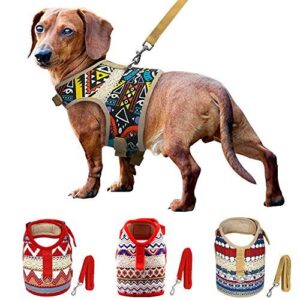
If style matters to you, the Muttitude World Collection gear brings some flair to walk time. The Pueblo design features a double buckle and heavy-duty Velcro closure—quick on, quick off. Made from breathable mesh, it gives full coverage across the chest and body, cutting down on irritation under the armpits.
It comes as a set with a matching leash, though the leash quality isn’t great. Sizing runs small, so measure your dachshund’s chest girth before you order—especially for tiny breeds.
| Best For | small breeds, puppies, and teacup dogs whose owners want a stylish, easy-on harness that’s gentle on tiny underarms. |
|---|---|
| Material | Polyester Mesh |
| Adjustability | Double buckle & Velcro |
| Leash Attachment | Single back D-ring |
| Closure System | Double buckle & Velcro |
| Primary Use | Walking & training |
| Breed Suitability | Small & teacup breeds |
| Additional Features |
|
- Double buckle and heavy-duty Velcro closure make it quick to put on and take off
- Breathable mesh with full chest and body coverage helps cut down on armpit irritation
- Comes with a matching leash, so you’ve got a complete set right out of the box
- The included leash is reported to be low quality, so you may end up replacing it
- Sizing runs small and can be inconsistent, so careful chest girth measuring is a must
- No elastic loops for extra strap length, and the color may fade after a few washes
6. Django Tahoe Padded Dog Harness
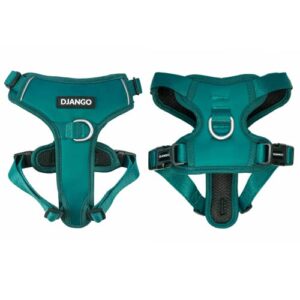
Picture a vest tough enough for muddy hikes yet soft enough for daily strolls—that’s the Tahoe. Its water-repellent neoprene shell and breathable mesh lining keep your dachshund cool, dry, and comfortable.
Two side-release buckles make it quick to slip on and off. With four adjustment points and dual D-rings, you get a snug, escape-resistant fit, plus the choice between front-clip control or back-clip comfort.
Sizes run S to XXL, covering mini and standard dachshunds alike. It’s a solid everyday choice.
| Best For | Dachshund owners and active dog parents who want a comfy, secure harness for hikes, swims, and everyday walks. |
|---|---|
| Material | Neoprene & Webbing |
| Adjustability | Four-point adjustment system |
| Leash Attachment | Dual front & back D-rings |
| Closure System | Quick-release chest buckles |
| Primary Use | Hiking & swimming |
| Breed Suitability | Dachshunds & athletic dogs |
| Additional Features |
|
- Four-point adjustment and dual D-rings give you a snug fit with the choice of front or back leash control.
- Padded neoprene with anti-chafe webbing and reflective trim keeps things comfy and visible in low light.
- Weather-resistant design holds up well through mud, rain, and rough outdoor conditions.
- You’ll need to measure your dog’s chest girth carefully to get the right fit.
- The front D-ring can sit a bit low on dachshunds and similar low-riding breeds.
- Some dogs may get skin irritation around the neck, and straps can loosen or wear over time.
7. GingerLead Dog Support Sling Harness
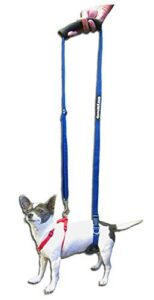
Not every dachshund needs a regular support gear—some need extra support. The GingerLead is a padded belly sling that lifts under your dog’s body instead of squeezing the chest. It’s a lifesaver for dogs recovering from IVDD or back surgery.
The soft neoprene pad comes in male and female versions, with sizes from Mini to Tall. Adjustable straps and a built-in handle let you guide your pup through stairs, car rides, or potty trips with ease. Note: chest support gear sold separately.
| Best For | dogs recovering from IVDD, back injuries, or spinal surgery, plus older or arthritic pups who need a little extra help getting around. |
|---|---|
| Material | Soft Neoprene |
| Adjustability | 28 to 69 inch sling |
| Leash Attachment | Integrated leash & handle |
| Closure System | Open sling design |
| Primary Use | Mobility & rehabilitation |
| Breed Suitability | Dogs with IVDD or injuries |
| Additional Features |
|
- Lifts gently from the belly instead of squeezing the chest, which is easier on a healing dog.
- Adjustable sling length (28" to 69") works for a wide range of heights, and you can toss it in the wash when it gets dirty.
- The built-in handle and leash make it simple to guide your dog on stairs, during car rides, or on potty trips.
- The chest harness isn’t included, so that’s an extra purchase.
- You’ll need to take careful measurements to make sure it fits right and stays safe.
- Some senior dogs might seem a bit confused or unsure when they first wear it.
8. Taglory Reflective Neoprene Leash for Small Dogs
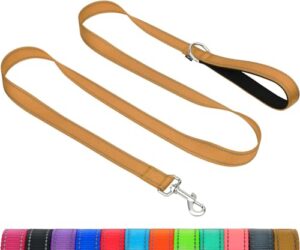
Night walks can feel risky, but this leash helps you stay seen. The Taglory Reflective Neoprene Leash weaves reflective threading right into the rope, so cars and bikes spot you fast.
The neoprene-padded handle is soft on your hand, even when your pup lunges. A 360-degree swivel clasp stops annoying tangles mid-walk.
At 3/4 inch wide and 4 feet long, it’s built for small dogs up to 30 pounds—lightweight, simple, and ready for daily strolls.
| Best For | Owners of small to medium dogs (up to 30 lbs) who want extra visibility and comfort on evening or nighttime walks. |
|---|---|
| Material | Nylon, Neoprene & Alloy Steel |
| Adjustability | Fixed 4-foot length |
| Leash Attachment | 360-degree swivel alloy clasp |
| Closure System | Rust-resistant hook & clip |
| Primary Use | Low-light evening walks |
| Breed Suitability | Small to medium breeds |
| Additional Features |
|
- Reflective threading makes you easy to spot after dark
- Padded neoprene handle keeps your hand comfy, even if your dog tugs
- Swivel clasp stops the leash from tangling mid-walk
- Not the right pick for big dogs or strong pullers over 30 lbs
- The 3/4-inch width may feel a bit thin for tougher breeds
- Fixed 4-foot length means no flexibility if you want more or less leash room.
9. Puppia RiteFit Adjustable Neck Harness
Once you’re visible at night, let’s talk fit—since that’s half the battle for dachshunds.
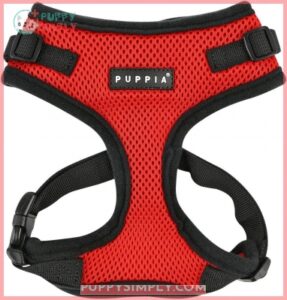
The Puppia RiteFit uses hook-and-loop fasteners plus buckles for the neck, so you skip pulling anything over your dog’s head. An adjustable chest belt rounds out the fit for barrel-shaped builds.
Made from soft polyester mesh, it’s breathable and gentle on sensitive skin. Dual D-rings give you leash options.
Heads up: sizing runs small, so measure carefully first.
| Best For | Dogs with tricky, barrel-shaped builds—like dachshunds—or growing puppies who need a harness that can keep up with frequent size changes. |
|---|---|
| Material | Neoprene & Mesh |
| Adjustability | Multi-point neck & chest |
| Leash Attachment | Single back D-ring |
| Closure System | Side-release buckles |
| Primary Use | Hiking & water activities |
| Breed Suitability | Small breeds |
| Additional Features |
|
- Step-in design means no fussing with pulling things over your dog’s head
- Soft polyester mesh is breathable and easy on sensitive skin
- Dual D-rings give you flexible leash attachment options
- Runs small, so measure your dog carefully before ordering
- Mesh can feel hot or bulky once the weather warms up
- Small buckles get fiddly if pet hair sneaks into them
Key Benefits of Using a Harness Daily
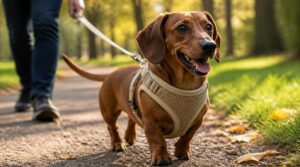
A good device isn’t just gear—it’s a daily habit that protects your dog’s back. Once you switch from a collar, you’ll notice the difference in how your pup walks, runs, and rests. Here’s what that simple swap actually does for your dachshund.
Reduced Strain on Neck and Spine
That little tug on the leash adds up fast. An ergonomic support system design spreads it across the chest, not the neck.
Chest support keeps your dachshund’s head in a neutral position, easing spinal load reduction with every step. For dogs prone to IVDD, that’s a big deal—gentler walks mean better canine spinal health, day after day.
Better Control on Walks
That gentle support gives you better steering. A front-clip gear puts leash attachment at the chest, turning pulling power back toward you.
Here’s why that matters:
- Leash pressure management eases neck tension fast
- More adjustment points keep a centered, stable fit
- Front clip control assists pull training tips and handler positioning
Walking dynamics improvement—your no-pull gear becomes antipull equipment.
Comfort During Longer Outings
Good control sets up real comfort on longer outings. Your dachshund’s back support gear works overtime here, lowering pressure for IVDD prevention along the way.
| Feature | Comfort Edge | Result |
|---|---|---|
| Mesh Ventilation Benefits | breathable design | Cooler walks |
| Chest Padding Comfort | comfort padding | Less rubbing |
| Adjustable Straps Fit | Secure Fit Stability | Snug, steady |
| Smooth Edge Design | ergonomic dog support gear | No sore spots |
Support for IVDD Recovery
If your dachshund faces IVDD, a back support belt becomes part of the healing plan. During Recovery Rest Protocols, a dachshund belt lets you lift safely for bathroom trips without twisting the spine.
It helps Pain Management Strategies, Mobility Support Devices, and Rehab Exercise Plans. Paired with Home Environment Adaptations, that’s real spinal injury prevention and IVDD prevention every day.
Common Harness Mistakes Dachshund Owners Make
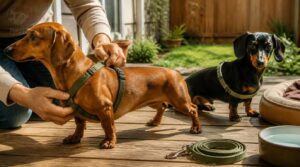
Even the most well-meaning dachshund owners slip up regarding equipment fit and daily habits. A few small mistakes can quietly cause discomfort — or worse, put extra stress on your dog’s already vulnerable spine. Here are the most common ones to watch out for.
Choosing The Wrong Size
Size is one of the easiest things to get wrong. Most owners glance at a size chart, pick "small," and call it done — but dachshunds don’t fit standard proportions. Their long torsos and short legs throw off generic sizing.
Always measure chest girth first. If that number lands near the edge of the adjustment range, go up.
Ignoring Underarm Irritation
This one sneaks up on you. You notice a little redness under your dog’s leg, think nothing of it — and a week later it’s a full rash.
Watch for these early warning signs:
- Redness or warmth under the armpit
- Itching or licking at the strap area
- Scaling, small bumps, or swelling
- Burning or tenderness to the touch
- Open sores or oozing skin
Moisture buildup and friction are usually the culprits. Warm, damp underarms soften skin fast, turning mild chafing into something worse. A breathable mesh gear with proper underarm clearance helps. Check the fit regularly — preventing chafing is far easier than healing it.
Using a Collar Alongside a Harness
Lots of owners use a collar and body strap together — and that’s actually smart, when done right. Keep the collar for ID tags only and let the body strap handle all leash duties.
Never clip the leash to both at once. That split tension can twist your dog’s spine mid-walk. One attachment point per walk keeps things safe and predictable.
Skipping Regular Fit Checks
A collar that fit perfectly last month mightn’t fit the same dog today. Seasonal weight shifts and growth spurts change chest girth faster than you’d expect — especially in younger dachshunds.
Before each walk, do a quick two-finger fit check. Catching a loose or tight spot early prevents skin irritation, reduces escape risk, and protects that vulnerable long spine.
Frequently Asked Questions (FAQs)
Do dachshunds need a special harness?
Yes—skip one, and you’re basically gambling with your dog’s spine. A breed-specific gear spreads weight off the neck, promotes spinal health, and lowers IVDD risk for that long, low dachshund body.
Is it better to use a collar or harness for a Dachshund?
For a dachshund’s back, a strap wins. It spreads pressure across the chest for spinal load reduction, helps neck strain prevention, and keeps walks safer—helping guard against dachshund back problems and easing IVDD risk during daily walks.
What kind of leash is best for dachshunds?
Skip the retractable leash—it gives too much freedom for a breed prone to back trouble. A fixed leash, 4 to 6 feet, paired with leash attachments at the front clip (or back clip for calmer pups), keeps tension low and IVDD risk lower.
How do I stop my Dachshund from pulling on the leash?
Stop walking the moment the leash tightens, then reward slack with high-value treats. Pair loose leash training with directional cueing, a no-pull dachshund gear, and a consistent walking routine for steady, lasting progress.
Is a harness safe to keep on my dachshund all day or just for walks?
Save it for supervised wear—walks, training, outings. Constant wear traps moisture, causing chafing and skin issues. Pick a durable, ergonomic support belt with good ventilation for back support, then remove it for rest, especially during IVDD recovery.
Can dachshunds wear harnesses during swimming?
Not all harnesses float—your dog’s safety depends on the gear. Use a water-safe vest with buoyancy panels, not a regular mesh gear, which holds water and adds drag, making swim training harder for short-legged dachshunds.
How often should harness straps be replaced?
Plan on swapping straps every 12 to 24 months, but check sooner for fraying, loose stitching, or worn buckles. Heavy pullers and pups need quicker adjustable strap changes.
Good cleaning habits boost equipment durability and keep neck and belly straps safe.
What age can puppies start wearing harnesses?
Little legs, big steps—puppy start age is around eight weeks. Early gear introduction matches vaccination timing for outdoor walks.
Check growth and use a gear sizing chart often, since dachshund pups grow fast and need rechecks.
Are step-in harnesses better than overhead styles?
Not always. The step-in design wins on ease of use, but overhead styles offer better fit security and escape risk control. For training control and a true back support system, an ergonomic overhead beats a collar every time.
Can harnesses cause matting in long-haired dachshunds?
Yes, "snuggly fit" can become a sneaky friction zone. Straps rub armpits and chest, matting feathering fast.
Pick ergonomic dog gear, brush often, and check fit weekly—chafing-free coats stay tangle-free, happy, and healthy.
Conclusion
Small steps, smart swaps—that’s all it takes to protect that long little back. The best supportive vest for dachshunds won’t sit in a drawer collecting dust; it’ll become part of every walk, every adventure, every tail-wagging dash to the door.
Skip the collar, check that fit, and watch your pup move with confidence instead of caution. A few extra dollars now beats a vet bill later. Your dachshund’s spine will thank you, one happy step at a time.
- https://ezydog.com.au/blogs/news/best-dog-harness-dachshund
- https://djangobrand.com/blogs/news/best-harness-for-deep-chested-and-broad-chested-small-dogs
- https://petcareshed.com.au/blogs/pet-supplies/best-harness-for-dachshunds-long-back-support-australia
- https://www.treelinereview.com/gearreviews/best-dog-harnesses
- https://www.wagtrendz.com/blogs/puppy-breed-guides/best-harness-for-dachshunds