
This site is supported by our readers. We may earn a commission, at no cost to you, if you purchase through links.
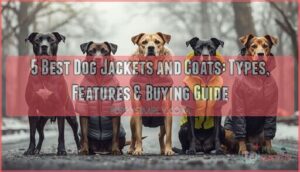
Your dog shivers through the evening walk, pulling toward home with ears pinned back against the cold. That’s when most owners realize a fur coat isn’t always enough—especially for small breeds, short-haired pups, or senior dogs who feel the chill more than their younger counterparts. The right jacket transforms a miserable trudge into a comfortable adventure, but the market floods you with options ranging from flimsy fashion pieces to serious cold-weather gear.
The best dog jackets and coats balance real protection with practical features like adjustable straps, waterproof shells, and leash compatibility. We tested dozens of options across different weather conditions, breed sizes, and activity levels to find jackets that actually keep dogs warm, dry, and moving comfortably.
Table Of Contents
- Key Takeaways
- Top 5 Best Dog Jackets and Coats
- When Does Your Dog Need a Coat
- Essential Features in Dog Jackets
- Types of Dog Coats Explained
- How to Choose The Right Dog Jacket
- Care and Maintenance Tips
- Frequently Asked Questions (FAQs)
- What is the best way to measure my dog for a winter jacket?
- Can my dog wear a raincoat on a dry day?
- How can I prevent skin irritation when dressing my dog in clothing?
- What are the most common skin complaints in dogs and how can I prevent them?
- How do I know if my dog is too hot or cold when wearing a jacket?
- Can puppies wear adult dog coats safely?
- Do indoor dogs need winter coats outside?
- Are there hypoallergenic materials for dog coats?
- How often should you replace dog coats?
- Can dogs overheat wearing coats indoors?
- Conclusion
Key Takeaways
- Most dogs need a jacket when temperatures drop below 45°F, with small breeds, short-haired pups, and seniors requiring protection earlier than double-coated or outdoor-adapted dogs.
- The best dog jackets balance three core features: proper insulation or waterproofing for your climate, adjustable straps that fit your dog’s specific chest girth and back length, and practical details like leash portals and reflective trim.
- Measure your dog’s chest girth, neck circumference, and back length before buying—sizing charts prioritize back length, but chest girth matters most when measurements conflict, and a poor fit restricts movement or slips off entirely.
- Match the coat type to your actual weather conditions and activity level: lightweight raincoats for drizzle, insulated puffers with 100-250g fill for freezing temps, fleece for mild 40-55°F days, and full snowsuits only when temperatures drop below 32°F with extended outdoor exposure.
Top 5 Best Dog Jackets and Coats
After testing dozens of dog coats in real-world conditions—from muddy trail hikes to freezing morning potty breaks—I’ve narrowed it down to five that actually deliver on their promises.
If your dog’s white coat needs extra care between baths, check out our guide to the best whitening shampoos for white coats to keep them looking fresh.
These picks balance warmth, weather protection, and fit across different breeds and activity levels.
Whether you’re choosing gear for a high-energy best outdoor dogs breed or a more delicate companion, prioritizing proper insulation and mobility ensures comfort in any condition.
Here’s what stood out after months of putting them through their paces.
1. Joydaog Fleece Lined Dog Jacket
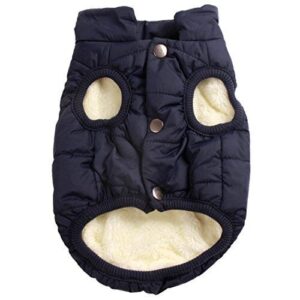
The JoyDaog Fleece Lined Dog Jacket delivers solid winter comfort for small dogs without breaking the bank at around $27. Its dual-layer polyester construction with fleece insulation cuts wind effectively and keeps your pup warm on chilly walks.
You’ll find it stacks up well against other popular options in guides like best dog sweaters for small breeds, especially if you’re after no-fuss winter protection.
The hook-and-loop closures make dressing quick and stress-free, while sturdy stitching holds up to regular outdoor use. Just note it’s not waterproof for heavy rain—this coat shines in dry cold or light drizzle.
Measure your dog’s chest carefully using the size chart since some owners report it runs slightly small.
| Best For | Small dog owners looking for an affordable, easy-to-use winter jacket that handles cold, windy weather without the price tag of premium brands. |
|---|---|
| Material | Polyester |
| Primary Color | Blue |
| Size Available | Medium |
| Weather Protection | Windproof |
| Closure Type | Metal snaps |
| Target Audience | Dogs |
| Additional Features |
|
- Dual-layer fleece insulation keeps small dogs warm on cold walks while cutting wind effectively
- Hook-and-loop closures make it quick to put on and take off, even with wiggly dogs
- Budget-friendly price around $27 offers solid value compared to pricier technical coats
- Not waterproof, so it won’t protect your dog during heavy rain or wet conditions
- Sizing can run small—you’ll need to measure your dog’s chest carefully before ordering
- Best suited for small to medium dogs, not ideal for very large or giant breeds
2. Ruffwear Sun Shower Dog Raincoat
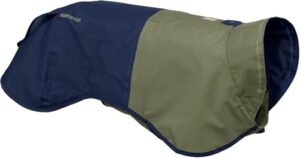
When wet weather’s the main challenge, the Ruffwear Sun Shower Dog Raincoat ($64.95) delivers serious protection with its 70D/210D ripstop nylon shell rated to 3,000 mm waterproofing. This lightweight raincoat keeps your dog dry without weighing them down, thanks to breathable fabrics and a vest-style cut that covers hips and thighs.
The quick-connect leash portal works over most harnesses, while reflective trim boosts visibility in gloomy conditions. It’s uninsulated, so layer it over fleece when temperatures drop—perfect for rainy hikes year-round.
If your dog tends to pull or nip on walks, pair it with positive reinforcement muzzle training for safer outdoor adventures.
| Best For | Dogs who spend time outdoors in rainy weather and need lightweight, breathable rain protection that works over their existing harness. |
|---|---|
| Material | Ripstop fabric |
| Primary Color | Midnight Blue |
| Size Available | Medium |
| Weather Protection | Waterproof |
| Closure Type | Side-release buckles |
| Target Audience | Dogs |
| Additional Features |
|
- Waterproof ripstop shell (3,000 mm rating) keeps dogs dry without adding bulk or restricting movement
- Leash portal lets you use it over most harnesses, so no need to switch gear when it starts raining
- Extended vest coverage protects hips and thighs, not just the back, plus reflective trim helps with visibility in low light
- No insulation means you’ll need to layer it with fleece or another jacket in cold weather
- Leg loops and girth closures can be tricky to fasten on wiggly dogs, and the loops might not work for all body types
- Price point around $65 is higher than basic dog raincoats, though the quality and features reflect that cost
3. Elasto Fit Puffer Dog Jacket
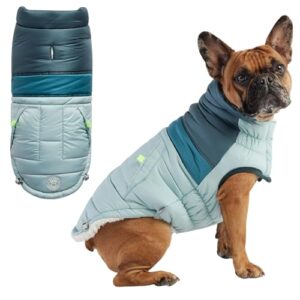
For dogs who need serious warmth without the bulk, the GF Pet Elasto Fit Puffer Dog Jacket ($39.99–$59.99) brings stretchy comfort to cold-weather walks. Its patented expandable neck and girth system adjusts to your dog’s body—no wrestling legs through tight openings—while sherpa lining and quilted insulation keep smaller pups cozy down to freezing temps.
The water-repellent shell sheds light snow and drizzle, and reflective piping helps you spot your dog at dusk. Available in nine sizes (2XS to 4XL), this machine-washable puffer balances mobility with coverage for active winter outings.
| Best For | Small to large dogs who need flexible, easy-on winter insulation for active outdoor time in cold, wet weather. |
|---|---|
| Material | Quilted polyester |
| Primary Color | Light Blue |
| Size Available | Small to Large |
| Weather Protection | Wind-resistant |
| Closure Type | Hook-and-loop |
| Target Audience | Dogs |
| Additional Features |
|
- Stretchy Elasto Fit design adjusts to your dog’s shape and eliminates the hassle of lifting legs during dressing
- Sherpa lining and quilted insulation deliver solid warmth while the water-repellent shell handles light rain and snow
- Machine-washable construction and reflective piping add convenience and safety for everyday winter walks
- Water repellency works for light precipitation but won’t hold up in heavy downpours or deep snow
- Quilted puffer design can look bulky on smaller or lean breeds despite the lightweight materials
- Nine-size range still requires careful measuring of chest girth and back length to avoid fit issues
4. Weatherbeeta ComfiTec Dog Coat
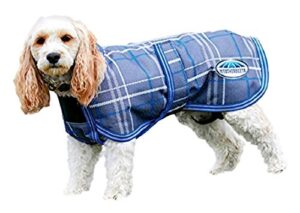
If your pup faces harsher winter storms, the WeatherBeeta ComFiTec Dog Coat ($47.99–$79.99) steps up with serious protection. Its 1200 denier triple-weave outer shell and 220 g insulation deliver waterproof warmth in freezing rain and snow, while the full wrap chest and belly closure keeps wind out.
For more ways to shield your dog from frostbite and cold-weather dangers, check out this complete guide to winter dog care.
Reflective strips boost visibility on dark mornings, and elasticized leg straps hold everything secure during active play. Available in sizes 10–32 inches, this durable coat manages wet trails and icy sidewalks without fuss.
| Best For | Dogs who need maximum protection during harsh winter weather with heavy rain, snow, and freezing temperatures. |
|---|---|
| Material | Polyester |
| Primary Color | Grey Plaid |
| Size Available | Multiple sizes |
| Weather Protection | Waterproof |
| Closure Type | Slip-on |
| Target Audience | Dogs |
| Additional Features |
|
- 1200 denier triple-weave shell and 220g insulation provide exceptional warmth and waterproof protection in extreme conditions
- Reflective strips and secure elasticized leg straps keep dogs visible and comfortable during active outdoor play
- Wide size range (10-32 inches) and full wrap closure system accommodate many breeds while blocking wind effectively
- Some dogs resist having the coat slipped over their head during put-on
- Leg straps may rub or feel uncomfortable for certain dogs during extended wear
- Leash hole access can be tricky for dogs wearing harnesses underneath
5. Voyager Waterproof Dog Raincoat
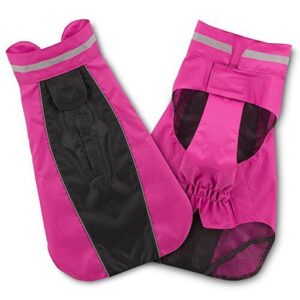
For quick neighborhood walks in drizzle or light showers, the Voyager Waterproof Dog Raincoat ($19.99–$29.99) offers practical rain protection without the bulk of a winter coat. Its polyester shell blocks moisture while reflective stripes keep your dog visible in low light.
Adjustable Velcro chest and belly straps create a secure fit for small breeds (chest 16–19 inches), and the leash-access flap prevents rain from sneaking in.
Though some owners report water seeping through during heavy downpours, this lightweight raincoat manages everyday wet weather and stows easily in your bag.
| Best For | Small breed dogs who need a lightweight, budget-friendly raincoat for quick walks in light rain and drizzle. |
|---|---|
| Material | Polyester |
| Primary Color | Yellow |
| Size Available | Small |
| Weather Protection | Waterproof/Windproof |
| Closure Type | Velcro straps |
| Target Audience | Small dogs |
| Additional Features |
|
- Reflective safety stripes boost visibility during early morning or evening walks
- Adjustable Velcro straps and leash-access flap make it easy to put on and use
- Lightweight design folds up small so you can stash it in a bag or pocket
- Not waterproof enough for heavy rain—some users report water seeping through
- Size limitations mean it won’t fit dogs with deeper chests or larger builds
- Velcro placement near belly may be uncomfortable for male dogs
When Does Your Dog Need a Coat
Not every dog needs a coat, but knowing when yours does can prevent serious health problems. Your dog’s breed, size, coat type, and the actual temperature outside all play a role in whether they need extra protection.
Let’s look at the key factors that tell you when it’s time to bundle up your four-legged friend.
Cold Weather and Temperature Guidelines
Most dogs benefit from winter dog clothing once temperatures dip into the mid-40s Fahrenheit—that’s when cold stress and hypothermia risk start climbing, especially with wind chill factored in. Below 32°F, you’re looking at frostbite prevention territory where insulated jackets and waterproof coats become essential.
Temperature thresholds matter: limit outdoor time to 5–10 minutes at 10°F, and always monitor for shivering or discomfort during cold weather dog safety checks. Understanding frostbite risks is vital for protecting your pet in extreme cold conditions.
Breed-Specific Considerations for Coat Needs
Coat thickness tells most of the story: short-coated Boxers and single-coated Whippets need dog jackets at 45°F, while double-coated Huskies stay comfortable much colder. Small breeds like Chihuahuas lose heat fast thanks to body proportions—high surface area, low mass—so dog winter clothing isn’t optional below 40°F.
Health factors matter too: hypothyroid dogs and seniors chill quickly regardless of breed temperament or climate adaptation. Pet owners should consider pet winter care to keep their dogs safe and healthy during cold weather.
Health Risks of Winter Exposure
Dogs can develop frostbite on their ears, paws, and tails in as little as 15 minutes when temperatures drop below 32°F—and hypothermia follows soon after. Cold stress weakens immunity, making winter illnesses more likely.
Below 32°F, frostbite can strike your dog’s extremities in just 15 minutes, with hypothermia and weakened immunity close behind
Frostbite prevention starts with cold weather gear: proper dog winter clothing shields vulnerable areas from chill factors that veterinary organizations warn about.
Winter dog care means recognizing shivering, lethargy, or lifting paws—early signs your dog needs winter dog gear immediately.
Essential Features in Dog Jackets
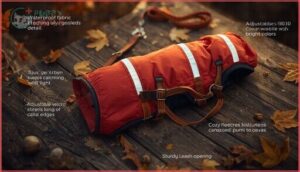
Not every dog coat is built the same, and the best ones share a few standout features that actually matter when you’re out in the elements. Whether you’re dealing with icy rain or just need better visibility during evening walks, certain design details make all the difference in comfort and performance.
Here’s what to look for when you’re shopping for a quality dog jacket.
Adjustable Fit for Different Breeds
Not all dogs are built the same, which is why adjustable fit matters so much in dog coats and jackets. Look for customizable coats with adjustable straps at the chest and neck—slider buckles let you fine-tune the fit for deep-chested Greyhounds or stocky Bulldogs.
Flexible materials and sizing charts based on chest girth, not weight alone, guarantee breed-specific fitting across different body shapes. This ensures your best dog winter coats won’t twist or slide during walks.
Waterproof and Breathable Materials
Think of waterproof and breathable materials as your dog’s weatherproof shield—fabrics with a 10,000 mm hydrostatic head waterproof rating keep rain out while 20,000 g/m²/24h moisture transmission lets sweat escape.
Here’s what makes insulated dog coats work:
- Waterproof ratings above 2,000 mm handle moderate rain; 10,000 mm resists downpours
- Breathable fabrics with high MVTR prevent overheating during active play
- DWR finishes (now PFAS-free) make water bead and roll off instantly
Reflective Elements for Visibility
When evening walks roll around, reflective materials become your dog’s safety lifeline. Retroreflective tape on dog jackets increases driver detection distance by up to 10 times in low light—that’s the difference between being spotted 30 feet away versus 300 feet.
Place reflective strips around your dog’s chest, shoulders, and sides for 360-degree conspicuity enhancement, especially during those risky dawn and dusk hours when most collisions happen.
Integrated Harness and Leash Attachments
Beyond visibility, look for dog jackets with integrated leash systems that protect your pup’s neck and trachea. Quality attachment systems use reinforced webbing—often rated to several thousand pounds—anchored to welded steel D-rings or aluminum V-rings.
Back-clip attachments distribute leash pressure across the chest and shoulders instead of concentrating force on delicate throat structures, making these dual-purpose designs both practical and safer.
Types of Dog Coats Explained
Not every dog coat is built the same, and understanding your options helps you pick the right protection for your pup’s needs. From lightweight rain gear to heavy-duty insulation, each style fulfills a specific purpose based on weather conditions and activity level.
Here’s a breakdown of the most common types you’ll encounter when shopping for dog outerwear.
Raincoats for Wet Weather Protection
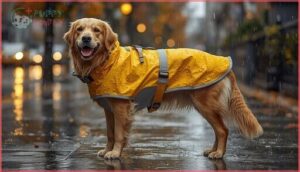
When rain turns your daily walk into a soggy mess, a quality raincoat keeps your pup dry and comfortable. Look for waterproof materials paired with breathable fabrics—options like the Ruffwear Sun Shower and WeatherBeeta ComFiTec excel here.
Good raincoat designs feature reflective trim for wet weather safety, adjustable straps for a snug fit, and coverage that shields your dog’s chest from splash-back.
Insulated Puffer Coats for Cold Climates
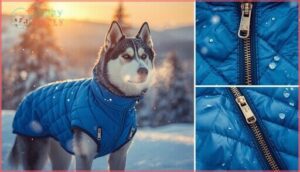
When temperatures drop below freezing, insulated puffer coats become your dog’s best defense against hypothermia and frostbite. Models like the Hurtta Expedition Parka use 100 to 250 grams of synthetic fill—polyfill maintains warmth even when damp, unlike down.
Waterproof coats with proper coverage shield short-haired breeds during sub-20°F outings.
Wash your dog’s winter coats regularly to preserve insulation loft and water-repellent performance.
Fleece and Sweater Coats for Mild Weather

Fleece and sweater coats offer breathable thermal insulation when your dog needs light protection—think 40°F to 55°F days with drizzle or wind. Polartec fleece rates above 4 tog, comparable to a summer duvet, trapping body heat without causing overheating.
- Fleece benefits: Water-repellent surfaces resist light rain while wicking moisture from wet coats.
- Sweater materials: Synthetic knits dry fast and wash easily for regular use.
- Mild weather: Perfect for spring and autumn walks when temperatures fluctuate.
- Dog comfort: Stretchy fabrics allow natural movement without restricting shoulders or joints.
Snowsuits for Full-Body Coverage
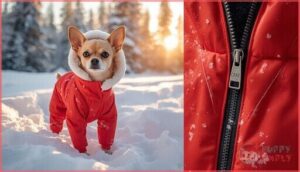
Full-body snowsuits deliver the most thorough winter protection when temperatures drop below 32°F. Polyester shells with fleece linings prevent snow accumulation between fur while blocking wind chill—essential dog winter gear for extended outdoor time in harsh conditions.
These waterproof coats combine torso insulation with leg sleeves, shielding short-haired and small dogs from frostbite risk on extremities.
How to Choose The Right Dog Jacket

Finding the right jacket for your dog isn’t about picking the cutest option—it’s about matching the coat to your dog’s size, the weather you’re facing, and how active they are. A good fit protects without restricting movement, the right material keeps them comfortable in rain or snow, and the design should suit whether you’re hiking trails or just heading out for potty breaks.
Here’s what you need to keep in mind to make the best choice for your pup.
Measuring Your Dog for Proper Fit
A poorly fitted coat can rub, restrict movement, or slip right off during your morning walk. You’ll need three body measurements: chest girth around the widest part behind the front legs, neck circumference where the collar sits, and back length from neck base to tail base.
Most sizing charts use back length as your primary reference, but chest girth matters most when measurements conflict with fit guidelines.
Material Selection for Different Weather Conditions
Your dog’s winter dog gear starts with smart fabric choices. In subfreezing weather, synthetic insulations like PrimaLoft in insulated jackets maintain warmth even when damp—look for 130–200 g/m² fills in cold climates. Waterproof coats need nylon or TPU-laminated shells for heavy rain and snow.
For mild days, breathable fabrics like lightweight fleece keep your pup comfortable without overheating during outdoor dog gear adventures.
Activity-Based Coat Recommendations
Matching your dog’s coat to their favorite pastimes—whether that’s trail hiking, neighborhood strolls, or backyard fetch—keeps them safe and comfortable no matter the weather. Here’s what works for common outdoor dog activities:
- Winter Hiking: Insulated dog jackets with chest coverage and flexible shoulder panels let your pup scramble over rocks without restriction.
- Snow Sports: Full-coverage snowsuits protect bellies from ice crystals during skijoring or snowshoeing adventures.
- Water Activities: Lightweight, quick-dry dog coats work best for creek crossings and rainy-day walks.
- Running Gear: Aerodynamic dog outerwear with breathable panels prevents overheating on jogs.
Care and Maintenance Tips

A good dog coat is an investment, and a little upkeep goes a long way in keeping it functional season after season.
Most modern dog jackets are designed with busy pet parents in mind, so cleaning and care don’t have to be a chore.
Here’s what you need to know to keep your dog’s coat looking sharp and performing well.
Machine Washable Options
Most quality dog jackets use polyester shells with synthetic insulation that handle regular machine washing without falling apart. You’ll want to stick with cold water and gentle cycles to protect those waterproof fabrics and breathable membranes. Skip the fabric softener—it clogs up durable coatings and ruins performance.
Close all zippers and buckles before tossing dog coats in, and consider a mesh bag for lighter pet outerwear.
Water-Resistant and Easy-Clean Materials
Beyond washing cycles, the fabrics themselves make a big difference. Smooth synthetic shells—polyester and nylon—shed mud better than textured weaves, so you’re wiping down instead of scrubbing. Durable coatings cause water to bead and roll off, keeping dirt from sticking in the first place.
- Polyester dries faster than nylon after rain or washing
- Nylon resists abrasion better for active trail dogs
- DWR treatments restore beading when water stops rolling off
- WeatherBeeta waterproof coats combine these features for low-maintenance protection
Reapply spray-on DWR when your dog’s raincoat starts soaking through.
Extending The Life of Your Dog’s Coat
Once the coat is clean and dry, a few smart habits double its life. Always air-dry your dog’s jacket away from sunlight to prevent UV damage to fabrics and coatings.
Before storing winter coats for the season, fold them loosely in a dry box—tight compression cracks waterproof membranes.
Check straps and snaps monthly; catching small tears early saves you from buying new pet clothing mid-season.
Frequently Asked Questions (FAQs)
What is the best way to measure my dog for a winter jacket?
Grab a flexible tape measure and get your pup standing—because eyeballing it’s how you end up with a jacket that fits like a sausage casing.
Measure chest girth, back length, and neck circumference for proper dog winter coats.
Can my dog wear a raincoat on a dry day?
Yes, but watch for overheating. Raincoats can trap heat on warm days since dogs dissipate warmth through panting. Breathable materials help, yet short-haired breeds might benefit from sun protection during cold, windy conditions.
How can I prevent skin irritation when dressing my dog in clothing?
To avoid skin irritation in dog apparel and canine accessories, choose hypoallergenic, skin-friendly fabrics and breathable designs.
Practice moisture management, check for proper pressure avoidance, and inspect dog coats—pet care starts with comfort in dog outerwear.
What are the most common skin complaints in dogs and how can I prevent them?
Allergic reactions, parasitic infestations, and skin infections top the list.
You can prevent most issues through year-round flea control, regular grooming, balanced nutrition with omega-3s, and protective dog apparel during outdoor activities.
How do I know if my dog is too hot or cold when wearing a jacket?
Watch for frantic panting, drooling, or bright red gums if your dog’s too hot. Shivering, lifted paws, or a hunched posture mean they’re too cold—even in a jacket.
Can puppies wear adult dog coats safely?
While technically possible, puppy coat safety requires proper sizing considerations and thermoregulation issues monitoring.
Adult dog coats often create material risks through poor fit, restricting movement or causing overheating in rapidly growing puppies needing frequent growth accommodations.
Do indoor dogs need winter coats outside?
Yes, indoor dogs usually need winter coats outside because they live in climate-controlled homes and don’t develop thick seasonal fur. They feel cold more intensely than outdoor dogs, especially small breeds during walks below 45°F.
Are there hypoallergenic materials for dog coats?
If your pup has sensitive skin, you’ll find hypoallergenic fabrics like bamboo, organic cotton, and silk in eco-friendly dog coats. These natural textiles prioritize chemical safety and allergy prevention in canine outerwear.
How often should you replace dog coats?
Replace your dog’s coat when you spot fraying seams, fading waterproofing, or stretched closures—usually every one to three seasons depending on how often your pup wears it outdoors.
Can dogs overheat wearing coats indoors?
A Golden Retriever sprawled panting near a radiator, still bundled in his fleece coat after a snowy walk—classic indoor heat stress.
Dogs absolutely can overheat indoors when wearing coats because heated homes reduce natural heat dissipation through their fur.
Conclusion
A shivering dog turns every walk into worry. A soaked coat brings muddy cleanup indoors. A properly equipped pup explores confidently regardless of weather. That’s the difference the best dog jackets and coats make in your daily routine.
Measure carefully, match the material to your climate, and prioritize features like adjustable straps and leash openings. Your dog doesn’t complain about the cold—they just endure it. You can fix that today.
- https://www.fortunebusinessinsights.com/pet-clothing-market-104419
- https://www.chicagovma.org/2022/01/27/protecting-pets-from-dangerous-winter-conditions/
- https://aercmn.com/winter-clothing-guide-for-dogs/
- https://www.kurgo.com/harnesses/impact-dog-car-harness
- https://www.skk.se/en/NKU-home/nordic-dog-breeds/