
This site is supported by our readers. We may earn a commission, at no cost to you, if you purchase through links.

That low-slung body and those droopy ears come with a hidden cost: bloat risk, joint strain, and a metabolism that turns extra kibble straight into extra pounds. Basset Hounds carry serious weight on short legs, so what fills their bowl matters more than for most breeds.
Picking the best dog food for Basset Hounds means balancing protein, fat, and calories with their unique frame and digestion. Get it right, and you’ll add active years to your dog’s life. Here’s what to look for, plus the formulas that deliver on it.
Table Of Contents
- Key Takeaways
- Best Dog Foods for Basset Hounds
- Basset Hound Nutrition Needs
- Health-Focused Food Features
- Food Types to Consider
- Feeding Your Basset Hound
- Frequently Asked Questions (FAQs)
- What is the best dog food for basset hounds?
- What should a basset hound eat?
- Do Basset Hounds consume fat?
- Do Basset Hounds need a lot of protein?
- How do I choose the right dog food for my Basset?
- Can a senior basset hound eat dog food?
- How big are Basset Hounds?
- What kind of fur does a Basset Hound have?
- What temperament do Basset Hounds have?
- How much exercise do Basset Hounds need?
- Conclusion
Key Takeaways
- Basset Hounds carry a large-breed body on short legs, so their food needs to actively manage weight and protect joints—not just fill them up.
- Look for formulas with glucosamine, omega-3s, and controlled calories, since these three features directly address the breed’s most common health risks.
- How you feed matters as much as what you feed: two measured meals a day, a slow feeder bowl, and a 7–10 day food transition protect your Basset from bloat and digestive upset.
- Protein and fat needs shift at every life stage, so matching your food label to your dog’s current age and activity level is the single most important thing you can do for their long-term health.
Best Dog Foods for Basset Hounds
Your Basset Hound’s body shape, low energy, and food-loving nature make food choice a big deal. The right bag or can can support joints, manage weight, and keep digestion steady.
If you’re not sure where to start, our guide to the best food for Basset Hounds breaks down top picks by budget, ingredients, and specific health needs.
Here are five picks worth a closer look, each suited to a different stage or need.
Best Overall Pick
If you want one food that covers all the bases, look for a Calorie Control Formula with a built-in Joint Support Blend. This combo helps with weight management and mobility—two common Basset Hound issues.
Choose options offering Digestive Comfort, easy Portion Management, and confirmed AAFCO Compliance for adult maintenance. Grain-free formulas work well too, giving you balanced nutrition Basset Hounds truly thrive on. Additionally, prioritizing high-quality animal proteins ensures they receive essential amino acids.
Best Puppy Food

Once your adult Basset Hound’s diet is sorted, your Basset Hound puppy needs different fuel for growth. Look for AAFCO Growth Standards on the label, plus DHA for brain development, controlled calcium, and high digestibility.
Top picks should offer:
- High-protein dog diet with real meat first
- Verified ingredient quality labels—no fillers
- Grain-free options with strong nutrient density
Best Senior Food

Puppy days fly by, and soon your Basset Hound is slowing down.
Senior diets need easily digestible protein from chicken or fish to maintain muscle. Look for joint support ingredients like glucosamine and omega-3s for mobility. Added fiber and prebiotics ease digestion, while controlled calories support weight management.
Check labels meet AAFCO standards for seniors.
Best Weight Control Food
Senior years bring a new worry: extra pounds. Basset Hounds are prone to obesity, so weight management matters.
Look for fiber-rich diets that boost satiety through fiber, keeping your pup full on fewer calories. A high-protein dog diet with a smart protein-to-fat ratio preserves lean muscle while trimming fat. Choose calorie-controlled formulas, not calorie-dense control options, to ease joint strain on that long Basset back.
Best Sensitive Stomach Food
Those long ears come with a long memory for tummy troubles.
Limited-ingredient diets with gentle protein options like lean chicken or fish go easy on digestion. Look for easy-to-digest carbs, plus probiotics for gut balance. A low-fat formula keeps things moving smoothly.
Many sensitive-stomach picks are also grain-free and hypoallergenic—gentle on Basset Hounds, inside and out.
Basset Hound Nutrition Needs
Your Basset Hound’s body shape and low energy levels mean their diet needs are pretty specific. Getting the protein, fat, and calorie balance right matters at every life stage, from puppy to senior years.
Let’s break down exactly what your dog needs on the plate, and why.
Start by checking the key things to look for in dry dog food, then balance those portions against your wet food’s label to keep calories in check.
Protein and Fat Levels
Not all protein is equal. Look for AAFCO protein profiles meeting at least 18% for adults, with quality animal sources for complete amino acids.
For fat, NRC guidelines suggest around 13.8g per 1,000 kcal. A balanced macronutrient ratio keeps your Basset’s energy steady without packing on pounds—critical for weight management for dogs prone to a sedentary lifestyle.
Daily Calorie Needs
How much should your Basset actually eat? Start with the RER Calculation Method: 70 × (weight in kg)^0.75. Most adults need 1,200–1,800 calories daily.
- Apply an activity level multiplier (1.6 neutered, 1.8 intact)
- Use life stage adjustments for puppies, adults, seniors
- Watch caloric intake closely if obesity-prone
- Try treat calorie integration (stay under 10%)
- Build a weight management plan with calorie-controlled meals
Puppy Growth Support
Growing a Basset puppy right takes patience, not speed.
Protein quality matters here—look for chicken or fish named first. Check the calcium phosphorus ratio, ideally close to 1.2–1.4 to 1, for healthy bones. Since Bassets are prone to joint issues, growth rate management with moderate fat (14–16%) keeps weight gain gentle and steady, protecting those short, sturdy legs.
Senior Digestive Support
Older bellies don’t bounce back like they used to.
As your Basset Hound hits senior years, digestive sensitivity becomes common, so look for digestive enzymes and prebiotic benefits that ease nutrient absorption. A grainfree formula with proper fiber requirements helps stool quality and a balanced gut microbiome.
- Probiotics for steady digestion
- Prebiotic fibers feeding good bacteria
- Specific probiotic strains for gut balance
- Fiber for healthy bowel movements
Pregnancy Nutrition Needs
Expecting a litter changes everything—your Basset’s body is now building puppies, bone by bone.
| Nutrient | Why It Matters |
|---|---|
| Folate | Promotes rapid cell division |
| Iron | Backs growing blood volume |
| Calcium | Builds fetal bones |
| Protein | Fuels tissue growth |
Choose high-quality proteins meeting AAFCO standards, boost calorie intake, and maintain steady hydration throughout this demanding life stage.
Health-Focused Food Features

Your Basset Hound’s body shape comes with some built-in challenges. The right food can help manage joints, weight, skin, allergies, and even bloat risk. Here’s what to look for on the label.
Joint Support Ingredients
Those long backs and short legs put extra strain on your Basset’s joints, so look for glucosamine and chondroitin on the label. These work together to cushion cartilage and help it hold water.
MSM and omega-3 and 6 fatty acids reduce stiffness too. Some formulas add hyaluronic acid for smoother movement—small amounts go a long way toward keeping your buddy comfortable.
Healthy Weight Formula
Joint comfort and a healthy weight go hand in hand for Basset Hounds. Extra pounds mean extra joint stress on those short legs.
Look for calorie-controlled formulas, like ones around 272 kcal per cup. Moderate protein (21%+) preserves muscle, while fiber from beet pulp keeps your pup feeling full. L-carnitine promotes fat metabolism, helping manage obesity safely.
Skin and Coat Nutrients
Weight management matters, but your Basset’s skin needs love too. Those droopy ears and folds are prone to irritation, so skin and coat health starts with the right nutrients.
Look for omega-3 benefits like EPA and DHA, plus balanced fatty acids from omega 3 and 6 sources. Add zinc for skin cell turnover, vitamin E protection against damage, and quality protein for coat strength and essential amino acids.
Allergy-Friendly Proteins
Skin issues often point to something deeper: food allergies.
If your Basset’s itching won’t quit, look for novel protein options like venison or duck, or try hydrolyzed formulas that break proteins down so the immune system won’t react. A limited ingredient diet keeps things simple.
Watch for cross-reactivity risks between similar proteins, and consider plant-based alternatives when animal protein keeps causing flare-ups.
Bloat-Safe Feeding
Because Basset Hounds have deep chests, bloat is a real danger—and how you feed matters as much as what you feed.
For deep-chested Basset Hounds, bloat risk makes how you feed just as important as what you feed
Air swallowing prevention starts with a calm feeding environment setup: no rushing, no competition from other dogs. Stick to a steady feeding schedule, split meals for better meal size management, and skip hard exercise around mealtime. Watch hydration timing too, and ease into new foods during the digestive adaptation period to protect gastrointestinal health.
Food Types to Consider
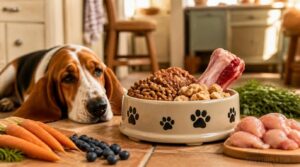
Your Basset Hound’s bowl can hold all kinds of food, and each type brings something different to the table. Some are easy and convenient, while others give you more control over what goes in. Let’s walk through the main options so you can pick what fits your dog’s needs best.
Dry Kibble Options
For most owners, dry dog food is the easiest daily choice for a Basset Hound. Look for AAFCO standards on the label, plus a named meat as the first ingredient. Check protein-fat ratios for high-protein kibble that fits their activity level.
Kibble size matters less for Bassets, but shelf stability helps with portion control and freshness between meals.
Wet Food Choices
A spoonful of wet food can do more than fill a bowl. With 60-80% moisture, it boosts hydration—great for Bassets who skip the water bowl. The softer texture suits dogs with dental issues, and protein/fat levels often run higher than dry kibble.
Just check "complete and balanced" labels, refrigerate after opening, and budget for the higher cost per calorie.
Fresh Dog Food
Imagine your Basset eating ingredients you’d recognize from your own kitchen—chicken, carrots, real food. That’s fresh dog food.
Digestibility benefits mean better nutrient absorption and smaller stools. Check ingredient transparency and confirm AAFCO standards for complete nutrition.
Storage solutions vary—frozen, refrigerated, or shelf-stable. Follow safety guidelines for handling. Cost runs higher than kibble, but many find these nutrient-dense meals worth it.
Freeze-Dried Meals
Ever wonder how raw nutrition can travel without spoiling? That’s freeze-drying. The freeze-drying process removes water through sublimation, preserving flavor and nutrient preservation while keeping food shelf-stable for months.
Why it works for your Basset:
- Shelf stability — no fridge needed
- Travel use — lightweight for trips
- Easy rehydration tips with warm water
Try Stella & Chewy’s Patties or Wellness CORE RawRev — both meet complete dietary requirements.
Raw Diet Considerations
Raw food sounds natural, but it’s not risk-free. Raw diets can carry Salmonella and E. coli, raising cross contamination concerns for your kitchen and family.
| Concern | Risk | Fix |
|---|---|---|
| Bacteria | Antibiotic resistant bacteria | Cook or buy tested brands |
| Bones | Choking, blockage | Use ground bone only |
| Balance | Low calcium iodine levels | Vet-formulated recipes |
Most veterinarians recommend balanced commercial diets for Basset Hounds instead.
Feeding Your Basset Hound

Picking the right food is only half the job. How you serve it matters just as much for your Basset Hound’s health and happiness. Here’s what you need to know about portions, timing, and a few smart feeding habits.
Cups Per Day
Two cups won’t fit every Basset Hound — life stage and body size both matter.
- Puppies (3-12 months): 1.5-2.5 cups, based on expected adult weight
- Adults: 1.5-2.5 cups, often 2.0-2.7 cups for 30-45 lb dogs
- Seniors: 1.5-2.0 cups, calorie-controlled for joint support
Calorie density varies by brand, so check feeding guidelines. Adjust portions seasonally, and factor treat integration into your daily total.
Meal Frequency
How often you feed your Basset matters as much as how much.
Puppy meal times mean four feedings daily under 3 months, three until 6 months, then two. Adults thrive on a twice-daily feeding schedule, spaced 8-12 hours apart. Senior meal frequency stays flexible — one or two meals, based on appetite and weight control needs for their life stage.
Treat Calorie Limits
Mealtimes matter, but so do snacks in between. Treats should stay under 10% of your Basset’s daily calories—about 50 calories for a 500-calorie diet.
Choose low-calorie rewards like carrot pieces or single-ingredient treats for easier calorie counting. Check labels for treat size guidelines, since similar-looking treats vary widely.
Practice treat portion control to avoid tipping a calorie-controlled plan toward obesity and excess weight.
Slow Feeder Benefits
Portion control matters, but so does eating pace. Bassets often gulp food fast, which raises air intake and bloat risk in deep-chested breeds.
Slow feeders fix this naturally:
- Promote digestive comfort by easing food into the stomach gradually
- Add mental enrichment through puzzle-style designs
- Support weight management by improving fullness cues
- Reduce gulping linked to obesity and digestive health issues
A simple bowl swap, big benefits.
Switching Foods Safely
Rarely does a sudden food swap go smoothly for a Basset’s sensitive gut. Follow a Changeover Timeline of 7-10 days, using Mixing Ratios that shift gradually from old to new.
| Days | Old Food | New Food |
|---|---|---|
| 1-3 | 75% | 25% |
| 4-6 | 50% | 50% |
| 7-10 | 25% | 75% |
Watch for Warning Signs like vomiting—call your veterinarian if symptoms persist.
Frequently Asked Questions (FAQs)
What is the best dog food for basset hounds?
A complete and balanced adult formula with real meat first, moderate fat (12-16%), and added glucosamine suits most Basset Hounds. Since they’re prone to weight gain, choose grain-free or hypoallergenic dog food with quality ingredient sourcing for steady, reliable nutrition.
What should a basset hound eat?
You might think one food fits every dog—it doesn’t. Your Basset Hound needs lifestage nutrition: balanced proteins and fats for puppies, joint support and hypoallergenic proteins for adults, and gentle, calm meals to prevent bloat.
Do Basset Hounds consume fat?
Yes, fat fuels your Basset Hound’s energy and enhances fat metabolism. Following AAFCO Standards (5% minimum), aim for moderate dietary fat sources like fish oil for omega benefits, while prioritizing weight management fat levels to avoid obesity.
Do Basset Hounds need a lot of protein?
Don’t believe the hype: a high-protein dog diet isn’t a must. AAFCO sets a 18% minimum, and most Basset Hounds thrive on moderate, high-quality proteins around 20-25%, balanced for weight control rather than chasing extreme percentages.
How do I choose the right dog food for my Basset?
Match life stage, health status, and activity level to the label’s AAFCO Standards. Check ingredient quality, run a calorie matching guide for weight goals, and follow gradual process steps—Basset Hounds thrive on careful, gradual choices.
Can a senior basset hound eat dog food?
Think of regular food as a winter coat your senior Basset has outgrown. Yes, dogs can eat it, but senior diets suit aging joints better, with calorie-controlled, balanced protein, and gentle, chewable food options for easier digestion.
How big are Basset Hounds?
Basset Hounds stand 11 to 15 inches tall but weigh 40 to 65 pounds, with a long body of 26 to 35 inches. That’s a lot of dog packed into a short frame, almost like a large breed on stubby legs!
What kind of fur does a Basset Hound have?
Like a suit that fits just right, a Basset Hound’s short smooth coat lies flat and close. It has a dense hard texture and comes in coat color patterns like tricolor or red and white.
What temperament do Basset Hounds have?
These calm, devoted dogs are easygoing companions with a stubborn streak. Their strong scent drive means they’ll follow a smell over a command — patient, consistent handling brings out the best in them.
How much exercise do Basset Hounds need?
Basset Hounds need just 20–30 minutes of daily exercise — one steady walk does the trick. Their low activity level and heavy build make consistent, gentle movement the safest way to protect their joints and manage weight.
Conclusion
Feeding your Basset Hound well isn’t just about keeping the bowl full—it’s about honoring the big, loyal personality packed into that low, long frame.
Choosing the best dog food for Basset Hounds means carefully matching protein, fat, and calories to a body built more for endurance than for excess. Two measured meals a day, a slow feeder, and the right formula can quietly add years of healthy, active days to your shared life together.