
This site is supported by our readers. We may earn a commission, at no cost to you, if you purchase through links.

If you’ve been dreaming of adding a spirited Jack Russell Terrier to your family but worry about sneezing fits and watery eyes, here’s the reality check: Jack Russell Terriers are not hypoallergenic. Despite their compact size and energetic charm, these terriers produce moderate levels of dander and shed consistently, releasing the same proteins that trigger allergic reactions in sensitive individuals.
The American Kennel Club doesn’t classify them as hypoallergenic, and all three coat types—smooth, rough, and broken—shed year-round. That doesn’t mean living with a Jack Russell is impossible if you have allergies, but it requires honest planning.
Understanding what actually causes dog allergies, how Jack Russells compare to truly low-allergen breeds, and which management strategies can reduce your exposure will help you make an informed decision about whether this lively breed fits your household.
Table Of Contents
- Key Takeaways
- Are Jack Russell Terriers Hypoallergenic?
- What Causes Dog Allergies?
- How Do Jack Russell Terriers Shed?
- Can Grooming Reduce Jack Russell Allergens?
- How Do Jack Russells Compare to Hypoallergenic Breeds?
- What Are Typical Allergy Symptoms With Jack Russells?
- Can Allergy Sufferers Live With Jack Russells?
- How to Minimize Allergens in The Home
- Do Air Purifiers Help With Dog Allergies?
- What Are Alternatives for Allergy Sufferers?
- Frequently Asked Questions (FAQs)
- What is the difference between hypoallergenic and allergy-proof dogs?
- What are some alternative breeds for allergy sufferers?
- Are Jack Russell puppies less allergenic than adults?
- Do outdoor Jack Russells produce fewer allergens?
- Can allergy shots help with Jack Russell allergies?
- Are female Jack Russells less allergenic than males?
- Does diet affect Jack Russell allergen production?
- Conclusion
Key Takeaways
- Jack Russell Terriers aren’t hypoallergenic because all three coat types (smooth, rough, and broken) shed year-round and produce moderate levels of dander containing allergenic proteins like Can f 1 and Can f 2.
- Regular grooming—including weekly brushing and monthly bathing—can reduce airborne allergens by up to 61% in the week following a bath, though it won’t eliminate allergens completely.
- Living with a Jack Russell when you have allergies requires combining multiple strategies like HEPA air purifiers (which reduce allergen levels by 50-60%), pet-free bedroom zones, and consistent cleaning protocols with hot water washing.
- Allergy sufferers should consult an allergist for testing and immunotherapy options before committing to a Jack Russell, since individual sensitivity varies widely and no dog breed is truly allergen-free.
Are Jack Russell Terriers Hypoallergenic?
Why do so many people wonder if Jack Russell Terriers fit the hypoallergenic category? The American Kennel Club doesn’t classify Jack Russell Terriers as hypoallergenic dogs, and for good reason. These energetic pups produce moderate levels of dander, which triggers dog allergies in sensitive individuals.
Despite common allergen misconceptions about coat variations, all three Jack Russell coat types—smooth, rough, and broken—shed consistently and release dog dander. Owners should also be aware of the need for regular grooming practices to manage shedding.
While breed popularity remains high, their Jack Russell Terrier hypoallergenic qualities don’t match truly low-shedding breeds, meaning allergy severity can vary greatly among owners.
What Causes Dog Allergies?

If you’re sneezing around your Jack Russell, you might wonder what’s actually triggering your symptoms. The culprit isn’t the dog hair itself, but specific proteins your dog produces.
Let’s look at the three main sources of allergens that can make life uncomfortable for people with sensitivities.
Proteins in Saliva
Regarding allergy triggers, dog saliva packs a punch. It contains multiple allergen types like Can f 1, Can f 2, and Can f 6, plus some recently discovered novel candidates. About 75% of people sensitive to dogs show IgE reactivity to saliva proteins. Breed saliva variation exists, meaning allergen levels differ between dogs.
Even without direct fur contact, saliva contact allergy can occur. Exposure to these allergens can lead to rhinitis and sensitization.
Dander and Dead Skin Cells
Beyond saliva, dander—those microscopic dead skin cells your dog sheds constantly—carries potent allergens like Can f 1, Can f 2, and Can f 3. These particles float in your air for months, and higher exposure increases sensitization by 19% in adults.
About 5–10% of US adults react to pet dander through inhalation, making it the primary trigger for dog allergies you’ll encounter.
Allergens in Urine
Urine harbors a distinct allergen called prostatic kallikrein—70% of allergy sufferers react to it, and 38% who don’t respond to dander still test positive for this novel protein. When urine dries, aerosolized allergens spread through your home.
Here’s what you should know about urine exposure risks:
- Kallikrein reactivity triggers respiratory allergy symptoms
- Novel proteins exist beyond standard dander allergens
- Aerosolized allergens contaminate indoor air
- Urine allergen types differ from saliva-based proteins
- Household surfaces retain allergenic residues
How Do Jack Russell Terriers Shed?
Jack Russell Terriers have a unique coat structure that impacts how much they shed and produce allergens. Their shedding patterns vary depending on their specific coat type, and all of them release dander throughout the year.
Understanding how these dogs shed can help you prepare for what to expect if you’re considering bringing one into your home.
Double Coat Characteristics

Jack Russell Terriers have a double coat—a coarse outer layer paired with a soft undercoat—that acts as a weatherproof barrier against rain, wind, and cold. This coat structure helps with temperature regulation but also traps dander, increasing allergen dispersion during seasonal molting periods in spring and fall. All three coat types (smooth, rough, and broken) share this double-coat design, requiring consistent grooming practices.
| Coat Component | Function |
|---|---|
| Outer layer | Protects against weather elements |
| Undercoat | Provides insulation and temperature control |
| Guard hairs | Shields skin from environmental exposure |
| Seasonal molt | Releases trapped dander and allergens |
| Double-coat design | Increases allergen retention and spread |
Shedding Patterns by Coat Type

Each of the three Jack Russell Terrier coat types sheds differently, which affects allergen exposure in your home. Smooth coats shed moderately year-round with short, dense hairs that accumulate on furniture and clothing. Broken coats fall somewhere in between, with seasonal shedding intensifying during spring and autumn transitions.
- Smooth coat: Requires weekly brushing; sheds continuously throughout the year
- Rough coat: Sheds least visibly; loose hair trapped in wiry undercoat released during grooming
- Broken coat: Moderate seasonal shedding influenced by environmental factors and genetics
The grooming impact varies considerably—rough coats need biannual hand-stripping, while smooth varieties may require daily attention during peak shedding periods.
Dander Production

Dander particle size matters more than you might think. Jack Russell Terriers produce skin flakes ranging from 2.5 to 25 microns, with the smallest particles staying airborne for hours and penetrating deep into your respiratory tract.
These moderate-to-heavy dander producers release allergen-rich proteins—primarily Can f 1 and Can f 2—year-round, creating consistent allergen levels that affect allergy sufferers regardless of coat type.
Can Grooming Reduce Jack Russell Allergens?
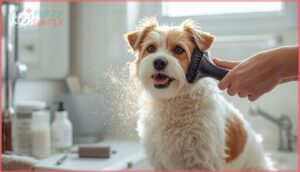
Yes, grooming can greatly reduce the allergens your Jack Russell Terrier produces, though it won’t eliminate them entirely. Regular maintenance helps remove loose hair and dander before they spread throughout your home.
Let’s look at three key grooming practices that can help manage allergen levels.
Brushing Techniques
Regular brushing is your most effective weapon against allergens from Jack Russell Terriers. You’ll want to use slicker brushes or grooming mitts for smooth coats, while rough coats benefit from hand-stripping twice yearly.
Weekly brushing can cut shed hair by up to 40%, and it distributes natural oils that keep the coat healthy and reduce dander. Most owners who stick with consistent grooming see real improvements.
Bathing Frequency
You can bathe your Jack Russell every 4–6 weeks without risking dry skin or coat damage. Moisturizing or oatmeal-based shampoo types help preserve skin health while supporting allergen reduction—research shows baths cut airborne allergens by 61% in the week following a wash.
Dogs with high activity impact from outdoor play may need baths every 3–4 weeks to maintain suitable intervals for allergen control.
Grooming Tools for Allergen Control
You’ll want to invest in the right equipment to keep allergen levels down. Vacuum grooming attachments with flexible bristles capture loose hair and microscopic dander directly into the machine, while slicker brushes physically remove trapped allergens from your dog’s coat.
A rubber-sided brush works well for daily maintenance, and allergen wipes between baths reduce surface proteins by up to 31%. Undercoat combs and dry shampoo round out effective grooming practices for allergen control.
How Do Jack Russells Compare to Hypoallergenic Breeds?

If you’re weighing your options between a Jack Russell and a truly hypoallergenic breed, understanding the differences can help you make the right choice for your household. Jack Russells don’t fall into the hypoallergenic category, and the gap between them and low-allergen breeds is pretty significant.
Here’s how they stack up in three key areas.
Allergen Levels
Regarding allergen levels, Jack Russell Terriers produce typical amounts of Can f 1 and other dog allergens found in non-hypoallergenic breeds. Here’s what you need to know about their allergen exposure:
- Jack Russells release moderate to high dander quantity through their double coats
- Saliva allergens and urine proteins spread during their active, energetic behavior
- Breed comparison studies show no meaningful difference from other non-hypoallergenic dogs
Shedding Differences
When you compare shedding volume, Jack Russell Terriers drop up to 1,000 hairs per square inch daily, far exceeding hypoallergenic breeds like Poodles. Smooth coat varieties spread allergens most noticeably, while rough coat and broken coat types trap hair temporarily but still require regular grooming.
Seasonal shedding intensifies during spring and autumn, increasing hair density and allergen spread substantially beyond low-shedding alternatives.
American Kennel Club Classification
The American Kennel Club doesn’t recognize “Jack Russell Terrier” as an official dog breed. Instead, you’ll find the Russell Terrier and Parson Russell Terrier registered since 2012 and 1997, respectively.
Neither appears on the AKC’s hypoallergenic list, as both belong to the Terrier Group with moderate shedding traits that produce allergens through their coat characteristics.
What Are Typical Allergy Symptoms With Jack Russells?

If you’re allergic to dogs, your body treats harmless proteins from Jack Russell Terriers as invaders, triggering an immune response. These reactions can range from mild annoyance to genuinely uncomfortable symptoms that affect your daily life.
Recognizing what you’re dealing with helps you decide whether living with a Jack Russell is realistic for you.
Respiratory Reactions
Your respiratory system often takes the first hit when you’re around a Jack Russell Terrier if you have dog allergies. Airborne allergens from their dander can spark asthma triggers, and up to 70% of allergy sufferers experience nasal congestion in homes with these moderate shedders.
- Coughing frequency increases in nearly 30% of people with allergy reactions during prolonged exposure
- Nighttime breathing becomes difficult for 22% of allergy sufferers, disrupting sleep quality
- Postnasal drip and persistent sneezing affect many individuals after direct contact with the breed
Skin Irritation
Beyond respiratory issues, your skin can react strongly to Jack Russell allergens. Atopic dermatitis develops in 10–15% of exposed individuals, while urticaria symptoms like raised bumps appear in 18% after contact with their saliva or fur.
Chronic scratching affects up to 30% of sensitized people during grooming, and eczema flare-ups occur in 24% of cases. Hand dermatitis from regular petting troubles about 12% of owners.
Eye and Nasal Symptoms
When you’re around Jack Russell Terriers, itchy eyes and watery eyes often strike within 20 minutes—75% of allergy sufferers report this reaction. Sneezing fits affect 68% of people, while nasal congestion troubles 60% who enter homes with these dogs.
Sinus pressure develops in 28% of cases, and allergy symptoms tend to linger longer indoors compared to hypoallergenic breeds, making allergy testing worth considering.
Can Allergy Sufferers Live With Jack Russells?

Living with a Jack Russell Terrier when you have allergies isn’t impossible, but it does require honest planning. You’ll need to evaluate how severe your symptoms are and whether you can commit to the extra steps involved.
Here’s what you should consider before bringing a Jack Russell into your home.
Assessing Individual Sensitivity
Your individual sensitivity to Jack Russell Terriers depends on your unique immune response and genetic predisposition. Allergy sufferers experience different symptom expression even with identical allergen exposure levels.
You can’t predict your allergic reactions without allergy testing that measures specific antibodies. Allergy diagnosis requires proper evaluation since some people with dog allergies tolerate certain breeds better, while others develop severe allergies regardless of the dog’s characteristics.
Consultation With Allergists
Visiting an allergist gives you the tools to manage dog allergies through proper diagnosis and treatment strategies. Skin-prick testing and specific IgE blood tests confirm your dog allergy with up to 85% sensitivity, helping your doctor create management plans designed for you.
Your allergist can offer:
- Allergy testing to identify exact triggers and severity levels
- Immunotherapy options like allergen-specific injections for long-term relief
- Follow-up care every 6-12 months to track symptoms and adjust treatment
There aren’t breed exemptions—Jack Russell Terriers require the same evaluation as any other dog.
Lifestyle Adjustments
You can share your home with a Jack Russell by making a few practical changes. Set up pet-free zones like your bedroom, vacuum regularly with a HEPA air purifier, and establish a consistent grooming routine.
Regular cleaning of living spaces, paired with air filtration systems and behavior modification training, helps reduce allergen exposure while maintaining your bond with your terrier.
How to Minimize Allergens in The Home

If you’ve decided to live with a Jack Russell Terrier despite allergies, you’ll need a solid game plan to keep allergen levels under control. The good news is that several practical strategies can make a real difference in your home environment.
Here’s how you can reduce exposure to dander and other allergens in your daily routine.
Cleaning Strategies
Carpet cleaning can cut allergens by 96% in nylon fibers, but hard flooring like tile stays even cleaner. Grooming protocols and product efficacy matter, too—allergen management works best when everything clicks together.
You’ll want to dust weekly with microfiber cloths and mop twice with wet pads to drop dander by 75%. Wash your dog’s bedding in hot water every week, and don’t forget toys.
Using HEPA Vacuums
A HEPA vacuum captures 99.97% of particles, trapping dander before it recirculates. You’ll want sealed systems—not just any filter—to prevent allergen leakage. Brands like Dyson or Miele offer strong suction and specialized pet attachments that dig into carpets where dander hides.
Vacuum twice weekly, and pair it with air purifiers for layered defense. Proper vacuum maintenance keeps filtration efficiency high, making life easier for allergy sufferers.
Washing Bedding and Toys
Beyond vacuuming, you’ll need to tackle bedding and toys directly. Hot water benefits allergen removal—wash your Jack Russell’s bedding bi-weekly in a hot cycle with hypoallergenic detergent. Laundry additives like DeMite can nearly eliminate allergens.
For toys, machine-wash plush items in a mesh bag, and hand-clean rubber ones with mild soap. Proper drying methods—high heat or sunny air-drying—seal the deal against dander buildup.
Do Air Purifiers Help With Dog Allergies?

Air purifiers can make a real difference when you’re living with a dog and dealing with allergies. They work by filtering out the tiny particles of dander that float around your home, which are the main culprits behind those sneezes and itchy eyes.
Let’s look at how these devices can help and how to use them effectively.
HEPA Air Purifier Benefits
You might wonder if an air purifier can really make a difference when you’re living with a Jack Russell. HEPA filters actually trap 99.97% of airborne particles, which means they’re excellent at particle removal of dander and other allergens floating around your home.
Studies show that HEPA air purifiers can reduce indoor allergen levels by 50-60%, leading to measurable improvements in respiratory symptoms. Some research even links these devices to better cardiovascular health in allergy sufferers.
While market growth reflects increasing confidence in this technology, remember that optimization factors like room size and continuous operation matter for best results.
Placement and Usage Tips
Getting the best results from your HEPA filter depends on where you put it and how you use it. Best placement means setting your air purifier 3–5 feet off the ground in living spaces where your Jack Russell hangs out most, with at least 18 inches of airflow clearance on all sides. Make sure the room coverage matches your device’s capacity, and keep it running continuously for steady allergen control.
Filter maintenance matters too—clean that pre-filter twice weekly in homes with pets, since clogged filters lose half their effectiveness at capturing dander.
What Are Alternatives for Allergy Sufferers?

If you love Jack Russell Terriers but can’t manage the allergens, you don’t have to give up on having a dog altogether. Several breeds produce fewer allergens and might work better for your situation.
Let’s look at some alternatives that could be a better match for allergy sufferers.
Hypoallergenic Dog Breeds
If you’re searching for hypoallergenic dog breeds after learning Jack Russells aren’t ideal, you’ll want to look at breeds marketed for lower allergen production. Common options include Poodles, Schnauzers, and the Coton de Tulear. However, studies show that breed allergen levels don’t differ greatly—even low-shedding hypoallergenic dogs can carry high Can f 1 proteins.
Even popular hypoallergenic breeds like Poodles and Schnauzers can produce high allergen levels, challenging the notion that any dog is truly allergy-free
Consider these popular hypoallergenic breeds:
- Poodle (despite mixed Poodle allergen study results)
- Schnauzer and Schnoodle mixes
- Coton de Tulear
- Small breed allergens may be reduced due to size
Allergen production factors vary individually, so spend time with your chosen breed first.
Low-Shedding Terrier Mixes
If you’re drawn to terrier personality but need lower allergen protein levels, consider terrier mix breeds with Poodle genetics. The JackAPoo, combining Jack Russell Terriers with hypoallergenic dogs like Poodles, offers better Poodle mix shedding control. Whoodles and Schnoodles also show reduced allergen output, though breed compatibility statistics reveal shedding varies by genetics.
Grooming best practices remain essential, as terrier mix popularity doesn’t guarantee allergy-free living.
Factors to Consider When Choosing a Dog
Before committing to any dog breeds for allergies, you’ll need to evaluate breed suitability against your lifestyle compatibility and financial commitment. Consider the acquisition source, whether breeder or shelter, and research hypoallergenic dog breeds versus nonhypoallergenic breeds.
Your dog breed selection should account for household allergies, exercise needs, housing space, and long-term welfare responsibilities spanning 10 to 16 years.
Frequently Asked Questions (FAQs)
What is the difference between hypoallergenic and allergy-proof dogs?
The term “hypoallergenic” means dogs produce fewer allergens, not zero. “Allergy-proof” suggests no allergens exist—a misconception debunked by scientific evidence.
No dog breeds for allergies are truly allergen-free, despite breed marketing claims.
What are some alternative breeds for allergy sufferers?
If you have allergies, consider hypoallergenic dog breeds like Poodles, Bichon Frises, or Yorkshire Terriers.
These low-shedding alternatives produce less dander than Jack Russells, though regular grooming remains essential for allergen control.
Are Jack Russell puppies less allergenic than adults?
Many families notice milder reactions when a Jack Russell puppy first arrives, only to see allergy symptoms worsen months later. Puppies produce less dander than adults because their skin is younger and less dry, making early dog exposure potentially easier for allergy sufferers.
However, as puppy coat shedding increases and they mature, dander production rises considerably. Indoor puppy time also grows with age, increasing household allergen levels.
Notably, puppy diet impact matters—raw food during development may reduce future allergy symptoms. Still, no Jack Russell puppy is truly hypoallergenic. Both puppies and adults carry allergenic proteins that trigger dog allergies and allergy symptoms in sensitive individuals.
Managing dog allergies with Jack Russell Terriers requires understanding that lower puppy dander levels are temporary, not permanent solutions.
Do outdoor Jack Russells produce fewer allergens?
Keeping your Jack Russell Terriers outside won’t lower dander production or allergen levels.
Outdoor allergen transfer actually increases as dogs bring pollen and environmental particles indoors, compounding allergy triggers through seasonal changes and rural vs. urban exposure differences.
Can allergy shots help with Jack Russell allergies?
If you’re living with Jack Russell allergies, immunotherapy could be your breakthrough. Shot effectiveness reaches up to 85% for dog allergies, with symptom reduction often visible within the first year. The dosage schedule involves weekly injections during buildup, then maintenance shots every 2-4 weeks for 3-5 years.
Long-term relief persists even after treatment ends for most responders. However, shot limitations exist—high allergen exposure can reduce effectiveness, and about 1% of patients experience severe reactions requiring observation.
This allergy treatment targets proteins like Can f 1 directly, helping allergy sufferers reduce medication dependence and improve quality of life through proper allergy management.
Are female Jack Russells less allergenic than males?
Yes, female Jack Russells produce less Can f 5, a male-specific allergen. About 30% of dog-allergic individuals are sensitive to this protein, so females may reduce allergy symptoms for some people.
Does diet affect Jack Russell allergen production?
Your Jack Russell’s diet directly influences allergen production. Raw food benefits include reduced inflammation, while novel protein sources and omega fatty acids lower dander levels.
Processed food impact increases allergenic proteins, making elimination diet protocols essential for managing allergies.
Conclusion
Knowledge is power for managing allergies. Jack Russell Terriers aren’t hypoallergenic, but understanding their shedding patterns, allergen triggers, and grooming needs gives you a realistic foundation for decision-making.
If your heart is set on this breed, work closely with your allergist, implement strict cleaning protocols, and invest in HEPA filtration.
For severe sensitivities, consider truly hypoallergenic breeds instead. Your health and your dog’s well-being both deserve thoughtful planning, not wishful thinking.