This site is supported by our readers. We may earn a commission, at no cost to you, if you purchase through links.

Some dogs turn their noses up at anything that isn’t freshly opened. Others eat the same kibble for years, then one day decide they’re done with it. If your dog falls into either camp, you’re not imagining things—and you’re not alone.
Picky eating affects a surprising number of dogs, and the causes range from simple boredom to food sensitivities to undiagnosed dental pain.
The right food makes a real difference. Knowing what to look for—and what to avoid—puts you back in control of your dog’s health and mealtime.
Table Of Contents
- Key Takeaways
- Why Do Dogs Become Picky Eaters?
- Is Your Dog Just Picky, or is Something Wrong?
- What to Look for in Dog Food for Picky Eaters
- Best Dog Food Types for Picky Eaters
- Top 10 Best Dog Foods for Picky Eaters
- 1. High Protein Dog Food
- 2. Sensitive Stomach Chicken Dog Food
- 3. Salmon Dog Food Sensitive Stomachs
- 4. Taste of the Wild Grain Free Dog Food
- 5. Blue Buffalo Wilderness Large Breed Dog Food
- 6. Merrick Grain Free Red Meat Dog Food
- 7. Nature Recipe Grain Free Salmon Dog Food
- 8. Open Farm Wild Salmon Dog Food
- 9. ACANA Wild Atlantic Grain Free Dog Food
- 10. Purina One True Instinct Dog Food
- Feeding Strategies to Encourage Picky Eaters
- How to Create a Positive Feeding Environment
- When Should You Talk to a Veterinarian?
- Frequently Asked Questions (FAQs)
- What is the best dog food for very picky dogs?
- What are the best tasting dog foods for picky eaters?
- What are some safe vegetables for dogs to eat?
- How to choose dog food for a picky eater?
- What are the best dog food brands for picky eaters?
- What is the best dry dog food for picky eaters?
- What should a dog eat if he is a picky dog?
- What’s the best dog food for a picky dog?
- What is the most irresistible dog food?
- What is the best thing to feed a dog that won’t eat?
- Conclusion
Key Takeaways
- Picky eating usually has a root cause — boredom, food sensitivities, dental pain, or stress — so identifying the "why" gets you to the fix faster than just switching brands.
- The first ingredient on the label tells you almost everything: real, named meat or fish (like chicken, salmon, or beef) signals higher palatability and better nutrition for dogs that are hard to please.
- Simple tweaks — warming food, adding low-sodium broth, or rotating proteins over 7 days — can turn a stubborn eater around without changing the entire diet.
- If your dog skips meals for more than a couple of days, or you notice weight loss, pale gums, or vomiting, don’t wait — that’s a vet visit, not a feeding strategy problem.
Why Do Dogs Become Picky Eaters?

Picky eating in dogs rarely comes out of nowhere. There’s usually a reason your dog is turning up its nose at the food bowl, and knowing what’s behind it makes all the difference.
Whether it’s texture, taste, or ingredient sensitivities, finding the best dog food for picky Corgis can take some trial and error.
Here are the most common causes to keep in mind.
Boredom and Lack of Food Variety
Just like you’d grow tired of eating the same meal every day, your dog can too. Scientists call it sensory-specific satiety — interest simply fades with repetition. Here’s what boredom-driven refusal actually looks like:
- Sniffing the bowl, then walking away.
- Eating only few bites before losing interest.
- Suddenly preferring your food over theirs.
- Responding better when you warm the food for an Aroma Boost.
- Perking up the moment you offer something new.
Flavor Rotation, Texture Variety, and adjusting food moisture content can reset that interest fast. Dog food variety isn’t a luxury — it’s a palatability strategy that works.
Food Sensitivities and Allergies
Sometimes the issue isn’t boredom — it’s biology. Food sensitivities trigger a slow immune response that builds over hours or days, making dog dietary allergies harder to spot than you’d think.
Your dog isn’t being difficult; allergens are genuinely uncomfortable.
Allergen identification through a limited ingredient diet benefits diagnosis enormously.
Threshold dose matters too — small amounts may be fine until they aren’t.
Health Issues and Dental Problems
Beyond sensitivities, physical pain quietly kills appetite too.
Dental pain, periodontal disease, oral abscesses, and tooth decay all affect how your dog approaches the bowl. Watch for these signs:
- Chewing discomfort or slowing down mid-meal
- Pawing at the mouth or dropping food
- Preferring soft textures over hard kibble
- Drooling more than usual
Dog dental health and eating are deeply connected — palatability of dog food means nothing if chewing hurts.
Even the finest dog food fails when chewing hurts
Environmental Stressors and Anxiety
Your dog’s environment matters more than most people realize. Noise pollution, crowded spaces, and even poor air quality can push a dog into a hyperalert state — and anxious dogs often stop eating.
Housing instability, routine disruptions, social stress from other pets, and climate threats like wildfire smoke all count as behavioral causes of picky eating. A stressed dog simply won’t feel hungry.
Is Your Dog Just Picky, or is Something Wrong?

Not every dog that skips a meal is being dramatic. Sometimes it’s a habit, but other times it’s your dog’s way of telling you something’s off.
Here’s how to tell the difference.
Behavioral Signs of a Picky Eater
Picky eating follows a pattern. Your dog might sniff and walk away repeatedly, never taking a bite.
You’ll notice slow eating, where they start, stop, and return later. Some dogs practice portion bargaining, finishing only half regardless of hunger.
Bowl pacing and whining are common. Preference consistency — always accepting wet food, always rejecting kibble — is one of the clearest signs of identifying picky eaters in dogs.
Warning Signs That Require Veterinary Attention
Not every skipped meal is an attitude. Some refusals are your dog’s way of saying something hurts.
Watch for these red flags — each one warrants same-day veterinary care:
- Wheezing or breathing issues or labored open-mouth breathing at rest
- Pale gums that look white or grayish instead of pink
- Urination problems — straining with little or no output
- Persistent vomiting with blood or signs of weakness
- Sudden severe pain, limping, or facial swelling
A sudden drop in weight may signal serious illness, such as unexplained weight loss.
Health Risks of Chronic Picky Eating
When picky eating drags on for weeks, the health implications of picky eating in dogs go far beyond a half‑empty bowl.
| Health Risk | What Happens | Why It Matters |
|---|---|---|
| Nutrient Deficiencies | Essential amino acids, calcium, iron, and B vitamins fall short | Affects energy, muscle function, and red blood cell production |
| Digestive Upset | Irregular eating disrupts gut adaptability | Leads to soft stools or constipation cycles |
| Immune Weakness | Poor nutritional adequacy weakens defenses | Increases infection risk over time |
Dental Disease, Weight Loss, and nutrient density gaps compound quietly — until veterinary guidance becomes urgent.
What to Look for in Dog Food for Picky Eaters

Not all dog food is created equal — especially when your dog turns up their nose at the bowl. For picky eaters, a few key features can make the difference between a meal that gets eaten and one that doesn’t.
Here’s what to look for.
Real Meat or Fish Listed First
first ingredient tells you everything. Under AAFCO guidelines, real meat or fish must lead the label — and that placement isn’t cosmetic.
About 82 percent of formulas built for sensitive stomachs list high-quality protein before anything else. That drives palatability metrics up and keeps nutrient density where it needs to be.
sourcing transparency and vet-approved, human-grade standards back every claim.
Whole, Recognizable Ingredients
What’s actually in your dog’s bowl matters more than the marketing on the bag.
Look for whole grain oats, named fruit ingredients like cranberries or apples, and visible vegetable chunks — sweet potato, peas, carrots.
Transparent fat sources such as salmon oil or chicken fat signal human-grade, vet-recommended quality.
Whole protein sources you can actually pronounce? That’s real food taste, your picky eater will notice.
Limited-Ingredient and Grain-Free Formulas
Less is genuinely more regarding formulas for picky eaters.
Limited-ingredient and grain-free recipes strip things back to what matters — a single protein focus, simple carb sources like sweet potato or rice, and allergen transparency from the first line of the label.
- Single Protein Focus cuts confusion and allergy risk
- Simple Carb Sources keep digestion gentle and predictable
- Grain-free formulas swap grains for digestible potato or lentils
- Vet-recommended picks avoid corn, wheat, and soy entirely
- Sustainable sourcing ensures high-quality protein without compromise
Probiotics, Prebiotics, and Digestive Support
Even the cleanest ingredient list won’t help much if your dog’s gut isn’t absorbing nutrients well. That’s where synbiotic formulas earn their place — combining prebiotic fiber types with strain-specific probiotic bacteria so each helps the other.
Look for K9 strain probiotics, clear CFU dosage guidelines in the billions, and gastro-resistant delivery. Veterinary guidance for picky eaters consistently points here first.
Essential Fatty Acids for Skin and Coat Health
Skin and coat health starts at the cellular level. Your dog’s body can’t make omega-3 fatty acids on its own — EPA and DHA must come from food.
Linoleic acid helps ceramide production and skin barrier hydration, while omega-3s shift inflammatory balance away from irritants.
Look for foods listing:
- Salmon oil for EPA and DHA
- Linoleic acid sources like chicken fat
- Balanced omega-6 to omega-3 ratios
- Vet-approved formulas with both fatty acid types
Best Dog Food Types for Picky Eaters
Not all dog foods are created equal, and for picky eaters, the format matters just as much as the ingredients.
Some dogs respond better to fresh meals, others need the strong aroma of wet food, and a few will only eat something with a satisfying crunch.
Here are the four best food types worth trying with a finicky dog.
Fresh and Lightly Cooked Meals

Fresh and lightly cooked meals are often the turning point for dogs that refuse everything else. Gentle heat locks in Moisture Retention and helps Nutrient Preservation — no harsh extrusion, no mystery ingredients. That’s why human-grade options like The Farmer’s Dog work so well. Aroma Enhancement from slight warming makes even stubborn dogs curious.
| Feature | Benefit | Example |
|---|---|---|
| Texture Variety | Softer pieces appeal to picky dogs | Patties, crumbles, trays |
| Shelf-Life Management | Freeze portions to reduce waste | Refrigerate 3–4 days |
| Fresh Dog Food Aromas | Warming boosts scent appeal | 10 seconds in microwave |
Freshly crafted dog meals give you real control over what goes in the bowl.
Wet and Canned Formulas

Wet and canned formulas hit differently than kibble. That 75–78% Moisture Content makes every bite more aromatic and easier to chew — a real win for picky eaters.
Look for Ingredient Transparency on the label: named proteins like chicken or salmon listed first.
Palatability Boosters like natural broths improve acceptance without junk fillers.
Vet-recommended wet dog foods also offer flexible Calorie Density and a longer Shelf Life than fresh meals.
Freeze-Dried and Air-Dried Options
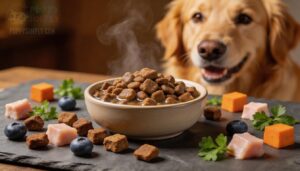
Freeze dried and air dried foods are worth a serious look if your dog turns its nose up at kibble. Both lock in Nutrient Retention without heavy processing — and the Texture Appeal is genuinely different.
- Shelf Stability of 1–2 years makes stocking up simple
- Weight Efficiency means easy travel and storage
- Rehydration Techniques like brief soaking restore palatability
- Vet-approved, human-grade ingredients are standard in top brands
- Picky eaters often respond well to the bold, natural aroma
High-Quality Dry Kibble
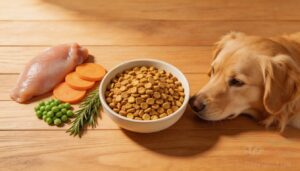
Dry kibble gets a bad reputation with picky eaters, but the right formula changes everything. Look for vet-approved options that meet AAFCO Standards, list high-quality protein first, and rely on sustainable sourcing with transparent manufacturing processes.
packaging innovations now protect nutrient bioavailability through the shelf life.
For genuinely finicky dogs, a kibble built on real ingredients — not fillers — is often the quiet win.
Top 10 Best Dog Foods for Picky Eaters
Finding the right food for a picky dog takes some trial and error, but a few standout options consistently win over even the fussiest eaters.
Each pick below was chosen with palatability, ingredient quality, and nutritional balance in mind. Here are the top ten dog foods worth trying.
1. High Protein Dog Food
High protein formulas are often the secret weapon for picky dogs. When real meat or fish leads the ingredient list and protein clears 30 percent on a dry matter basis, most dogs simply can’t resist. That strong animal aroma pulls them in.
Beyond palatability, the protein helps lean muscle, steady energy, and faster recovery — especially in active dogs.
Look for named sources like chicken, beef, or salmon. Avoid vague labels like "meat by-products". Specificity signals quality.
| Best For | People with color-treated, chemically processed, or heat-styled hair who want a lightweight daily leave-in that cuts frizz, protects against heat, and helps hold color longer. |
|---|---|
| Price | $36.00 |
| Primary Ingredient | Bonding Care Complex |
| Grain Free | N/A |
| Artificial Additives | None listed |
| Package Size | 5.61 oz tube |
| Joint Support | No |
| Additional Features |
|
- Repairs weakened hair bonds and visibly reduces breakage and split ends with consistent use.
- Doubles as a heat protectant up to 450°F, so you’re covered whether you’re blow-drying or using a flat iron.
- Vegan, sulfate-free formula works on all hair types without weighing hair down.
- At $36 for a small 5.61 oz tube, it can get expensive fast — especially for anyone with thick or long hair.
- Results are cosmetic, not structural, so don’t expect it to truly "heal" damaged hair from the inside out.
- You have to keep using it consistently to maintain the benefits, which adds up over time.
2. Sensitive Stomach Chicken Dog Food

Chicken is one of the most digestible proteins you can give a sensitive dog. The best formulas keep it simple — chicken or chicken meal listed first, with prebiotic fiber from sources like chicory root or pumpkin to settle the gut.
Look for brown rice as a gentle carb base. Skip anything with corn, soy, or wheat.
Ingredients like fish oil and beta-carotene support coat health alongside digestion. A gradual 7-day adjustment helps your dog adjust without flare-ups.
| Best For | Dog owners whose pups have sensitive stomachs and need a simple, easy-to-digest meal built around quality chicken protein. |
|---|---|
| Price | $14.97 |
| Primary Ingredient | Jojoba Oil |
| Grain Free | N/A |
| Artificial Additives | None listed |
| Package Size | 3 x 8 oz bottles |
| Joint Support | No |
| Additional Features |
|
- Chicken or chicken meal is listed first, making it a highly digestible protein source that’s gentle on sensitive digestive systems.
- Prebiotic fiber from ingredients like chicory root or pumpkin helps settle the gut and supports healthy digestion long-term.
- Added fish oil and beta-carotene do double duty — supporting both a healthy coat and smoother digestion.
- The 7-day transition period means you can’t just switch foods overnight, which takes some planning.
- May not be the right fit for dogs with a chicken allergy or sensitivity, which isn’t as rare as you’d think.
- Simpler formulas can sometimes fall short on variety, which matters if your dog needs a broader nutrient profile.
3. Salmon Dog Food Sensitive Stomachs
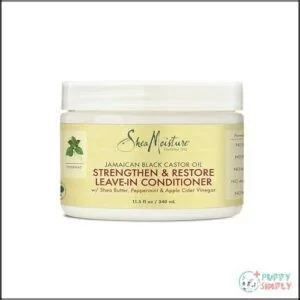
Salmon is a quiet powerhouse for dogs with sensitive stomachs. It’s a novel protein, meaning dogs that react to chicken or beef often tolerate it well.
The omega-3 fatty acids — EPA and DHA — do double duty: calming gut inflammation and supporting a healthy coat.
Many salmon-based formulas pair the protein with a short ingredient list, making it easier to pinpoint what’s causing trouble.
Look for added probiotics and easily digestible carbs like rice for extra gut support.
| Best For | Dogs with sensitive stomachs who react to common proteins like chicken or beef and need a gentle, easily digestible diet. |
|---|---|
| Price | $8.97 |
| Primary Ingredient | Jamaican Black Castor Oil |
| Grain Free | N/A |
| Artificial Additives | None listed |
| Package Size | 11.5 oz tub |
| Joint Support | No |
| Additional Features |
|
- Salmon is a novel protein that’s easier on sensitive digestive systems
- Omega-3 fatty acids help reduce gut inflammation while keeping the coat healthy
- Short ingredient lists make it simple to track down food sensitivities
- Salmon-based formulas can be pricier than chicken or beef options
- The fish smell can be strong — not ideal for every household
- Not all brands include probiotics, so you’ll need to read labels carefully
4. Taste of the Wild Grain Free Dog Food
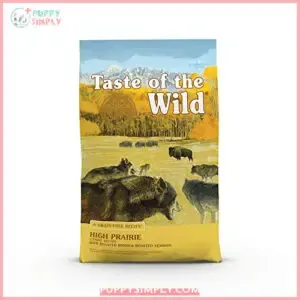
Taste of the Wild High Prairie punches well above its price. It leads with water buffalo and lamb meal — real, named proteins your picky dog can actually use.
You’re also getting a K9-strain probiotic blend, prebiotic chicory root, and omega fatty acids from salmon oil and flaxseed.
That combination aids digestion, coat health and immune function all at once.
Sweet potatoes and blueberries add fiber and antioxidants without fillers. For grain-sensitive dogs who turn their nose up at standard kibble, this formula is worth trying.
| Best For | Dogs with grain sensitivities or active adult dogs that need high-protein, nutrient-rich food to support muscle, coat, and digestive health. |
|---|---|
| Price | $58.99 |
| Primary Ingredient | Bison & Venison |
| Grain Free | Yes |
| Artificial Additives | None |
| Package Size | 28 lb bag |
| Joint Support | Yes (omega-3s) |
| Additional Features |
|
- High 32% protein from real meat sources like water buffalo, lamb meal, and chicken meal — great for lean muscle support.
- Built-in probiotic and prebiotic blend keeps digestion on track and supports immune function.
- Omega fatty acids from salmon oil and flaxseed promote a healthy skin and coat.
- Contains plant-based proteins like peas and pea flour, which don’t offer the same biological value as animal proteins.
- Grain-free formulas have been flagged for a possible link to dilated cardiomyopathy (DCM) — worth a chat with your vet, especially for at-risk breeds.
- One kibble size fits all, which can be a problem for very small dogs or those with chewing difficulties.
5. Blue Buffalo Wilderness Large Breed Dog Food
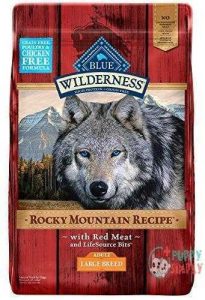
If your large breed dog walks away from the bowl, Blue Buffalo Wilderness Rocky Mountain might change that.
Deboned beef leads the ingredient list, backed by lamb and venison — a red-meat trio that’s hard to ignore.
LifeSource Bits add antioxidants and immune support without artificial fillers.
Glucosamine and chondroitin are built right in, so joint health isn’t an afterthought.
It’s grain-free, soy-free, and wheat-free.
A solid choice for big dogs with big opinions about dinner.
| Best For | Large breed adult dogs with grain sensitivities, picky eaters, or owners who want a high-protein, red-meat-focused formula that supports joint health and muscle maintenance. |
|---|---|
| Price | $84.98 (22lb est.) |
| Primary Ingredient | Deboned Beef |
| Grain Free | Yes |
| Artificial Additives | None |
| Package Size | 22 lb bag |
| Joint Support | Yes (glucosamine, chondroitin) |
| Additional Features |
|
- Real deboned beef, lamb, and venison make it genuinely appealing — even for dogs that turn their nose up at most kibble
- Glucosamine and chondroitin are built in, so you’re not separately shopping for joint supplements
- Grain-free with no artificial preservatives, making it a cleaner option for sensitive stomachs
- It’s pricey — especially if you’re feeding a 90-pound dog and going through bags fast
- Calorie-dense formula means you’ll need to watch portions for couch-potato dogs
- Contains multiple proteins (beef, lamb, venison, fish), so it’s not a great fit if your dog has specific protein allergies
6. Merrick Grain Free Red Meat Dog Food
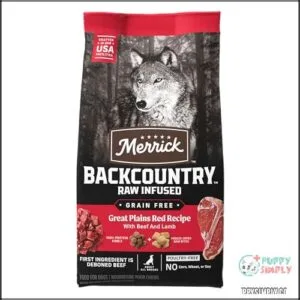
Merrick’s Great Plains Red Meat takes a different approach — and picky eaters tend to notice.
Deboned beef leads the formula, with lamb, pork, and salmon filling out the protein lineup. The freeze-dried raw pieces are the real draw for finicky dogs. That texture and aroma combination is hard to resist.
It’s poultry-free and grain-free, which helps dogs with chicken or gluten sensitivities. Glucosamine and chondroitin support joint health too.
One trade-off: at $84.98 for 20 lbs, it’s a premium buy.
| Best For | Dogs with chicken or grain sensitivities, picky eaters, or active adults needing a high-protein, joint-supporting diet. |
|---|---|
| Price | $84.98 |
| Primary Ingredient | Deboned Beef |
| Grain Free | Yes |
| Artificial Additives | None |
| Package Size | 20.2 lb bag |
| Joint Support | Yes (glucosamine, chondroitin) |
| Additional Features |
|
- Deboned beef leads the ingredient list, backed by lamb, pork, and salmon for a solid protein punch
- Freeze-dried raw pieces add texture and aroma that picky eaters actually go for
- Poultry-free and grain-free formula works well for dogs with common food sensitivities
- At $84.98 for 20 lbs, the cost adds up fast — especially with bigger or multiple dogs
- Multiple protein sources (pork, lamb, salmon) and legumes could still trigger allergies in sensitive dogs
- High protein content may not suit dogs with kidney disease or other conditions without a vet’s okay
7. Nature Recipe Grain Free Salmon Dog Food
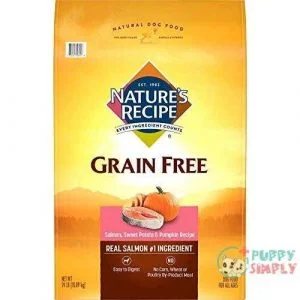
If your dog turns up its nose at poultry-based foods, Nature’s Recipe Grain Free Salmon hits differently.
Real salmon leads the ingredient list, bringing that strong aroma that picky eaters can’t easily ignore.
Sweet potato and pumpkin add fiber for smooth digestion, while omega-3s support skin and coat health.
No corn, wheat, soy, or artificial anything.
At $47.97 for 24 lbs, it’s a solid mid-range pick for dogs across all life stages.
| Best For | Dogs with grain sensitivities or poultry allergies, especially picky eaters who respond better to fish-based proteins. |
|---|---|
| Price | $47.97 |
| Primary Ingredient | Salmon |
| Grain Free | Yes |
| Artificial Additives | None |
| Package Size | 24 lb bag |
| Joint Support | No |
| Additional Features |
|
- Real salmon is the first ingredient, so even finicky dogs tend to dig in
- Sweet potato and pumpkin keep digestion running smoothly
- Works for all life stages — puppy, adult, or senior
- Contains peas and garbanzo beans, which some dogs don’t tolerate well
- The 24 lb bag is bulky and can go stale if you don’t store it right
- Pricier than everyday kibble, so it’s a bigger ask for budget shoppers
8. Open Farm Wild Salmon Dog Food
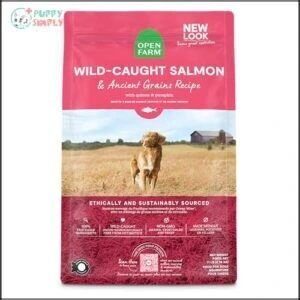
Open Farm takes transparency up a notch. Their Wild Salmon Ancient Grain kibble starts with wild-caught salmon — real, traceable, Ocean Wise-certified.
Ancient grains like oats, quinoa, and sorghum keep digestion smooth without the legume load that bothers sensitive stomachs.
Coconut oil and DHA-rich salmon oil boost coat shine and palatability.
No peas, no potatoes, no artificial anything.
$59.99 for 11 lbs, it’s a premium pick — but for finicky fish lovers, the aroma alone often does the convincing.
| Best For | Dogs with food sensitivities, allergies, or fish-loving pups who thrive on high-quality protein and clean, traceable ingredients. |
|---|---|
| Price | $59.99 |
| Primary Ingredient | Wild-Caught Salmon |
| Grain Free | No |
| Artificial Additives | None |
| Package Size | 11 lb bag |
| Joint Support | No |
| Additional Features |
|
- Wild-caught salmon as the first ingredient, with full traceability and third-party certification
- Free of peas, potatoes, and legumes — great for dogs with sensitive stomachs or common food allergies
- Omega-3s and DHA support a healthy coat, skin, and brain function
- At $59.99 for 11 lbs, it’s a pricier option that can add up fast — especially in multi-dog homes
- Contains wheat-based ingredients, so it’s not a fit for dogs with wheat or grain sensitivities
- Only available in an 11 lb bag, which means more frequent reorders for bigger dogs or households
9. ACANA Wild Atlantic Grain Free Dog Food
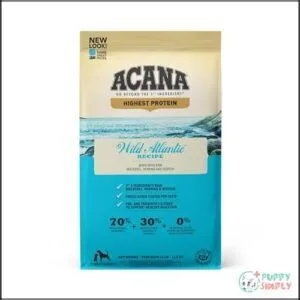
ACANA’s Wild Atlantic packs five whole fish — mackerel, herring, redfish, silver hake, and flounder — into a single grain-free formula. That’s 70% animal ingredients, no fillers, no shortcuts.
The freeze-dried cod liver coating makes it hard for even the pickiest noses to ignore. Probiotics and chicory root keep digestion steady.
It’s fish-forward all the way, so skip it if your dog has seafood sensitivities. At $108.99 for 25 lbs, it’s a commitment — but the protein profile and palatability make it worth considering.
| Best For | Dogs with chicken or meat allergies, active or working breeds, and owners who want a high-protein, fish-based diet without grains or fillers. |
|---|---|
| Price | $108.99 |
| Primary Ingredient | Whole Mackerel & Herring |
| Grain Free | Yes |
| Artificial Additives | None |
| Package Size | 25 lb bag |
| Joint Support | No |
| Additional Features |
|
- Five whole fish proteins with a freeze-dried cod liver coating that even picky eaters tend to love
- 70% animal ingredients plus probiotics and prebiotics for strong digestion and a healthier coat
- Free from corn, gluten, grains, soy, and potatoes — a solid pick for dogs with food sensitivities
- At $108.99 for 25 lbs, it’s one of the pricier options on the shelf
- The fish smell is strong — not everyone (human or dog) is on board with that
- Produced in a facility that also handles grains, so it’s not fully safe for dogs with severe grain allergies
10. Purina One True Instinct Dog Food
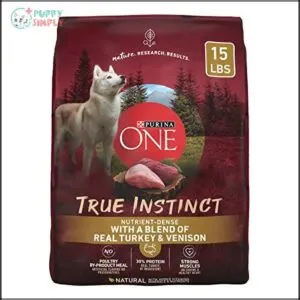
Purina ONE True Instinct puts real turkey first — and your picky dog will notice. The 30% protein formula helps lean muscle, with venison adding variety that keeps meals from feeling monotonous. Natural glucosamine from turkey and chicken meal helps joint health, which matters for active adults. Omega-6 fatty acids promote a healthy coat. No artificial flavors or preservatives.
At $32.28 for 15 lbs, it’s accessible without sacrificing quality. A solid everyday option for dogs who need a little convincing at the bowl.
| Best For | Active adult dogs who are picky eaters and need a high-protein, everyday kibble with joint support. |
|---|---|
| Price | $32.28 |
| Primary Ingredient | Turkey |
| Grain Free | No |
| Artificial Additives | Caramel color present |
| Package Size | 15 lb bag |
| Joint Support | Yes (natural glucosamine) |
| Additional Features |
|
- Real turkey leads the ingredient list with 30% protein to support lean muscle — great for active or working dogs.
- Natural glucosamine from turkey and chicken meal helps keep joints happy, especially for bigger breeds.
- No artificial flavors or preservatives, and picky dogs tend to actually eat it.
- Despite the "Allergen-Free" label, it contains corn, soy, and wheat — a real problem for dogs with grain sensitivities.
- Calorie count isn’t listed, so you’ll need to do a little math to avoid overfeeding.
- At $32.28 for 15 lbs, it’s pricier than basic dry foods, and some buyers have run into shipping hiccups.
Feeding Strategies to Encourage Picky Eaters

Sometimes the fix isn’t the food itself — it’s how you serve it. A few small changes to your routine can make a real difference for a dog who turns his nose up at every bowl.
Here are five feeding strategies worth trying.
Drizzling Broth or Toppers Over Kibble
A simple drizzle can turn a bowl of dry kibble into something your dog actually wants to eat. Warm bone broth for dog nutrition is real — the heat releases aroma, making palatability enhancement techniques easy to apply at home. Choose an allergen‑free broth with no onion, garlic, or xylitol.
Key tips for using toppers:
- Aroma Amplification: Warm broth slightly before pouring — never hot enough to burn
- Portion Control: Use a measuring spoon to track added calories daily
- Nutrient Boost: Choose collagen‑rich options for joint and gut support
- Shelf Life Management: Refrigerate opened broth and follow package use‑by dates
- Best dog food topper rule: Serve immediately after mixing to avoid sogginess
Adding Wet Food to Dry Kibble
Wet dog foods can be a significant benefit for picky eaters — but the mix matters.
Start with 1 to 2 tablespoons per meal, keeping the moisture ratio around 10–25% of total volume. Always adjust portions for calorie balance.
Watch stool consistency; loose stools mean slow down. Serve immediately for food safety timing and factor in reduced chewing for dental impact.
Warming Up Food or Moistening With Water
splash of warm water can flip a picky eater’s attitude fast. Water Temperature Control matters — warm water opens up aroma and softens dry kibble without cooking it further.
basic Soak Time Optimization: let it sit two to three minutes, then stir.
Stirring Technique Benefits include even moisture distribution so no dry pockets remain.
servings prompt. Warmed Food Safety means discarding anything uneaten.
Rotating Proteins Gradually to Maintain Interest
Think of protein rotation like a planned menu — your dog doesn’t want the same meal every day. A solid Protein Rotation Schedule introduces one new protein source over 5 to 7 days, starting at 25% new food.
Track Stool Consistency and keep Calorie Consistency steady throughout. This vet‑guided diet change reduces intolerance risks while delivering real Flavor Variety Benefits that keep picky eaters genuinely interested.
Hand-Feeding or Making Mealtime Engaging
Some dogs just need a little coaxing — and hand-feeding delivers that.
- Use Bite-Size Offering: one small piece, wait, then the next
- Apply a Warm Broth Cue to boost dog smell sensitivity and aroma
- Keep Hand Position Consistency at chest level so each motion feels safe
- Try a Clicker Prompt right before each bite for calm reinforcement
- Practice Calm Pre-Feeding — a settled dog eats better
How to Create a Positive Feeding Environment

What your dog eats matters, but so does where and when they eat. A chaotic or unpredictable feeding setup can quietly fuel picky behavior — even when the food itself is great.
Here are four simple environment changes that can make a real difference.
Establishing a Consistent Feeding Schedule
Your dog’s body runs on rhythm.
Fixed Meal Times — generally two per day for adults — anchor a natural hunger cycle that makes meals predictable and purposeful.
Pair that with Measured Portion Control and a Consistent Bowl Location, and you’re sending a clear Feeding Cue Routine your dog can trust.
Limit access with a 15–30 minute Feeding Window, then remove the bowl.
Consistency wins.
Choosing a Quiet, Low-Traffic Feeding Area
Rhythm sets the stage — but where your dog eats matters just as much as when.
A low noise corner, away from appliances and foot traffic, helps dog’s appetite stimulation naturally.
Place a non-slip mat under the bowl.
Set up a visual barrier in multi-pet homes.
Stick to a stable temperature spot.
A consistent separate feeding zone is creating a positive feeding environment in practice.
Using Exercise to Stimulate Appetite
A short pre-meal walk does more than burn energy — it shifts appetite-regulating hormones in your dog’s favor. Exercise intensity matters here. Light-to-moderate activity, not an exhausting run, helps dog appetite stimulation without suppressing it.
Recovery timing counts too. Wait until your dog has cooled down, then feed. Pair this with your feeding schedule consistently, and picky meals become less of a battle.
Avoiding Table Scraps and Bad Feeding Habits
Table scraps seem harmless, but they quietly rewire your dog’s expectations — and not in a good way. For picky eaters, this habit is especially damaging.
Three rules to follow:
- Never feed from your plate — it signals human food is fair game.
- Keep treats under 10% of daily calories to avoid Calorie Overload.
- Offer Healthy Treat Alternatives like carrot sticks or freeze-dried meat.
Feeding Discipline protects your vet-guided diet adjustment.
When Should You Talk to a Veterinarian?

Picky eating can sometimes be more than a preference — it can be a sign something’s off. If dog’s appetite doesn’t improve after a few days of trying different strategies, it’s time to loop in your vet.
Here are the key moments when a professional conversation can make all the difference.
Ruling Out Underlying Medical Conditions
Sometimes picky eating isn’t about preference — it’s a symptom.
A vet consultation can uncover hidden causes through targeted tests:
| Test | What It Checks |
|---|---|
| Thyroid Screening | Energy and appetite regulation |
| Kidney Function Tests | Toxin buildup causing nausea |
| Liver Enzyme Panel | Organ-related appetite suppression |
| Blood Glucose Monitoring | Diabetes-related eating changes |
| Neurologic Assessment | Swallowing or behavioral food aversion |
Dog allergy tests help identify food allergies in dogs — a common cause of picky eating behavior. Don’t guess. Test.
Getting Breed- and Age-Specific Diet Guidance
Every dog is different — and breed size and life stage shape what your dog actually needs to thrive.
A vet can match your dog’s diet to their biology:
- Puppy Growth — Higher protein and controlled calcium for steady development
- Senior Digestibility — Easier-to-process nutrients for slower metabolisms
- Calorie Requirements — Adjusted by activity level and Breed Size Portions
- Joint Nutrition — Glucosamine and omega-3s for large breeds
- Life stage specific dog food recommendations — From best small breed dog food to best large breed dog food
Veterinarian-guided diet selection removes the guesswork.
Transitioning to a New Diet Safely
Switching foods too fast is one of the most common mistakes owners make. Use gradual mix ratios over 7–14 days, increasing the new food slowly while maintaining calorie consistency throughout. Watch for loose stools — your signal to slow down. Track allergy symptoms, hydration monitoring, and supplement timing carefully. A pet nutritionist or vet makes veterinarian-guided diet selection straightforward.
| Switch Day | New Food Ratio |
|---|---|
| Days 1–3 | 25% new, 75% old |
| Days 4–6 | 50% new, 50% old |
| Days 7–9 | 75% new, 25% old |
| Days 10–12 | 90% new, 10% old |
| Days 13–14 | 100% new food |
Frequently Asked Questions (FAQs)
What is the best dog food for very picky dogs?
Think of your dog’s bowl as a flavor handshake — it has to feel right. The best picks combine high-quality protein, grain-free formulas, and customizable meal plans built for picky eaters.
What are the best tasting dog foods for picky eaters?
Fresh, lightly cooked meals with high moisture levels and real meat lead to palatability.
Dogs respond best to aroma enhancement from natural broths, texture contrast, and clean flavor pairings with transparent ingredients.
What are some safe vegetables for dogs to eat?
Some vegetables make great additions to your dog’s diet. Carrots offer crunch and Carrot Benefits without the guilt.
Green Bean Fiber aids digestion.
Practice Broccoli Moderation, Pea Portioning, and proper Sweet Potato Prep — always plain, cooked, and unseasoned.
How to choose dog food for a picky eater?
Selecting dog food for finicky eaters comes down to five things: ingredient transparency, aroma enhancement, texture variety, nutrient density, and allergen testing.
Match those to your dog’s needs, and mealtimes get easier.
What are the best dog food brands for picky eaters?
The best dog food brands for picky eaters combine ingredient transparency, veterinary endorsements, and strong price performance.
Top vet-recommended names include Hill’s, Royal Canin, Blue Buffalo, Purina Pro Plan, and Wellness Core.
What is the best dry dog food for picky eaters?
Orijen Original tops the list for dry dog food for picky eaters — grain-free, vet-recommended, with high-quality protein from named meats first.
Ingredient transparency and a strong Star Rating System make it easy to trust.
What should a dog eat if he is a picky dog?
Focus on Aroma Stimulation and Texture Variety. Warm, wet, or lightly cooked meals work best. Add broth for a Hydration Boost. Rotate proteins gradually and keep Calorie Control in mind.
What’s the best dog food for a picky dog?
Funny enough, the answer depends on your dog. For picky eaters, vet-approved picks with high-quality protein, grain-free formulas, and ingredient transparency tend to win — every time.
What is the most irresistible dog food?
The most irresistible dog food combines Scent Chemistry, Aroma Boosters, and Texture Variety — think real meat first, added fish oils as Flavor Enhancers, and high-quality protein that your dog can smell from across the room.
What is the best thing to feed a dog that won’t eat?
When a dog won’t eat, try warm fresh dog food or wet dog foods with strong aroma enhancement.
High-quality protein and sensory enrichment — like texture variety — usually win over even the stubbornest snout.
Conclusion
For picky eaters, "you can’t teach an old dog new tricks" isn’t always true. With patience and the right food, your furry friend can learn to love mealtime again.
Look for the best dog food for picky eaters that meets their nutritional needs and preferences.
By making informed choices and trying different feeding strategies, you can help your dog enjoy a healthy, happy life.
A balanced diet is just the beginning.
- https://food.maxbone.com/?utm_source=dogfoodadvisor&utm_medium=referral&utm_campaign=organic&utm_content=review
- https://thefarmersdog.otegtm.net/c/2442109/1640964/9488?subId3=best-dog-foods%2Fpicky-eaters_8iqJYeqe6UM6YArb63srBZq
- https://olliepets.sjv.io/c/2442109/1605208/12309?subId3=best-dog-foods%2Fpicky-eaters_8i6qoF2opeUpOlEPrsqB2eO
- https://www.akc.org/expert-advice/health/ibd-and-ibs-in-dogs/
- https://thepetstableus.pxf.io/c/2442109/3819352/41436?subId3=best-dog-foods%2Fpicky-eaters_8imBVPZqZmNAzYJqEO7ePsp