This site is supported by our readers. We may earn a commission, at no cost to you, if you purchase through links.

Your dog’s digestive system is trying to tell you something, and those signs—the gurgling stomach at 3 AM, the soft stool that never quite firms up, the meals pushed away untouched—aren’t just bad luck. Up to 70% of dogs experience digestive sensitivities at some point in their lives, yet many owners cycle through food after food without understanding what their dog’s gut actually needs.
The right sensitive stomach formula doesn’t just mask symptoms; it tackles the underlying issue by providing proteins your dog can break down efficiently, carbohydrates that won’t trigger inflammation, and nutrients that rebuild gut integrity. When you match your dog’s specific digestive challenges with the appropriate ingredients and formulation, you’ll see the difference in everything from stool consistency to energy levels, often within just a few weeks.
Table Of Contents
- Key Takeaways
- Signs Your Dog Has a Sensitive Stomach
- Key Ingredients for Sensitive Stomach Dog Food
- How to Choose The Right Sensitive Stomach Food
- Top 10 Dog Foods for Sensitive Stomachs
- 1. Honest Kitchen Grain Free Dog Food
- 2. JustFoodForDogs Balanced Remedy Dog Food
- 3. Open Farm Digestive Health Dog Food
- 4. Hill’s Digestive Care Dog Food
- 5. Dr Harvey’s Canine Health Dog Food
- 6. Dr Harvey’s Canine Health Dog Food Base Mix
- 7. Royal Canin Digestive Care Dog Food
- 8. Purina Pro Plan Sensitive Skin Dog Food
- 9. Purina One Digestive Health Dog Food
- 10. Purina One Sensitive Stomach Dog Food
- Tips for Managing Canine Digestive Health
- Frequently Asked Questions (FAQs)
- What food is best for dogs with sensitive stomachs?
- What dog food is least likely to cause diarrhea?
- What is the most digestible dry dog food?
- What is the difference between perfect digestion and sensitive stomach?
- How often should I feed my sensitive-stomach dog?
- Can exercise impact my dogs sensitive stomach?
- Are there any natural remedies for sensitive stomachs?
- How long does it take to see improvement?
- Can stress affect my dogs sensitive stomach?
- Can stress cause a sensitive stomach in dogs?
- Conclusion
Key Takeaways
- Digestive sensitivities affect up to 70% of dogs at some point, with symptoms like chronic vomiting, loose stools, flatulence, and skin irritation often pointing to food intolerances rather than just bad luck.
- The most effective sensitive stomach formulas combine easily digestible single-source proteins (like salmon, turkey, or lamb), gentle carbohydrates (rice, oatmeal, sweet potato), moderate fat content (12-16%), and added prebiotics or probiotics to rebuild gut integrity.
- Successful management requires veterinary consultation to rule out underlying disease, careful identification of trigger ingredients through limited ingredient diets, and a gradual 7-10 day transition period when switching foods to avoid overwhelming the digestive system.
- Long-term digestive health depends on consistent daily habits including eliminating table scraps, monitoring stool quality for early warning signs, maintaining regular vet checkups every 6-12 months, and supporting the gut microbiome with targeted probiotic supplementation.
Signs Your Dog Has a Sensitive Stomach
Your dog’s digestive system doesn’t always announce itself with a loud alarm, but once you know what to look for, the signs become pretty clear.
If you’re introducing new proteins like frozen chicken to your dog’s diet, watch for subtle shifts in stool consistency or energy levels during the transition period.
Some symptoms show up after nearly every meal, while others might appear only when your dog encounters a specific ingredient or experiences stress. Here are the most common indicators that your dog’s stomach needs some extra support.
If you notice vomiting, diarrhea, or lethargy after meals, it might be time to review what foods are safe for your dog and which ones could be causing digestive trouble.
Vomiting
Vomiting signals that your dog’s gut health isn’t cooperating with their current dog food. Watch for yellow bile on an empty stomach or foamy regurgitation after meals—both point to stomach inflammation and digestion issues.
If your dog shows stomach upset alongside skin irritation or paw licking, consider whether certain foods might be triggering both digestive and allergy symptoms.
Here’s what recurring vomit triggers mean:
- Chronic irritation from food ingredients your dog can’t tolerate
- Compromised digestive enzymes that struggle to break down proteins or fats
- Possible food poisoning or ongoing sensitivity requiring veterinary guidance
Don’t ignore patterns in dogs with sensitive stomachs. For an in-depth look at signs of stomach issues, consult expert veterinary resources.
Diarrhea or Loose Stool
Loose or runny bowel movements several times a week signal that your dog’s digestive enzymes aren’t handling their current dog food well. Stool consistency reveals gut inflammation, and you’ll notice mucus coating or bright red streaks when diarrhea persists.
If digestive upset continues, switching to a bland diet or gentler food option can help settle your dog’s stomach and restore normal stool consistency.
| Stool Sign | What It Means |
|---|---|
| Mucus coating | Colon irritation from diet |
| Bloody streaks | Inflamed lower digestive tract |
| Chronic loose stools | Poor nutrient absorption |
Adjusting fiber intake helps firm things up, but ongoing digestion issues demand veterinary attention before gastrointestinal health declines further. For a thorough overview of the , it’s important to consult reliable veterinary sources.
Flatulence
Beyond diarrhea, frequent gas signals that your dog’s digestive enzymes aren’t breaking down food properly, and the stronger-than-usual odor confirms incomplete digestion in the intestines. You’ll hear gurgling or rumbling as the gut struggles to process ingredients, and excessive flatulence often points to food intolerances specific to your dog.
Probiotics and stomach-soothing formulas improve gut health, offering flatulence remedies that support better gastrointestinal health overall.
Appetite Change
When your dog skips meals or hesitates at the bowl, food avoidance often signals that past eating habits have taught them to associate their dog food with stomach discomfort. Sensitive stomachs can disrupt meal frequency, leading to nutrient deficits as your dog eats less and absorbs fewer calories.
If you notice on-and-off reluctance paired with vomiting or loose stools, sensitive stomach issues may be interfering with digestive health and overall gut health.
Skin Irritation or Itching
Itchy skin and paw infections can reveal that the same food allergies disrupting your dog’s gut are also triggering skin inflammation and redness.
When food intolerances upset sensitive stomachs, they often spark recurrent ear redness, brown paw staining from constant licking, and dull coats, because chronic digestive upset interferes with nutrient absorption and irritation causes both gut and skin reactions.
Key Ingredients for Sensitive Stomach Dog Food
When you’re shopping for sensitive stomach dog food, the ingredient list matters more than the marketing claims on the front of the bag. Certain proteins, carbohydrates, and digestive aids can make the difference between ongoing stomach issues and a happy, settled gut.
Let’s look at the key ingredients that veterinary nutritionists recommend for dogs with digestive sensitivities.
Easily Digestible Protein Sources

When your dog’s stomach struggles with most commercial kibbles, the protein source often sits at the heart of the problem.
Single animal proteins like turkey, salmon, or lamb contain fewer digestive enzymes to break down, making them gentler on sensitive stomachs than mixed meat meals.
If you notice unusual white specks in your dog’s poop that aren’t moving or worms, it could signal a digestion issue related to their protein source.
Novel proteins such as venison or duck can improve gut health by avoiding common triggers like beef or chicken that frequently cause protein sensitivity in dog nutrition.
Gentle Carbohydrates (Rice, Oatmeal, Sweet Potato)

Carb sources in sensitive stomach dog food do more than fill your pup’s bowl—they provide steady energy without overwhelming the gut. White rice breaks down quickly and leaves little residue, while oatmeal and sweet potato offer gentle fiber that aids normal stool formation. These digestive aids are naturally gluten-free, making them ideal gut soothers for dogs with food sensitivities.
- White rice delivers fast energy with minimal digestive strain, perfect for calming upset stomachs
- Oatmeal provides soluble fiber that helps firm loose stools while promoting gut health
- Sweet potato offers beta-carotene and potassium in a highly digestible, starch-rich package
Fiber Sources (Pumpkin, Beet Pulp)

Fiber might seem like a minor detail, but it plays a starring role in managing sensitive stomach issues. Pumpkin delivers soluble fiber that firms loose stools and helps regular bowel movements, while beet pulp feeds beneficial gut bacteria without causing excess gas.
These fiber sources work gently—pumpkin nutrition calms digestive upset, and beet pulp maintains stool quality, making both essential for dogs with touchy tummies.
Added Prebiotics and Probiotics

Your dog’s gut microbiome needs backup, and that’s where prebiotics and probiotics step in. These gut health champions support microbiome balance and offer real probiotic benefits for sensitive stomachs.
- Prebiotics like chicory root and inulin feed beneficial bacteria
- Probiotics such as Lactobacillus strains reduce diarrhea and gas
- Some formulas add digestive enzymes to improve nutrient absorption
- Prebiotic sources work alongside probiotics for complete digestive health support
Low to Moderate Fat Content

Too much fat can trigger vomiting and diarrhea in dogs prone to sensitive stomach issues, so moderate fat diets make sense for digestive health. Fat content management helps prevent digestive fat sensitivity while still delivering needed calories through low fat recipes.
| Fat Level | Protein Source Examples | Best For |
|---|---|---|
| Low (8–12%) | White fish, turkey breast | Severe pancreatitis history |
| Moderate (12–16%) | Salmon, chicken meal | General sensitive stomachs |
| Controlled (16–18%) | Lamb meal, whole eggs | Active dogs needing energy |
| Higher (18%+) | Beef, pork | Usually avoided in sensitive formulas |
Fat reduction strategies include choosing lean proteins and adding omega-3s from fish oil for anti-inflammatory benefits without overwhelming your dog’s system.
How to Choose The Right Sensitive Stomach Food

Choosing the right sensitive stomach food isn’t about picking the most expensive bag on the shelf—it’s about understanding your dog’s specific needs and making informed decisions with your vet’s guidance.
You’ll need to think about everything from identifying problematic ingredients to ensuring the food matches your dog’s life stage, all while planning a careful switch that won’t upset their already-delicate digestion. Here’s what you should focus on when selecting a food that’ll actually help your pup feel better.
Consulting a Veterinarian
Before you choose any dog food, schedule a vet visit to rule out underlying disease and get nutrition advice suited to your dog’s medical history. Your vet can guide you through diagnostic tests that identify whether parasites, inflammation, or organ problems are behind those sensitive stomachs. Together, you’ll build a plan that meets your dog’s specific needs, not just symptoms.
- Bring a complete list of current foods, treats, and supplements
- Share a two to four week log of vomiting, diarrhea, and stool changes
- Discuss diagnostic tests like fecal exams, blood work, or imaging
- Ask about veterinary therapeutic diets or novel protein trials
Identifying and Avoiding Trigger Ingredients
Once your vet confirms that diet is the culprit, you’ll need to read ingredient labels like a detective hunting for food allergens.
Beef, chicken, dairy, and wheat are common trigger proteins that show up under multiple names, so scan for chicken meal, whey, or beef by-product. Limited ingredient diets and novel protein options—venison, duck, certain fish—reduce exposure and support digestive health while probiotics rebuild gut health.
Selecting Life Stage Appropriate Food
After identifying triggers, you can’t ignore life stage when picking sensitive stomach dog food—puppy nutrition demands higher protein and calories for growth, adult diets focus on maintenance with moderate nutrient balance, and senior needs drop calories while preserving digestible protein. Mismatched formulas strain digestion and worsen symptoms, so:
- Puppies require at least 22% protein for tissue development
- Adults need roughly 18% protein for weight maintenance
- Seniors benefit from lower calories with higher-quality protein sources
Always verify the label confirms complete and balanced for your dog’s current stage.
Transitioning to a New Dog Food
Once you’ve picked the right formula for your dog’s dietary needs, you can’t just dump a new bag into the bowl and hope for the best—abrupt changes overwhelm sensitive stomachs and trigger the exact symptoms you’re trying to avoid. A gradual switching approach over 7 to 10 days lets gut bacteria adjust to different proteins and carbohydrates without causing vomiting or diarrhea.
| Days | Old Food | New Food |
|---|---|---|
| 1–3 | 75% | 25% |
| 4–6 | 50% | 50% |
| 7–10 | 25% | 75% |
Watch each stool for changes in firmness, color, or mucus during dietary changes, because soft or watery output signals you’re moving too fast. If vomiting appears more than twice in 24 hours or diarrhea lasts beyond 48 hours, pause the food trials and call your vet—persistent symptoms mean the new formula isn’t working for that individual dog. Keep total daily calories steady while adjusting the ratio to prevent overfeeding, which worsens gas and loose stool during sensitive stomach dietary management.
Some dogs with fragile digestive health handle the shift better when you add a canine probiotic to support gut health throughout the process. Avoid table scraps and rich treats while your dog adjusts, and maintain consistent feeding times to reduce stress on the system.
Top 10 Dog Foods for Sensitive Stomachs
After you’ve consulted with your vet and identified what your dog needs, the next step is finding a formula that actually delivers.
The options below represent a range of approaches to sensitive stomach support, from limited ingredient recipes to veterinary-backed formulas with added probiotics. Each one brings something different to the table, so you can match your dog’s specific digestive needs with the right nutritional profile.
1. Honest Kitchen Grain Free Dog Food
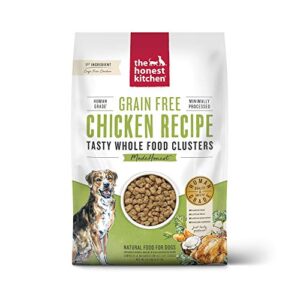
Honest Kitchen Grain Free dog food stands out because it’s made with 100 percent human-grade ingredients in U.S. facilities, not feed-grade plants. If your dog struggles with food allergies or sensitive stomachs, these dehydrated recipes use real meats like chicken or turkey instead of meat meals, which promotes better digestive health.
The grain-free formulas exclude common triggers such as corn, wheat, and soy, while meeting AAFCO nutrient profiles for complete nutrition. You’ll appreciate that the gentle dehydration process preserves nutrients while creating digestive comfort for dogs prone to upset.
| Best For | Dog owners looking for human-grade, gentle nutrition for pets with sensitive stomachs, food allergies, or digestive issues who want to avoid common fillers and artificial additives. |
|---|---|
| Brand | The Honest Kitchen |
| Primary Protein | Chicken |
| Form | Dry |
| Age Range | Adult |
| Weight | 20.3 lbs |
| Special Ingredients | Probiotics |
| Additional Features |
|
- Made with 100% human-grade ingredients in U.S. facilities using real meats instead of meat meals for better digestibility
- Free from common allergens like corn, wheat, soy, and artificial preservatives that often trigger stomach upset
- Dehydrated recipes preserve nutrients while creating an easy-to-digest, customizable texture when rehydrated with water
- More expensive than conventional dog food options, which may not fit every budget
- Requires preparation time to rehydrate the food with warm water before serving
- Some dogs may lose interest in the food over time, and packaging issues like torn bags have been reported
2. JustFoodForDogs Balanced Remedy Dog Food
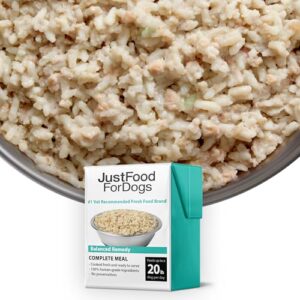
JustFoodForDogs Balanced Remedy offers a low residue diet that veterinarians often recommend for dogs recovering from gastrointestinal upset or managing chronic digestive health issues. This formula relies on gentle ingredients like ground turkey breast and white rice, keeping the crude fat content between 1 and 4 percent for sensitive stomachs prone to pancreatitis.
You’ll find digestive enzymes aren’t listed, but the nutrient balance includes added vitamins and minerals that plain homemade diets lack. The human-grade preparation and low fiber design support gut health while reducing stool volume in dogs needing ongoing veterinary advice and digestive support.
| Best For | Dogs with sensitive stomachs, pancreatitis, or chronic digestive issues who need a gentle, low-fat maintenance diet that’s more complete than homemade bland food. |
|---|---|
| Brand | JustFoodForDogs |
| Primary Protein | Turkey |
| Form | Pate |
| Age Range | Adult |
| Weight | 12.5 oz |
| Special Ingredients | Fresh Whole Foods |
| Additional Features |
|
- Low residue formula with single protein (turkey) and simple rice base reduces digestive stress and stool volume
- Human-grade ingredients with added vitamins and minerals make it nutritionally complete, unlike plain boiled chicken and rice
- Shelf-stable Pantry Fresh option stays good for up to two years unopened, making it convenient for travel or emergency use
- Significantly more expensive than standard dog food or homemade bland diets
- Some customers report quality control issues like inconsistent ingredient distribution in packages
- Packaging sizes may vary from in-store options, and the premium price can strain budgets for long-term feeding
3. Open Farm Digestive Health Dog Food
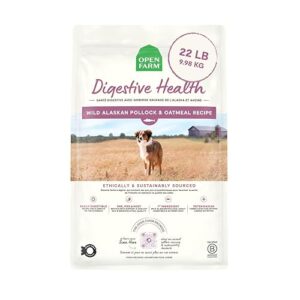
Open Farm Digestive Health Dog Food centers on wild Alaskan pollock, a lean protein choice that delivers pollock benefits through easy digestion and natural omega-3s for gut health. You’ll appreciate the oatmeal value here, as this soluble fiber helps firm loose stools without overloading sensitive stomachs.
The formula includes Bacillus coagulans probiotics at 200 million CFU per pound, supporting probiotic effects that balance your dog’s microbiome. Fish oil and prebiotic fiber work together to reduce gas and inflammation, making this veterinarian-formulated dog food a practical option when digestive health matters most.
| Best For | Dogs with sensitive stomachs, chronic digestive issues, or food intolerances who need a gentle, fish-based formula that supports gut health and firmer stools. |
|---|---|
| Brand | Open Farm |
| Primary Protein | Pollock |
| Form | Pellet |
| Age Range | Adult |
| Weight | 21.9 lbs |
| Special Ingredients | Pre/Pro/Postbiotics |
| Additional Features |
|
- Wild Alaskan pollock delivers lean, easily digestible protein with natural omega-3s that reduce inflammation and support a healthy gut lining
- Oatmeal and prebiotic fiber regulate stool consistency while 200 million CFU probiotics balance the microbiome to reduce gas and bloating
- 100% traceable ingredients with no corn, wheat, soy, or artificial additives make it safer for dogs with common food sensitivities
- Expensive compared to standard kibble, which may strain budgets for owners of larger dogs or multi-dog households
- Strong fishy smell can be off-putting for some owners and may not appeal to picky eaters who dislike seafood flavors
- Some dogs experience upset stomachs or refuse to eat it despite the sensitive formula, showing it doesn’t work for every pet
4. Hill’s Digestive Care Dog Food
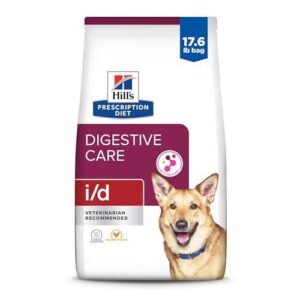
Hill’s Prescription Diet i/d Digestive Care stands out because it combines highly digestible Hills Ingredients with ActivBiome+ prebiotic fiber to target gut health at the microbiome level. You’ll find this veterinary formula helpful for food allergies and gastrointestinal problems, since it’s formulated to ease nutrient absorption while supporting digestive enzymes your dog needs.
The recipe balances protein, fat, and added B vitamins to maintain nutrient balance in sensitive stomachs, and clinical studies back its ability to settle upset digestive health within days when dog food transitions matter most.
| Best For | Adult dogs with sensitive stomachs, chronic digestive issues, or recovery from gastrointestinal upset who need veterinarian-supervised nutrition. |
|---|---|
| Brand | Hill’s Prescription Diet |
| Primary Protein | Chicken |
| Form | Dry |
| Age Range | Adult |
| Weight | 17.6 lbs |
| Special Ingredients | ActivBiome+ |
| Additional Features |
|
- ActivBiome prebiotic blend targets gut bacteria directly to improve stool quality and digestive comfort fast
- Highly digestible formula with added B vitamins and electrolytes makes nutrient absorption easier for compromised systems
- Multiple options (standard, low fat, different kibble sizes) let vets match the exact recipe to your dog’s specific GI needs
- Requires a vet prescription, so you can’t just grab it off the shelf when you need it
- Bags can go bad within 2-3 weeks after opening if storage isn’t airtight and careful
- Some dogs won’t touch the taste or texture without mixing in toppers or other foods to make it appealing
5. Dr Harvey’s Canine Health Dog Food
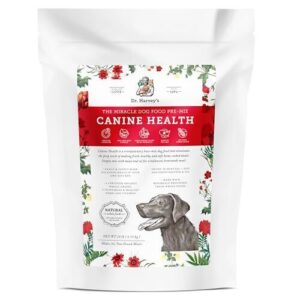
Dr Harvey’s Canine Health Dog Food lets you take control of exactly what your dog eats, which is invaluable when you’re managing sensitive stomachs. This dehydrated food combines whole food ingredients like rolled oats, barley, and nine vegetables with the protein you cook and add yourself, creating a customizable diet that promotes gentle digestion.
You’ll rehydrate the mix with warm water, then stir in lean meat and oil for complete homemade nutrition that many owners report firms loose stools within days while aiding overall canine health and wellness.
| Best For | Dog owners who want full control over ingredients and protein sources to address digestive issues, food sensitivities, or allergies in their pets. |
|---|---|
| Brand | The Honest Kitchen |
| Primary Protein | User’s Choice |
| Form | Dehydrated |
| Age Range | All Life Stages |
| Weight | 10 lbs |
| Special Ingredients | 9 Vegetables, 6 Grains |
| Additional Features |
|
- You choose and cook the protein yourself, so you can customize meals for dogs with specific allergies or weight goals
- Many owners report firmer stools and resolved digestive issues within days of switching to this whole-food mix
- No fillers, artificial preservatives, or synthetic ingredients—just dehydrated vegetables, grains, and seeds you rehydrate at home
- Requires meal prep time to cook protein, rehydrate the mix, and add oil before every feeding
- More expensive per serving than traditional kibble, especially when factoring in fresh meat costs
- Not a complete meal on its own—you must add the right protein and oil portions to meet your dog’s nutritional needs
6. Dr Harvey’s Canine Health Dog Food Base Mix
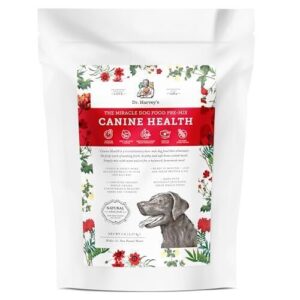
If you want complete control over what goes into your dog’s bowl, Dr Harvey’s Canine Health Dog Food Base Mix offers that flexibility for sensitive stomachs. This dehydrated blend of six organic grains and nine vegetables provides the foundation while you add your choice of protein and oil, creating customization options that help you pinpoint which ingredients support your dog’s gut health.
The gentle carbohydrates like oats and sweet potato rehydrate quickly, and pairing them with lean meats delivers nutrient balance suited to your dog’s specific sensitivities.
| Best For | Dog owners who want to tailor every ingredient in their dog’s meals and are willing to invest time in preparing fresh food for pets with sensitive stomachs or specific protein intolerances. |
|---|---|
| Brand | The Honest Kitchen |
| Primary Protein | User’s Choice |
| Form | Dehydrated |
| Age Range | All Life Stages |
| Weight | 5 lbs |
| Special Ingredients | 9 Vegetables, 6 Grains |
| Additional Features |
|
- Lets you choose and rotate proteins freely, so you can avoid triggers and keep meals interesting for picky eaters
- Contains gentle, organic grains and nine vegetables that rehydrate easily and provide natural fiber to support digestion
- Free from artificial preservatives, dyes, and fillers that can irritate sensitive stomachs
- Requires you to source, prepare, and add your own protein and oil at every meal, which takes more effort than scooping kibble
- Can cost more per serving than standard dry food, especially when factoring in quality meat and oils
- Some dogs may resist the texture or taste initially and need a gradual transition with broth or flavor boosters
7. Royal Canin Digestive Care Dog Food
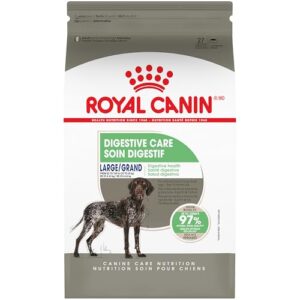
Royal Canin Digestive Care Dog Food targets sensitive stomachs with a blend of highly digestible proteins, prebiotics, and fibers that work together to support gut balance and firm up loose stools. Clinical data shows 92 percent of dogs on this formula achieve ideal stool quality, which translates to fewer digestive issues and easier cleanup for you.
The formula comes in both dry kibble suited to your dog’s size and a loaf-in-sauce wet option, delivering probiotic benefits that maintain healthy gut flora while addressing common digestive health concerns in adult dogs.
| Best For | Large and small breed adult dogs with sensitive stomachs who experience frequent loose stools or mild digestive upset. |
|---|---|
| Brand | Royal Canin |
| Primary Protein | Highly Digestible Proteins |
| Form | Pellet |
| Age Range | Adult |
| Weight | 30 lbs |
| Special Ingredients | Prebiotics & Fibers |
| Additional Features |
|
- Clinical results show 92% of dogs achieve optimal stool quality, making cleanup easier and reducing digestive discomfort
- Available in size-specific dry kibble and wet loaf options that can be fed alone or mixed together for picky eaters
- Prebiotic and fiber blend supports healthy gut bacteria without requiring a prescription diet
- Higher price point compared to standard dog food brands
- Some dogs won’t eat the dry kibble unless it’s mixed with the wet formula
- Limited availability in certain stores like Petco, which can make restocking difficult
8. Purina Pro Plan Sensitive Skin Dog Food
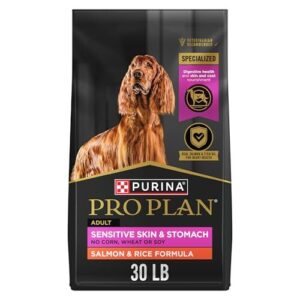
Purina Pro Plan Sensitive Skin & Stomach Formula pairs salmon as the first ingredient with oat meal and rice, creating a gentle carb-protein blend that calms digestive upset while addressing food allergies tied to common proteins like chicken or beef.
The guaranteed live probiotics support gut health alongside prebiotic fiber from chicory root, and you’ll notice omega-6 from sunflower oil helps reduce the itchy skin that often accompanies sensitive stomachs.
Available in both adult and large-breed puppy versions, this formula gives you life-stage flexibility without sacrificing digestive support.
| Best For | Dogs with sensitive stomachs or skin issues who need a high-protein formula that avoids common allergens like chicken, beef, corn, wheat, and soy. |
|---|---|
| Brand | Purina Pro Plan |
| Primary Protein | Salmon |
| Form | Dry |
| Age Range | Adult |
| Weight | 30 lbs |
| Special Ingredients | Live Probiotics |
| Additional Features |
|
- Real salmon as the first ingredient delivers quality protein while reducing allergy triggers, plus guaranteed live probiotics and prebiotic fiber work together to support gut health
- Omega-6 fatty acids from sunflower oil and omega-3s from fish oil target the skin-and-stomach connection, helping reduce itching, flakiness, and digestive upset at the same time
- Life-stage options from large-breed puppy to senior formulas mean you can stick with a trusted sensitive-system brand as your dog ages
- The $77.48 price tag for a 30 lb. bag runs higher than standard dog foods, which adds up over time for multi-dog households or larger breeds
- Some users have reported quality control problems including bugs in the food, raising concerns about consistency from batch to batch
- Environmental allergies like pollen or dust may still cause skin issues even when food allergies are addressed, so this won’t solve every itching problem
9. Purina One Digestive Health Dog Food
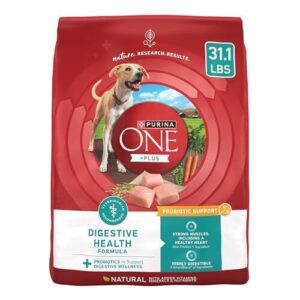
If you’re watching your budget without sacrificing digestive support, Purina One Plus Digestive Health offers real chicken as the first ingredient alongside rice flour, whole grain corn, and oat meal to create a highly digestible nutrient balance your dog’s sensitive stomach can handle.
The added Bacillus coagulans probiotic aids gut wellness, while prebiotic fiber helps firm loose stools tied to food allergies or digestive issues. You’ll find omega-6 fatty acids for skin health and a complete antioxidant blend, making this formula a practical step up from basic kibble without the Purina Pro Plan price tag.
| Best For | Dog owners looking for affordable digestive support that combines probiotics, prebiotic fiber, and real chicken to manage sensitive stomachs without stepping up to premium-priced formulas. |
|---|---|
| Brand | Purina ONE |
| Primary Protein | Chicken |
| Form | Chunk |
| Age Range | Adult |
| Weight | 31.1 lbs |
| Special Ingredients | Probiotics |
| Additional Features |
|
- Real chicken listed first with added Bacillus coagulans probiotic to support gut health and firm up loose stools
- Includes omega-6 fatty acids and a four-antioxidant blend (vitamins E, A, zinc, selenium) for skin, coat, and immune support
- No artificial flavors or preservatives, made in U.S. Purina facilities at a more accessible price point than Pro Plan
- Contains chicken by-product meal, corn, and wheat, which may not suit dogs with grain sensitivities or specific protein allergies
- Some customers report delivery issues and inconsistent product availability
- Feeding guidelines are general averages—you’ll need to monitor your dog’s weight and adjust portions based on activity level and metabolism
10. Purina One Sensitive Stomach Dog Food
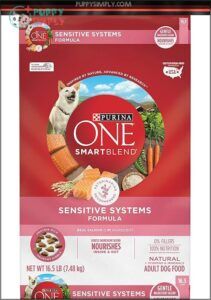
For dogs needing even simpler formulation, Purina One uses real salmon as the first ingredient instead of chicken, which works well if poultry triggers your dog’s food allergies. This formula skips corn, wheat, and soy while delivering omega-6 fatty acids for skin health and natural glucosamine for joints.
The blend aids sensitive stomachs with gentle carbohydrates and balanced fat, making it a reliable choice when gut health matters but you don’t need prescription-level intervention.
| Best For | Dogs with sensitive stomachs or poultry allergies who need a salmon-based formula that supports digestive health without prescription-level intervention. |
|---|---|
| Brand | Purina ONE |
| Primary Protein | Salmon |
| Form | Dry |
| Age Range | Adult |
| Weight | 16.5 lbs |
| Special Ingredients | Antioxidants |
| Additional Features |
|
- Real salmon as the first ingredient provides an alternative protein source for dogs with chicken sensitivities
- Omega-6 fatty acids and natural glucosamine support both skin health and joint function in one formula
- Free from corn, wheat, and soy, making it easier on sensitive digestive systems
- Contains some by-products and grains that may not suit dogs on strict grain-free diets
- Kibble size may not work for all dog breeds and preferences
- Amazon pricing can be inconsistent and sometimes higher than local pet stores
Tips for Managing Canine Digestive Health

Finding the right food is just the first step—managing habits and smart choices take consistent daily effort. You’ll need to pay attention to what goes into their bowl, how you introduce new foods, and when to check in with your vet.
Here are five practical strategies that can make a real difference in keeping your dog’s digestion on track.
Eliminating Table Scraps and Unnecessary Treats
Table Scrap Dangers can wreak havoc on your dog’s gut health, especially when rich leftovers like gravy or bacon trigger vomiting and diarrhea in sensitive stomachs. Treat Portion Control and Calorie Management matter too—your dog’s extras should stay under 10 percent of daily intake.
Here’s how to protect digestive wellness:
- Skip fatty table scraps that cause pancreatitis
- Use kibble portions as Healthy Snack Alternatives
- Avoid Sensitive Stomach Triggers hidden in human food
- Measure treats by calories, not just pieces
Proper Dietary Management promotes long-term Gut Health.
Monitoring Stool Quality and Behavior
Your dog’s bathroom routine offers powerful Gut Health Indicators, so daily Fecal Matter Examination pays off when managing Sensitive Stomachs. Healthy stools are brown, log-shaped, and firm—not hard pellets or watery puddles.
Watch for mucus, undigested food, or sudden Diarrhea alongside Vomiting, since these Digestive Issue Signs warrant quick action. Stool Color Analysis, paired with noting your dog’s Canine Defecation Habits, helps you catch Digestive Issues early and aids effective Gut Health and Probiotics strategies.
Gradual Diet Transitions
Switching your dog’s food overnight often backfires, especially with Sensitive Stomachs, so smart phasing timing matters.
Most vets recommend a seven to ten day Diet Phasing schedule, starting with 25 percent new food mixed into the old, then increasing by 25 percent every few days.
This gentle approach aids Gut Health, helps prevent Digestive Issues, and gives beneficial Probiotics time to adjust.
Regular Veterinary Checkups
Even with perfect Dog Food, your vet remains your strongest ally in managing Sensitive Stomachs and Canine Health and Wellness. Routine Vet Visit Schedules give professionals time for Health Monitoring, Symptom Tracking, and Diet Adjustments based on what they observe during physical exams.
Smart Checkup Frequency patterns include:
- Every six to twelve months for stable adult dogs on maintenance diets
- Every three to six months for seniors or dogs with chronic digestive concerns
- Prompt visits when vomiting, diarrhea, or appetite changes persist beyond two days
These touchpoints guarantee Veterinary Care and Advice stays current with your dog’s evolving needs.
Supporting Gut Health With Probiotics
A balanced Gut Microbiome transforms Digestive Enzymes and nutrient absorption in ways standard food can’t achieve alone.
Probiotics deliver colony forming units that support Immune Support and calm Sensitive Stomachs, with strains like Enterococcus faecium reducing diarrhea episodes.
Probiotic Supplements offering 2–3 billion CFU daily for medium dogs help maintain Gut Health and overall Canine Health and Wellness, especially when combined with prebiotic fibers.
Frequently Asked Questions (FAQs)
What food is best for dogs with sensitive stomachs?
Many veterinarians recommend formulas featuring single-source proteins like salmon or turkey paired with easily digestible carbohydrates such as rice or oatmeal, since these combinations reduce exposure to multiple potential allergens while supporting better nutrient absorption.
What dog food is least likely to cause diarrhea?
Dog foods least likely to cause diarrhea feature high digestibility—often exceeding 87 percent protein digestibility—plus lean proteins like chicken or turkey, gentle carbs such as white rice, and moderate fat levels to reduce intestinal strain.
What is the most digestible dry dog food?
Highly digestible dry dog food usually features simple animal proteins like chicken or salmon paired with gentle grains such as rice, along with prebiotics and probiotics that support gut health and nutrient absorption.
What is the difference between perfect digestion and sensitive stomach?
Perfect digestive health means your dog processes food smoothly, with firm stools and no discomfort, while sensitive stomachs react to certain ingredients with loose stools, gas, or intermittent vomiting.
How often should I feed my sensitive-stomach dog?
Most adult dogs with sensitive stomachs thrive on two smaller meals daily, spaced 8 to 12 hours apart.
Though puppies often need three to four portions because their developing digestive systems handle frequent, modest servings better.
Can exercise impact my dogs sensitive stomach?
Yes, exercise timing, intensity, and stress levels directly affect gut motility and digestive pace in dogs.
Vigorous activity after meals can trigger vomiting or stomach strain, while steady routines support better digestive function.
Are there any natural remedies for sensitive stomachs?
Several natural remedies can support gut health when digestive issues appear.
Probiotic supplements, herbal remedies like slippery elm, and natural fiber from pumpkin help ease food intolerance, though homemade diets require veterinary guidance for completeness.
How long does it take to see improvement?
Most dogs show digestive relief within 24 to 48 hours after starting a gentle sensitive stomach food, though skin irritation or chronic gut healing may take 4 to 12 weeks of consistent diet control.
Can stress affect my dogs sensitive stomach?
Emotional triggers like travel or routine changes can absolutely worsen digestive symptoms in your dog through stress colitis, raising gut inflammation and causing diarrhea.
Calming techniques and predictable routines help protect sensitive stomachs.
Can stress cause a sensitive stomach in dogs?
When your dog faces boarding, travel, or loud noises, the fight or flight response diverts blood from the gut, slowing digestion and triggering diarrhea, vomiting, or gas in anxious pets.
Conclusion
Think of your dog’s gut as a gut garden that’s been overrun with weeds—you can’t just trim the surface and expect lasting change.
The best dog food for sensitive stomach works like rich soil, nourishing from the roots up. By selecting proteins your dog digests easily, incorporating gut-supporting nutrients, and maintaining consistency through transitions, you’re not managing symptoms—you’re rebuilding digestive resilience that transforms daily comfort and long-term health.
- https://www.forbes.com/sites/forbes-personal-shopper/article/best-dog-foods-for-sensitive-stomachs/
- https://vetslovepets.com.au/collections/dog-food-for-sensitive-stomachs
- https://www.diamondpet.com/dog/diamond-care/sensitive-stomach/
- https://www.petmd.com/dog/vet-verified/best-dog-food
- https://www.akc.org/expert-advice/nutrition/best-dog-food-sensitive-stomachs/