This site is supported by our readers. We may earn a commission, at no cost to you, if you purchase through links.

Your dog’s breath shouldn’t clear a room, but periodontal disease affects roughly 80% of dogs by age three, turning dental health into one of the most overlooked aspects of canine care.
The good news is that the best dog dental chews can markedly reduce plaque and tartar buildup between professional cleanings, acting as a convenient daily defense against bacteria that threaten not just your dog’s teeth but their heart, liver, and kidneys.
Not all chews deliver on their promises, though—some lack proven efficacy, while others pose choking risks or pack unnecessary calories that contribute to weight gain. Understanding which products combine safety, effectiveness, and quality ingredients helps you make an informed choice that protects your dog’s smile and extends their healthier years.
Table Of Contents
Key Takeaways
- Look for the VOHC Seal of Acceptance on dental chews—it’s the only independent verification that a product actually reduces plaque or tartar through controlled clinical trials, not just marketing claims.
- Match chew size and texture to your dog’s jaw using the thumbnail test: if you can’t indent the surface with your nail, it’s too hard and risks fracturing teeth during chewing.
- Dental chews can pack 60–128 calories per piece, often exceeding the 10 percent daily treat guideline, so you’ll need to reduce meal portions proportionally to prevent weight gain.
- While VOHC-approved chews reduce plaque by 12–40 percent and tartar by 20–70 percent between cleanings, they can’t replace professional veterinary scaling that removes deposits below the gumline.
What Makes a Good Dog Dental Chew
Not all dental chews are created equal, and the difference between a helpful product and a risky one often comes down to a few key factors.
If you’re considering rawhide specifically, knowing which types of rawhide are safest for dogs can help you avoid common choking or digestive hazards.
You’ll want to look beyond clever marketing and focus on what veterinary science actually tells us works.
Here’s what separates effective, safe dental chews from the rest of the pack.
The best dental chews for dogs combine texture, size, and ingredients that actually reduce plaque while keeping your pup interested.
VOHC Seal of Acceptance

When you’re picking dental chews, look for the VOHC Seal of Acceptance—it’s your benchmark. The Veterinary Oral Health Council only awards this seal to products that prove they can reduce plaque or tartar in controlled clinical trials, not just marketing fluff.
Products that earn this certification have been clinically proven to support oral health, and many of the best options are formulated as part of dental-focused dog food diets.
You’ll find it on packaging for chews that actually work, giving you confidence you’re supporting your dog’s oral health with something backed by real evidence. Checking for VOHC approved products can help you make an informed decision.
Ingredient Quality and Safety

Beyond that VOHC seal, scrutinize the ingredient list—it’s where dental chews can go wrong. Skip products listing vague “meat by-products” or synthetic preservatives like BHA, BHT, and ethoxyquin, which toxicology studies have linked to liver damage and cancer risk in lab animals.
Instead, look for natural ingredients with named proteins (chicken meal, not just “poultry”), avoiding artificial colors that serve you, not your dog’s oral health.
When selecting dental chews, consider the importance of daily oral care for your dog.
Size and Consistency for Safety

Once you’ve nailed down quality ingredients, match the chew’s size and consistency to your dog’s mouth and chewing strength—a mismatch is where choking risks spike. Veterinary dentists use a simple thumbnail test: if you can’t indent the surface, it’s too hard and risks tooth fractures during dental abrasion.
Match chew size and texture to your dog’s jaw—if you can’t dent it with your thumbnail, it’s too hard and risks fracturing teeth
- Right-sized chews prevent safe consumption from turning into airway obstruction—choose one larger than your dog’s mouth opening
- Firm-but-flexible texture allows controlled dental abrasion without sudden chew fragmentation into sharp pieces
- Gradual wear patterns signal proper fragment control, so inspect regularly and toss small, thin remnants before gulping happens
- VOHC-approved options balance durability with safety, giving you confidence in both plaque reduction and canine oral health protection
Calorie Content and Nutritional Value

A safe chew can still sabotage dental health if it packs more calories than your dog’s energy requirements allow—many treats contribute 80 to 128 kilocalories per piece, pushing well past the 10 percent daily treat guideline. Check the macronutrient profiles on the label: high-protein, low-fat options preserve nutrient balance without stacking unnecessary caloric intake, so you can protect both canine dental health and your pup’s waistline.
Dentastix and similar chews align with this approach by delivering a satisfying crunch at roughly 60–90 calories per stick, though you can learn more about balancing treat routines and overall wellness in guides like how to maintain a healthy grooming and care schedule for active breeds.
| Dog Weight | Calories per Chew | % of Daily Intake | Recommendation |
|---|---|---|---|
| 10–24 lbs | 48 kcal | ~8% | One chew fits dietary needs |
| 25–50 lbs | 81 kcal | ~8% | Adjust meal portions slightly |
| 50+ lbs | 128 kcal | ~13% | Exceeds 10% guideline—reduce food |
| Small breeds | 27 kcal | ~5% | Safe daily addition to dog nutrition and diet |
Chew Shape and Cleaning Effectiveness
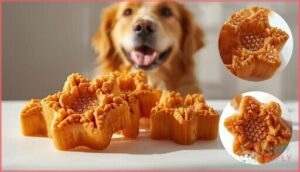
Star-shaped and honeycomb geometries turn ordinary dental chews into scrubbers that reach between teeth, delivering up to 30 percent tartar reduction through surface texture alone.
Ridges and nubs increase dental abrasion during prolonged chewing, mechanically removing plaque from gumlines and hard-to-reach surfaces—proof that chew shape directly controls tooth contact time and plaque removal effectiveness in daily dog dental care routines.
Benefits of Dental Chews for Dogs
Dental chews do more than just keep your dog busy—they’re working hard to protect your pet’s mouth from the kinds of problems that can lead to pain, infection, and even tooth loss down the road. When you choose the right product and use it consistently, you’re giving your dog a real advantage in the fight against plaque buildup and gum disease.
Here’s what quality dental chews can do for your dog’s oral health.
Plaque and Tartar Reduction
Think of plaque as a sticky film that hardens into tartar if you don’t tackle it early. Dental chews help your dog fight both.
If you’re wondering whether certain bones are safe for chewing, stick to vet-approved dental chews designed to break down safely while scrubbing away plaque.
Clinical trials show VOHC-approved chews reduce plaque by 12 to 40 percent and tartar by 20 to 70 percent compared to diet alone. That mechanical scrubbing action disrupts biofilm before it mineralizes, giving you real oral health benefits with every chew.
Gum Health and Inflammation Control
Inflammation is the enemy hiding behind red, swollen gums. Daily dental chews tackle gingivitis prevention head-on, reducing gum disease markers by 20 percent in controlled trials.
That mechanical action plus active ingredients like polyphosphates lower pocket bleeding and shift oral bacteria away from infection-causing strains.
You’re not just controlling plaque—you’re protecting the periodontal tissue that anchors every tooth your dog relies on.
Freshening Breath
Your dog’s breath shouldn’t clear the room—yet anaerobic bacteria like Porphyromonas produce volatile sulfur compounds that cause canine halitosis treatment needs.
Dental chews targeting oral microbiome health reduce those odor molecules by up to 40 percent, shifting bacterial populations toward fresher breath tips territory.
Daily chews offer practical bad breath prevention for canine mouth health, addressing bad breath causes at the source through consistent dental care for dogs.
Supporting Overall Oral Health
Beyond freshening breath, effective dental chews deliver thorough oral health benefits that cascade through your dog’s entire body. By controlling plaque accumulation and gingival inflammation between cleanings, these products help prevent the progression to severe periodontal disease—a condition linked to kidney and heart valve pathology in dogs.
That’s why Veterinary Oral Health Council–approved chews form essential cornerstones of your canine oral hygiene and dental care routine, supporting plaque control methods that protect both mouth and systemic wellness.
Top Dog Dental Chews Reviewed
You want a dental chew that actually works, not one that just looks good on the package. After reviewing dozens of products and checking veterinary recommendations, I’ve narrowed it down to six standout options that balance safety, effectiveness, and real plaque-fighting power.
Here’s what made the cut and why each one earned a spot on this list.
1. Greenies Natural Dental Dog Treats
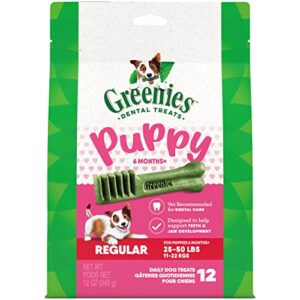
If you’re searching for a proven dental chew with real clinical backing, Greenies Natural Dental Dog Treats earn their reputation through VOHC acceptance for both plaque and tartar control.
These treats feature a unique toothbrush-like shape with ridges that clean down to the gumline, and controlled trials show they reduce plaque coverage, calculus scores, and even bad breath markers markedly better than control diets.
Made with natural ingredients including wheat flour, glycerin, and poultry flavor, Greenies offer a chewy, flexible texture that bends as your dog chews, scraping away deposits through mechanical action.
| Best For | Pet owners looking for a clinically proven, vet-recommended dental chew that reduces plaque and tartar while freshening breath in puppies 6+ months old. |
|---|---|
| Brand | Greenies |
| Age Range | Puppy (6+ months) |
| Primary Benefit | Oral health support |
| Form | Treat |
| Flavor | Original |
| Weight | 12 oz |
| Additional Features |
|
- VOHC-accepted with clinical trial evidence showing significant reductions in plaque, tartar, and bad breath compared to control groups
- Unique ridged, toothbrush-like design cleans down to the gumline through mechanical scraping action as your dog chews
- Made with natural, easy-to-digest ingredients plus added vitamins, minerals, and DHA for brain and jaw development in growing puppies
- May cause digestive upset or diarrhea in some puppies, particularly if introduced too quickly
- Quality control issues reported by some buyers, including packages with fewer treats than advertised or unusual odors
- Requires supervision during chewing and careful size selection to reduce choking risk, especially for dogs that gulp food
2. Bocces Bakery Dental Sticks For Dogs
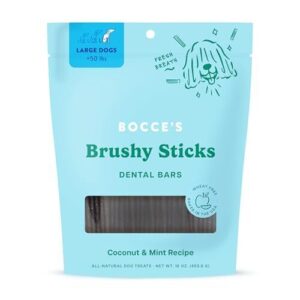
For wheat-sensitive dogs or owners who prefer grain-free dental treats, Bocces Bakery Brushy Sticks offer a chickpea-based alternative with coconut, mint, and parsley for fresher breath. These bristle-shaped bars come in three sizes (small, medium, large) with calorie counts ranging from 34 to 155 per treat, and they’re baked in the United States with simple, recognizable dental stick ingredients.
However, Bocces Bakery products don’t carry VOHC acceptance, meaning controlled plaque or tartar reduction data isn’t available to guide your expectations for clinical dental chew safety and effectiveness.
| Best For | Dogs with wheat sensitivities or owners who want a grain-free dental treat made with simple, recognizable ingredients like chickpea and coconut. |
|---|---|
| Brand | Greenies |
| Age Range | Senior |
| Primary Benefit | Plaque and tartar control |
| Form | Bone |
| Flavor | Aging Care |
| Weight | 27 oz |
| Additional Features |
|
- Wheat-free formula with limited ingredients makes them suitable for dogs with grain sensitivities or allergies
- Bristle-shaped design helps scrub teeth during chewing, and mint plus parsley work to freshen breath
- Available in three sizes to match your dog’s weight, from small breeds to large dogs over 50 pounds
- Not VOHC-accepted, so there’s no independent testing to back up plaque or tartar reduction claims
- Higher price point at $16.49 may add up for daily use, especially with larger dogs
- Larger packs aren’t widely available for big breeds, and the largest size may still be too small for giant breed dogs
3. Virbac Enzymatic Oral Hygiene Dog Chews
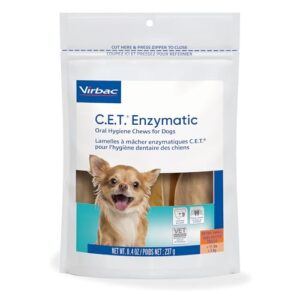
Virbac C.E.T. Enzymatic Oral Hygiene Chews combine single-layer beef rawhide with a dual-enzyme system (glucose oxidase and lactoperoxidase) that generates hypothiocyanite, a natural antimicrobial compound, for plaque control between brushings. Four sizes—extra small to large—are available, with calories ranging from 27 to 89 per chew.
The coarse chew texture scrubs teeth mechanically, while the enzyme benefits target oral bacteria. Although these chews don’t carry Veterinary Oral Health Council approval, veterinarians frequently recommend them for daily feeding in dogs without beef or poultry sensitivities, emphasizing supervision to prevent rawhide safety issues like choking.
| Best For | Dog owners looking for a vet-recommended daily dental chew that uses enzymes and mechanical scrubbing to reduce plaque and tartar in dogs of all sizes. |
|---|---|
| Brand | Bocce’s Bakery |
| Age Range | All Ages |
| Primary Benefit | Plaque and tartar removal |
| Form | Bristle-shaped |
| Flavor | Coconut & Mint |
| Weight | Varies by size |
| Additional Features |
|
- Dual-enzyme system works with saliva to fight bacteria and freshen breath between professional cleanings
- Single-layer beef rawhide is easier to digest than traditional multi-layer rawhide products
- Available in four sizes with appropriate calorie counts for dogs from under 11 pounds to over 51 pounds
- Requires supervision during chewing to prevent choking or swallowing large pieces whole
- Not suitable for dogs with beef or poultry allergies due to ingredients in both the rawhide and flavoring
- Lacks VOHC seal of acceptance and may cause digestive upset in some dogs, especially when first introduced
4. Pedigree Large Breed Dog Dental Treats
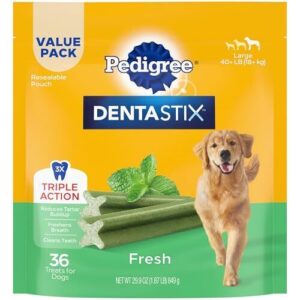
Pedigree Large Breed Dog Dental Treats scale up the familiar X-shape to match bigger mouths, offering mechanical plaque removal through a textured surface designed for adult dogs over 30 pounds.
At $14.89 for a 1.87-pound bag of 36 treats, these chews deliver fresh flavor without added sugar, though each treat adds roughly 60–70 calories to your dog’s daily intake.
You’ll need to supervise closely—large-breed dogs can gulp oversized chews too quickly—and adjust meal portions to prevent weight gain, especially if you’re using them daily for oral hygiene between brushings.
| Best For | Owners of dogs over 30 pounds who want a tasty dental chew that mechanically scrapes plaque while keeping their pup occupied, though you’ll need to watch portions and supervise chewing. |
|---|---|
| Brand | Virbac |
| Age Range | All Life Stages |
| Primary Benefit | Reduces plaque and tartar |
| Form | Solid |
| Flavor | Beef |
| Weight | Varies by size |
| Additional Features |
|
- X-shaped design with textured surface helps scrub hard-to-reach teeth and reduce tartar buildup during chewing
- Fresh flavor without added sugar or fillers makes it a healthier treat option dogs actually enjoy
- Affordable at $14.89 for 36 treats, giving you a month’s supply if used daily
- Each treat adds 60–70 calories, so you’ll need to cut back on meals to avoid weight gain
- Large dogs can gulp them too fast, creating choking risk if you’re not supervising closely
- Won’t replace regular brushing or vet cleanings—it’s just one piece of a dental care routine
5. Pedigree Dentastix Dog Dental Treats
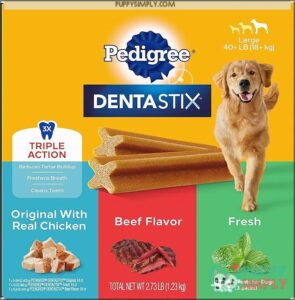
If you prefer variety and VOHC-backed plaque control, Pedigree Dentastix Dog Dental Treats come in a three-flavor pack—Original, Beef, and Fresh—that keeps pickier pups interested while the X-shaped stick scrapes tartar from hard-to-reach molars.
At about 2.73 pounds for around $15, each chew packs roughly 60 calories, so you’ll want to trim meal portions slightly to avoid weight gain.
Chew texture matters here: the flexible consistency lets dogs gnaw safely without fracturing teeth, though supervision remains key for preventing choking if your dog swallows large pieces too quickly.
| Best For | Owners of large-breed dogs who want a vet-backed dental chew in multiple flavors to maintain daily oral hygiene without breaking the bank. |
|---|---|
| Brand | Pedigree |
| Age Range | Adult |
| Primary Benefit | Reduces tartar buildup |
| Form | Dental chew |
| Flavor | Fresh |
| Weight | 1.87 lb |
| Additional Features |
|
- VOHC-accepted for plaque and tartar reduction, giving you third-party validation that the X-shape design actually works between molars
- Variety pack with three flavors keeps dogs from getting bored, which helps if you have a picky eater who turns up their nose at single-flavor treats
- Flexible texture reduces the risk of tooth fractures compared to harder chews, though you still need to watch for gulping or choking
- At roughly 60 calories per stick, you’ll need to cut back on meal portions to prevent weight gain, especially if you’re using these daily
- Dogs who inhale treats can choke on large pieces, so supervision is non-negotiable even though the texture is softer than some alternatives
- Daily use adds up quickly at around $15 per bag, making it pricier than skipping treats altogether or rotating with cheaper options
6. Dr Petra Dental Chews For Dogs
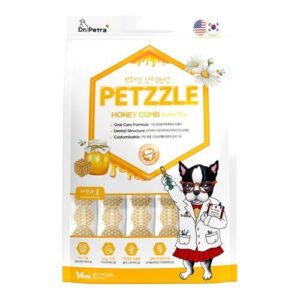
For dogs with sensitive stomachs or owners seeking alternatives to standard grain-based chews, Dr. Petra Dental Chews offer a unique solution. They use hydrolyzed salmon, a low-molecular-weight protein that’s easier to digest, paired with manuka honey to support oral freshness. The puzzle-link shape of these chews effectively scrubs plaque from canine teeth.
Co-developed with veterinary endorsements from the USA and Korea, each 4.45-ounce pack contains fourteen individually wrapped treats, suitable for dogs three months and older. While these chews do not carry the VOHC seal, they can be a valuable addition to your dog’s dental care routine when paired with regular brushing.
| Best For | Dog owners seeking a gentle dental chew for pets with sensitive stomachs or those looking for a grain-alternative option with natural ingredients. |
|---|---|
| Brand | Pedigree |
| Age Range | Adult |
| Primary Benefit | Reduces tartar buildup |
| Form | Bone |
| Flavor | Variety Pack |
| Weight | 2.73 lb |
| Additional Features |
|
- Hydrolyzed salmon and low molecular weight formula make it easier to digest for dogs with sensitive stomachs
- Puzzle-link design effectively helps remove plaque and tartar while freshening breath with manuka honey
- Individually wrapped treats maintain freshness and are suitable for dogs of all sizes from 3 months and up
- Lacks VOHC seal of approval, so effectiveness isn’t independently verified like some competing products
- Refrigeration requirements after opening are unclear, which could affect product storage and shelf life
- May not work well for extremely picky eaters or dogs with severe dental problems without additional care
How to Choose The Right Dental Chew

Picking the right dental chew for your dog isn’t as simple as grabbing the first product you see on the shelf, because factors like your dog’s size, dietary restrictions, and chewing style all play a role in both safety and effectiveness. What works beautifully for a Golden Retriever might pose a choking hazard for a Chihuahua, and a chew that excites one dog might sit untouched by another.
Here’s what you need to keep in mind to find a dental chew that your dog will actually use and benefit from.
Matching Chew Size to Your Dog
Choosing the right dental chews starts with matching the size to your dog’s weight and jaw anatomy. Most manufacturers group chews into categories—small (under 25 pounds), medium (25–50 pounds), and large (over 50 pounds)—to prevent choking hazards and boost oral health benefits.
A properly sized chew lets your dog grip comfortably, chew thoroughly, and enjoy extended plaque-scraping time without swallowing large chunks.
Considering Dietary Needs and Restrictions
Your dog’s health profile shapes every treat decision. Food allergies—often triggered by beef, chicken, or grains—demand hypoallergenic, limited-ingredient chews that skip common allergens while still scraping plaque. If your pup battles digestive issues, look for highly digestible formulas free from fillers.
Calorie management matters, too: dental treats can pack surprising energy, so adjust meals accordingly. Dogs with diabetes, pancreatitis, or kidney disease need special diets vetted by your veterinarian to maintain nutrient balance and support canine dental care without compromising overall pet health and wellness.
Evaluating Chew Texture and Durability
Texture matters as much as ingredients in dental hygiene. You want a chew that yields slightly under your fingernail—firm enough for plaque control and tartar removal, yet crushable enough to avoid tooth fractures.
Research shows maxillary premolars fracture around 1,281 N, so avoid rock-hard materials that splinter. Match chew material and durability testing to your dog’s jaw strength assessment to minimize fragmentation risk while maximizing cleaning power.
Flavor Preferences for Picky Eaters
Even the safest, most effective dental chew won’t help your dog’s teeth if it stays untouched in the bowl because your pup won’t eat it. Taste preferences matter for picky eaters, so explore flavor options—chicken, beef, mint—until you find what your pet’s palate accepts.
Many dental treats now offer varied dental flavors, letting you match dog health and wellness goals with flavors your dog actually enjoys.
Safe Use and Veterinary Recommendations

Even the best dental chew won’t do its job if you’re using it incorrectly, and that’s where a lot of well-meaning pet parents run into trouble. Safe use requires a bit of know-how, from figuring out how often to offer these treats to knowing when something’s gone wrong.
Let’s walk through the veterinary-backed guidelines that’ll help you get the most benefit from dental chews while keeping your dog safe.
Proper Dental Chew Frequency
Most healthy adult dogs can enjoy one dental chew per day, but you’ll need to follow product directions carefully and watch those calories—a single treat can pack over 100 calories, potentially exceeding the 10 percent treat guideline veterinary nutritionists recommend.
Here’s how to nail your daily chew limits while keeping plaque control on track:
- Choose VOHC-accepted dental treats for proven effectiveness
- Give one chew daily as part of your dental routine
- Adjust meal portions to maintain calorie control
- Monitor your dog’s weight and stool quality regularly
- Consult your vet before starting any new pet dental care regimen
Monitoring for Choking Hazards
Stay right by your dog while they work on a dental chew. Aggressive chewers can break off chunks that turn into swallowing hazards, triggering gagging or even esophageal obstruction. Small breeds face the highest risk, accounting for nearly 84 percent of documented blockages.
Take the chew away once it’s bite-sized to prevent airway blockage or tooth trauma, especially in brachycephalic dogs with narrowed throats.
Adjusting Diet for Extra Calories
Once you’ve handled choking risks, think about calorie balance. Dental chews bring extra energy intake, so you’ll need diet modification to keep weight management on track. Veterinarians recommend:
- Cap treats at 10 percent of daily calories—your dog’s waistline depends on it.
- Calculate your dog’s total energy needs using weight, age, and activity level.
- Reduce meal portions proportionally when adding daily chews.
- Choose lower-calorie chew options for small or sedentary dogs.
- Monitor body condition monthly to catch gradual weight gain early.
Dog treats add up fast, especially in toy breeds where one chew can exceed safe limits without nutrient adjustment.
When to Consult Your Veterinarian
Beyond calorie counts, watch for red flags that demand veterinary care. Contact your vet within 24 hours if vomiting, diarrhea, or persistent drooling appears after chewing. Puppies under six months need veterinary guidance before starting chews, and dogs with esophageal abnormalities require safety precautions customized by veterinary dentistry experts.
| Emergency Signs | Response Time | Action Required |
|---|---|---|
| Vomiting, diarrhea, abdominal distress | Within 24 hours | Vet consultation |
| Difficulty swallowing, gagging | Promptly | Veterinary oral health assessment |
| Reluctance to eat, pawing at mouth | Same day | Veterinary advice and guidance |
| Preexisting medical conditions | Before introduction | Veterinary Oral Health Council-approved product selection |
Frequently Asked Questions (FAQs)
Can dental chews replace professional teeth cleaning?
No, dental chews can’t replace professional cleaning. While they reduce plaque and gingival inflammation, only veterinary scaling removes tartar below the gumline and includes the full-mouth assessment your dog needs.
Are dental chews safe for puppies?
Most dental chews carry puppy teeth risks until teething completes, so you’ll want veterinary guidance on chew safety, oral development timing, and puppy monitoring to protect those delicate growing teeth during dog teeth cleaning routines.
Do dental chews work for senior dogs?
Even older dogs with established plaque benefit from daily dental chews.
Clinical trials show senior dogs achieve measurable reductions in tartar, gingivitis, and halitosis within weeks when you choose VOHC-approved products matched to their jaw strength.
What if my dog swallows chews whole?
If your dog gulps chews instead of gnawing them, you’re facing real choking risks and potential gastro blockage—both true emergencies.
Switch to larger, appropriately sized options and always supervise to prevent swallowing hazards.
Can dogs with allergies use dental chews?
Choosing dental chews for allergic dogs requires careful ingredient scrutiny, like traversing a minefield with your pup’s dinner bowl. Hypoallergenic options exclude common triggers like beef and chicken, though allergen avoidance demands veterinary consultation first.
Conclusion
Picture your dog grinning without hesitation, their breath no longer a warning signal but a simple fact of closeness.
Choosing the best dog dental chews transforms daily care into proactive prevention, protecting organs far beyond the mouth while keeping those twice-yearly vet visits calmer.
Match the chew to your dog’s size, respect calorie limits, and supervise each session. Your diligence today builds healthier tomorrows—one satisfying chew at a time.
- https://www.petmd.com/vet-verified/best-dental-chews-dogs
- https://www.fda.gov/safety/recalls-market-withdrawals-safety-alerts/redbarn-pet-products-issues-voluntary-recall-dog-chews
- https://vohc.org/news-publications/
- https://www.vetmed.ucdavis.edu/faculty/stephanie-lynne-goldschmidt
- https://wagwalking.com/wellness/how-to-take-care-of-your-dogs-teeth-at-home