
This site is supported by our readers. We may earn a commission, at no cost to you, if you purchase through links.

You’re inspecting your dog’s chin and notice something odd — a cluster of small red bumps that weren’t there yesterday. Your first thought probably isn’t acne, but it should be on the list. Dogs can get pimples, and it’s more common than most pet owners realize, especially in puppies going through adolescence.
Canine acne isn’t just a cosmetic quirk. It’s a genuine skin condition involving inflamed hair follicles, and without the right care, those harmless-looking bumps can turn into painful, infected sores. Knowing what you’re looking at — and what to do about it — makes all the difference.
Table Of Contents
- Key Takeaways
- Yes, Dogs Can Get Pimples
- What Dog Pimples Look Like
- Why Dogs Get Pimples
- Dogs Most at Risk
- Treating Dog Acne Safely
- Preventing Future Dog Pimples
- Frequently Asked Questions (FAQs)
- Why does my dog have pimples?
- Can dogs get acne?
- Can a dog break out with pimples?
- Can dogs get pimples during puberty?
- What words do dogs hear best?
- Is it okay to pop a pimple on a dog?
- Why is there a pimple-like bump on my dog?
- What does acne on a dog look like?
- How long does dog acne typically last?
- Can adult dogs develop acne later in life?
- Conclusion
Key Takeaways
- Dog acne is a real skin condition — not just a cosmetic quirk — caused by clogged hair follicles, hormonal shifts during puberty, and bacterial invasion, most often affecting puppies between 5 and 12 months old.
- Short-coated breeds with facial folds, like Bulldogs and Boxers, are especially prone to breakouts because their skin traps the warmth, oil, and bacteria that fuel acne.
- Never pop your dog’s pimples — squeezing spreads bacteria and risks scarring; instead, use vet‑approved medicated wipes or benzoyl peroxide gels formulated for dogs.
- Simple daily habits — cleaning your dog’s chin, switching to stainless steel bowls, and washing toys and bedding regularly — go a long way toward preventing future breakouts.
Yes, Dogs Can Get Pimples

Yes, dogs can absolutely get pimples — and it’s more common than most pet owners realize. Canine acne usually shows up as red bumps or pustules around the chin and muzzle, and it often follows a fairly predictable pattern depending on your dog’s age and how severe the breakout is.
These breakouts are essentially the canine version of teenage acne — for a closer look at what they can look like, white spots on a dog’s nose are a surprisingly common early sign.
Here’s what you need to know about how it starts, where it appears, and when it becomes a bigger concern.
Dog Acne Overview
Believe it or not, dogs can get pimples — and it’s more common than most owners realize. Canine acne is a skin condition that causes redness, bumps, and irritation, particularly in young dogs. Here’s what you should know at a glance:
- It’s a real skin condition, not just a cosmetic issue
- Puppies aged 5–12 months are most commonly affected
- Excess sebum production clogs hair follicles, triggering inflammation
- Most mild cases clear up on their own
Using stainless steel bowls can help prevent outbreaks.
Common Pimple Locations
Dog pimples don’t just appear randomly — they tend to cluster in predictable spots. The chin is the most common site, partly because it stays damp from drinking water, making it a prime environment for bacterial growth. After the chin, the lips and muzzle are next, with their dense hair follicles prone to inflammation.
Puppy Acne Timeline
Puppy acne has a fairly predictable window. Most cases appear when a dog is between 3 and 12 months old, with many puppies showing their first spots around 5 to 8 months. That lines up with adolescence — the same hormonal surge that makes this age group so energetic also ramps up oil production in the skin.
Mild Versus Severe Cases
Not all cases of dog acne look — or act — the same. Mild acne shows up as small, intact red bumps confined to the chin and lips, usually causing no pain and no disruption to eating.
Severe canine acne, on the other hand, can spread across the entire muzzle, rupture into oozing wounds, and make feeding genuinely uncomfortable for your dog.
What Dog Pimples Look Like
Dog pimples don’t always look the same, and that can make them confusing to spot. Some show up as small red bumps, while others turn into something more noticeable. Here’s what to watch for on your dog’s chin, lips, and muzzle.
Red Bumps
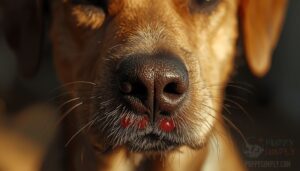
The first signs of dog acne are often easy to miss — just a cluster of small red bumps on the chin or along the lip margins. These raised dog skin pimples are inflamed and tender, so your dog may flinch when touched there.
Scratching makes things worse, as broken skin invites canine skin infection and bleeding.
White-headed Pustules
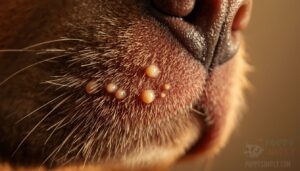
When red bumps don’t clear up quickly, some develop into white-headed pustules — raised, rounded spots with a yellowish pus-filled center, usually measuring 2–8 mm across. Here’s what they look like up close:
- A soft, fluid-filled bump you can gently feel shift under pressure
- Whitish or yellow center surrounded by reddened skin
- Mild swelling at the base
- Occasional faint odor from bacterial activity inside
- Clustered mainly along the chin and lip line
The pus forms because your dog’s immune system sends neutrophils (infection-fighting white blood cells) rushing to the damaged follicle. If a pustule ruptures, bacteria can spread, widening the infected area. Don’t squeeze them — warm compresses applied gently two to three times daily help encourage natural drainage without making the canine skin infection worse.
If recurring skin infections seem tied to diet, switching to a hypoallergenic dog food brand that avoids common triggers like beef, chicken, or dairy may help break the cycle.
Blackheads and Clogged Pores
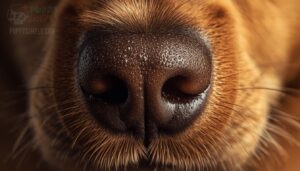
Blackheads — called comedones in clinical terms — look like tiny dark dots embedded in your dog’s skin, usually measuring 1–3 mm across.
They form when excess sebum and dead skin cells plug a hair follicle, then oxidize on contact with air, turning that characteristic dark brown or black.
You’ll spot them most often along the chin and muzzle.
Scabs or Bleeding Spots
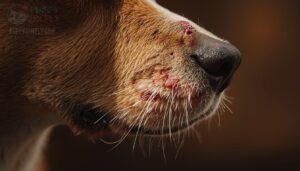
When dog acne gets irritated — from scratching, rubbing, or a pustule that ruptures — you may notice scabs or bleeding spots on the chin or muzzle. The skin bleeds because inflamed tissue is fragile, and even minor friction can reopen it.
A scab that keeps returning in the same spot, or one that won’t heal within three to four weeks, warrants a vet visit.
Swollen Muzzle Signs

In severe cases of canine acne, what starts as a few red bumps can cause the entire muzzle to puff up. Your dog may paw at their face, whine when touched, or eat more slowly.
Short-coated breeds like Boxers and Bulldogs are especially prone.
That swelling can signal muzzle furunculosis — a deeper infection requiring veterinary care.
Why Dogs Get Pimples

Dog pimples don’t just appear out of nowhere — there’s always something triggering that inflammation under the skin. A few different factors can be at play, and knowing which ones apply to your dog makes it a lot easier to address the problem. Here’s a look at the most common reasons pimples develop.
Clogged Hair Follicles
Think of each hair follicle on your dog’s chin as a tiny pipe. When sebum and dead skin cells mix together, they form a keratin plug that blocks the opening — the same way grease clogs a kitchen drain. Dog sebum is oilier than human sebum, which makes this blockage happen faster.
Three factors that accelerate follicle clogging:
- Excess sebum production coating the follicle walls
- Dead skin cell buildup creating a dense keratin plug
- Environmental particles like dirt embedding into the sebum layer
Once plugged, a follicle doesn’t just sit quietly. Pressure builds until the follicle wall ruptures, releasing sebum and keratin into surrounding tissue — and that’s what triggers the redness and swelling you see on your dog’s muzzle.
Facial Rubbing or Scratching
Clogged follicles aren’t the only problem. When your dog rubs or scratches their face, the friction tears tiny breaks in the skin — microwounds that let bacteria slip straight into hair follicles, turning a minor irritation into an infected pimple.
That scratch feels like relief to your dog, but it’s actually making things worse.
Puberty and Excess Oil
Scratching isn’t the only thing ramping up your puppy’s skin issues.
Around 6 months of age, rising reproductive hormones trigger the sebaceous glands — tiny oil-producing glands beneath the skin — to work overtime. That surge of oil mixes with dead skin cells, clogs hair follicles, and creates the perfect setup for pimples to form.
Bacterial Skin Infections
Once that oil starts clogging follicles, bacteria don’t need much of an invitation. The two main culprits behind canine acne are Staphylococcus species and Propionibacterium acnes, both of which thrive inside blocked follicles.
- Folliculitis — inflamed hair follicles — is the most common result
- Superficial pyoderma can develop when infection spreads beneath the skin surface
- Deep pyoderma (furunculosis) forms painful abscesses that may need veterinary drainage
Allergies and Sensitivities
Bacteria aren’t always the only trigger. Food protein allergies — to chicken, beef, dairy, or eggs — can spark skin inflammation that shows up right on your dog’s chin and muzzle.
Environmental triggers like pollen, dust mites, or mold do the same.
That constant scratching and rubbing to relieve the itch? It breaks hair follicles open, inviting acne to form.
Dogs Most at Risk

While any dog can develop pimples, some are simply more prone to it than others. Certain ages, coat types, and physical traits put specific dogs at a higher risk. Here’s a closer look at which dogs tend to deal with acne most often.
Puppies and Adolescent Dogs
If your puppy seems to be going through an awkward phase, their skin might be right there with them. Acne peaks between 5 and 12 months, when hormonal surges during puberty push the sebaceous glands into overdrive — flooding follicles with excess oil and setting the stage for dog skin pimples.
- Testosterone spikes in male puppies between 4–12 months
- Female puppies experience estrogen fluctuations during their first heat cycle
- Hormonal shifts overstimulate oil glands, clogging hair follicles
- Adolescent behavioral changes like face-rubbing worsen canine facial dermatitis
- Most cases resolve naturally as dogs reach canine social maturity around 18–24 months
Short-coated Breeds
Unlike long-haired breeds that have some natural buffer, short-coated dogs have bristly, coarse hair that can snap and break near the skin — pushing fragments back into the follicle and triggering inflammation.
That trapped debris mixes with excess sebum, quickly creating the clogged pores that drive canine facial dermatitis and bacterial skin infection in dogs.
Boxers and Bulldogs
Two breeds stand out regarding canine acne: Boxers and Bulldogs.
Their short, coarse coats already put them at risk, but their deep facial skin folds create warm, dark pockets that trap oil and bacteria — the perfect conditions for breakouts. Bulldogs develop acne at nearly double the rate of Boxers for exactly this reason.
Bulldogs develop acne at nearly double the rate of Boxers, their deep facial folds trapping the oil and bacteria that fuel breakouts
Great Danes
Great Danes weren’t always the gentle giants curled up on living room couches — they spent centuries hunting wild boar across German estates, bred for sheer power and courage. That same imposing build, including a massive, rectangular head and deep muzzle, makes them surprisingly prone to dog skin pimples.
| Feature | Detail | Acne Risk Factor |
|---|---|---|
| Muzzle shape | Deep and square | Traps oil and debris |
| Coat type | Short and sleek | Exposes follicles easily |
| Breed size | Giant | More skin surface area |
Their short coat offers little protection, leaving hair follicles vulnerable to canine folliculitis during adolescence.
Dogs With Skin Folds
Some dogs carry their acne risk right on their face — literally. Breeds with deep skin folds, like Bulldogs and Pugs, trap warmth and moisture between those wrinkles, creating the perfect environment for bacterial and yeast overgrowth.
Obesity makes this worse by pressing folds tighter together.
Daily fold cleaning and keeping your dog at a healthy weight are your best defenses.
Treating Dog Acne Safely

Seeing pimples on your dog’s chin can feel alarming, but the good news is that most cases are very treatable. The key is starting with the right approach rather than grabbing whatever’s in your medicine cabinet. Here’s what actually works for clearing up dog acne safely.
Veterinary Diagnosis First
Before reaching for any treatment, a vet visit is your first step.
Your veterinarian will examine your dog’s muzzle, chin, and lips, checking for red papules, pustules, or blackheads, while also feeling for swollen nodules beneath the skin.
This rules out look-alike conditions like mange, ringworm, or allergies — which need very different care.
Medicated Wipes and Shampoos
Once your vet confirms it’s acne, medicated wipes and shampoos become your go-to tools for daily care. Look for wipes containing chlorhexidine gluconate — an antiseptic that reduces bacteria directly on the skin — and miconazole nitrate for any fungal involvement.
The no-rinse formula makes spot-cleaning your dog’s chin quick and stress-free between baths.
Benzoyl Peroxide Treatments
Benzoyl peroxide is one of the most trusted topical treatments for dog acne. Veterinary formulas come in 2% and 5% concentrations — never use human products, which often reach 10% and can seriously irritate your dog’s sensitive skin.
Gels work best, massaged gently into the chin once or twice daily on clean, dry skin.
Antibiotics for Infections
When topical treatments aren’t enough, your vet may prescribe antibiotics.
First-tier oral antibiotics like cephalexin or clindamycin are common starting points for a secondary bacterial infection. Typical courses run three to five weeks. Watch for diarrhea — a known side effect.
Your vet won’t guess at the right antibiotic if lesions persist; culture testing confirms which bacteria you’re fighting.
Preventing Future Dog Pimples

Once your dog’s skin has cleared up, keeping it that way comes down to a few consistent habits. The good news is that most of them are simple and easy to work into your daily routine. Here’s what you can do to help prevent pimples from coming back.
Clean Chin Daily
Think of daily chin cleaning as your dog’s first line of defense against acne.
Use a soft cloth with a pet-safe cleanser and work in gentle circular motions to lift oil and debris. Dry the area thoroughly afterward — lingering moisture encourages bacteria to thrive.
Then take a quick look at the skin. Redness, swelling, or pustules mean it’s time to call your vet.
Use Stainless-steel Bowls
Something as simple as your dog’s bowl can make a real difference. Plastic scratches easily, and those tiny grooves become hiding spots for bacteria — the same bacteria that trigger chin breakouts.
Stainless-steel bowls have a smooth, nonporous surface that’s far easier to clean thoroughly and won’t trap oils or food residue against your dog’s muzzle.
Wash Toys and Bedding
Toys and bedding harbor bacteria dogs rub against daily, so washing them often matters.
- Rope toys: every 1–2 weeks
- Plush toys: weekly to monthly
- Hard toys: dishwasher-safe, high heat
- Bedding: pet-safe detergent, no softener
- Dry fully before storing
Rotate in clean spares while items dry completely, and you’ll cut down the environmental irritants triggering those stubborn chin breakouts for good.
Prevent Muzzle Trauma
Rubbing against rough carpet, digging chin‑first into dirt, or pressing the muzzle against hard crate bars can all break hair follicles and trigger muzzle folliculitis.
Swap plastic bowls for stainless steel ones, limit unsupervised digging, and use a smooth, well‑fitted muzzle if your dog needs one. Less friction means fewer breakouts.
Manage Allergies Early
Allergies — whether food-related or environmental — quietly fuel repeat breakouts. Identifying and managing them early makes a real difference:
- Switch to a novel protein diet (like venison) for 8–12 weeks
- Remove all treats and flavored medications during the trial
- Ask your vet about intradermal skin testing
- Track symptoms daily to spot seasonal or dietary patterns
Frequently Asked Questions (FAQs)
Why does my dog have pimples?
Your dog’s pimples usually trace back to sebum buildup clogging hair follicles, bacterial invasion, hormonal shifts during puberty, skin trauma from rubbing, or food allergies — all of which trigger the folliculitis behind dog acne.
Can dogs get acne?
Yes, dogs can get acne. Canine acne is a real skin condition triggered by clogged follicles, hormonal shifts, and bacterial colonization — most common in adolescent pups around 5 to 12 months old.
Can a dog break out with pimples?
Your dog can absolutely break out with pimples. These small red bumps, white pustules, or blackheads commonly appear on the chin, lips, and muzzle — most often during puppyhood, between five and eight months of age.
Can dogs get pimples during puberty?
Just like human teenagers, puppies can hit a hormonal rough patch. Between 5 and 8 months, sebum spikes during puberty can clog follicles, triggering canine acne that usually clears by their first birthday.
What words do dogs hear best?
Short, sharp words with hard consonant sounds — like "sit," "come," and "stay" — register most clearly to dogs. Consistent tone matters as much as the word itself.
Is it okay to pop a pimple on a dog?
No, you shouldn’t pop your dog’s pimples. Squeezing spreads bacteria, increases swelling, and risks scarring. Clean the area gently instead and let your vet handle anything that looks infected.
Why is there a pimple-like bump on my dog?
That bump on your dog’s chin? It’s likely dog acne — caused by clogged hair follicles, bacterial invasion, or hormonal sebum spikes during puppyhood. Minor trauma, like rubbing, can trigger it too.
What does acne on a dog look like?
Acne on a dog shows up as small red bumps, white-tipped pustules, or dark blackheads — mostly on the chin and muzzle. Swelling and scabs signal more serious involvement.
How long does dog acne typically last?
Most mild cases clear up in 10 to 14 days with consistent care. Severe or infected acne can take 4 to 12 weeks — sometimes longer if deeper follicles are involved.
Can adult dogs develop acne later in life?
Most cases clear up by age one, but some dogs carry acne into adulthood. When that happens, the cause often isn’t puberty — it’s an underlying skin condition that needs a vet’s attention.
Conclusion
Turns out your dog didn’t steal your teenager’s skincare struggles — but yes, dogs can get pimples, and the fix isn’t all that different. A clean routine, the right bowl, and a vet’s guidance when things escalate can keep those bumps from becoming something worse.
Don’t wait for a small breakout to turn painful. Catch it early, treat it consistently, and your dog’s skin has every chance of staying healthy.