This site is supported by our readers. We may earn a commission, at no cost to you, if you purchase through links.
Your dog planted all four paws on the sidewalk and refused to move — and no amount of coaxing, treat-waving, or gentle tugging changed anything. It’s frustrating, but that stubborn stop is rarely defiance. Dogs don’t stage protests.
When a dog refuses to walk, something specific triggered it: joint pain, a hot surface, a frightening sound, or gear that digs into the wrong place. Pinpointing the cause is the difference between a quick fix and a problem that quietly gets worse. The answers are more straightforward than most owners expect.
Table Of Contents
- Key Takeaways
- Why Dogs Refuse to Walk
- Pain and Injury Clues
- Fear, Stress, and Anxiety
- Weather and Environment Triggers
- Leash Gear and Training Issues
- How to Get Your Dog Moving
- Top 7 Walking Aids
- Frequently Asked Questions (FAQs)
- Why is my dog not walking?
- Why does my dog refuse to walk without a leash?
- What if my dog refuses to walk away from home?
- What should I do if my dog refuses to walk?
- What are the signs that a dog is about to pass away?
- How can I reward my dog for good walking behaviors?
- How do I know if my dog is experiencing joint pain?
- How can I properly fit a collar to my dog?
- What are the best ways to desensitize my dog to a certain trigger?
- Can puppies develop walk refusal habits early?
- Conclusion
Key Takeaways
- When your dog plants their paws and won’t budge, it’s almost never stubbornness — pain, fear, illness, or poorly fitted gear are usually the real culprit, and finding which one matters more than pushing through it.
- Physical red flags like limping, post-rest stiffness, paw licking, or stopping after just a few steps are your dog’s way of signaling joint pain or injury before it gets worse.
- Environmental triggers — hot pavement, icy surfaces, loud noises, unfamiliar routes, and de-icing chemicals — can stop a walk cold just as fast as any physical problem, so conditions matter as much as your dog’s health.
- Getting your dog moving again comes down to matching the fix to the cause: rule out pain first with a vet, then use short quiet walks, high-value treats, and gradual desensitization to rebuild confidence one step at a time.
Why Dogs Refuse to Walk

When your dog plants their paws and refuses to budge, it’s easy to chalk it up to stubbornness — but something real is usually going on. Most walk refusals trace back to a handful of physical causes that are worth knowing.
Sometimes the fix is simpler than you’d think — poor engagement or a lack of early training are behind more refusals than most owners realize, as covered in this guide to common dog behavior and breed-specific traits.
Here’s what to look for.
Joint Pain From Arthritis or Hip Dysplasia
When your dog plants all four paws and refuses to budge, joint pain is often the culprit. Arthritis causes cartilage degeneration that makes each step uncomfortable. Hip dysplasia creates structural misalignment, increasing pressure with every stride.
Your veterinarian can confirm both through diagnostic imaging. Key signs to watch:
- Stiffness after rest or sleep
- Limping or favoring one leg
- Reluctance to climb stairs
In humans, female gender risk factor also influences hip dysplasia prevalence.
Paw Injuries, Cuts, and Loose Nails
Joint pain isn’t the only reason your dog stops cold. A sharp piece of glass or a loose nail can do the same job instantly.
Check the paw pad for open wounds, debris, or swelling. Splinter removal, paw bandaging, and dewclaw protection all matter here.
A nail bed infection gets worse fast. Booties or paw wax can prevent most of this.
Obesity and Low Stamina
Weight is a quiet saboteur. An obese dog carries extra load on every joint with every step, which drives exercise intolerance fast.
Muscles tire sooner, breathing gets labored, and energy levels in dogs drop well before the walk ends.
Controlled feeding and metabolic monitoring help, but start with low-impact activities and incremental conditioning.
Dog obesity and activity tolerance improve slowly — expect gradual progress, not overnight results.
Illness or General Weakness
Sometimes illness is the culprit — not laziness, stubbornness, or even joint pain in dogs. A sick dog simply doesn’t have the reserves to move.
Watch for:
- Fever symptoms like warm ears and shivering
- Dehydration signs such as dry gums or skin tenting
- Anemia effects — pale gums, rapid breathing
- Medication sedation causing unusual sluggishness
Any of these warrants a prompt dog health assessment with your veterinarian.
Pain and Injury Clues
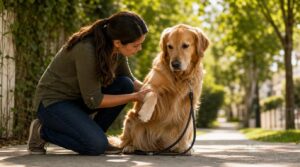
Pain often hides in plain sight — your dog can’t tell you what hurts, but their body usually does. Before assuming it’s stubbornness or a bad mood, it’s worth checking for a few physical red flags.
Your dog cannot tell you what hurts, but their body always does
Here’s what to watch for.
Limping or Favoring One Leg
A limp tells you more than you might think. When a dog shifts weight away from one leg — a pattern called an antalgic gait — it’s actively protecting a painful spot. Watch for stance time asymmetry: the sore leg touches the ground for a noticeably shorter moment than the others.
| What You See | What It Signals |
|---|---|
| Head bob while walking | Front leg discomfort |
| Hip sway or lean | Rear leg or joint pain |
| Toe-touching only | Avoiding full weight load |
| Paw rotation on landing | Orthopedic disease in dogs |
| Worse on hard surfaces | Paw or joint sensitivity |
Paw preference observation and leg load distribution checks — done simply by watching your dog stand still — are your first step before any veterinary assessment.
Stopping After a Few Steps
When a dog stops cold after just a few steps, that’s a signal worth taking seriously.
The cause is often one of three things:
- Muscle fatigue or energy depletion from joint pain
- Paw pad burns from temperature sensitivity on hot pavement
- Fear or anxiety triggered by visual overload in a new environment
Positive reinforcement helps — but only after you’ve ruled out pain.
Licking Paws or Avoiding Touch
Paw licking is one of the quietest distress signals your dog sends — easy to miss, hard to ignore once you know what it means.
Persistent licking often points to Allergy Itching from pollen or grass, Parasite Irritation from fleas, or a cut hiding between the toes. Left unchecked, it escalates into Acral Dermatitis — a raw, hairless lesion driven by compulsive Self‑soothing Behavior.
| Signal | Likely Cause | What to Do |
|---|---|---|
| Licking one paw repeatedly | Acral Dermatitis or wound | Vet exam, desensitization handling |
| Pulling away from touch | Pain-based avoidance | Positive reinforcement, gentle palpation |
| Redness between toes | Allergy Itching or Parasite Irritation | Antiparasitic treatment, allergen workup |
| Mild post-walk licking | Sensory Grooming | Monitor; normal if brief |
Medical causes of walking refusal in dogs often trace back here. Booties can protect irritated paws during walks while you tackle the underlying issue.
Stiffness After Rest or Sleep
Stiffness right after waking isn’t laziness — it’s biology. During sleep, Synovial Fluid Redistribution slows, leaving joints temporarily dry and creaky.
Most dogs shake it off within 15 minutes through natural Morning Joint Warm-up. Watch for these Stiffness Duration Flags:
- Stiffness resolving under 15 minutes — typical age-related tightness
- Stiffness lasting over 60 minutes — possible Inflammatory Morning Stiffness
- Cold Muscle Tightness plus refusal to bear weight — warrants a vet visit
Fear, Stress, and Anxiety

Sometimes dog’s refusal to walk has nothing to do with its body — it’s its mind putting on the brakes. Fear and anxiety can stop a dog cold just as fast as any sore paw.
Here are the most common emotional triggers to watch for.
Loud Noises and Sudden Movement
A car backfires, and your dog plants all four paws and refuses to budge — that’s the startle reflex response at work. Sudden sounds trigger defensive freezing behavior almost instantly.
Repeated exposure builds post-noise caution, making walks feel unsafe. Acoustic shock management through gradual desensitization and counterconditioning helps rewire that fear response.
Watch for behavioral cues of discomfort like tucked tails or flattened ears.
New Routes or Unfamiliar Places
Your dog isn’t being stubborn — an unfamiliar route triggers Route Memory Gap and Scent Mark Disorientation, removing the landmarks it relies on for confidence. Visual Cue Uncertainty and Surface Texture Shift compound behavioral resistance fast.
An Unexpected Detour Reaction kicks in when environmental factors influencing canine walks suddenly change.
Counter this through desensitization and positive reinforcement, gradually introducing new paths to reduce environmental stimulus avoidance.
Rescue Trauma and Past Negative Experiences
Rescue dogs often carry invisible baggage. A history of abuse can trigger Hypervigilant Scanning — your dog constantly checks for threats, even on calm streets.
One loud noise might cause a Startle Freeze Response, leaving them motionless and unreachable. Restraint Avoidance and Trauma-Induced Shutdown are common too.
Desensitization and counterconditioning, done slowly, rebuild trust and ease Sensory Overload over time.
Repeated Stopping at The Same Spot
Sometimes the pattern isn’t random. If your dog stops at the exact same spot every walk, there’s usually a reason — a Scent Anchor from another animal, a Visual Reference like a gate or parked car, a Surface Texture shift underfoot, or a Microclimate Hotspot baking through their paws.
Leash Pressure at that point can reinforce the pause too.
Identify the trigger, then use positive reinforcement to move past it.
Weather and Environment Triggers

Weather can stop a walk just as fast as pain or fear — sometimes faster. Your dog isn’t being stubborn when the heat, cold, or a surprise storm hits; they’re reacting to real discomfort.
Here are the most common environmental triggers to watch for.
Hot Pavement and Heat Stress
Dark asphalt can hit 68°C on a hot day — hot enough to blister paw pads in under three seconds. Urban Heat Island conditions make neighborhood pavement stay dangerous well into evening.
Before any hot weather walk, use Surface Temperature Monitoring: press your hand to the ground for seven seconds.
Too hot for you? Too hot for your dog.
Prioritize Paw Pad Cooling, Heat-Resistant Footwear, and Hydration Strategies to prevent heat stress and heatstroke.
Cold, Ice, and Snow Discomfort
Cold flips the risk. Paw Pad Numbness sets in fast, and Cold Paw Stiffness makes the first steps feel like walking through concrete.
Ice Slip Hazard is real — dogs hesitate on icy patches after one bad slide.
Thaw‑Freeze Slush creates unpredictable footing step by step.
Frozen Pad Cracks and de-icing chemicals sting exposed skin.
Short-coated breeds need a dog coat for cold weather walks.
Rain, Wind, and Storm Anxiety
more than wet fur.
Thunder Anxiety Triggers can set in before the first drop falls — darkening skies and rising wind act as Storm Visual Cues, your dog reads instantly.
Wind Pressure Effects throw off balance, while Slippery Wet Surfaces create real footing hesitation.
Rainfall Odor Aversion from rain-soaked pavement, and these weather-related walking challenges stack fast.
Weather sensitivity is legitimate — don’t dismiss it.
De-icing Chemicals and Rough Surfaces
Salt residue irritation is more than a minor nuisance — it’s a real source of chemical dermatitis on your dog’s paw pads.
Watch for these four signs:
- Redness or cracking from paw pad dryness
- Limping caused by abrasive grit trapped between toes
- Licking triggered by micro-texture traction shifts underfoot
- Refusal tied to stinging from de‑icing chemicals on raw skin
Leash Gear and Training Issues
Sometimes the problem isn’t your dog — it’s the gear.
collar that digs in, a vest that pinches, or a leash that’s too heavy can turn a simple walk into something your dog dreads.
Here are the most common equipment issues that cause walk refusal.
Collars That Choke or Rub

The wrong collar can quietly sabotage every walk. Prong collars and choke chains create real tracheal compression and neck pressure injury with repeated pulling — and thyroid gland damage is a documented risk, not a rare worst case.
Even standard collars cause skin chafing risks when they fit too snugly. Check the tips on any prong collar regularly; worn or sharp prong tip safety matters more than most owners realize.
Harnesses That Fit Too Tightly
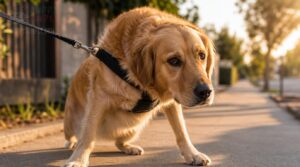
A safety strap that’s one size too snug does more damage than most owners expect. Chest Strap Irritation develops fast when the girth sits too close to the armpits, limiting reach and causing Skin Chafing Redness within a single walk. Breathing Constriction from a tight chest band hits hardest during warm weather.
Watch for these fit failures:
- Neck Strap Breathing problems when the strap rides too high toward the throat
- Strap Compression Limits normal front-leg stride, mimicking joint pain in gait
- Step-in safety strap panels pressing into armpit creases during each forward step
- Escape-proof safety strap designs that over-tighten during pulling episodes
- Redness or hair loss at contact points — key pain detection signals
Comfort fitting of safety strap means two fingers slide easily under every strap.
Heavy or Short Leashes

Leash Weight Fatigue is real — a heavy leash adds constant drag that wears dogs down faster than you’d think. Short leashes compound this through Micro‑Stop Frequency, hitting the leash limit repeatedly until your dog simply quits.
Tightness Discomfort restricts natural stride, and poor Tangling Prevention turns each direction change into a frustrating block.
When adjusting walking gear for dog comfort, consider matching leash weight and leash lengths to your dog’s size — it’s a genuine Control vs Freedom balance.
Negative Leash Associations

Some dogs aren’t being stubborn — they’re reacting to Pressure Conditioning built up over time. Unexpected Leash Tightening triggers a Leash Startle Reflex, and when stopping reduces that pressure, Reinforced Stopping Behavior takes hold fast. Historical Walk Trauma makes early leash experiences stick hard.
Counterconditioning strategies and gradual desensitization can rebuild trust, but only if you replace negative associations with consistent, reward-based leash training and positive reinforcement.
How to Get Your Dog Moving

Getting your dog moving again doesn’t have to feel like a battle. The right approach depends on what’s holding them back — whether it’s fear, pain, or just bad leash habits.
Here are six practical ways to turn things around.
Use Treats and Praise for Forward Steps
Timing is everything here. The moment your dog takes even one step forward, mark it with a short word like "yes" and follow immediately with a high-value treat.
Small wins matter — reward the half-step, not just full walking. treat size tiny for quick delivery.
reward fading, practice reward fading by spacing treats out gradually, keeping praise consistency throughout.
Try Short, Quiet Practice Walks
Once your dog starts responding to treat rewards, build on that momentum with short walks in quiet familiar areas. Loop Route Planning keeps things predictable — your dog learns the walk ends where it starts, which eases anxiety. Keep sessions brief before tension builds.
- Pick low-traffic times for Ambient Noise Control
- Use Incremental Step Rewards every few paces
- Apply Gradual Pace Adjustment if they stall
- Schedule Timed Rest Pauses before full refusal hits
Desensitize Fear With Slow Exposure
Short walks build confidence, but fear needs a more deliberate approach.
Desensitization techniques for fearful dogs rely on a Gradual Fear Hierarchy — starting at the least scary step and working up slowly.
Relaxation Pairing keeps your dog calm at each Controlled Exposure Level before advancing.
Real-World Practice, tracked through Measured Progress Signals like fewer freezes, shows fear desensitization and counterconditioning working through positive reinforcement against dog anxiety on walks.
Give Sniff Breaks and Calm Redirection
Once fear work is underway, sniff breaks become one of your best tools. Let your dog sniff to their heart’s content for 30 seconds, then use a consistent redirection cue like "find it" and drop treats slightly ahead.
Leash Slack Management matters here — loosen the leash during the break.
Your Calm Body Language does the rest, keeping pressure low so forward steps follow naturally.
Use Alternative Exercise When Walks Fail
When walks break down completely, don’t stop movement altogether. Low-impact alternatives keep your dog’s muscles active and their mind engaged.
- Indoor Marching — guide your dog through stepping in place on a non-slip surface, rewarding each step.
- Seated Target Practice — small forward weight shifts rebuild confidence without outdoor triggers.
- Swimming Buoyancy Work — hydrotherapy reduces joint stress while maintaining muscle engagement.
Treadmill Training and Wheel Rolling are also solid options worth exploring.
Call a Vet or Trainer if Needed
If home strategies aren’t working, it’s time to bring in reinforcements.
Medical triage comes first — sudden refusal warrants veterinary consultation to rule out pain before any training begins. Once health is cleared, a certified professional trainer can handle behavioral assessment. Pet insurance helps offset those costs.
| Situation | Who to Call | Why |
|---|---|---|
| Sudden refusal | Veterinarian | Rule out injury or illness |
| Fear-based stopping | Professional trainer | Behavioral assessment and desensitization plan |
| Mixed signals | Both | Referral coordination between vet and trainer |
| Gear-related discomfort | Trainer first | Owner communication about fit and technique |
| Persistent refusal | Veterinarian | When to seek veterinary help for walking issues |
Top 7 Walking Aids
The right gear can make a real difference when your dog struggles to walk. From padded leashes to calming vests, these seven picks cover the most common causes of walk refusal.
Here’s what’s worth keeping in your corner.
1. BAAPET Reflective Padded Dog Leash
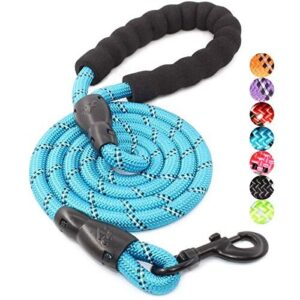
If your dog pulls hard, your hands pay the price. The BAAPET leash fixes that with a half-inch rock-climbing rope and a fully padded handle that absorbs shock and prevents rope burn on long walks or training sessions.
At just 6.38 oz and $7.89, it punches well above its weight. The 360-degree swivel clip stays tangle-free, and the reflective stitching keeps you visible at night.
One honest caveat: the foam handle can stiffen over time.
| Best For | Dog owners with strong or high-energy breeds who want a durable, comfortable leash for daily walks, runs, or training sessions. |
|---|---|
| Material | Nylon rope |
| Weight | 6.38 oz |
| Price | $7.89 |
| Primary Use | Dog walking |
| Size Suitability | Large/strong breeds |
| Low-Light Safety | Reflective stitching |
| Additional Features |
|
- Rock-climbing rope construction handles serious pulling without snapping or fraying
- Padded handle cuts down on hand fatigue and rope burn during long walks
- Reflective stitching adds a layer of visibility for evening or early-morning outings
- Foam padding can harden over time, making the handle less comfortable with heavy use
- The small plastic piece near the clip tends to shift upward after extended use
- No locking mechanism on the clip — it relies on spring tension alone, which may not feel secure enough for very strong dogs
2. Blueberry Pet Baby Pink Dog Leash
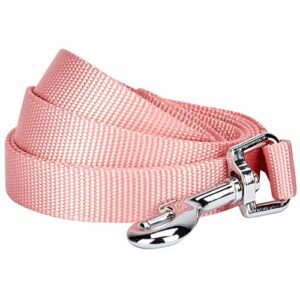
Not every leash needs to be heavy-duty. For small or medium dogs up to about 30 pounds, the Blueberry Pet Baby Pink leash keeps things simple and comfortable.
It’s built from high-density nylon webbing at 3/4-inch wide — light enough at 0.63 oz to avoid tangling in paws, yet strong enough for daily walks and basic training.
The eco-friendly buckle and steel hook hold securely, and cleanup is easy: just wipe and air-dry.
A practical, no-fuss pick if style and simplicity matter to you.
| Best For | Small to medium dog owners (up to ~30 lbs) who want a lightweight, easy-to-clean leash for daily walks and basic training. |
|---|---|
| Material | Nylon webbing |
| Weight | 0.63 oz |
| Price | Not specified |
| Primary Use | Dog walking |
| Size Suitability | Medium breeds up to 30 lb |
| Low-Light Safety | None |
| Additional Features |
|
- Featherlight at 0.63 oz — won’t drag or tangle in your dog’s paws
- Easy to clean; just wipe it down and let it air-dry
- Comfortable grip, especially for anyone with reduced hand strength
- Too narrow for large or strong-pulling breeds
- The ribbon-style design can knot up more than a standard leash
- Fixed 5 ft length with no accessory attachment points
3. Halti Optifit Anti Pull Headcollar

If your dog pulls like a freight train, the Halti Optifit Headcollar gives you a smarter way to steer. Instead of fighting neck strength, it redirects the head — pull left, dog turns left. Simple physics, immediate effect.
The padded nose band won’t restrict panting or drinking, and the cam-lock straps let you dial in a precise fit. Reflective cheek straps help in low-light conditions.
At $23.75, it’s practical control gear — not a punishment tool, just gentle guidance that actually works.
| Best For | Owners of strong, high-energy, or reactive dogs who need better control on walks without resorting to harsh correction tools. |
|---|---|
| Material | Nylon webbing |
| Weight | 4.48 oz |
| Price | $23.75 |
| Primary Use | Anti-pull training |
| Size Suitability | Medium dogs |
| Low-Light Safety | Reflective cheek straps |
| Additional Features |
|
- Redirects pulling instantly by turning head movement into a natural deterrent — no strength needed on your end.
- Padded nose band lets your dog pant, drink, and eat normally while wearing it.
- Reflective straps and a safety backup link add peace of mind in low-light or high-distraction situations.
- Fit has to be spot-on — too loose and it can slip into eyes or mouth, too tight and it’s just uncomfortable.
- Not meant for all-day wear; it comes off after the walk and needs a regular collar alongside it.
- Heavy pullers or chewers may loosen the straps over time, so a quick check before each walk is a good habit.
4. Fruitables Pumpkin Blueberry Dog Treats
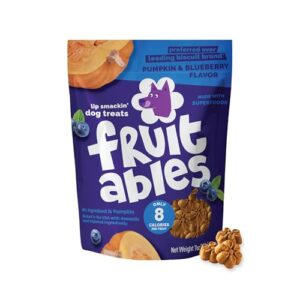
Training rewards only work if your dog actually wants them.
Fruitables Pumpkin Blueberry Biscuits are oven-baked, crunchy treats with just 8 calories each — low enough to use freely without worrying about weight gain. They’re free of wheat, corn, and soy, so dogs with common sensitivities can have them too. The pumpkin and blueberry flavor is genuinely appealing, and the fiber-rich ingredients support digestion.
For walk training especially, a treat your dog notices makes the difference between progress and stalling.
| Best For | Dogs with food sensitivities or weight concerns who need a light, grain-free treat that still gets them excited during training. |
|---|---|
| Material | Injection-molded plastic |
| Weight | 0.29 lb |
| Price | Not specified |
| Primary Use | Mental enrichment |
| Size Suitability | Small to medium breeds |
| Low-Light Safety | None |
| Additional Features |
|
- Only 8 calories per biscuit, so you can reward often without packing on pounds
- No wheat, corn, or soy — great for dogs with common allergies or sensitivities
- Pumpkin and fiber-rich grains help keep digestion on track
- Meat-lovers may not be impressed — some dogs just don’t get excited about fruit-based flavors
- The biscuits can crumble when you break them, which gets a little messy mid-training
- Not a meal replacement, and bigger dogs need portion watching to avoid overdoing it
5. Stewart Freeze Dried Beef Liver Treats
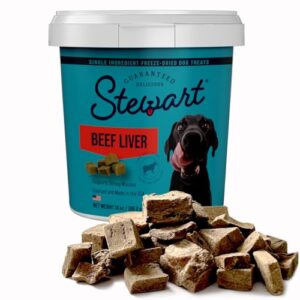
Some dogs turn their nose up at biscuits and need something stronger. That’s where Stewart Freeze Dried Beef Liver Treats come in.
One ingredient — 100% USDA beef liver — nothing added. Each tub holds about 315 pieces, so you’ve got plenty for consistent daily training.
The protein content sits around 50%, which makes these genuinely satisfying for food-motivated dogs. Lightweight and easy to carry on walks, they’re a reliable tool when your dog needs a real reason to keep moving.
| Best For | Dogs that ignore regular treats — especially picky eaters, food-motivated dogs, or pets with dietary sensitivities who need a single-ingredient, hypoallergenic reward. |
|---|---|
| Material | Baked oat biscuit |
| Weight | 7.3 oz |
| Price | Not specified |
| Primary Use | Training reward |
| Size Suitability | All life stages |
| Low-Light Safety | None |
| Additional Features |
|
- Just one ingredient — 100% USDA beef liver, so you always know exactly what your dog is eating
- Around 315 pieces per tub means you’ve got a solid two-month supply for daily training
- Works for dogs and cats, and pulls double duty as a food topper to make boring kibble more appealing
- At $26.99, it’s pricier than most store-bought treats, which adds up fast
- Piece sizes can be all over the place — too small for big dogs, inconsistent within the same batch
- The liver smell is strong, and you’ll want to wash your hands after handling them
6. Halti Adjustable Reflective Anti Pull Headcollar
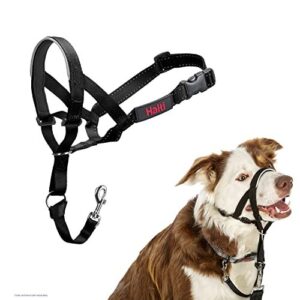
Treats get your dog moving — but if pulling is the real problem, you need something that changes the mechanics. The Halti Adjustable Reflective Headcollar ($24.85) works by gently steering your dog’s head, which naturally redirects the whole body.
No neck pressure, no choking. The padded neoprene noseband keeps it comfortable, and the reflective accents help you stay visible on early morning or evening walks.
Introduce it slowly with rewards, and most dogs adapt without much fuss.
| Best For | Dog owners dealing with a chronic puller who want a humane, training-friendly solution that doesn’t rely on pressure or pain. |
|---|---|
| Material | Freeze-dried beef liver |
| Weight | 14 oz |
| Price | $26.99 |
| Primary Use | Training reward |
| Size Suitability | All dogs and cats |
| Low-Light Safety | None |
| Additional Features |
|
- Can cut pulling by up to 90% — makes a real difference on walks almost immediately
- Padded noseband keeps it comfortable, and the safety link means it won’t slip off mid-walk
- Reflective accents are a nice bonus for low-light walks
- Some dogs push back hard against wearing it — you’ll need patience and treats to get them used to it
- Fit really matters; too loose or too tight and you lose most of the benefit
- The leash attachment point can cause tangling, especially with strong, active dogs
7. ThunderShirt Medium Dog Calming Vest
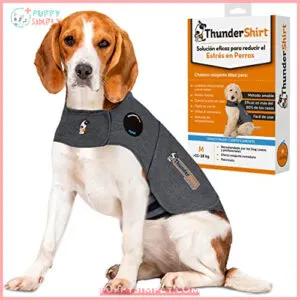
If pulling isn’t the issue but anxiety is, the ThunderShirt Calming Vest ($39.99) takes a different approach entirely.
It wraps gently around your dog’s torso, applying steady pressure — think of it like a firm hug that signals safety to a nervous system on high alert.
For dogs that freeze up from fear rather than pain, that calming effect can make the difference between a walk that happens and one that doesn’t.
Lightweight, washable, and vet-recommended.
| Best For | Dogs that shut down or shake from anxiety — thunderstorms, fireworks, vet visits, or anything loud and unfamiliar. |
|---|---|
| Material | Nylon webbing |
| Weight | 2.08 oz |
| Price | $24.85 |
| Primary Use | Anti-pull training |
| Size Suitability | Medium to large dogs |
| Low-Light Safety | Reflective accents |
| Additional Features |
|
- That pressure-wrap design works like a steady hug, and a lot of dogs genuinely settle down fast
- Lightweight and machine-washable, so it’s easy to use daily or toss in a bag for travel
- Drug-free and vet-recommended — works on its own or alongside calming sprays and chews
- Sizing can be hit or miss; you might need to try a couple sizes before finding the right fit
- Polyester runs warm, so it’s not ideal for dogs in hot climates or during summer months
- It won’t work for every dog — severe anxiety cases may still need medication alongside it
Frequently Asked Questions (FAQs)
Why is my dog not walking?
Your dog’s refusal to walk usually points to one of four things: pain, fear, exhaustion, or a gear problem. Figuring out which one is key to actually fixing it.
Why does my dog refuse to walk without a leash?
Without a leash, your dog loses structure and boundaries — that freedom can actually trigger anxiety, pain responses, or confusion.
Some dogs genuinely feel safer with gentle guidance, keeping them on track.
What if my dog refuses to walk away from home?
Some dogs feel safest close to home. Fear, pain, or anxiety can all make leaving that comfort zone feel impossible.
Check for physical causes first, then consider stress or past negative experiences.
What should I do if my dog refuses to walk?
First, check the paws, then the gear, then the environment.
If nothing looks off, a vet visit is your next move — don’t wait if the refusal is sudden or paired with other symptoms.
What are the signs that a dog is about to pass away?
Watch for appetite loss, extreme lethargy, labored breathing, and incontinence.
A withdrawing dog that stops responding to you or hides more than usual is often signaling that the end is near.
How can I reward my dog for good walking behaviors?
Reward your dog the instant they take a calm step forward — use a small treat, a cheerful "yes," or brief praise.
Timing is everything. That split-second connection is what teaches them walking feels good.
How do I know if my dog is experiencing joint pain?
Joint pain shows up in subtle ways. Look for stiffness after naps, limping, licking at a leg, or swollen joints.
If your dog hesitates on stairs, that’s another red flag worth a vet visit.
How can I properly fit a collar to my dog?
Slide two fingers under the collar. If they fit snugly without being squeezed, you’ve got the right fit. Too loose and it slips; too tight and it chafes.
What are the best ways to desensitize my dog to a certain trigger?
Start below the dog’s reaction point. Pair the trigger with high-value treats, the instant your dog notices it.
Gradually close the distance over multiple short sessions, adjusting one variable at a time.
Can puppies develop walk refusal habits early?
Yes, puppies can absolutely develop walk refusal habits early.
Fear, joint pain, paw discomfort, or illness can all teach a young dog that stopping brings relief — and that lesson sticks fast.
Conclusion
Think of your dog like a compass that stops spinning—it’s not broken, it’s telling you something’s off. When your dog refuses to walk, that planted stance is the needle pointing to a real problem: pain, fear, discomfort, or gear working against them.
Follow where it points. Address the cause, adjust the equipment, build trust one quiet walk at a time.
The dog who wouldn’t budge an inch can become your most willing walking partner.