This site is supported by our readers. We may earn a commission, at no cost to you, if you purchase through links.

Your dog just snatched a cube of Spam off your plate, and now you’re wondering if a trip to the emergency vet is in your near future. It’s a common scenario in many households where this canned meat staple sits in pantries and sometimes lands in curious mouths.
While Spam isn’t immediately toxic like chocolate or grapes, it packs a concerning combination of excessive sodium, high fat content, and preservatives that can harm your dog’s health. Even a small amount can disrupt electrolyte balance, trigger digestive upset, or strain the pancreas—especially in smaller dogs or those with existing health conditions.
Understanding what makes this processed meat risky for canines helps you make informed decisions about treats, prevent accidental consumption, and recognize when your four-legged friend needs medical attention.
Table Of Contents
- Key Takeaways
- What is Spam and What’s in It?
- Can Dogs Eat Spam Safely?
- Health Risks of Feeding Spam to Dogs
- Symptoms After a Dog Eats Spam
- What to Do if Your Dog Eats Spam
- Healthier Alternatives to Spam for Dogs
- Preventing Accidental Spam Consumption
- Frequently Asked Questions (FAQs)
- Is Spam dog friendly?
- Are dogs allowed to Spam?
- What happens if my dog eats Spam?
- Can pets have Spam?
- What canned meat can dogs eat?
- What meat should dogs avoid?
- How does SPAM affect dog behavior?
- Is cooked SPAM safer for dogs?
- Can puppies have a small SPAM portion?
- What immediate actions if a dog eats SPAM?
- Conclusion
Key Takeaways
- Spam isn’t toxic to dogs, but its excessive sodium (790mg per serving—more than a dog’s daily need), high fat content (16g per serving), and preservatives create serious risks including salt poisoning, pancreatitis, and long-term organ damage.
- If your dog eats Spam, watch closely for vomiting, diarrhea, excessive thirst, tremors, or abdominal pain within the first 24-48 hours, and contact your vet immediately if symptoms appear severe or persistent.
- Lean proteins like plain chicken, turkey, or beef offer safer alternatives that provide nutrition without the dangerous sodium overload and inflammatory fat content found in processed meats.
- Prevention through secure food storage, clear household rules, and educating visitors about feeding boundaries protects your dog more effectively than any after-the-fact intervention.
What is Spam and What’s in It?
Before you can figure out whether Spam is safe for your dog, you need to understand what you’re actually dealing with. This canned meat product has been a pantry staple for decades, but its ingredient list tells a different story than its popularity might suggest.
Just like canned beans pose risks due to sodium and additives, Spam shares similar concerns that every dog owner should know about.
Let’s break down what’s really inside that iconic blue tin and why it matters for your dog’s health.
Ingredients and Nutritional Breakdown
Spam packs processed pork, ham, salt, water, modified potato starch, sugar, and sodium nitrate into every can. The curing process uses preservatives to extend shelf life, but this meat composition creates concerns for canine health and pet nutrition.
Each serving delivers significant protein alongside troubling levels of fat and calories. Food additives like sodium nitrate preserve color and safety, yet these same ingredients raise red flags when you’re considering your dog’s bowl.
Sodium, Fat, and Preservatives in Spam
Looking at the nutrition label reveals the core issue: a single two-ounce serving contains about 790 milligrams of sodium—more than your dog needs in an entire day.
One serving of Spam contains 790 milligrams of sodium—more than a dog needs in an entire day
That same portion packs 16 grams of fat, setting the stage for pancreatitis in susceptible pets.
Sodium nitrite acts as the primary preservative, preventing food toxicity from bacteria while fixing that familiar pink color. For more on Spam’s role as a wartime shelf-stable staple, explore how it became a global phenomenon.
Why Spam is Popular in Human Diets
Hormel Foods Corporation built an empire on convenience foods that solved real problems. People reach for this canned pork product for five clear reasons:
- Shelf life of two to five years means you can stock your pantry without worry
- Pre-cooked meat products cut meal prep time dramatically
- Adaptable recipes work across breakfast, lunch, and dinner
- Global availability puts it within reach almost anywhere
- Cultural significance in certain regions—from Hawaii to the Philippines—keeps demand strong
That same convenience poses risks when Spam ends up in your dog’s bowl. Note that Spam’s can have health implications for both humans and pets.
Can Dogs Eat Spam Safely?

Technically, dogs can eat Spam without immediate toxic effects, but that doesn’t mean they should. The real question isn’t whether it’s poisonous—it’s whether the high sodium, fat, and preservatives make it a safe choice for your pet.
Let’s break down what veterinarians actually say about feeding Spam to dogs, from one-time accidents to regular treats.
Is Spam Toxic to Dogs?
Is pork itself dangerous to your dog? No—plain cooked pork isn’t toxic, but Spam’s real threat comes from what’s added to the meat. The excessive sodium can trigger salt poisoning, while high fat content raises pancreatitis risk. Ingredient dangers multiply with repeated exposure, potentially leading to canine obesity and long-term effects on heart and kidney health.
| Toxicity Concerns | Risk Level |
|---|---|
| Pork protein alone | Low (not toxic) |
| Sodium overload | High (salt poisoning possible) |
| Fat content | Moderate to high (pancreatitis) |
| Preservatives/additives | Moderate (digestive upset) |
Occasional Vs. Regular Consumption
Regarding Spam and Dog Health and Nutrition, Consumption Patterns make all the difference. An occasional nibble won’t necessarily trigger Pancreatitis, but regular feeding creates Food Addiction risks and disrupts Nutrient Balance.
Since Spam shares similar high-salt and preservative concerns with other processed meats, understanding how sodium and additives affect your dog’s digestion can help you make safer snack choices.
Habit Formation happens faster than you’d think, undermining Dietary Flexibility and Food Safety for Pets.
Following Veterinary Advice means keeping Spam off the menu entirely—your dog’s health depends on it.
Veterinarian Insights on Spam for Dogs
Canine nutrition experts agree: Spam isn’t a safe choice for your dog. Vets consistently warn that its 790 milligrams of sodium per serving and high fat content pose real risks, from food toxicity to pancreatitis.
When seeking veterinary advice on pet safety tips, professionals recommend dog food alternatives and healthy snacks instead—your dog deserves veterinary care that prioritizes long-term wellness over convenience.
Health Risks of Feeding Spam to Dogs

While your dog won’t collapse after sneaking a bite of Spam, the ingredients in this canned meat can cause real problems over time. The combination of excessive sodium, unhealthy fats, and chemical preservatives creates a perfect storm for canine health issues.
Let’s break down the three main risks you need to understand before sharing any Spam with your pup.
Excessive Sodium and Salt Poisoning
Spam’s sodium content poses a serious threat to your dog’s health. Just one serving contains more salt than a dog needs all day, and excess sodium intake disrupts electrolyte balance, pulling water from cells and triggering hypernatremia.
This food toxicity can quickly spiral into salt poisoning, causing dehydration risks, confusion, seizures, and even life-threatening brain injury requiring urgent veterinary intervention.
High Fat Content and Pancreatitis
Beyond the sodium concern, Spam’s high fat content puts serious strain on your dog’s pancreas. Fat metabolism in dogs differs from ours, and fatty foods like Spam can trigger pancreatitis—a painful inflammation where digestive enzymes attack the organ itself.
High fat diets increase this risk substantially, causing pancreatitis symptoms like vomiting, abdominal pain, and lethargy that require immediate veterinary attention.
Effects of Preservatives and Additives
Your dog’s body wasn’t designed to process the chemical cocktail in processed foods like Spam. Preservatives such as sodium nitrite and various additives create toxic compounds that accumulate over time, potentially triggering allergic reactions and nutrient imbalance.
Consider these preservative risks:
- Nitrites can interfere with oxygen transport in blood
- Chemical reactions may damage liver and kidney function
- Additive effects compound existing sodium and fat concerns
Symptoms After a Dog Eats Spam

If your dog succeeds in sneaking a piece of Spam, you’ll want to keep a close eye on them for the next several hours. Some dogs won’t show any issues at all, while others may develop symptoms fairly quickly depending on how much they ate and their individual sensitivity.
Here’s what to watch for so you can respond appropriately.
Vomiting and Diarrhea
Within a few hours of eating Spam, your dog may start vomiting or develop diarrhea as their stomach and intestines react to the sudden overload of salt and fat. These gastro issues signal digestive problems and stomach upset that shouldn’t be ignored.
Persistent vomiting paired with watery stool can quickly lead to dehydration and may indicate developing pancreatitis or even food poisoning, especially in smaller dogs.
Increased Thirst and Dehydration
After the digestive upset comes another telltale sign: excessive thirst. High sodium levels trigger thirst mechanisms as your dog’s body scrambles to restore fluid balance and flush out the salt overload. You’ll notice your pup drinking more water than usual, a direct response to sodium-induced dehydration risks.
Watch for these dehydration signals:
- Dry, tacky gums instead of moist ones
- Reduced skin elasticity when gently pinched
- Lethargy or unusual tiredness
- Dark, concentrated urine or infrequent urination
Electrolyte imbalance from vomiting and diarrhea worsens dehydration, creating a cycle that can quickly become serious without intervention.
Signs of Pancreatitis or Salt Toxicity
When symptoms escalate past thirst and digestive upset, you’re facing two serious conditions: salt poisoning and pancreatitis risk.
Toxicity symptoms include muscle tremors, disorientation, or seizures from severe electrolyte imbalance. Pancreatitis presents as a hunched posture, abdominal tenderness, and persistent vomiting paired with diarrhea.
Both conditions demand immediate veterinary care, as canine dehydration compounds rapidly when sodium levels spiral out of control.
What to Do if Your Dog Eats Spam

If your dog gets into Spam, staying calm and taking the right steps quickly can make a real difference. The actions you need to take depend on how much they ate and how they’re acting afterward.
Here’s what you should do to keep your dog safe and know when professional help is necessary.
Immediate Steps to Take at Home
If your dog snags a piece of Spam, stay calm and act quickly with these first aid measures to protect their health:
- Remove any leftover Spam and secure the area to prevent further access
- Offer fresh water in small amounts to help flush excess sodium and prevent dehydration
- Monitor closely for vomiting, diarrhea, or signs of distress over the next four hours
- Withhold food for six to twelve hours if vomiting occurs, then introduce a bland diet
- Document the amount consumed and any symptoms for potential veterinary consultation
When to Call The Veterinarian
While careful observation helps most cases, some situations demand immediate veterinary attention. Contact your vet or poison control right away if your dog shows any of these urgent care indicators:
| Emergency Signs | What It Means |
|---|---|
| Repeated vomiting (3+ times) | Possible salt toxicity or severe digestive distress |
| Extreme lethargy or weakness | Dehydration or metabolic imbalance developing |
| Severe abdominal pain | Potential pancreatitis requiring urgent treatment |
| Seizures or tremors | Salt poisoning causing neurological symptoms |
| Pale or blue gums | Poor oxygenation needing immediate evaluation |
Don’t wait overnight if these canine emergencies appear—prompt intervention protects your dog’s health and prevents serious complications.
Monitoring Your Dog for Complications
Even after the initial scare passes, your dog needs close observation for 24 to 48 hours. Delayed complications from pancreatitis, dehydration, or salt poisoning can emerge unexpectedly.
Keep these Pet Health Monitoring priorities front and center:
- Essential Sign Tracking – Check gum color, energy levels, and breathing patterns every few hours to catch subtle changes.
- Symptom Identification – Watch for persistent vomiting, diarrhea, excessive thirst, or abdominal tenderness signaling a Canine Emergency.
- Veterinary Guidance – Document any worrying signs and contact your vet if symptoms worsen or new concerns appear.
Healthier Alternatives to Spam for Dogs
If you’re looking for better protein options for your dog, you don’t need to look far. Plenty of wholesome alternatives exist that won’t spike sodium levels or threaten your dog’s pancreas.
Let’s explore some veterinarian-approved choices that deliver nutrition without the health risks.
Lean Meat Options (Chicken, Turkey, Beef)

If you’re looking for healthier meat products than Spam, lean protein sources like skinless chicken, turkey breast, and lean beef cuts are excellent alternatives. Chicken nutrition shines with about 31 grams of protein per serving, while turkey benefits include lower fat content—around 1.5 to 3.5 grams per portion.
These options support dog nutrition without triggering canine digestive issues that processed meat can cause.
Safe Homemade Treat Ideas

You can sidestep dietary dangers for dogs by creating homemade dog biscuits using lean ground turkey, oats, and pumpkin puree—healthy snack options that support dog nutrition without excess sodium.
Pet-friendly recipes like plain chicken mixed with mashed sweet potato offer natural treat ideas free from harmful preservatives.
These homemade pet chews give you control over ingredients while following sound pet nutrition advice.
Nutritional Dog Food Recommendations
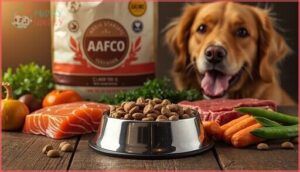
When building a complete canine diet that promotes long-term health, you’ll want commercial dog foods that list real chicken, beef, or fish first—these follow dog nutrition basics and offer true nutritional balance.
- Check for AAFCO statements confirming the formula meets balanced diets standards for your dog’s life stage
- Read pet food labels to avoid unnamed by-products and excessive fillers
- Consider canine supplements like omega fatty acids if your vet recommends them
- Choose healthy snacks with whole ingredients instead of processed meats high in sodium
Preventing Accidental Spam Consumption

The best way to keep your dog safe is to make sure they can’t get to Spam in the first place. A few simple changes to how you store food and communicate with others can prevent most accidents.
Here’s how to create a safer environment at home and reduce the chances of an unwanted snack.
Safe Food Storage and Handling
Your first line of defense against food hazards is storing Spam properly. Keep unopened cans in a cool pantry, and once opened, transfer contents to an airtight container—never leave them in the can. Refrigerate at 40°F or below and use within three to four days.
Store Spam on lower shelves, away from your dog’s reach, following basic refrigeration guidelines and handling practices that protect both food safety and pet food safety.
Educating Family and Visitors
Your household rules mean nothing if the people around you don’t understand them. Visitor etiquette starts with clear guest education—explain to family and friends why Spam poses dog health risks before they slip your pup a “harmless” bite.
Share basic pet safety guidelines, emphasize food safety boundaries, and remind dog owners and guests alike that pet care and wellness depend on consistent family awareness and household rules.
Tips for Responsible Pet Feeding
Beyond keeping Spam out of reach, responsible pet ownership means building solid pet nutrition plans around balanced diets and consistent feeding schedules.
Measure portions carefully, limit healthy snacking to 10 percent of daily calories, and choose foods that support canine health rather than create dog health risks.
When you prioritize dog food safety and thoughtful meal portioning, you’re protecting your companion from preventable harm.
Frequently Asked Questions (FAQs)
Is Spam dog friendly?
A Labrador once snatched Spam from a picnic table—within hours, his owner noticed excessive thirst and stomach upset.
No, Spam isn’t dog-friendly due to high sodium, fat, and preservatives that pose canine health risks.
Are dogs allowed to Spam?
Dogs aren’t prohibited from eating Spam, but vets strongly discourage it. The excessive sodium and fat pose serious health risks, including Pancreatitis and salt toxicity, making Spam a poor choice for canine nutrition and dog food safety.
What happens if my dog eats Spam?
Most dogs will show mild stomach upset—vomiting or diarrhea—within hours.
Serious scenarios include salt poisoning or pancreatitis, especially after large amounts, warranting immediate veterinary care and careful pet first aid monitoring.
Can pets have Spam?
Most pets shouldn’t have Spam. While cats and dogs aren’t poisoned by pork itself, the extreme sodium and fat levels pose serious health risks across species, making safer meat alternatives essential for pet wellness.
What canned meat can dogs eat?
Plain canned chicken or turkey in water, without added seasonings, works well for occasional treats.
Boneless canned salmon packed in water provides healthy omega-3s.
Always rinse meat to reduce excess sodium.
What meat should dogs avoid?
Fatty meat risks, processed meat dangers, and high sodium foods top the list.
Raw meat hazards, spoiled meat toxins, and items like spam pose serious threats to dog nutrition and overall health.
How does SPAM affect dog behavior?
High sodium and fat in Spam can trigger restlessness, digestive discomfort, and increased begging behavior in dog owners’ pets. Food association forms quickly, leading to behavioral changes like persistent kitchen hovering and learned food-seeking habits that challenge canine temperament.
Is cooked SPAM safer for dogs?
Cooking doesn’t reduce sodium, fat, or preservatives in Spam—the core risks for canine health.
Your dog faces the same pancreatitis and toxicity concerns whether the meat is cooked or straight from the can.
Can puppies have a small SPAM portion?
Should tiny tummies risk it? Puppies have immature canine digestion and lower sodium tolerance. Even small portions pose puppy safety concerns—salt toxicity and pancreatitis risk outweigh any perceived benefit. Veterinary care professionals recommend spam alternatives entirely.
What immediate actions if a dog eats SPAM?
Remove any leftover Spam immediately, offer fresh water, and monitor for vomiting, diarrhea, or unusual behavior.
Call your vet right away if your dog ate a large amount or shows concerning symptoms.
Conclusion
Your dog’s health depends on thoughtful choices, your vigilance protects against preventable harm, and your awareness ensures safer mealtimes. While the question “can dogs eat spam” has a clear answer—avoid it—the real takeaway lies in understanding why processed meats pose unnecessary risks.
Stick with lean proteins, monitor kitchen access carefully, and consult your veterinarian when accidents happen. Small preventive steps today safeguard your companion’s digestive system, pancreatic function, and overall wellbeing for years ahead.
- https://www.justanswer.com/dog-health/a2tgp-gave-dog-spam-will-okay-drinking-alot-water.html
- https://pangovet.com/talk-to-a-vet-online-dog-nutrition/?utm_source=hepper&utm_medium=article&utm_campaign=dog-nutrition&utm_content=can-dogs-eat-spam
- https://www.merckvetmanual.com/toxicology/salt-toxicosis/salt-toxicosis-in-animals
- https://www.hepper.com/can-dogs-eat-spam/
- https://blog.tryfi.com/can-dogs-eat-spam/