
This site is supported by our readers. We may earn a commission, at no cost to you, if you purchase through links.

Your dog’s curious sniff at your dinner plate might spark a quick question: can dogs eat collard greens? The short answer is yes, but only when you prepare them correctly. These nutrient-dense leafy greens pack vitamins A, C, and K, which support your dog’s vision, immune function, and bone health.
However, raw collard greens contain calcium oxalate, a compound that can contribute to bladder stones in susceptible dogs, and the tough stems pose choking hazards. Steaming plain leaves until soft, removing all stems, and serving small portions transforms collard greens into a safe, beneficial treat. The key is understanding proper preparation methods, recognizing which dogs should avoid them entirely, and knowing exactly how much to serve based on your dog’s size.
Table Of Contents
- Key Takeaways
- Are Collard Greens Safe for Dogs?
- Nutritional Benefits of Collard Greens for Dogs
- How to Properly Prepare Collard Greens
- Potential Risks and Health Concerns
- Recommended Serving Sizes by Dog Weight
- When to Consult Your Veterinarian
- Frequently Asked Questions (FAQs)
- Can a dog eat cooked collard greens?
- How to prepare collard greens for dogs?
- What greens are good for dogs?
- Can dogs eat raw collard greens?
- How often can dogs have collard greens?
- Do collard greens cause diarrhea in dogs?
- Can collard greens help dogs lose weight?
- Are collard greens good for a dogs skin?
- Can puppies safely eat collard greens?
- Are collard green stems ever safe for dogs?
- Conclusion
Key Takeaways
- Dogs can safely eat collard greens only when you steam or boil plain leaves, remove all stems to prevent choking, and serve small portions based on weight—never feed raw, seasoned, or canned varieties.
- The calcium oxalate in collard greens can contribute to bladder stones in susceptible dogs, making them completely off-limits for any dog with existing kidney or bladder issues.
- Proper serving sizes range from one teaspoon for small dogs under 20 pounds to half-to-one cup for large dogs over 70 pounds, offered two to three times weekly rather than daily.
- While collard greens provide beneficial vitamins A, C, and K plus digestive fiber, you must monitor your dog for gas, bloating, or digestive upset and consult your veterinarian before introducing them to the diet.
Are Collard Greens Safe for Dogs?
The good news is that collard greens aren’t toxic to dogs, but that doesn’t mean they’re automatically safe for every pup. Whether your dog can enjoy these leafy greens depends on how you prepare them and your dog’s individual health status.
For instance, collard greens cooked in butter and garlic might seem tasty, but garlic is dangerous for dogs and should always be avoided.
Let’s break down when collard greens are safe and when you need to be more cautious.
General Safety Overview
The good news: collard greens aren’t inherently toxic to dogs, and when you follow proper Safety Protocols, they can be a nutritious addition to your pup’s bowl. Think of preparation as your primary Hazard Prevention tool—it transforms this leafy vegetable from a potential gastrointestinal challenge into a safe treat.
- Fresh leaves only, never raw or seasoned
- Steam or boil to improve digestibility
- Remove all stems to prevent choking
- Monitor for individual sensitivities
Compliance with these standards protects your dog’s health.
When Collard Greens Can Be Harmful
Despite their nutritional benefits, collard greens can pose Toxicity Risks when served incorrectly or consumed in excess. Digestive Problems like gas and bloating often arise from overfeeding, while Oxalate Issues may contribute to bladder issues in predisposed dogs.
Seasoned varieties introduce food toxicity concerns through sodium, and uncooked greens challenge the gastrointestinal tract. You must recognize these Nutrient Imbalances and vegetable toxicity factors before adding greens to your dog’s meals.
For a detailed look at their fiber and vitamin K content, consider their effects on overall health and digestion.
Dogs With Kidney or Bladder Issues
If your dog has kidney issues or bladder issues, you must avoid collard greens entirely. The calcium oxalate and isothiocyanates in these leaves can worsen existing conditions, interfere with Renal Diet Planning, and potentially trigger stone formation.
Dogs with kidney or bladder issues must avoid collard greens entirely, as calcium oxalate can worsen their condition and trigger stone formation
Canine Nephrology experts recommend Urinary Tract Care strategies that exclude high-oxalate vegetables, focusing instead on Kidney Stone Prevention and Bladder Health Management through veterinarian-approved foods customized to your dog’s specific needs.
Nutritional Benefits of Collard Greens for Dogs

Collard greens pack a serious nutritional punch that can benefit your dog when served properly. These dark leafy vegetables contain vitamins, minerals, and fiber that support various aspects of canine health, from immune function to digestion.
Let’s look at the specific nutrients that make collard greens worth considering for your dog’s diet.
Pairing collard greens with healthy fats for your dog’s diet can help maximize absorption of fat-soluble vitamins like A and K.
Vitamins A, C, and K
Collard greens pack three essential vitamins that support canine nutrition in distinct ways. Vitamins A, C, and K work together through nutrient interactions to strengthen your dog’s health, though you must understand their individual functions before adding dietary supplements or whole foods.
- Vitamin A benefits include supporting normal vision, immune function, and healthy skin
- Vitamin C sources provide antioxidant protection and collagen synthesis
- Vitamin K functions regulate blood clotting and bone metabolism
- These fat-soluble and water-soluble vitamins complement each other
- Proper preparation preserves vitamin content for maximum absorption
Fiber Content and Digestive Health
Your dog’s gastrointestinal health depends on adequate fiber benefits, and collard greens deliver the insoluble type that promotes regular bowel movement. This dietary aid adds bulk to stool, normalizes digestive transit, and aids gut health when you incorporate it correctly into canine nutrition.
| Fiber Benefit | Digestive Impact |
|---|---|
| Insoluble bulk | Speeds stool passage |
| Stool normalization | Prevents constipation |
| Satiety support | Aids weight management |
Recent research highlights the significance of in aiding overall digestive well-being.
Minerals and Protein
Beyond vitamins, collard greens supply essential mineral balance through magnesium, which drives over 300 enzymatic reactions supporting muscle function and nerve conduction in canine dietary needs.
You’ll find calcium for skeletal strength, iron supplements for oxygen transport, and zinc supporting immune health. This nutrient absorption package, paired with modest protein sources, rounds out your dog’s nutrient intake when you prepare these greens properly.
How to Properly Prepare Collard Greens
The way you prepare collard greens matters just as much as whether you serve them at all.
Raw or improperly cooked greens can be tough on your dog’s digestive system, and certain preparation methods introduce risks you’ll want to avoid.
Let’s walk through the essential steps to make collard greens safe and digestible for your pup.
Steaming or Boiling The Leaves

Cooking collard greens properly ensures both vegetable safety and nutrient retention for your dog’s health. Steaming or boiling the leaves softens the fiber structure, which aids canine dietary needs and makes the greens easier to digest.
- Steaming preserves more vitamins using indirect heat for 5 to 7 minutes, maintaining leaf texture and nutrition
- Boiling takes 3 to 5 minutes in plain water but can leach minerals
- Heat control matters—avoid overcooking to prevent mushiness and nutrient loss
Remove Stems to Prevent Choking
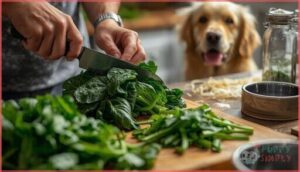
Before you feed collard greens to your dog, you must strip the leaves from their thick central stems to protect your pet’s airway and gastrointestinal health.
Stem removal reduces choking hazards substantially, as the fibrous, rigid stems can lodge in the throat or esophagus during chewing. Use a sharp knife to separate each leaf at the junction, then chop the stemless greens into small, uniform pieces for safe consumption.
Avoid Canned or Seasoned Varieties

You must choose fresh greens over canned varieties to safeguard your dog’s sodium balance and nutrient retention.
Canned Food Risks include high salt levels that can exceed daily canine requirements in a single serving, plus preservatives that compromise digestive comfort.
Seasoning Dangers extend to garlic, onion powder, and artificial additives commonly found in prepared collard greens.
Fresh Preparation through steaming maximizes vitamins while Safe Storage Methods preserve quality without chemical exposure.
Potential Risks and Health Concerns
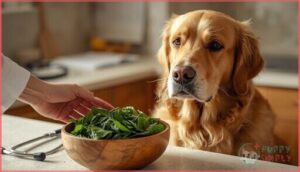
While collard greens offer nutritional benefits, they aren’t without their downsides. You need to understand the potential health risks before adding them to your dog’s bowl, especially if your pet has certain sensitivities or underlying conditions.
Let’s examine the most important concerns you should watch for.
Calcium Oxalate and Bladder Stones
Collard greens contain calcium oxalate, compounds that can combine in your dog’s urine and form hard, painful kidney stones or bladder crystals. When oxalate levels rise in urine chemistry, they disrupt mineral balance and threaten kidney health.
Dogs with existing kidney issues face even higher risk, as their bodies struggle to process these substances efficiently. This serious canine health concern demands careful monitoring of gastrointestinal health and stone formation patterns.
Gas, Bloating, and Digestive Upset
Beyond bladder stones, you’ll need to watch for gas and bloating when introducing these cruciferous greens.
The high fiber content triggers fermentation in your dog’s gut, where digestive enzymes break down complex carbohydrates and produce hydrogen and methane.
This fermentation process can cause uncomfortable gastrointestinal issues like abdominal distention, especially in dogs with fiber intolerance or sensitive gut health.
Salt Poisoning From Seasoned Greens
Seasoning presents an even greater threat than digestive upset. When you add butter, garlic, onion powder, or bacon drippings to collard greens, you risk salt toxicity and electrolyte balance disruption in your dog’s system.
Watch for these salt poisoning signs after ingestion:
- Excessive thirst and urination within hours
- Vomiting, diarrhea, or confusion
- Seizures, tremors, or muscle weakness in severe cases
Canine hydration status affects sodium concentration, so dehydration worsens seasoning risks rapidly.
Recommended Serving Sizes by Dog Weight

Portion control matters when you’re adding collard greens to your dog’s meals, and size plays a big role in getting it right.
A Chihuahua shouldn’t eat the same amount as a Golden Retriever, so you’ll need to adjust based on your dog’s weight and build. Here’s a practical breakdown to help you measure out safe servings for small, medium, and large dogs.
Small Dogs: Teaspoon to Tablespoon
For small dogs weighing under 20 pounds, you should start with just one teaspoon of steamed collard greens. If your pup tolerates this well, you can gradually increase to one tablespoon maximum.
This cautious approach to dog food safety prevents digestive upset while providing canine health benefits. These healthy snack options work best when mixed into regular meals, following pet nutrition advice for small breed diets.
Medium Dogs: Quarter to Half Cup
If you have a medium breed dog weighing 20 to 50 pounds, you can offer a quarter to half cup of cooked collard greens per meal. This feeding guideline balances canine nutrition with digestive health, allowing your dog to benefit from vegetables for dogs without overwhelming their system.
Adjust portions based on your pet’s individual response, following pet nutrition advice for nutrient balance and healthy eating for dogs.
Large Dogs: Half to One Cup
For large breed dogs weighing 70 to 100 pounds, you can safely provide half to one cup of steamed, chopped collard greens per day as dog food supplements. This serving promotes daily fiber intake and canine digestive health while delivering green vegetable benefits essential for large breed nutrition.
Split this amount into two meals to prevent gas, and always introduce collard greens gradually to support ideal dog health and canine nutrition.
When to Consult Your Veterinarian

Even though collard greens can be a healthy treat for many dogs, you shouldn’t make this decision on your own. Your veterinarian knows your dog’s medical history, current health status, and any underlying conditions that might make collard greens risky.
Here’s when you need to pick up the phone and get professional guidance before serving these leafy greens.
Before Adding Collard Greens to Diet
Before you weave collard greens into your dog’s diet, schedule a veterinarian consultation to review dietary needs and health considerations specific to canine nutrition.
Bring a sample of your current dog diet to discuss how these greens fit within nutrient balance and dietary restrictions. Your vet will provide customized feeding guidelines based on weight, existing conditions, and proper food preparation for dogs.
Monitoring Your Dog’s Response
After introducing collard greens, you must track your dog’s digestive tracking and behavioral signs for at least seven to ten days. Health monitoring provides essential data on nutrient absorption and gastrointestinal health, helping you spot animal health risks early.
Key dog care tips for monitoring dogs’ response include: 1. Record stool consistency, frequency, and color changes 2. Note gas, bloating, or appetite shifts within 48 hours 3. Track water intake and urination patterns daily 4. Watch for skin reactions or respiratory issues 5. Document reaction times between feeding and symptoms. Share unusual patterns with your vet to guarantee pet health remains supreme.
Safer Alternative Vegetables
If collard greens don’t suit your dog’s system, you have plenty of safer routes to explore. Consider leafy greens like spinach or romaine lettuce, root vegetables such as carrots and sweet potatoes, or crunchy snacks including green beans and cucumber—all delivering vegetable nutrition without the oxalate concerns that complicate collard greens safety for dogs with sensitive digestion.
| Leafy Greens | Root Vegetables | Crunchy Snacks |
|---|---|---|
| Spinach (small amounts) | Carrots (beta carotene) | Green beans (fiber-rich) |
| Romaine lettuce | Sweet potatoes (complex carbs) | Cucumber (hydrating) |
| Kale (vitamin K) | Pumpkin (digestive aid) | Celery (mineral-rich) |
Frequently Asked Questions (FAQs)
Can a dog eat cooked collard greens?
Yes, most healthy dogs can enjoy small amounts of plain collard greens as an occasional treat.
Steamed or boiled leaves without salt, seasonings, or fatty add-ins support healthy digestion methods in canine nutrition.
How to prepare collard greens for dogs?
Steam or boil the leaves thoroughly, then chop them into small pieces to aid canine digestion.
You must remove all stems to prevent choking, and never add salt, butter, garlic, or onions.
What greens are good for dogs?
Safe leafy greens for canine diets include spinach, kale, and collard greens—all nutrient-rich foods that provide vitamins A, C, and K.
Green vegetables like these support dog nutrition and pet health when prepared plain and served moderately.
Can dogs eat raw collard greens?
While raw feeding has appeal, your dog’s gastrointestinal health faces risks from raw greens.
Raw collard greens are hard to digest, potentially causing gas, diarrhea, and stomach upset—cooked cruciferous vegetables are safer.
How often can dogs have collard greens?
You should offer collard greens as an occasional treat, not daily—maybe two to three times weekly in small portions.
This feeding frequency promotes canine nutrition while respecting digestive limits and preventing potential health issues.
Do collard greens cause diarrhea in dogs?
Collard greens can trigger diarrhea in dogs when introduced too quickly, fed in large portions, or served raw.
The high fiber content may overwhelm digestive systems, causing loose stools and gastrointestinal upset in sensitive dogs.
Can collard greens help dogs lose weight?
Like a feather on the scale, these greens barely register calorically yet deliver fiber that promotes fullness—making them a smart, low-calorie addition to your dog’s weight loss plan when balanced with proper nutrition and portion control.
Are collard greens good for a dogs skin?
Yes, collard greens support skin and coat health through vitamins A, C, and E, which protect against oxidative stress and maintain a healthy skin barrier, though they won’t cure existing allergies or dermatology conditions.
Can puppies safely eat collard greens?
When steamed greens are served plain, these leafy greens fit into puppy nutrition safely—though only in tiny portions.
Start with a teaspoon, watch for digestive upset, and skip them entirely if your pup has urinary issues.
Are collard green stems ever safe for dogs?
In general, you should remove stems completely because their tough fiber content can trigger digestive issues, choking, or gas in many dogs, making them a poor choice compared to properly steamed leaves.
Conclusion
Collard greens offer impressive nutrition yet demand careful handling—a vegetable both beneficial and potentially risky. Whether you can dogs eat collard greens safely depends entirely on your preparation method, your dog’s health history, and portion control.
Steam plain leaves until soft, remove every stem, and start with small amounts while watching for digestive changes. Dogs with kidney issues require veterinary approval first. When prepared correctly, these leafy greens become a valuable addition, not a dietary gamble.