
This site is supported by our readers. We may earn a commission, at no cost to you, if you purchase through links.

Your first swipe with the wrong brush teaches a hard lesson fast—yelps, tangled fur, and a dog bolting under the bed. I’ve watched it happen in my grooming studio more times than I can count. New pet owners grab whatever’s cheap at the store, then wonder why their dog dreads brushing day.
Here’s the thing: deshedding brushes for beginners aren’t one-size-fits-all. A tool built for a Husky’s thick double coat will scrape and irritate a Chihuahua’s thin fur. Get the match wrong, and you’re not just wasting money—you’re building distrust with every stroke.
Below, you’ll find ten brushes worth your cash, plus the coat-matching know-how that turns a nervous first-timer into a confident groomer.
Table Of Contents
- Key Takeaways
- Top 10 Deshedding Brushes for Beginners
- 1. FURminator Large Dog Undercoat Deshedding Tool
- 2. Dual Sided Pet Deshedding Brush
- 3. Miu Color Pet Grooming Brush
- 4. SleekEZ Patented Dog Deshedding Brush
- 5. Maxpower Double Sided Pet Grooming Rake
- 6. Hertzko Self Cleaning Pet Slicker Brush
- 7. Paw Brothers Extra Long Slicker Brush
- 8. GoPets Double Sided Pet Grooming Comb
- 9. Aumuca Self Cleaning Pet Slicker Brush
- 10. Docrok pet deshedding brush combo
- Match Brushes to Dog Coats
- Beginner-Friendly Brush Features
- Safe Deshedding for First-Timers
- Deshedding Schedule and Maintenance
- Frequently Asked Questions (FAQs)
- What is the best brush to deshed a dog?
- How often should you brush your dog with a deShedding brush?
- Are deShedding brushes good for dogs?
- What do groomers do to deshed dogs?
- How much does professional dog grooming typically cost?
- Can I use a deshedding brush on wet fur?
- Whats the difference between deshedding and detangling tools?
- Are grooming gloves effective compared to traditional brushes?
- Should puppies be deshedded the same as adult dogs?
- Conclusion
Key Takeaways
- Match your brush to your dog’s bristle type of coat—double coats, short hair, curly fur, and long hair each need different tools, so a Husky’s rake will irritate a Chihuahua’s thin coat.
- Look for beginner-friendly features like rounded tooth tips, stainless-steel teeth, non-slip handles, and self-cleaning buttons to make grooming safer and easier.
- Protect trust and skin by brushing with the hair growth direction, using light pressure, keeping early sessions short, and avoiding sensitive areas like the belly, joints, and spine.
- Stick to a consistent routine—two brushing sessions a week, more during seasonal shedding—and keep your tools clean and dry to prevent rust and skin irritation.
Top 10 Deshedding Brushes for Beginners
Walking into a pet store’s grooming aisle can feel overwhelming, with dozens of brushes promising the same results. You don’t need all of them—just the right one for your dog’s coat and your comfort level as a beginner. Here are ten tools worth your money, starting with a name you’ve probably already heard.
Whether your pup loves muddy trails or backyard romps, this breakdown of the best dog grooming brushes for outdoor dogs makes picking the right one a lot less guesswork.
1. FURminator Large Dog Undercoat Deshedding Tool
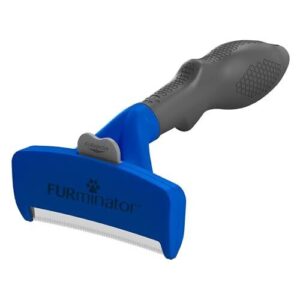
1.1 FURminator Large Dog Undercoat Deshedding Tool
This is the tool most groomers reach for first, and for good reason. Its 4-inch curved edge fits dogs over 50 pounds, guiding a stainless steel edge through the topcoat to grab loose undercoat hair.
The FURejector button releases collected fur with one push—no tugging clumps off by hand. Built for double-coated breeds like Labs, it’s rated to cut shedding by up to 90%. Pricier than a basic comb, but the ergonomic handle earns its keep during long sessions.
| Best For | Owners of large dogs (50+ lbs) with long, double coats—like Labs or Border Collies—who deal with heavy seasonal shedding. |
|---|---|
| Handle Type | Ergonomic |
| Skin Protection | Curved edge design |
| Coat Type | Long hair |
| Material | Metal |
| Primary Function | Deshedding |
| Cleanup Method | FURejector button |
| Additional Features |
|
- Cuts loose undercoat shedding by up to 90%, keeping fur off furniture and floors
- FURejector button makes cleanup quick with no clumps stuck to the tool
- Ergonomic handle and curved edge stay comfortable through longer grooming sessions
- Costs more than a standard grooming comb or brush
- Won’t work on matted fur—mats need to be removed beforehand
- FURejector button may not perform as well on fine-haired coats
2. Dual Sided Pet Deshedding Brush
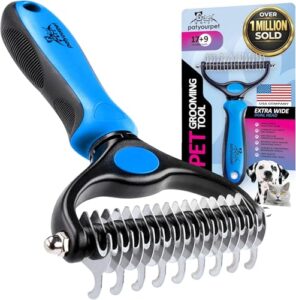
Not every beginner has a 50-pound dog, though—that’s where the Pat Your Pet dual-head brush steps in. One side packs 9 teeth for dematting, the other 17 for thinning undercoat.
Rounded tips protect skin, while slightly sharpened blades cut through tangles without excessive tugging. It works on dogs, cats, and even horses. At 3.2 ounces with a non-slip handle, it’s light enough for long sessions. You even get a bonus paw-shaped tag thrown in.
| Best For | Owners of medium to long-haired dogs, cats, or horses who need an easy way to tackle mats, tangles, and heavy shedding. |
|---|---|
| Handle Type | Non-slip rubber |
| Skin Protection | Rounded teeth ends |
| Coat Type | Medium to long |
| Material | Stainless steel and rubber |
| Primary Function | Dematting and thinning |
| Cleanup Method | Manual removal |
| Additional Features |
|
- Dual-head design offers both dematting and thinning in one tool
- Rounded teeth tips help protect skin during grooming
- Lightweight, non-slip handle makes it comfortable for longer sessions
- Sharpened blades require careful handling to avoid nicking skin
- Not ideal for pets with short or thin coats
- Only two teeth options, which may limit versatility for very specific coat needs
3. Miu Color Pet Grooming Brush
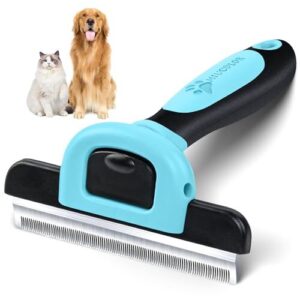
Budget-conscious owners will appreciate this one. The MIU COLOR brush works as a two-sided undercoat rake, pulling loose hair without yanking on fur.
Stainless steel teeth on one side handle deep undercoat work, while the shorter side takes care of surface brushing. Rounded tips keep things comfortable for dogs and cats alike.
It’s easy to rinse clean after sessions, and the ergonomic handle holds steady even during longer grooming stretches—proof you don’t need a big price tag for solid results.
| Best For | Budget-conscious pet owners who want an effective, easy-to-use tool for reducing shedding and removing loose undercoat from dogs and cats of any size. |
|---|---|
| Handle Type | Anti-slip |
| Skin Protection | Safety blade cover |
| Coat Type | All hair types |
| Material | Plastic and silicone |
| Primary Function | Deshedding comb |
| Cleanup Method | Safety cover |
| Additional Features |
|
- Removes up to 95% of loose shedding hair while promoting healthy blood circulation
- Detachable stainless steel comb head makes cleaning and maintenance simple
- Anti-slip handle offers a comfortable, secure grip during longer grooming sessions
- Only designed to comb the upper layer of hair, so it won’t reach deep mats
- Safety blade cover must be used consistently to keep the teeth in good condition
- At 4 inches long, the comb head may take extra passes to groom larger pets fully
4. SleekEZ Patented Dog Deshedding Brush
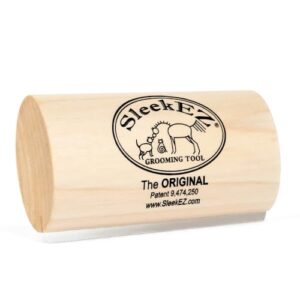
If a low price point isn’t your priority, SleekEZ earns its spot through smart engineering. Its patented wave tooth pattern grabs hair at the tips instead of tearing from the base—gentler on your dog, easier on your hands.
Teeth are spaced to handle fine and coarse coats alike, working on single or double coats without damaging that outer layer. Loose fur collects in neat rows along the blade, so cleanup takes seconds, not minutes.
For dogs sensitive to grooming, this one’s a solid pick.
| Best For | Dog owners with shedding-prone pups who want a gentle, effective deshedding tool that also doubles as a quick fix for hair on carpets, furniture, and car interiors. |
|---|---|
| Handle Type | Ergonomic |
| Skin Protection | Non-cutting blade |
| Coat Type | Short to double |
| Material | Not specified |
| Primary Function | Deshedding and raking |
| Cleanup Method | Hair collection system |
| Additional Features |
|
- Lifts loose fur and undercoat without cutting or damaging healthy hair
- Gentle on skin, reducing tugging or irritation during grooming
- Doubles as a surface hair rake for cleaning up embedded pet hair around the house
- Not suitable for pets with curly or non-shedding coats
- Requires regular use (once or twice a week) to stay effective
- Small size (5.5 x 3 x 1.5 inches) may mean more passes needed on larger dogs
5. Maxpower Double Sided Pet Grooming Rake
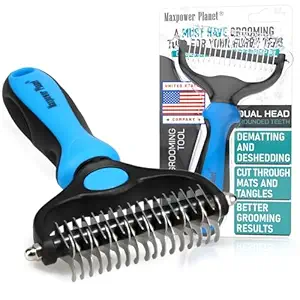
Two tools in one handle—that’s the appeal here. The 9-tooth side works through mats and tangles, while the 17-tooth side takes care of deshedding work on the undercoat.
During those intense spring and fall blowouts, this dual-sided design makes quick work of the loose fur that piles up when your Pembroke Welsh Corgi sheds its thick double coat.
Rounded teeth keep things gentle on skin, and the wider head covers more ground than single-sided rakes. That’s a real time-saver on big dogs.
The non-slip rubber grip stays steady even with damp paws. For long-haired or double-coated breeds, this rake pulls its weight without much fuss.
| Best For | dog and cat owners with long-haired or double-coated pets who need help managing mats, tangles, and heavy shedding. |
|---|---|
| Handle Type | Non-slip rubber |
| Skin Protection | Rounded teeth |
| Coat Type | Thick or double |
| Material | Stainless steel |
| Primary Function | Dematting and deshedding |
| Cleanup Method | Manual removal |
| Additional Features |
|
- Two grooming tools in one—9-tooth side for mats and tangles, 17-tooth side for deshedding
- Rounded teeth reduce the risk of scratching or irritating sensitive skin
- Non-slip rubber base and lightweight handle make it easy to grip and control, even with damp paws
- Not ideal for short-haired breeds without an undercoat
- Still requires careful handling to avoid any skin irritation despite rounded teeth
- At 4 ounces with a compact head, it may take longer to cover very large or extra-thick coats
6. Hertzko Self Cleaning Pet Slicker Brush
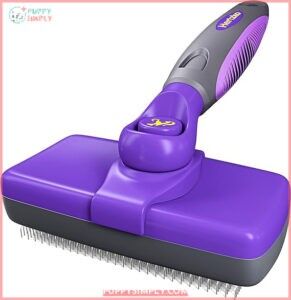
One push of a button is all it takes to clear the bristles here. The retractable design pulls fur loose instantly, no picking or tugging required.
Fine wire bristles reach deep into undercoats without scratching skin, and rounded tips keep things comfortable during longer sessions. It works well across coat lengths—short, medium, or long.
The non-slip grip stays steady through wiggly grooming sessions. For beginners short on time, this brush trims cleanup down considerably.
| Best For | Pet owners with long- or short-haired dogs and cats—especially heavy shedders like Maine Coons or Huskies—who want a fast, comfortable grooming tool with easy cleanup. |
|---|---|
| Handle Type | Ergonomic comfort grip |
| Skin Protection | Soft bristles |
| Coat Type | Long and short |
| Material | Plastic |
| Primary Function | Retractable deshedding |
| Cleanup Method | Push-button retraction |
| Additional Features |
|
- One-button retractable bristles make removing collected fur quick and mess-free
- Fine, rounded-tip bristles detangle and reach undercoats gently, even on sensitive skin
- Comfort grip handle stays steady and reduces hand fatigue during longer sessions
- Repeated use of the retraction button may require decent thumb strength over time
- Some users find it less effective on certain short-coated dog breeds
- May not remove large amounts of hair in a single pass, so multiple passes are often needed
7. Paw Brothers Extra Long Slicker Brush
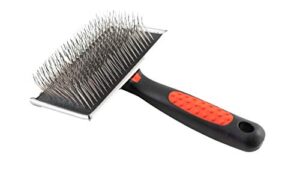
Those extra-long stainless steel pins are the whole point here—they dig past surface fluff and reach undercoat that shorter brushes miss entirely.
The flat slicker head glides without snagging, even behind legs where fur likes to knot up. You get an ergonomic handle that won’t tire your hand mid-session.
At 4.32 ounces with 1-inch pins, it works for short, double, and long coats alike. Just go slow—those longer pins mean careful handling matters more.
| Best For | pet owners and professional groomers looking to deep-clean thick, double, or tangle-prone coats on dogs and cats. |
|---|---|
| Handle Type | Ergonomic |
| Skin Protection | Rounded pin tips |
| Coat Type | All hair types |
| Material | Stainless steel |
| Primary Function | Undercoat removal |
| Cleanup Method | Manual removal |
| Additional Features |
|
- Extra-long stainless steel pins reach deep into the undercoat for a thorough clean
- Ergonomic handle keeps grooming sessions comfortable, even for longer coats
- Versatile enough for all hair types, from short to double to long
- Long pin length requires careful, slower handling to avoid discomfort
- No specific guidance for pets with sensitive skin or coats
- May feel like overkill for pets with short, low-maintenance fur
8. GoPets Double Sided Pet Grooming Comb
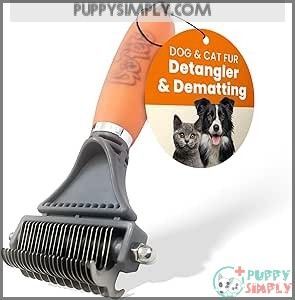
Twelve teeth on one side, twenty-three on the other—this comb works through mats and undercoat without swapping tools mid-session.
The rounded, rust-resistant blades glide through tangles instead of ripping them, which matters a lot for anxious or senior pets who flinch at rough handling.
It works great on curly, wavy, and double coats. Just rinse it under warm water after each use and let it air dry, so the stainless steel keeps its edge for years.
| Best For | owners of thick-coated, long-haired, or double-coated breeds like Huskies and Poodles who need an efficient way to manage mats and shedding. |
|---|---|
| Handle Type | Non-slip handle |
| Skin Protection | Rounded blade ends |
| Coat Type | Thick, double, long |
| Material | Stainless steel |
| Primary Function | Dematting and deshedding |
| Cleanup Method | Manual removal |
| Additional Features |
|
- Dual-sided design (12-blade and 23-blade) tackles both matting and undercoat without switching tools
- Rounded, rust-resistant stainless steel blades are gentle enough for sensitive, anxious, or senior pets
- Ergonomic non-slip handle reduces hand fatigue during longer grooming sessions
- Best suited for thick or double coats, so it may not offer much benefit for short-haired pets
- Requires careful handling technique to avoid any skin irritation
- Needs manual cleaning to clear hair from the blades after each use
9. Aumuca Self Cleaning Pet Slicker Brush
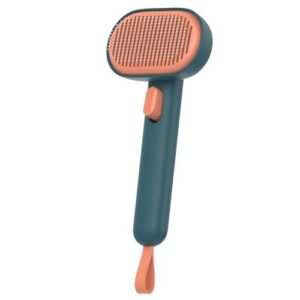
One button, and the tangled mess just falls away. That’s the whole appeal of the Aumuca’s push-button retraction—no more sitting there picking hair out of the bristles by hand.
The 150-degree bent needles hook loose undercoat efficiently, while rounded tips keep skin safe on sensitive dogs and cats alike. The anti-slip handle stays comfortable through longer sessions, and a silicone hanging strap keeps it off the counter.
Solid choice if you shed pet hair daily and want cleanup to take seconds, not minutes.
| Best For | Owners of semi-short to long-haired dogs or cats who deal with heavy shedding and want a faster, less messy way to clean out the brush after each use. |
|---|---|
| Handle Type | Silicone loop strap |
| Skin Protection | Rounded plastic tips |
| Coat Type | Semi-short to long |
| Material | ABS and stainless steel |
| Primary Function | Self-cleaning deshedding |
| Cleanup Method | One-click self-cleaning |
| Additional Features |
|
- One-click cleaning button ejects trapped hair instantly, no manual picking required
- 150-degree bent needles with rounded tips remove undercoat effectively while staying gentle on sensitive skin
- Silicone hanging loop keeps the brush tidy and easy to store
- Not suitable for very short-haired or hairless breeds
- Still requires wiping the hair disc by hand after ejecting it
- Thicker stainless steel bristles may feel firmer for pets that need an extra-gentle touch
10. Docrok pet deshedding brush combo
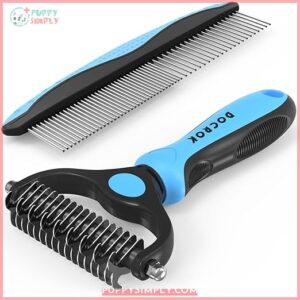
Two tools, one box, twice the coverage. The Docrok combo pairs a 2-in-1 undercoat rake with a matching metal comb, so you’ve got dematting and deshedding covered in a single purchase.
The rake’s wide side breaks up knots fast, while the dense side pulls loose undercoat free. Switch to the comb for tight spots—legs, head, tail—where the rake can’t quite reach.
Stainless steel teeth resist rust, and rounded edges keep things gentle. Budget-friendly, and built for double coats.
| Best For | Owners of medium to long-haired, double-coated dogs and cats who want an affordable two-tool solution for both dematting and everyday deshedding. |
|---|---|
| Handle Type | Anti-slip TPR |
| Skin Protection | Soft protective edges |
| Coat Type | Medium to long |
| Material | Stainless steel and TPR |
| Primary Function | Dematting and deshedding |
| Cleanup Method | Manual removal |
| Additional Features |
|
- Combo pack covers both heavy dematting and routine deshedding without buying separate tools
- Soft-edged, rust-resistant stainless steel teeth make it comfortable and durable for regular use
- Comb design reaches sensitive, tricky spots like legs, head, and tail that the rake can miss
- Not ideal for short-haired or single-coated pets, since it’s built specifically for double coats
- Protective edges need careful handling to avoid dulling or damage over time
- Two separate tools mean an extra step switching between them during grooming sessions
Match Brushes to Dog Coats
Not every dog sheds the same way, and not every brush is built to handle it. Your pet’s coat type decides which tool will actually work—and which one just wastes your time. Here’s how to match the right brush to the coat you’re dealing with.
Short-haired Dogs
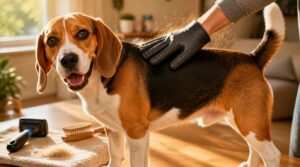
Beagles, Boxers, and short-haired Chihuahuas seem low-maintenance, but they shed year-round with two seasonal peaks. A rubber curry brush or massage glove loosens dead hair without irritating skin. Brush once or twice weekly, following hair growth direction. Watch for skin health—smooth, shiny coats signal good diet and grooming. This routine also cuts down indoor hair buildup a lot.
Many short haired dogs are well-suited for busy families.
Double-coated Breeds
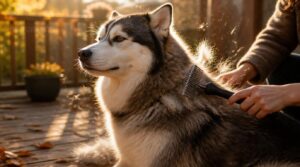
Huskies, Shepherds, and Malamutes carry two coats at once—a dense undercoat for insulation and tougher guard hairs that repel water.
Seasonal molt cycles hit hard each spring and fall, so grab an undercoat rake with wide-spaced teeth. Brush during peak shedding weeks, and check skin underneath—thick undercoat density can hide hotspots or irritation you’d otherwise miss.
Long-haired Coats
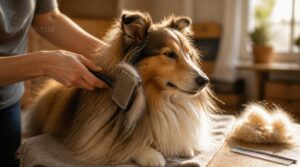
Collies, Yorkies, and Afghan Hounds need daily attention, not weekly. Hair over two inches long tangles fast, especially behind ears and along the chest.
Use a slicker brush paired with a metal comb for matting prevention and dander control. Focus on trouble spots:
- Behind the ears
- Under the legs
- Tail and hindquarters
- Around the eyes for trimming
Trapped moisture in mats invites skin trouble—catch tangles early.
Curly or Wavy Coats
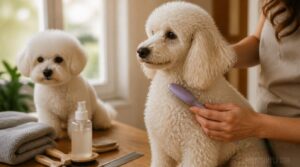
Poodles and Bichons bring their own puzzle—those tight spirals hide mats close to the skin. A dog detangler brush with rounded tips works best, followed by detangling spray to ease knots without snapping strands.
Humidity makes curls frizz fast, so brush often. Check skin during grooming, since curls conceal irritation easily. Good nutrition keeps coat texture springy and healthy from the inside out.
Thick Seasonal Shedders
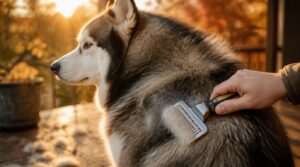
Twice a year, thick seasonal shedders blow their coat wide open—spring and fall, triggered by daylight and weather shifts. That dense undercoat insulates all winter, then dumps fast, sometimes for six weeks straight.
Reach for a deshedding brush with a wide, rounded-tip blade or an undercoat rake. Daily brushing cuts dander for allergy-prone households, and fatty-acid-rich diets keep coats resilient through the cycle.
Beginner-Friendly Brush Features
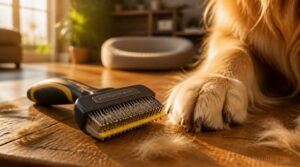
Not every deshedding brush is built with beginners in mind. Some little design choices make a tool safer and easier to handle when you’re just starting out. Here’s what to look for before you buy one.
Rounded Tooth Tips
Run your thumb across a quality deshedding tool and you’ll notice something: no sharp points. Rounded tooth tips curve at the top, spreading pressure evenly instead of digging in.
That curvature matters most for first-time dog owners still learning how much pressure is too much. You get real tactile feedback, better control, and way less risk of nicking sensitive skin near joints.
Stainless-steel Teeth
Two metals make the difference: chromium and nickel, blended into an alloy that forms a protective layer against rust. That’s why quality deshedding brush teeth shrug off saliva, drool, and humid bathrooms for years.
For first-time dog owners, this means less maintenance guesswork. Wipe teeth dry after use, and you’ll get reliable shedding reduction without pitting, tarnish, or snapped tines mid-groom.
Non-slip Handle Grip
Ever tried gripping a wet brush handle mid-groom? That’s where a nonslip rubber handle earns its keep. Rubber or silicone coatings hold firm even with damp, soapy hands, while textured grip patterns—diamond knurling, micro-dots—add extra traction.
Ergonomic handle materials also cut hand fatigue during longer sessions. Thermoplastic blends stay tacky and durable, so your grip won’t slip when your dog decides to wiggle.
Self-cleaning Hair Release
Nobody enjoys pulling clumped fur out of a brush by hand. That’s where a selfcleaning button earns its keep—press it, and bristles retract in under a second, dropping hair into a debris bin (holding 5–20 grams). One-click reset gets you back to brushing fast.
Bonus: many housings carry antimicrobial coatings, cutting bacterial buildup between uses.
Proper Brush Head Size
Size matters more than most beginners realize. A head that’s too wide can’t navigate a Poodle’s leg joints, while one too small takes forever on a Lab’s broad back.
Match the head to the dog, not just the coat:
- Small breeds: compact heads for tight spots
- Medium dogs: balanced coverage
- Large breeds: wider heads for efficiency
Right-sized heads mean better anatomical reach and less arm fatigue for you.
Safe Deshedding for First-Timers
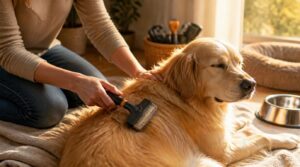
A great brush won’t help much if your technique is off. Good habits protect your dog’s skin and build trust right from the start. Here’s what every beginner needs to know before that first stroke.
Brush With Hair Growth
Grab your deshedding tool and follow the fur’s natural path — from shoulder to tail, never against it. Brushing against the grain tugs on the follicle and can rip loose hair out painfully.
Working with the growth pattern helps scalp circulation and nutrient delivery to each follicle, keeping canine coat care gentle for first-time dog owners while easing dead skin removal and sebum distribution across the coat.
Start With Short Sessions
Once your dog’s comfortable with direction, keep that first session short—5 minutes tops. Rushing a new grooming routine backfires fast, causing fatigue and distrust.
Building pet trust takes patience: brush a small area, reward with a treat, then stop. Track session length in a quick log to spot progress. Short bursts beat marathon brushing every time for first-time dog owners.
Building trust takes patience: brush a small area, reward with a treat, then stop
Use Light Pressure
Think of a coin’s weight resting on the coat—that’s about right. Gentle pressure pulls loose undercoat fibers free while preserving guard hairs, preventing hair pulling that spooks first-time dog owners.
If hair resists, stop and check your grip instead of pushing harder. Watch for redness afterward; that’s your cue pressure ran too high. Good technique, paired with pet grooming tools (not dog deshedding shampoo), makes all the difference.
Avoid Sensitive Body Areas
Pressure control only gets you halfway—where you brush matters just as much.
- Skip the belly and nipples, where skin runs thin
- Avoid inner thighs, groin, and elbow joints
- Keep bristles off paw pads and between toes
- Go easy near the throat and trachea—neck safety matters
- Steer clear of the spine, shoulder blades, and bony hips
Watch for pulling away or tensing; that’s your dog’s warning sign.
Check Skin for Redness
Ever wonder if that pink tinge on your dog’s belly is normal? It’s not always cause for alarm, but daily skin checks during brushing catch irritation patterns early.
Watch for redness lasting past five minutes, paired with itching or warmth. Uniform patches differ from scattered spots—both matter. Flaking or darkening signals trouble too.
Use gentle pressure and skin-safe rounded tips to protect skin health from day one.
Deshedding Schedule and Maintenance
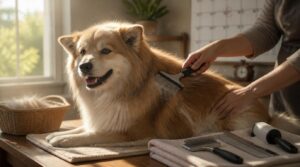
Buying the right brush is only half the job—using it well is the other half. A good routine keeps shedding under control and your tool working like new for years. Here’s what that routine actually looks like, week to week.
Weekly Brushing Routines
Two sessions a week beats one marathon session every time. Short, regular brushing builds pet trust and keeps shedding manageable.
- Less fur on your couch
- A calmer, happier pet
- Fewer skin surprises
Keep sessions to 10-20 minutes, watch for redness, and stick to your grooming routine. Consistency—not intensity—is what makes deshedding brushes actually work for first-time dog owners.
Seasonal Shedding Increases
Every dog owner notices it: clumps everywhere come late summer. Shedding often peaks then, as the resting phase (about three months) winds down and hormones shift more follicles into "let go" mode.
| Trigger | Effect on Coat |
|---|---|
| Sun exposure | Weakens hair shafts |
| Dry indoor air | Increases breakage |
| Hormonal shifts | Pushes follicles into shedding |
| Poor scalp hydration | Worsens undercoat loss |
Adjust your dog grooming routine accordingly—more frequent brushing keeps seasonal shedding manageable.
Cleaning Brush Teeth
Hair-clogged teeth can’t grab loose fur, so a quick rinse after each session matters. For metal teeth and stainless-steel rakes, wipe dry to dodge rust and pitting.
Self-cleaning brushes make this easy—just press the button and release trapped hair. Give tools a weekly soap wash for real tool hygiene, keeping rounded tooth tips skin-safe and snag-free for your dog’s next brushing.
Dry Storage Habits
Where you toss your brushes matters as much as how you clean them. Stash tools in a dry spot between 50-70°F, away from sunlight and damp bathrooms.
- Rust ruins metal teeth fast
- Humidity causes pitting and odor
- Sunlight degrades rubber grips
- Open bins invite pests
- Airflow keeps mildew away
A small drawer or ventilated caddy protects your pet grooming supplies between sessions.
Replacing Damaged Tools
A bent tooth can nip skin fast—so inspect tools before each use. Check for rust, loose pins, or cracked grips.
Match replacements to your exact model and part number. Skip generic parts; original manufacturer pieces protect performance and warranty.
Jot down wear patterns over time. Then swap damaged deshedding tools promptly, keeping your grooming routine safe and uninterrupted.
Frequently Asked Questions (FAQs)
What is the best brush to deshed a dog?
For most dogs, a dual-sided deshedding brush wins—it pairs a stainless-steel undercoat blade with softer bristles for comfort. It reaches deep layers, cuts shedding fast, and suits multiple coat types, making it a solid, all-around grooming tool.
How often should you brush your dog with a deShedding brush?
It depends on coat type frequency—short coats need 1–2 sessions weekly, double coats several, long or curly coats 3–5 times. Bump up during seasonal shedding peaks, keep sessions short, and watch for skin irritation as you adjust intervals.
Are deShedding brushes good for dogs?
Shedding season sagas end with the right tool in hand. Yes—used correctly, a deshedding tool cuts loose undercoat, boosts shedding reduction, and keeps pet skin safety intact for first-time dog owners building good grooming habits.
What do groomers do to deshed dogs?
Pros start with a coat assessment, then a professional bath, hydrating conditioning, and high-velocity drying to lift loose fur. They finish with a targeted deshedding tool and brushing technique for thorough undercoat removal, plus moisture care to keep the coat healthy.
How much does professional dog grooming typically cost?
Think of it like a toll road — the price shifts with size, distance, and traffic. Small dogs run $45-70, large breeds $60-130, and mobile grooming premiums add $20-60 more, especially in pricier coastal cities.
Can I use a deshedding brush on wet fur?
Best answer: no. Moisture softens hair, raising breakage risk, and wet fur clings to bristles instead of lifting away. Towel-dry first, then brush—whether your dog’s coat is wet or dry, gentle technique always protects skin from irritation.
Whats the difference between deshedding and detangling tools?
Picture a rake pulling deep into the undercoat versus a comb gently sliding through surface knots — that’s the split. A deshedding tool removes loose fur; detangling with a slicker brush prevents matting, working the topcoat before shedding season prep begins.
Are grooming gloves effective compared to traditional brushes?
For anxious pets, grooming gloves reduce stress with a gentle petting motion.
But traditional slicker brushes reach deeper for real undercoat removal depth.
Choose gloves for daily maintenance, brushes for thorough deshedding—matching technique to your dog’s coat and comfort level.
Should puppies be deshedded the same as adult dogs?
No, puppies need soft bristle selection and light pressure during their coat change. Their skin is more sensitive than an adult dog’s, so gentle grooming builds trust early—setting up a lifelong, stress-free grooming routine as their adult coat develops.
Conclusion
Groomers see it constantly: nearly 90% of shedding complaints trace back to the wrong brush, not the dog. That’s the real lesson here.
The right deshedding brushes for beginners turn a dreaded chore into ten calm minutes together, coat by coat, breed by breed. Match the tool, use light pressure, and watch trust build with every stroke. Your dog won’t just shed less—he’ll actually look forward to brushing day.
- https://people.com/best-dog-brushes-7377043
- https://dakpets.com/blogs/news/how-to-use-a-deshedding-brush-taking-care-of-your-pets-with-dakpets
- https://cats.com/best-cat-brush
- https://blog.vetriscience.com/the-best-dog-brushes-by-coat-type-a-vet-recommended-guide
- https://www.furminator.net/guide/deshed/what-is-deshedding-and-why-should-you-do-it